

Journalist

Chang SeongWon
-
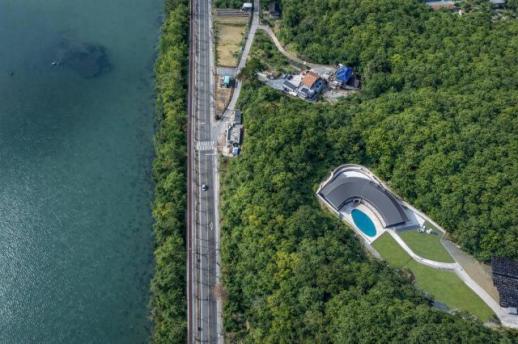 From ashes to rebirth: Yoon Kyeong-sik wins World Architecture Awards SEOUL, March 18 (AJP) - In March 2026, the announcement came from the United Kingdom: the World Architecture Community Awards, 53rd cycle. It was not simply a prize. It was recognition that something quiet, something deeply human, had spoken across borders. Among works from 53 countries and judged by 243 jurors, the Inwolsa Dharma Center was chosen — not for spectacle, but for the depth of its question. This was not architecture of reconstruction. It was architecture of renewal. “The fire burned the buildings, but it could not burn our practice. What we rebuilt was not a temple, but the mind.” With these words, Venerable Jaebeom condensed the entire narrative of Inwolsa. What stands today is not only designed — it is gathered. From quiet donations, from unseen solidarity, from a shared refusal to let meaning disappear. As the Buddhist teaching goes: All things arise from the mind. Inwolsa is that mind made visible. Faced with the ruins, architect Yoon Kyeong-sik did not choose restoration. He chose not to repeat the past. He chose to reinterpret it. “Inwol” — the moon reflected on water. One moon, infinitely mirrored. From this idea, he translated philosophy into space. The curve of the crescent moon, the arc of the Buddha’s brow. No rigid lines, but flowing continuity. No division, but relationship. Architecture here becomes thought. Inside, the central space opens — empty, yet full. This emptiness is not absence. It is potential. The meditation hall and prayer spaces unfold as separate functions within a single continuous flow. To be empty is to hold everything. The Indra Wall forms the heart of the building. A field of color, light, and deliberate voids.Each opening receives light, and reflects it onward. Yoon Kyeong-sik does not build religion. He builds questions. “Architecture is not where people stay. It is where people change.” At Inwolsa, this is not an idea. It is an experience. His work resists spectacle. It returns to essence. Inwolsa gathers all of this into one place. It is not merely a temple. It is a record of loss, a form shaped by community, a vessel of spirit. Fire destroys. But it cannot touch the mind. And the mind, in time, builds again. Yoon’s architecture stands as proof. About the author: Architect Yoon Kyeong-sik is widely regarded as one of the defining voices in contemporary spiritual architecture, known for his philosophy of harmonizing tradition and modernity through nature-responsive design and humanistic inquiry. Over a career spanning more than 35 years, Yoon has earned over 24 international architecture awards. His work extends beyond the physical realm, positioning architecture as an intellectual and philosophical practice—one that engages with the humanities, aesthetics and the inner life of space. Among his most celebrated works, the Haselina Ninebridge Clubhouse has drawn international attention. The project was featured by the BBC for its striking ceiling design, noted for its sculptural interplay of light and structure. It was also highlighted by The New York Times as a distinctive architectural destination, underscoring its global cultural resonance. Yoon’s portfolio has been recognized with major honors including the International Architecture Awards (IAA), the iF Design Award and the Architecture MasterPrize (AMP). Notably, he became the first non-European architect to receive top recognition at an Italian sustainable architecture award, marking a significant milestone in the field. 2026-03-18 20:01:19
 -
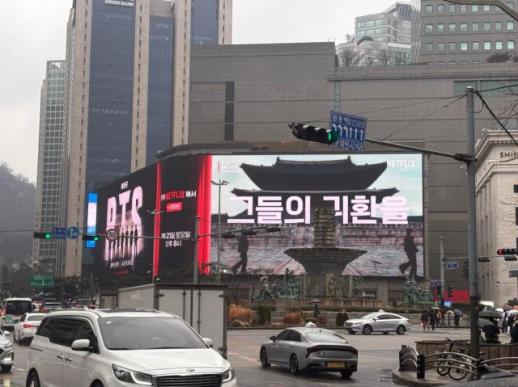 BTS Live D-3: Fan must-have turns sour as light stick prices soar SEOUL, March 18 (AJP) - The soaring price of K-pop light sticks — once a simple symbol of fandom — is fast becoming a flashpoint ahead of the BTS Gwanghwamun comeback concert, as shortages and steep markups leave fans questioning whether the experience is still worth the cost. With the concert just three days away, demand for official light sticks has surged, triggering shortages and driving up resale prices, particularly in tourist-heavy districts in central Seoul such as Myeongdong. At around 3 p.m. on Wednesday, K-MECCA, a K-pop goods store in Myeongdong, was crowded with about 30 foreign visitors browsing merchandise. Light sticks displayed at the entrance drew attention. “I think everyone wants to get the feeling, but these prices are too high,” said Katie Mueller, a visitor in her 30s from Germany. “A lot of fans are younger than me, so it should stay within a reasonable range. I’m not sure if I would want to spend this much.” “The light stick is too expensive,” said Nanako, 18, from Fukuoka. “I can’t afford it. But if I could, I would want to get a light stick and photo cards.” Myeongdong has emerged as a hub for K-pop merchandise sales, with stores targeting foreign tourists who may be less familiar with official pricing. Some stores did not display prices, requiring customers to check at the counter, where prices change with demand. According to data from secondhand platform Bungaejangter, search interest in BTS-related items including “BTS light stick,” “BTS concert” and “BTS tickets” has spiked this month, indicating a simultaneous increase in both concert participation and merchandise demand. As of March, searches for BTS light sticks rose 438 percent from the previous month and 1,764 percent from a year earlier. The trend extends beyond Korea. On Japan’s resale platform Mercari, transactions involving BTS light sticks have also increased, indicating strong overseas demand ahead of the event. Offline demand is also evident. At the K-pop specialty “K-WAVE Zone” inside Shinsegae Duty Free Myeongdong, BTS merchandise sales jumped about 190 percent over the March 13–15 weekend, with March 14 sales more than tripling year-on-year. A staff member said light sticks are currently difficult to secure and that inquiries about BTS goods have been increasing, particularly from Japan. “Today it’s a bit quieter because of the rain,” she said. “Light sticks are not coming in. They’re in short supply.” Analysts warn that excessive price hikes that could damage Korea’s tourism credibility. “This is not just a pricing issue. It’s a matter of trust,” said Lee Hoon, professor of Hanyang University. “When pricing exceeds a certain acceptable range, trust begins to break down.” “If such practices are repeated, it could create a perception that Korean businesses are not trustworthy. Trust is easy to lose but very difficult to rebuild,” he said. He emphasized both private- and public-sector roles in addressing the issue. “Local merchant associations should take the lead, while governments need to establish systems and safeguards to prevent such practices,” he said. Kim Nam-jo, a professor at Hanyang University, said price increases may be natural amid rising demand, but agreed that excessive markups are problematic. Prices should remain within a reasonable range, he said, noting that tourism depends on repeat visits rather than one-time consumption. “Tourism is not a one-off experience. If visitors leave with a negative impression, they may not return, and they won’t recommend it to others.” He warned that such practices could have broader implications beyond individual stores. “What appears to be a local issue can ultimately affect the country’s overall image,” he said. “Short-term pricing strategies do not last. Businesses built on image cannot survive if that image is damaged.” On a different note, Joo Dong-oh, a professor of Kyung Hee University, offered a more nuanced view, saying that if consumers are aware of regular prices yet still choose to pay more, K-pop merchandise can be seen as “an emotional symbol commemorating the BTS concert rather than a simple product.” He added that unless clear illegal practices such as counterfeit sales or price collusion occur, the impact on Korea’s tourism image is likely to be limited. Kim Hong-yu, also of Kyung Hee University, agreed that the surge in K-pop merchandise prices is problematic. “With K-pop’s core fan base is growing beyond Southeast Asia into Europe and North America, this is a particularly sensitive stage,” he said. 2026-03-18 18:08:31
 -
 Woori Bank Expands AI Banker, Turns Unstructured Data Into Usable Assets Woori Financial Group is accelerating its push to embed artificial intelligence across management and operations as part of its AI transformation, known as AX. Woori Bank said it is the first in South Korea’s financial sector to pursue “assetization” of unstructured data. The bank holds large volumes of unstructured information — including financial product materials, work rules, official notices and reports — that has been difficult to use systematically. By collecting, refining and structuring that data into formats AI can learn from, employees can now search for and use needed information more quickly. Building on that data, Woori Financial developed a generative AI customer service tool called “AI Banker.” The group is applying generative AI to tasks such as knowledge search, checking internal rules, drafting corporate analysis reports and supporting customer consultations to improve efficiency. The group has also introduced a “deep research” function that automatically generates reports using internal data. It has advanced to the point of gathering and analyzing relevant data on an employee-requested topic and delivering it in report form. Woori Financial is also upgrading customer-facing services, expanding generative AI consultations from deposit and savings products to loans, subscriptions and other financial products. For loan consultations, it said the service has evolved to support the broader decision-making process by building a consultation flow that reflects a customer’s goals and conditions. * This article has been translated by AI. 2026-03-18 18:05:25
 -
 Hana Bank Automates Marketing and FX Reviews to Boost Efficiency Hana Bank said it is expanding the use of artificial intelligence across operations, from branch sales to customer service. To raise marketing productivity for branch staff, the bank introduced an AutoML (Auto Machine Learning)-based service that recommends marketing targets. It goes beyond product suggestions by analyzing each customer’s preferences and financial usage patterns to propose the most effective marketing approach. The bank is also applying AI to foreign exchange work. It said it can automatically draft initial opinions for spot FX limit applications, aiming to improve both processing speed and accuracy. An AI asset-diagnosis service linked to its MyData platform is designed to help branch employees provide more precise wealth-management consulting. Customer-facing AI services are also being upgraded. The bank’s AI service that predicts overseas remittance processing times is intended to reduce uncertainty over how long transfers will take by calculating multiple variables and providing an estimated time in advance. With foreigners accounting for more than 5% of South Korea’s population, Hana Bank said it is strengthening related services. One example is a real-time multilingual chat counseling service within the HanaEZ app, which uses multilingual AI to help foreign customers receive financial consultations and improve satisfaction among new users.* This article has been translated by AI. 2026-03-18 18:04:57
 -
 IBK Industrial Bank Expands AI Use, Automates Guaranteed-Loan Reviews IBK Industrial Bank of Korea is expanding its use of artificial intelligence by rolling out an in-house system across frontline operations. The bank said it built an AI model called ‘IBK GenAI’ to boost efficiency and productivity across the organization and is applying it broadly to day-to-day work. IBK GenAI is an internal large language model trained on the bank’s own data. It provides tailored AI environments by department and can instantly search and answer from 120,000 items of key business knowledge. It also offers 17 specialized services, including a letter-of-credit assistant. Head office and branch employees have used IBK GenAI to develop and deploy 249 customized services, the bank said, supporting more personalized workflow improvements. The bank is also applying AI to core lending operations, including guaranteed loans. In the guaranteed-loan process, it has automated AI reviews and approval work that had been handled manually, reducing repetitive tasks for staff. When issuing AI-based guarantees, the system automatically recommends internal products that match special contract terms, improving branch efficiency. An IBK official said the bank plans to pursue internal and external innovation so that, through a broad AI transformation, AI becomes embedded across operations — including work processes, decision-making systems and risk management — beyond being used as a simple tool.* This article has been translated by AI. 2026-03-18 18:04:16
 -
 NH NongHyup Bank Launches AI Service to Automatically Request Loan Rate Cuts NH NongHyup Bank said it has launched and is operating an artificial intelligence-based service that automatically applies for loan rate reductions on behalf of customers, allowing financial consumers to exercise their right to request a lower rate without a separate application process. The bank said its "AI Loan Rate Care" service uses AI to submit requests to cut interest rates for customers who hold loans. The right to request a rate cut allows borrowers to ask for a lower loan rate when their credit conditions improve, such as through higher income or better creditworthiness. The system has been criticized for low usage because many consumers are unaware of it and the application process can be cumbersome. In December last year, the Financial Services Commission designated a MyData-based proxy service for rate-cut requests as an "innovative financial service" as part of efforts to expand inclusive finance. MyData is a system that lets individuals transmit their personal data to a destination of their choice and manage and use it based on their own decisions. NongHyup Bank said the core of its service is that AI analyzes customers' asset and debt information using MyData and, when conditions for a rate cut are met, exercises the right on the customer's behalf. NH MyData users can access the service after giving one-time consent for proxy applications through NH All One Bank or NH Smart Banking. After that, if the AI determines there is a possibility of a rate cut, it automatically submits rate-cut requests for loan accounts at each financial institution without any additional application, the bank said. * This article has been translated by AI. 2026-03-18 18:03:47
 -
 Hyundai Motor Group Chairman Chung Euisun’s 2025 Pay Totaled 17.46 Billion Won, Up 51.6% Hyundai Motor Group Chairman Chung Euisun received total compensation of 17.461 billion won last year, the company disclosed. According to Hyundai Motor’s annual business report filed on Tuesday, Chung received 9.001 billion won from Hyundai Motor, including 4.5 billion won in salary and 4.501 billion won in bonuses and other income. That was up 1.914 billion won, or 27.0%, from 7.087 billion won a year earlier. Chung also received 5.4 billion won from affiliate Kia and 3.06 billion won from Hyundai Mobis. It was the first time he received compensation from Kia, the filing said. With Kia’s pay included, Chung’s total rose 5.943 billion won, or 51.6%, from 11.518 billion won the previous year. Hyundai Motor said the compensation reflected its executive pay table and factors including duties and rank, tenure, leadership, expertise and contribution to the company. Hyundai Motor Vice Chairman Jang Jaehoon received 5.416 billion won in total compensation last year, up 59.3% from the year before. Jose Munoz, who has served as Hyundai Motor’s first foreign CEO since last year, received 9.729 billion won, up 242.7% from 2.839 billion won in 2024. Based on Hyundai Motor compensation alone, Munoz received more than Chung. 2026-03-18 17:57:30
 -
 Korea Zinc Expands Ultra-Pure Sulfuric Acid Output for Semiconductors, Eyes U.S. Hub Korea Zinc said March 18 it is producing ultra-high-purity, semiconductor-grade sulfuric acid by refining sulfur dioxide (SO₂) generated in its zinc and lead smelting process, and plans to expand annual capacity to 320,000 tons starting in the second half of this year. The company also said it will build a production line in the United States. After Chairman Choi Yun-beom took office, the company has pursued efficiency improvements and investment to expand production lines. It now operates 19 lines at its Onsan smelter with annual sulfuric acid capacity of 280,000 tons. Korea Zinc said it has been expanding since late 2024 and plans further additions to raise annual capacity to 500,000 tons. “As the largest supplier of semiconductor sulfuric acid in Korea, we are supporting the semiconductor industry,” the company said. It added that after building an integrated smelter in the United States in 2029, it plans to help stabilize supplies for Korean chipmakers operating there and strengthen its role as a global supply hub. Korea Zinc also pointed to growing concerns about sulfuric acid supply amid the impact of the U.S.-Iran war. It said its semiconductor-grade sulfuric acid is produced through an integrated smelting process rather than oil refining, allowing it to supply the product more steadily outside the effects of the war and potential disruptions such as a closure of the Strait of Hormuz. Semiconductor-grade sulfuric acid is a key material used in wafer cleaning to remove impurities. The company said this step accounts for one-third of the overall cleaning process. As circuits become more miniaturized, it said, impurity tolerances have tightened and the need for stable purity and quality has increased because wafer contamination directly affects yield and reliability. Korea Zinc said it covers more than about 60% of domestic demand for semiconductor-grade sulfuric acid and supplies about 95% of its output to major chipmakers in South Korea. It also supplies global semiconductor manufacturers in Japan and Singapore. The company said it plans to build a semiconductor-grade sulfuric acid production line at its U.S. integrated smelter, reviewing annual capacity of about 100,000 tons. It plans to start production with the smelter’s trial operation in 2029, aiming to supply production bases of global semiconductor companies in the United States. A Korea Zinc official said demand is expected to keep rising as competition in AI intensifies and fabs expand globally. The official said the company will use its accumulated ultra-high-purity sulfuric acid technology to support supply-chain stability while expanding those capabilities into global markets and strengthening its position in semiconductor materials supply chains.* This article has been translated by AI. 2026-03-18 17:56:09
 -
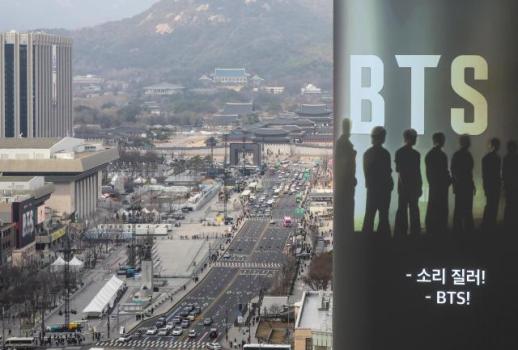 BTS Live D-3: Stage is shaping up fast SEOUL, March 18 (AJP) - The mega stage for BTS comeback show at Gwanghwamun Square is quickly taking shape, even under rain on Wednesday. Roads around Gwanghwamun will be closed on the day of the performance, and access to nearby subway stations will also be limited. Boarding and alighting will be suspended at City Hall Station on Lines 1 and 2, Gyeongbokgung Station on Line 3, and Gwanghwamun Station on Line 5. Major cultural facilities near Gwanghwamun, including Gyeongbokgung Palace and the National Palace Museum of Korea, will be temporarily closed. Meanwhile, about 20 major landmarks across Seoul are set to be illuminated in purple to mark the performance. 2026-03-18 17:55:21
 -
 CDMO Market Heats Up as Drugmakers Compete on Development Know-How, Not Just Capacity Contract development and manufacturing organizations, or CDMOs, are expanding rapidly beyond contract manufacturing into research and development, but industry officials say adding facilities alone is unlikely to secure an edge. They note that competition for orders is shifting from simple production pricing to development capabilities, and that as the market grows, specialization is increasingly determining winners and losers. Industry officials said March 18 that CDMOs provide a high-barrier service model, handling biopharmaceutical R&D, clinical production and commercial manufacturing for clients that lack sufficient production capacity. The business requires advanced process technology, skilled workers and the ability to meet strict regulatory requirements. Lee Seung-gyu, vice chairman of the Korea Bio Association, said companies must realistically assess whether they can endure the early years after building a CDMO plant. “After building a CDMO factory, you have to keep it going for three to five years,” Lee said. “CMO is about manufacturing capability, but CDMO also requires development capability. You need a clear strategy on what area to focus on.” The sector also tends to generate follow-on deals once a relationship is established, prompting analysis that CDMOs must move beyond simple outsourced production and become strategic partners across the full drug development process to survive. Jeong Yun-taek, head of the Korea Pharmaceutical Industry Strategy Institute, urged companies to strengthen expertise in specific high value-added technologies rather than broad, general-purpose offerings. He said the ability to provide end-to-end services — from process development and analytical method development to clinical and commercial production — will be a key differentiator. Traditional drugmakers are also entering CDMO businesses by leaning on their strengths. Boryung, citing production and quality capabilities built in oncology drugs, signed a CDMO contract last year with Zuellig Pharma tied to supplying the cytotoxic anticancer drug Alimta (pemetrexed) to seven Southeast Asian countries. The company plans to begin supplying the product to seven countries, including the Philippines, Thailand and Malaysia, starting in 2027. ST Pharm, an affiliate of the Dong-A Socio Group, is focusing on an oligonucleotide CDMO business, a key raw material for ribonucleic acid, or RNA, medicines. It completed construction of a “second oligo building” at its Banwol campus in Ansan, Gyeonggi Province, as it seeks to expand global orders. Kyongbo Pharmaceutical, a subsidiary of Chong Kun Dang, is building an antibody-drug conjugate, or ADC, plant in Asan, South Chungcheong Province.* This article has been translated by AI. 2026-03-18 17:54:53