

Journalist

Chang SeongWon
-
 BTS Live D-3 : BTSnomics 2.0 estimated to top $2 billion SEOUL, March 18 (AJP) -Even before the album drop, BTS’s comeback after a nearly four-year hiatus is shaping up to be a billion-dollar blockbuster. Starting with a truly national-scale open-air performance on Saturday — expected to shut down traffic and deploy a presidential-level security presence — analysts forecast more than 3 trillion won ($2.2 billion) in economic impact from their year-long comeback agenda. Moreover, their return has accelerated the transition from event-driven revenue for K-Pop performers to a platform-based model, analysts say. “This comeback is not just a return to activity, but an event that expands the monetization structure of the K-pop industry,” said Kim Yoo-hyuk, an analyst at IBK Investment & Securities, in a report released March 17. The report projects 2.9 trillion won in direct revenue from album sales, global tours, and merchandise. The estimate assumes 6 million albums sold and 6 million concert attendees, with an average ticket price of 300,000 won and average merchandise spending of 140,000 won per fan. Including tourism-related spending, the total economic impact will exceed 3 trillion won, the report said. If global demand that cannot be absorbed by offline concerts shifts online, revenue estimates could rise further, it said. Early demand indicators already point to strong momentum for the fifth full-length album “Arirang.” The record surpassed 4.06 million pre-orders within a week of pre-sales beginning, according to distributor YG Plus, exceeding the previous record of 3.42 million set by “Map of the Soul: 7” in 2020. The scale of the upcoming BTS world tour further underscores the economic impact. The “Arirang” tour is scheduled to feature 82 performances across 34 cities, positioning it as one of the largest ever mounted by a K-pop act. Demand has surged across major markets. Performances in North America and Europe sold out rapidly following ticket releases, with online queues reportedly reaching hundreds of thousands of users. Secondary market prices have also spiked, with some U.S. resale tickets trading as high as $5,700. The surge is extending beyond ticket sales into broader consumption. Travel demand linked to tour locations has risen sharply, with flight and accommodation searches increasing significantly ahead of major shows, highlighting the group’s capacity to drive cross-border economic activity. Select performances are to be streamed globally, a model that effectively transforms concerts from location-bound events into scalable digital products. Online concerts have already emerged as a key revenue driver, with BTS’ virtual performances in 2020 and 2021 drawing about 2.92 million viewers and generating $15.26 million in revenue. The scale of the economic spillover has drawn comparisons to “Swift-nomics,” a term used to describe the surge in local economic activity generated by Taylor Swift’s global tour. Swift’s Eras Tour was estimated to produce roughly $10 billion in economic impact across 51 cities, setting a benchmark for how large-scale tours can stimulate local economies. Analysts note that the BTS model differs in structure. While traditional tours primarily generate localized economic effects, BTS is increasingly combining offline performances with digital distribution and fan-platform monetization, allowing demand to scale beyond the actual venues. It is also possible the comeback will serve as a catalyst for broader industry transformation. In a report released in December, Samsung Securities said the revenue model for the BTS agency HYBE is shifting toward fan platforms and digital content. The BTS return is expected to accelerate that transition. “As fan-platform revenue expands, HYBE’s earnings structure is being reshaped toward recurring revenue streams,” the report said. At the center of this transition is Weverse, HYBE’s global fan platform, which has been expanding its user base and increasing paid subscription and digital service revenue. HYBE maintained its multi-trillion-won annual revenue during the group’s hiatus by expanding a multi-label strategy and platform business. BTS remains the key driver of the company’s revenue growth and margin expansion. The shift toward platform-based monetization is also influencing valuation. HYBE is currently trading at a forward price-to-earnings ratio of around 35 times, with analysts still seeing upside potential as recurring revenue streams expand. Beyond music, BTS’ intellectual property continues to extend into industries including fashion, gaming, and food. Analysts increasingly refer to this evolution as “BTSnomics 2.0,” defined by monetizing global audiences through platforms rather than one-off events. “In the past, BTSnomics 1.0 was about expanding the market through fandom growth,” Kim Yoo-hyuk of IBK Investment & Securities said in his report. “Now it has evolved into a structure that generates recurring revenue through platforms.” Risks such as revenue concentration around a single act and uncertainties in global regulatory environments remain, analysts note. Still, the comeback is likely a defining moment marking the transition from a hit-driven entertainment model to a scalable platform economy. 2026-03-18 17:07:14
 -
 Korean Pharma and Medtech Updates: New Chondroitin Supplement, China Dividend Win, AI Project, CGM Study, FDA Fast Track, KGMP Renewal Daewon Pharmaceutical launches “Chondroitin King 1200” with individually approved functional ingredient Daewon Pharmaceutical said March 18 that its health supplement brand Daewon Health has launched “Chondroitin King 1200,” a functional health food that may help support joint and cartilage health. The product’s main ingredient is chondroitin sulfate, which has been recognized by the Ministry of Food and Drug Safety for joint and cartilage health functionality. The company said it is the first and only individually approved functional ingredient used in a chondroitin health supplement made by a domestic pharmaceutical company. Daewon said it selected an ingredient with more than 90% purity and the same structure as chondroitin found in human cartilage. Users can take two tablets once a day to supplement 1,200 milligrams of the main ingredient. The company said a human study also verified improvements in objective indicators related to joint health management. In a 90-day intake test involving 137 men and women ages 40 to 75, it said there were significant improvements in levels of inflammation-related factor TNF-α and inflammation-inducing factor COX-2. Ilyang Pharmaceutical wins final ruling in China undistributed profits dispute Ilyang Pharmaceutical said March 18 that its final victory in a dispute over undistributed profits with its Chinese joint venture, Tonghua Ilyang, was selected as a model case in an official work report by China’s top judicial body. The company said the Supreme People’s Court included the dividend-rights dispute in the “five major cases in China’s judicial field” released in its work report to the National People’s Congress. The court described the case as a representative judicial example showing “opening up to the outside world through equal protection,” and as “a model case for protecting the rights and interests of foreign investors and resolving international investment disputes.” Ilyang said the key point in the report was a ruling ordering Tonghua Ilyang to pay dividends of about 18 billion won in undistributed profits, allowing recovery of the full amount that had been tied up for more than three years. Mogam Institute joins government-led K-Moonshot AI research program Mogam Institute for Biomedical Research said March 18 that it was selected on March 11 as a partner institution for the Ministry of Science and ICT’s nationwide artificial intelligence research and innovation program, the “K-Moonshot” project, and signed a memorandum of understanding. K-Moonshot is a mission-driven program aimed at boosting productivity in science and technology research through AI and tackling key national missions. Participating organizations will cooperate to build an AI-based research innovation ecosystem by providing AI resources, conducting joint R&D and collaborating on data use. Mogam said it will participate as a partner in the “advanced bio and new drug development” area among 12 national missions. The institute said it plans to use its AI-based drug development capabilities to help improve productivity and research efficiency in the drug development process. Handok, Seoul Pharmacists Association sign MOU on CGM-based counseling model Handok and the Seoul Pharmacists Association said March 18 they signed an agreement the previous day at Handok’s headquarters in Yeoksam-dong to cooperate on research into pharmacist services and personal health management based on continuous glucose monitoring, or CGM. The partners said the goal is to build practical evidence that standardized education, counseling and behavior-coaching services can be provided systematically using CGM data. They also aim to develop guidance on standardized CGM use and diabetes education guidelines that can be applied in pharmacies. The study will be led by the Seoul Pharmacists Association and will involve 150 participants. Subjects will be divided into three groups based on whether they wear a CGM device and the level of pharmacist intervention: a non-wearing group; a wearing group without pharmacist intervention; and a wearing group that receives pharmacist counseling. The non-wearing group will receive basic medication guidance. The wearing group without pharmacist intervention will also receive training on how to use the device. The wearing group with pharmacist counseling will have regular counseling at least once a week. Researchers will analyze changes in blood glucose patterns and the overall effects of pharmacist counseling based on these differences. Ildong’s Idience cancer drug candidate Venadaparib gets FDA fast-track designation Idience, Ildong Pharmaceutical Group’s oncology drug development affiliate, said March 18 that the U.S. Food and Drug Administration granted fast-track designation for its targeted anticancer drug candidate Venadaparib. Fast track is an FDA program intended to speed development and review of drugs for serious conditions when they may offer meaningful improvement over existing therapies or address unmet medical needs. With fast-track status, a developer can consult more closely with the FDA during development and may use expedited procedures such as rolling submissions and applying for priority review. Venadaparib is a next-generation PARP inhibitor designed to suppress cancer by selectively acting on PARP1, an enzyme involved in repairing DNA damage in cells. The company said the FDA designated it in 2022 as an orphan drug for gastric cancer. Osstem Implant’s K1 plant renews KGMP compliance certification Osstem Implant said March 18 that its K1 (Orange Tower) implant manufacturing plant was recertified by the Ministry of Food and Drug Safety as compliant with Korea Good Manufacturing Practice, or KGMP, standards for medical device manufacturing and quality control. The company said K1 has built a strict quality management system across all processes to produce and supply high-quality products. It operates “management by six key processes” and a “five-step precision inspection system,” and is aiming for a defect rate of 100 parts per million, or no more than one defect per 10,000 units. Osstem said it runs a full inspection system from raw material receipt through shipment of finished products, while continuing investments to upgrade manufacturing conditions, including clean rooms, deionized water facilities and robotic processes. The company said it has built the same level of quality management at its nearby K2 plant. K2, which began full operations in the second half of 2023, has a total floor area of 13,699 square meters (about 4,144 pyeong) and an annual maximum capacity of 12 million implant sets. Osstem said K2 is scheduled to undergo a regular audit in April for KGMP compliance certification.* This article has been translated by AI. 2026-03-18 17:03:22
 -
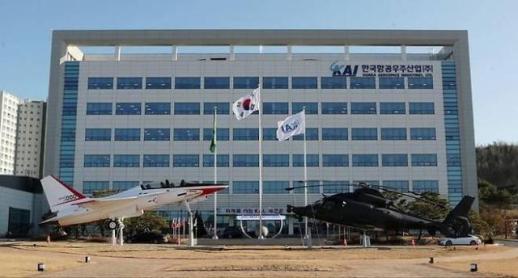 KAI Names Kim Jong-chul CEO as Export Push and Leadership Scrutiny Grow Kim Jong-chul, former head of the Defense Technology Protection Bureau at South Korea’s Defense Acquisition Program Administration, has been confirmed as the new CEO of Korea Aerospace Industries. Attention is focused on whether he can overcome recurring criticism over military-linked appointments and deliver on urgent tasks, including expanding exports of key weapons systems such as the domestically developed KF-21 supersonic fighter. KAI said it held an extraordinary shareholders meeting and a board meeting on Tuesday and approved Kim’s appointment. The decision moves the company toward ending an eight-month leadership vacuum following the departure of Kang Goo-young. KAI’s CEO nomination committee had recommended Kim on Feb. 27 as an inside director candidate, calling him “a suitable leader with outstanding expertise across the defense industry and insight into future businesses.” Kim is a graduate of the 31st class of the Air Force Academy. He served about 23 years as an Air Force officer before joining DAPA in 2006 through a special recruitment program at the Grade 4 level. Inside KAI, views on his background are divided, with some describing him as a political appointment and others as a hands-on defense procurement specialist. Kim previously served as vice chair of the Smart Strong Military Committee in Lee Jae-myung’s presidential campaign, prompting claims that his appointment is a reward for political service. Concerns have also been raised as KAI has repeatedly named leaders with military backgrounds, including Kang, who previously served as Air Force vice chief of staff and head of the Joint Chiefs of Staff’ Military Support Headquarters. Others point to Kim’s more than 20 years at DAPA after retiring as an Air Force lieutenant colonel. As a founding member of the agency, he served in roles including head of the defense export support team and director of offset trade, and was credited with helping open export channels for South Korea’s defense industry. Kim is expected to begin his public schedule by attending the rollout ceremony for the first mass-produced KF-21 aircraft, set for March 25. With global competition intensifying, KAI faces pressure to secure leadership stability and profitability. Expanding exports of the KF-21 and the FA-50 light attack aircraft is seen as the company’s top task. KAI has set targets this year of 5.7306 trillion won in revenue and 10.4383 trillion won in orders. Last year, on a consolidated basis, it posted 3.6964 trillion won in revenue and 6.3946 trillion won in orders, meaning the new goals are roughly double. Kim met with the labor union on March 13 and pledged to stabilize management and streamline what he called unnecessary task force teams. The move was seen as an effort to simplify the organization and focus on competitiveness in winning contracts. How KAI manages cooperation with Hanwha Group, which recently acquired a 4.99% stake, has also become a key issue. The purchase drew attention because it came as calls for privatization have persisted, putting KAI’s response under industry scrutiny. A KAI official said Kim faces the dual challenge of expanding exports while stabilizing the organization, adding that “early leadership will determine success or failure.” 2026-03-18 16:57:21
 -
 Han So-hee and Jeon Jong-seo team up for film 'Project Y' Every production is seen from countless angles. Even in the same place at the same time, directors and actors may experience the moment differently. <Choi Song-hui’s B-Cut> looks past the on-screen “A-cut” to the vivid record of what happened on set. By weaving together interviews with directors and actors, it reconstructs the “B-cut” moments that were often more intense than the finished frame. <Editor’s note> In the middle of a glittering city, two women at the edge of their lives reach for dirty money and gold bars. The film “Project Y,” directed by Lee Hwan, began with that one-line logline. But the project’s driving force, the actors said, came less from a production system than from their own initiative. Han So-hee and Jeon Jong-seo, both the same age, said they read the script together and decided, “Let’s do this.” They described a set built on mutual trust and intense focus, before any talk of visual spectacle. The film’s origins, they said, were rooted in admiration for each other’s work — support that came before any business pitch. “Jong-seo and I looked at the script together. We read it and started with, ‘Let’s do this,’” Han said. “Before being friends, I really like Jong-seo as a fellow actor. I liked her previous work, too, so I was curious how this project would turn out within her filmography — and what it would be like acting with me.” “When I was reading this script with So-hee, it was an especially difficult time for movie theaters,” Jeon said. “But since there were people who said they would believe in us, I wanted to do well. The starting point was that one line: ‘Two women the same age, standing at the edge of life, touch dirty money.’ Somehow it gave me courage.” The actors said their main task was convincing viewers why Mi-seon and Do-gyeong — two friends with sharply different personalities — would stay together. They built the characters to balance stability and danger, and worked with the costume team to create a simple, minimalist look, sometimes incorporating items from their own wardrobes. “I thought we had to persuade people why these two, who are completely different in personality and temperament, are friends,” Han said. “Mi-seon is more capable in daily life than Do-gyeong and pursues a stable kind of happiness. Since I also pursue an ordinary life, I tried to use that point of contact to make Mi-seon’s actions feel believable. There’s only one thing I want to say with this film: Even if you don’t have anyone on your side in this world, if you have one person who truly understands you, that’s a successful life.” “I wanted Do-gyeong to look tough but also feel like she could shatter like glass,” Jeon said. “Mi-seon, played by So-hee, looks fragile but is surprisingly solid and action-oriented. We talked about holding hands and moving forward as if we’re looking at the same thing, like a decalcomania. We especially wanted these characters to stick visually, so we discussed it directly with the costume team and reflected personal items, too. We said, let’s keep it simple and minimalist.” Their on-set rhythm, they said, came from balancing sensitivity and steadiness. One scene — digging through the night to steal a large sum of money — became the moment their commitment was most visible. “We dug for five hours,” Han said. “Since that scene is the start of our film, we really immersed ourselves to keep it real. After shoveling for hours, you sweat. We took off our outer layers and even used a watering can to create sweat while filming. I remember being so locked into that scene that I didn’t even feel the cold — I was extremely focused.” “The director actually tried to stop us,” Jeon said. “But we volunteered and acted it out like, ‘It would be good to throw off our clothes and dig here,’ sweating a lot. The director was the one telling us to wrap up and was worried about us. Ha.” Positioning themselves as part of a generational shift in Korean film, the two actors also stressed balance and responsibility across the cast. “It’s a two-lead film with two women the same age, and we wanted it to feel iconic rather than simply pretty,” Jeon said. “We hoped even a single poster would leave a strong impression, and I think audiences are interested in that. It seems like people responded well to the curiosity of, ‘A movie with two iconic women — what happens?’” “I feel a sense of responsibility with every project,” Han said. “Watching the edited cut, I thought, ‘In this era, there isn’t really a single main character.’ Everyone moves in harmony in their own place. The story flows with Do-gyeong and Mi-seon at the center, but without the other roles, they wouldn’t exist either. It feels like we’ve entered a time when the boundary of the main character is breaking down.” From volunteering to dig for five hours to offering personal items for costumes, the actors’ approach became, in their telling, the film’s most vivid “B-cut” record — two women meeting at the edge and moving forward through fierce rapport and shared responsibility.* This article has been translated by AI. 2026-03-18 16:54:52
 -
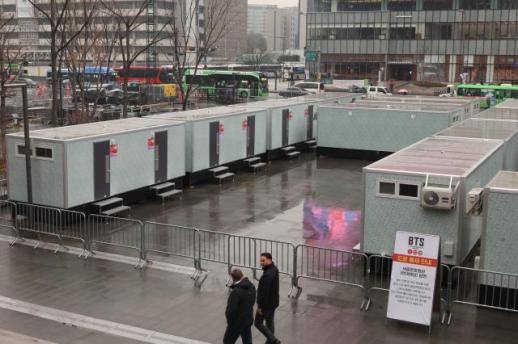 BTS Live D-3 - Public toilets and other tips on the concert day SEOUL, March 18 (AJP) - Seoul City announced viewing guidelines for the BTS 2026 comeback show. On March 9, Seoul City conveyed viewing information for the 'BTS Comeback Live: ARIRANG' performance scheduled for 8 p.m. on March 21 at Gwanghwamun Plaza through official social media. Seoul City stated, "Approximately 2,000 open-type and portable restrooms will be operated for visitor convenience," adding, "Overnight waiting and lining up on sidewalks are restricted to prevent safety accidents and pedestrian congestion." The city continued, "Subway stations near the venue (Gwanghwamun Station, City Hall Station, Gyeongbokgung Station) will operate as non-stop pass-throughs with station entrances closed. Nearby stations such as Euljiro 1-ga Station may also operate as non-stop pass-throughs if necessary depending on congestion," and "Some bus routes will operate temporary detours on the performance day, and public bicycle rental and return will be temporarily suspended." Additionally, starting March 20, the day before the BTS comeback performance, lockers at 17 subway stations in Seoul will be closed in preparation for potential terrorism threats. During the suspension period, all use including new rentals and item retrieval will be restricted. 2026-03-18 16:53:41
 -
 Samsung Elec AGM turns euphoric despite union's party-crashing strike news SUWON, March 18 (AJP) - Samsung Electronics’ annual general meeting struck an unusually buoyant tone Wednesday as a surging share price and AI-driven optimism lifted investor sentiment — even as a looming union strike cast a shadow over the outlook. More than 1,000 shareholders gathered at the Suwon Convention Center with little to complain about. The stock has nearly quadrupled from a year ago, while the company is now targeting 200 trillion won ($150 billion) in operating profit as it deepens its role in Nvidia’s AI supply chain. Samsung is also moving ahead with its largest-ever treasury stock cancellation — 87 million shares worth 16 trillion won ($11 billion) — in the first half of the year, reducing outstanding shares and boosting earnings per share. Against a backdrop of sustained applause, concerns over transparency and post-AI strategy were largely muted — a stark contrast to last year’s meeting, when shareholders openly criticized management over a stagnant share price stuck in the 50,000-won range. Momentum has been fueled in part by Nvidia’s endorsement. Earlier this week, CEO Jensen Huang gave Samsung a public shoutout at the GTC developer conference, highlighting its role in producing AI chips based on technology from startup Groq. Samsung’s 4-nanometer foundry is now “cranking as hard as they can” to manufacture Groq’s LP30 inference chips, slated for release in the second half, according to Huang and the company. “The mood today is completely different; people are actually saying ‘thank you’ to the board,” said a shareholder in his 50s, surnamed Oh, who reported a nearly 190 percent return on his holdings. Still, beneath the optimism, unease lingered. During the Q&A session, shareholders pressed management on the durability of the current upcycle and the company’s position in high-bandwidth memory (HBM), particularly as rival SK hynix maintains a lead in supplying advanced chips to key clients such as Tesla. Jun Young-hyun, head of the Device Solutions (DS) division, emphasized Samsung’s “one-stop solution” spanning logic, memory, foundry and packaging. But tensions surfaced when a shareholder compared employee incentives to the record-breaking bonuses at SK hynix. Jun appeared momentarily on the defensive, saying the company is “focused on securing long-term technological dominance,” which would ultimately translate into “sustainable rewards” for both employees and investors. Some attendees also questioned the authenticity of the meeting’s upbeat tone, describing it as “choreographed.” “It felt like an effort to shield executives from accountability just as the questions got difficult,” one shareholder said after the session. The gathering ended with a stark reminder of internal risks. The National Samsung Electronics Union (NSEU) said 93.1 percent of its members had voted in favor of industrial action, warning of a potential general strike starting in May — which would mark the first in the company’s 57-year history. The labor tension poses a tangible risk to Samsung’s “all-in-one” AI strategy, particularly as it seeks to close the gap with SK hynix in HBM and Taiwan’s TSMC in advanced foundry. For now, however, investors appear willing to look past the risks. Samsung reaffirmed its commitment to shareholder returns, announcing an additional 1.3 trillion won ($980 million) dividend alongside record R&D spending of 6.73 trillion won. The market response was unequivocal. Shares of Samsung Electronics rose 7.27 percent to close at 207,500 won ($156.82) on Wednesday, shrugging off the strike threat. 2026-03-18 16:46:09
 -
 Samsung Electronics union threatens walkout after near-unanimous strike vote SEOUL, March 18 (AJP) - More than 60,000 employees out of 89,874 union members at Samsung Electronics have voted to go on a general strike in May if their demands for fair and transparent compensation during the chip boom are not met, posing a potential headwind to the chipmaker’s AI-driven upswing. The joint union coalition announced Wednesday that 93.1 percent of participating members voted in favor of a strike in a 10-day ballot. A total of 66,019 employees from three separate unions took part, with 61,456 voting in favor. The collective action would mark the second such stoppage in the company’s 57-year history, following a 25-day walkout in July 2024. The strike threat cast a shadow over Wednesday’s annual shareholder meeting, where Vice Chairman Jun Young-hyun pledged to restore the company’s “technological hyper-gap.” While many retail investors celebrated the stock’s surge past the 200,000-won mark following Nvidia’s endorsement of Samsung’s HBM4 chips, the union finalized its walkout plans just three hours after the meeting concluded. Labor leaders are demanding a 7 percent wage increase, the removal of caps on performance-based incentives, and greater transparency in bonus calculations. “The sheer rate — 93 percent — in support demonstrates how deeply frustrated our members are with the company’s compensation proposal,” a union official told AJP. “This has given us powerful momentum for our struggle and a firm foundation to push even harder.” The potential impact of a walkout is significant, particularly for the critical Device Solutions (DS) division, which accounts for the bulk of Samsung’s profits. The union coalition warned that even an 18-day stoppage could result in losses of at least 5 trillion won ($3.79 billion), with some industry estimates suggesting the total impact could reach 9 trillion won if the strike is prolonged. The labor unrest is further complicated by escalating geopolitical tensions in the Middle East and rising raw material costs that threaten global supply chains. In response to these mounting pressures, Samsung’s consumer electronics divisions have already initiated cost-cutting measures, including requiring executives to fly economy class on short-haul trips. 2026-03-18 16:23:50
 -
 Actor Go Jun to Marry Non-Celebrity Partner in Private Ceremony on April 5 South Korean actor Go Jun will marry his non-celebrity partner on April 5, according to reporting by this outlet. The wedding will be held at a location in Seoul and will be private, with only family and close acquaintances invited. The bride-to-be is not in the entertainment industry. The couple has been dating since last year. Go debuted in the 2001 film ‘Wanee & Junah’ and has since appeared in films including ‘Byeonsan,’ ‘Midnight Runners,’ ‘Luck-Key’ and ‘The Age of Shadows.’ His television credits include ‘The Fiery Priest,’ ‘Oh My Baby,’ ‘Save Me’ and ‘Death to Snow White-Black Out.’ He won the SBS Drama Awards for best supporting actor in 2019 for ‘The Fiery Priest’ and received the KBS Drama Awards best couple award in 2020 for ‘Cheat on Me If You Can.’* This article has been translated by AI. 2026-03-18 16:15:17
 -
 BTS Live D-3 - Latest from Gwanghwamun SEOUL, March 18 (AJP) - Across the Gwanghwamun district, signs of tightening control are becoming visible in real time. Police barricades are being extended along sidewalks and major intersections, carving out narrow pedestrian corridors and restricting lateral movement between streets. Access points to nearby subway stations are being prepared for selective closure, while public bike docks and lockers around the area have already been suspended or sealed off. Security perimeters are also expanding outward from the square. Metal fencing now lines key roads and building frontages, creating buffer zones designed to absorb crowd pressure before it reaches the main venue. Mobile police units and monitoring vehicles have been positioned at strategic points, indicating a shift toward active, real-time crowd management. Together, these measures are gradually transforming not just the square, but the surrounding urban grid into a controlled environment, where movement is increasingly guided, filtered and contained ahead of the event. With three days remaining until BTS’s live comeback performance, Gwanghwamun Square is rapidly transforming into a tightly controlled event zone, as new layers of infrastructure and security measures take shape by the hour. Rows of temporary modular units believed to be portable restrooms and staff facilities have been installed across sections of the square, while extensive metal fencing now carves the area into clearly defined pedestrian corridors. Despite steady rain, pedestrians were seen navigating the newly arranged routes under umbrellas, offering an early preview of how movement will be managed as crowds swell later this week. As night fell, the transformation became even more apparent. The main stage structure lit up against the backdrop of Gwanghwamun Gate, suggesting that preparations are moving beyond construction toward technical testing. Beyond the square itself, nearby businesses are also adjusting to the expected influx of visitors. Cafes in central Seoul have begun introducing themed menus and streamlining operations with kiosks and reusable cup systems to handle increased demand. The changes reflect how preparations for the event are extending beyond the venue into the broader urban environment. On the policy side, authorities have raised the terrorism alert level in central Seoul ahead of the event, citing risks associated with large-scale crowd gatherings amid heightened global security uncertainties. The alert level in parts of Jongno and Jung districts will be elevated from “attention” to “caution” from midnight on Thursday through Saturday, under a four-tier system ranging from attention to serious. Police estimate that up to 260,000 people could converge on the area, prompting heightened surveillance and expanded safety measures. Authorities have also moved to restrict planned demonstrations near the square, warning that overlapping gatherings could pose risks of crowd crush and other safety incidents. Several groups have since relocated or scaled back their events as police tighten control over the area. Authorities have also moved to restrict planned demonstrations near the square, warning that overlapping gatherings could pose risks of crowd crush and other safety incidents. Officials have also requested cooperation from organizers to voluntarily adjust or relocate events during the concert period. Several groups have since relocated or scaled back their events as police tighten control over the area. On the ground, those measures are already materializing not as policy statements, but as barriers, routes and controlled spaces that are steadily reshaping how the public moves through the city center. 2026-03-18 16:13:46
 -
 GULF CRISIS: Iran war gives Kim Jong-un more reason to cling to nuclear arms SEOUL, March 18 (AJP) - The war in Iran — marked by the killing of top leaders and relentless airstrikes since the United States launched Operation Epic Fury on Feb. 28 — will be watched closely by one man in particular: North Korean leader Kim Jong-un. Among the states once grouped by President George W. Bush in the “axis of evil,” only one regime remains intact: Pyongyang. Saddam Hussein, who ruled Iraq for nearly a quarter century, was toppled in the 2003 U.S. invasion and executed in 2006. Iran's Supreme Leader Ali Khamenei is said to be killed during the opening strikes late February. Pundits generally agree that North Korea’s case is fundamentally different. According to Kousuke Saitou of Sophia University, U.S. President Donald Trump has shown a willingness to use force, but not without limits. “In my point of view, President Trump tends to resort to the use of force in disregard of international law, based on U.S. interests or his own assumptions,” Saitou said. The Korean Peninsula presents a very different strategic calculus from the Gulf. “The U.S. has little direct interest in forcibly changing the North Korean regime now,” he argued. Trump himself has repeatedly boasted of his “good relationship” with Kim Jong-un, and any military action against North Korea would carry immediate and potentially devastating consequences, including a severe deterioration in ties with China. That, Saitou said, would be disadvantageous to the Trump administration. If Pyongyang does not face an imminent military threat to regime survival, it has little reason to alter its current posture. “If Kim Jong Un’s ultimate goal is to stabilize his regime,” Saitou said, “he would not take actions that undermine the current stability.” Yet the longer-term implications may prove more consequential. A prolonged U.S. military and diplomatic fixation on the Middle East could create what Saitou described as greater “diplomatic freehand” for countries such as North Korea. “If U.S. diplomatic attention and military resources continue to be concentrated in the Middle East,” he said, “countries of concern in other regions … may gain greater diplomatic freehand because the U.S. does not wish to carry out military operations across multiple theaters.” That shift could ripple across East Asia. If Washington’s focus drifts, allies such as South Korea and Japan may feel compelled to strengthen their own defense capabilities — moves that could in turn provoke North Korea and China, accelerating a regional arms race. More importantly for Pyongyang, the strike on Iran over its nuclear and missile programs is likely to be read not as a warning, but as validation. “The decapitation strikes against Iranian leadership … confirm the rationality of Kim Jong Un’s strategy of ‘nuclear insurance,’” observed Vasilis Trigkas of Tsinghua University. From Iraq to Libya to Iran, the lesson North Korea may draw is blunt: regimes that lack a credible nuclear deterrent remain exposed. That, Trigkas argued, further erodes the logic of the Nuclear Non-Proliferation Treaty. “The U.S. has targeted the leadership of NPT non-nuclear states,” he said, “further undermining the very bargain that once contained the spread of nuclear weapons.” By that reasoning, Pyongyang is more likely to double down on its nuclear doctrine, deepen its strategic alignment with Russia and seek geopolitical or economic advantage from a distracted international order. Beyond North Korea, the Iran war also raises broader questions about U.S. strategic credibility. Trigkas argued that Washington’s approach — military intervention abroad combined with growing pressure on allies — has weakened its standing. “Trump’s behavior has undermined U.S. strategic credibility,” he said, pointing to strains with both European and Asian allies and the administration’s heavy Middle East focus at the expense of the Indo-Pacific. For South Korea, that presents both danger and opportunity. A reduced U.S. strategic bandwidth could weaken deterrence on the peninsula, but it may also create room for a more flexible diplomatic strategy. “South Korea now has a significant opportunity to hedge by reaching out to both Beijing and Moscow,” Trigkas argued, suggesting that pragmatic engagement with China and renewed energy cooperation with Russia could serve Seoul’s interests. At the same time, more difficult questions will come into sharper focus — including the future of missile defense systems such as THAAD and the longer-term structure of the U.S.-South Korea alliance. In the end, the lesson Kim Jong-un is likely to take from Iran is not that nuclear ambition invites danger. It is that nuclear arms remain the only reliable insurance against regime change, and that may be the most damaging strategic aftershock of this war. 2026-03-18 16:06:56