

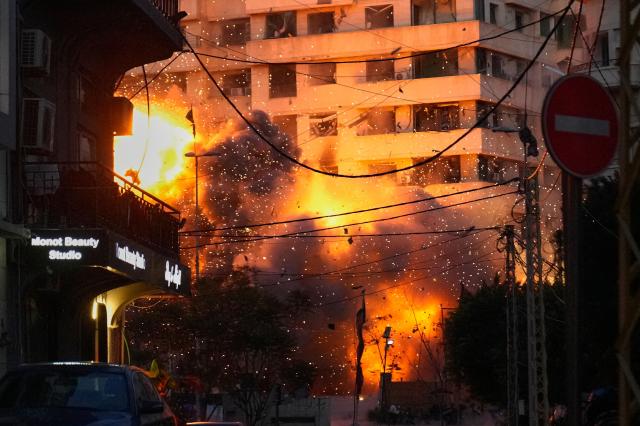
Among the states once grouped by President George W. Bush in the “axis of evil,” only one regime remains intact: Pyongyang.
Saddam Hussein, who ruled Iraq for nearly a quarter century, was toppled in the 2003 U.S. invasion and executed in 2006. Iran's Supreme Leader Ali Khamenei is said to be killed during the opening strikes late February.
Pundits generally agree that North Korea’s case is fundamentally different.
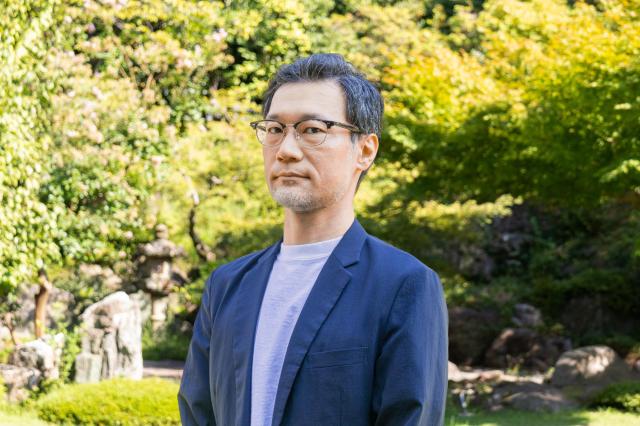
According to Kousuke Saitou of Sophia University, U.S. President Donald Trump has shown a willingness to use force, but not without limits.
“In my point of view, President Trump tends to resort to the use of force in disregard of international law, based on U.S. interests or his own assumptions,” Saitou said.
The Korean Peninsula presents a very different strategic calculus from the Gulf.
“The U.S. has little direct interest in forcibly changing the North Korean regime now,” he argued.
Trump himself has repeatedly boasted of his “good relationship” with Kim Jong-un, and any military action against North Korea would carry immediate and potentially devastating consequences, including a severe deterioration in ties with China.
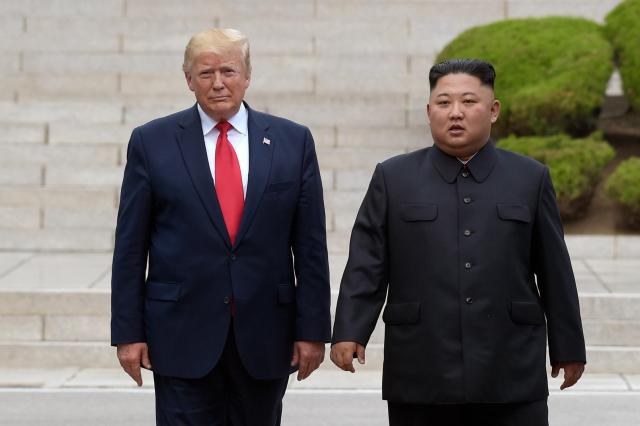
If Pyongyang does not face an imminent military threat to regime survival, it has little reason to alter its current posture.
“If Kim Jong Un’s ultimate goal is to stabilize his regime,” Saitou said, “he would not take actions that undermine the current stability.”
Yet the longer-term implications may prove more consequential.
A prolonged U.S. military and diplomatic fixation on the Middle East could create what Saitou described as greater “diplomatic freehand” for countries such as North Korea.
“If U.S. diplomatic attention and military resources continue to be concentrated in the Middle East,” he said, “countries of concern in other regions … may gain greater diplomatic freehand because the U.S. does not wish to carry out military operations across multiple theaters.”
If Washington’s focus drifts, allies such as South Korea and Japan may feel compelled to strengthen their own defense capabilities — moves that could in turn provoke North Korea and China, accelerating a regional arms race.
More importantly for Pyongyang, the strike on Iran over its nuclear and missile programs is likely to be read not as a warning, but as validation.
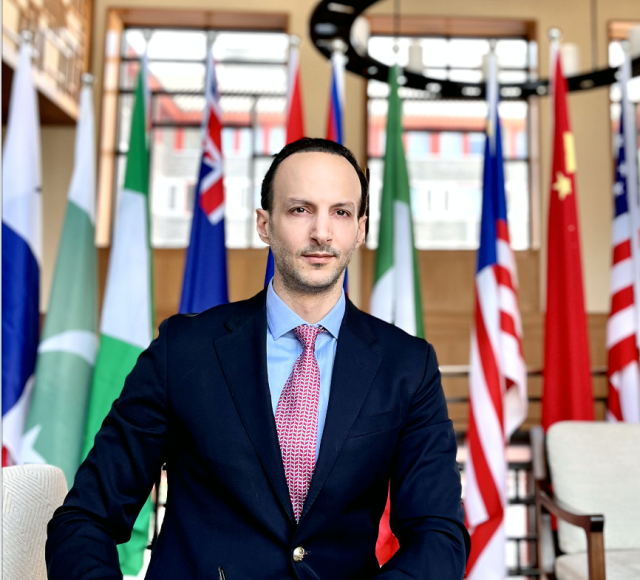
“The decapitation strikes against Iranian leadership … confirm the rationality of Kim Jong Un’s strategy of ‘nuclear insurance,’” observed Vasilis Trigkas of Tsinghua University.
From Iraq to Libya to Iran, the lesson North Korea may draw is blunt: regimes that lack a credible nuclear deterrent remain exposed.
That, Trigkas argued, further erodes the logic of the Nuclear Non-Proliferation Treaty.
“The U.S. has targeted the leadership of NPT non-nuclear states,” he said, “further undermining the very bargain that once contained the spread of nuclear weapons.”
By that reasoning, Pyongyang is more likely to double down on its nuclear doctrine, deepen its strategic alignment with Russia and seek geopolitical or economic advantage from a distracted international order.
Beyond North Korea, the Iran war also raises broader questions about U.S. strategic credibility.
Trigkas argued that Washington’s approach — military intervention abroad combined with growing pressure on allies — has weakened its standing.
“Trump’s behavior has undermined U.S. strategic credibility,” he said, pointing to strains with both European and Asian allies and the administration’s heavy Middle East focus at the expense of the Indo-Pacific.
For South Korea, that presents both danger and opportunity. A reduced U.S. strategic bandwidth could weaken deterrence on the peninsula, but it may also create room for a more flexible diplomatic strategy.
“South Korea now has a significant opportunity to hedge by reaching out to both Beijing and Moscow,” Trigkas argued, suggesting that pragmatic engagement with China and renewed energy cooperation with Russia could serve Seoul’s interests.
In the end, the lesson Kim Jong-un is likely to take from Iran is not that nuclear ambition invites danger. It is that nuclear arms remain the only reliable insurance against regime change, and that may be the most damaging strategic aftershock of this war.
Copyright ⓒ Aju Press All rights reserved.
