
Journalist

DR. IMRAN KHALID
-
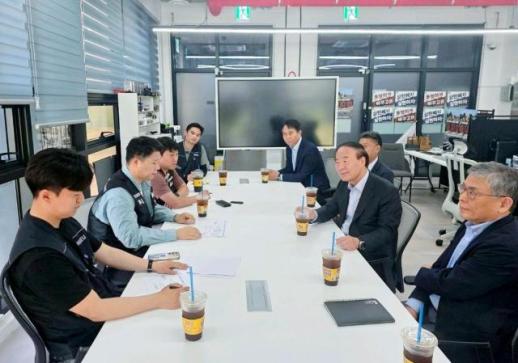 Court Ruling Highlights Tension Between Labor Rights and National Industry A court has intervened in the labor dispute at Samsung Electronics. The Seoul Central District Court recently granted part of Samsung's request for a temporary injunction against the nationwide Samsung Electronics Labor Union, recognizing the need to restrict access to production facilities, occupation of equipment, and safety-threatening actions. While the ruling does not deny the union's right to strike, it is interpreted as drawing a boundary considering the unique nature of critical national industrial facilities. This decision carries implications beyond a simple labor dispute. It brings to the forefront the long-standing issue in South Korean society of balancing labor rights with the protection of national industry. The three labor rights are constitutionally guaranteed. Workers have the right to organize, negotiate, and strike. These rights were established as a minimal safety measure to curb labor exploitation and unilateral management that occurred during the industrialization process. Regardless of a company's size or industrial significance, limiting labor rights solely for these reasons is perilous. If economic logic begins to overshadow labor rights, the balance of society as a whole will inevitably be disrupted. However, the reality cannot be ignored. The semiconductor industry is distinct from general manufacturing. If a production line operating with ultra-fine processes stops or becomes contaminated, it incurs enormous time and cost to restore. Production disruptions do not merely result in losses for specific companies; they can ripple through the global supply chain, exports, the ecosystem of partner companies, and even national credibility. Especially in the context of the U.S., China, and Taiwan competing for semiconductor dominance amid the rise of artificial intelligence (AI), any instability in South Korea's production base could directly weaken its industrial competitiveness. The problem is that recent trends in South Korean society are increasingly pushing these two values into extreme conflict. When labor rights are mentioned, an 'anti-business' frame often emerges, while discussions of industrial competitiveness immediately provoke accusations of 'labor repression.' When either side is approached as an absolute good, practical solutions vanish. The court's ruling is significant because it does not prohibit strikes while simultaneously asserting the need to protect the safety and production stability of critical national industrial facilities. It conveys the message that while labor rights must be respected, occupation of industrial facilities or safety threats cannot be justified. Conversely, companies must also recognize that they cannot unconditionally suppress union demands under the guise of being a 'national industry.' Criticism of Samsung's past no-union management and rigid organizational culture still exists. Complaints from employees regarding performance bonuses and compensation systems have also accumulated. What is needed now is not an escalation of legal battles and power struggles, but a restoration of trust. Unions must view industrial realities with a clear perspective, and companies need to be more proactive in persuading employees and enhancing transparency in compensation systems. An industry cannot exist without labor, and if the industry collapses, labor cannot be secure either. The South Korean economy currently stands at the center of a massive wave of global supply chain restructuring and technological competition. In this reality, what is necessary is not a clash of strengths but a sustainable order of coexistence. The court's recent intervention prompts a reconsideration of this uncomfortable yet unavoidable balance point. 2026-05-19 08:58:04
 -
![[AJP Spiritual Asia ①] Why humanity must rediscover Asias spiritual heritage in age of AI](https://image.ajunews.com//content/image/2026/05/19/20260519085412753175_518_323.png) [[AJP Spiritual Asia ①]] Why humanity must rediscover Asia's spiritual heritage in age of AI A Grand Asian Journey Toward Civilization, Religion, Humanity and the Future Humanity in the 21st century stands at the threshold of a profound civilizational transformation. Artificial intelligence has begun to learn human language and patterns of thought. Robots and algorithms are steadily replacing large portions of human labor and judgment. Never before has mankind enjoyed such material abundance, and yet never before has it entered such a deep psychological unease. Economies continue to expand, but communities weaken. Technology advances at astonishing speed, yet human sensitivity and moral depth appear increasingly fragile. Across the world, a quiet anxiety is spreading — the fear that while civilization grows more sophisticated, humanity itself may be gradually diminishing. Wars have not disappeared. In the Middle East and Eastern Europe, human lives are still collapsing under the weight of violence and geopolitical conflict. Climate change and ecological destruction now threaten the stability of civilization itself. Extremism, hatred, isolation and depression spread across both developed and developing societies alike. At this point, humanity is returning once more to its oldest questions. What is a human being? Where does civilization go after technology? How can the value of life and the human soul be preserved? And increasingly, the world is turning its eyes back toward Asia. Asia is not merely the factory of the world, nor simply a vast economic marketplace. Asia is one of the great spiritual birthplaces of human civilization. Across this continent, over thousands of years, human beings explored the relationship between humanity and the cosmos, nature and community, heaven and life itself. Hinduism, Buddhism, Confucianism, Taoism and Islam, together with Korea’s indigenous traditions such as Cheondoism , Daejonggyo, Won Buddhism and Jeungsanism, all emerged from a shared civilizational effort to understand the meaning of life, the order of nature and the place of humanity within the universe. It is within this intellectual and spiritual context that Aju Korea Daily and ajupress.com launch the series Spiritual Asia. This is not merely a series introducing religions. It is a civilizational and humanistic project that asks where humanity itself should move in the age after artificial intelligence. More importantly, it seeks to reinterpret Asia’s spiritual heritage in the language of the present and connect it to the future of global civilization. Much of today’s global media remains dominated by politics, markets, war and power. Yet human beings do not live by economics alone. Humanity searches for meaning, asks why life exists, and wonders what lies beyond death. Ultimately, civilization is defined by what human beings choose to regard as sacred. And for centuries, Asia’s religions and philosophies have explored questions of life, harmony, community and the inner world of the human spirit. Hinduism Hinduism is among the oldest living religions in human history. Built upon the Vedas and the Upanishads, Hindu philosophy contains a profound insight: that the origin of humanity and the universe is ultimately one. Brahman represents the supreme cosmic principle, while Atman refers to the soul within the individual. The famous idea that “Atman is Brahman” expresses a worldview in which humanity and the cosmos are fundamentally inseparable. The concepts of reincarnation and karma understand life not as a single isolated event, but as part of a vast cosmic process. The worldwide spread of yoga and meditation culture today is deeply connected to the spiritual depth of Hindu civilization. Buddhism Buddhism began in the sixth century BCE with the enlightenment of Siddhartha Gautama. At its core lies the belief that human suffering originates from greed and attachment. The Four Noble Truths, the Noble Eightfold Path, compassion and the Middle Way evolved into far more than religious doctrines; they became an enduring philosophy for healing the human mind. Buddhism spread from India across China, Korea, Japan and Southeast Asia, becoming one of Asia’s great civilizational pillars. In modern times, Zen Buddhism has deeply influenced Western psychology, spirituality and meditation culture. As the age of AI deepens, Buddhist ideas such as mindfulness and compassion are once again emerging as important alternatives for restoring humanity. Confucianism Confucianism developed from the teachings of Confucius and became the ethical foundation of East Asian civilization. Its core values are benevolence, ritual propriety, filial duty and communal order. Confucianism is less a religion in the conventional sense than a philosophy of how to build a humane society. Human beings, it teaches, exist not in isolation but within relationships. Confucian ideals profoundly shaped the political and educational systems of Korea, China and Japan. Even today, traces of Confucian tradition remain deeply embedded within Korean society’s emphasis on education, family and collective responsibility. Taoism Taoism emerged from the philosophies of Laozi and Zhuangzi and centers on harmony with nature. Its core principle, wu wei — often translated as “effortless action” or “non-coercive living” — teaches that humanity should not violently resist the natural order of the universe. Taoism profoundly influenced Chinese medicine, martial arts, feng shui and longevity culture. In an era increasingly threatened by climate crisis and ecological collapse, Taoist philosophy is being rediscovered as a possible foundation for a more sustainable civilization. Islam Islam began in the Middle East, but in many respects it became one of Asia’s great civilizational systems. Stretching across the Middle East, Central Asia, India and Southeast Asia, Islamic civilization formed a vast intellectual and cultural network. At its heart lies humility before one God. The Qur’an emphasizes justice, communal responsibility, charity and restraint. During the medieval period, Islamic civilization achieved extraordinary advances in mathematics, astronomy, medicine and philosophy, helping shape the intellectual foundations of the later European Renaissance. To reduce Islam merely to images of conflict is to misunderstand one of the world’s deepest spiritual traditions. Cheondoism Cheondoism emerged from Korea’s Donghak movement and became a major spiritual force within modern Korean history. Its central teaching — “Human beings are Heaven” — affirms the sacred dignity of every person. This philosophy became one of the moral foundations of Korea’s democratic and popular movements. The Donghak Peasant Revolution itself was not simply a rural uprising, but a profound cry for human equality and dignity. Daejonggyo Daejonggyo, centered on the spirit of Dangun and the philosophy of Hongik Ingan — “to broadly benefit humanity” — became deeply connected to Korea’s independence movement during Japanese colonial rule. Its spiritual nationalism remains an important moral legacy within Korean society. Won Buddhism Won Buddhism sought to reinterpret Buddhist philosophy for the modern industrial age. Founded by Sotaesan Park Jung-bin, it emphasized spiritual cultivation within everyday life and sought harmony between material progress and spiritual awakening. In many ways, it represented one of Korea’s earliest efforts to reconcile religion with modernity. Jeungsanism Jeungsanism developed around the teachings of Kang Jeungsan and emphasized the philosophy of sangsaeng — mutual life-giving coexistence. It teaches that humanity, nature and the spiritual world are deeply interconnected. In a time increasingly defined by conflict and competition, its philosophy of coexistence has gained renewed relevance. Shinto Shinto, Japan’s indigenous faith, believes that spiritual presence resides within mountains, rivers, trees and ancestors. Japan’s aesthetic sensitivity toward nature and communal harmony remains deeply shaped by Shinto tradition. Sikhism Sikhism, born in India’s Punjab region, emphasizes equality, labor and communal service. Sikhs are renowned for their discipline, solidarity and humanitarian spirit, and continue to play important roles within global Indian diaspora communities. Zoroastrianism Zoroastrianism, which originated in ancient Persia, developed a worldview centered on the struggle between light and darkness, good and evil. Though small in numbers today, it exerted significant influence upon later Abrahamic traditions including Judaism, Christianity and Islam. Despite their differences, Asia’s religions and philosophies share a common insight: human beings are not merely material entities. Humanity is connected to the cosmos, and life exists within relationships rather than isolation. Korean philosopher Ryu Young-mo explored Eastern and Western religions deeply and often remarked, “Truth is one, though the paths are many.” He did not place the Bible against Buddhist sutras, nor Laozi against Confucius, nor Jesus against the Buddha. Rather, he believed that humanity, life and truth ultimately flow from the same great source. This perspective also resonates with Korea’s ancient philosophy of Cheon-Ji-In — Heaven, Earth and Humanity — which understands the universe as an interconnected living order. Today, the world once again stands at a civilizational crossroads. Artificial intelligence and technological revolution may make life more efficient and convenient. Yet technology alone cannot heal loneliness, hatred, war or greed. That is why humanity has begun searching once again for spirituality. And at the center of that search stands the ancient wisdom of Asia. Spiritual Asia is not a series about old religions. It is a civilizational project asking why human beings must remain human in the age after artificial intelligence. And ultimately, this is not merely Asia’s question. It is humanity’s question. 2026-05-19 08:57:53
[[AJP Spiritual Asia ①]] Why humanity must rediscover Asia's spiritual heritage in age of AI A Grand Asian Journey Toward Civilization, Religion, Humanity and the Future Humanity in the 21st century stands at the threshold of a profound civilizational transformation. Artificial intelligence has begun to learn human language and patterns of thought. Robots and algorithms are steadily replacing large portions of human labor and judgment. Never before has mankind enjoyed such material abundance, and yet never before has it entered such a deep psychological unease. Economies continue to expand, but communities weaken. Technology advances at astonishing speed, yet human sensitivity and moral depth appear increasingly fragile. Across the world, a quiet anxiety is spreading — the fear that while civilization grows more sophisticated, humanity itself may be gradually diminishing. Wars have not disappeared. In the Middle East and Eastern Europe, human lives are still collapsing under the weight of violence and geopolitical conflict. Climate change and ecological destruction now threaten the stability of civilization itself. Extremism, hatred, isolation and depression spread across both developed and developing societies alike. At this point, humanity is returning once more to its oldest questions. What is a human being? Where does civilization go after technology? How can the value of life and the human soul be preserved? And increasingly, the world is turning its eyes back toward Asia. Asia is not merely the factory of the world, nor simply a vast economic marketplace. Asia is one of the great spiritual birthplaces of human civilization. Across this continent, over thousands of years, human beings explored the relationship between humanity and the cosmos, nature and community, heaven and life itself. Hinduism, Buddhism, Confucianism, Taoism and Islam, together with Korea’s indigenous traditions such as Cheondoism , Daejonggyo, Won Buddhism and Jeungsanism, all emerged from a shared civilizational effort to understand the meaning of life, the order of nature and the place of humanity within the universe. It is within this intellectual and spiritual context that Aju Korea Daily and ajupress.com launch the series Spiritual Asia. This is not merely a series introducing religions. It is a civilizational and humanistic project that asks where humanity itself should move in the age after artificial intelligence. More importantly, it seeks to reinterpret Asia’s spiritual heritage in the language of the present and connect it to the future of global civilization. Much of today’s global media remains dominated by politics, markets, war and power. Yet human beings do not live by economics alone. Humanity searches for meaning, asks why life exists, and wonders what lies beyond death. Ultimately, civilization is defined by what human beings choose to regard as sacred. And for centuries, Asia’s religions and philosophies have explored questions of life, harmony, community and the inner world of the human spirit. Hinduism Hinduism is among the oldest living religions in human history. Built upon the Vedas and the Upanishads, Hindu philosophy contains a profound insight: that the origin of humanity and the universe is ultimately one. Brahman represents the supreme cosmic principle, while Atman refers to the soul within the individual. The famous idea that “Atman is Brahman” expresses a worldview in which humanity and the cosmos are fundamentally inseparable. The concepts of reincarnation and karma understand life not as a single isolated event, but as part of a vast cosmic process. The worldwide spread of yoga and meditation culture today is deeply connected to the spiritual depth of Hindu civilization. Buddhism Buddhism began in the sixth century BCE with the enlightenment of Siddhartha Gautama. At its core lies the belief that human suffering originates from greed and attachment. The Four Noble Truths, the Noble Eightfold Path, compassion and the Middle Way evolved into far more than religious doctrines; they became an enduring philosophy for healing the human mind. Buddhism spread from India across China, Korea, Japan and Southeast Asia, becoming one of Asia’s great civilizational pillars. In modern times, Zen Buddhism has deeply influenced Western psychology, spirituality and meditation culture. As the age of AI deepens, Buddhist ideas such as mindfulness and compassion are once again emerging as important alternatives for restoring humanity. Confucianism Confucianism developed from the teachings of Confucius and became the ethical foundation of East Asian civilization. Its core values are benevolence, ritual propriety, filial duty and communal order. Confucianism is less a religion in the conventional sense than a philosophy of how to build a humane society. Human beings, it teaches, exist not in isolation but within relationships. Confucian ideals profoundly shaped the political and educational systems of Korea, China and Japan. Even today, traces of Confucian tradition remain deeply embedded within Korean society’s emphasis on education, family and collective responsibility. Taoism Taoism emerged from the philosophies of Laozi and Zhuangzi and centers on harmony with nature. Its core principle, wu wei — often translated as “effortless action” or “non-coercive living” — teaches that humanity should not violently resist the natural order of the universe. Taoism profoundly influenced Chinese medicine, martial arts, feng shui and longevity culture. In an era increasingly threatened by climate crisis and ecological collapse, Taoist philosophy is being rediscovered as a possible foundation for a more sustainable civilization. Islam Islam began in the Middle East, but in many respects it became one of Asia’s great civilizational systems. Stretching across the Middle East, Central Asia, India and Southeast Asia, Islamic civilization formed a vast intellectual and cultural network. At its heart lies humility before one God. The Qur’an emphasizes justice, communal responsibility, charity and restraint. During the medieval period, Islamic civilization achieved extraordinary advances in mathematics, astronomy, medicine and philosophy, helping shape the intellectual foundations of the later European Renaissance. To reduce Islam merely to images of conflict is to misunderstand one of the world’s deepest spiritual traditions. Cheondoism Cheondoism emerged from Korea’s Donghak movement and became a major spiritual force within modern Korean history. Its central teaching — “Human beings are Heaven” — affirms the sacred dignity of every person. This philosophy became one of the moral foundations of Korea’s democratic and popular movements. The Donghak Peasant Revolution itself was not simply a rural uprising, but a profound cry for human equality and dignity. Daejonggyo Daejonggyo, centered on the spirit of Dangun and the philosophy of Hongik Ingan — “to broadly benefit humanity” — became deeply connected to Korea’s independence movement during Japanese colonial rule. Its spiritual nationalism remains an important moral legacy within Korean society. Won Buddhism Won Buddhism sought to reinterpret Buddhist philosophy for the modern industrial age. Founded by Sotaesan Park Jung-bin, it emphasized spiritual cultivation within everyday life and sought harmony between material progress and spiritual awakening. In many ways, it represented one of Korea’s earliest efforts to reconcile religion with modernity. Jeungsanism Jeungsanism developed around the teachings of Kang Jeungsan and emphasized the philosophy of sangsaeng — mutual life-giving coexistence. It teaches that humanity, nature and the spiritual world are deeply interconnected. In a time increasingly defined by conflict and competition, its philosophy of coexistence has gained renewed relevance. Shinto Shinto, Japan’s indigenous faith, believes that spiritual presence resides within mountains, rivers, trees and ancestors. Japan’s aesthetic sensitivity toward nature and communal harmony remains deeply shaped by Shinto tradition. Sikhism Sikhism, born in India’s Punjab region, emphasizes equality, labor and communal service. Sikhs are renowned for their discipline, solidarity and humanitarian spirit, and continue to play important roles within global Indian diaspora communities. Zoroastrianism Zoroastrianism, which originated in ancient Persia, developed a worldview centered on the struggle between light and darkness, good and evil. Though small in numbers today, it exerted significant influence upon later Abrahamic traditions including Judaism, Christianity and Islam. Despite their differences, Asia’s religions and philosophies share a common insight: human beings are not merely material entities. Humanity is connected to the cosmos, and life exists within relationships rather than isolation. Korean philosopher Ryu Young-mo explored Eastern and Western religions deeply and often remarked, “Truth is one, though the paths are many.” He did not place the Bible against Buddhist sutras, nor Laozi against Confucius, nor Jesus against the Buddha. Rather, he believed that humanity, life and truth ultimately flow from the same great source. This perspective also resonates with Korea’s ancient philosophy of Cheon-Ji-In — Heaven, Earth and Humanity — which understands the universe as an interconnected living order. Today, the world once again stands at a civilizational crossroads. Artificial intelligence and technological revolution may make life more efficient and convenient. Yet technology alone cannot heal loneliness, hatred, war or greed. That is why humanity has begun searching once again for spirituality. And at the center of that search stands the ancient wisdom of Asia. Spiritual Asia is not a series about old religions. It is a civilizational project asking why human beings must remain human in the age after artificial intelligence. And ultimately, this is not merely Asia’s question. It is humanity’s question. 2026-05-19 08:57:53 -
 SK Securities Raises Target Price for SK Square Reflecting Hynix Stake Value SK Securities announced on May 19 that it has raised the target price for SK Square to 1.45 million won while maintaining its investment rating at 'Buy.' This adjustment reflects an increase in equity method income from SK Hynix and the potential rise in stake value. Choi Kwan-soon, a researcher at SK Securities, stated, "SK Square's consolidated operating profit for the first quarter reached 8.3 trillion won, marking the highest quarterly performance on record. This was significantly influenced by the increase in equity method income from SK Hynix." He further noted, "Last year's net profit for SK Hynix was approximately 42.9 trillion won, but it is expected to expand to 205 trillion won this year, which is anticipated to drive improvements in SK Square's consolidated performance." Choi also highlighted the strong correlation between SK Square's stock price and that of SK Hynix. He remarked, "Currently, 98.6% of SK Square's stake value is tied to SK Hynix, and SK Square's 52-week beta is higher than that of SK Hynix, indicating that it tends to experience greater stock price increases during periods of rising SK Hynix shares." Additionally, he mentioned, "As SK Hynix's market capitalization increases, institutional investors' demand for SK Square is likely to rise due to regulations on single-stock holdings. This is a key reason why SK Square exhibits a higher beta compared to SK Hynix." Moreover, he suggested that during the process of promoting overseas depositary receipts, SK Square is likely to maintain a stake of over 20% in SK Hynix to preserve its influence. He concluded that if further stock price increases for SK Hynix are anticipated, expanding SK Square's stake would be a viable strategy. * This article has been translated by AI. 2026-05-19 08:55:50
 -
 CJ Group Employee Data Breach Highlights Corporate Security Vulnerabilities The recent data breach at CJ Group, involving the personal information of over 330 female employees, is a serious issue that cannot be dismissed as a mere internal incident. The exposure of phone numbers, job titles, internal phone numbers, and photographs on a Telegram channel underscores the structural vulnerabilities in corporate security. Notably, the leaked information matches what is accessible on the company intranet, suggesting a greater likelihood of internal leakage rather than external hacking. The essence of this incident is not 'intrusion' but 'leakage.' Corporate security has traditionally focused on blocking external attacks. However, when insiders exploit their access rights to extract information, existing security systems become ineffective. The Telegram channel in question was created in 2023 and reportedly has around 2,800 members, indicating that this was not a sudden incident but rather a situation that may have been neglected over time. The nature of the leaked information is serious, as it includes identifiable contact details, photographs, and job titles, raising the potential for secondary victimization. There is a risk of spam, voice phishing, and even targeted crimes against specific individuals. The fact that the information of female employees was particularly exposed adds another layer of social concern. Data breaches are not merely data incidents; they directly impact personal safety. This incident reveals that South Korean companies still primarily focus on 'external threats' in their security awareness. While large corporations have invested heavily in firewalls and security systems, they often remain vulnerable in terms of internal access control and anomaly detection. Employees typically have broad access to information, yet monitoring and controlling who views what information is often only nominally enforced. This incident can be seen as a case that exploited such structural weaknesses. Corporate responses must also be more specific and effective. The company has stated it is preparing an investigation and has requested a probe, but urgent measures to prevent further victimization must take precedence. Rapidly closing the leak and shutting down related accounts is essential. Additionally, practical support for affected employees—such as monitoring services, legal consultations, and reporting assistance—should follow. A simple apology or investigation is insufficient to fulfill their responsibilities. More fundamental improvements are necessary. First, the 'principle of least privilege' should be reinforced, ensuring employees only access information necessary for their work. Second, systems to detect mass queries or abnormal access in real-time must be established. Third, internal security training and ethical awareness should be systematically strengthened. Without a change in organizational culture alongside technical measures, similar issues are likely to recur. The role of investigative authorities is also crucial. Platforms like Telegram, which rely on anonymity and overseas servers, make tracking difficult. Nevertheless, given the clear signs of internal leakage, a swift and rigorous investigation is needed. It is essential to determine whether this was an individual act or involved organizational complicity. If effective penalties are not ensured, similar crimes are likely to continue. This incident serves as a reminder that data protection is not just a management issue but a fundamental aspect of corporate trust. Data is a corporate asset but also sensitive information directly related to individuals' lives. Failure to manage it properly shifts the burden of harm onto individuals. Ultimately, this situation is not just a problem for CJ Group; it represents a structural risk faced by all companies. Unless security is recognized as a matter of survival rather than a cost, similar incidents could occur again. Ignoring the warning lights now could lead to far greater consequences.* This article has been translated by AI. 2026-05-19 08:52:37
 -
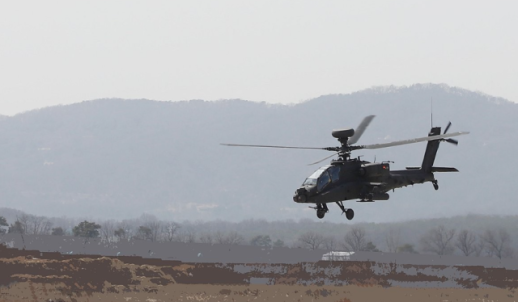 Trump Administration Approves $4.2 Billion Sale of Helicopters and Apache Upgrades to South Korea The Trump administration has approved the sale of military equipment to South Korea, including multi-role helicopters and upgrades for Apache helicopters, totaling $4.2 billion (approximately 6.3 trillion won). On May 18, the U.S. Department of State's Bureau of Political-Military Affairs announced on its website that it had approved a Foreign Military Sales (FMS) request from the South Korean government for 24 MH-60R multi-role helicopters and related weapons and equipment. The estimated cost of this sale is $3 billion. The sale includes 24 MH-60R helicopters, 24 airborne low-frequency sonars, eight M240D 7.62mm machine guns, AN/ALQ-210 electronic support measures, APS-153(V) multi-mode radars, night vision devices, missile warning systems, electronic countermeasures, spare and repair parts, and technical and logistical support. The State Department stated that this sale will enhance the South Korean Navy's multi-role helicopter capabilities and provide a reliable force to deter hostile actors, thereby improving South Korea's ability to respond to current and future threats. Additionally, the State Department approved an FMS for an $1.2 billion AH-64E Apache upgrade program. South Korea requested eight AN/APG-78 fire control radar mast assemblies, eight Longbow fire control radar electronic units, and 40 AN/ARC-231A ultra-high frequency radios. The Apache upgrade program includes small tactical terminals with Link 16 capability, a common missile warning system, manned-unmanned integrated systems, enhanced image intensifier cameras, communication and navigation equipment, software support, and training equipment. The State Department emphasized that this sale will strengthen the South Korean Army's attack helicopter capabilities and provide a reliable force to deter hostile actors, enhancing South Korea's ability to respond to current and future threats. It also highlighted that improving the security of key allies, which are important forces for political stability and economic progress in the Indo-Pacific region, supports U.S. diplomatic and national security goals. The department added that this equipment and support sale proposal will not alter the fundamental military balance in the region and will not negatively impact U.S. defense readiness.* This article has been translated by AI. 2026-05-19 08:51:50
 -
 I.O.I and Xikers Release New Albums Today, Marking Their Comeback Group I.O.I and Xikers are making their return to the music scene today, releasing new albums simultaneously. I.O.I will release their mini-album 'I.O.I: LOOP' at 6 PM on various online music platforms. This marks the group's first new album in nearly nine years. Members Lim Nayoung, Chungha, Kim Sejeong, Jung Chaeyeon, Kim Sohye, Yoo Younjeong, Choi Yoojung, Kim Doyeon, and Jeon Somi have combined their musical talents to create a complete album. The title track 'Suddenly' is a synth-pop song that captures the unexpected feelings of nostalgia and memories. Jeon Somi contributed to the lyrics, reflecting on the emotions of reconnecting with past relationships. The dreamy outro enhances the song's lingering effect. The album also features contributions from the members. 'I.O.I (Where My Girls At)', co-written and co-composed by Jeon Somi, showcases the group's signature refreshing energy over house rhythms. 'SPF 100+ (Summer Pop Fantasy)' is an Afrobeats track that expresses rekindled emotions through summer imagery. 'If I', written and composed by Yoo Younjeong, features a rock-based sound that encapsulates a decade-long relationship, while 'Back Then, Us Now', penned by Chungha, serves as a response to their previous song 'Shower'. Additionally, the album includes the pre-released track 'Goodbye with a Smile (Recorded in 2016)', produced by Jin Young, bridging I.O.I's past and present. Following the album release, I.O.I will hold a solo concert titled '2026 I.O.I Concert Tour: LOOP' from May 29 to 31 at the Jamsil Indoor Stadium in Seoul, where they will meet with fans. Xikers is also making a comeback today with their new album. They will release their mini-album 'ROUTE ZERO: The ORA' at 6 PM. This album marks the beginning of a new series following the conclusion of their 'HOUSE OF TRICKY' series, which has spanned two years and seven months since their debut. 'ROUTE ZERO: The ORA' captures Xikers' first encounter with the world beyond Tricky House. The title track 'OKay' embodies the group's bold energy as they strive to break free from societal norms. The album includes five tracks, featuring 'Ghost Rider', 'Graffiti', 'Trophy', and 'Outsider', alongside the title track. Members Minjae, Sumin, and Yechan contributed to the lyrics for all songs, infusing the album with the group's unique style. Xikers will hold a comeback showcase at 8 PM today at the NOL Theater in Mapo-gu, Seoul, where they will perform their new songs. They will also host their second fan meeting 'roadymap to univerxity' on June 27 at the Ticketlink 1975 Theater in Seoul and on July 31 at Zepp Haneda in Tokyo. With I.O.I returning as a full group after nearly nine years and Xikers launching a new series, the music industry is set to heat up with their simultaneous album releases today.* This article has been translated by AI. 2026-05-19 08:49:10
 -
 LS Securities Maintains Daewoo Engineering's Target Price at 45,000 Won LS Securities on May 19 expressed a positive outlook for Daewoo Engineering, citing its competitiveness in nuclear power and LNG, and maintained a target price of 45,000 won with an investment recommendation of 'buy.' Kim Se-ryun, a researcher at LS Securities, stated, "We are estimating the target price based on a sum-of-the-parts (SOTP) valuation, assuming long-term revenue generation from Daewoo Engineering's Team Korea order pipeline, divided into nuclear power and plant and construction sectors." He further analyzed that, assuming a gradual revenue realization from the Team Korea nuclear pipeline, Daewoo Engineering's peak revenue from nuclear power is projected for 2033. According to LS Securities, Daewoo Engineering reported an operating profit of 255.6 billion won in the first quarter, marking a 68.9% increase compared to the same period last year, significantly exceeding the consensus estimate of 116.5 billion won by 119.4%. Kim noted, "The significant turnaround in profits this quarter is primarily due to reflecting a big bath across all business units, including delays and write-offs from unsold properties at the end of last year." He added, "While one-time gains from settlement profits and scheduled cost adjustments also played a role, the rapid turnaround in margins for the housing and plant sectors is encouraging, indicating a recovery in profit strength. We expect strong performance to continue as we monitor margin recovery throughout the year." Kim also highlighted the potential for Team Korea's orders, stating, "With the expected construction contract for Daewoo Engineering's Dukovany nuclear power plant in the Czech Republic, the possibility of securing orders for the second phase of the Ninh Thuan nuclear power plant in Vietnam presents significant momentum for Daewoo Engineering." Additionally, he mentioned, "We are aiming for further orders in global LNG projects in Papua New Guinea, which is significant for enhancing expectations for entering the North American market, including Alaska LNG."* This article has been translated by AI. 2026-05-19 08:46:20
 -
 Samsung Securities Raises Target Price for Hansol Chemical Amid Growth Prospects Samsung Securities evaluated on May 19 that Hansol Chemical's long-term growth visibility is improving, driven by the expansion of hydrogen peroxide production and growth in precursor sales. As a result, the firm raised its target price by 31.5% to 420,000 won while maintaining a 'buy' rating. Lee Jong-wook, a researcher at Samsung Securities, stated in a report that the 25% increase in hydrogen peroxide capacity will provide additional growth momentum for the stock through 2028. He also noted, "We are adjusting our operating profit estimates for this year and 2027 upward by 1% and 21%, respectively," adding that profits from precursors, particularly trisilylamine (TSA), are expected to grow by 31% this year and 18% in 2027, driving overall profit growth. Furthermore, he remarked that recovery is beginning to show in previously sluggish applications such as battery binders and tape. In the first quarter of this year, the company reported sales of 231.9 billion won, an 11% increase from the previous year, while operating profit rose 7% to 44.4 billion won. Although sales met expectations, operating profit fell short of consensus by 8.5% due to rising raw material and transportation costs linked to oil price increases, as well as underperformance in quantum dot (QD) materials. However, Lee pointed out that the company's semiconductor-related sales and profitability from hydrogen peroxide and precursors remain robust, and sales of battery binders are returning to normal levels. He anticipates that the increase in raw material costs due to rising oil prices will be passed on to consumers starting in the second quarter, leading to a recovery in profitability to normal levels thereafter.* This article has been translated by AI. 2026-05-19 08:43:16
 -
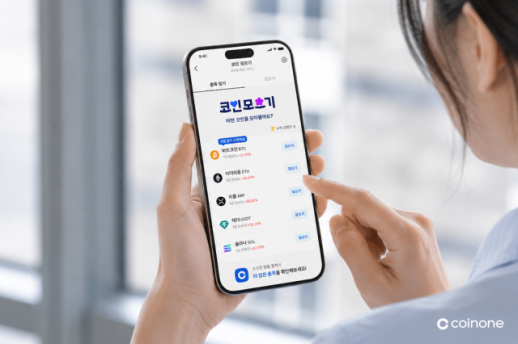 Coinone Launches 'Coin Collecting' Service via KakaoBank Coinone announced on May 19 that it will offer its savings investment service, 'Coin Collecting,' through the KakaoBank app.Coinone transitioned its real-name account partnership from NH Nonghyup Bank to KakaoBank in August 2022 and has renewed the contract annually since then. Customers of Coinone with KakaoBank accounts can now conveniently access the Coin Collecting service.Coin Collecting is an automated order service that allows customers to purchase virtual assets on designated dates based on their chosen asset, frequency, and amount. This service aims to reduce the burden of short-term price fluctuations while pursuing stable long-term returns. Since its launch in December of last year, the service has surpassed 40,000 users.Users can set up their collection rules directly within the KakaoBank app without needing to switch between platforms, and they can monitor their returns in real-time. A total of ten types of virtual assets are supported, and each user can apply for up to 20 collections. The minimum investment amount per collection is 5,000 won, while the maximum is 5 million won.Cha Myung-hoon, CEO of Coinone, stated, "We have launched this service in collaboration with KakaoBank to enhance user experience and attract new customers. We aim to combine Coinone's expertise in the virtual asset sector with the strengths of KakaoBank, which has over 20 million users, to showcase diverse collaborations moving forward." 2026-05-19 08:38:52
 -
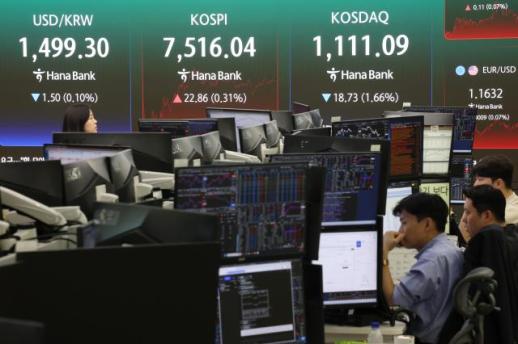 Market Preview: U.S. Stocks Mixed Amid Tech Profit-Taking and Stalled Peace Talks U.S. stock indices closed mixed amid geopolitical risks in the Middle East and a sharp decline in semiconductor stocks, suggesting that the domestic market may enter a phase of increased short-term volatility. Following the KOSPI's historic breach of the 8000 mark, analysts note that profit-taking and concerns over Nvidia's earnings could limit the index's upward potential. On May 18, the Dow Jones Industrial Average rose 0.32%, while the S&P 500 fell 0.07% and the Nasdaq dropped 0.51%. The Philadelphia Semiconductor Index plummeted 2.47%. The market experienced significant fluctuations early in the session due to Middle Eastern risks, interest rate pressures, and profit-taking in tech stocks. However, President Donald Trump’s announcement to postpone military action against Iran helped ease the surge in U.S. Treasury yields, which in turn reduced the market's losses. Sector-wise, weakness in technology stocks, particularly semiconductors, was prominent. Seagate's CEO highlighted at the JP Morgan conference that significant time is needed for new factories and equipment expansions, raising concerns about memory supply bottlenecks. Consequently, Seagate shares fell 6.87%, while Micron dropped 5.95%. SanDisk also declined by over 5%, reflecting widespread profit-taking in memory-related stocks. Additionally, President Trump’s ambiguous messaging regarding Taiwan's defense during U.S.-China summit discussions has heightened concerns over the semiconductor supply chain. As pressures mount on semiconductor stocks, which had surged recently due to expectations of increased AI demand, investor sentiment in domestic semiconductor stocks may also be affected. Despite the Nasdaq's sharp decline and rising U.S. Treasury yields on May 18, the domestic market showed relative resilience, recovering from early losses. The KOSPI dipped to around 7100 but closed at 7516.04, up 0.31%, bolstered by easing labor disputes at Samsung Electronics and an influx of bargain-hunting. In contrast, the KOSDAQ index fell 1.66% to 1111.09. In the securities market, institutions and individuals net bought 1.39 trillion won and 2.21 trillion won, respectively, while foreigners net sold 3.65 trillion won. Samsung Electronics rose 3.88% following news that a court partially granted an injunction against illegal union activities, and SK Hynix increased by 1.15%. The electrical and electronics sector rose 2.01%, contributing to the index's rebound. However, forecasts suggest that the domestic market may experience increased volatility centered around semiconductors due to the impact of the U.S. semiconductor stock decline. The MSCI Korea ETF fell 1.54%, and KOSPI night futures dropped 1.88%. The dollar-won exchange rate closed at 1500.30 won in the Seoul foreign exchange market before falling to 1492.90 won in after-hours trading. Market observers are noting that the KOSPI's recent rapid ascent has been excessive. The KOSPI took only eight trading days to surpass the 8000 mark after breaking through the 7000 level on May 15. Given the unusually swift rise, there is a growing desire for short-term profit-taking. Han Ji-young, a researcher at Kiwoom Securities, stated, "The market is currently sensitive to external factors such as rising U.S. 10-year Treasury yields and Middle Eastern risks, but fundamentally, the pressure from the speed of the KOSPI's rise is more significant after breaching the 8000 mark. We may frequently see increased intraday volatility for the time being." Nevertheless, analysts largely view this adjustment as a process of speed regulation rather than a trend disruption. The KOSPI's 12-month forward price-to-earnings ratio (PER) stands at 8.1, which is not significantly burdensome compared to historical averages, and corporate profit momentum is improving. In fact, the KOSPI's 12-month forward earnings growth rate increased from 197% year-on-year in April to 214% in May. Upcoming major events this week are expected to influence market direction. The Google I/O 2026 annual developer conference on May 19-20 and Nvidia's earnings announcement on May 21 are notable examples. If expectations for increased AI investment are reignited, the sentiment for recently adjusted semiconductor stocks could recover quickly. Kim Ji-hyun, a researcher at Daol Investment & Securities, commented, "While profit-taking is occurring in tech stocks, the rotation within sectors is a positive sign. Although uncertainties remain regarding U.S.-Iran negotiations and interest rate pressures, the market continues to focus on earnings and AI growth potential." Sung Han-young, a researcher at LS Securities, noted, "Global investment firms like Oppenheimer and UBS maintain that the long-term growth potential of AI semiconductors remains intact, but short-term, a portfolio strategy incorporating defensive sectors such as utilities, telecommunications, and pharmaceuticals is necessary." While acknowledging the potential for increased volatility due to recent rapid gains, analysts advise that a strategy of gradual buying during corrections is more effective than reducing exposure to leading stocks. In particular, concerns about supply bottlenecks in the semiconductor sector may actually enhance pricing power, indicating that the trend of improving long-term performance remains valid.* This article has been translated by AI. 2026-05-19 08:37:40