
Journalist

David McMillan
-
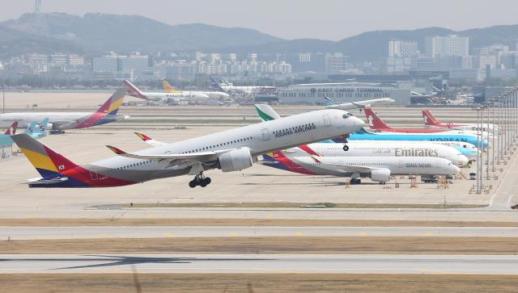 Korean Air and Asiana Airlines Finalize Merger Agreement Ahead of December Launch Korean Air has officially confirmed its merger with Asiana Airlines, setting the launch date for the new integrated airline for December 17. While the framework for the merger is in place, significant challenges remain, including the integration of mileage programs, adjustments to seniority, and internal organizational restructuring. With approximately seven months until the launch, last-minute complications related to stakeholder interests are expected.According to industry sources, Korean Air and Asiana Airlines signed the merger agreement on May 14, marking the conclusion of a process that began with the resolution to acquire Asiana Airlines on November 16, 2020.Korean Air has been progressing through the absorption merger process, including a 300 billion won investment in new shares of Asiana Airlines. The merger has received approval from the Korean Fair Trade Commission and 13 foreign competition authorities over a three-year period. In December 2024, Korean Air acquired a 63.88% stake in Asiana Airlines.This merger agreement represents the final stage of the integration process. As the year-end launch approaches, Korean Air has submitted a request for merger approval to the Ministry of Land, Infrastructure and Transport immediately following the signing. In June, the airline plans to apply for approval of changes to operational standards that include safety compliance conditions and restrictions.Asiana Airlines is scheduled to hold an extraordinary shareholders' meeting on August 12 to vote on the merger proposal. An industry insider stated, "Given the lengthy integration process, the merger proposal is expected to pass without issues at the shareholders' meeting, marking the final hurdle for the launch of the integrated full-service carrier (FSC)."However, even if these legal procedures are completed, substantial challenges remain before achieving a true integration. Notably, the interests of employees from both airlines are intricately linked and are seen as key variables surrounding the launch of the new airline.One significant issue is the integration of seniority. Pilots, due to the nature of their roles, are particularly sensitive to changes in seniority, which can affect promotion timelines, flight schedules, aircraft types, and work location choices.Regarding seniority adjustments, it has been reported that Korean Air is not currently engaging in separate discussions with the union. No further four-party meetings involving both airlines and the pilots' union have occurred since March. Instead, Korean Air has been conducting HR integration briefings since last month, leading to tensions with the union. Consequently, it is anticipated that achieving harmony among employees and stabilizing the organization will take considerable time even after the physical merger.The integration of mileage programs also remains an outstanding issue. The Fair Trade Commission is currently reviewing the third mileage integration proposal submitted by Korean Air. Previously, the commission rejected two proposals, citing insufficient consumer benefits.An industry insider noted, "Once the FSC integration is completed, the three low-cost carriers (LCCs) will likely begin their integration efforts in the first quarter of next year, with the Korean Air-Asiana Airlines merger process potentially serving as a benchmark for future integrations."* This article has been translated by AI. 2026-05-15 03:06:06
 -
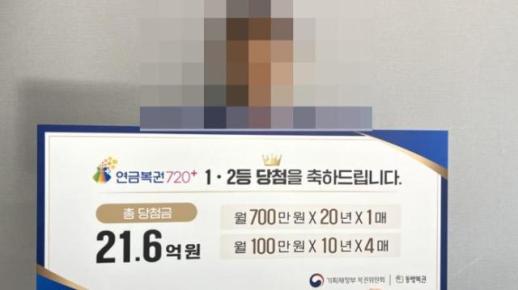 Dream of Crossing a River with Chestnuts in an Apron: 315th Pension Lottery 720+ Winning Numbers Drawn "After winning, I remembered a dream my mother had when she was pregnant with me. She dreamed of crossing a river with chestnuts in her apron." As interest mounts in the winning numbers for the 315th Pension Lottery 720+ on May 14, the story of a winner from the 287th draw has captured public attention. In a recent post on the Donghaeng Lottery winners' board, the winner of one first-place ticket and four second-place tickets from the 287th draw shared, "I usually buy lottery tickets without any special expectations. I think about how the lottery proceeds are used for good causes, so I keep buying them. I purchased the lotto and pension lottery tickets as usual, and a few days later, I checked the QR code at home and was amazed to find I had won both first and second prizes." The winner recalled, "I couldn't believe it and spent 30 minutes verifying the winning numbers on the website. For the next three days, I couldn't sleep because my mind was racing with thoughts." When asked if they had any memorable dreams recently, the winner replied, "I didn't have any special dreams, but after winning, I remembered a dream my mother had when she was pregnant with me. She dreamed of crossing a river with chestnuts in her apron." The winner, who purchased the lottery ticket at a retailer in Cheongsan-myeon, Okcheon-gun, stated, "I usually buy lotto and pension lottery tickets." Regarding plans for the winnings, the winner mentioned, "I still can't believe it, so I haven't made any plans for how to use the prize money yet." Meanwhile, the winning numbers for the 315th Pension Lottery 720+ will be available after 7:05 PM today.* This article has been translated by AI. 2026-05-15 03:04:07
 -
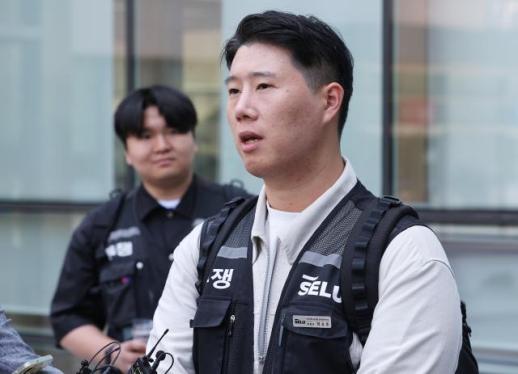 Samsung and Government Urge Return to Negotiations Amid Ongoing Strike The Central Labor Relations Commission has urged Samsung Electronics to return to the negotiating table, but the union is maintaining its stance by insisting on the institutionalization of performance bonuses as a precondition. Analysts suggest that if the union chooses to strike despite the potential for a significant special compensation package, it may find itself at a disadvantage in the public relations battle. On May 14, Samsung Electronics sent a formal letter titled "Proposal for Additional Dialogue Between Labor and Management" to the National Samsung Electronics Labor Union and the inter-company labor union. On the same day, the Central Labor Relations Commission also officially requested the resumption of post-adjustment meetings on May 16. Both the government and the company are calling for a return to negotiations. However, Choi Seung-ho, chairman of the inter-company labor union, stated, "There is no reason to engage in dialogue unless the institutionalization and transparency of performance bonuses are achieved," indicating that the union expects its demands to be met before negotiations can proceed. The union is demanding that 15% of the operating profit be permanently allocated as a performance bonus for the Device Solutions (DS) division and that the current cap on the Operating Profit Incentive (OPI) be eliminated, formalizing these changes into the system. The Central Labor Relations Commission's proposal includes a provision that if the DS division achieves the highest operating profit in the country, 12% of the operating profit would be used for special bonuses in addition to the existing OPI, potentially amounting to around 40 trillion won in total compensation. Nevertheless, the union's rejection of this proposal is largely interpreted as a focus on securing a permanent profit-sharing structure rather than a one-time compensation this year. Industry experts argue that the union's demands extend beyond simple wage negotiations and challenge the very principles of profit distribution within the company. Given that Samsung Electronics operates across various sectors, including semiconductors, foundries, mobile, home appliances, and automotive electronics, fixing the profit distribution structure during a boom in one division could lead to fairness issues among divisions. Concerns have also been raised that repeated demands for fixed distributions during downturns or periods requiring significant preemptive investments could subordinate management decisions to labor negotiations. Samsung Electronics has reportedly entered an emergency management mode in anticipation of a potential strike. Since continuity is crucial in semiconductor processes, any actual production disruptions due to a strike could lead to issues with yield, delivery, and customer trust. Kim Young-hoon, Minister of Employment and Labor, emphasized the urgent need for dialogue, stating, "We must engage in discussions, even if it means staying up all night." As long as the union maintains its preconditions, the likelihood of resuming negotiations remains limited, with less than a week remaining until a general strike is scheduled for May 21.* This article has been translated by AI. 2026-05-15 03:02:15
 -
 Samsung Workers Express Concerns Over Upcoming Strike As a general strike at Samsung Electronics approaches, internal members are expressing growing fatigue regarding the union's demand for the institutionalization of performance-based bonuses. Critics argue that the request to fix a certain percentage of operating profit as a bonus fund and to eliminate the cap on excess profit bonuses (OPI) is excessive, separate from existing grievances about the company's compensation system. On May 13, an employee from a manufacturing company affiliated with the metalworkers' union described the upcoming strike as "quite bizarre." He noted, "We have also made demands during wage negotiations for basic salary increases of around 150,000 won, hundreds of percent in bonuses, retirement extensions, and job security. However, the starting point for negotiations was to determine how to share based on actual results, inflation, and employment instability." He added, "The demand from the Samsung Electronics union to fix a certain percentage of yet-to-be-determined future operating profits as a bonus fund each year is fundamentally different. It sounds like they want to dictate the profit-sharing formula itself, rather than just asking for more bonuses." Colleagues in the same industry are also critical. An employee in the electronics sector remarked, "I often discuss the Samsung Electronics strike with my peers, and many find it ironic that while some are discussing bonuses in the millions of won, they are resorting to a strike again." Another employee recalled, "I remember choosing not to join Samsung Electronics due to workplace preferences, even though we were both hired at the same time. I don't believe the current results solely belong to Samsung Electronics workers." The atmosphere within Samsung Electronics is also divided. A staff member from the Device Experience (DX) division said, "Employees with around 15 years of service feel resentment towards newer employees who seem to demand credit for the company's achievements as if they built it themselves." Another employee raised concerns about whether it is fair for a 20-year veteran in memory to share performance outcomes in the same way as a one-year employee. Criticism of the union's demands is strong among Samsung Electronics employees. One employee questioned, "Will we get paid for going on strike? If we keep incurring losses from strikes and then demand compensation, how can the company survive?" Another added, "While the company’s previous handling of issues was excessive, the current stance of the union also seems unreasonable." The internal sentiment regarding the strike is complex. One union member stated, "I understand the intent behind the union's demands, but the psychological burden of a general strike is significant. I worry that we might be seen as hindering progress at a time when the semiconductor industry is recovering." While there is agreement on the need for performance-based bonuses, many internal voices draw the line at the strike as a means to achieve those demands. Concerns have also been raised that this situation could exacerbate the controversy surrounding the 'elite union' status of the Samsung Electronics union. A business insider commented, "The issues of demanding higher compensation and fixing the profit-sharing structure are entirely different. If the strike proceeds, it is likely to be perceived as an unreasonable demand for profit distribution rather than a legitimate request for fair compensation."* This article has been translated by AI. 2026-05-15 03:00:12
 -
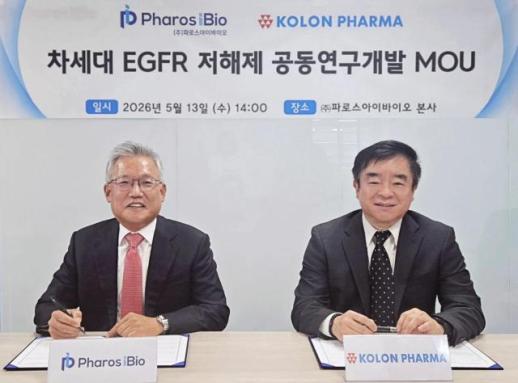 Pharos AI Bio and Kolon Pharmaceutical Collaborate on Next-Generation EGFR Inhibitor Pharos AI Bio, an artificial intelligence-based drug development company, announced on May 14 that it has signed a strategic memorandum of understanding (MOU) with Kolon Pharmaceutical's new drug division to develop a next-generation lung cancer treatment, PHI-701. The agreement aims to combine Pharos AI Bio's AI drug design technology with Kolon Pharmaceutical's clinical translational research capabilities to expand joint research and development efforts. The two companies plan to develop a next-generation epidermal growth factor receptor (EGFR) mutation inhibitor that can overcome the resistance limitations of existing treatments. According to global market research firm DelveInsight, the global market for EGFR mutation-targeted non-small cell lung cancer treatments is expected to grow at a compound annual growth rate (CAGR) of approximately 7.3%, reaching about $14.6 billion by 2036. The companies will work together to derive new candidate substances targeting EGFR protein mutations, which are known to be a major cause of non-small cell lung cancer, with the goal of entering preclinical trials. Pharos AI Bio will focus on designing small molecule compounds and securing the candidate substance PHI-701 using its AI drug development platform, Chemiverse. Kolon Pharmaceutical's new drug division plans to conduct translational research, including mechanism studies and non-clinical efficacy evaluations of PHI-701. While existing third-generation EGFR-targeted therapies have improved efficacy compared to traditional chemotherapy, they have been criticized for the emergence of mutations within one to two years of treatment. In response, the two companies are focusing on overcoming resistance through a "dual mechanism." They aim to develop a fourth-generation EGFR inhibitor that selectively suppresses mutated proteins while blocking alternative survival pathways in cancer cells. Analysts believe this approach will address unmet patient needs and drive market expansion. Yoon Jeong-hyuk, CEO of Pharos AI Bio, stated, "We plan to accelerate the creation of results by expanding our AI drug design capabilities through external collaborations and joint research and development. We will also demonstrate the scalability and competitiveness of our platform in the high-value oncology market."* This article has been translated by AI. 2026-05-15 02:57:39
 -
 Hanwha Solutions Delays 1.8 Trillion Won Capital Increase to July Hanwha Solutions announced a revised schedule for its capital increase on May 14. The date for the new share allocation has been moved from May 5 to July 5, and the date for confirming the new share issuance price has been changed from June 17 to July 7. The expected listing date for the new shares has also been postponed from July 10 to July 31. The total amount of the capital increase is 1.8144 trillion won, with 907.7 billion won allocated for facility funds and 906.7 billion won designated for debt repayment. The purpose of the fundraising remains consistent with previous announcements. After receiving a second correction request, Hanwha Solutions had previously changed the related schedule to unspecified on May 12. A company representative stated, "We plan to submit a revised report to the Financial Supervisory Service soon." Additionally, Hanwha Solutions will conduct an in-person and group investor relations (IR) meeting in Hong Kong from May 27 to 28, organized by UBS, to discuss the details of the capital increase, the intended use of funds, and the company's current management status while gathering investor feedback.* This article has been translated by AI. 2026-05-15 02:56:59
 -
 Inflation Rate at 12.6% and Trade Deficit of $5.3 Billion: Records Connecting DJ and the World For the first time, notes written by the late Lee Hee-ho while preparing for visits to her husband, former President Kim Dae-jung, during his imprisonment have been made public. With the 46th anniversary of the May 18 Democratic Uprising approaching, the release of this book, which includes the couple's 'Prison Records,' is expected to resonate with the spirit of forgiveness and tolerance that Kim emphasized in the political arena. On May 14, the Kim Dae-jung Library at Yonsei University held a press conference in Mapo-gu, Seoul, to introduce the book 'Kim Dae-jung and Lee Hee-ho's Prison Records.' Published by Hangilsa, the book compiles various records from Kim's imprisonment during the March 1 Democratic National Declaration incident in 1976 and the 1980 conspiracy to commit insurrection. Notably, the book includes previously unreleased materials, such as notes Lee Hee-ho wrote between June 1981 and March 1982 for her visits to Kim Dae-jung, as well as letters she sent to advocate for his release. To efficiently convey domestic and international situations to Kim during their brief 10-minute meetings, she prepared notes in advance. On January 20, 1982, she recorded key economic indicators for Kim, including a 7.1% growth in Gross National Product (GNP), a per capita income of $1,636 (the same level as in 1979), an inflation rate of 12.6% for retail, and a trade deficit of $5.3 billion with exports at $21 billion and imports at $26.3 billion. Park Myung-rim, Director of the Kim Dae-jung Library, stated, "The notes encapsulate and summarize the realities of Korea and the world, accompanied by Lee's high-level analysis. It appears that she played a crucial role in helping Kim maintain his sense of reality and grasp global trends while imprisoned." During the press conference, Kim Hong-gul, the son of Kim Dae-jung, recalled anecdotes about his parents. He noted, "After my father was imprisoned, my mother consistently connected with families of other detainees and continued to inform the world about the situation under the Korean dictatorship. It is very meaningful that these related records are being published for a wider audience." The publication of the book has sparked calls for the South Korean political sphere to reflect on the spirit of forgiveness, reconciliation, and tolerance that Kim Dae-jung emphasized. While on death row, Kim stated, "Even if I die, there should never be political revenge again." After being elected as the 15th president, he took steps toward national unity, including pursuing pardons for former presidents Chun Doo-hwan and Roh Tae-woo. Kim Sung-jae, who served as the Chief of Civil Affairs and Policy Planning Secretary and Minister of Culture and Tourism during the Kim Dae-jung administration, criticized the current political climate, saying, "Politicians are only seeking political power and engaging in politics for personal gain." He added, "In his prison memoirs, Kim Dae-jung wrote, 'Without forgiveness and reconciliation, our nation cannot move forward.' While both parties talk about the spirit of Kim Dae-jung, the most important aspect of that spirit is indeed reconciliation and forgiveness."* This article has been translated by AI. 2026-05-15 02:55:32
 -
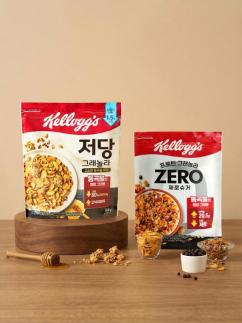 Kellogg Expands Granola Line to Align with 'Pixel Life' Trend Recent trends in the food market show a shift in consumer preferences, leading to changes in how granola products are selected. As health management approaches diversify, there is a growing trend to differentiate between low-sugar and zero-sugar products based on consumption context and goals. According to industry sources, the so-called 'Pixel Life' trend is gaining attention in the consumer market. This trend emphasizes choosing products that align with individual lifestyles and preferences rather than following a single trend. This shift is influencing the strategies of food companies regarding low-sugar and zero-sugar products. The Korea Agro-Fisheries & Food Trade Corporation (aT) reported that the global zero-sugar food and beverage market reached $17.92 billion in 2022 and is projected to grow at an average annual rate of 4% through 2027. Companies are not only launching products with reduced sugar content but are also accelerating the segmentation of products to meet specific consumer needs. Kellogg is responding to this trend by focusing on its granola lineup. Kellogg's 'Low Sugar Granola' maintains a texture and taste centered on whole grains while reducing sugar content, targeting consumers looking for light meal alternatives for breakfast or snacks. The 'Protein Granola Zero Sugar' is designed for those managing their diet or looking for a pre- or post-workout option, featuring enhanced protein content and no added sugars. A Kellogg representative stated, "Recently, consumers tend to distinguish between low-sugar and zero-sugar products within the same granola category based on their situations, such as breakfast, snacks, or pre/post-workout. We plan to continue expanding our variety of options to align with changing consumer lifestyles." The trend toward expanding low-sugar products is evident across the food industry. Daesang has introduced the 'Low Tag' emblem for its low-sugar and low-calorie product line since last year, focusing on sauces and condiments. CJ CheilJedang launched nine low-sugar products under the 'Sugar Light' brand, including bulgogi seasoning, salad dressings, and oyster sauce. Lotte Wellfood is also targeting domestic and international markets with its sugar-free dessert brand 'ZERO.'* This article has been translated by AI. 2026-05-15 02:53:35
 -
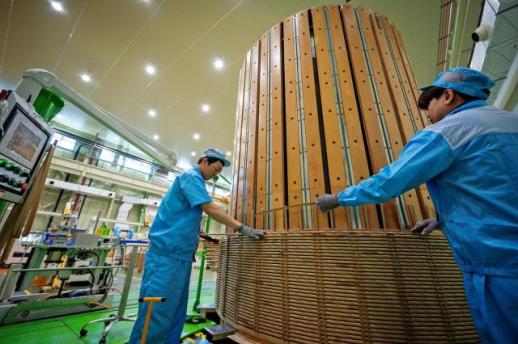 Surging Copper Prices Boost Power Equipment Sector Amid AI Supercycle Copper prices are nearing record highs due to the prolonged conflict in the Middle East and increasing global demand, creating a favorable outlook for the domestic power equipment industry. The demand for transformers and circuit breakers has surged, driven by the need to upgrade North American power grids and the expansion of artificial intelligence data centers (AIDC), placing the sector in a supercycle. Additionally, manufacturers are able to pass on rising costs to consumers, further accelerating this supercycle. As of May 14, copper prices on the London Metal Exchange have surpassed $14,400 per ton, continuing their upward trend. This marks a nearly 40% increase from last May's price of $10,360 per ton and a 10% rise from approximately $13,150 per ton at the beginning of this year. Copper constitutes about 20% of the weight of transformers, making the industry particularly sensitive to fluctuations in copper prices. Typically, rising raw material costs pose challenges for manufacturers. However, the current power equipment market is characterized by supplier dominance, allowing companies to effectively pass on these cost increases to their prices. Notably, there is a growing demand for high-value products such as high-voltage transformers and low-loss transformers for AI data centers, with the rise in copper prices supporting this trend. Hyosung Heavy Industries has seen an increase in high-voltage transformer orders, particularly in North America and Europe. The proportion of low-cost orders has decreased, and high-value projects are beginning to positively impact profitability. In the first quarter, the company secured approximately 4 trillion won in new orders, becoming the first domestic power equipment firm to exceed a backlog of 15 trillion won. HD Hyundai Electric has also benefited from the booming North American high-voltage transformer market, with its operating profit margin rising above 20% in the first quarter. The company has already achieved 42.6% of its annual order target of $4.222 billion and has secured orders extending to 2029. LS Electric is demonstrating strength in the medium and low-voltage distribution equipment sector for AI data centers. The company recorded its highest-ever performance in the first quarter and is planning to expand its distribution equipment at the Bestrop site in Texas, while also considering expansions at its Southeast Asian factories in Vietnam. Industry insiders are optimistic that the growth of the AI sector will lead to stable growth for the power equipment industry. The four major domestic power equipment companies have already secured workloads for at least three years. Furthermore, demand for high-voltage power equipment is expected to continue rising not only in North America but also domestically, driven by semiconductor clusters, AI data centers, and new industrial complexes. One industry official stated, "Given that the market is currently supplier-driven, when raw material prices rise, companies can pass those costs onto consumers. Thus, even with rising raw material prices, supplying companies may see increased revenues."* This article has been translated by AI. 2026-05-15 02:51:45
 -
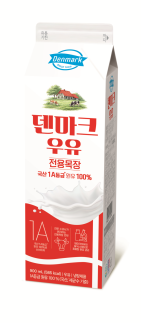 Dongwon F&B Launches 'Denmark Milk' Made from Premium Grade A Milk Dongwon F&B announced on May 14 that it has launched a new product, 'Denmark Milk,' made from premium Grade A milk sourced from its dedicated farms. The new product features only Grade A milk produced at approximately 60 dedicated farms operated by Dongwon F&B. A veterinary management system is in place to oversee the farm environment and the health of the dairy cows, ensuring high milk quality. The company has also strengthened its management system to maintain milk freshness. It has optimized the transportation route from the farms to the factory and ensures that the milk is stored at temperatures below 7 degrees Celsius throughout the production and distribution process. Dongwon F&B conducts milk testing using its own quality control system, the 'NF (Nature Fresh) System.' This involves sensory and physicochemical tests across four stages: upon arrival at the farm and factory, and before and after production, with a total of 14 inspection items. Only milk that meets the standards is used for product manufacturing. A Dongwon F&B representative stated, "We have applied strict standards to every process from milking to quality control and low-temperature distribution. We plan to continue our efforts to deliver the inherent freshness of milk to consumers." The product is available in a 900ml package and is priced at 3,280 won. It will be sold at major supermarkets and discount stores nationwide. Denmark is a dairy brand that was established in 1985 as a joint venture between Korea and Denmark. It currently operates as Dongwon F&B's premium dairy brand, offering a variety of products including milk, fermented milk, and cheese. Recently, there has been a noticeable trend in the milk market prioritizing freshness and quality over price. According to a survey conducted by the Korea Dairy Promotion Committee in November of last year, 57.7% of 3,000 consumers nationwide identified 'freshness' as the most important factor when purchasing milk, while only 13.8% prioritized price.* This article has been translated by AI. 2026-05-15 02:49:12