
Journalist

Elizabeth Englezos
-
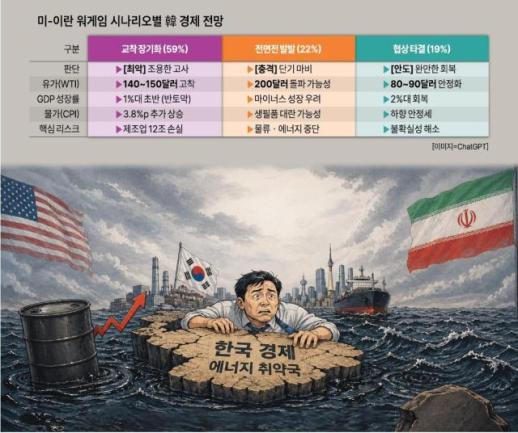 AI War Game Sees Prolonged U.S.-Iran Stalemate as Biggest Risk for South Korea “The most dangerous moment for South Korea is not all-out war, but when a neither-war-nor-peace stalemate hardens into a new normal after six months.” A war-game simulation run on April 28 using Anthropic’s AI agent model, Claude Opus, found the most worrying outcome in the U.S.-Iran end-of-war talks was not a full-scale conflict but a prolonged stalemate. The risk of immediate escalation eased after U.S. President Donald Trump declared an “indefinite ceasefire,” but the simulation warned that for energy-vulnerable countries such as South Korea, a drawn-out impasse could bring what it called a “quiet ruin.” Trump’s zigzags: Claude calls it “advanced psychological warfare” aimed at division The simulation was based on the situation in which Trump, on the morning of the 22nd in Korean time, abruptly announced an “indefinite extension” ahead of the ceasefire’s expiration. In the war game, the Trump agent (Agent A) described his approach as making the other side “not know where to run.” Claude interpreted Trump’s reversals not as whim but as a populist strategy designed to upset the balance between Iran’s hard-liners (the Islamic Revolutionary Guard Corps) and moderates (the Foreign Ministry), while also managing U.S. gasoline prices ahead of midterm elections. In response, the IRGC agent (Agent B) labeled the U.S. extension “strategic deception” and answered with steps including laying mines in the Strait of Hormuz and warning shots at U.S. naval vessels. The AI depiction showed moderates’ room for diplomacy narrowing quickly amid internal power struggles. Prolonged stalemate put at 59%, seen as worst case for South Korea Claude assigned a 22% probability to a full-scale war and 19% to a dramatic negotiated breakthrough. The highest probability — 59% — was a prolonged stalemate. It described that outcome as a “gray zone” in which no one clearly loses, but everyone absorbs slow damage. For South Korea, the simulation called it the worst scenario. If the stalemate lasts more than six months, it projected West Texas Intermediate crude would settle at $140 to $150 a barrel. Domestic gasoline prices were projected to rise to around 2,700 won per liter, and South Korea’s annual energy import bill to increase by as much as $42 billion. The cost shock to manufacturing was described as severe. Claude projected that in four strategic sectors — petrochemicals, refining, shipping and aviation — cumulative operating losses over six months could reach up to 12 trillion won. Automakers and semiconductor firms were also projected to see operating profit fall by more than 15% due to indirect effects such as higher logistics costs, while the 2026 GDP growth outlook was projected to slip from 1.7% to the low 1% range. In the AI’s framing, institutionalized uncertainty reduces Trump’s political burden and lets Iran’s military keep leverage, while energy-dependent countries such as South Korea face economic bleeding under what it called the “cost of alliance.” Claude warned again that South Korea’s most dangerous moment is when this neither-war-nor-peace condition becomes a “new normal.” Expert: “It’s impossible to predict” — prepare for every scenario The AI war game was launched because the real-world situation is hard to forecast. In a phone interview with the newspaper, In Nam-sik, a professor at the Korea National Diplomatic Academy, compared the U.S.-Iran standoff to “watching a soccer broadcast.” The sides may be passing the ball around the center circle, he said, but no one can predict when a sudden play will produce a shot. On Trump’s sudden ceasefire declaration, In said the constant shifts and lack of consistency “could itself be a negotiating strategy,” but added, “I don’t know what the real intention is.” Iran, he said, is also sending mixed messages. “Normally, messages should be consistent and war aims clear, but right now both sides keep going back and forth,” he said, adding that he doubts anyone can explain the situation precisely. The current environment, he said, could swing quickly on a single decision by leaders — toward a breakthrough or toward disaster. Still, the article said one point is clear: as the AI warned, economic bleeding from an oil shock has already begun. Fatih Birol, executive director of the International Energy Agency, warned that the crisis is “the biggest in history, more severe than the 1973 and 1979 oil shocks and the 2022 Ukraine war combined.” He said a closure of the Strait of Hormuz has halted 20% of global energy flows, and that restoring disrupted output of 13 million barrels a day would take more than two years. The exercise sought to fill what it described as a gap in expert forecasting by using AI to map a “worst path.” The 59% stalemate estimate is not a fixed future. But the article said experts’ caution and the AI’s warning converge on one point: for South Korea, institutionalized uncertainty — neither war nor peace — could be more damaging than a full-scale war. 2026-04-28 21:00:17
 -
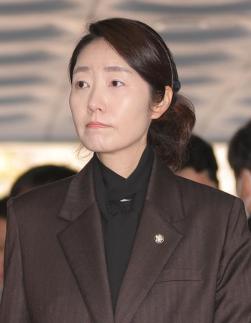 Police Clear Rep. Kang Sun-woo of Alleged Fake Address Registration Police have concluded there is no basis to pursue allegations that independent lawmaker Kang Sun-woo arranged a fake address registration for her family. The Seoul Gangseo Police Station said on the 28th it forwarded the case to prosecutors with a recommendation not to indict. The complaint alleged violations of the Resident Registration Act and the Public Official Election Act, as well as aiding and abetting under the Criminal Act. Police said there was insufficient evidence to support alleged Resident Registration Act violations by Kang’s family or allegations that Kang instigated or assisted them. They said the election law allegation was time-barred. Kang had been accused of moving her family’s registered address to Gangseo District, her constituency in Seoul, ahead of the 2024 general election to maintain eligibility to run. The controversy grew after claims that the family actually lived around Gwanghwamun in Jongno District. Police also dismissed separate allegations of obstruction of business and abuse of authority tied to a so-called “hospital power abuse” incident. Kang was accused of entering a ward at a Seoul university hospital in July 2023, when she served on the National Assembly’s Health and Welfare Committee, after taking only a rapid antigen test rather than a PCR test, despite a nurse’s attempt to stop her.* This article has been translated by AI. 2026-04-28 20:51:53
 -
 South Korea Finalizes 2027 Medical School Enrollment, Adding 490 Seats The Education Ministry said on the 28th it has finalized medical school enrollment quotas for the 2027-2031 academic years without changes from its previously announced plan. For the 2027 academic year, total medical school enrollment will be 3,548, up 490 from 3,058 in the 2024 academic year before the expansion. Kangwon National University and Chungbuk National University will see the largest increases, with 39 additional seats each. The ministry issued a preliminary notice of the quota allocations on March 13 and collected feedback from universities through March 24, then formally notified schools of the quotas on March 26. It accepted objections through April 27. "Some universities submitted opinions and filed objections regarding the preliminary notice of the quota allocations, but the allocation committee decided not to accept them after review," the ministry said. With the quotas finalized, universities will revise their school regulations by May and proceed with steps such as updating their 2027 college admissions implementation plans. 2026-04-28 20:39:19
 -
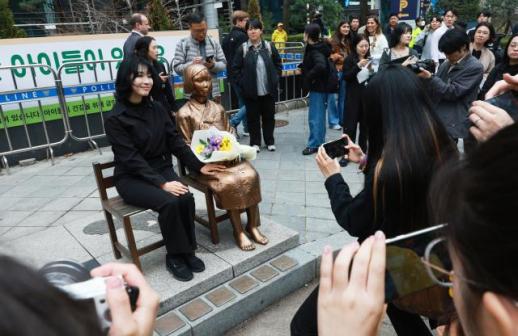 Police to Remove Barrier Around ‘Statue of Peace’ Near Former Japanese Embassy in Seoul Police will remove a barricade surrounding the “Statue of Peace,” a symbol of victims of Japan’s wartime sexual slavery, about six years after it was installed. The barricade outside the former Japanese Embassy in Seoul’s Jongno district is set to come down to coincide with the weekly Wednesday rally on May 6, according to the Jongno Police Station and other officials on April 28. The removal is seen as restoring the area so the public can again approach the statue freely. The barricade was installed in June 2020 at the request of the Korean Council for Justice and Remembrance after concerns were raised that the statue could be damaged during rallies by opposing groups. The organization owns the statue, which is designated and managed as Jongno district’s first public sculpture. The Korean Council for Justice and Remembrance plans to hold an event at the May 6 rally to mark the removal. Sculptor Kim Seo-kyung, who participated in creating the statue, is expected to attend. Police said they will continue order and safety measures after the barricade is removed, including deploying riot police at the site.* This article has been translated by AI. 2026-04-28 20:12:17
 -
 Samsung Biologics Union Begins Partial Strike After Talks Break Down Samsung Biologics’ labor union began a partial strike on the 28th after negotiations with management broke down. About 60 union members in the materials aliquoting unit joined the walkout starting that day. The partial strike is scheduled to run through the 30th. The union has demanded what it calls “setting personnel principles straight” and narrowing wage gaps within the group. Labor and management have held 13 bargaining sessions since their first meeting in December last year but failed to narrow differences. The union said it will move to a full strike next month if there is no progress in talks. The action is the company’s first strike since it was founded in 2011. About 2,000 union members have reportedly indicated they are willing to participate. A court, however, restricted strike activity in final-stage processes such as work to prevent drug deterioration and spoilage, and staff in those departments were excluded from the walkout. Industry observers are watching the dispute closely as it comes while the company is expanding production facilities. They say the outcome could be a key factor in assessing the stability of Samsung Bio’s operations and its ability to manage risk going forward. The company said it is working to minimize disruptions. “We are responding by using available personnel,” a Samsung Biologics official said, adding that the company plans to continue talks to resolve the issue.* This article has been translated by AI. 2026-04-28 19:48:25
 -
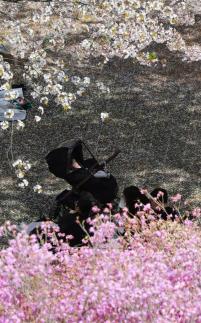 Wednesday Forecast: Big Spring Temperature Swings, Highs Near 20 C Wednesday the 29th will bring generally mild spring weather nationwide, but temperatures will dip in the morning, making it feel chilly. Seoul’s morning low is forecast at 8 C, about 3 degrees lower than the previous day. Other areas are also expected to start in the single digits, keeping conditions cool early. Temperatures will rise sharply during the day, with most regions reaching around 20 C. Central areas will be mostly sunny, while the south and Jeju Island will be mostly cloudy. Daytime highs there are expected to be around 21 C, near seasonal norms or slightly lower. The Seoul metropolitan area and northern Chungcheong Province will see clouds give way to clearer skies, and Gangwon Province will gradually clear after a cloudy start. Inland areas will see a large day-to-night temperature swing of about 15 degrees. The Korea Meteorological Administration urged caution on fire prevention and health as dry weather advisories remain in effect for inland Chungcheong, northern Jeonbuk and inland North Gyeongsang, where conditions are expected to be very dry. Forecast highs include Seoul 20 C, Incheon 19 C, Suwon 19 C, Chuncheon 20 C, Daegu 20 C, Busan 18 C, Ulsan 18 C and Jeju 16 C. Fine dust levels are expected to range from “good” to “moderate” nationwide.* This article has been translated by AI. 2026-04-28 19:36:19
 -
 Google DeepMind CEO Demis Hassabis Meets South Korea’s Top Business Leaders on AI Chips Demis Hassabis, the Google DeepMind co-founder and CEO known as the creator of AlphaGo, has met in quick succession with leaders of major South Korean conglomerates as he seeks closer cooperation on AI semiconductors. The string of visits by global tech chiefs is fueling views that South Korea is emerging as a key hub in the global AI supply chain. According to industry officials on April 28, Samsung Electronics Chairman Lee Jae-yong held a closed-door meeting with Hassabis that afternoon at Samsung’s Seocho office in Seoul. They were reported to have discussed semiconductor cooperation for next-generation AI chip design and ways to expand on-device AI using Google’s Gemini. SK Group Chairman Chey Tae-won also met with Hassabis to discuss cooperation on building AI infrastructure, reports said. Earlier the same day, Hyundai Motor Group Chairman Chung Euisun and LG Group Chairman Koo Kwang-mo also held meetings. The talks were said to have explored collaboration between Google and Korean companies across semiconductors, mobile, telecommunications and robotics. DeepMind is focused on developing artificial general intelligence, or AGI. Google has already moved to place its Gemini model on Samsung smartphones to push on-device AI, and it is applying intelligent life solutions to LG Electronics’ home appliances to broaden user experiences. It is also working with Hyundai Motor Group’s Boston Dynamics to improve AI performance for the next-generation humanoid robot Atlas. Last month, AMD CEO Lisa Su made her first official visit to South Korea since taking the job and met with Samsung Electronics DX division head Roh Tae-moon, among others, to discuss expanding cooperation across the AI mobile and PC ecosystem, including smartphones, PCs and tablets. From AMD’s perspective, Samsung’s advanced manufacturing processes and memory solutions are critical as it seeks to challenge Nvidia’s dominance. In October last year, Nvidia CEO Jensen Huang visited South Korea to reaffirm partnerships with local companies. OpenAI CEO Sam Altman also visited and explored cooperation with South Korea’s semiconductor ecosystem to produce an “OpenAI-dedicated chip.” Industry experts say Korean companies are moving beyond being chip suppliers to becoming key partners in shaping global AI standards. Ahn Ki-hyun, executive director of the Korea Semiconductor Industry Association, said, “As the global competition for AI leadership intensifies, AI business has reached a point where it is impossible without the memory and foundry technologies of Korean companies such as Samsung Electronics and SK hynix.” He added, “Beyond a simple supply relationship, a ‘one-team’ system is strengthening, with partners thinking together from the design stage.”* This article has been translated by AI. 2026-04-28 19:33:22
 -
 People Power Party Nominates Ahn Gyo-jae for Suwon Mayor, Park Tae-kyung for Hwaseong Mayor The People Power Party's Nomination Management Committee on April 28 finalized Ahn Gyo-jae as its candidate for Suwon special city mayor and Park Tae-kyung as its candidate for Hwaseong special city mayor. Committee Chair Park Deok-heum told reporters at the party's central headquarters in Seoul's Yeouido that the committee had completed the vote count for the internal primaries to pick the Suwon and Hwaseong mayoral nominees. Park also outlined the next steps for National Assembly by-elections and rules on vote bonuses and penalties in party primaries. He said the party plans to post a notice on April 29 to accept applications for nominations in additional by-elections that arise, with filings accepted through April 30. He said interviews for applicants will be held May 1, and the committee will move quickly to decide the nomination method and announce candidates. In districts holding primaries, voting will run for two days starting May 3, with final candidates to be announced on May 5. The committee also approved standards for adding or subtracting points in primaries. Park said the party decided to reduce a portion of primary vote shares for candidates who previously served as lawmakers in the same constituency, in an effort to encourage newcomers to enter politics. Those who served three or more terms in the same district would face a 15% deduction in a two-way race and a 10% deduction in races with three or more candidates, he said. Candidates viewed as having sharply low competitiveness after losing three or more times in the same district would face a 30% deduction in a two-way race and a 20% deduction in races with three or more candidates, he added. 2026-04-28 18:39:19
 -
 KOSPI Sets Another Record as Chip Stocks Drive Rally; How Long Can It Last? The KOSPI’s run of record highs shows little sign of slowing, with some market watchers saying the index could even push past 7,000 in short order if the trend holds. The rally has been led by semiconductors, as gains in Samsung Electronics and SK hynix — together accounting for more than 40% of total market value — have amplified the index’s rise. Analysts say how long the rally lasts will largely depend on the semiconductor cycle. Optimists argue that an AI-driven “super cycle” could extend for a prolonged period, supporting further gains. Others warn that if the cycle turns down as it has in the past, the market could face a sharp correction. ◆ Semiconductors power the rally Aju Economy compared the KOSPI and the KRX Semiconductor Index over the past year (April 28, 2025, to April 28, 2026; 244 trading days) and found they moved in the same direction on 191 days, or 78.3% of the period. On April 28, the KOSPI rose 0.86% while the KRX Semiconductor Index fell 0.45%. The link was stronger on up days. Both indexes rose on 132 days, more than double the 59 days when both fell, underscoring how the KOSPI tends to respond when chip stocks gain momentum. Days when the two diverged totaled 49, or 20.1%, including 26 days when the KOSPI rose but semiconductors fell and 23 days when the KOSPI fell but semiconductors rose. There were four days, or 1.7%, when one index was flat at 0.00%. The results highlight the sector’s outsized influence in South Korea’s market, where large chipmakers dominate the top of the market-cap rankings. As of April 28, Samsung Electronics (including preferred shares) accounted for 26% of the market and SK hynix for 17%. ◆ How long will the “super cycle” last? Analysts say the rally’s durability ultimately hinges on chip industry conditions. Since 2000, the semiconductor industry has typically swung between booms and downturns in cycles of three to four years. The most recent downturn was in 2022-2023, when demand for memory chips fell sharply and Samsung Electronics and SK hynix posted large losses. Their share prices were then stuck in the 50,000-won range for Samsung Electronics and the 70,000-won range for SK hynix. The turnaround began in the second half of last year, as the AI boom drove a surge in memory-chip demand and the market entered what is often called a “super cycle.” Research firm Omdia raised its forecast for this year’s semiconductor market growth to more than 60%, projecting rapid expansion in memory. It said demand for high-bandwidth memory, or HBM, is jumping as AI data centers spread, while supply remains tight — creating a market where rising prices, unlike in past cycles, are leading the upturn. Kim Dong-won, head of the research center at KB Securities, said AI data center and cloud companies are actively pursuing three- to five-year long-term supply agreements to secure stable memory supplies. “This trend will strengthen the durability of the semiconductor upcycle,” he said. Still, some warn of a pullback after the recent surge. BNK Investment & Securities said in a report on April 27 that memory conditions appear to be entering a late-cycle phase, raising the possibility that demand could soften. Overseas, Goldman Sachs and others have also voiced concerns about the pace of the short-term run-up. * This article has been translated by AI. 2026-04-28 18:27:21
 -
 Korea to List 2x Leveraged ETFs Tied to Samsung Electronics, SK Hynix as Hong Kong Demand Grows South Korea is set to list 2x leveraged exchange-traded funds tied to Samsung Electronics and SK Hynix by late May, drawing attention to whether money that flowed into Hong Kong-listed products could shift back to the domestic market. According to the Korea Securities Depository, as of April 24 the Hong Kong holdings of South Korean investors ranked the “CSOP SK Hynix Daily 2X Leveraged ETF (XL2CSOPHYNIX)” seventh and the “CSOP Samsung Electronics Daily 2X Leveraged ETF (XL2CSOPSMSN)” 10th among top stocks by custody value. Their custody amounts were tallied at $104.78 million and $74.11 million, respectively, totaling nearly 264 billion won. Both rank and size rose from the end of March, when the two products stood at 10th ($54.95 million) and 11th ($43.45 million). With upbeat expectations for the semiconductor cycle persisting, domestic demand has continued to move into Hong Kong, where single-stock 2x ETFs have been available while such products were not allowed in South Korea. The underlying shares also climbed sharply from April 1 to 24: Samsung Electronics rose 31.28% and SK Hynix gained 51.43%. Over the same period, South Korean investors’ Hong Kong trading was concentrated in the two ETFs. The SK Hynix 2x ETF saw purchases of $40.27 million and sales of $48.96 million, while the Samsung Electronics 2x ETF recorded $23.75 million in buys and $19.36 million in sells. With the domestic launch of single-stock leveraged ETFs approaching on May 22, the financial investment industry is discussing the possibility that demand headed to Hong Kong could return to South Korea. Domestic listings are seen as more convenient because Hong Kong ETFs require converting won into Hong Kong dollars and factoring in currency gains or losses, while domestic ETFs can be traded without separate currency exchange. Tax treatment also differs: overseas-listed ETFs are subject to capital gains tax on trading profits, while trading gains on domestically listed ETFs are effectively not taxed. “One big reason demand moved to Hong Kong was the lack of single-stock leveraged products in South Korea,” a financial investment industry official said. “After domestic listing, the lack of currency-conversion burden and the tax advantages could lead to a shift of funds into domestic ETFs, especially among retail investors.”* This article has been translated by AI. 2026-04-28 18:24:17