
Journalist

Elizabeth Englezos
-
 South Korea’s KOSPI Hits Record Close as Market Cap Rises to World No. 8 South Korea’s stock market has overtaken the U.K. to rank eighth globally by market capitalization, driven by a semiconductor rally tied to artificial intelligence. The market’s value has more than doubled in about a year, and analysts say the ranking could rise further as the benchmark KOSPI nears the 7,000 level. <Related article, page 10> According to the Korea Exchange, the KOSPI on April 28 closed up 25.99 points, or 0.39%, at 6,641.02. It set another record high close after doing so the previous session. The index climbed as high as 6,712.73 intraday, briefly topping 6,700. With the rally continuing, total market capitalization for South Korea’s exchanges — KOSPI, KOSDAQ and KONEX combined — reached about 6,116 trillion won (about $4.16 trillion) at the close. That was up 53.4% from 3,986 trillion won on Dec. 30 last year. Bloomberg said South Korea’s market cap, based on closing prices, rose 45% from the start of the year through April 27. That pushed it past the U.K., which rose 3% over the same period to $3.99 trillion, placing South Korea eighth worldwide. As recently as 2024, the U.K. market was about twice the size of South Korea’s, but the gap reversed in a little over a year. The U.S. ranks first at $75.4004 trillion, followed by China (mainland), Japan, Hong Kong, India, Canada and Taiwan. From India in fifth to the U.K. in ninth, markets are clustered around $4 trillion, leaving room for further shifts if South Korean shares keep rising. Bloomberg cited heavy concentration in AI semiconductor-related stocks and policy momentum as key drivers. Samsung Electronics and SK hynix, the top two companies by market value in South Korea, led the rally as global money moved into AI-linked firms. Corporate governance reforms and pro-market policies also supported gains. The two companies account for more than 40% of the KOSPI’s total market capitalization. Major global investment banks and South Korean brokerages have forecast further gains, citing improving earnings at leading companies. Some projections extend beyond 7,000 to as high as 8,000. Hana Securities set a second-half KOSPI upper range of 7,540 to 8,470 depending on scenarios. Goldman Sachs set a 12-month KOSPI target of 8,000, and JPMorgan said it sees room up to 8,500. Japan’s Nomura Securities set a first-half target of up to 8,000. Lee Kyung-min, a researcher at Daishin Securities, said South Korea’s market rose to eighth globally on an intraday basis, adding that as rotation spreads into areas such as robotics and construction and the market enters earnings season, stock-by-stock divergence is becoming more pronounced. 2026-04-28 18:21:19
 -
 Korea Weighs Trading Curbs on Single-Stock Leveraged ETFs for Finance Staff, Civil Servants As South Korea prepares to introduce single-stock leveraged exchange-traded funds, attention is turning to whether financial investment professionals and civil servants will be allowed to trade them. The financial sector is already moving to effectively restrict employee trading, and similar rules are expected for government workers. Although the products are structured as ETFs, they track the price of a single company directly, fueling calls for tighter controls. The Korea Financial Investment Association and other industry bodies said Monday that the sector plans to treat single-stock leveraged ETFs not as conventional ETFs but as products comparable to individual equity securities. That would tighten employee trading rules, likely including mandatory pre-approval of trades, investment limits that do not exceed annual salary, and bans on margin and unsettled credit trading. Measures to curb short-term trading, such as minimum holding periods and limits on the number of trades, are also likely to be included. The association and others say regulation is needed because the products are, in effect, “single stocks wearing an ETF mask.” Traditional ETFs spread risk by holding multiple stocks, while single-stock ETFs’ returns hinge directly on one company’s share price. Leveraged versions are more volatile, raising concerns about conflicts of interest and excessive speculative demand. Similar oversight may be applied to civil servants. The Ministry of Personnel Management is reviewing whether single-stock ETFs should be treated the same as individual shares. Under current rules, civil servants whose stock holdings exceed 30 million won are subject to a job-related review and may be required to sell or place the assets in a blind trust if a conflict of interest is found. There are no separate limits on ETF investing. A ministry official said the agency is reviewing trading rules “in consideration of the characteristics of the leveraged ETF made up of a single stock.” The Financial Supervisory Service is also discussing whether to apply investment restrictions to its own staff. As an agency under the Financial Services Commission that oversees the financial investment industry, it is expected to set separate management standards for single-stock ETFs, given ethics and investment rules that are similar to, or stricter than, those for other civil servants. * This article has been translated by AI. 2026-04-28 18:18:20
 -
 Global Automakers Unveil China-Focused EV and AI Models at Auto China 2026 Global automakers seeking to regain ground in China are leaning harder into localization, rolling out strategy models that pair electrification with autonomous-driving and AI-driven digital features developed with Chinese partners. According to the industry on April 28, Mercedes-Benz moved to a head-to-head push by unveiling the China-only “electric GLC L” for the first time worldwide. The centerpiece is its in-house operating system, MB.OS. The company said a local AI assistant tailored to Chinese customers supports dialects including Cantonese and Sichuanese, while dedicated navigation links to China’s highway electronic toll collection system, underscoring its pitch of “intelligent luxury.” Ola Kallenius, chairman of Mercedes-Benz’s board, said the Auto China show would demonstrate the company’s product strength and strategic commitment to the Chinese market. He said Mercedes-Benz would deepen China-specific models, production and research and development, and use China as a source of innovation for the brand worldwide. BMW put its next-generation Neue Klasse platform front and center and unveiled, for the first time worldwide, long-wheelbase versions of its iX3 and i3, along with a new BMW 7 Series. The automaker said it is upgrading AI-based software through cooperation with local companies including Alibaba, DeepSeek and Huawei, and plans to introduce a new driver-assistance system developed for China’s traffic environment starting with the iX3. It also plans to apply “BMW Panoramic iDrive,” which uses the front windshield as a display, reflecting Chinese consumers’ focus on interior usability. Volkswagen Group said it has reset its product portfolio — from design and digital cockpits to advanced driver-assistance systems — around Chinese customer needs under its “In China, For China” strategy. It plans to launch more than 20 electrified models in China within the year, including the ID·UNYX 09 co-developed with Xpeng, as it seeks to reclaim market leadership by linking with local innovation ecosystems. A Volkswagen China official said the company will introduce a total of 13 new-energy vehicle models across EVs and plug-in hybrids in China this year and expand the lineup to 30 by 2029. Hyundai Motor is also stepping up. The company unveiled for the first time its China EV strategy model, the Ioniq V, designed from the planning stage to reflect Chinese consumer preferences. The model uses a platform co-developed with its joint-venture partner Beijing Automotive Group and a battery developed in cooperation with China’s CATL, with a driving range of more than 600 kilometers on a single charge under the CLTC standard. Hyundai also applied more advanced ADAS functions through cooperation with Chinese autonomous-driving specialist Momenta. 2026-04-28 18:14:21
 -
 National Assembly Speaker, Six Parties Set May 7 Vote on Constitutional Amendment, Urge PPP to Join National Assembly Speaker Woo Won-shik and six political parties said April 28 they plan to put a constitutional amendment bill to a vote at a May 7 plenary session, alongside the June 3 local elections. The proposal includes adding the spirit of the Bu-Ma Democratic Uprising and the May 18 Democratization Movement to the Constitution’s preamble. They called on the People Power Party to stop what they described as opposition for its own sake and take part in the amendment effort. Woo and the six parties — the Democratic Party, the Rebuilding Korea Party, the Reform Party, the Progressive Party, the Basic Income Party and the Social Democratic Party — held their third roundtable meeting at the speaker’s office and said they had decided to move the bill at the May 7 session. They urged the People Power Party to participate in the floor vote. Woo said the party’s call to delay constitutional revision until after the local elections amounted to “opposition for the sake of opposition,” and he asked the party leadership to allow its lawmakers to vote “according to their conscience and convictions” so democracy can be strengthened. Cheon Jun-ho, acting floor leader of the Democratic Party, said the People Power Party was blocking “a century-long national plan,” and urged it to join the vote and show “genuine remorse” over the insurrection. The jointly sponsored amendment bill would introduce National Assembly approval for a president’s declaration of martial law, add the spirit of the Bu-Ma Democratic Uprising and the May 18 Democratization Movement to the preamble, and spell out an obligation for balanced regional development. To pass the National Assembly, a constitutional amendment requires approval from two-thirds of sitting lawmakers. With nine lawmakers having resigned to run for metropolitan mayor and governor posts in the June 3 elections, 191 votes are needed out of 286 seats. Without cooperation from the People Power Party, the amendment cannot pass. Earlier April 28, Song Eon-seok, floor leader of the People Power Party, said at a party meeting that the Constitution is an organically connected system and revisions should proceed only after comprehensive discussion. He argued that a hastily pushed amendment ahead of an election should not be pursued. After the roundtable, Cho Oh-seop, chief of staff to the National Assembly speaker, told reporters the speaker’s office has been in ongoing contact with People Power Party leaders and lawmakers by phone and in person to seek support for the bill. He said some People Power Party lawmakers had responded that there was “no reason to oppose” the amendment, and that further persuasion would continue. He added that the speaker’s office is also seeking a meeting between Woo and Jang Dong-hyeok, the party’s representative.* This article has been translated by AI. 2026-04-28 18:13:15
 -
 Foreign Minister Cho Hyun Meets Bhutan Prime Minister to Expand Cooperation on Climate, Economy Foreign Minister Cho Hyun met Monday afternoon with Bhutan Prime Minister Tshering Tobgay at the Foreign Ministry and discussed practical bilateral cooperation and regional developments. Cho welcomed Tobgay’s trip to South Korea, the first visit by a Bhutanese prime minister since 2010. He said he was impressed that Bhutan prioritizes citizens’ happiness and pursues environmentally friendly economic growth, and called for expanding mutually beneficial, practical cooperation between the two countries. Cho said South Korea is also seeking a shift to renewable energy to cut carbon emissions, and expressed hope the two sides would continue working together to respond to the climate crisis with Bhutan, the world’s first carbon-negative country. Tobgay praised South Korea’s efforts to address climate change and achieve carbon neutrality alongside its advanced economic development. He said he hoped the two countries would sustain cooperation in areas including the economy, climate change and development cooperation. The two sides also exchanged views on regional and international issues and cooperation in international organizations. * This article has been translated by AI. 2026-04-28 18:12:28
 -
 CJ OnStyle Speeds Up Content Commerce With 'Devil Wears Prada 2' Campaign, KBO Goods CJ OnStyle is strengthening its content-commerce business by turning fandom-based intellectual property tied to film and sports into shopping experiences. Industry officials said CJ OnStyle has partnered with The Walt Disney Company Korea to run a large branding campaign inspired by the film ‘The Devil Wears Prada 2,’ which is set to open on the 29th. The campaign runs through May 14. CJ OnStyle said it is the only commerce platform in South Korea running the campaign. The slogan is “This summer, OnStyle wears the devil.” The company is combining film content with its retail platform, targeting overlap between its core customers — women in their 30s and 40s — and the movie’s fan base. The main concept is “Runway to Realway,” aiming to bring the film’s fashion into everyday wear. CJ OnStyle curated about 2,500 style items, from office looks to resort wear, reflecting the storylines of the two main characters. To extend the film theme across the shopping experience, CJ OnStyle redesigned its mobile app interface, circular launcher logo and live-streaming studio around the movie concept. CJ OnStyle is also expanding its approach to Korea Baseball Organization, or KBO, goods, saying baseball fans’ spending has moved beyond stadium cheering to everyday self-expression. Instead of simply printing team logos, it planned merchandise focused on fashion accessories that can be used naturally for commuting, outings and travel. Based on CJ OnStyle’s analysis of KBO goods sales data from April 9 to 25, fashion accessories such as bandana scarves, lightweight folding umbrellas and stadium-bag key rings ranked among top sellers. Cumulative sales reached 35,000 items in about 10 days after launch, and fashion accounted for 52.8% of total sales. A CJ OnStyle official said the company will continue to strengthen content-commerce competitiveness through differentiated IP that gives customers more reasons to visit and more to enjoy on the platform.* This article has been translated by AI. 2026-04-28 18:11:36
 -
 Auto China 2026: BYD, Geely tout AI and battery advances to defend home market Chinese automakers rolled out new electric models packed with the latest technology at the motor show, betting that strong battery engineering and AI-driven features can help them hold their ground at home against global brands’ premium appeal. According to the industry on April 28, BYD applied the theme “All things move toward renewal” to its Dynasty lineup and introduced a wave of new vehicles, including the flagship SUV Datang, the third-generation Yuan Plus and the Song Ultra EV. BYD highlighted its second-generation Blade battery, flash-charging technology and an intelligent ecosystem connection aimed at younger Chinese buyers. The company said the second-generation Blade battery can reach 70% charge in five minutes at room temperature and a full charge in nine minutes; in minus 30 Celsius conditions, it said, a full charge takes about three minutes longer. BYD said the Datang achieved a 950-kilometer range on a single charge by increasing energy density, calling it among the longest in the world. The Yuan Plus, which BYD said has topped 1.1 million global sales since its 2022 launch, adds a 240-kilowatt motor and is rated at 630 kilometers under China’s CLTC test cycle; BYD said flash charging is applied across the lineup. The models were presented as new-energy vehicles priced from 250,000 to 320,000 yuan. Across its flagship brands — including Fangchengbao, Yangwang and Denza — BYD also unveiled new sedans, SUVs, multipurpose vehicles and supercars. Yangwang showed the 2026 U7, U8 and U8L Dingchang Edition, along with the U9, which it said was the first Chinese supercar to appear in “Gran Turismo 7.” The company said the Yangwang U9 Extreme (U9X) set a world record with a top speed of 496.22 kph. BYD said the Denza Z uses an intelligent vehicle control technology platform to improve cornering, driving safety and tuning performance. Geely Holding Group showcased mobility solutions across its brands — including Zeekr, which is slated for domestic launch this year — as well as Lynk & Co, Geely Galaxy, Lotus and Smart. It highlighted technologies such as the EVA-cap robotaxi, Super EVA and the Smart Egg cockpit, underscoring capabilities spanning AI, autonomous driving and next-generation eco-friendly technology. Zeekr introduced the high-performance hybrid flagship SUV “8X,” calling it the only midsize hybrid SUV in the world capable of 0-100 kph acceleration in the three-second range. Geely attributed the performance to a 900-volt high-voltage platform, a 2.0 turbo super-hybrid engine, a 145-kilowatt (197-horsepower) generator, an AI digital chassis and dual Nvidia Drive Thor-U chips. Geely Automobile also presented new models featuring a fresh design concept and advanced technology, including its second concept car, the “Galaxy Light,” and the brand’s first off-road NEV architecture. The company also promoted its i-HEV intelligent hybrid system. A Geely Holding Group official said the products unveiled at Auto China 2026 showed the group’s “clear trend” toward intelligent electrification. The official added that, as the industry enters an era of intelligent electrification marked by both challenges and opportunities, the group will seek growth by creating strong synergies across its businesses. 2026-04-28 18:10:23
 -
 South Korea to Launch $1 Billion On-Device AI Chip Program in May The South Korean government will begin a large-scale program in May to develop on-device artificial intelligence semiconductors, committing a total budget of 1 trillion won through 2030. The initiative aims to have major companies including Hyundai Motor and LG Electronics work with domestic fabless chip designers to build customized AI chips. Lim Ki-taek, a project director at the Korea Institute for Advancement of Technology (KEIT), said April 28 that the “K-On-Device AI Semiconductor Technology Development Program” will launch new projects in May and then continue for five years. “We held a final review meeting yesterday with the Ministry of Science and ICT and the Ministry of Trade, Industry and Energy, and we expect to post the request for proposals as early as late May,” Lim said. He added that a draft RFP is complete and will be adjusted slightly to fit the budget before it is announced. Under the program, domestic fabless companies will design AI chips requested by corporate users, and domestic foundries will manufacture them. The government plans to link demand companies with fabless designers and foundries. As an example, Lim said a fabless firm could design an AI chip needed for Hyundai Motor’s autonomous vehicles, and a foundry such as Samsung Electronics could produce it. The program targets four areas: automobiles; Internet of Things and home appliances; machinery and robots; and defense. The goal is to develop on-device AI semiconductors domestically and build advanced products using them, with mass production targeted for 2030. Lim said the government’s R&D planning reflects the need for industry-specific customization in system semiconductors. “The biggest change in R&D policy under the current administration is connecting fabless companies with leading firms in each industry,” he said. “Because system semiconductors must be tailored to each industry, fabless companies need to know what demand companies want. We built matching opportunities into the R&D plan so they can meet more often.” This year, based on feasibility reviews and demand surveys, the government plans to newly support seven areas. In autos, it will back development of an advanced driver assistance and autonomous driving (ADAS/AD) domain controller for next-generation software-defined vehicles. In IoT and home appliances, it will support development of human-empathy smart space systems and on-device AI semiconductor technology. It will also support development of an on-device AI computing unit for collaborative robots at a commercially viable level, and product development of next-generation AI collaborative robots based on neural processing units (NPUs). Demand-side participants include Hyundai Motor, LG Electronics, Doosan Robotics, Daedong and Korea Aerospace Industries (KAI). Selected fabless companies include Nextchip, Telechips, DeepX, Mobilint, Boss Semiconductor, Aim Future and DeeperAI. Lim said the program is designed primarily to help domestic fabless companies expand globally. “We are placing more weight on the fabless sector,” he said, adding that working with major domestic demand companies through chip development and commercialization will strengthen technical capabilities and create “a win-win” for both chip designers and end users. * This article has been translated by AI. 2026-04-28 18:09:12
 -
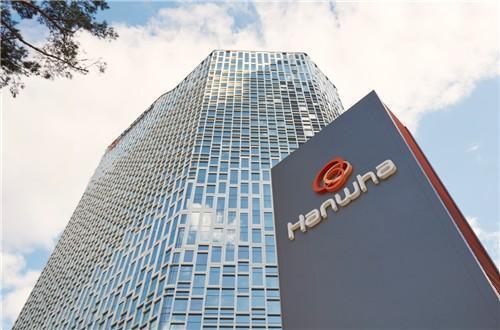 Hanwha Solutions swings to profit in Q1 on solar gains, chemical recovery SEOUL, April 28 (AJP) - Hanwha Solutions posted a sharp earnings recovery in the first quarter of 2026, with operating profit surging more than threefold as its solar and chemical units both returned to the black amid easing U.S. trade headwinds and internal restructuring efforts. The South Korean conglomerate reported Tuesday through regulatory filings consolidated revenue of 3.88 trillion won ($2.63 billion) for the January to March period, up 25.4 percent from a year earlier, while operating profit climbed 205.5% year-on-year to 92.6 billion won — marking its first profitable quarter since the second quarter of 2025. The renewable energy division, operating under the Qcells division, led the charge with revenue of 2.111 trillion won and operating profit of 62.2 billion won. The unit logged its second consecutive quarter above the 2-trillion-won revenue threshold, even during a traditionally slow season, as U.S. factory output normalized following the resolution of a customs clearance backlog on cell shipments that had weighed on output late last year. The chemicals division returned to profit for the first time in about two and a half years, posting revenue of 1.340 trillion won and operating profit of 34.1 billion won. The unit shed loss-making businesses, streamlined production lines, and expanded sales of high-margin products such as ultra-high-voltage cable materials. "We expect performance to improve steadily through year-end, and anticipate that the Cartersville plant's cell line will enter mass production from the third quarter, driving solid earnings momentum in the renewable energy division," co-CEOs Park Seung-deok and Nam Jung-woon said in a statement. Shares of Hanwha Solution ended at 50,800 won per stock, 1.2 percent higher than a day ago. 2026-04-28 18:08:49
 -
 Auto China 2026 Showcases EVs Evolving Into AI-Driven Vehicles "The era of electrification has passed, and the era of intelligence has arrived." Auto China 2026, also known as the Beijing Motor Show, opened in China, the world’s largest electric-vehicle market. This year’s show spotlighted Chinese automakers rolling out new artificial intelligence and autonomous-driving technologies, while global carmakers sought to keep pace. German, South Korean and Japanese brands pushed deeper “In China for China” strategies, tailoring products and operations to the local market. The China Association of Automobile Manufacturers, or CAAM, said in its “2026 China auto market outlook report” that it expects total vehicle sales this year to rise 1.2% from 34.40 million to 34.80 million. New energy vehicles, or NEVs, are projected to account for 19.00 million units, up 15.2% from 16.49 million a year earlier. That would lift NEV penetration to 54.7% from 47.9%, positioning 2026 as a turning point when NEVs become the market standard. As the EV market enters a mature phase, competition is expected to intensify as companies fight to survive. Chinese brands used the show to highlight advances in AI, self-driving systems and battery performance as they aim to move further into the premium segment. Xiaomi drew attention with a marketing display that suspended a cutaway model of its self-developed NEV, exposing the battery and motor structure and the placement of thousands of parts. The display was seen as a way to show how software tightly controls hardware, reinforcing the idea of the car as “AI on wheels,” built on the company’s smartphone software experience. Geely Automobile Group’s premium brand Zeekr unveiled the “8X,” a premium sport utility vehicle with a claimed maximum output of 1,380 horsepower. Xpeng introduced the “GX” with Level 4 autonomous-driving technology. Nio displayed its three brands — Nio, Onvo and Firefly — and showed new models including the Nio ES9 and ET9 equipped with its self-developed smart-driving chip. Established automakers also emphasized technology shifts. Mercedes-Benz showcased its history from horse-drawn carriages to the latest Maybach electric vehicle, while placing the results of its collaboration with China’s Huawei prominently on the stand. BMW and Audi also drew attention for integrating autonomous-driving technologies developed with Chinese partners such as Momenta and Huawei into new models. Battery technology, linked with AI, emerged as a key battleground. CATL, the world’s top battery maker, said its third-generation “Shenxing” battery can charge to 98% in 6 minutes 27 seconds. BYD demonstrated technology that it said boosts energy density and can charge a battery from 10% to 70% in five minutes even in extreme conditions below minus 30 degrees Celsius. An industry official said, “Once the EV market fully enters maturity, only companies with software-defined vehicle technology will survive.” 2026-04-28 18:06:29