
Journalist

Elizabeth Englezos
-
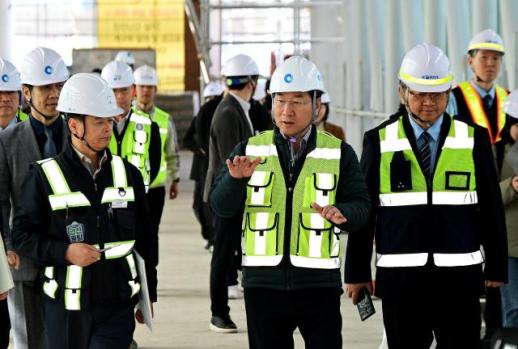 Incheon mayor inspects Songdo Station work for Incheon-origin KTX, set to open in 2026 Incheon city officials on the 21st inspected construction at Songdo Station, the starting point for the Incheon-origin KTX direct-connection project. Mayor Yoo Jeong-bok, city officials and representatives from the National Railroad Authority reviewed progress by major work stages, safety management and facilities being added as part of the Songdo Station expansion. The project will lay new track along a 3.19-kilometer (1.98-mile) section linking the Suin Line and the Gyeongbu high-speed line, while upgrading three stations: Songdo, Choji and Eocheon. Overall progress stands at about 71%. The National Railroad Authority plans to complete key work, including roadbed construction, by the first half of the year, begin integrated test runs in August and open the line in December 2026. The inspection was part of the city’s push to prepare for the year-end opening of the Incheon-origin KTX, one of the eighth elected administration’s core transportation pledges. Yoo called the Incheon-origin KTX “a key transportation infrastructure project that will dramatically improve residents’ mobility,” and urged thorough oversight to ensure the work proceeds safely and without delays. During a site visit to Songdo Station in July last year, Yoo said KTX service originating in Incheon was a long-held wish of residents and a turning point for transportation in the western Seoul metropolitan area, calling for tight schedule control and careful preparation so people can travel nationwide faster and more conveniently. Incheon views the project not as a single rail line but as a central pillar of broader metropolitan transportation expansion. In its major policy announcements this year for transportation, maritime and aviation, the city again listed the Incheon-origin KTX as a project targeting a 2026 opening. It also said it is seeking to have an extension to Incheon International Airport reflected in the fifth national rail network plan. At the time, the city presented the Incheon-origin KTX as part of a strategy to make nationwide travel possible within half a day, alongside the Wolgot-Pangyo double-track rail project, GTX-B, a western metropolitan express rail line and extensions of Seoul and Incheon urban rail lines. The city is also moving ahead with plans tied to development around Songdo Station. It said in December 2024 that differences between the Songdo station-area urban development project and the KTX direct-connection project had been adjusted, and it expected mixed-use development at the station to accelerate. Plans include a multi-level complex combining a transfer support facility in front of Songdo Station with parking, a park and cultural facilities. In addition to 175 existing on-street parking spaces, the city plans to add a transfer parking lot with about 150 spaces. It also outlined a plan to use an average 39-story residential-commercial complex as part of the transfer support facilities. After completing the Songdo Station expansion and opening the Incheon-origin KTX, the city said it plans to continue pushing a rail network expansion strategy that would extend service to Incheon International Airport.* This article has been translated by AI. 2026-04-21 13:21:19
 -
 Gyeonggi education superintendent hopeful Ahn Min-seok proposes training 100,000 AI, semiconductor students Ahn Min-seok, a preliminary candidate for Gyeonggi Province superintendent of education, on Monday unveiled a plan to shift Gyeonggi education to an artificial intelligence-centered system, marking Science Day. “AI is more than a simple technology; it is the infrastructure of our time that supports children’s dreams,” Ahn said, vowing to secure leadership in Gyeonggi education and make it a center for training South Korea’s future technology workforce. He said AI would be used to “substantially guarantee the rights of everyone in education,” citing data-based student growth records to narrow gaps in basic academic skills and administrative reforms to free teachers to focus more on students and instruction. Ahn said the core philosophy of his AI education system is people-centered AI education focused on “dignity and growth.” He pledged to pursue “training 100,000 Gyeonggi AI future talents,” build an AI and semiconductor talent belt, establish new AI and semiconductor high schools in northern Gyeonggi, and push to attract a KAIST northern campus to make the province a hub for future technology talent. As on-the-ground measures, he proposed operating AI-focused schools; building a “Gyeonggi-style AI curriculum” linking classes, elective subjects and assessment; project-based classes tied to universities and companies; school labs equipped with the latest devices; AI literacy training for all teachers and training specialist teachers; an AI-based career history system; and shifting vocational high schools toward an AI-convergence vocational education system. For teachers, Ahn promised to introduce an “AI administrative secretary system” to cut routine work and create conditions that allow educators to concentrate on teaching. The announcement follows a proposal Ahn made in February, when he called AI and semiconductor talent development “a future growth engine and a matter of survival” for South Korea. At the time, he presented a plan to establish 15 semiconductor future schools and a roadmap to train 100,000 people. He also said in February he would build a talent belt connecting elementary, middle and high schools with universities, companies and local communities, and that Gyeonggi education would take the lead in training 100,000 semiconductor workers. Monday’s Science Day pledge again highlighted AI and semiconductors as core industry and education priorities for Gyeonggi education. Ahn also included measures for vulnerable students, saying he would use AI as a “warm tool” for those left out. He pledged learning support for students from immigrant backgrounds through AI translation; distribution of customized assistive technology devices and AI programs for special education students; and an AI-based remote learning system and stronger learning-history management for students facing long-term hospitalization, including pediatric cancer patients. “For South Korea’s future survival, Gyeonggi education must become the center of the talent supply,” Ahn said, adding that every child in the province should be able to develop their abilities on an equal foundation of public education regardless of family background or where they live. He said he would not spare support for AI and science and technology education so that children raised in Gyeonggi can compete confidently on the global stage.* This article has been translated by AI. 2026-04-21 13:06:17
 -
 Daegu’s Nam District Expands Housing Aid for Newlyweds, Adds Jeonse Support Daegu’s Nam District said it will significantly expand its loan-interest support program for newlyweds buying homes by adding support for jeonse (lump-sum deposit leases) and easing eligibility rules. The district said it will increase the number of beneficiary households from 1,000 to 1,500 by adding 500 jeonse households. Nam District said it completed consultations with the Ministry of Health and Welfare on changes to the social security system, allowing the program—described by the district as the first of its kind in Daegu—to extend beyond home purchases to reflect newlyweds’ housing needs. The district said it will abolish the age limit, expand the definition of newlyweds to couples within 10 years of marriage from the current seven, and raise income and housing-price thresholds. For home purchases, the combined annual income cap will rise to 130 million won from 100 million won, and the home price limit will increase to 650 million won from 600 million won. Under the new jeonse category, eligible applicants are households living in homes with deposits of 300 million won or less and exclusive floor area of 85 square meters or less, with combined annual income of 75 million won or less. Applications will be accepted online through Daegu’s civil service and public contest home service from June, between the first and 15th of each month, excluding May and November. Selected households can claim interest support twice a year, receiving up to 250,000 won a month, or 3 million won a year, for up to three years, for a maximum of 9 million won. Nam District Mayor Cho Jae-gu said the expansion to jeonse and the eased standards reflect newlyweds’ varied housing situations. He said the district will continue refining the policy so that meaningful relief in housing costs can help attract residents and improve settlement conditions.* This article has been translated by AI. 2026-04-21 12:42:18
 -
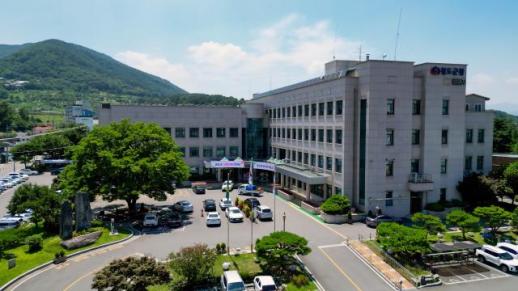 Cheongdo County Expands Child Allowance to Under Age 9, Up to 120,000 Won a Month Cheongdo County said it will expand eligibility for child allowance payments under the revised Child Allowance Act, aiming to ease families’ financial burden and strengthen a child-friendly environment. The county said the eligible age will rise to under 9 from under 8. It will also apply a special provision for depopulation areas, adding 20,000 won a month per eligible child. With the national benefit of 100,000 won, children in Cheongdo will receive up to 120,000 won per month. For 139 children born from January 2017 to March 2018 who have previously received the benefit, the county said the process will be handled through an ex officio application, with no separate request required. The expanded allowance is set to be paid for the first time on April 24 to 833 children. Payments will be deposited monthly on the 25th into an account in the guardian’s name, or the prior day if the 25th falls on a holiday. Under the government plan, the eligible age will increase by one year each year, expanding to under 13 by 2030. Acting Cheongdo County Mayor Kim Dong-gi said the move goes beyond simple cash support and is meant to be a policy families can feel, adding that the county will continue to strengthen child welfare policies to make Cheongdo a place where both children and parents can be happy.* This article has been translated by AI. 2026-04-21 12:37:11
 -
 President Lee Jae-myung Heads to Vietnam After India Trip, Eyes High-Tech Cooperation President Lee Jae-myung will leave India on April 21 after wrapping up a two-night, three-day trip and travel to Hanoi, Vietnam. The visit will be the first state event hosted by Vietnam’s new leadership, which took office earlier this month. It will also be a return visit, coming eight months after Communist Party General Secretary To Lam visited South Korea in August last year. After arriving in Hanoi, Lee will begin his schedule on April 22 with a meeting with members of the Korean community. He will lay flowers at the Ho Chi Minh Mausoleum and attend an official welcome ceremony with Vietnam’s leadership. Lee will then hold a summit with To Lam, followed by an exchange of memorandums of understanding, a joint press statement and a state banquet. On April 23, he is to meet with Prime Minister Le Minh Hung and have lunch with National Assembly Speaker Tran Thanh Man. Lee will also attend a Korea-Vietnam business forum to meet with business leaders from both countries and discuss ways to expand trade and investment. On April 24, he is to tour the UNESCO World Heritage site of the Thang Long Imperial Citadel with To Lam before returning home. Separately, Lee posted on Facebook on April 21 under the title, “Korea and India, walking together toward a better future,” reflecting on his India trip. “This summit was a place to discuss concrete and practical measures to take Korea-India cooperation to the next level,” Lee wrote. “We agreed to deepen cooperation in strategic core areas such as shipbuilding, finance, AI and the defense industry, and to create new growth opportunities together based on advanced technology and innovation.” He added, “Above all, I extend my deep gratitude for the warm welcome shown by Prime Minister Modi and the people of India,” and said he hoped to meet again in South Korea in the near future.* This article has been translated by AI. 2026-04-21 12:34:01
 -
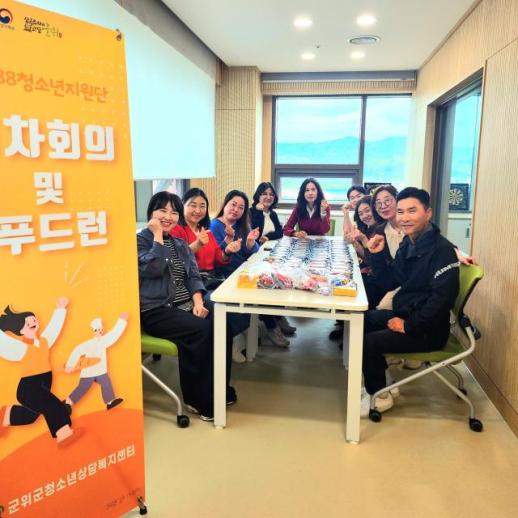 Gunwi youth volunteers launch Food Run to deliver homemade side dishes to at-risk teens Gunwi County’s 1388 Youth Support Volunteers, part of the Gunwi County Youth Counseling and Welfare Center, have begun the 2026 Food Run program to promote healthy eating and help stabilize daily life for local youth. Eight volunteers attended the first meeting on April 20 and pledged private-sector cooperation to protect at-risk teens. Food Run is a regular volunteer effort that will run through November, selecting 10 households with at-risk youth. Once a month, volunteers will cook side dishes and deliver them to each home while checking on the youths’ health and living conditions. The 1388 Youth Support Volunteers serve as a key private network in the youth safety net, helping identify and protect young people showing signs of crisis. Last year, the group carried out a range of activities, including school violence prevention campaigns, meal deliveries, promotion of the 1388 youth hotline and mentoring for vulnerable groups. Lee Kyung-sook, head of the Gunwi County Youth Counseling and Welfare Center and director of the county’s Resident Welfare Office, said, “I am grateful for the hard work of the volunteers who dedicate themselves to young people.” She added, “We will build a tighter, more practical support system so that youth can grow up healthy with the community’s 관심 and love.”* This article has been translated by AI. 2026-04-21 12:33:17
 -
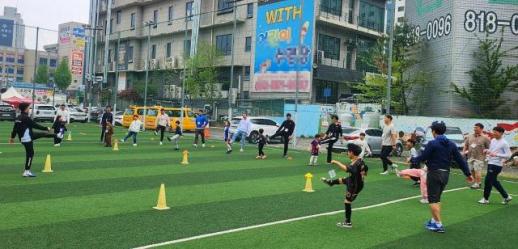 Gyeongsan Family Center Launches Soccer Program to Encourage Fathers’ Child Care GYEONGSAN, South Korea — The Gyeongsan Family Center in North Gyeongsang Province is running its 2026 neighborhood fathers class, “Goal-Kicking Kids and Dads,” to encourage fathers to take a more active role in child care and strengthen bonds with their children. The program targets fathers and their children ages 7 to 9. It began in April and will run through October for a total of 23 sessions. Along with play, it includes instruction to help fathers better understand child-rearing based on developmental stages. Soccer activities range from basic drills to mini-games, designed to help fathers and children cooperate and communicate through physical activity. The center said it expects the program to promote more active involvement by male caregivers at home and deepen emotional connections with children. Shin Yong-ik, head of the Gyeongsan Family Center, said the hands-on program will expand opportunities for family communication and help build a healthy family culture. The center said it plans to continue offering additional education programs for fathers.* This article has been translated by AI. 2026-04-21 12:27:15
 -
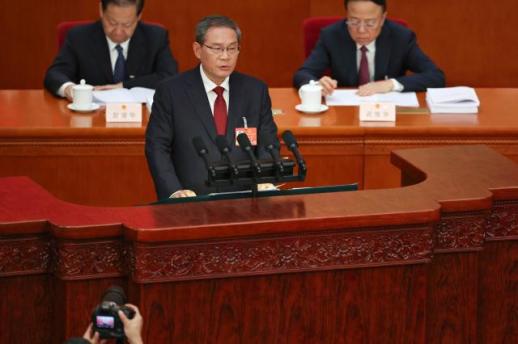 China Recasts Coal as Power-Grid Backstop Amid Energy Security Concerns China is again elevating coal in its energy policy as surging electricity demand, the intermittency of renewables and geopolitical uncertainty sharpen concerns about energy security. Analysts say Beijing, which has promoted a shift away from coal, is redefining it as a “safety valve” to help keep the power grid stable. The direction was underscored at a recent State Council meeting. China’s state-run Xinhua News Agency reported on April 21 that the State Council held its 19th group study session the previous day on “accelerating the building of a new energy system through coordinating energy security and the green, low-carbon transition.” Premier Li Qiang said strengthening energy security is a core foundation for building China into an energy power. Citing rapid changes in the international situation and rising energy consumption, he called for maintaining a sense of urgency and preparing for worst-case scenarios to improve the resilience and security of the energy system. Li said the key to stronger energy security is optimizing the energy mix. He urged greater innovation in energy technology, faster construction of a new energy system and a push for low-carbon shifts in energy production and consumption. He also called for expanding large clean-energy bases, including wind and solar in the northwest, hydropower in the southwest and offshore wind along the eastern coast, while developing distributed solar and wind and region-specific biomass, geothermal and ocean energy. At the same time, Li made clear that coal’s role is changing. He said China should raise the level of clean and efficient use of fossil energy, speed upgrades to improve efficiency at existing coal-fired plants and accelerate retrofits to cut carbon. He also said coal power should move beyond serving only as baseload supply and become a flexible source that can adjust output to match demand. China has promoted “de-coal” policies while pursuing goals of peaking carbon emissions by 2030 and achieving carbon neutrality by 2060, pushing a shift from coal to renewables. With expanded wind and solar installations, renewable capacity rose to about 2.334 billion kilowatts last year, accounting for about 60% of total power capacity. But electricity demand has been rising quickly, with some warning it is outpacing capacity growth. Driven by artificial intelligence, data centers and the spread of electric vehicles, power consumption last year exceeded 10.4 trillion kilowatt-hours, more than double the 2015 level and more than twice that of the United States. A key challenge is the nature of renewables. Solar and wind output can swing sharply with weather, making it difficult to respond reliably when demand peaks. With volatility in global energy markets rising amid the Russia-Ukraine war and the outbreak of the Iran war, arguments have gained traction for slowing the pace of coal cuts. Against that backdrop, coal is re-emerging as a central stabilizing element in China’s power system. Coal output has continued to rise, and the National Bureau of Statistics said production last year hit a record 4.85 billion tons. Some analysts say this does not signal a return to a coal-centered system, but an evolution in coal’s function. The U.S. foreign affairs magazine The Diplomat said that as renewables expand, China’s policy focus is shifting from increasing generation to ensuring grid stability, with coal being reshaped from a baseload source into flexible capacity that offsets renewable variability. Still, some warn that local governments may lean on coal generation because it is easier to build and cheaper in the name of short-term energy security, potentially adding pressure to long-term carbon-reduction goals. 2026-04-21 12:24:38
 -
 Hong Kong Luxury Home Sales Value Hits 18-Quarter High in Q1 Hong Kong real estate brokerage Centaline Property said luxury single-family home deals totaled 164 in the first quarter (January-March), with a combined contract value of HK$9.056 billion (about 184 billion yen). The number of deals fell 9.4% from the previous quarter, but total value rose 6.0% to the highest level in 18 quarters. New-home transactions rose 5.3% to 20 deals, and their value jumped 27.9% to HK$3.661 billion. Resale deals fell 11.1% to 144, and value slipped 5.0% to HK$5.395 billion. Centaline said resale activity has been weakening, but noted that deal volume has stayed above 100 for six straight quarters, indicating demand from buyers and investors remains solid. Ultra-luxury homes priced above HK$100 million accounted for 22 deals, up 4.8%, while their value increased 14.6% to HK$6.006 billion. Both measures rose for a fourth consecutive quarter. The priciest deal was a resale unit at Mount Nicholson on Hong Kong Island’s Victoria Peak, at HK$1.039 billion. A new unit at Plantation Blue Pearl, also on Victoria Peak, followed at HK$557.9 million. Yang Mingyi, senior associate director in Centaline’s research department, said improving market conditions and rising asking prices have continued to draw capital from wealthy buyers, signaling a recovery in the luxury single-family home segment. Yang also said second-quarter (April-June) activity could cool, citing the Hong Kong government’s February increase in stamp duty rates on home transactions above HK$100 million, Middle East turmoil and continued price gains in the resale market. 2026-04-21 12:03:17
 -
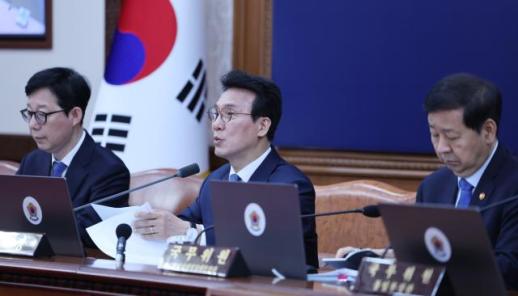 PM Kim Min-seok orders fast rollout of extra budget, including aid for high oil prices Prime Minister Kim Min-seok on April 21 ordered officials to closely check how 243 local governments are drafting supplementary budgets so that funding for 20 projects — including support for damage from high oil prices — can be executed quickly. In opening remarks at the 17th Cabinet meeting and the eighth emergency economy headquarters meeting at the Government Complex Seoul, Kim said “speed is the lifeblood” of what he called a “wartime supplementary budget.” He urged relevant ministries — including the Ministry of Economy and Finance, the Ministry of Trade, Industry and Energy, and the Ministry of Health and Welfare — to ensure additional supply-stabilization steps scheduled for this week, including releasing stockpiled urea for vehicles and setting a fourth maximum price for oil. With the deadline for a ceasefire between the United States and Iran approaching, Kim said uncertainty in the Middle East continues and stressed that the government will keep its current emergency economic response system firmly in place. Kim also called on ministries to follow through on steps tied to President Lee Jae-myung’s trip to India and Vietnam, saying the government must keep working under the president’s leadership to overcome difficulties from the Middle East war and strengthen energy and supply-chain stability. Kim said 217 of 341 key bills that should be handled in the first half — including the so-called materials, parts and equipment law and a bill to support victims of jeonse rental fraud — have yet to pass the National Assembly. He asked Cabinet members to keep meeting lawmakers in person to seek cooperation so the government does not miss what he called a legislative “golden time.” Kim said the government began intensive safety inspections the previous day at about 32,000 facilities nationwide considered at risk of accidents, citing concerns that oversight could weaken ahead of local elections. He instructed agencies to conduct thorough checks over the two-month inspection period and immediately carry out needed fixes, with special management for summer disaster-related sites such as underpasses, semi-basement homes and landslide-prone areas. * This article has been translated by AI. 2026-04-21 12:00:06