

China is again elevating coal in its energy policy as surging electricity demand, the intermittency of renewables and geopolitical uncertainty sharpen concerns about energy security. Analysts say Beijing, which has promoted a shift away from coal, is redefining it as a “safety valve” to help keep the power grid stable.
The direction was underscored at a recent State Council meeting. China’s state-run Xinhua News Agency reported on April 21 that the State Council held its 19th group study session the previous day on “accelerating the building of a new energy system through coordinating energy security and the green, low-carbon transition.”
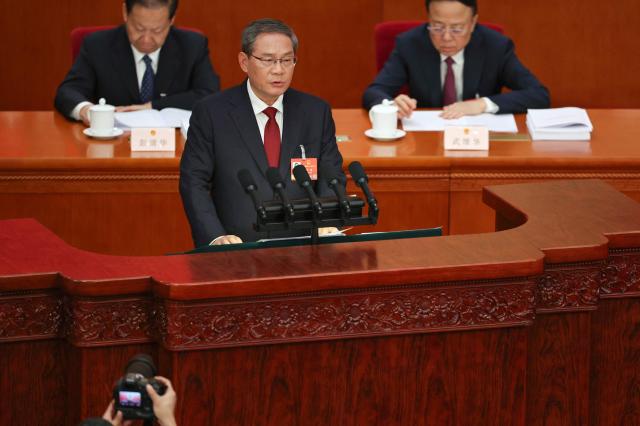
Premier Li Qiang said strengthening energy security is a core foundation for building China into an energy power. Citing rapid changes in the international situation and rising energy consumption, he called for maintaining a sense of urgency and preparing for worst-case scenarios to improve the resilience and security of the energy system.
Li said the key to stronger energy security is optimizing the energy mix. He urged greater innovation in energy technology, faster construction of a new energy system and a push for low-carbon shifts in energy production and consumption. He also called for expanding large clean-energy bases, including wind and solar in the northwest, hydropower in the southwest and offshore wind along the eastern coast, while developing distributed solar and wind and region-specific biomass, geothermal and ocean energy.
At the same time, Li made clear that coal’s role is changing. He said China should raise the level of clean and efficient use of fossil energy, speed upgrades to improve efficiency at existing coal-fired plants and accelerate retrofits to cut carbon. He also said coal power should move beyond serving only as baseload supply and become a flexible source that can adjust output to match demand.
China has promoted “de-coal” policies while pursuing goals of peaking carbon emissions by 2030 and achieving carbon neutrality by 2060, pushing a shift from coal to renewables. With expanded wind and solar installations, renewable capacity rose to about 2.334 billion kilowatts last year, accounting for about 60% of total power capacity.
But electricity demand has been rising quickly, with some warning it is outpacing capacity growth. Driven by artificial intelligence, data centers and the spread of electric vehicles, power consumption last year exceeded 10.4 trillion kilowatt-hours, more than double the 2015 level and more than twice that of the United States.
A key challenge is the nature of renewables. Solar and wind output can swing sharply with weather, making it difficult to respond reliably when demand peaks. With volatility in global energy markets rising amid the Russia-Ukraine war and the outbreak of the Iran war, arguments have gained traction for slowing the pace of coal cuts.
Against that backdrop, coal is re-emerging as a central stabilizing element in China’s power system. Coal output has continued to rise, and the National Bureau of Statistics said production last year hit a record 4.85 billion tons.
Some analysts say this does not signal a return to a coal-centered system, but an evolution in coal’s function. The U.S. foreign affairs magazine The Diplomat said that as renewables expand, China’s policy focus is shifting from increasing generation to ensuring grid stability, with coal being reshaped from a baseload source into flexible capacity that offsets renewable variability.
Still, some warn that local governments may lean on coal generation because it is easier to build and cheaper in the name of short-term energy security, potentially adding pressure to long-term carbon-reduction goals.
* This article has been translated by AI.
Copyright ⓒ Aju Press All rights reserved.