
Journalist

Eric Lob
-
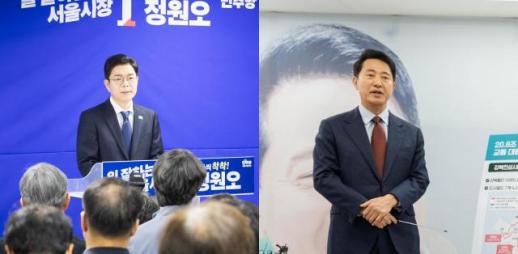 Oh Se-hoon Criticizes Jung Won-o's Property Tax Relief Proposal for Homeowners Oh Se-hoon, the People Power Party's candidate for Seoul mayor, criticized Jung Won-o's proposal to reduce property taxes for homeowners, calling it "disappointing and merely a stopgap measure." Oh made his remarks on the afternoon of May 15 during a visit to a site in Gangdong District, where he held a meeting with the "Citizens' Countermeasures Committee for Real Estate Hell." He stated, "As property values rise across Seoul, property taxes will inevitably increase. Proposing to reduce taxes for a select few while creating an environment that raises property taxes is akin to breaking someone's limbs and then offering a band-aid as a solution." Oh further pointed out that Jung's proposal is limited to homeowners without income and includes age restrictions, calling it "extremely disappointing and merely a stopgap measure." Earlier, on May 13, Jung announced his plan to implement property tax relief for homeowners without income. Following a press conference at the National Assembly that morning, Jung told reporters, "There have been many calls for measures as property taxes for homeowners are expected to rise significantly across Seoul. If I am elected mayor, I will ensure that these measures are implemented before September." He clarified that property taxes can be temporarily reduced through ordinances under the Local Tax Special Provisions Act. Regarding price limits for high-value homes, Jung mentioned, "There will be a cap, but the specifics will be discussed immediately after the election among the newly elected district mayors."* This article has been translated by AI. 2026-05-15 23:07:54
 -
 SeAH Steel Holdings Reports 1st Quarter Operating Profit of 26.7 Billion Won, Down 59% Year-on-Year SeAH Steel Holdings announced on May 15 that it recorded consolidated sales of 991.9 billion won and an operating profit of 26.7 billion won for the first quarter. While sales increased by 4.7% compared to the same period last year, operating profit fell by 59%. Despite weak demand in key sectors like construction, sales rose due to strong product sales in the North American oil and gas market. However, a decline in the selling price of oil country tubular goods (OCTG) and delays in logistics and raw material procurement caused by geopolitical risks in the Middle East led to the drop in operating profit. A representative from SeAH Steel Holdings stated, "The North American energy market is expected to maintain a solid trend due to ongoing demand for supply chain restructuring and inventory replenishment. We anticipate a gradual recovery in profitability from price increases starting in the second quarter." The company also plans to continue expanding product sales by responding to new demands from Middle Eastern oil and gas and LNG projects, as well as data centers in the Americas and offshore wind projects. On a standalone basis, SeAH Steel reported first-quarter sales of 415.8 billion won, a 17.8% increase from the same period last year, while operating profit decreased by 11.1% to 23.2 billion won. This growth was attributed to the recognition of sales from the Shin An Woo I offshore wind and Canadian natural gas pipeline projects, along with increased sales volumes driven by rising LNG demand in North America. However, the imposition of steel tariffs in the United States and rising raw material costs have negatively impacted profitability. SeAH Steel noted, "The effects of the rising won-dollar exchange rate and a profitability-focused sales strategy have improved operating profit compared to the previous quarter." Meanwhile, SeAH Besteel Holdings is working towards achieving carbon neutrality by 2050, having obtained verification for its carbon footprint assessment solution under the international standard 'ISO 14607.'* This article has been translated by AI. 2026-05-15 23:06:00
 -
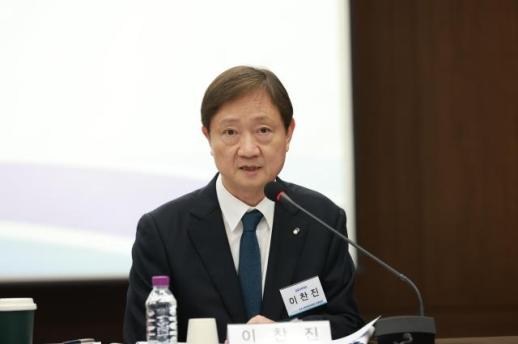 Financial Supervisory Service Chief Calls for Funding Shift to Productive Sectors The Financial Supervisory Service (FSS) is intensifying oversight to redirect funds concentrated in household loans and real estate project financing (PF) toward more productive sectors. The aim is to encourage financial institutions to actively support corporate investment and the real economy rather than relying solely on stable interest income. On May 15, the FSS held a plenary meeting of the 2026 Financial Supervisory Advisory Committee at the Bank Hall in Seoul, where they discussed the direction of financial supervision. In his opening remarks, Lee Chan-jin, the head of the FSS, noted, "The uncertainty in the global economy continues due to the impact of the situation in the Middle East that began in February. If high exchange rates and inflation persist, corporate activities may contract, and the difficulties faced by ordinary citizens and vulnerable groups could worsen." Lee emphasized the need for a shift in the direction of funding from the financial sector. He stated, "Financial institutions should not be fixated on easy interest income but should support productive sectors to foster economic growth." To achieve this, the FSS plans to manage risks related to household debt and real estate PF by implementing loan inspections and introducing limits on PF lending. The goal is to mitigate excessive capital flow into real estate and create conditions for funds to be supplied to productive sectors such as businesses. The FSS will also work on regulatory reforms to enhance the investment capacity of financial institutions. This includes rationalizing loss recognition for market risks in the banking sector and revising the calculation system for the insurance sector's solvency ratio (K-ICS) to broaden the foundation for investments in productive areas. Protecting ordinary citizens and vulnerable groups was also highlighted as a key supervisory task. The FSS aims to promote a culture of inclusive finance within the banking sector and support savings banks and mutual finance institutions in fulfilling their roles as community financial entities. Additionally, measures to combat financial crimes, including comprehensive strategies to eradicate voice phishing and one-stop support services for illegal lending, will be strengthened. This year, the Financial Supervisory Advisory Committee consists of 92 members, with the number of consumer-related representatives increased to 25 to align with academia, research institutions, and the financial sector. This change aims to more broadly reflect consumer opinions in the direction of supervision.* This article has been translated by AI. 2026-05-15 23:00:06
 -
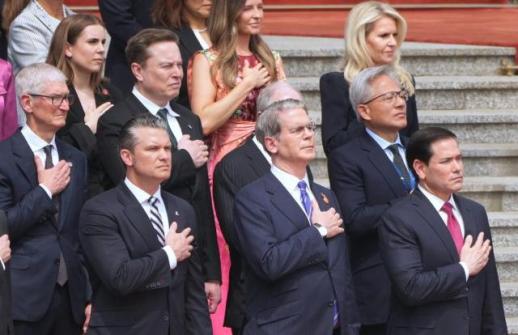 U.S.-China Summit Highlights Big Tech's Role in AI and Semiconductor Competition The U.S.-China summit held on May 14 at the Great Hall of the People in Beijing was more than just a diplomatic event. It symbolized a shift in the 21st-century global order, indicating that the new power dynamics are now centered around AI, semiconductors, data, platforms, energy, and supply chains, rather than solely military and diplomatic relations. Notably, the presence of prominent U.S. tech CEOs in the delegation led by President Trump drew significant attention. Leaders from major companies, including NVIDIA's Jensen Huang, Tesla's Elon Musk, and Apple's Tim Cook, joined representatives from BlackRock, Goldman Sachs, Qualcomm, Meta, Micron, Visa, Mastercard, and Boeing, effectively forming a 'technology supremacy delegation' in Beijing. This contrasts sharply with Cold War-era summits, which primarily focused on nuclear weapons and military alliances. Today's U.S.-China discussions center on AI, semiconductors, platforms, data, supply chains, and advanced manufacturing. The core of global supremacy has shifted from “who has more aircraft carriers” to “who controls the strongest AI ecosystem and semiconductor supply chain.”Trump's decision to bring U.S. tech leaders to China was not coincidental; it served as both a warning and a negotiation signal. The U.S. currently dominates the global AI industry in software and design capabilities. Companies like OpenAI, NVIDIA, Google, Meta, Microsoft, and Apple maintain the strongest influence in AI algorithms, cloud computing, semiconductor design, and platforms. Notably, NVIDIA's GPUs are often referred to as the 'oil' of the AI era. In this context, Jensen Huang's participation in Beijing is highly symbolic. A Taiwanese-American, Huang stands at the forefront of the AI revolution. NVIDIA is a dominant player in the AI training semiconductor market and symbolizes U.S. AI superiority. However, NVIDIA's long-term growth is challenging without access to the Chinese market, which is the world's largest manufacturing hub and a vast AI application market. Trump is leveraging this reality, indicating that while the U.S. holds the core AI technologies, the market and manufacturing ecosystem remain crucial in China. Interestingly, private sector leaders participated directly in parts of the summit, a rare occurrence in diplomatic meetings traditionally reserved for diplomats and security officials. This reflects the reality that U.S. national competitiveness is increasingly intertwined with private technology firms. The U.S. AI supremacy has not emerged solely from government efforts. It is the result of a massive ecosystem involving Silicon Valley, Wall Street, university research labs, the Department of Defense, cloud companies, and semiconductor firms. In essence, the U.S. is forming an AI supremacy structure that combines state and corporate power. Conversely, China is also formidable. While it lags in foundational semiconductor technology, it excels in data scale, manufacturing application, and national-level investment. Companies like Huawei, SMIC, Baidu, Alibaba, and Tencent are rapidly establishing an AI self-sufficiency system despite U.S. sanctions. China's strength lies in its speed. While the U.S. operates on a free-market innovation model, China employs a total mobilization system. When deemed necessary, central and local governments, state-owned enterprises, and private companies act in unison. This concentrated nurturing model, demonstrated in high-speed rail, electric vehicles, and solar industries, is now being applied to AI. Another critical difference is data. In the AI era, the key components are data, power, and semiconductors. China has accumulated vast amounts of data based on its large population and mobile ecosystem, combined with a cheap manufacturing base and a massive domestic market. In contrast, the U.S. excels in creative innovation and foundational technologies. Companies like OpenAI, Google DeepMind, and NVIDIA are shaping the direction of global AI technology. Thus, the current AI competition is not merely a technological race; the U.S. is strong in 'brainpower,' while China excels in 'scale and execution.' Both nations harbor fears of each other. The U.S. is wary of China's potential success in combining manufacturing and AI application markets for technological self-sufficiency. Meanwhile, China is concerned about the U.S. leveraging its semiconductor, GPU, and cloud systems to stifle China's AI industry. Ultimately, the Beijing summit was not just about tariff negotiations; it represented a significant negotiation table concerning the power structure of the AI era. Where does South Korea stand in this landscape? South Korea occupies a uniquely delicate position. With Samsung Electronics and SK Hynix leading the memory semiconductor sector, it remains among the world's strongest. Additionally, companies like Naver, Kakao, LG AI Research, and Samsung Research are developing their own AI ecosystems. However, the challenge lies in scale. The U.S. is strong in platforms and foundational technologies, while China excels in markets and manufacturing. South Korea is strong in semiconductors but relatively weak in platforms and large-scale AI ecosystems. Nevertheless, there are significant opportunities for South Korea. First, there is AI semiconductors. The core of the AI era is computational power, and AI cannot exist without memory semiconductors. South Korean companies are among the best in the high-bandwidth memory (HBM) sector. Second, there is manufacturing-based AI. South Korea has a robust industrial base in automobiles, shipbuilding, batteries, semiconductors, and robotics. In the realm of 'industrial AI,' South Korea can aim for a top-three position globally. Third, there is culture and soft power. In the AI era, data is not the only important factor; content and culture also matter. The global influence of K-pop, K-dramas, and K-content may become vital assets in future AI training data and digital platform competition. Ultimately, the future world will not be driven solely by military supremacy. It will be an era where AI, semiconductors, data, platforms, culture, energy, supply chains, and finance form a vast network. The participation of U.S. tech companies in Trump's visit to China underscores this reality. They are not merely business leaders but 'technology generals' at the forefront of 21st-century American supremacy. The scenes at the Great Hall of the People in Beijing mark a historical moment, signaling that the world has entered an era of AI Cold War.* This article has been translated by AI. 2026-05-15 22:57:00
 -
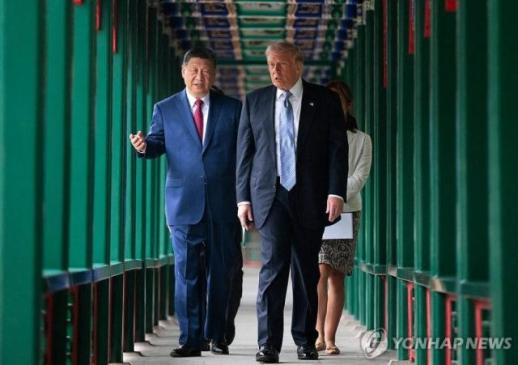 When the Doors of Zhongnanhai Open, the World Order is Reshaped Power speaks through space. Located in the heart of Beijing, adjacent to the Forbidden City, Zhongnanhai is the core of Chinese power, surrounded by high walls and strict security. This area, which is off-limits to ordinary tourists, serves as the de facto 'political heart' where the central leadership of the Chinese Communist Party and key officials of the State Council work and reside. Zhongnanhai is not merely a collection of buildings or offices; it symbolizes the very operation of power itself. Information released to the public is limited, and major policy decisions are made behind closed doors. Due to this characteristic, Zhongnanhai is often referred to as the 'center of invisible power.' In diplomacy, location is not just a backdrop. The venue of a meeting conveys its own message. Open meeting spaces and closed power areas carry different meanings. An invitation to Zhongnanhai is interpreted as a political signal that goes beyond mere hospitality. When President Xi Jinping invited President Donald Trump to this space, it held significance beyond a diplomatic schedule. It was seen as an expression of China's willingness to manage relations on a symbolic stage set by the country. However, this interpretation is context-dependent and should be considered alongside the officially confirmed messages. When was Zhongnanhai opened? Zhongnanhai has not historically been a space frequently opened to foreign leaders. However, there have been symbolic instances where it has been utilized during key moments in US-China relations. During President Richard Nixon's visit to China in 1972, his meeting with Chairman Mao Zedong took place in a power space near Zhongnanhai. This marked a significant turning point in US-China relations within the context of the Cold War. Subsequently, some US presidents have also held informal meetings with Chinese leaders in Zhongnanhai or similar symbolic spaces during their visits to China. These examples suggest that Zhongnanhai tends to be chosen for its symbolic significance rather than as a typical diplomatic venue. However, not all summits carry the same meaning, and each visit should be interpreted according to the political context and level of protocol at the time. Trump's invitation can also be understood in this context. In a situation where US-China relations are characterized by both competition and cooperation, a meeting in a symbolic space can be seen as a way to express the intent to manage the relationship. However, it is important to be cautious in interpreting this as an immediate improvement in relations or a strategic shift. Diplomatic gestures do not always align with actual policy directions. Trump and Xi: Different Styles of Power Another key element to note in this meeting is the governing styles of the two leaders. President Trump is regarded as a politician who prefers a pragmatic approach over traditional diplomatic norms. He emphasizes results over processes in negotiations and tends to make decisions in a flexible and sometimes unpredictable manner. In contrast, President Xi has demonstrated leadership that strengthens the party-centered governance structure and systematically concentrates power. The policy-making process is relatively closed, and national strategies are pursued from a long-term perspective. These differences also influence their diplomatic styles, resulting in a meeting of open and spontaneous negotiation styles with controlled and structured decision-making processes. Therefore, the essence of this meeting lies not merely in reaching agreements but in how these differing styles of power find common ground. Analysts suggest that the focus is likely to be on managing rather than resolving conflicts. The choice of Zhongnanhai as the venue can also be understood in this context. The closed and controlled environment is advantageous for reducing variables and managing the flow during negotiations. Understanding the Reality for South Korea The meeting at Zhongnanhai is not just an internal Chinese matter; it is connected to the broader international order. The current global environment is shifting from a single order to a coexistence of multiple power structures. The existing US-centered order competes with a new China-centered order, while coexisting to some extent. In this process, competition in key areas such as technology, supply chains, energy, and finance is intensifying. Even with ongoing meetings between leaders, the likelihood of resolving this structural competition in the short term is low. South Korea occupies an important position amid these changes. Economically, it is closely connected to both the US and China, and it has complex security interests as well. Thus, a strategy that allows for flexible responses depending on the situation is required, rather than a simplistic approach of choosing one side. It is a structure that must consider both diplomatic balance and industrial competitiveness. This meeting at Zhongnanhai reaffirms this reality. The world is becoming increasingly complex, and diplomacy has entered a stage that cannot be easily explained by simple cooperation or confrontation. Zhongnanhai is a symbol of Chinese power and a space that opens to the outside world only at limited moments. Meetings held here carry a certain political significance in themselves. However, it is essential to be cautious about overinterpreting that significance. While symbols are important in diplomacy, actual policies and outcomes are determined in separate realms. Trump's invitation could signal a de-escalation of tensions, but it may also be part of managing competition. Ultimately, what matters is not the location but the dynamics. US-China relations remain structured around coexistence of competition and cooperation, and a single event will not change the direction. Nevertheless, one fact is clear. The world order is currently undergoing a restructuring, and major countries are signaling to each other in various ways. The opening of the doors to Zhongnanhai is merely a scene that illustrates that this change is still in progress.* This article has been translated by AI. 2026-05-15 22:49:35
 -
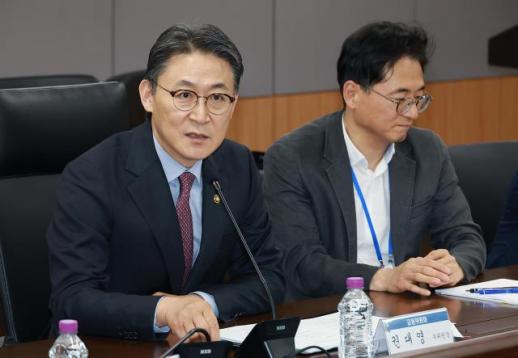 Financial Authorities Accelerate Token Securities Regulation Ahead of 2027 Implementation South Korea's financial authorities are accelerating the design of regulations for token securities (STO), set to be implemented next year. Discussions have begun on various aspects, including the criteria for underlying assets in fractional investments, the approval system for over-the-counter exchanges, and on-chain payment infrastructure, raising expectations for the early establishment of the STO ecosystem. The authorities reaffirmed their commitment to balancing innovation and trust rather than imposing excessive regulations that hinder progress. On May 15, the Financial Services Commission (FSC) held the second meeting of the public-private Token Securities Council at the Government Seoul Building, discussing amendments to subordinate regulations and guidelines in preparation for the implementation of the token securities law. The council, which launched in March, includes members from the FSC, the Financial Supervisory Service, the Korea Securities Depository, the Financial Security Institute, the Korea Financial Investment Association, the Fintech Industry Association, as well as experts from academia and the legal field. The token securities law, established through amendments to the Electronic Securities Act and the Capital Markets Act, is scheduled to take effect in February 2027. The financial authorities aim to minimize market confusion by refining detailed regulations related to issuance, distribution, and payment infrastructure before the law takes effect. During the meeting, discussions focused on three main areas: criteria for fractional investment issuance, expansion of tokenization infrastructure, and the design of the distribution market structure. The authorities plan to announce the final draft of the related enforcement decree and guidelines by July. In the fractional investment issuance sector, the eligibility criteria for underlying assets and investor protection systems were key issues. The authorities expressed their intention to allow innovative asset tokenization to expand the token securities market, provided that objective asset valuation, disclosure systems, and risk management measures are firmly established. Kwon Dae-young, Vice Chairman of the FSC, stated, "Even with innovative tokenization, maintaining market order and protecting investors are fundamental premises of the capital market. Objective asset valuation and risk management systems are necessary." However, the authorities also indicated plans to relax the rigidity of existing regulations. Currently, the issuance of fractional investment securities that bundle multiple underlying assets is effectively restricted, but there is a consensus to allow pooling within a certain range for assets of the same type in the future. Discussions on expanding tokenization targets and building infrastructure have also intensified. While domestic STO discussions are currently focused on fractional investments, the global market is rapidly expanding the tokenization of existing structured securities such as stocks, bonds, and money market funds (MMFs). Kwon emphasized, "Green bonds in Hong Kong and MMFs in the U.S. have been issued in token securities form, and both the New York Stock Exchange (NYSE) and Nasdaq are preparing pilot projects for the tokenization of listed stocks. We must prepare for the imminent future with urgency." However, the financial authorities drew the line at a complete transition of the existing electronic securities system to a blockchain-based structure all at once. They explained that they would approach this with a phased roadmap and concurrent testing to avoid potential conflicts with the existing system. Accordingly, the government and relevant agencies plan to examine the feasibility of digitizing the entire process of on-chain payment systems, rights transfer, trading, and settlement while improving related infrastructure. The industry views the integration of central depository systems with distributed ledger technology as a key challenge ahead. The design of the distribution market structure has also emerged as a core topic of discussion. In particular, the approval system for over-the-counter exchanges capable of multi-party transactions in token securities and the setting of trading limits for general investors were highlighted as major issues. Currently, there are increasing demands for clarity on whether separate approvals are needed for electronic securities-based OTC exchange operators supporting STO transactions and the extent to which concurrent operations among unlisted stocks, investment contract securities, and fractional investment platforms are permissible. The financial authorities aim to design regulations that enhance trading efficiency while achieving fair competition and investor protection. Kwon stated, "We will set limits in a way that does not confine innovation while systematizing investor protection and expanding initial market liquidity." Market participants view this discussion as a significant step toward the implementation of the STO regulatory framework. With proactive efforts to design detailed infrastructure and market structure ahead of the law's enactment, preparations in the securities and fintech sectors are expected to accelerate. However, industry experts caution that challenges remain. If the criteria for assessing the eligibility of underlying assets become overly stringent, it could stifle innovation, while lenient regulations may increase the risk of investor harm. The stability of blockchain-based transactions and the integration with existing financial infrastructure are also identified as pressing issues. Kwon remarked, "Token securities are a developing market without clearly established global standards or answers. We must continuously consider the optimal approach that aligns with our capital market environment while closely monitoring new technologies and business attempts."* This article has been translated by AI. 2026-05-15 22:45:57
 -
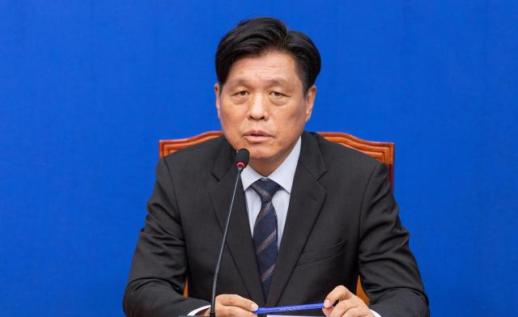 Democratic Party Responds to Kim Du-gyeom's Allegations of Collusion in Ulsan Mayor Race The Democratic Party on May 15 responded to allegations of collusion made by Kim Du-gyeom, the candidate from the People Power Party, regarding the unification of progressive candidates for the Ulsan mayoral election. The party expressed confidence that there would be no unification with independent candidate Park Maeng-woo. While Kim Sang-wook of the Democratic Party and Kim Jong-hoon of the Justice Party agreed to unify their candidacies through a poll-based primary, discussions between Kim Du-gyeom and Park on unification have stalled, raising concerns about the conservative candidates' prospects. However, the unification of progressive candidates could potentially accelerate talks between Kim Du-gyeom and Park. During a press conference at the National Assembly, Cho Seung-rae questioned the basis of Kim Du-gyeom's claims, stating, "What evidence do you have to assert collusion?" He further explained that the decision to unify was made out of a desperate need to correct Ulsan's governance and prevent the People Power Party from regaining power. On the previous day, Hwang Myung-pil, the Ulsan mayoral candidate from the Justice Party, had withdrawn in support of Kim Sang-wook. Additionally, Cho addressed the Pyeongtaek by-election, stating, "Currently, there are no ongoing discussions with the Justice Party." The race has seen sharp exchanges between Democratic candidate Kim Yong-nam and Justice Party candidate Cho Guk, complicating the possibility of unification. Moreover, regarding the support for Cho from Lee Ho-cheol, a former chief of the Civil Affairs Office during the Roh Moo-hyun administration, Cho remarked, "We consider actions by our party members supporting candidates from other parties or independents as inappropriate, and we will make a comprehensive judgment on this matter."* This article has been translated by AI. 2026-05-15 22:43:05
 -
 Hanmico Semiconductor to Enter U.S. Semiconductor Supply Chain Hanmico Semiconductor is poised for significant growth in the second quarter of this year, driven by the ongoing demand for global artificial intelligence (AI) semiconductors. The company anticipates a substantial increase in annual revenue as it prepares to establish its U.S. subsidiary, Hanmi USA, by the end of the year.Hanmico Chairman Kwak Dong-shin stated on May 15, "With the mass production of High Bandwidth Memory (HBM4) ramping up, we are seeing a surge in orders for TC bonders in the second quarter. This trend is expected to accelerate in the second half of the year." He emphasized that Hanmico's TC bonders, which hold the top global market share, will benefit significantly from the expansion of the AI semiconductor market.The establishment of Hanmi USA in San Jose, California, will enable Hanmico to actively respond to local market demands. The company plans to use the San Jose office as a central hub for rapid technical support, aligning with the operational timelines of new semiconductor factories being established by global firms in the U.S. This strategy includes deploying skilled engineers locally to provide proactive technical assistance.The formation of Hanmi USA also marks a significant realization of Hanmico's founding vision of serving as a bridge between Korea and the United States, 50 years after its inception. The company was founded by the late Kwak No-kwon, who built his expertise during 14 years at Motorola in the U.S. before establishing Hanmico in Korea, a country that was then a barren landscape for the semiconductor equipment industry. Now, Hanmico plans to make a substantial entry into the U.S. market through Hanmi USA.As the production of HBM4 expands, Hanmico's growth trajectory is expected to steepen. Analysts are noting that competition among global memory companies to increase HBM production will intensify in the second half of the year, potentially leading to increased orders for TC bonders. Hanmico is currently supplying equipment to global memory companies, including SK Hynix, and anticipates diversifying its revenue portfolio with new products such as next-generation hybrid bonders and 2.5D packaging equipment.Recent investments in large-scale semiconductor manufacturing facilities in the U.S. have been notable. In the fourth quarter of last year, Intel began operations at a new advanced process-based foundry and packaging plant in Chandler, Arizona. By 2027, Micron aims to have a cutting-edge DRAM and HBM manufacturing hub operational in Boise, Idaho, and is constructing the largest memory production facility in the U.S., known as a "megafab," in Syracuse, New York, set to begin operations in 2028. Additionally, SK Hynix plans to start advanced HBM supply in Lafayette, Indiana, by 2027.In this context, Hanmico's direct participation in the U.S. government-led AI semiconductor supply chain is expected to yield significant benefits in the future.Moreover, the establishment of Hanmi USA is significant for building direct collaboration with global hyperscaler companies, which are end-users. Recently, companies like Microsoft, Google, Amazon (AWS), and Meta have been developing their own AI semiconductors, increasingly reviewing and specifying the high-performance memory and essential equipment used in manufacturing processes. Consequently, demand for packaging equipment aimed at hyperscalers is anticipated to rise.Currently, Hanmico holds the top global market share in TC bonders, which are essential for HBM manufacturing, and plans to launch a prototype of its second-generation hybrid bonder equipment within the year to solidify its leadership in the next-generation HBM market.In addition to HBM TC bonders, Hanmico aims to drive revenue growth with a variety of equipment. The company is set to supply its 2.5D packaging equipment, including the "2.5D TC Bonder 40" and "2.5D TC Bonder 120," to foundry and OSAT companies this year. The "BOC COB Bonder," which was launched earlier this year as the world's first, has begun supplying global memory companies and is expected to contribute to revenue growth alongside the expanding demand for AI and data centers.Chairman Kwak stated, "Through our U.S. subsidiary, we plan to actively support our clients' needs closely. We anticipate significant equipment orders alongside the operation of new factories in the U.S., which is emerging as a global semiconductor production hub, and expect continuous revenue growth in the future."* This article has been translated by AI. 2026-05-15 22:37:27
 -
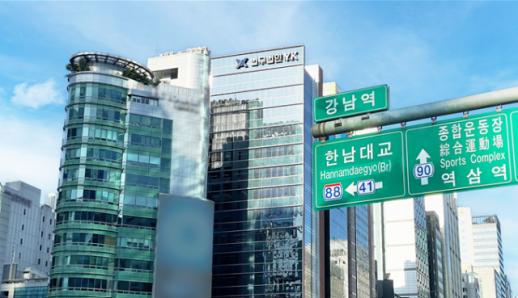 YK Law Firm Offers Experienced Attorneys Annual Salary of 150 Million Won YK Law Firm has announced a base salary of over 150 million won (approximately $130,000) per year for experienced attorneys during its hiring process. Amid increasing competition for talent in the law firm sector, YK is emphasizing a compensation system that prioritizes skills and performance over seniority and tenure. According to legal industry sources on May 15, YK recently posted job openings for experienced attorneys in its criminal law and litigation groups. The job listing includes a base salary of at least 150 million won, an annual performance bonus, and priority participation in high-stakes cases. The firm also indicated that salary negotiations could vary based on location and individual capabilities. While the starting salary for new attorneys at large law firms in South Korea typically ranges from 150 million to 180 million won, it is considered unusual for a mid-sized firm to offer such a high base salary for experienced hires. Industry analysts suggest that the competition for securing top talent, particularly in criminal and corporate litigation, is driving up compensation across the board. This hiring initiative aligns with YK's strategy to expand its corporate legal services in response to growing demand from small and medium-sized enterprises. The firm is reportedly accelerating its recruitment of experienced attorneys with practical expertise. Notably, the job announcement includes a statement rejecting the outdated notion that seniority should take precedence over achievement, emphasizing a performance-driven organizational culture. The firm aims to base its compensation structure on the ability to handle cases and deliver results. YK also plans to improve the working conditions for its current attorneys. Reports indicate that the firm is considering a phased salary increase for existing lawyers to align with the new hiring standards. The legal community is observing an intensifying competition for talent between large and mid-sized law firms. Particularly in the fields of criminal and corporate litigation, there is a fierce competition to attract former judges, prosecutors, and graduates from police academies, which is contributing to rising salary levels. In fact, YK has indicated that it will prioritize candidates with outstanding performance in judicial training or law school, as well as those with strong client management skills. Attorneys with backgrounds as judges, prosecutors, or those who have demonstrated success at other law firms will also have the opportunity for separate salary negotiations. A YK representative stated, "We aim to establish a system where the achievements of professionals lead to fair compensation."* This article has been translated by AI. 2026-05-15 22:34:37
 -
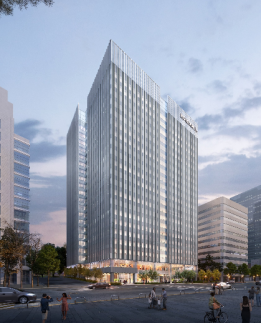 Korean Reinsurance Reports 131.4% Increase in Q1 Net Profit Korean Reinsurance reported a net profit of 209.5 billion won for the first quarter of this year, more than double the amount from the same period last year. The increase was attributed to gains from overseas bond evaluations due to rising exchange rates and a base effect from last year's high-claim incidents. The company announced on May 15 that its revenue for the first quarter reached 1.6981 trillion won, a 9.3% increase compared to the same period last year. The revenue growth was significantly influenced by increased evaluation gains from overseas bonds resulting from the rising exchange rates. As a global reinsurer, Korean Reinsurance has a considerable proportion of overseas investment assets and foreign currency-denominated assets, making it susceptible to fluctuations in exchange rates that can impact investment and evaluation profits. The net profit of 209.5 billion won represents a 131.4% increase from the previous year. This increase reflects the base effect from significant claims incurred during the same period last year, which included losses of 121.5 billion won from three major incidents: the LA wildfires, the Myanmar earthquake, and the Yeongnam wildfires. Reinsurers can experience substantial quarterly profit volatility based on the occurrence of high-claim incidents such as natural disasters, large fires, and industrial accidents. A representative from Korean Reinsurance stated, "The increase in performance was influenced by the base effect from last year's high-claim incidents. In the first quarter of this year, there were no major incidents leading to significant losses, and the increase in evaluation gains from overseas bonds due to rising exchange rates also contributed to revenue growth."* This article has been translated by AI. 2026-05-15 22:33:00