


Latest by
-
 Hong Myung-bo Resigns as South Korea Soccer Coach After World Cup Exit Hong Myung-bo has stepped down as head coach of the South Korean national soccer team following their exit from the group stage of the 2026 FIFA North Central America World Cup. On June 29, local time, Hong announced his resignation during a press conference at the Chivas Verde Bay training base in Sapopan, Mexico. He expressed his sincere apologies to the fans, saying, "I want to sincerely apologize to the people who love Korean soccer and always support the national team. I am here today to announce my resignation as head coach of the South Korean national team." Having taken over in July 2024, Hong will not complete his contract, which was set to run until the Asian Cup in Saudi Arabia in January 2027. This marks his second World Cup as head coach, following a disappointing performance in 2014, where the team finished with one draw and two losses. Reflecting on his tenure, Hong stated, "Being the head coach of the national team was never an easy decision for me. However, once I decided to take on this role, I did not think of any other reasons. I believed that fulfilling my responsibilities was my only duty." He added that he consistently asked himself, "Is this choice for the benefit of Korean soccer?" during critical decisions, including player selections and training preparations. "I cannot say that all my judgments were correct, but the standard for all my decisions was always Korean soccer," he noted. He reiterated that he takes full responsibility for the team's failure to advance, saying, "I believe that the position of a coach cannot be explained away in the face of results. Therefore, I stand here today to speak of responsibility rather than explanations. I could not deliver the results that the public expected, and that responsibility lies entirely with me." In closing, he said, "I am resigning as head coach today. However, I have not given up my passion for Korean soccer. I sincerely hope our national team can grow into a team that earns the trust and love of the people once again." Under Hong's leadership, the South Korean team finished third in Group A with one win and two losses (3 points, goal difference -1) at the North Central America World Cup. In this expanded tournament featuring 48 teams, only the top eight third-place teams advanced to the knockout stage, but South Korea ranked 10th among the 12 third-place teams and failed to progress. This marks the first time South Korea has exited the World Cup group stage since the 2018 tournament in Russia, and it is the ninth time in history (1954 Switzerland, 1986 Mexico, 1990 Italy, 1994 United States, 1998 France, 2006 Germany, 2014 Brazil, 2018 Russia) that they have failed to advance from the group stage. The team's final ranking in the tournament was 34th. Despite the expansion to 48 teams, this result is effectively equivalent to not qualifying for the knockout stage, marking the lowest performance in South Korea's World Cup history. 2026-06-29 01:08:00
 -
 4th Annual Aju Economy Veterans Literary Awards Ceremony Aju Economy will hold the 4th Annual Aju Economy Veterans Literary Awards Ceremony on June 30 at 10 a.m. in the auditorium on the third floor of the Maeheon Yoon Bong-gil Memorial Hall in Seoul. Today’s South Korea is built on the sacrifices and dedication of countless veterans who have served the nation. Remembering and passing on this noble spirit is an important responsibility for our society. In this spirit, Aju Economy continues the Veterans Literary Contest to reflect on the meaning of veterans through literature and to honor the sacrifices of veterans with the public. This year marks the fourth edition of the Aju Economy Veterans Literary Contest, which received over 1,000 submissions across various categories, including poetry, essays, short stories, children's literature, screenplays, and book reviews. Notably, this year has seen the introduction of six awards from the Minister of Veterans Affairs, along with a new award from the Korea Army Association, enhancing the recognition and categories of the awards. The ceremony aims to celebrate and encourage the literary achievements of the awardees while providing an opportunity for all citizens, especially the youth, to reflect on the meaning of veterans through literature. <Event Overview> ■ Event Name: 4th Annual Aju Economy Veterans Literary Awards Ceremony ■ Date: June 30, 2026 (Tuesday), 10 a.m. to 11 a.m. ■ Location: Auditorium, Maeheon Yoon Bong-gil Memorial Hall, 3rd Floor ■ Awards: Poetry, essays, short stories, children's literature, screenplays, book reviews, etc. ■ Hosted by: Aju Economy ■ Sponsored by: Ministry of Veterans Affairs, Dongnong Cultural Foundation, Korean Liberation Association, Korea Army Association, Auto Industry* This article has been translated by AI. 2026-06-29 00:04:00
 -
 Lee Jae-myung Calls World Cup Exit a Failure of Organization and Personnel President Lee Jae-myung has attributed the South Korean national football team's exit from the group stage of the 2026 FIFA World Cup to a "failure of organization and personnel," pledging to expedite reforms in sports administration. Culture, Sports and Tourism Minister Choi Hwi-young also announced plans to form an expert committee to thoroughly investigate the reasons behind the team's failure and to revamp football administration overall.In a statement on social media, President Lee expressed his disappointment, saying, "Minister Choi and the relevant officials have worked hard. As a former honorary president of a professional football club and a passionate supporter, I feel not just surprised but also bewildered by the unexpected outcome."He emphasized, "This once again proves that personnel decisions are crucial. If incompetent individuals are appointed as leaders based on favoritism rather than ability, the results will be predictable."Lee further noted that the ability to distinguish between public and private interests is hindered by a lack of oversight and accountability for those in power. He stressed the importance of democratic structures, control, and alignment of authority and responsibility within all organizations.The president directed the Korea Sports Council and the Korea Football Association to implement a direct election system involving all relevant sports personnel, stating that he believes this is already being carried out. He highlighted the need to establish a monitoring and accountability system to enhance transparency, fairness, and objectivity in operations, ensuring that actions and outcomes are met with corresponding responsibilities.He remarked that the failure to qualify for the World Cup appears to stem from these issues and instructed the Ministry of Culture, Sports and Tourism to carefully analyze the situation and causes, as well as to develop measures to prevent recurrence and improve the system."I sincerely apologize for the deep disappointment this has caused the public," he added, pledging to swiftly pursue reforms in sports administration to prevent such incidents from happening again.Minister Choi also addressed the situation on social media, stating, "The goal of reaching the Round of 32 has been thwarted. We watched in silence, but the result was an exit in the group stage. South Korean football, now in a quagmire, must gather itself and start anew from the ground up."He emphasized the need to identify where things began to go wrong and what has been holding the team back, stating, "It is time to consolidate the discussions we have had and create fundamental alternatives. Until the day the public's support is restored, the government will do everything it can to assist."* This article has been translated by AI. 2026-06-28 21:44:00
 -
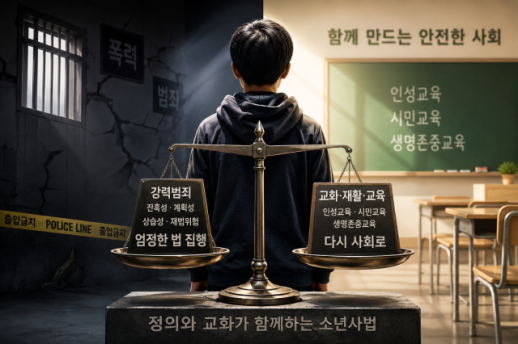 South Korea Considers Lowering Age for Criminal Responsibility for Serious Crimes The South Korean government is moving to lower the age of criminal responsibility for serious crimes from 14 to 13 years old. This proposal comes after a long-standing debate between those advocating for maintaining the current age and those pushing for a reduction, ultimately resulting in a compromise of "conditional lowering." The key issue in this discussion is not merely about reducing the age by one year. A more critical question is which crimes society should hold juveniles accountable for. The juvenile criminal system was established in 1953, during a time when South Korea was still recovering from war and had significantly lower levels of education and welfare compared to today. The state's priority on protection over punishment was a choice reflective of that era. However, over 70 years later, South Korea has transformed into a very different society. Adolescents today experience faster physical and cognitive development, and the proliferation of digital technology and generative AI has vastly improved their access to information. Some violent crimes now exhibit brutality comparable to adult offenses. That said, uniformly lowering the age of criminal responsibility is not a panacea. Examining the experiences of advanced countries reveals that the age of criminal responsibility varies widely. The focus should not solely be on the number but on how the nature of the crime, the risk of reoffending, and the need for societal protection are reflected in the laws. The issue of juvenile offenders should not be reduced to a simple age debate. Serious crimes such as murder, robbery, rape, arson, and organized violence pose significant threats to public safety and cannot be treated the same as minor offenses. For crimes characterized by premeditation, brutality, and a high risk of recidivism, society must critically assess whether it is just to completely exempt individuals from criminal responsibility based solely on age. Conversely, it is also inappropriate to punish impulsive or minor offenses with the same severity. Distinctions should be made between first-time offenders and habitual offenders, taking into account the motives, circumstances, and potential for rehabilitation. The juvenile justice system should strive for both strictness and the possibility of rehabilitation. Most importantly, education aimed at preventing crime is more crucial than punishment after the fact. In several European countries, civic education, character education, and community awareness are systematically taught from a young age. There is a growing recognition that schools should be places where respect for others and responsibility are learned, beyond merely imparting knowledge. South Korea should also strengthen moral education, civic education, and respect for life from kindergarten and elementary school levels. In an age dominated by AI, the ability to make humane judgments and a sense of responsibility become even more vital. While AI can provide information, the conscience that guides moral choices ultimately develops through education. The solution to the issue of juvenile offenders does not lie in choosing between harsher punishments and enhanced education. Only when strict law enforcement and systematic character education go hand in hand can society become truly safe. The law must protect victims while also providing opportunities for young offenders to reintegrate into society. However, these opportunities should be granted based on accountability. South Korea's juvenile criminal system must move beyond simply asking, "How old are they?" In the future, it should evolve into a sophisticated juvenile justice system that comprehensively considers the brutality, premeditation, habitual nature, risk of reoffending, and the need for social isolation, rather than relying on a uniform age-based standard. This approach will safeguard public safety while ensuring that future generations are not abandoned, embodying a path toward a just and rehabilitative advanced judicial state.* This article has been translated by AI. 2026-06-28 21:28:00
 -
 Semiconductor Boom Expands to Regional Investments and Advanced Industry Transformation Samsung Electronics is preparing its largest regional investment plan to date, aiming to leverage the semiconductor boom for national balanced development and the cultivation of future industries. If SK Group also engages in large-scale investments, projections suggest that total investments could reach 2,000 trillion won over the next decade. According to Yonhap News Agency, both the government and industry analysts view Samsung's investment as a strategy to maintain leadership in the global semiconductor competition while expanding the semiconductor value chain and advancing manufacturing capabilities. The semiconductor cluster being developed in the Honam region is expected to match the scale of the semiconductor cluster in Yongin, which includes up to 10 semiconductor fabrication plants (fabs) featuring both front-end and back-end processes. This cluster is anticipated to foster a large industrial ecosystem with concentrated design, equipment, and materials companies, along with an influx of research and development (R&D) personnel and specialized talent. Industry experts believe that if the semiconductor boom continues until 2030, this investment foundation will be crucial for maintaining South Korea's global semiconductor leadership. In addition to semiconductors, Samsung plans to expand investments in advanced materials and components. In the Chungcheong region, Samsung Display, Samsung SDI, and Samsung Electro-Mechanics are producing semiconductor substrates, displays, and batteries, with increased production capacity expected to strengthen the supply chain for advanced industries such as physical AI and next-generation mobility. The expansion of multi-layer ceramic capacitor (MLCC) production at Samsung Electro-Mechanics in Busan and the enhancement of production facilities at Samsung Biologics are also expected to boost competitiveness in the electronics and biopharmaceutical sectors, respectively. Samsung Group is projected to invest approximately 1,000 trillion won in the semiconductor and materials and components sectors over the next decade. If SK Group also plans a similar scale of investment, the combined total from both conglomerates could reach 2,000 trillion won. Kim Yong-beom, head of the Presidential Policy Office, recently remarked that the figures associated with this investment are likely to be unprecedented. The government aims to decentralize advanced industry hubs to alleviate concentration in the capital region and promote balanced regional development. Plans are underway to establish Honam as a semiconductor production hub, Chungcheong as a center for semiconductor packaging and advanced materials and components, Yeongnam as a base for AI-driven manufacturing, and Incheon as a core hub for the biopharmaceutical industry. Additionally, there are expectations that if SK Group considers developing a semiconductor cluster in Honam and an AI data center in Yeongnam, along with Hyundai Motor Group and LG Group expanding investments in physical AI and AI data centers, a nationwide advanced industry ecosystem could be established.* This article has been translated by AI. 2026-06-28 20:44:00
 -
 South Korea to Lower Age of Criminal Responsibility for Serious Offenses The South Korean government has decided to lower the age of criminal responsibility for serious and habitual offenders from 14 to 13 years old. According to Yonhap News, the Ministry of Gender Equality and Family and the Ministry of Justice have reached a consensus to adjust the age threshold for criminal minors to 13 years only for severe crimes such as murder, robbery, and sexual offenses.Initially, a social dialogue committee aimed at discussing the age of criminal responsibility recommended maintaining the current age range of 10 to 14 years after public consultations in March and April. However, growing concerns over serious juvenile crimes and public calls for a lower age limit prompted the government to propose a compromise.A survey conducted by Gallup Korea in March found that 81% of respondents aged 18 and older supported lowering the age of criminal responsibility. While experts generally advocated for keeping the current age limit during the public discussions, many ordinary citizens and youth participating in online forums expressed support for a reduction.The government plans to present the revised recommendation to the Cabinet meeting as early as June 30. However, some details may be adjusted based on the meeting's outcomes.The specific definition of serious crimes has yet to be finalized. The Ministry of Justice intends to refer to a proposed amendment to the criminal law introduced in the 21st National Assembly to establish detailed criteria. This bill includes serious offenses such as murder, robbery, sexual crimes including rape and sexual assault, and group violence, and stipulates that individuals sent to juvenile detention centers three times or more would not be exempt from criminal responsibility.Lawmakers from both parties who proposed the amendment stated, "The current age limit for criminal minors was established when the criminal law was enacted in 1953. Today, adolescents are more physically and mentally mature, and there has been an increase in serious juvenile crimes, particularly sexual offenses."* This article has been translated by AI. 2026-06-28 20:28:00
 -
 South Korean Foreign Minister Discusses Security Cooperation with Japan's Defense Minister South Korean Foreign Minister Choo Hyun met with Japan's Defense Minister Shinjiro Koizumi on June 28 to discuss expanding practical cooperation and enhancing security collaboration between the two countries.According to the Ministry of Foreign Affairs, Minister Choo assessed that shuttle diplomacy between the leaders of both nations has been driving cooperation across various sectors, including active exchanges in defense.In light of rapidly changing international circumstances, Choo emphasized the need for South Korea and Japan to strengthen their cooperation as "close neighbors."He particularly noted that "Korea-Japan security cooperation is related to the sentiments of our people," stressing the importance of expanding tangible cooperation that citizens can feel.Minister Koizumi also mentioned in his opening remarks that he believes understanding among the Korean public is essential for the development of Korea-Japan defense cooperation, referencing a 'Youth Security Dialogue' held that afternoon at the Korea Institute for Defense Analysis (KIDA) in Dongdaemun, Seoul.He added, "It is important for both countries to continue exchanges in various fields as partners responding to diverse issues in the international community."The two sides exchanged views on the recent security situation in the Middle East, as well as regional and global security matters, agreeing to continue their cooperation with the international community.* This article has been translated by AI. 2026-06-28 19:52:00
 -
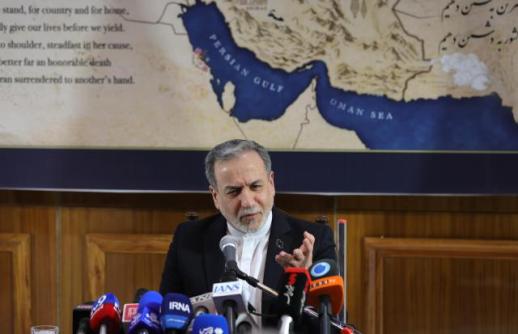 Iran's Foreign Minister Emphasizes Need to Adhere to MOU in Iraq As the United States and Iran engage in military confrontations, casting doubt on a ceasefire memorandum of understanding (MOU), Iranian Foreign Minister Abbas Araghchi visited Iraq to reiterate the importance of adhering to the MOU. According to Yonhap News Agency, during a joint press conference following talks with Iraqi Foreign Minister Fuad Hussein in Baghdad on June 28, Araghchi stated, "The events in the Strait of Hormuz over the past two days have heightened tensions and conflicts." He urged all parties to refrain from interfering with Iran's measures to reopen the Strait of Hormuz and to comply with the signed MOU, emphasizing the need to stay true to its intent. Araghchi noted that under the MOU, Iran must secure control over the strait and remove obstacles to restore it to a state of "war-free status" within 30 days. He stressed that, according to Article 1 of the MOU, hostilities must cease on all fronts, including Lebanon. He also proposed that all countries in the Persian Gulf region reassess their security and establish a new framework for participation without the intervention or interference of external nations. Regarding the military clashes between Israel and the southern Lebanese militant group Hezbollah, he claimed, "The U.S. government has the responsibility to halt the attacks by the Zionist (Israeli) regime and withdraw from the occupied territories, as promised in the MOU."* This article has been translated by AI. 2026-06-28 19:40:00
 -
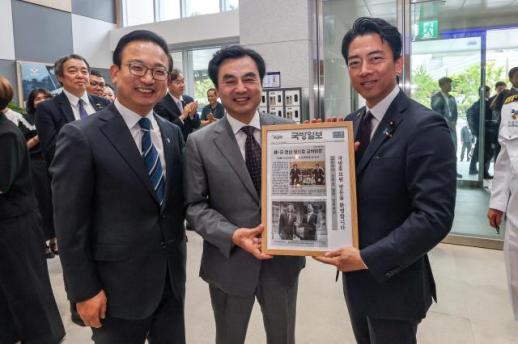 South Korea and Japan Defense Ministers Agree to Expand Cooperation South Korea's Defense Minister An Gyu-baek and Japan's Defense Minister Shinjiro Koizumi met in Seoul on June 28 to discuss expanding cooperation in the Air Force Special Flight Teams and Navy search and rescue training, as well as enhancing collaboration in advanced scientific and technological fields, including artificial intelligence (AI).According to the Ministry of National Defense, the two ministers reached this agreement during their meeting at the Defense Ministry headquarters in Yongsan, Seoul, and issued a joint press release outlining their commitments.They plan to continue expanding exchanges between South Korea's Black Eagles and Japan's Blue Impulse, both of which are Air Force special flight teams, and to further develop Navy search and rescue training (SAREX) in preparation for various maritime accidents. Additionally, they agreed to discuss cooperation in advanced scientific and technological areas, including AI.The ministers also committed to strengthening communication and collaboration to foster stable and future-oriented defense exchanges between South Korea and Japan, based on mutual understanding and trust.This agreement follows the Black Eagles' first-ever stop at Japan's Air Self-Defense Force base in Naha while en route to participate in an international airshow in January. However, the Ministry clarified that the Black Eagles' stopover and refueling support in Japan are not yet formalized.The two nations expressed their intent to continue expanding naval cooperation, particularly following the resumption of joint Navy search and rescue training earlier this month, the first such exercises in nine years since 2017.In light of the serious regional security environment, the ministers agreed to maintain cooperation to ensure peace and stability, reaffirming their commitment to the complete denuclearization of the Korean Peninsula and the establishment of lasting peace, while continuing trilateral cooperation among South Korea, Japan, and the United States.However, the issue of the Korea-Japan Mutual Logistics Support Agreement (ACSA) was not included in the official agenda of this meeting.* This article has been translated by AI. 2026-06-28 19:32:00
 -
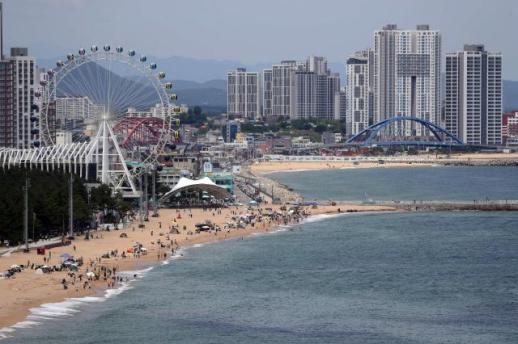 Weather Forecast: Afternoon Showers Expected Nationwide with Continued Heat On Monday, June 29, scattered showers are expected across the country, but the heat will persist with daytime temperatures exceeding 30 degrees Celsius.According to the Korea Meteorological Administration, showers of 5 to 10 millimeters are likely from noon to evening in areas including the inland regions of Seoul and Gyeonggi, the mountainous areas of Gangwon, the inland regions of Chungcheong, Jeolla, and western Gyeongnam.Morning low temperatures are forecasted to range from 15 to 21 degrees Celsius, while daytime highs will be between 24 and 33 degrees Celsius. For the time being, daytime temperatures are expected to remain above 30 degrees Celsius in many inland areas.Wave heights are predicted to be 0.5 to 1.0 meters in the East and South Seas, and about 0.5 meters in the West Sea. Offshore wave heights are expected to be 0.5 to 1.0 meters in all three seas.Regionally, Seoul will see temperatures between 21 and 32 degrees Celsius with afternoon showers, while Incheon is expected to be 20 to 29 degrees and Suwon 20 to 30 degrees, both experiencing mostly cloudy weather. In Gangwon, Chuncheon will have temperatures of 20 to 31 degrees with afternoon showers anticipated, while Gangneung will remain mostly cloudy with temperatures between 19 and 27 degrees. In Chungcheong, Cheongju (20 to 32 degrees), Daejeon (20 to 32 degrees), and Sejong (19 to 32 degrees) are all expected to have afternoon showers. In Honam, Jeonju and Gwangju will both see temperatures of 20 to 31 degrees with afternoon showers forecasted. In Yeongnam, Daegu will be clear with temperatures ranging from 19 to 32 degrees, while Busan (19 to 27 degrees), Ulsan (17 to 27 degrees), and Changwon (18 to 28 degrees) will also experience mostly clear weather. Jeju is expected to be 20 to 26 degrees, starting clear in the morning but becoming cloudy in the afternoon.* This article has been translated by AI. 2026-06-28 19:24:00