
Journalist

Gareth Thomas
-
 South Korea deploys CAS500-2 satellite in milestone for domestic space technology SEOUL, May 3 (AJP) — South Korea successfully launched its next-generation midsized Earth observation satellite on Sunday, marking a major step forward in the country’s push to strengthen homegrown space technology and private-sector satellite capabilities. The satellite, known as CAS500-2 or Next-Generation Mid-Sized Satellite No. 2, lifted off aboard SpaceX’s Falcon 9 rocket from Vandenberg Space Force Base in California at 4 p.m. Korea time Sunday, according to the Korea AeroSpace Administration (KASA). CAS500-2 separated from the launch vehicle about an hour after liftoff and later established its first communication with a ground station in Svalbard, Norway, confirming that onboard systems were operating normally. Developed primarily by Korea Aerospace Industries under South Korea’s next-generation satellite program, CAS500-2 is designed for high-precision Earth observation missions including land resource management, disaster monitoring and agricultural analysis. The satellite will orbit Earth at an altitude of about 498 kilometers in a sun-synchronous orbit. It is equipped with domestically developed optical imaging technology capable of identifying objects as small as 0.5 meters in black-and-white imagery and 2 meters in color imagery. KASA said the successful launch demonstrated a significant advancement in South Korea’s satellite independence, as key satellite body systems and payload components were developed using domestic technology. The satellite is expected to undergo about four months of initial operational testing before beginning full-scale missions later this year alongside CAS500-1, which was launched in 2021. The project was originally scheduled to launch aboard a Russian Soyuz rocket in 2022, but the plan was delayed for nearly four years following Russia’s invasion of Ukraine and the resulting disruption in the global launch market. SpaceX said the mission, dubbed “CAS500-2,” carried a total of 45 payloads for multiple international customers including KAI, Planet Labs and other commercial operators. The company also noted that the Falcon 9 first-stage booster used for the mission was making its 33rd flight before successfully landing at Landing Zone 4 at Vandenberg Space Force Base. “The successful launch of CAS500-2 is an important milestone opening the era of private-led New Space,” KASA Administrator Oh Tae-seok said in a statement. “By independently securing ultra-high-resolution imagery needed for land and disaster management on the Korean Peninsula, we have significantly strengthened the technological competitiveness of Korea’s satellite industry.” The Ministry of Land, Infrastructure and Transport, which will utilize the satellite’s imagery services, said the launch would improve the country’s ability to provide faster and more diverse geospatial information services through the combined operation of national satellites. The Falcon 9 mission also carried 44 additional payloads, including “BusanSat,” a cube satellite jointly developed by the city of Busan, the Korea Astronomy and Space Science Institute and Nara Space Technology. 2026-05-03 18:34:08
 -
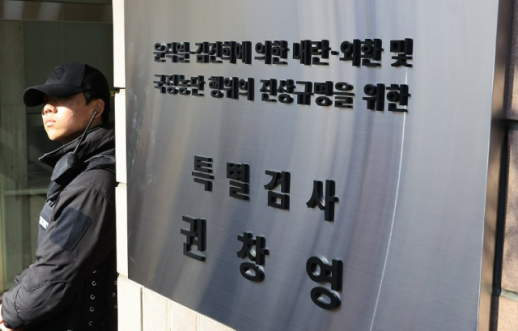 Special Counsel Investigator’s ‘Career-Building’ Post Sparks Fairness Concerns A lawyer-turned special investigator who joined the second comprehensive special counsel team led by Special Counsel Kwon Chang-young has drawn criticism after posting online that work at the office would help build investigative experience and sharpen expertise in criminal cases. On May 3, social media users circulated a post by the investigator, identified only as A, showing photos including an office nameplate bearing the investigator’s name, a stamped suspect statement record and a picture of A holding an appointment letter alongside Kwon. In the post, A wrote, “I’ve always stood on the suspect’s side, but for the first time in my life I’ve entered an investigative agency,” adding that gaining experience “from an investigator’s perspective” would “maximize” expertise in criminal cases. A also wrote that questioning a suspect as an investigator was “really hard,” saying it felt “about five times” harder than attending an interview as defense counsel. The post drew backlash as the comprehensive special counsel faces criticism for failing to produce clear results even as its first investigation deadline on the 25th approaches, while also grappling with staffing shortages. After the controversy, A’s post was deleted. A special counsel official said the team plans to discuss internally as early as the 4th whether the post was appropriate. Kim Chi-heon, the assistant special counsel serving as spokesperson, said in a notice that no official position has been set on the masked statement record being posted to social media and that the matter will be reviewed internally. The team has previously faced controversy, including Assistant Special Counsel Kim Ji-mi, who serves as public affairs officer, appearing on the progressive-leaning YouTube channel “Kim Eo-jun’s Humility Is Hard, News Factory,” and questions over Assistant Special Counsel Kwon Young-bin’s past work as a lawyer for a key reference witness. Some critics say the episode reflects a growing perception that participation in special counsel investigations is being treated less as a public duty and more as a way to build personal credentials. They warn that if the office is seen as a tool for resume-building, it could undermine the special counsel’s fairness and authority. * This article has been translated by AI. 2026-05-03 18:18:17
 -
 SME Tech Theft Hotline Gets 20 Complaints in First Month, Ministry Says The Ministry of SMEs and Startups said Saturday it has received 20 reports of technology-related disputes about a month after launching a hotline aimed at stamping out technology theft from small businesses. The “SME Technology Theft Eradication Hotline” officially launched April 26 as the first joint project of an interagency task force. When small firms file a report through the hotline, legal experts provide consultations to help craft a response strategy and connect the company to the agency best suited to the type of dispute. Of the 20 reports, eight have been forwarded to investigative authorities, nine are under expert consultation and interagency review, and three were withdrawn or rejected because they did not qualify as technology theft. The ministry said it is considering adding staff for the hotline at the ministry and the Large and Small Business and Agriculture and Fisheries Cooperation Foundation to speed processing. Over the past two years, the ministry received 20 complaints in 2024 and 16 in 2025 seeking administrative investigations into technology infringement. The ministry said compensation has been difficult because evidence is hard to secure and lawsuits can be lengthy and costly. The ministry said it is working with related agencies on measures to strengthen proof of harm, including a Korean-style discovery system, new authority to order submission of materials, evidence-building based on administrative investigations and tougher penalties. It said the Korean-style discovery system cleared the National Assembly in January, but some have said practical infrastructure must be built for it to take effect. SMEs and Startups Minister Han Seong-sook said the hotline was created so very small firms harmed by technology theft can report cases easily and receive free help from legal experts. “We will strengthen cooperation with the interagency task force and related ministries and expand the budget for technology protection to meet the high expectations and interest in the field,” Han said. Separately, the ministry said there were 299 technology infringement cases as of 2024, with average losses of 1.82 billion won per affected company. The National Police Agency said it arrested about 380 people in 179 cases last year related to technology leakage crimes.* This article has been translated by AI. 2026-05-03 18:11:58
 -
 Yoo Hyun-jo wins inaugural DB Women’s Championship for first victory of 2026 season "I’m going to put aside the impatience to win and just try to play golf in a fun, enjoyable way." Yoo won the inaugural DB Women’s Championship on Saturday at Rainbow Hills Country Club (par 72) in Eumseong, North Chungcheong province, on the Korea Ladies Professional Golf Association tour. She shot an even-par 72 in the final round with two birdies and two bogeys. Yoo finished at 7-under 281, edging Ko Ji-won, Kim Min-sol and Lee Da-yeon by one stroke. The tournament carried a total purse of 1.2 billion won, with 216 million won going to the winner. The 2024 KLPGA rookie of the year, Yoo won last year’s player of the year and low scoring titles. Saturday’s victory was her first of the 2026 season and her third career tour win, coming eight months after her win at the KB Financial Star Championship last September. "I’m so happy I could become the tournament’s first champion," Yoo said. "I had a tough time early this year. I think I’m even happier because I was able to recover quickly and win." Yoo entered the season with high expectations but struggled early, failing to contend in her first four starts and missing the cut at the Nexen-SaintNine Masters, which ended April 19. She found momentum at the Deokshin EPC Championship, which ended April 26, tying for third to rebuild confidence. Yoo said she felt pressure after last season’s success. "Because I did so well last year, I thought I could do even better this year," she said. "The pressure to do better grew, and I became afraid of making mistakes. That led to bad results. Starting with the last tournament, I tried to empty my mind a bit. I wanted to play golf happily as Yoo Hyun-jo before being a golfer. I think this win came from letting go of greed and impatience." She said the change helped her stay steady after mistakes. "I think not being impatient was the driving force behind the win," Yoo said. "When I made mistakes, I thought, ‘Winning isn’t something I can do just because I want it.’ I just tried to do my best where I was. Not forcing course strategy or getting greedy helped me win." Yoo said she is still aiming to lead the tour in wins this season, but without pressing for results. "This win will give a big boost to my hope of becoming the multiple-wins leader," she said. "That’s still the goal. But I won’t rush just to win. I plan to enjoy it and have fun, like I did this week." Ko, who led alone after each of the first three rounds, sought her first multiple-win season but lost two strokes Saturday and settled for second. Park Ju-young, described as a mother on tour, posted the day’s best round by cutting five strokes. She finished at 5-under 283, tied for fifth with Kim Soo-ji and Han Jin-seon. 2026-05-03 18:10:40
 -
 Profit-Linked Bonus Demands Spread Across South Korea’s Top Industries Labor disputes are flaring simultaneously at some of South Korea’s flagship companies, spanning semiconductors, autos, biotech and telecommunications, as unions push for bigger, profit-linked bonuses. The Samsung Electronics union has warned of a general strike while demanding the removal of a bonus cap and distribution of 15% of operating profit. The Samsung Biologics union began its first full-scale strike since the company’s founding on May 1. The Hyundai Motor union is seeking bonuses equal to 30% of net profit, and the LG Uplus union is also demanding 30% of operating profit, widening what has become a contest over “profit-linked bonuses” across industry. Unions argue that stronger results justify a larger share. But the demands are increasingly seen as going beyond routine pay bargaining, as signals emerge that could affect companies’ capacity to invest, production stability, supply-chain confidence, gaps between prime contractors and suppliers, and ultimately national industrial competitiveness. Some in the industry trace the current dynamic to SK hynix, where bonuses around 10% of operating profit have come to be treated as a benchmark. Once a higher ratio is set at one company, other unions find it harder to accept less, and negotiations can shift from productivity to symbolic one-upmanship — a dynamic often described as a “bonus chicken game.” The issue is not confined to individual companies. Since the implementation of the so-called Yellow Envelope Act, bargaining demands by subcontractor unions toward prime contractors have surged, with requests filed at multiple worksites — including Hanwha Ocean, POSCO and Hyundai Motor — from the first day of enforcement. As large-company unions raise profit-linked compensation standards, prime contractors’ cost burdens grow, increasing the likelihood that pressure is passed on through tighter supplier pricing or reduced investment. That, in turn, highlights a long-standing bottleneck in Korean industry: bargaining power rises for regular workers at big firms, while smaller suppliers, nonregular workers and subcontracted labor can face greater instability. As bonus payouts grow, companies may have less room to raise payments to partner firms, potentially widening wage gaps between large companies and small and midsize businesses. Critics warn that what appears to expand labor’s share could deepen the labor market’s dual structure. The industrial reality is unforgiving. Semiconductors, biotech and autos face global competition, heavy capital spending and pressure to shift technologies. If bonuses harden into an automatic fixed share of profits rather than rewards tied to productivity gains, management can become locked into short-term cash distribution while investment is pushed back. When unions seek to maximize payouts based on short-term performance, spending on research and development, facility expansion and new businesses — often the first sources of future growth — is more likely to be squeezed. The need now, the article argues, is not escalation but a reset of rules. Bonus systems should reflect more than a simple share of operating or net profit, incorporating investment execution, cash flow, industry cycles and future cost provisions. Before strikes and all-out confrontation, labor and management should institutionalize bonus formulas, upper and lower limits, and adjustment principles for downturns. It also calls for broader discussion of how compensation systems at major prime contractors ripple through suppliers and the wider industrial ecosystem. South Korea’s economy rests on exports, manufacturing and the competitiveness of advanced industries. The current bonus conflicts are both a dispute over labor’s fair share and a warning light that could erode the power of the country’s growth engine. Just as unions should weigh not only today’s profits but also tomorrow’s survival, companies should treat labor not simply as a cost but as a pillar of sustainable competitiveness. The article concludes that this is not a problem that ends with one side’s victory. It says negotiations should focus on sustainability — not a test of strength — so that sharing industrial gains does not damage the industry’s future. * This article has been translated by AI. 2026-05-03 18:03:46
 -
 Samsung Electronics Faces Q2 Cost Risks Despite Chip Boom, Union Bonus Talks and Strike Threat Samsung Electronics posted a first-quarter earnings surprise on the back of a semiconductor upcycle, but it could face major cost risks in the second quarter, including labor-management tensions, industry and financial sources said Saturday. Analysts warn that the union’s unusually large bonus demands and the possibility of a strike could significantly erode chip profits. Market consensus for Samsung’s second-quarter results calls for revenue of 174.4 trillion won and operating profit of 86.8 trillion won, according to the sources. Operating profit at the Device Solutions (DS) division, which runs the chip business, is estimated in the 80 trillion won range — about a 50% increase from the prior quarter’s 53.7 trillion won. How much of that improvement is realized may depend on the outcome of bonus negotiations, which could add costs in the trillions of won. The union is seeking to set aside 15% of annual operating profit for performance bonuses. With some forecasts putting Samsung’s full-year operating profit as high as 350 trillion won, accepting the proposal as-is would push bonus payouts above 50 trillion won. The company has indicated the impact could begin as soon as the second quarter. On an April 30 first-quarter conference call, Samsung said bonus provisions were not reflected in first-quarter results because talks were ongoing, adding that “depending on the outcome of negotiations, whether and how much is reflected could be decided as early as the second quarter.” Because bonus provisions are typically spread across quarters, a deal would likely require recognizing costs of several trillion won each quarter, potentially weighing on results through the second to fourth quarters even if operating profit hits a record. If talks fail, Samsung could face a different kind of cost shock. The union has warned it will launch an 18-day general strike starting May 21. If labor action halts semiconductor production lines, losses of at least 10 trillion won are expected, the report said. Due to the nature of chip manufacturing, even a brief power outage or stoppage can force the disposal of all wafers in process on the affected line. Industry officials also voiced concern that the dispute could undermine longer-term competitiveness as global rivalry intensifies and large-scale investment is needed to secure next-generation technologies such as high-bandwidth memory (HBM) and advanced foundry processes. Lee Jong-hwan, a professor of system semiconductor engineering at Sangmyung University, said the prospect of large strike-related costs is “regrettable” at a time when expectations are rising for a rebound in foundry competitiveness. He said such costs could crowd out research and development funding needed to strengthen the nation’s semiconductor capabilities and weaken long-term growth drivers. * This article has been translated by AI. 2026-05-03 18:03:17
 -
 Korean Horror Film 'Salmokji' Tops 2.6 Million Admissions, Ranks No. 3 All Time The horror film 'Salmokji' has surpassed 2.6 million admissions, ranking third among the top-grossing horror films in South Korea’s box office history. According to the Korean Film Council’s integrated ticketing network, the film’s cumulative audience topped 2.6 million on Saturday. That moved it past the 2002 release 'Phone' (estimated 2.6 million) into third place on the all-time domestic horror list. 'Salmokji' reached 2.4 million admissions — three times its break-even point — and crossed 2.6 million just a day later, maintaining strong momentum. Observers credited word-of-mouth driven by what has been described as “experiential horror,” bucking the usual notion that the genre performs best in summer. Attention is now on whether it can overtake the No. 2 record held by 'Gonjiam' (2.68 million). The film has also held up against new competition, including 'The Devil Wears Prada 2' and 'Super Mario Galaxy,' staying near the top in seat sales. It posted seat-occupancy rates of 42.8% on May 1 and 31.5% on May 2, signaling sustained demand during the holiday period. Earlier, 'Salmokji' led the overall box office for 21 consecutive days from its release through April 28, the longest opening-to-No.-1 run among films released in 2026. It later slipped to third once, but reclaimed the top spot the next day by drawing 102,166 viewers on April 30. Its fourth-week Thursday tally also exceeded its opening-day figure of 90,000, an unusual result. The film has drawn audiences despite having fewer screens and seats than rivals. On May 1, it accounted for about 12% of total seats but recorded a 37% seat-occupancy rate. Analysts said repeat business has been supported by moviegoers in their teens and 20s, often attending with friends. 'Salmokji' follows a film crew that heads to a reservoir for reshoots after an unidentified figure appears on a road-view image, only to encounter something in the dark, deep water. The film is directed by newcomer Lee Sang-min and stars Kim Hye-yoon, Lee Jong-won, Kim Jun-han, Kim Young-sung, Oh Dong-min, Yoon Jae-chan and Jang Da-a.* This article has been translated by AI. 2026-05-03 17:48:15
 -
 Iran Proposes Hormuz Strait Controls, Fees; Would Bar Israeli Ships and Demand Reparations Iran is moving to place the Strait of Hormuz effectively under its control and impose transit fees. Iran International, a U.K.-based opposition outlet, reported that Ali Nikzad, the first deputy speaker of Iran’s parliament, said during a visit to Bandar Abbas that a 12-point plan on Hormuz controls and transit rules would ban Israeli vessels from passing through the strait under any circumstances. Nikzad added that ships belonging to “hostile” countries would not be allowed to transit unless they first pay compensation for war-related damage. He did not name specific countries. Iran International said the measure is being interpreted as aimed at the United States and some Middle Eastern Arab allies, which Iran has previously described as “hostile countries.” The plan would also restrict passage for ships from nonhostile countries. Under the proposal, all vessels would need prior Iranian permission before transiting the strait, and could be required to pay a fee. Mohammadreza Rezaei, chair of parliament’s construction committee, said Iran plans to use 30% of the fee revenue to expand military infrastructure and the remaining 70% for economic development and welfare. “Managing the Strait of Hormuz is more important than obtaining nuclear weapons,” he said. Since a Middle East war began after the United States and Israel struck Iran on Feb. 28, the strait has remained effectively blocked, according to the report. The waterway is a key maritime route through which about 20% of global oil and gas supplies pass. Iran is seeking to use the fee system to offset some of its war-related economic losses, but the United States has strongly objected. Washington has warned that companies or countries that pay Iran’s transit fees could face sanctions.* This article has been translated by AI. 2026-05-03 17:42:05
 -
 Takaichi Unveils Revised ‘Free and Open Indo-Pacific’ Plan in Hanoi, Puts Economic Security First Japan’s Prime Minister Sanae Takaichi, visiting Vietnam, used a foreign policy speech to lay out a new diplomatic line, revising the “Free and Open Indo-Pacific” (FOIP) concept first advanced in 2016 by former Prime Minister Shinzo Abe. The update shifts the emphasis decisively toward economic security, including stronger supply chains for critical goods, analysts said. Speaking at Vietnam National University in Hanoi to an audience of 270 students and experts, Takaichi said, “The environment around us has changed greatly, but the validity of FOIP remains unshaken,” adding that Japan would “play an even more proactive role than before.” She set out three priorities: building an economic ecosystem by strengthening energy and critical-material supply chains; jointly developing new economic fields and sharing rules through public-private cooperation; and expanding linkages in the security domain. Takaichi also said Japan would promote a “FOIP digital corridor” focused on information and communications infrastructure such as undersea cables and communications satellites. She said Japan would expand both the number of countries and the scale of its Official Security Assistance (OSA) program, which provides weapons and equipment free of charge to friendly militaries. She also pledged an early start to procedures to expand the Trans-Pacific Partnership (TPP). Japanese media offered differing readings of the revised plan. Nikkei said the update is aimed at responding to an era of “power” shaped by the United States and China, and at preserving a wavering “rule of law” by putting economic security at the center and prioritizing practical cooperation with partners. Nikkei highlighted what it called a key difference from 2016. When Abe first promoted FOIP, Japan and the United States held up shared values such as “freedom from coercion,” the “rule of law” and a “market economy.” A decade later, Nikkei wrote, “the United States, FOIP’s most important partner, has come to ‘coerce’ countries by using tariffs.” The newspaper also said the United States showed disregard for international law in a military clash with Iran and described the Strait of Hormuz as having been “reverse-blockaded.” In Nikkei’s framing, the United States shifted from a country that should not be a coercer to one acting as a coercer. Nikkei also pointed to China’s export controls on critical materials and Russia’s invasion of Ukraine as factors creating an environment in which countries “cannot help but follow power.” It said Takaichi’s call for “autonomy” and “resilience” across the economy, society and security fit that context. Yomiuri Shimbun said the revised FOIP is aimed at China, which it said is intensifying coercive moves on both the economic and military fronts. It reported that Takaichi warned low-cost Chinese artificial intelligence could be used for influence operations and stressed joint development of local-language AI with Southeast Asian countries. Yomiuri also said she signaled a response to market distortions, citing “unfairly low-priced supply,” in remarks it linked to China amid concerns about overproduction in sectors such as electric vehicles and steel. Yomiuri also cast a $10 billion financial support package announced by the Japanese government last month, dubbed “Power Asia,” as a core tool of Takaichi’s diplomacy. It said the package could be used urgently, including to support crude oil procurement for Southeast Asian countries during the Strait of Hormuz blockade situation. A senior Japanese government official described Power Asia as “live ammunition” to put FOIP into practice. Another Foreign Ministry official said Japan’s strength is providing tailored support for what partner countries need, since Japan cannot outspend China in scale. At the same time, Japanese newspapers voiced doubts about the plan’s effectiveness, pointing to the absence of the United States as a shared weakness. Yomiuri said the United States, pressed by Middle East developments, has little room to focus on the Indo-Pacific and warned that without U.S. cooperation the prime minister’s plan could become “a pie in the sky.” Asahi Shimbun said the second Trump administration has continued actions that deny freedom and the rule of law, including launching attacks on Iran while disregarding international law. Combined with Nikkei’s view that the United States has become a coercive actor, the three papers described different facets of the same vulnerability: physical absence, ideological departure and coercive behavior. A second weakness, Asahi said, is that even Vietnam — the venue for the announcement — may keep its distance. Citing Futaba Ishizuka, a researcher at the Institute of Developing Economies, Asahi reported that while Vietnam joined the Indo-Pacific Economic Framework (IPEF), it has avoided using the U.S.-promoted phrase “Indo-Pacific” in major domestic policy documents. The move was seen as reflecting sensitivity to China, a neighboring socialist country and Vietnam’s largest trading partner, and Asahi said Vietnam is expected to “carefully balance” its stance on the revised FOIP as well. A third weakness is the diverging positions among Southeast Asian countries. Yomiuri said there are differences in temperature on security cooperation: the Philippines is considering importing used Japanese weapons and equipment, while Cambodia and Indonesia have held successive “2+2” meetings of foreign and defense ministers with China since last year. The paper said the reality is not a unified ASEAN line but a region split in multiple directions. Takaichi’s revised FOIP has opened with a high-profile rollout, but Japanese media said Japan faces a heavy task in rallying partners without the United States. Vietnam’s cautious approach and Southeast Asia’s fragmentation have emerged as early variables. How Japan manages partner diplomacy amid U.S. absence remains a key test, with implications for South Korea’s Indo-Pacific strategy and its ASEAN diplomacy.* This article has been translated by AI. 2026-05-03 17:41:02
 -
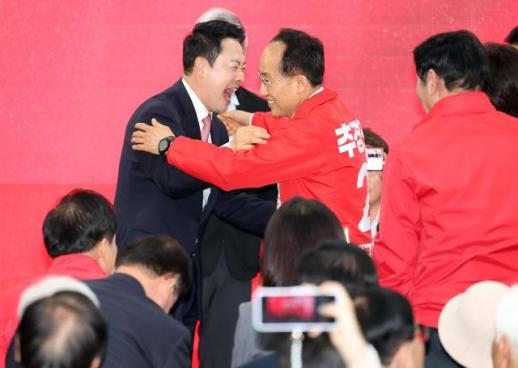 PPP leader Jang Dong-hyeok campaigns in Daegu for mayoral hopeful Choo Kyung-ho Jang Dong-hyeok, leader of the People Power Party, visited Daegu on Saturday to rally support for Choo Kyung-ho, the party’s candidate for Daegu mayor, saying the conservative stronghold should not be handed to Kim Boo-kyum. Jang’s appearance followed his attendance a day earlier at the opening of Busan mayoral candidate Park Hyung-joon’s campaign office, as the party seeks to consolidate its base. Speaking at Choo’s campaign office opening in Suseong District, Jang said he had checked what he described as Kim’s criminal record the previous day and criticized Kim as someone who received a one-year prison sentence with a two-year suspended term for violating the National Security Law. Jang also accused President Lee Jae-myung of trying to erase his own alleged wrongdoing, saying Lee had pursued what Jang called an unreasonable state investigation and was now pushing a special counsel probe aimed at canceling indictments tied to 12 allegations. Jang claimed such a move would lead to what he called a socialist constitution intended to extend Lee’s term. “This has to be stopped in Daegu,” Jang said, calling the local elections a contest to block dictatorship and socialism and to protect liberal democracy and future generations. He said supporters last winter chanted “We are Choo Kyung-ho” to defend Choo, and argued that Choo is now running for mayor to protect South Korea, liberal democracy and Daegu. “Economic mayor Choo Kyung-ho will change Daegu,” he said. Addressing controversy over the party’s nomination process for the Daegu mayoral race, Jang apologized to Daegu residents, saying as party leader he was responsible. He also expressed regret to National Assembly Deputy Speaker Joo Ho-young and candidate Lee Jin-sook, who were cut from the primary process. The event drew party leaders and nearly 40 sitting lawmakers, including honorary campaign chair Kim Moon-soo, a former labor minister; former Korea Communications Commission chair Lee Jin-sook; and lawmakers Joo Ho-young, Na Kyung-won and Yoon Jae-ok. Former President Lee Myung-bak also offered a video message of support, saying Daegu needs an “economic mayor, not a political mayor.” He cited the global financial crisis shortly after his inauguration, saying South Korea was the only country to post positive growth and that Choo served at the time as senior secretary for economic and financial affairs at Cheong Wa Dae and head of an emergency economic situation office.* This article has been translated by AI. 2026-05-03 17:40:05