
Journalist

Gareth Thomas
-
 U.S. Pushes New Coalition to Restore Shipping Through Strait of Hormuz, WSJ Reports The United States is working to form a new international coalition to restore normal shipping through the Strait of Hormuz, The Wall Street Journal reported. The effort comes after President Donald Trump declared the strait “fully open,” yet vessel traffic has not returned to normal, the report said. Citing an internal State Department cable sent to U.S. embassies, the Journal said the department on April 29 (local time) instructed diplomats to urge foreign governments to join the new group. The initiative is called the “Maritime Freedom Construct,” or MFC, and would be U.S.-led, combining information sharing, diplomatic coordination and sanctions enforcement, according to the report. The plan follows prolonged disruptions in Hormuz transit. The Journal reported that Iran has laid mines and attacked oil tankers passing through the strait without its approval. The U.S. Navy, meanwhile, has maintained a blockade on vessels broadly traveling to and from Iranian ports. Restoring normal passage has also emerged as a key issue in stalled peace talks between the United States and Iran, the report said. The cable suggested the coalition could go beyond a diplomatic forum. U.S. officials were told to ask whether partner countries would be willing to participate not only as diplomatic partners but also as military partners. The Journal said the MFC “is not a military alliance.” The report described a division of roles under the concept: The State Department would serve as the hub for diplomatic operations, while U.S. Central Command would handle real-time maritime information for commercial shipping and coordinate intelligence sharing among participating militaries. Trump has also made clear he intends to keep the blockade in place. The Journal reported that he told aides on April 28 to prepare for a long-term blockade until Iran accepts U.S. nuclear demands. Speaking to reporters on April 30, Trump called the blockade “genius” and said it is “100% airtight.” He also said the United States could continue “war and the blockade” if Iran does not agree to give up nuclear weapons. The new coalition push differs from Trump’s earlier approach of pressing allies, particularly in Europe, to address the Hormuz issue. In late March, he publicly urged Europe to solve the problem on its own and made remarks suggesting Britain and France should go to the strait and handle it directly. He later criticized NATO as a “paper tiger,” arguing it was not providing enough support. Europe has been preparing its own response. Britain and France held a meeting with more than 50 countries to discuss ways to ensure safe passage through the Strait of Hormuz after the war, the Journal reported. While U.S. officials have criticized Europe’s efforts as slow and bureaucratic, the cable included language saying the MFC could be complementary to existing maritime security plans led by Britain and France, according to the report. 2026-04-30 11:18:43
 -
 South Korea to command multinational naval forces at RIMPAC exercise for first time SEOUL, April 30 (AJP) - South Korea will command multinational naval forces in an U.S.-led maritime exercise late next month, the Navy said on Thursday. According to the Navy, it will be the first time the country assumes command in the Rim of the Pacific (RIMPAC), the world's largest multinational naval exercise, since joining in 1990. Launched in 1971, the biennial exercise, hosted by the U.S. Navy's Third Fleet, is designed to enhance cooperation among participating countries, strengthen joint responses to maritime threats, and improve integrated operational capabilities among allied forces. This year's exercise, slated to kick off on June 24 and run until July 31 off Hawaiian waters, will involve more than 25,000 military personnel along with 40 surface ships, five submarines, and 140 aircraft from over 30 countries. South Korea is expected to send the Aegis destroyer Jeongjo the Great, P-8 maritime patrol aircraft, and the 3,000-ton-class submarine Dosan Ahn Chang-ho. "We will complete the mission successfully, showing the world the country’s excellent operational command capabilities," a navy official vowed. 2026-04-30 11:18:18
 -
 Seoul Apartment Prices Rise 0.14%; Seocho Joins Songpa in Turning Up Price declines eased in Seoul neighborhoods packed with high-end apartments, while gains also cooled in areas dominated by mid- to lower-priced units. After Songpa-gu turned higher last week, Seocho-gu also shifted into gains, as bargain listings dried up following the end of a suspension of heavier capital gains taxes on home sales. Seoul’s weekly apartment sale prices rose 0.14% in the fourth week of April, the Korea Real Estate Board said Thursday. In northern Seoul, gains slowed across 14 districts, which rose 0.15% from a week earlier. Dongdaemun-gu climbed 0.21%, down from 0.25% the prior week. Rapid risers also cooled, including Gangbuk-gu (0.24% to 0.16%), Nowon-gu (0.22% to 0.18%) and Seongbuk-gu (0.27% to 0.21%). Yongsan-gu was the only district in the north to fall, slipping 0.03%, as a short-term surge tightened listings and end-users turned cautious, the report said. In southern Seoul, the 11 Gangnam-area districts rose 0.13%, narrowing the gap with the north. Seocho-gu edged up 0.01%, ending a slide that had continued since the last week of February. Songpa-gu, which turned positive at 0.07% last week, rose 0.13% in the fourth week of April. Gangnam-gu fell 0.02%, improving from a 0.06% drop a week earlier. “Starting with multiple bargain transactions in Songpa-gu, bargain deals have steadily spread to Gangnam and Seocho, and slightly higher asking prices from sellers have been reflected in some price moves,” Nam Hyuk-woo, a real estate researcher at Woori Bank, said. He said macro variables remain, including a second-half tax overhaul plan and the possibility of renewed rate hikes amid inflation, which could affect sentiment in the investment-driven “Gangnam three” market — Gangnam, Seocho and Songpa. He said prices may stay largely range-bound for the time being. Gyeonggi Province rose 0.06%, easing from 0.07% the previous week. Gwangmyeong gained 0.31%, led by large complexes in Cheolsan and Haan. Guri rose 0.29%, driven by smaller units in Inchang and Gyomun. Anyang’s Dongan-gu climbed 0.22%, led by Pyeongchon and Hogye. Nationwide, weekly apartment sale prices rose 0.03% in the fourth week of April. The five major metropolitan cities fell 0.02%, and Sejong fell 0.05%. Eight provinces that had been flat for two straight weeks posted a slight 0.01% gain. * This article has been translated by AI. 2026-04-30 11:16:45
 -
 Samsung Electronics Says HBM Sales to Triple in 2026, HBM4 to Top Half From Q3 Samsung Electronics said Thursday on its conference call for 2026 first-quarter results that it expects its high-bandwidth memory, or HBM, sales this year to surge to more than triple last year’s level. The company said it has secured “industry-leading” product competitiveness based on advanced processes and helped drive an upward revision in HBM4 performance specifications. “As customers adopt it, our outstanding performance is translating into a real premium,” the company said, adding that demand has been concentrated on its products and that all capacity it had prepared is sold out. Samsung said HBM4 sales are expected to expand sharply starting in the third quarter. It said it began mass production shipments of HBM4 in February, the first in the world, and plans to ramp up supply in the second half. HBM4 sales are expected to account for more than half of total HBM sales from the third quarter this year, and to make up a majority of annual HBM sales in 2026, the company said.* This article has been translated by AI. 2026-04-30 11:14:10
 -
 Jang Dong-hyeok says South Korea is becoming a monarchy under Lee Jae-myung Jang Dong-hyeok, leader of the People Power Party, stepped up his criticism of the ruling camp on April 30, saying South Korea was becoming a monarchy where “the state is me.” Speaking at a party Supreme Council meeting at the National Assembly, Jang said that with “one word from President Lee Jae-myung,” the ruling party and government were “busy pushing things through without discussion or review.” Jang said Lee’s remark that “it is fair for nonregular workers to be paid more” was followed by a rush to create a “fairness allowance” and raise pay first in the public sector. “Taxpayer money is being put in, but there was no proper review or debate,” he said. He also criticized comments about school trips, saying teachers were unfairly demonized by claims that trips were being canceled to avoid responsibility. As backlash grew, he said, the Education Ministry said it would present measures in May. “A policy produced in a month because the president ordered it can only be sloppy and rushed,” Jang said. Jang also attacked Democratic Party candidates running for mayor in major cities in the June 3 local elections, including Seoul and Busan. He said Seoul candidate Jeong Won-oh was dodging questions about raising property holding taxes and abolishing the long-term holding special deduction. He also criticized Busan candidate Jeon Jae-soo, saying he would not clearly answer a question about whether he received a Cartier item. Separately, the People Power Party used the meeting to denounce a parliamentary investigation into allegations tied to what it called a “political prosecution” under the Yoon Suk Yeol administration. Floor leader Song Eon-seok called it a “self-destructive” probe, saying it began with unconstitutional and illegal actions, proceeded with “barbarism and violence,” but ultimately proved “Lee Jae-myung is guilty.” He said introducing a special prosecutor to cancel an indictment would be an abuse of the rule of law and an act that would destroy the justice system.* This article has been translated by AI. 2026-04-30 11:12:55
 -
 Subway to Raise Prices Starting May 7; 15 cm Sandwiches Up 210 Won on Average Subway will raise menu prices starting May 7, citing higher ingredient costs and rising operating burdens for franchisees. The sandwich chain said April 30 that the increases will apply to sandwiches, sides and drinks. For its best-selling 15 cm sandwiches sold a la carte, prices will rise by an average of 210 won, or about 2.8%. A la carte drinks and set menus will be adjusted by 100 won to 200 won. Among major 15 cm items, the Egg Mayo will increase to 6,200 won from 5,900 won, and the Italian BMT to 7,500 won from 7,200 won. The cookie side will rise 100 won to 1,600 won. A Subway official said the company made the changes because of “continued increases in ingredient costs and the operating burden on franchisees,” adding that it minimized the hikes through internal cost-cutting and will “provide consumers with more choices” through value-focused menu items.* This article has been translated by AI. 2026-04-30 11:12:16
 -
 China’s top financial regulator Li Yunze reportedly demoted amid discipline probe China’s top financial regulator, Li Yunze, has reportedly been demoted over discipline violations. Li’s information was removed on April 29 from the “leadership” section of the official website of the National Financial Regulatory Administration. His last public appearance was on April 22 at a meeting on an all-out campaign to prevent and crack down on illegal financial activity. Hong Kong’s Ming Pao and other outlets reported that Li was internally dismissed on April 28 and is likely to be reassigned to a midlevel post within the agency. Born in 1970, Li was appointed in 2023 as the inaugural head of the regulator, drawing attention as the first “post-70s” official to move into a minister-level central government post. He spent more than two decades at state-owned banks including China Construction Bank and Industrial and Commercial Bank of China, and later served as a vice governor of Sichuan province, where he worked on managing local government debt risks. The regulator oversees banking, insurance and trust businesses. It was created in March 2023 during a State Council restructuring aimed at tightening financial oversight under Chinese President Xi Jinping. The financial market under its jurisdiction is estimated at about $79 trillion. Multiple explanations have circulated for Li’s reported demotion. Ming Pao, citing sources, said he was dismissed over issues related to raising his children. A recent Weibo post by a prominent Chinese journalist said a child had driven under the influence of alcohol or drugs and that the father, described as a powerful figure, tried to use connections to cover it up and nearly became implicated himself — remarks widely seen as pointing to Li. Reuters noted the reported dismissal comes as financial risks grow amid a prolonged property downturn and slowing economic growth. Some analysts have linked the move to a broader tightening of scrutiny over the financial sector. Chinese authorities have in recent years expanded regulatory powers while also pursuing anti-corruption efforts in the industry; Zhou Liang, a deputy head of the regulator, was previously removed over corruption allegations. 2026-04-30 11:09:17
 -
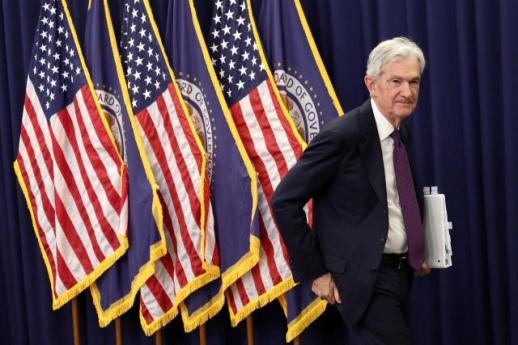 Fed Holds Rates as Dissent Rises, Complicating Bank of Korea’s Next Move The Federal Reserve again held its benchmark rate at 3.50% to 3.75%. While the decision signaled a pause, uncertainty over the policy path has deepened. At the latest Federal Open Market Committee meeting, four members dissented — the largest number in 34 years — underscoring a break in the Fed’s usual unity. That split is quickly reverberating in Seoul, adding to the Bank of Korea’s policy challenge. The most striking feature of the decision was not the outcome but the division behind it. Four dissenting votes among 12 members was the first such split since 1992. One dovish member argued for a rate cut, while three hawkish members called for removing an easing bias, highlighting how mixed the economic signals have become. With inflation picking up again amid the fallout from the war in the Middle East, neither growth nor prices has clearly taken priority. The article describes the moment as a transitional period as the Jerome Powell era ends and a Kevin Warsh chairmanship begins, leaving the Bank of Korea to design policy around a more unpredictable external backdrop. South Korea’s domestic picture is also complicated. First-quarter real GDP growth came in at 1.7%, an “earnings surprise” that nearly doubled the Bank of Korea’s 0.9% forecast. The result, driven by strong semiconductor exports, weakens the case for a rate cut aimed at supporting growth. Inflation indicators, however, remain a concern. March consumer inflation was 2.2%, appearing stable on the surface, but petroleum product prices jumped by nearly 10%, pushing up producer prices. Stronger growth can bolster the case for tightening, while elevated inflation makes easing harder. The government is also supporting the economy with a 26 trillion won supplementary budget, but that could add liquidity and complicate efforts to stabilize prices. Attention is now on the Bank of Korea’s Monetary Policy Board meeting on May 28, the first policy decision since Gov. Shin Hyun-song took office. At his confirmation hearing, Shin said he would put more weight on prices given South Korea’s sensitivity to oil shocks, a stance that points to a hawkish hold in May. With the Korea-U.S. rate gap holding at 1.25 percentage points at the upper end, and the timing of Fed cuts unclear, South Korea has limited room to move first. A pre-emptive cut could trigger a weaker currency and capital outflows. The Bank of Korea is therefore likely to stick with a wait-and-see approach, watching April inflation data and geopolitical risks in the Middle East. The economy is at an inflection point, with a semiconductor boom colliding with the risk of supply-chain shocks tied to the Middle East. As the Fed’s internal split suggests, the era of a single, predictable monetary-policy answer is fading. The Shin-led central bank will need to do more than hold rates; it must deliver clear and precise guidance to markets. With even the possibility of rate hikes in the second half being discussed, any wobble in policy consistency could fuel market volatility. The article calls for flexible, data-driven decisions paired with strategic communication focused on the central bank’s core mission of price stability. * This article has been translated by AI. 2026-04-30 11:07:20
 -
 South Korea Says No Talks With U.S. on Cutting American Troops in Korea South Korea's Ministry of National Defense said Wednesday there have been no discussions with the United States about reducing U.S. troops stationed in South Korea, after President Donald Trump said Washington is considering cutting forces in Germany. Asked about the issue at a regular briefing, ministry spokesperson Jeong Bitna said, "There have been no discussions at all between South Korea and the United States regarding a reduction of U.S. Forces Korea." She said the main mission of U.S. Forces Korea is to maintain a strong combined defense posture with South Korean forces to deter and respond to North Korean invasion and provocations. Jeong said the allies will continue close consultations to ensure the stable stationing of U.S. forces in South Korea and to strengthen the combined defense posture. Trump wrote on social media Truth Social on April 29 (local time) that the United States is looking at the possibility of reducing troops in Germany and that a decision would be made soon. The remarks prompted speculation the move could be retaliation for Germany's lack of active cooperation in the Iran war. Meanwhile, the fiscal 2026 National Defense Authorization Act, which took effect last December, includes provisions barring the use of funds to reduce U.S. Forces Korea below 28,500 troops. * This article has been translated by AI. 2026-04-30 11:06:15
 -
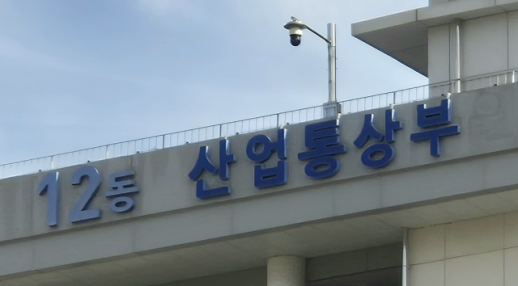 South Korea to Recruit Trainees for Digital Twin-Based Semiconductor Process Design Academy The Ministry of Trade, Industry and Energy said Wednesday it will recruit trainees for the Korea Semiconductor Academy to provide semiconductor process design training using digital twin technology. The program, supported by the ministry and run by the Korea Semiconductor Industry Association, targets company employees and people seeking jobs in the semiconductor sector. It plans to train about 100 process design specialists through four sessions a year, each lasting two weeks. The ministry said the initiative reflects growing complexity in manufacturing processes for 3D-stacked AI semiconductors such as HBM and 3D NAND. It said demand is rising for specialists who understand entire process flows — not just individual steps — and can solve technical problems that occur during production. It noted that manufacturing sequences and equipment layouts vary by chip type, while changing and rearranging expensive equipment to match each process is not feasible due to cost and space constraints. The academy said it worked with global semiconductor equipment companies to develop a curriculum that uses specialized software already used at major Korean companies and universities, allowing trainees to learn without dedicated equipment. In a virtual environment that replicates a semiconductor fab, trainees will study overall manufacturing processes and how to design optimized process flows. Industry experts will also serve as instructors to share on-the-job know-how. Applications open May 4 on the academy’s website, with trainees to be selected through screening based on selection criteria. Training is set to begin in late May. Choi Woo-hyuk, the ministry’s director general for advanced industry policy, called it “a new paradigm of training that lets people learn semiconductor processes at a glance without expensive equipment.” He said it is expected to produce talent tailored to industry needs in the short term and significantly reduce the costs required to build hands-on training equipment over the long term.* This article has been translated by AI. 2026-04-30 11:04:19