

Citing an internal State Department cable sent to U.S. embassies, the Journal said the department on April 29 (local time) instructed diplomats to urge foreign governments to join the new group. The initiative is called the “Maritime Freedom Construct,” or MFC, and would be U.S.-led, combining information sharing, diplomatic coordination and sanctions enforcement, according to the report.
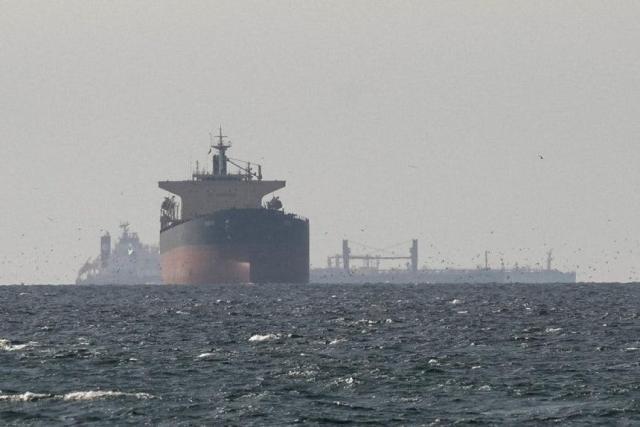
The plan follows prolonged disruptions in Hormuz transit. The Journal reported that Iran has laid mines and attacked oil tankers passing through the strait without its approval. The U.S. Navy, meanwhile, has maintained a blockade on vessels broadly traveling to and from Iranian ports. Restoring normal passage has also emerged as a key issue in stalled peace talks between the United States and Iran, the report said.
The cable suggested the coalition could go beyond a diplomatic forum. U.S. officials were told to ask whether partner countries would be willing to participate not only as diplomatic partners but also as military partners. The Journal said the MFC “is not a military alliance.”
The report described a division of roles under the concept: The State Department would serve as the hub for diplomatic operations, while U.S. Central Command would handle real-time maritime information for commercial shipping and coordinate intelligence sharing among participating militaries.
Trump has also made clear he intends to keep the blockade in place. The Journal reported that he told aides on April 28 to prepare for a long-term blockade until Iran accepts U.S. nuclear demands. Speaking to reporters on April 30, Trump called the blockade “genius” and said it is “100% airtight.” He also said the United States could continue “war and the blockade” if Iran does not agree to give up nuclear weapons.
The new coalition push differs from Trump’s earlier approach of pressing allies, particularly in Europe, to address the Hormuz issue. In late March, he publicly urged Europe to solve the problem on its own and made remarks suggesting Britain and France should go to the strait and handle it directly. He later criticized NATO as a “paper tiger,” arguing it was not providing enough support.
Europe has been preparing its own response. Britain and France held a meeting with more than 50 countries to discuss ways to ensure safe passage through the Strait of Hormuz after the war, the Journal reported. While U.S. officials have criticized Europe’s efforts as slow and bureaucratic, the cable included language saying the MFC could be complementary to existing maritime security plans led by Britain and France, according to the report.
* This article has been translated by AI.
Copyright ⓒ Aju Press All rights reserved.