

Journalist

Gourangalal Das
-
 Samsung and SK Hynix Expected to Continue Record Performance in Q2 Samsung Electronics and SK Hynix are projected to maintain their record performance in the second quarter. After both companies exceeded market expectations with their operating profits in the first quarter, there are predictions that they could rank among the top global profit earners for the year, and this positive trend is expected to continue into the second quarter. According to industry reports on June 7, analysts predict that the combined operating profit for Samsung Electronics and SK Hynix in the second quarter could exceed 150 trillion won. When annualized based on first-quarter results, Samsung is expected to rank among the top two globally, while SK Hynix is projected to be around fifth place, with second-quarter forecasts indicating even higher expectations. Samsung's semiconductor division is expected to drive the company's overall performance in the second quarter. Market analysts believe Samsung's operating profit could rise to the high 80 trillion won range. This increase is attributed to the significant impact of rising prices for general DRAM and NAND, along with expanded sales of HBM, leading to a greater share of profits from the device solutions segment. Samsung is benefiting greatly from its world-leading memory production capacity, particularly as demand for general DRAM recovers. The expansion of AI servers is not only affecting HBM but also boosting demand for general server DRAM and high-capacity NAND, shifting the memory market to a supplier-dominated landscape. SK Hynix is also likely to achieve record results in the second quarter. With its leading position in the HBM market and rising prices for general memory, forecasts suggest that its operating profit margin could exceed that of the first quarter. Some analysts even speculate that the second-quarter operating margin could approach 80%. Both companies attribute their performance improvements to the simultaneous strength of HBM and general memory. While the AI memory boom was primarily centered around HBM until last year, the expansion of inference-based AI services this year has rapidly increased demand for server DRAM and NAND. As the focus shifts from AI training to inference, the types of memory required by data centers are also diversifying. Major server clients are moving to secure supplies of general DRAM and high-capacity NAND ahead of potential shortages in the third quarter, and this pre-order trend is believed to have influenced price negotiations in the second quarter. Exchange rates are also playing a favorable role in performance. Since memory semiconductors are predominantly settled in dollars, a high won-dollar exchange rate increases revenue and profits when converted to won. Additionally, given the semiconductor industry's high fixed costs, revenue increases during price upturns quickly translate into profits. The key question is whether the supplier-dominated trend will continue in the second half of the year. SK Hynix is expanding its long-term production capacity through investments in its Cheongju M15X and Yongin clusters, as well as advanced packaging in the U.S. Samsung is also aiming to regain leadership in the next-generation AI memory market with HBM4 and HBM4E. An industry insider noted, "While the first quarter confirmed the semiconductor supercycle in numerical terms, the second quarter will demonstrate that this trend is not just a temporary rebound. Prices for HBM, general DRAM, and NAND are moving together, suggesting that annual operating profit forecasts for this year may continue to be revised upward."* This article has been translated by AI. 2026-06-07 10:39:00
 -
 Jeon Ji-hyun's 'Gunchi' Leads Weekend Box Office, 'Wild Thing' Follows The films 'Gunchi' and 'Wild Thing' have showcased the strength of Korean cinema by dominating the weekend box office. 'Gunchi,' marking Jeon Ji-hyun's return to the screen, continues to draw audiences as it approaches 5 million ticket sales. Meanwhile, the comedy 'Wild Thing,' starring Kang Dong-won, Um Tae-goo, and Park Ji-hyun, is also performing well in its early release phase. According to the integrated ticket sales network on June 7, 'Gunchi' attracted 281,926 viewers on June 6, maintaining its position at the top of the box office. The film's cumulative audience now stands at 4,523,309. Released on May 21, 'Gunchi' has consistently ranked among the top films since its debut and is on the verge of surpassing 5 million viewers. 'Gunchi' tells the story of survivors trapped in a building due to an unidentified infection outbreak, facing off against infected individuals who evolve in unpredictable ways. Directed by Yeon Sang-ho, known for expanding the zombie genre with films like 'Train to Busan' and 'Peninsula,' the film features a cast that includes Jeon Ji-hyun, Koo Kyo-hwan, Ji Chang-wook, Shin Hyun-bin, Kim Shin-rok, and Go Soo. Notably, 'Gunchi' marks Jeon Ji-hyun's first return to the big screen in 11 years, generating significant interest. After being invited to the Midnight Screenings section of the 79th Cannes Film Festival, the film quickly gained traction in the domestic market, showcasing the strength of Yeon Sang-ho's K-zombie genre. In second place is 'Wild Thing,' which opened on June 3 and drew 149,040 viewers on June 6, bringing its total audience to 431,987. The film started strong with over 160,000 viewers on its opening day and continues to attract audiences as the weekend approaches. 'Wild Thing' is a comedy about a once-popular mixed-gender dance group called 'Triangle' that, after being embroiled in an unexpected incident, seeks a chance at redemption 20 years later. Kang Dong-won, Um Tae-goo, and Park Ji-hyun portray members of 'Triangle,' with supporting roles from Oh Jung-se and Shin Ha-kyun. Kang Dong-won's comedic transformation, along with the performances of Um Tae-goo and Park Ji-hyun, resonates with audiences, contributing to positive reactions. 'Wild Thing' has also received high ratings from early viewers, generating buzz. Among foreign films, 'Backroom' secured third place with 93,073 viewers, bringing its total to 731,840. 'Michael' attracted 28,968 viewers, with a cumulative total of 1,516,641. As the first weekend of June approaches, the box office is led by two Korean films, with 'Gunchi' entering a phase of long-term success while 'Wild Thing' expands its audience base. The performance of these films raises expectations for the recovery of Korean cinema in June.* This article has been translated by AI. 2026-06-07 10:39:00
 -
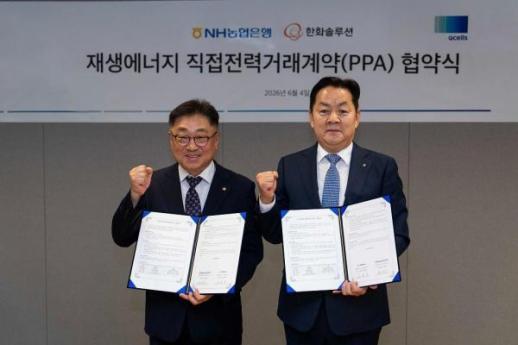 NH Nonghyup Bank Partners with Hanwha Solutions to Address Power Shortages with Renewable Energy NH Nonghyup Bank is accelerating its transition to renewable energy to address the rising demand for electricity. On June 7, the bank announced it has signed a Direct Power Purchase Agreement (PPA) with Hanwha Solutions to achieve carbon neutrality and expedite the shift to renewable energy. A PPA allows companies to directly purchase electricity from eco-friendly power plants. This arrangement is seen as a crucial tool for companies to effectively reduce greenhouse gas emissions and meet their RE100 (100% renewable energy) goals. With this new agreement, NH Nonghyup Bank will secure a total of 8 megawatts (MW) of renewable energy, following an initial contract for 4 MW signed in 2025. This makes it the largest amount of renewable energy secured through a direct PPA by any bank in South Korea. Under the agreement, NH Nonghyup Bank will receive 4 MW of renewable energy produced by Hanwha Solutions' solar power facilities over the next 20 years. This energy will be fully utilized to operate the NH Uiwang Integrated IT Center. Im Se-bin, Senior Vice President of NH Nonghyup Bank, stated, "This agreement is a step towards fulfilling our responsibility as a leading bank actively practicing climate crisis response and ESG (Environmental, Social, and Governance) management. We will continue to work on building a reliable ecosystem for procuring green energy and contribute to the national greenhouse gas reduction targets." 2026-06-07 10:36:00
 -
 Jensen Huang to Throw First Pitch and Meet Game Executives Jensen Huang, CEO of NVIDIA, is continuing his unique activities that bridge sports and gaming during his third day in South Korea. On June 7, Huang is set to make a surprise appearance as the starting pitcher at the Doosan Bears' home game at Jamsil Baseball Stadium in Seoul. He will don a Doosan uniform featuring the number '93' to commemorate the year NVIDIA was founded (1993) as he steps onto the mound in front of local baseball fans. Notably, Doosan Group Chairman Park Jung-won will step up to the plate to catch Huang's pitch, wearing a uniform with the number '96' to symbolize the year Doosan was established (1896). Given that Doosan Group has recently focused on robotics and automation solutions as future growth areas, this meeting between the two executives is expected to foster a closer partnership beyond just a sports event. Before his visit to the baseball stadium, Huang is also scheduled to hold a series of private meetings with executives from major South Korean gaming companies. A meeting with NCSOFT CEO Kim Taek-jin is highly anticipated. NCSOFT has maintained a close relationship with NVIDIA, often showcasing its new titles at NVIDIA's technology events. This meeting is expected to discuss specific collaboration strategies to enhance digital human implementation, simulation technology, and 'physical AI' that interacts with the real world. Huang will also meet separately with Krafton executives, including Chairman Chang Byung-kyu. This meeting is likely to focus on building next-generation gaming environments based on NVIDIA's high-performance AI computing resources, as well as joint strategies for new business areas like humanoid robots. As the South Korean gaming industry is recognized as a hidden powerhouse in generative AI and robotics technology, it is expected to serve as a crucial foothold for NVIDIA's ecosystem expansion.* This article has been translated by AI. 2026-06-07 10:27:00
 -
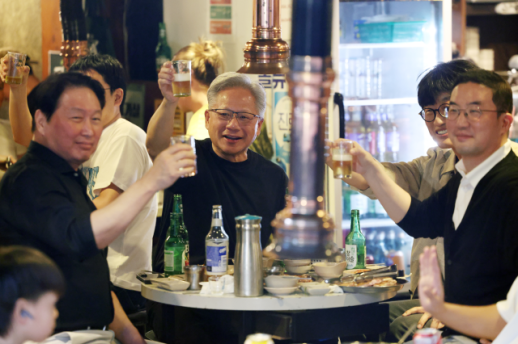 NVIDIA CEO Jensen Huang's Visit Raises Questions About South Korea's Role in AI Industry In the first weekend of June 2026, all eyes in South Korea's semiconductor industry were on NVIDIA CEO Jensen Huang. After presenting his vision for the future of the global AI industry at the Computex event in Taiwan, he quickly traveled to South Korea. The local media covered his every move in real time, including meetings with executives from LG Electronics, Naver, and SK Hynix, as well as a dinner featuring samgyeopsal and soju. However, the global semiconductor industry is a place where cold calculations often lie behind smiling faces. While friendships exist in international business, the direction of the industry is ultimately determined by interests, supply chains, and market logic. In this context, Huang's visit to South Korea was more of a strategic assessment of the global supply chain for the AI era than a friendly visit. During his stay, Huang reportedly focused on discussions with major partners, including Samsung Electronics and SK Hynix, regarding next-generation HBM supply plans, the expansion of AI data centers, and forecasts for future AI server market demand. While the media's attention was drawn to the dinner, the truly significant discussions took place behind closed doors, where the future AI industry's supply chain worth tens of trillions of won was at stake. Many people today understand the AI revolution as a GPU revolution, which is not entirely incorrect. However, within the AI industry, there are already discussions about something even more critical than GPUs: HBM, or high-bandwidth memory. No matter how advanced a GPU is, if it cannot supply data in a timely manner, the overall performance of the AI system will inevitably decline. If the AI industry is a vast highway, the GPU is the engine, and HBM is the essential system supplying fuel to that engine. In this market, South Korean companies have secured world-class competitiveness. SK Hynix currently leads the global HBM market, while Samsung Electronics is launching a major counterattack centered on next-generation HBM4. However, South Korea must be wary of a trap: becoming complacent with its current position as the world's number one in HBM. History shows that the winners of technological revolutions are not necessarily the countries that produce specific components best, but those that dominate the entire ecosystem. The UK invented the steam engine, but the U.S. emerged as the ultimate victor of the Industrial Revolution. Japan dominated the DRAM market, but South Korea took the lead in the memory semiconductor era. Similarly, while South Korea is a powerhouse in HBM, it cannot yet be called an AI powerhouse. Currently, in the global AI ecosystem, design is handled by NVIDIA, cutting-edge production is managed by TSMC, and cloud and platform services are dominated by U.S. tech giants. South Korea stands at a crucial point in the supply chain but does not yet control or design the entire system. Thus, South Korea's goal should not be to remain an HBM powerhouse but to leap to an AI infrastructure powerhouse. The AI industry is no longer just about semiconductors. It is evolving into a massive national infrastructure industry that combines data centers, power grids, cooling systems, communication networks, cloud services, and networks. In the future, global AI competitiveness is likely to be determined not only by semiconductor production capacity but also by how much power can be reliably supplied and how efficient data centers can be built. In fact, the U.S. and China have already entered a competition to build super-sized AI data centers, and some experts predict that the biggest bottleneck in the future AI industry may not be a shortage of semiconductors but a lack of power. South Korea possesses significant potential amid these changes. It has a world-class semiconductor industry, as well as expertise in communication infrastructure, nuclear power technology, battery production, and power grid management. The challenge is that these industries have yet to be integrated into a cohesive national strategy. A comprehensive strategy that connects semiconductors, energy, communications, data centers, manufacturing, and AI is now necessary. Only then can South Korea transcend being a mere semiconductor supplier and become a leader in AI infrastructure. An even more critical concept emerges here: Physical AI. Many still perceive AI as conversational services like ChatGPT, but Huang has recently emphasized areas such as robotics, autonomous driving, smart factories, and humanoid industries. This indicates that the era of AI moving beyond computer screens into the real world has begun. At this juncture, South Korea can position itself more advantageously than any other country. With a world-class manufacturing base in shipbuilding, automobiles, steel, batteries, machinery, and semiconductors, the combination of AI and manufacturing could elevate South Korea from a mere IT powerhouse to a central player in the future industrial revolution. The era of Physical AI, where factories make autonomous decisions, robots move independently, and logistics systems optimize in real time, could provide a stage for South Korea's manufacturing sector to showcase its greatest competitiveness. Another reality we must confront is that South Korea's true competitor in the semiconductor industry is not China but Taiwan. While South Korean society often focuses on U.S.-China competition, the strongest competitor in the semiconductor industry is Taiwan. The semiconductor ecosystem built around TSMC is not just a production facility but a vast industrial platform where design, production, packaging, and supply chains are interconnected. This is why Huang effectively utilizes Taiwan as his second base. Today, the AI supply chain connecting the U.S. and Taiwan is arguably the central axis of the global AI industry. Ultimately, the message Huang's visit sends to South Korea is straightforward: being number one in HBM is just the starting point, not the destination. South Korea must now grow beyond being a memory powerhouse to become an AI infrastructure powerhouse and evolve from a semiconductor supplier to a key player in the AI ecosystem. Furthermore, it needs to establish a national strategy that connects semiconductors, data centers, power grids, robotics, manufacturing, and Physical AI. Only then can South Korea become a co-designer of a new industrial civilization rather than a subcontractor in the AI empire. While the memories of samgyeopsal and soju will remain for a day, the questions raised by this visit could determine the future of South Korea's economy for decades to come. Will South Korea be satisfied with its current success, or will it leap to become a central nation in the AI era? History always offers opportunities to only a few countries at decisive moments. Now is the time for South Korea to seize that opportunity. 2026-06-07 10:15:00
 -
 LG Uplus to Build Largest AI Data Center in the Seoul Area, Targeting $4.5 Billion in Contracts by 2030 "We plan to continue expanding the AIDC based in Paju in the future." On June 5, at the construction site of LG Uplus's Paju AIDC, workers donned hard hats as they entered a site still dominated by concrete frames and steel structures. By 2027, this facility is set to transform into the largest AIDC in the Seoul area, capable of accommodating over 100,000 servers with a power capacity of 200 megawatts (MW). During a press briefing held at the site, Ahn Hyung-kyun, head of LG Uplus's Enterprise AI Business Group, stated, "We aim for 5 trillion won in contract revenue over the next five years and an annual growth rate of 15-20%." The motivation behind LG Uplus's large-scale AIDC construction in Paju stems from changes in the AI market. Ahn noted, "As AI demand shifts from learning-based to inference-based, we are entering an era where customers are rapidly adopting AI technology." LG Uplus emphasized the need for rapid AI infrastructure supply. While graphics processing units (GPUs) can be secured within months, building a data center to accommodate them typically takes 3-4 years. Ahn assessed, "As AI services increase, there is a need for new infrastructure standards that possess real competitive advantages in power, cooling, construction, and operational capabilities." To address this, LG Uplus will adopt a standard modular data center (PMDC) approach that enhances construction speed and scalability. This method involves pre-manufacturing key equipment and assembling it on-site, allowing for infrastructure expansion tailored to customer demand. The Paju AIDC is being developed as the largest data center in the Seoul area, with a power supply capacity of 200 MW. According to LG Uplus, this is sufficient to accommodate approximately 70,000 NVIDIA Blackwell GPUs. Plans for business expansion are also taking shape. Currently, one building (50 MW) has secured customers, while discussions are ongoing with potential clients for buildings two through four. Ahn stated, "We are in talks with customers who have actual demand for buildings two through four, and we are preparing our business while providing the necessary specifications to our clients." He added, "Our goal is to eventually expand the AIDC capacity to 600 MW." A key focus at the site was cooling technology. AI servers have higher power density and heat generation than standard servers, making cooling technology increasingly critical as next-generation GPUs emerge. The Paju AIDC was designed with liquid cooling in mind from the outset. The building's load, piping, and waterproofing were all configured to accommodate a liquid cooling environment. It is designed to support various AI semiconductors, including GPUs and neural processing units (NPUs). Ahn remarked, "Air cooling is nearing its physical limits; the Paju AIDC is designed with a hybrid structure that supports both air and liquid cooling." Jeong Sook-kyung, who oversees the AIDC business at LG Uplus, revealed plans to develop the Paju AIDC into a testing hub for a "Korean-style AI Data Center (K-AIDC)." To achieve this, LG Uplus intends to build the Paju AIDC as a culmination of "One LG" technologies. This will integrate LG Electronics' liquid cooling technology and chillers, LG Energy Solution's UPS batteries, and LS Electric's power solutions to establish the core infrastructure for the AI data center. The initiative goes beyond merely applying affiliate equipment. It will also serve as a proof-of-concept data center to validate the performance and reliability of domestic solutions in real-world environments for major tech clients. Jeong stated, "Big tech clients have hundreds of technical requirements," adding that the Paju AIDC will play a role in verifying the performance and reliability of domestic solutions. Ahn emphasized, "Ultimately, the key is uninterrupted reliability," asserting that the Paju AIDC will provide infrastructure that allows businesses and customers to confidently utilize AI.* This article has been translated by AI. 2026-06-07 10:12:00
 -
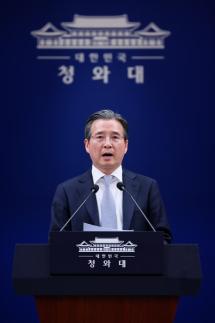 Kim Yong-beom Reflects on One Year as Policy Chief: Thanks Supporters Kim Yong-beom, Chief of the Policy Office, stated that while corporate earnings are at record levels with the KOSPI reaching 8,000 points, the exchange rate is hovering around 1,550 won.In a Facebook post on June 6, Kim reflected, "Both good and challenging times present us with unfamiliar tasks." He noted, "Exactly one year ago today, I began my role as Policy Chief, and now I face a different landscape."He continued, "Amid dismal macroeconomic indicators, including 13 consecutive quarters of declining retail sales and soaring housing prices, I felt lost about where to begin. Looking back at a photo of myself in a suit and tie standing in the press room after several years, I vividly recall the heavy emotions I felt at that time."Kim expressed gratitude for the support he received over the past year, saying, "I was able to navigate through this year thanks to the wonderful people who stood by me. I deeply appreciate those who offered encouragement like a refreshing sip of water during difficult moments."* This article has been translated by AI. 2026-06-07 10:00:00
 -
 North Korean leader's sister rules out denuclearization as Xi prepares to visit Pyongyang SEOUL, June 7 (AJP) - Kim Yo-jong, the sister of North Korean leader Kim Jong-un, reiterated that North Korea would never give up its nuclear weapons, state media reported on Sunday. According to the state-run Korean Central News Agency, she said in a statement the previous day that North Korea's status as a nuclear-armed state is "irreversible," regardless of whether others recognize it, and vowed that the country would "never tolerate any threat to or compromise of our sovereignty and security." Her remarks came just days before Chinese President Xi Jinping is set to visit Pyongyang for the first time in about seven years, as Beijing seeks to mend ties with its traditional ally, which has grown closer to Russia in recent years. She also dismissed as "false" what she described as U.S. officials' "wishful hopes" that Xi and U.S. President Donald Trump had agreed on North Korean denuclearization during their summit in Beijing last month, adding that she had the "most accurate information," suggesting that Beijing may have briefed Pyongyang on what was discussed. Citing a recent U.S. arms sale worth $106 million to South Korea including precision-guided bombs such as Joint Direct Attack Munitions (JDAMs) and related equipment, she said it demonstrated why North Korea needs to keep building up its military arsenal to protect itself. Meanwhile, North Korea last week unveiled a new nuclear facility without disclosing its location or other details. Satellite imagery suggests it is located in Yongbyon, North Pyongan Province, where leader Kim Jong-un has called for an "exponential" expansion of the country's nuclear arsenal, a move that appeared to boost Pyongyang's leverage in talks ahead of Xi's visit. 2026-06-07 09:58:46
 -
 KT Enhances Zero Trust Security Framework Across Its Systems KT announced on June 7 that it is enhancing its Zero Trust security strategy to implement a continuous prevention and proactive response system across its entire organization. Previously, KT introduced a Zero Trust Network Access (ZTNA) solution to verify access to work systems based on the trust level of users and devices. Building on this operational experience, the company plans to establish a threat detection system and strengthen its capabilities to prevent the spread of security incidents. To achieve this, KT has implemented a behavior-based detection system. The Endpoint Detection and Response (EDR) system will identify abnormal activities on devices such as PCs and servers, while the Network Detection and Response (NDR) system will analyze abnormal traffic and signs of attacks in real-time. Additionally, KT has developed a multi-layered detection system to identify unusual behaviors occurring on devices and networks, enabling early detection of new types of attacks and abnormal access following internal breaches. The company is also enhancing its micro-segmentation architecture to prevent the spread of damage in the event of a security incident. Micro-segmentation is a technology that limits an attacker's lateral movement within the system by segmenting access rights and communication ranges for each system, thereby preventing the spread of security threats. KT has completed pilot applications of micro-segmentation for key systems and certain work environments, with plans to expand its application to the entire work environment after verifying operational stability and policy effectiveness this year. Based on its Zero Trust security strategy, KT aims to proactively respond to evolving cyber threats by expanding the application of intelligent threat detection technologies. Kim Chang-o, Chief Information Security Officer (CISO) at KT, stated, "We are continuously enhancing our Zero Trust security framework focused on ongoing prevention and proactive response based on our ZTNA operational experience. We will actively adopt advanced security technologies such as micro-segmentation and behavior-based detection to maintain the highest security levels for our key work systems and services." Zero Trust is a modern cybersecurity framework based on the principle of 'never trust, always verify,' requiring strict identity verification and approval for all access requests. It is founded on three core principles: continuous verification, least privilege, and the assumption of breach.* This article has been translated by AI. 2026-06-07 09:03:00
 -
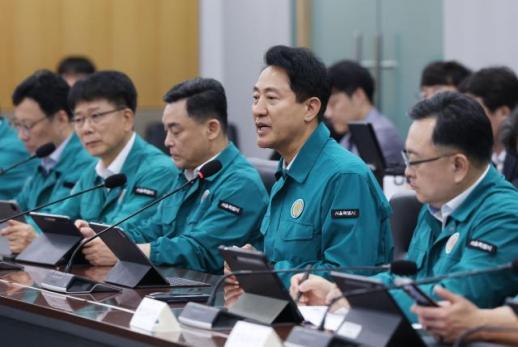 Oh Se-hoon Faces Challenges as Seoul Mayor Amid Divided Council In the June 3 local elections, Oh Se-hoon of the People Power Party secured his fifth term as Seoul mayor, demonstrating his political strength. However, the next four years are expected to be challenging as the Seoul City Council has shifted power back to the Democratic Party, placing Oh's administration under significant scrutiny from the outset. According to the National Election Commission, the Democratic Party has won 81 of the 118 seats in the Seoul City Council, while the People Power Party holds only 37 seats. This majority allows the Democratic Party to potentially override the mayor's veto power, as they have surpassed the two-thirds majority required to do so under local government law. Political analysts suggest that this shift indicates that "half of Seoul's power has returned to the Democratic Party." Even if Mayor Oh attempts to lead the city, he will likely struggle to enact ordinances, budget allocations, and major policies without cooperation from the Democratic-controlled council. The city has a history of conflict under a divided government. Oh previously clashed with a Democratic majority in the city council after the 2010 local elections, notably over the issue of free school meals. The council pushed for universal free meals, while Oh advocated for selective welfare. This standoff culminated in a referendum, which resulted in low voter turnout and led to Oh's resignation as mayor. This incident is often cited as a prime example of how political disputes can engulf city governance. After returning to the mayor's office in the April 2021 by-election, Oh faced a similar situation. At that time, the Democratic Party held 99 of 110 seats in the council. Oh sought to restructure various projects initiated during the tenure of former Mayor Park Won-soon, but encountered significant resistance from the council. A notable point of contention was TBS (Traffic Broadcasting System). Disputes over financial support and allegations of bias led to prolonged conflicts between the city and the council, which were only resolved after the People Power Party gained a majority in the 2022 local elections and moved to halt funding. Given the Democratic Party's acquisition of 81 seats, significant challenges are anticipated for Oh's administration. The TBS issue is likely to resurface, with speculation that the Democratic-controlled council may revisit funding discussions under the pretext of restoring public broadcasting functions. TBS has become a politically charged topic between Oh's administration and the Democratic Party. Budgetary conflicts also seem inevitable. Oh's key initiatives, including the Great Han River Project, Han River Bus, Seoul Run, Guaranteed Income, and Automatic Transportation policies, may face budget cuts or adjustments during the council's review process. If the Democratic Party prioritizes "people's livelihood" and demands a reassessment of these projects, the pace of implementation could be adversely affected. However, some analysts believe that there are factors that differentiate the current situation from those in 2010 and 2021. Oh's political stature has changed significantly. As a five-term mayor and a potential candidate for the next presidential election, he carries more political weight than before. His extensive administrative experience may lead him to pursue a more pragmatic approach, balancing direct confrontations with negotiations and compromises on specific policies. The Democratic Party also faces its own challenges. If they are perceived as obstructing city governance, they could face backlash from voters. Seoul residents tend to prioritize practical solutions to issues like transportation, housing, and livelihoods over ideological conflicts. Unconditional opposition or political strife could ultimately lead to voter fatigue. Historically, the politics of Seoul have demonstrated the costs of failed cooperation. When the city and council clash, the consequences are often borne by the citizens, resulting in project delays, budget disputes, and administrative gaps that lead to everyday inconveniences. A political insider remarked, "If the Democratic council focuses solely on securing political dominance rather than serving as a check, Seoul's governance could descend into extreme conflict. Conversely, Mayor Oh must also demonstrate leadership through collaboration and persuasion rather than unilateral actions." The success or failure of Seoul's governance over the next four years will depend not on numbers but on political acumen. Whether the Democratic Party's 81 seats will serve as a balance of power or become a source of contention will be determined in the evolving relationship between the city and the council. 2026-06-07 09:03:00