
Journalist

HAN Joon ho
-
 Annual Cannes Film Festival opens with South Korean cinema in spotlight SEOUL, May 12 (AJP) - This year's Cannes Film Festival kicked off its 11-day run in the southern French city on Tuesday, with South Korean films among the highlights. Widely regarded as one of the world's most prestigious film festivals, alongside those in Berlin and Venice, the festival, now in its 79th year, is known for recognizing auteur-driven, bold, and artistic films. Its top prize, the Palme d'Or, also known as Golden Palm, is considered one of the highest honors in global cinema and has often propelled filmmakers and films to international prominence. This year's festival notably features an impressive South Korean lineup across multiple sections, led by director Na Hong-jin's sci-fi thriller "Hope," which was invited to the main competition, marking the first time in four years that a South Korean film has competed for the top honor. Set in a demilitarized border village where unidentified objects suddenly appear, "Hope" is scheduled to make its world premiere on Sunday at the Grand Théâtre Lumière, the festival's main screening venue. The 160-minute film stars veteran actor Hwang Jung-min, along with Zo In-sung and Jung Ho-yeon. The cast also includes Hollywood stars such as Alicia Vikander, Michael Fassbender and Taylor Russell. About 22 films will compete for the Palme d'Or, with works by acclaimed directors including Cristian Mungiu, Hirokazu Kore-eda, and Pedro Almodóvar seen as strong contenders. Among the highlights, award-winning filmmaker Park Chan-wook, best known internationally for "Oldboy" (2003) and "Decision to Leave" (2022), is serving as jury president, becoming the first South Korean to hold the role. Director Yeon Sang-ho, famous for his zombie thriller "Train to Busan" (2016) returns with his new film "Colony," which has been invited to the Midnight Screenings section, dedicated mainly to genre films such as horror and thrillers. The film tells the story of survivors trapped inside a quarantined building amid the outbreak of a mysterious virus. Director July Jung, who attracted attention with dramas "A Girl at My Door" (2014) and "Next Sohee" (2022), was also invited with her new film "Dora," which will be screened in a section dedicated to independent and emerging cinema. The festival runs until May 23, when the Palme d'Or and other major awards will be announced at the closing ceremony. 2026-05-12 11:16:36
 -
 Krafton's 'Subnautica 2' opens Steam preloads as wishlists pass 5 million SEOUL, May 12 (AJP) - Krafton's creative studio Unknown Worlds opened Steam pre-orders and pre-downloads for "Subnautica 2" at midnight Tuesday, three days before the underwater survival sequel enters early access on Friday. The title has held the top spot on Steam's global wishlist for nine straight months and recently crossed 5 million cumulative wishlists, the company said. It also climbed to No. 1 on Steam's global top-grossing chart shortly after pre-orders opened. Krafton and Unknown Worlds staged the "First Dive Showcase" on May 10 to mark the milestone, streaming simultaneously on Twitch, YouTube and Steam to a peak concurrent audience of about 80,000 viewers. Developers walked through the design direction and demonstrated new vehicles and an expanded base-building system. The accompanying gameplay trailer showcased a richly rendered marine ecosystem powered by Unreal Engine 5, alongside a body-adaptation mechanic, fresh underwater vehicles and tense encounters with deep-sea titans. "We were overwhelmed by the warm response to the early access launch," said Ted Gill, CEO of Unknown Worlds. "We look forward to building this game together with our players, listening to their voices along the way." Founded by Charlie Cleveland and Max McGuire, Unknown Worlds developed "Subnautica 2" as the official sequel to the genre-defining "Subnautica" series. Set on a different alien planet, the game introduces a four-player cooperative mode for the first time in the franchise, broadening the survival experience beyond solo play. The launch arrives despite a bruising legal battle between Krafton and Unknown Worlds' founding leadership over the title's release timing and a $250 million performance-based earnout. Gill, Cleveland and McGuire were ousted in July 2025 and later sued Krafton in Delaware's Court of Chancery, which on March 16 ruled that Krafton had breached its acquisition agreement and ordered Gill reinstated as chief executive. The court also extended the earnout window to September, though litigation over damages remains pending. 2026-05-12 11:16:35
 -
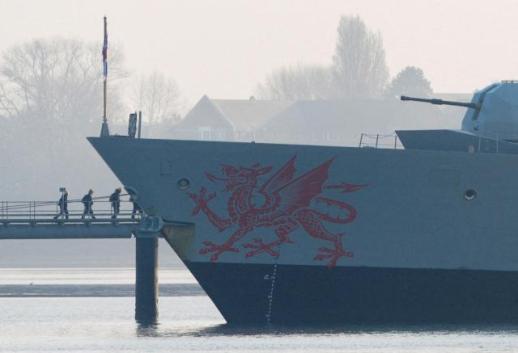 Korea joins UK-France-led Hormuz defense talks after vessel strike SEOUL, May 12 (AJP) - South Korea will take part in a defense ministerial video conference led by Britain and France on Tuesday to discuss efforts to restore safe passage through the Strait of Hormuz, as Seoul faces growing pressure to clarify its role in a possible multinational maritime mission. The Ministry of National Defense said Woo Kyung-seok, director general for defense policy planning and an Army major general, will attend the meeting on discussions related to a U.K.- and France-led multinational military mission. Woo is expected to attend on behalf of Kim Hong-cheol, deputy minister for national defense policy, who is currently in the U.S. accompanying Defense Minister Ahn Gyu-back. “The government has been actively participating in international discussions aimed at ensuring safe passage through the Strait of Hormuz, while closely monitoring the situation and communicating with related countries,” a ministry official said. Britain and France have been leading talks on forming a multinational force to restore navigation through the key waterway after a possible end to the Iran war. The talks began with a French-hosted video conference among chiefs of defense in March and have continued at various levels, including leaders and senior officials. South Korea has also taken part in the discussions. Tuesday’s meeting marks the first defense ministerial-level session of the grouping, raising speculation that the U.K. and France may be seeking to move the discussions toward a more concrete policy decision as their operational plan takes shape. Seoul’s participation comes as attention grows over how it will respond after the fire aboard the Korean vessel Namu was confirmed to have been caused by an external attack. The government has yet to identify who was behind the incident. The defense ministry repeated its previous position, saying it will “carefully review realistic ways to contribute” in consultation with related ministries, while comprehensively considering international law, the safety of international sea lanes. Meanwhile, a very large crude carrier owned and operated by South Korean shipping company Sinokor Merchant Marine reportedly passed safely through the Iran-blockaded Strait of Hormuz earlier this month after turning off its location-tracking device. Reuters reported Monday, citing shipping data from Kpler and the London Stock Exchange Group, that three tankers were recently found to have exited the Strait of Hormuz with their tracking systems switched off. Among them was the VLCC Basrah Energy, owned by Sinokor. The vessel loaded 2 million barrels of crude oil at the Zirku crude export terminal operated by the Abu Dhabi National Oil Company in the United Arab Emirates on May 1 and passed through the Strait of Hormuz on May 6, according to the report. It remains unclear which company chartered the vessel. Reuters said it had requested comment from Sinokor but did not receive a response. Sinokor has expanded its presence in the tanker market in recent years through aggressive purchases and chartering of vessels. The company is estimated to control around 150 VLCCs as of the end of last month. Industry sources said Sinokor had deployed at least six empty tankers to the Persian Gulf from late January over a four-week period. Some market watchers believe the company may have profited significantly by using its tankers as floating storage for crude from Gulf producers whose export routes were disrupted by the Iran war, even as some of its vessels became stranded in the region. 2026-05-12 11:02:01
 -
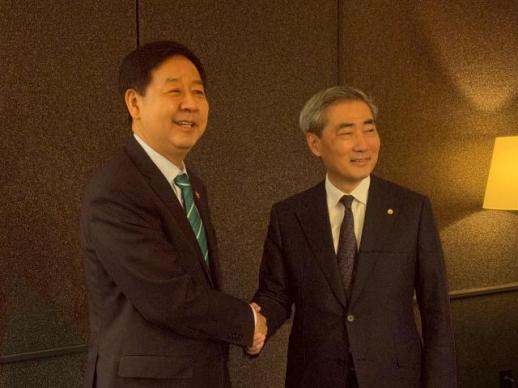 BOK holds BIS board seat for third straight term SEOUL, May 12 (AJP) —New governor Shin Hyun-song of the Bank of Korea has been elected to the Board of Directors of the Bank for International Settlements, extending South Korea’s representation at the top decision-making body of the global central banking community for a third consecutive term. The BOK said Tuesday that Shin officially began his three-year term on Monday after being elected as an elected director during a regular board meeting held at the BIS headquarters in Basel, Switzerland. The term is renewable. The central bank described the appointment as a sign of South Korea’s growing influence in international finance, noting that BOK governors have continuously held seats on the BIS Board since 2019 through successive appointments of former governors Lee Ju-yeol and Rhee Chang-yong. The BIS Board serves as the de facto supreme decision-making body overseeing the institution’s strategy, governance and operational direction. The board meets at least six times annually and supervises key functions including amendments to BIS statutes, membership approvals and appointments of senior executives. Board members also sit ex officio on the Economic Consultative Committee, which helps shape agendas for the BIS Global Economy Meeting, where governors from around 30 major central banks discuss global financial and monetary issues. The 18-member board consists of six ex-officio directors representing the founding member central banks of the United States, United Kingdom, France, Germany, Italy and Belgium, alongside the president of the Federal Reserve Bank of New York. The remaining 11 elected directors are selected by a two-thirds majority vote from among governors of other member central banks. Current elected member countries include Japan, China, India, Canada, Saudi Arabia and South Korea. Shin is widely regarded as one of Asia’s leading international finance experts. Before assuming the governorship of the BOK, he served for 12 years at the BIS as Economic Adviser and head of its Monetary and Economic Department until March this year. The BOK said Shin’s extensive BIS experience, South Korea’s active contribution to global monetary discussions and his international reputation were reflected in the appointment. The appointment also comes as South Korea’s role in global capital markets expands. The country operates one of the world’s largest non-deliverable forward currency markets alongside India, while expectations for long-term foreign capital inflows have strengthened following Korea’s inclusion in the World Government Bond Index. 2026-05-12 10:53:37
 -
 CJ CheilJedang Q1 profit falls 26% on bio slump SEOUL, May 12 (AJP) - CJ CheilJedang, South Korea's largest food maker, reported a 26.0 percent drop in first-quarter operating profit, as a sharp downturn in its bio business overshadowed steady gains overseas from its frozen dumpling franchise. According to regulatory filings released Tuesday, operating profit fell to 148.5 billion won ($100 million) for the three months ended March, while revenue edged up 4.3 percent to 4.03 trillion won, the company said. The figures exclude its logistics affiliate CJ Logistics. On a consolidated basis, revenue rose 6.0 percent to 7.11 trillion won, with operating profit down 17.2 percent at 238.1 billion won. The firm said that the food division carried the quarter, posting a 3.9 percent rise in revenue to 3.04 trillion won and an 11.2 percent jump in operating profit to 143.0 billion won. Overseas food sales climbed 4.5 percent to 1.56 trillion won, driven by its lineup of global strategic products led by the Bibigo dumpling brand. In the Americas, dumpling sales grew 15 percent and shelf-stable rice 7 percent, while frozen pizza continued to gain market share. In Japan, dumpling revenue surged 17 percent on the back of the company's new Chiba plant, pushing its market share into double digits at 11.0 percent for the first time. European and Asia-Pacific sales each expanded 17 percent, with Vietnam up 32 percent and Oceania up 31 percent. The bio division, however, dragged on group earnings. Revenue rose 5.7 percent to 988.7 billion won, but operating profit collapsed 92.4 percent to 5.5 billion won as competition intensified in tryptophan and lysine prices weakened on base effects. Specialty amino acids such as arginine notched record sales volumes, partly cushioning the blow. CJ CheilJedang said it plans to accelerate the rollout of its Bibigo brand in mainstream European retail channels and expand digital marketing in the United States, while pushing higher-margin specialty products in bio. "We will press ahead with the global expansion of K-food through strategic products such as dumplings, while stepping up efforts to improve profitability through bio sales growth and management efficiency," said a company spokesperson. Shares of CJ CheilJedang traded at 212,500 won per stock at 10:37 a.m., 5.76 percent lower than the day before. 2026-05-12 10:43:32
 -
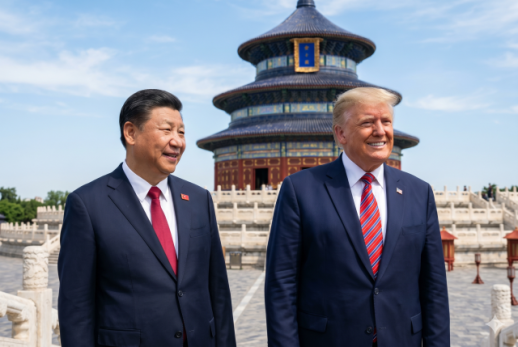 ASIA INSIGHT: Xi Jinping crafts imperial mirage at Temple of Heaven The meeting between the world’s two most powerful men is less a diplomatic summit than a calculated ritual of psychological capture. SEOUL, May 12 (AJP) - In a quiet corner of the Treasury Department, the steel plates have been etched with a flourish that feels more like a royal decree than a bureaucratic necessity. For the first time in the history of the American Republic, the currency carries the aggressive, looping signature of the man in the Oval Office. Combined with the twenty-two-foot gilded monuments rising on Florida golf courses and the promise of a presidential seal embossed on every United States passport, the aesthetic shift is unmistakable. Donald Trump does not merely want to lead a government. He wants to embody a state. Xi Jinping has spent a lifetime studying the semiotics of power, and he knows exactly who is stepping off Air Force One on Wednesday. He understands that while a president is constrained by courts and congresses, an emperor is moved by something far more primal, which is the recognition of his own divinity. When the two leaders meet for the summit on May thirteen, fourteen, and fifteen, the world will be told of trade quotas, semiconductor sovereignty, and the cooling of the Iranian theater. The true business of the week, however, will take place on the ancient, circular stones of the Tiantan, universally known as the Temple of Heaven. By choosing this site over the sterile, socialist-realist halls of the Great Hall of the People, Xi is not merely hosting a summit. He is conducting a coronation. The Temple of Heaven is the literal axis where the Son of Heaven once mediated between the celestial and the terrestrial. Built in fourteen twenty, it was the site where the emperor would process from the Forbidden City to fast, pray, and offer sacrifices during the winter solstice. The architecture is a map of a rigid, cosmic hierarchy. The northern walls are rounded to mimic the sky, while the southern walls are square to represent the earth. To walk these grounds is to walk the boundary of the known world. The irony of the Temple of Heaven is that the rituals performed there were historically a desperate plea for order in a time of chaos. The emperor offered sacrifices because he feared the drought, the famine, and the loss of his mandate. He went there to be humble before the heavens. Today, as the world teeters on the edge of a fundamental divorce between the two largest economies, the pageantry in Beijing serves an entirely opposite purpose. It is a grand, gilded attempt to mask the fact that the old global order is dying, utilized by two men who view the mandate of heaven not as something to be earned through prayer, but as something to be seized through brute transaction. When the American delegation arrives, it will bring more than just state department officials. Chief executives from Apple, Nvidia, Boeing, and Exxon are expected to flank the president, transforming this diplomatic mission into a high-stakes corporate parley. They are traveling to Beijing because the architecture of the future is currently fractured. The United States maintains a tight grip on the advanced microprocessors that serve as the brains for the next generation of artificial intelligence and humanoid robotics. China, conversely, processes roughly 90 percent of the world’s rare earth minerals, effectively holding the lifeblood of modern hardware hostage. This is the opening chapter of an artificial intelligence cold war, and it is a distinctly modern standoff being waged inside a fifteenth-century courtyard. The negotiations over this technological frontier are inextricably linked to the physical wars currently draining the global economy. As the conflict involving Iran enters its third month, China has quietly stepped into the unlikely role of Middle Eastern peacemaker. Beijing cannot afford the disruption of prolonged hostilities. Surging oil prices have driven up the cost of petrochemicals, raising production costs by 20 percent for some Chinese manufacturers who are already battling a sluggish domestic economy and high unemployment. Xi needs Washington to recognize China's leverage over Tehran. He is likely hoping that if he can nudge Iranian officials back to the negotiating table and stabilize the Strait of Hormuz, Trump will reconsider the aggressive trade probes and chip export bans currently strangling Chinese technology firms. Trump arrives with his own domestic vulnerabilities that demand a grand bargain. The American agricultural sector has been battered by retaliatory Chinese tariffs, and securing a massive purchase of soybeans and pork is essential for pacifying his political base in key voting states. Furthermore, the Supreme Court recently curbed his unilateral tariff powers, meaning he must secure concessions through sheer diplomatic force rather than executive fiat. Xi knows that a man who sees his own name on a dollar bill is susceptible to the lure of a historic deal. By elevating Trump to the status of a fellow Son of Heaven, Xi creates a space where the brutal, zero-sum realities of global trade can be reimagined as a simple agreement between two titans. For those of us in the rest of Asia, this is a profoundly precarious moment. We are watching two men negotiate the fate of the twenty-first century across an ancient altar. From Seoul, the view is one of existential anxiety. Our semiconductor sovereignty and our regional security are the bargaining chips in a ritual designed to satiate the egos of two men who believe they are the authors of history. The won-dollar pressure is already mounting as markets anticipate an agreement that might favor personal prestige over structural stability. If the price of semiconductor access is a banquet in a restricted palace, Xi Jinping is more than willing to pay it, leaving allied nations to navigate the fallout. As the sun sets over the blue-tiled roofs of the Hall of Prayer for Good Harvests, the reality will remain long after the motorcades have departed. A signature on a dollar bill does not make a man an emperor, and a dinner in a restricted palace does not resolve a superpower rivalry. We are witnessing the birth of a new, imperial era of diplomacy, one where the theater of power is so overwhelmingly loud that it threatens to drown out the silent, crumbling foundations of the world it seeks to govern. In the end, the mandate of heaven is never truly given to any nation. It is only borrowed, and the interest is ultimately paid in the stability of the nations left standing outside the temple walls. 2026-05-12 10:34:03
 -
 BLACKPINK's Jennie rakes in billions after establishing her own agency SEOUL, May 12 (AJP) - K-pop star Jennie of BLACKPINK has earned more than 23 billion Korean won (about US$16 million) in just two years since launching her own agency. According to the Financial Supervisory Service's electronic corporate disclosure, OA Entertainment, founded by Jennie, paid her 9.48 billion won last year and 14.31 billion won the year before. The combined total over the two-year period amounts to approximately 23.8 billion won. OA Entertainment posted 23.8 billion won in revenue last year, up 26 percent from a year earlier. Jennie owns 100 percent of the company, while her mother serves as its CEO. Jennie's activities as a member of the quartet are handled through YG Entertainment, while her solo activities are managed through OA Entertainment. While no detailed breakdown is available, industry insiders say most of the revenue likely came from Jennie's solo activities including advertising and promotional endorsement deals. The flamboyant star set up OA Entertainment in November 2023, shortly after her exclusive contract with YG Entertainment ended, posting 18.9 billion won in revenue in its first year. But operating profit fell to 390 million won last year from 580 million won in 2024, attributed to increased investment in infrastructure and staffing. It has nine employees, with total compensation paid to staff last year standing at about 1.08 billion won. Last month, Jennie was included in TIME magazine's annual list of the "100 Most Influential People" for this year. 2026-05-12 10:31:53
 -
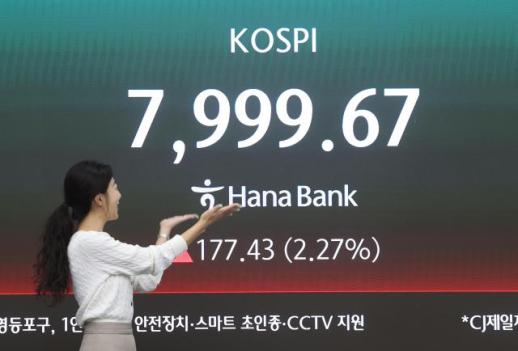 KOSPI move closer to 8,000 amid retail FOMO demand over AI SEOUL, May 12 (AJP) - South Korea’s benchmark KOSPI barreled toward the 8,000 threshold on Tuesday, nearing another four-digit milestone in just five trading sessions after first testing 7,000, as chip shares continued to attract fear-of-missing-out retail demand. As of 9:46 a.m., the KOSPI stood at 7,939.73, up 1.5 percent, while the tech-heavy KOSDAQ gained 0.83 percent to 1,217.40. The rally was driven largely by strong buying from retail and institutional investors. Individuals purchased a net 1.2 trillion won worth of local shares, while institutions added a net 368.4 billion won. Foreign investors, however, sold a net 1.59 trillion won. Market momentum remained heavily concentrated in AI-linked heavyweights, with decliners outnumbering gainers 609 to 267 on the main bourse. Major chipmakers continued their climb, with Samsung Electronics rising 0.35 percent to 286,500 won and SK hynix advancing 2.77 percent to 1,932,000 won, both heading toward fresh milestones. The upbeat mood followed another strong overnight rally in U.S. semiconductor stocks. Qualcomm surged 8.42 percent, Micron Technology climbed 6.50 percent, Western Digital gained 7.46 percent and Seagate Technology advanced 6.56 percent, lifting the Philadelphia Semiconductor Index 2.59 percent. On Wall Street, major U.S. indexes ended modestly higher despite mounting uncertainty in the Middle East. The S&P 500 and Nasdaq both closed at fresh record highs as investors continued betting heavily on the durability of the AI boom. U.S. President Donald Trump said the ceasefire with Iran was “on massive life support” after dismissing Tehran’s latest proposal as “garbage,” while also hinting at the possibility of renewed military action. The remarks helped push Brent crude futures up 2.9 percent to settle at $104.21 per barrel, reviving concerns over energy supply disruptions and inflationary pressure. Back in Seoul, sector performance remained mixed. Among automakers, Hyundai Motor gained 3.10 percent to 666,000 won, while Kia slipped 1.77 percent to 171,600 won. Industrial and energy shares traded broadly higher, with LG Energy Solution rising 1.92 percent to 477,000 won, Doosan Enerbility climbing 3.44 percent to 132,400 won and HD Hyundai Heavy Industries jumping 5.26 percent to 721,000 won. Technology-related shares also advanced. SK Square gained 2.19 percent to 1,213,000 won, while Samsung Electro-Mechanics added 3.00 percent to 927,000 won. Financial stocks were mixed. Samsung Life Insurance rose 3.84 percent to 311,000 won, Shinhan Financial Group added 1.54 percent to 98,700 won and Mirae Asset Securities advanced 1.76 percent to 80,800 won. KB Financial Group, however, edged down 0.13 percent to 158,600 won. Biotech and defense shares underperformed. Samsung Biologics slipped 0.21 percent to 1,455,000 won, while Hanwha Aerospace fell 0.84 percent to 1,304,000 won. The Korean won remained weak, trading above 1,480 per dollar compared with the previous close of 1,472.40 won. 2026-05-12 10:31:13
 -
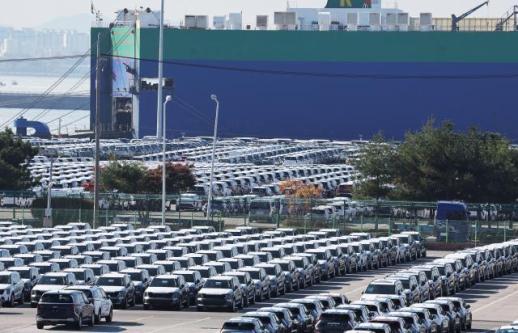 South Korea reaches 76 million vehicles in 50 years of auto exports SEOUL, May 12 (AJP) - South Korea has exported more than 76 million vehicles over the past 50 years since entering overseas markets, the Korea Automobile & Mobility Association said on Tuesday. The cumulative number of exports reached 76.55 million vehicles as of last month, a milestone that comes nearly half a century after Hyundai Motor first exported its domestically made Pony passenger car to Ecuador in June 1976. The country first hit the 10 million mark in vehicle shipments in 1999, then surpassed 50 million in 2015, 60 million in 2019, and 70 million in 2023, adding roughly 10 million units every three to four years. At this pace, industry watchers say cumulative exports could cross the 80 million mark as early as next year. According to a study by a Hyundai-affiliated research institute, the global auto market is expected to continue growing this year despite overall market saturation, with sales projected at around 87.93 million units. While growth is slowing in mature markets like the U.S. and Europe, emerging markets such as India are picking up the slack. "South Korea's auto export achievements have kept pace with the country's economic growth," said KAMA chairman Jeong Dae-jin. "Staying competitive in the global market will require a strong domestic production base and greater investment in research and development for next-generation vehicles," he added. 2026-05-12 09:53:29
 -
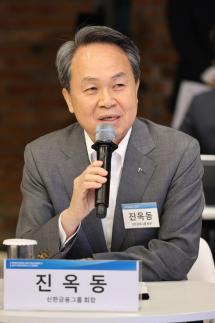 Shinhan Financial Group's Jin Ok-dong Navigates Trust and Transformation in the AI Era Jin Ok-dong, chairman of Shinhan Financial Group, emphasizes trust and transformation. For a long time, Shinhan has been a symbol of meticulous management, strong organizational discipline, and stable performance in South Korea's financial sector. However, leadership in finance during the AI era can no longer be evaluated solely on the ability to manage numbers and mitigate risks. What is now required is the judgment to decide where to allocate capital, how far to integrate digital and AI into decision-making structures, and who will take responsibility in the event of failure. Jin stands at this critical juncture. As a manager who inherited Shinhan's stability, he aims to transition the company into a future-oriented financial player through initiatives like the 110 trillion won productive finance project, Value-Up 2.0, global investor relations, AI branches, SuperSOL, and discussions on stablecoins. His challenge is clear: he must ensure that Shinhan's management strengths do not hinder innovation. Productive finance must be proven through actual capital movement, and the AI transition should extend beyond automating customer interactions to transforming risk management and investment decision-making structures. Internal control issues also present unavoidable tests in the trust-based finance industry. Ultimately, Jin's leadership is an experiment aimed not at 'perfecting management' but at 'finance beyond management.' The question is whether Shinhan can evolve from a stable financial institution to one that embodies judgment in finance. To evaluate Jin Ok-dong's leadership, one must first consider the nature of Shinhan as an organization. For a long time, Shinhan has been regarded as the 'model student of management' in South Korea's financial sector. Its organizational culture is tightly knit, with strong internal discipline and sophisticated performance management. Despite suffering setbacks from the Shinhan incident and private equity fund issues, the words that have defined Shinhan since then are trust and control. Jin is a product of this organizational culture. Having served as the branch manager in Osaka, head of SBJ Bank, president of Shinhan Bank, and now chairman of Shinhan Financial Group, he has experience in field operations, global banking, and holding company strategy. His time at SBJ Bank in Japan left a significant mark on his leadership. The Japanese financial market values discipline, trust, and long-term relationships. In this environment, Jin learned that finance is not merely an industry that sells products but one that accumulates trust. This background explains his emphasis on early adoption of internal controls, consumer protection, and accountability structures after becoming chairman. Shinhan Financial has established a consumer protection division and was the first among the five major financial groups to submit a responsibility structure. However, leadership in finance during the AI era requires more than just maintaining trust. Past trust stemmed from preventing accidents; future trust will come from the ability to explain the outcomes of choices made in uncertain futures. This is where the tension in Jin's leadership begins. He is a leader who understands the language of management finance better than anyone, yet he also knows that this language alone cannot shape Shinhan's future. One of the most notable changes under Jin's leadership is the simultaneous push for productive finance, digital transformation, global expansion, and enhanced shareholder returns. Shinhan Financial is pursuing the 'Shinhan K-Growth Project,' which aims to supply 110 trillion won to productive and inclusive finance by 2030, with plans to allocate approximately 93 to 98 trillion won to productive finance. This is not merely a social contribution but a declaration to change the direction of capital allocation. Frank Knight stated that the essence of entrepreneurship lies in taking on hard-to-calculate uncertainties rather than calculable risks. Applying this criterion to finance clarifies the question: Is Jin a manager who stays with safe assets, or a decision-maker willing to take risks and allocate capital to future industries? So far, the answer reflects a partial transition. While he is changing direction, it cannot be said that the fundamental nature of Shinhan, a massive financial organization, has completely shifted. Thus, Jin's leadership remains an ongoing experiment. When viewed from the perspective of entrepreneurship, the most significant aspect of Jin's leadership is productive finance. Shinhan Financial has launched a productive finance promotion team, aiming to create a group-wide funding system through four divisions: investment, lending, financial soundness, and inclusive finance. The significance of this choice is substantial. The long-standing profit formula in South Korean finance has been household loans, real estate collateral, and interest income. While stable, this formula has limitations in enhancing economic productivity. Capital must flow into AI, semiconductors, biotechnology, advanced manufacturing, and regional industries for new growth to occur. Jin has connected this transition not just to policy slogans but to organizational restructuring. The establishment of the productive finance promotion team signals a shift in capital allocation priorities. However, there is a crucial verification point: for productive finance to truly embody entrepreneurship, it is not enough to announce large amounts. It is essential to consider which industries, what stage of companies, and under what risk conditions the capital is allocated. Funding already validated large corporate projects may merely extend management finance. In contrast, supplying long-term capital to early-stage growth companies, technology firms, and regional innovation enterprises would be closer to judgment finance. Alongside productive finance, Jin is also strongly advocating for shareholder returns. Through 'Shinhan Value-Up 2.0,' Shinhan Financial has proposed a system linking group growth with shareholder returns, actively pursuing share buybacks and cancellations, as well as enhancing dividends. In 2025, the company resolved to acquire and cancel 800 billion won worth of its own shares, following similar actions in 2023 and 2024. The adjustment of the dividend record date to after the dividend amount is confirmed is also a proactive step among major financial groups. Interestingly, productive finance and shareholder returns may seem to be in opposition. One involves directing funds to future industries, while the other entails returning money to shareholders. However, in the context of financial leadership in the AI era, these two aspects do not merely collide. Financial companies that fail to gain trust in capital markets struggle to maintain long-term investments. Shareholder returns can serve as a mechanism to lower capital costs and enhance market trust, rather than being a short-term popularity policy. The challenge lies in finding balance. Overemphasis on shareholder returns can weaken future investments, while focusing solely on productive finance may disrupt short-term capital market evaluations. Jin aims to strike this balance. His strategy is to strengthen shareholder returns based on stable performance while simultaneously opening avenues for future growth through productive finance. This is the most challenging path for a financial leader. When making profits, shareholders demand attention, while industries require preparation for the future. Satisfying both demands simultaneously is no easy task. Therefore, Jin's productive finance emphasizes sustainability over mere numbers. The critical factor is not the total amount of 110 trillion won but whether that capital genuinely transforms Shinhan's portfolio and the structure of South Korean industries. The second pillar of Jin's leadership is AI and digital transformation. Shinhan has already conducted various digital experiments at the forefront of the banking sector. Shinhan Bank has opened an AI branch featuring AI bank tellers, which has been designated as an innovative financial service by the Financial Services Commission. Additionally, Shinhan Financial launched the integrated app 'SuperSOL,' which combines core functions of banking, cards, securities, life insurance, and savings banks, recording approximately 2.06 million monthly active users as of the third quarter of 2025. Jin has emphasized since his tenure as president that the organization's fate hinges on digital transformation and has also pursued experiments with non-financial platforms like the delivery app 'Ddaengyeoyo.' However, the evaluation criteria for AI financial leadership are not straightforward. Simply having an AI branch or launching a super app is not sufficient. The key question is whether digital transformation has altered the decision-making structure of finance. Automating customer interactions, integrating apps, and reducing operational costs improve efficiency, which is necessary. However, true competitiveness in the AI era lies in enhancing the quality of decision-making. Determining which financial products to offer to which customers, how to assess risks in various industries, and how to capture internal control signals early are crucial. In this regard, Shinhan's digital strategy is still transitional. While SuperSOL has demonstrated the potential of an integrated platform, its growth cannot be described as explosive. The AI branch is symbolically significant, but further verification is needed regarding how much it has changed the group's credit evaluation, risk management, investment judgment, and internal control structures. Jin's task is not merely to showcase digital capabilities but to fundamentally change decision-making processes through digital means. Shinhan's approach to stablecoins and digital assets is also noteworthy. Jin has met with executives from major global stablecoin issuers in 2025 and has mentioned stablecoins and ERP banking, along with AI agents, as key drivers for reshaping the core functions of finance. He appears to view stablecoins not just as investment targets in virtual assets but as infrastructure for cross-border payments and the global financial system. Shinhan Financial's efforts to educate employees on the issuance and distribution processes of stablecoins also aim to enhance technological understanding within the organization. This aspect is significant from an entrepreneurial perspective. As Kirzner noted, entrepreneurs are those who capture market opportunities ahead of others. Stablecoins currently face considerable institutional uncertainty, and discussions regarding relevant legislation in South Korea have yet to be fully resolved. Nevertheless, exploring the potential for global payments and digital currency infrastructure falls within the realm of judgment finance. However, this area carries substantial risks. If trust in digital assets falters, it could threaten the reputation of the entire financial institution. Jin must prioritize controlled experimentation over rapid entry. He should secure future infrastructure while first establishing safeguards for customer protection and internal controls. The essence of finance in the AI era is not the technology itself. It revolves around what choices are made among the myriad options created by technology, what is sacrificed, and who takes responsibility for the outcomes. Jin's digital leadership is still a work in progress. However, he is at least striving to elevate AI and digital from mere promotional slogans to issues of restructuring financial functions. Whether this will be proven successful remains a challenge for the future. Global Shinhan: Expanding DNA from Japan and Vietnam Jin's global experience is an indispensable aspect of his leadership. During his tenure as the branch manager in Osaka, he led the establishment of SBJ Bank and later served as its vice president and head. His experience in Japan has shaped him into a financial professional who understands global operations, not just a domestic bank leader. Operating a business in Japan's challenging regulatory and customer trust environment has translated into overseas investor relations and global business strategies since he took office as chairman. After becoming chairman, Jin has actively engaged with overseas investors. In 2025, he met with investors and financial authorities in Japan, Europe, Central Asia, and North America to explain Shinhan's growth strategy. In early 2026, he is expected to participate in an economic delegation during a state visit to China, making him one of the five major financial group chairmen involved. This is not merely a diplomatic schedule but an effort to connect Shinhan Financial's global stature with capital markets. Vietnam is particularly central to Shinhan's global strategy. Shinhan Vietnam Bank accounted for 44.5% of the total net profit from all Shinhan Bank's overseas subsidiaries and 25.3% of the total net profit from all overseas subsidiaries in 2024, establishing itself as a key overseas entity. Jin personally attended the ceremony for the new headquarters in Vietnam and expressed intentions to achieve greater heights through collaboration among affiliates. A robust global strategy is a crucial indicator of entrepreneurial spirit in financial leadership. The domestic market is already mature, and profitability is shaken by interest rates and household loan regulations. Seeking growth opportunities abroad is not just a choice but a matter of survival. However, global finance is not merely about increasing the number of overseas branches. It requires understanding local customers, adapting to regulations and cultures, and managing local assets. Shinhan's strategy in Vietnam is a relatively advanced example in this regard. However, limitations are evident. If overseas profits are concentrated in specific regions, the company becomes vulnerable to economic fluctuations, exchange rates, and regulatory changes in those areas. To become a global financial group, Shinhan must replicate its success in Vietnam across other regions. The key question is how Shinhan will create differentiated profit models in Central Asia, Japan, Europe, and North America. Merely expanding overseas is an extension of management; deeply integrating into local financial ecosystems and connecting capital and data represents an expansion of judgment. Jin's global leadership is characterized by a hands-on approach. Explaining Shinhan Value-Up 2.0 to overseas institutional investors through investor relations and directly communicating the stability of the South Korean financial market and Shinhan's fundamentals exemplifies a form of capital market leadership. However, for global Shinhan to truly thrive, the quality of overseas profits must change, not just the quantity. It is essential to create a complex financial model that combines digital finance, corporate finance, asset management, and payment infrastructure rather than merely conducting traditional banking abroad. Jin has learned trust in Japan and confirmed growth potential in Vietnam. Now, his challenge is to structure that experience into a cohesive global strategy for Shinhan. Internal Control and Trust: The Greatest Test of Jin Ok-dong's Leadership The most significant test of Jin's leadership lies in internal control. While productive finance, AI, global initiatives, and value-up strategies are all important, the foundation of finance ultimately rests on trust. If trust erodes, no innovation can be sustained. Shinhan Financial has been regarded as a strong organization in terms of internal control, but recent incidents, including significant losses at Shinhan Investment Corp, financial mishaps at Shinhan Bank, and personal data breaches at Shinhan Card, have raised questions about its control capabilities. In particular, the losses from Shinhan Investment Corp's futures trading were shocking. The issue was not just the losses themselves but the fact that the department failed to report them in a timely manner. In financial incidents, the most dangerous aspect is not the loss itself but the delay in reporting. Losses can be managed, but reporting delays reveal cultural issues within the organization. If the field conceals unfavorable information, headquarters is slow to grasp the situation, and management reacts only after the fact, even the most sophisticated regulations become ineffective. Jin has taken this issue seriously. He apologized through a letter to shareholders and emphasized the need for strengthened internal controls and consumer protection. Shinhan Financial has introduced a responsibility structure, established a consumer protection division, and added internal control evaluations to subsidiary CEO assessments as part of its institutional response. Additionally, it has begun applying a financial security level assessment framework to major group companies to enhance autonomous security systems. Shinhan Financial claims that this framework is the first of its kind to be applied in the field within the financial sector. However, internal control cannot be resolved solely through regulations. Financial organizations typically experience issues when two forces collide: the conservatism of avoiding risks and the pressure to achieve performance. While appearing conservative on the surface, performance pressures operate in the field. As a result, employees may downplay risks, delay reporting, and attempt to handle problems personally. This is why significant incidents often occur in conservative organizations. In the AI era, the meaning of internal control is also changing. In the past, internal control was about compliance with regulations. In the future, it will involve data-driven early warnings and structured accountability. While AI can detect unusual transactions and risk signals more quickly, determining who makes judgments and who takes responsibility for those signals remains a human responsibility. For Jin to become a true AI financial leader, he must integrate AI deeply into the structures of internal control and risk assessment, not just use it for customer interactions and platforms. Jin's leadership must be evaluated with the utmost rigor at this point. Productive finance may require taking risks, but failures in internal control cannot be tolerated. Experiencing losses while investing in future industries may be an entrepreneurial failure. However, delays in reporting, breakdowns in consumer protection, and data breaches are failures of management, not entrepreneurship. Financial leaders must distinguish between the two. Ultimately, Jin's remaining tasks are clear. First, he must demonstrate the actual capital allocation results of productive finance. Second, he needs to connect AI and digital initiatives to decision-making structures and internal control systems. Third, he should expand global performance beyond reliance on Vietnam to a replicable model. Fourth, he must create a succession structure that maintains both Shinhan's stability and innovation. Jin is a leader aiming to transform finance. However, Shinhan is a large organization, and the inertia of South Korean finance is deep. For his leadership to succeed, it must not stop at providing a good direction. He must translate direction into numbers, numbers into structures, and structures into culture. Only then can Jin's Shinhan be recorded as a standard of judgment finance in the AI era, surpassing its reputation as the model student of management finance. Jin Ok-dong's leadership at Shinhan Financial Group is characterized as a structural leadership attempting transformation atop the completion of management.Strengths: Above all, he can pursue strategies based on Shinhan's unique sophisticated internal controls and stable profit foundation. He demonstrates a sense of balance by simultaneously advancing productive finance of 110 trillion won, value-up policies, global investor relations, and digital transformation. His global sensibility and capital market communication skills, gained through experiences in Japan and Vietnam, provide a clear competitive advantage over other financial groups.Weaknesses: An overly sophisticated management system can make the organization conservative, slowing the execution speed of digital transformation and productive finance. While the direction of the super app and AI strategy is clear, tangible results are still limited, and incidents such as securities losses, financial mishaps, and data breaches raise questions about the 'completeness' of internal controls.Opportunities: AI finance, digital assets, and the expansion of global emerging markets present opportunities for Shinhan to evolve from a simple banking-focused group to a platform-based financial entity. Particularly, if productive finance leads to actual capital allocation structures, it can secure a new role in industrial finance.Threats: The 'crack in trust' poses a significant threat. Finance is a trust-based industry, and failures in internal control can undermine all strategies. At the same time, the penetration of big tech into finance and intensified global competition can rapidly weaken Shinhan's existing competitiveness.* This article has been translated by AI. 2026-05-12 09:13:50