
Journalist

HAN Joon ho
-
 Chinese EV Brand Zeekr Enters South Korea Market Chinese premium electric vehicle brand Zeekr, a subsidiary of Geely Automobile, has officially entered the South Korean market by opening its first brand gallery in Gangnam's Daechi-dong. Following BYD's entry, Zeekr's arrival marks a rapid expansion of Chinese automotive brands in South Korea. On May 8, Zeekr Korea announced the opening of its gallery, which will operate until the end of the month to introduce the brand to local consumers. The gallery will later transition into a regular showroom, with plans to establish a total of 14 showrooms nationwide. Launched in April 2021, Zeekr is part of the Geely Holding Group and has global R&D centers in Sweden, Hangzhou, and Shanghai, along with design centers in Sweden and China. The brand's entry into South Korea follows the establishment of its local subsidiary in February 2022, led by former Audi Korea President Im Hyun-ki. The first model to be sold in South Korea will be the mid-size SUV '7X,' set for release in the second half of this year. The 7X, a five-seater family SUV unveiled in 2024, has gained popularity, surpassing 400,000 global sales within 37 days of its launch. This success influenced Zeekr's decision to introduce the 7X as its initial model in South Korea. Currently, the gallery features only four models: the large SUV '9X,' the premium MPV 'MIX,' the all-electric MPV '009 Grand,' and the sedan shooting brake '001 FR.' The 7X is expected to be displayed after its official launch. The 9X is a hybrid, while the others are all-electric, all equipped with Level 2 autonomous driving technology. Since its launch in October 2022, the 9X has sold approximately 50,000 to 60,000 units globally, gaining attention in markets including China, Saudi Arabia, and Central Asia. Zeekr Korea's marketing manager stated, "The 9X uses a world-first super electric hybrid drive system, allowing for battery charging of up to 80% while driving." He noted that one in three SUVs sold in China is a 9X, with about 10,000 units sold monthly in the country. Zeekr Korea plans to expand its lineup with various models following the 7X. The manager emphasized, "While these cars are not yet available in South Korea, we will strive to bring what consumers want." The influx of Chinese automotive brands in South Korea is expected to accelerate. BYD, which entered the market with the electric SUV 'Atto 3' in January 2022, ranked fourth in cumulative sales among imported car brands by March this year.* This article has been translated by AI. 2026-05-08 09:09:19
 -
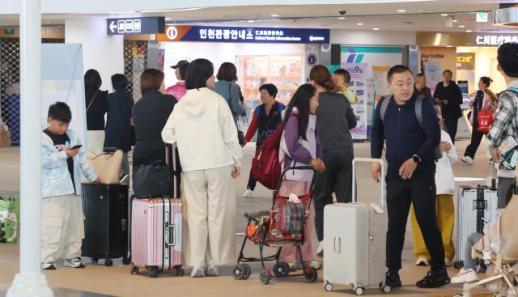 Over 220,000 Chinese and Japanese Tourists Visit South Korea During Super Holiday During the overlapping 'Super Holiday' of China's Labor Day and Japan's Golden Week, South Korea welcomed approximately 220,000 tourists from both countries, surpassing government forecasts. This success is attributed to targeted regional marketing strategies that align with the trend of short-distance travel. According to the Ministry of Culture, Sports and Tourism and the Korea Tourism Organization, about 112,000 Japanese and 108,000 Chinese tourists visited South Korea during this period. This total exceeds initial estimates of 180,000 to 200,000. Compared to last year, Japanese visitors increased by 52.9% and Chinese visitors by 29.9%, resulting in an overall rise of over 40%. The first quarter of this year also saw record-high arrivals, with 940,000 Japanese and 1.42 million Chinese tourists. Targeting Families in Japan and Regional Tourism in China The government implemented consumer-focused marketing strategies during the holiday. For the Japanese market, it highlighted the geographical advantage of short flight times. Discounts on flights and ferry fares were offered to residents of the Kyushu region, and baggage allowances were increased to ease travel for families with young children. Conversely, efforts were made to alleviate the concentration of tourists in the capital region from China by promoting regional tourism. Collaborating with national airlines, the government aimed to distribute arrivals from southern regions like Guangzhou to local airports such as Gimhae and Daegu. A special welcome booth was set up at Gimhae International Airport to promote tourism infrastructure in four southeastern cities: Busan, Ulsan, Pohang, and Changwon, encouraging longer stays and spending. Plans to Sustain Tourism Growth The Ministry aims to maintain the upward trend in inbound tourism throughout the year. In Japan, new specialized travel packages will be developed that incorporate local traditional festivals, such as the Hamann Nakha Festival and Andong Seonyujul Fire Festival, reflecting the trend of visiting smaller cities. For Chinese tourists, the recently relaxed multiple visa issuance policy will be leveraged. The government plans to enhance promotions for tailored travel packages through major online travel platforms and social media channels. Minister of Culture, Sports and Tourism, Choi Hwi-young, stated, "We will fully support the tourism industry based on the proven competitiveness of K-tourism during this holiday. We will respond swiftly to global travel trends and develop precise strategies for target countries to sustain inbound demand through the end of the year."* This article has been translated by AI. 2026-05-08 09:06:38
 -
 SK hynix Launches Initiative to Restore Salmon Migration Path in South Korea SK hynix is partnering with government and local agencies to restore the aquatic ecosystem of the Namdaecheon River in Yangyang, Gangwon Province. The initiative aims to enhance its water-positive activities by returning more water to nature than the company uses in semiconductor production. On May 8, SK hynix announced its collaboration with the Ministry of Climate, Energy and Environment, Gangwon Special Self-Governing Province, Yangyang County, Korea Water Resources Corporation, and Korea Environment Corporation to improve aging weirs along the Namdaecheon. Water-positive refers to the concept where a company returns more water to the environment than it withdraws, contributing to sustainable water management. This initiative will be driven by government policies, public agency projects, and corporate participation. The Namdaecheon is known as a key salmon migration river in South Korea. However, outdated weirs and altered waterways have hindered salmon from reaching their spawning grounds. SK hynix plans to enhance the weirs from 2026 to 2037 to ensure adequate water flow and facilitate fish movement. The company believes this project will help restore the disrupted salmon migration path and improve the continuity of the aquatic ecosystem. It also aims to enhance the living environment for local residents and increase the ecological and tourism value of the Namdaecheon. Previously, SK hynix engaged in environmental improvement activities near its facilities, including a partnership with Cheongju City for the 'One Company, One Stream Love Movement,' focusing on cleaning a 2-kilometer stretch of the Gagyeong Stream. To reduce water usage in semiconductor processes, SK hynix has implemented a wastewater recycling system and set a goal to recycle an average of 138,000 tons of water daily by 2030. Lee Byeong-gi, Chief Production Officer at SK hynix, stated, "This project will demonstrate how corporate water-positive activities can serve as a tool for mutual growth with local communities and the natural environment. SK hynix will continue its sincere efforts to protect water resources."* This article has been translated by AI. 2026-05-08 09:02:54
 -
 Hanwha Investment Raises KT&G Target Price by 39% Amid Growth Prospects Hanwha Investment & Securities announced on May 8 that it has raised its target price for KT&G from 180,000 won to 250,000 won, reflecting a 39% increase. The firm maintained its "buy" rating on the stock. Han Yu-jung, an analyst at Hanwha Investment, stated, "We are raising the target price based on the company's core growth, portfolio restructuring, and expanded shareholder return policies. KT&G has completed the buyback of all its treasury shares, and a new shareholder return policy focused on increased dividends is expected to be announced in the second half of the year." In the first quarter of this year, KT&G exceeded market expectations with its performance. Consolidated revenue reached 1.7036 trillion won, a 14.3% increase year-on-year, while operating profit rose by 27.7% to 364.5 billion won, surpassing the market consensus of 342.1 billion won. Compared to the previous quarter, operating profit increased by 50.1%. The overseas cigarette segment drove the company's performance, with average selling prices and sales volumes increasing by 8% and 15%, respectively, leading to revenue and operating profit growth of 25% and 56%. Although the sales growth rate for next-generation products (NGP) was only 1%, revenue surged by 391% due to the normalization of the device supply chain. The health supplement segment also saw domestic sales grow for the first time in four quarters, driven by increased demand during the Lunar New Year. Looking ahead, the restructuring of KT&G's business is expected to take effect. The overseas cigarette business is anticipated to continue growing through an expanded presence in direct markets and improved product mix. Analysts predict that the increased share of capsule and flavored products, along with brand strength, will support price increases and enhance performance. Changes in production structure are also seen as positive. With new factories in Kazakhstan (set to begin operations in the second quarter of 2025) and Indonesia (scheduled for the first quarter of 2026), KT&G plans to produce over half of its overseas sales locally by 2026, which is expected to reduce manufacturing and logistics costs. The NGP segment is entering an expansion phase as well. With a long-term supply agreement with Philip Morris moving into its second phase, KT&G's role is expected to evolve from a simple supplier to a direct operator. Direct launches are planned for the Asia-Pacific and Eurasia regions within the year, which, while having limited short-term impact, are significant for long-term brand asset accumulation. In the health supplement sector, KT&G is also set to launch new beverage products in collaboration with Altria, expanding its B2B raw materials business and contributing to diversification and growth.* This article has been translated by AI. 2026-05-08 09:00:18
 -
 Trump's 10% Global Tariff Blocked Again by Court President Donald Trump's proposed 10% global tariff has been blocked again by the courts. Following a Supreme Court ruling that halted existing tariffs, a workaround has also lost its effectiveness. However, U.S. tariff pressures are far from over, as the focus shifts to country- and item-specific measures. On May 7, the U.S. International Trade Court voted 2-1 to block the global tariff that the Trump administration implemented in February. The court found that the tariff was unlikely to have been legally imposed under Section 122 of the Trade Act of 1974. The plaintiffs who won the case include the state of Washington, toy company Basic Fun, and spice importer Burlap & Barrel. However, the court only prevented the tariff's application to these plaintiffs, not extending the ruling to other states or all importers. The central issue was whether the president could invoke Section 122 based on the U.S.'s chronic trade deficit. This section allows for temporary tariffs of up to 150 days to address international balance of payments issues. Trump announced the 10% tariff on February 20, claiming, "The U.S. is currently in a large and serious balance of payments deficit." However, the court disagreed, stating that the White House's reliance on various economic indicators was insufficient to meet the requirements for invoking Section 122. The court ruled that a significant trade deficit alone does not grant the president the authority to impose a blanket tariff globally without congressional approval. With this ruling, Trump's blanket tariff plan has faced setbacks from both the Supreme Court and the International Trade Court, which previously blocked broad tariffs based on the International Emergency Economic Powers Act. Despite this, U.S. trade pressures are not diminishing. Following the ruling, the administration did not delay in initiating a new approach. On March 11, the Office of the U.S. Trade Representative (USTR) began an investigation under Section 301 targeting structural supply excesses. The USTR identified 16 economic regions, including China, the European Union, Japan, South Korea, Vietnam, India, and Mexico, as subjects of this investigation. As blanket tariffs face legal challenges, the likelihood of the U.S. shifting to more targeted pressures increases. South Korea is also included in this investigation. The USTR's announcement linked South Korea to sectors such as electronics, automobiles and parts, machinery, steel, and shipbuilding. Industry insiders noted, "This ruling highlights the legal vulnerabilities of Trump's blanket tariffs. However, businesses should focus not on the removal of tariffs but on the changing methods of pressure." They added, "As the U.S. is likely to intensify targeted pressures through Section 301, South Korean companies must prepare accordingly."* This article has been translated by AI. 2026-05-08 08:57:00
 -
 Government Plans to Adjust Tax Benefits for Rental Property Owners The government has assessed that the real estate market is transitioning to a focus on actual residents, prompting a review of tax benefits for rental property owners. Deputy Prime Minister and Minister of Economy and Finance Koo Yun-cheol stated on May 8 during a meeting at the Government Complex in Seoul that, "The recent real estate market is moving away from overheating and is being restructured around actual residents." He noted that loan regulations and land transaction permits are effectively curbing speculative purchases, while expectations for rising housing prices are diminishing. The government aims to enhance housing supply in Seoul and the surrounding metropolitan area while blocking speculative demand and fostering a trading environment centered on actual residents. With the recent passage of the 'Land Compensation Act' in the National Assembly, the government plans to focus on generating tangible supply outcomes that citizens can feel. Additionally, in response to concerns about a potential inventory freeze following the expiration of the capital gains tax exemption for multiple homeowners on May 9, various measures are under consideration. This includes reviewing the appropriateness of tax benefits for rental property owners in designated adjustment areas. On the same day, Koo emphasized the resilience of the economy, referencing the Bank of Korea's report on the current account balance for March, which recorded a historic surplus of $37.3 billion. He noted that exports exceeded $800 billion for two consecutive months, indicating strong fundamentals. However, he acknowledged that the prolonged conflict in the Middle East is exacerbating economic pressures, including high oil prices and supply chain disruptions. He assured that the government would maintain a firm response until uncertainties are fully resolved. The government also reported that the supply of key items like NAFTA, syringes, and trash bags is stabilizing, and consumer prices remain lower than in major countries. Nonetheless, it remains vigilant about supply chain uncertainties and is committed to alleviating the burden on citizens. Furthermore, the government plans to continue implementing price stabilization measures, including the fifth round of the oil price cap and addressing supply chain issues for essential items like syringes.* This article has been translated by AI. 2026-05-08 08:54:28
 -
 Samsung Securities Raises Target Price for HD Hyundai Heavy Industries Samsung Securities announced on May 8 that it has raised its target price for HD Hyundai Heavy Industries from 890,000 won to 1,030,000 won, citing improvements in profitability across all business divisions and the anticipated impact of high-value contracts. The investment rating remains at 'Buy.' Analyst Han Young-soo noted, "First-quarter operating profit exceeded market expectations by 14%. Even without one-time gains, the results are impressive considering conservative performance bonuses and a high proportion of currency hedging." He added that despite the merger with HD Hyundai Mipo, the shipbuilding sector has seen improved profitability, while the marine division has experienced significant revenue and profit growth due to the advancement of major projects. The engine division also continues to show improved operating margins. Han emphasized that further profitability improvements are possible with the recognition of revenue from high-value contracts. As of the end of the first quarter, net cash approached 3.7 trillion won, and additional cash inflow is expected from the successful sale of the Gunsan yard. He also highlighted the positive effects of increased orders for power engines for North American data centers and price hikes due to tight supply for ship engines, stating, "Considering premium factors, the current valuation is conservative, with ample room for further increases."* This article has been translated by AI. 2026-05-08 08:51:21
 -
 Bitcoin Falls Below $80,000 Amid Uncertainty in Middle East Negotiations Bitcoin's price has dropped below $80,000, reflecting a bearish trend as uncertainty looms over peace negotiations in the Middle East. As of 8 a.m. on May 8, Bitcoin was trading at $79,899, down 1.73% from the previous day, according to CoinMarketCap. The cryptocurrency briefly surpassed $82,000 on May 6 amid optimism for a U.S.-Iran agreement but has since declined. Major altcoins also experienced losses, with Solana (SOL) down 1.09% at $88.08, Ripple (XRP) falling 2.62% to $1.38, and Ethereum dropping 2.54% to $2,286. Market analysts attribute the decline to a slowdown in U.S.-Iran peace talks, dampening investor sentiment towards risk assets. According to Yonhap News, on May 7, U.S. forces struck Iranian military facilities in the Strait of Hormuz in self-defense against Iranian attacks. The resumption of hostilities between U.S. and Iranian forces has heightened military tensions just a day after negotiations were mentioned. Meanwhile, on the domestic exchange Bithumb, Bitcoin was trading at approximately 117.91 million won ($80,871), a decrease of 0.11%. The so-called 'Kimchi premium' stood at 1.28%, indicating that domestic prices are higher than international rates.* This article has been translated by AI. 2026-05-08 08:24:19
 -
 U.S. Stocks Decline as Semiconductor Gains Fade; Dow Drops 0.63% U.S. stock indices fell across the board as profit-taking in semiconductor stocks followed recent gains, compounded by volatile oil prices and uncertainty in the Middle East. However, strength in major artificial intelligence (AI) stocks and some software companies helped limit the declines. On May 7, the Dow Jones Industrial Average closed down 313.62 points (0.63%) at 49,596.97. The S&P 500 dropped 28.01 points (0.38%) to 7,337.11, while the Nasdaq Composite fell 32.75 points (0.13%) to 25,806.20. The Russell 2000 index declined by 1.6%. After setting records the previous day, the market showed signs of consolidation, particularly in semiconductor stocks. Intel and AMD each fell about 3%, and the Philadelphia Semiconductor Index dropped 2.7%. Arm's significant decline also weighed on investor sentiment in the sector. Sector performance was notably weak in materials and energy, with nine of the 11 S&P 500 sectors declining. Materials fell 1.83%, and energy dropped 1.78%, as oil price volatility affected related industries. Conversely, some AI and software stocks mitigated losses. Nvidia and Microsoft rose around 2%, while Datadog surged 31% after raising its annual forecast. CrowdStrike and Palo Alto Networks increased by 8% and 7%, respectively. Oil prices experienced sharp fluctuations during the day, reflecting market expectations for negotiations between the U.S. and Iran, while investors awaited confirmation of any agreements. Economic indicators were mixed. Weekly initial jobless claims in the U.S. rose less than expected, suggesting a resilient labor market. However, Cleveland Federal Reserve President Loretta Mester indicated that interest rates could remain unchanged for an extended period, dampening hopes for early rate cuts. On a weekly basis, the upward trend persisted, with the S&P 500 gaining 1.5%, the Nasdaq rising 2.8%, and the Dow increasing by 0.2%. Year-to-date, the Russell 2000 is up 14.4%, the Nasdaq 11.0%, the S&P 500 7.2%, and the Dow 3.2%. The market continues to navigate oil price fluctuations, Middle Eastern uncertainties, and interest rate trajectories, showing a differentiated performance among tech stocks and those with improving earnings.* This article has been translated by AI. 2026-05-08 08:18:47
 -
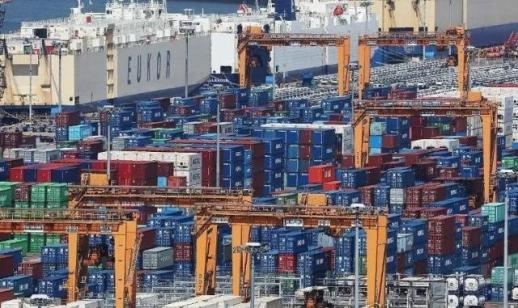 South Korea's Current Account Surplus Reaches Record $37.3 Billion in March South Korea's current account surplus reached a record $37.33 billion in March, driven by strong semiconductor exports. The increase in oil products and chemicals also contributed to this historic surplus. According to preliminary statistics released by the Bank of Korea on May 8, the current account surplus for March was approximately 54.43 trillion won. This marks the 35th consecutive month of surplus, the second-longest streak since the 2000s. Following a record surplus of $23.19 billion in February, March's figure exceeded $30 billion, indicating significant growth. The trade balance recorded a surplus of $35.07 billion, the highest ever. After reaching $23.36 billion in February, the trade surplus surpassed $30 billion in March. Exports surged 56.9% year-on-year to $94.32 billion, also a record high. IT products, particularly semiconductors and computer peripherals, showed strong performance, while non-IT items benefited from increased working days and rising oil prices. Notable increases were seen in exports of computer peripherals (167.5%), semiconductors (149.8%), wireless communication devices (13.1%), and chemicals (9.1%). After a 23% decline last year, automobile exports rebounded with a 1.1% increase. Oil product exports surged from a 0.7% decline to a 69.2% increase. Regionally, exports to Southeast Asia (68.0%), China (64.9%), the United States (47.3%), and Japan (28.5%) performed well, while exports to the Middle East fell by 49.1%. Imports also rose by 17.4% to $59.24 billion, driven by capital goods, particularly information and communication equipment (51.6%), transportation equipment (34.8%), and semiconductors (34.5%). Raw material imports increased by 8.5%, led by chemicals (20.5%), marking the first rise in six months, while consumer goods imports grew by 2.1%. The services account recorded a deficit of $1.29 billion, significantly reduced from a $2.51 billion deficit in March last year and down from $1.86 billion the previous month. The travel balance showed a surplus of $140 million, marking the first surplus since November 2014, coinciding with the spring travel season. The primary income balance surplus increased from $2.48 billion in February to $3.58 billion in March, driven by higher dividend income from direct and portfolio investments. The financial account showed a net asset increase of $36.99 billion. Domestic investment abroad rose by $8.89 billion, while foreign investment in South Korea increased by $3.77 billion. In securities investment, domestic investment abroad increased by $4 billion, but foreign investment in South Korea decreased by $34.04 billion, the largest drop on record, amid concerns over regional risks and declining memory demand.* This article has been translated by AI. 2026-05-08 08:15:28