

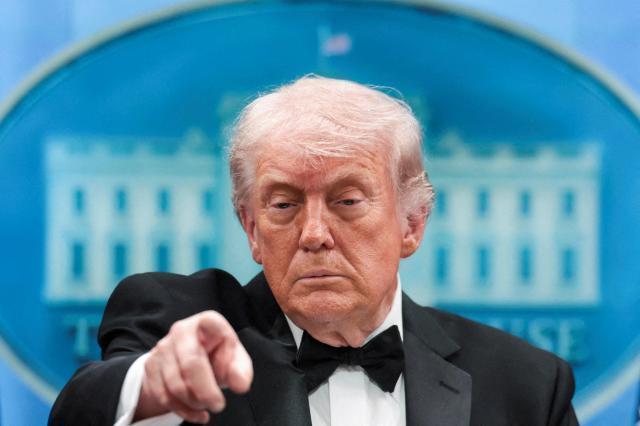
President Donald Trump's proposed 10% global tariff has been blocked again by the courts. Following a Supreme Court ruling that halted existing tariffs, a workaround has also lost its effectiveness. However, U.S. tariff pressures are far from over, as the focus shifts to country- and item-specific measures.
On May 7, the U.S. International Trade Court voted 2-1 to block the global tariff that the Trump administration implemented in February. The court found that the tariff was unlikely to have been legally imposed under Section 122 of the Trade Act of 1974.
The plaintiffs who won the case include the state of Washington, toy company Basic Fun, and spice importer Burlap & Barrel. However, the court only prevented the tariff's application to these plaintiffs, not extending the ruling to other states or all importers.
The central issue was whether the president could invoke Section 122 based on the U.S.'s chronic trade deficit. This section allows for temporary tariffs of up to 150 days to address international balance of payments issues. Trump announced the 10% tariff on February 20, claiming, "The U.S. is currently in a large and serious balance of payments deficit."
However, the court disagreed, stating that the White House's reliance on various economic indicators was insufficient to meet the requirements for invoking Section 122. The court ruled that a significant trade deficit alone does not grant the president the authority to impose a blanket tariff globally without congressional approval.
With this ruling, Trump's blanket tariff plan has faced setbacks from both the Supreme Court and the International Trade Court, which previously blocked broad tariffs based on the International Emergency Economic Powers Act.
Despite this, U.S. trade pressures are not diminishing. Following the ruling, the administration did not delay in initiating a new approach. On March 11, the Office of the U.S. Trade Representative (USTR) began an investigation under Section 301 targeting structural supply excesses. The USTR identified 16 economic regions, including China, the European Union, Japan, South Korea, Vietnam, India, and Mexico, as subjects of this investigation. As blanket tariffs face legal challenges, the likelihood of the U.S. shifting to more targeted pressures increases.
South Korea is also included in this investigation. The USTR's announcement linked South Korea to sectors such as electronics, automobiles and parts, machinery, steel, and shipbuilding.
Industry insiders noted, "This ruling highlights the legal vulnerabilities of Trump's blanket tariffs. However, businesses should focus not on the removal of tariffs but on the changing methods of pressure." They added, "As the U.S. is likely to intensify targeted pressures through Section 301, South Korean companies must prepare accordingly."
* This article has been translated by AI.
Copyright ⓒ Aju Press All rights reserved.