
Journalist

HAN Joon ho
-
 Tving Posts 19.2 Billion Won Q1 Operating Loss, Narrowing Deficit by 6.5 Billion Won Online video service Tving posted an operating loss of 19.2 billion won in the first quarter, narrowing its deficit and raising expectations for improved profitability after extending its content amortization period. CJ ENM said on May 7 during its 2026 first-quarter earnings conference call that Tving recorded a 19.2 billion won operating loss for the quarter. That compared with a 25.7 billion won operating loss a year earlier, reducing the loss by 6.5 billion won. A CJ ENM official said the company changed Tving’s amortization method for content rights from two years to four years. The official said the previous system was designed around broadcast-centered distribution cycles, but the shift to an OTT-driven market led the company to adjust content useful lives to better reflect reality. The official added that the change was made to align with amortization practices used by global OTT operators. CJ ENM said it will expand content investment this year centered on Studio Dragon while also improving cost efficiency by managing production costs per episode. A company official said domestic new-content investment had been somewhat stagnant, but investment will increase this year led by Studio Dragon. The official said CJ ENM plans to systematically manage per-episode production costs to limit the overall pace of cost increases. On a supply gap involving Fifth Season, CJ ENM said it was temporary. The company said it is discussing series supply with multiple platforms, and that Fifth Season posted first-quarter revenue of 233.6 billion won and an operating loss of 2.9 billion won, with the loss improving by 14.5 billion won from a year earlier. CJ ENM also reported on a consolidated basis first-quarter 2026 revenue of 1.3297 trillion won and operating profit of 1.5 billion won. That was up 16.8% and 107.2%, respectively, from a year earlier. Revenue in the entertainment division rose 22.6% to 951.1 billion won. The division remained in the red with an operating loss of 19.0 billion won, though the loss narrowed by 7.2 billion won from a year earlier. The commerce division extended revenue growth but saw weaker profitability. First-quarter revenue rose 4.5% to 378.5 billion won, while operating profit fell 7.6% to 23.9 billion won.* This article has been translated by AI. 2026-05-07 15:51:20
 -
 President Lee Jae-myung says price stability is top priority, urges steady supply of key goods President Lee Jae-myung said May 7 that stabilizing prices must be the government’s top priority, calling for full use of available measures to secure supplies of crude oil and other key raw materials and to keep supply and demand steady for major goods. Chairing a meeting with senior aides at Cheong Wa Dae, Lee warned that prolonged inflation would deepen the hit to livelihoods, weaken consumer sentiment and weigh on the economic recovery. He said price pressures were rising as global oil prices remained volatile, noting that fuel prices climbed more than 20% amid uncertainty over ceasefire negotiations and that the consumer price increase in April widened from March. Lee said active government management had kept Korea’s inflation increase relatively smaller than in other major countries, but added that was no reason for complacency. While it is unclear how long the war will last, Lee said, how the country overcomes the crisis will shape the future of the economy. He urged the public, businesses and the government to pull together, saying the crisis could ultimately strengthen the economy. Applications for the first round of “high oil price damage support payments” for vulnerable groups — including basic livelihood recipients, near-poor households and single-parent families — are open through May 8. Lee said the central and local governments’ detailed preparations helped keep confusion and inconvenience low during the first round. He called for thorough checks and publicity so the second round, set to begin May 18, proceeds without disruption. Lee also spoke about a 600 billion won citizen-participation National Growth Fund set to launch May 22, saying the world is engaged in a “war without gunfire” for leadership in future industries. He said active public investment to foster advanced industries could inject new and dynamic energy into Korean industry. Growth that does not share results with the public is not sustainable, Lee said. He said the fund could help expand productive finance and serve as a solid catalyst for developing future advanced industries and helping people build stable assets. He urged officials to step up outreach and closely review any institutional shortcomings so more people can join and share in the gains.* This article has been translated by AI. 2026-05-07 15:48:17
 -
 South Korea Appoints 134 New Prosecutors, Doubling Lateral Hires The Justice Ministry has appointed 134 new prosecutors, including 86 who passed the 15th bar exam and 48 experienced legal professionals. The ministry said the appointments were confirmed at a ceremony held May 7 at its headquarters in Gwacheon, south of Seoul. It said it moved up the selection process and expanded hiring compared with previous years to address a shortage of prosecutors. Of the 86 bar-exam hires, the ministry said it has run a strict, multi-step screening process since last year for law school students, including document reviews, practical-record evaluations, personality tests, and assessments of job and organizational competencies. The group included 41 men and 45 women. The share of lateral hires rose sharply. The ministry appointed 48 experienced legal professionals this year, double last year’s 24 and far above the three selected in each of 2022 and 2023. The ministry said it recruited candidates with at least two years of experience across fields including government agencies, courts, law firms, the Financial Supervisory Service, police, and companies, aiming to strengthen expertise and ease staffing strains. To speed up handling of a growing criminal caseload and add momentum to the organization, the ministry said it began the lateral-hire selection process about three months earlier than usual, reflecting calls from front-line offices for more prosecutors. It said the candidates completed a transparency review that included a recent two-week public disclosure of the roster. The lateral hires include 31 men and 17 women. At the ceremony, Justice Minister Jeong Seong-ho urged the new prosecutors to uphold fairness in law enforcement and protect human rights, and to use their varied experience to help the prosecution service earn public trust. The new prosecutors will enter the Justice Ministry’s training institute immediately for practical instruction. Training will vary by background: bar-exam hires will complete about five months of intensive training, including on-the-job practice at prosecutors’ offices, while experienced legal professionals will take about two months of focused training before being assigned to duties. A ministry official said bringing in people from diverse backgrounds would enable more well-rounded investigations and decision-making, adding that the ministry will continue to secure strong legal talent in a timely way to provide high-quality criminal justice services. 2026-05-07 15:36:34
 -
 Trump Aides Worry Jet Fuel Spike From Middle East War Could Hurt GOP in Midterms President Donald Trump’s aides have begun voicing concern about a sharp rise in jet fuel prices tied to the Middle East war, The Wall Street Journal reported Tuesday, citing sources. The spike could become a political liability for Republicans ahead of the midterm elections in early November, the report said. Chris Sununu, a Republican who leads Airlines for America, has warned Trump administration officials in recent weeks — including White House National Economic Council Director Kevin Hassett — about the economic fallout from elevated jet fuel costs, the sources said. Trump’s advisers also fear the price surge could damage Republicans politically and want the war to end quickly, the sources said. With global oil and jet fuel prices climbing because of the war, consumers heading into the summer travel season face higher costs, potentially fueling negative views of Trump and the GOP, the report said. In an NPR/PBS/Marist poll conducted April 27-30 among 1,322 U.S. adults (margin of error plus or minus 3.1 percentage points), 63% said the Trump administration bears significant responsibility for rising oil prices. Eight in 10 respondents said higher oil prices are increasing their financial burden. Reuters reported jet fuel prices rose from about $85 to $90 before the war to roughly $150 to $200 recently. The U.S. Department of Transportation said U.S. scheduled airlines spent $5.06 billion on jet fuel in March, up 56.4% from the prior month and 30.4% from a year earlier. Spirit Airlines, a major U.S. low-cost carrier, announced on May 2 that it would shut down, citing rising costs and other pressures. Higher fuel costs are also pushing up ticket prices. The U.S. Airline Survey Association said the average U.S. round-trip airfare in March was $570, up 21% from a year earlier. The Journal said Trump, who had initially dismissed the oil-price rise as “a very small cost” to eliminate Iran’s nuclear weapons, is now moving quickly to end the war. Sununu said administration officials are starting to recognize the economic consequences of the conflict. “Because of this, they’re trying to end the war as quickly as possible,” he said. Sununu cautioned it could take months for oil prices to return to prewar levels, and said even if the war ends immediately, airfares are likely to remain high through the fall. Trump said in an interview with PBS that a deal to end the war with Iran could be reached before his planned trip to China on the 14th and 15th, signaling the possibility of a swift agreement.* This article has been translated by AI. 2026-05-07 15:34:35
 -
 LH Signs Deal to Seek Second Special Redevelopment Zone for Gunpo Sanbon Rebuild Korea Land and Housing Corp., known as LH, said Wednesday it signed a business agreement with residents’ representatives from Zones 12 and 13 in Gunpo’s Sanbon area to pursue designation as a “second special redevelopment zone.” The aging planned-city redevelopment program targets sites developed more than 20 years ago, including the first-generation new town of Gunpo Sanbon. It aims to improve living conditions through integrated upgrades that include infrastructure such as parks and schools. Projects in these areas will use an improved resident-proposal process under the government’s Sept. 7 housing supply measures. Residents can speed the process by securing consent from a majority of landowners and proposing zone designation to the local government. The Ministry of Land, Infrastructure and Transport has said prepared projects could cut timelines by at least six months because there is no separate preparation period for a public contest. LH said the agreement was intended to strengthen cooperation with residents so Zones 12 and 13 can move forward as a follow-up integrated reconstruction project and be designated as a second special redevelopment zone. Under the agreement, the residents’ group will handle key decisions and collect consent forms. LH will support the overall project, including drafting the special redevelopment plan, assisting with permits and approvals, and providing initial project funding. LH said it will begin by seeking preliminary advice on an application to propose designation of the special redevelopment plan in the second half of the year, aiming to secure zone designation by year’s end. Based on the current draft redevelopment plan, the project is expected to supply about 5,000 housing units in the area. “With the earlier leading districts, we will help drive redevelopment momentum across Sanbon and present a high-quality model based on our public redevelopment know-how,” said Park Hyeon-geun, head of LH’s Seoul metropolitan area redevelopment projects headquarters. In its Sept. 7 housing supply measures last year, the land ministry projected that redevelopment of aging planned cities in first-generation new towns, including Gunpo Sanbon, could enable the supply of 63,000 housing units through improvements to selection methods and project procedures. * This article has been translated by AI. 2026-05-07 15:33:20
 -
 Seoul Apartment Jeonse Listings Plunge, With Sharpest Drop in Outer Districts Jeonse listings for Seoul apartments have fallen by nearly 40% over the past year, with outer districts seeing the steepest declines, according to market data. Analysts said further tightening of rules targeting nonresident owners of a single home could prompt more landlords to move in or pull rentals from the market, worsening housing insecurity for lower-income tenants. As of May 7, the real estate big-data platform Asil counted 16,052 jeonse listings in Seoul, down 38.9% from 26,247 on May 6 last year. The drop was far sharper on the city’s outskirts. Jungnang-gu fell to 67 listings from 407, an 83.6% plunge, the largest decline among districts. Seongbuk-gu dropped 82.6% to 179 from 1,025. Gwanak-gu fell 80.3% to 100 from 507, and Nowon-gu fell 80.0% to 210 from 1,046. Guro-gu (498 to 118, down 76.4%), Geumcheon-gu (249 to 63, down 74.7%) and Gangbuk-gu (228 to 58, down 74.6%) also posted declines of more than 70%. By contrast, Seoul’s three affluent southern districts recorded declines in the teens. Songpa-gu fell 11.4% to 1,781 from 2,010, the smallest drop in Seoul. Seocho-gu fell 14.9% to 4,886 from 5,741, and Gangnam-gu fell 19.4% to 4,192 from 5,196. The pullback has been linked to the government’s Oct. 15 measures last year, which expanded land-transaction permit zones across Seoul and parts of the greater capital area and tightened owner-occupancy requirements and lending limits. Some investment money also shifted to less-regulated areas or to regions outside the capital, the report said. According to the Korea Real Estate Board, the share of Seoul apartment purchases by nonlocal buyers averaged 18.81% over the four months from November, immediately after the Oct. 15 measures, through February, the lowest level in about nine years. The report cited tougher conditions for so-called gap investment, along with the end of a temporary suspension of heavier capital gains taxes for multi-home owners and limits on loan extensions, as additional factors reducing rental supply. Pressure on jeonse prices is rising. Seoul Housing Information Plaza data showed Gangbuk-gu had the highest jeonse-to-price ratio at 67.9%, followed by Jungnang-gu at 67.5%, Gwanak-gu at 66.3%, and Eunpyeong-gu and Geumcheon-gu at 66.1% each. The ratio compares jeonse deposits with sale prices; it is often viewed as a threshold that can start to push up home prices when it exceeds 60%. With the government signaling tougher rules for nonresident one-home owners and additional lending curbs, the market is increasingly concerned that instability in the jeonse market could outweigh protections for end users. If pressure rises on nonresident owners who keep homes with jeonse tenants, landlords may be more likely to switch to living in the home or withdraw it from the rental market. Park Won-gap, senior real estate specialist at KB Kookmin Bank, said outer districts such as Jungnang-gu and Geumcheon-gu are already above 60%. “We need to watch whether the price stimulus that began in mid- to low-priced apartments spreads to Seoul’s high-priced areas,” he said. Park added that higher holding taxes could stabilize the sales market, but the burden could be passed on to tenants through higher rents. “Policies are needed to guide a soft landing so it does not spill over into housing insecurity for low-income households without homes,” he said.* This article has been translated by AI. 2026-05-07 15:24:18
 -
 Tesla extends lead over BMW to top imported car market for third consecutive month SEOUL, May 7 (AJP) - American electric vehicle maker Tesla continued its dominance in South Korea's imported car market in April, selling more than 10,000 vehicles to retain the top spot for a third consecutive month after overtaking Germany's BMW for the first time in February. According to the Korea Automobile Importers & Distributors Association (KAIDA), Tesla led with 13,190 registrations, followed by BMW with 6,658 and Mercedes-Benz with 4,796. China's BYD ranked fourth with 2,023 registrations, while Sweden's Volvo placed fifth with 1,105. Lexus (1,079), Audi (918), Toyota (829), Mini (696) and Porsche (679) rounded out the top 10. Among April's best-selling models were Tesla's Model Y Premium with 9,328 units, and the Model 3 Premium Long Range with 1,481 units. The number of registered foreign passenger vehicles stood at 33,993 in April, up 58.1 percent from 21,495 a year earlier and 0.1 percent from 33,970 in March, bringing the cumulative total for the first four months of this year to 116,113, up 41.3 percent from 82,152 in the same period last year. Electric vehicles accounted for more than half of the total with 18,319 units, followed by hybrids with 12,777, gasoline vehicles with 2,734 and diesel vehicles with 163. Individuals purchased 22,089 units, compared with 11,904 bought by companies. Among individual motorists, those in Gyeonggi Province led with 7,427 units, followed by Seoul with 4,075 and Incheon with 1,732. For corporate purchases, the country's second-largest city of Busan led with 3,798, followed by Incheon with 3,458 and South Gyeongsang Province, which includes several industrial cities, with 2,067. "With some ups and downs among brands, sales remain steady due to strong sales of electric vehicles along with new releases by some automakers," said KAIDA's vice chairman Jeong Yun-young. 2026-05-07 15:17:28
 -
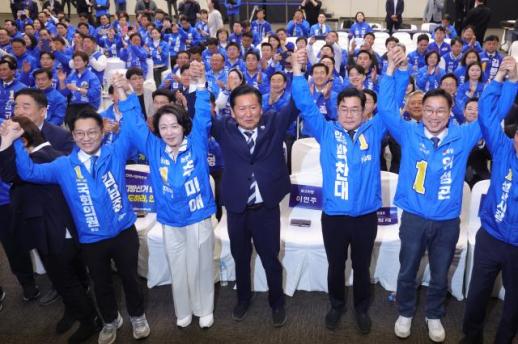 South Korea’s Democratic Party Vows June 3 Local Election Win to Back Lee Jae-myung Government The Democratic Party on May 7 reaffirmed its determination to win the June 3 local elections, saying victory is needed to “end the insurrection” and ensure the success of the Lee Jae-myung government. The party also urged its candidates for Incheon mayor, Gyeonggi governor and Jeju governor — Park Chan-dae, Choo Mi-ae and Wi Seong-gon — to give their all. At a nomination rally for Incheon, Gyeonggi and Jeju held at KINTEX in Goyang, the party said voters should deliver a stern judgment against the People Power Party, accusing it of repeatedly making “Yoon Again” nominations, and said an overwhelming win would help support the Lee government’s state affairs. Party leader Jung Cheong-rae said, “Winning the local elections and ensuring the success of the Lee Jae-myung government is the spirit of the times and a mission for those living in 2026.” He added, “The embers of the insurrection are still stirring in places,” and said the People Power Party, which he said has not yet reflected on the insurrection, would face “the people’s stern judgment.” Jung said the election would be “another challenge” to fully realize what he called President Lee’s agenda of locally led growth, balanced national development and the Lee government’s governing philosophy. He said he hoped the party’s pledge to build a country where people “live well across the board” would be reflected in an election victory. Jung called for strong support for the party’s candidates, saying, “With Choo, we can trust Gyeonggi’s future,” and that Park would reopen Incheon’s “growth potential,” while Wi would make Jeju’s future “brighter than ever.” He added, “The Democratic Party will also mobilize all its capabilities to support the candidates. I ask you to win without fail.” Choo responded, “Only a desperate mindset and effort can protect democracy and subdue the insurrection forces,” adding that winning in border areas would be “more valuable” than any other victory. Park said he was campaigning with the resolve to “win without fail” and show the Lee government’s philosophy and competence in Incheon. “With that sense of responsibility and expectation of victory, we will win,” he said. Wi said, “Today we came here for the Lee Jae-myung government and a Republic of Korea where everyone is happy,” and urged a united push to win the local elections and build a country where “everyone lives well.” The candidates adopted a resolution calling for: uniting as “one team” by region to promote national unity; acting as responsible ruling-party candidates to drive the Lee government’s success and national development; and winning a landslide in the local elections to support state affairs by following “the people’s command.” Also attending were by-election candidates Lee Kwang-jae (Hanam-gap), Kim Yong-nam (Pyeongtaek-eul), Kim Nam-kuk (Ansan-gap), Song Young-gil (Yeonsu-gap) and Kim Nam-jun (Gyeyang-eul). Song and Kim Nam-jun reiterated their determination to win, saying they would work so “everyone can win” as Democratic Party candidates, and, “Kim Nam-jun will keep Lee Jae-myung’s promise.”* This article has been translated by AI. 2026-05-07 15:16:57
 -
 About 50,000 BTS Fans Crowd Mexico’s National Palace After Presidential Invite BTS, which is scheduled to hold comeback concerts at Mexico City’s GNP Stadium on the 7th, 9th and 10th, met with Mexico President Claudia Sheinbaum. News that BTS had been invited to the National Palace to pay a courtesy call drew an estimated 50,000 fans to the Zocalo plaza outside the palace. According to Yonhap, Sheinbaum appeared with BTS on a palace balcony and greeted the crowd, which erupted in cheers. The BTS members waved back and filmed the packed plaza on their phones, the report said. Leader RM told fans, “Nice to meet you, and thank you so much for inviting us,” adding, “I’m looking forward to tomorrow’s show. Let’s have a fun time. I love you.” V, speaking in Spanish, said, “Mexico fans, I really missed you so much. The energy here is unbelievably amazing,” prompting another roar from the crowd. Earlier, Sheinbaum posted on her official social media: “We welcome BTS, one of the groups most loved by Mexican youth. Their music and values bring Mexico and Korea together.” As the members spoke to fans, Sheinbaum applauded. When V said, “We’ll come back next year,” she replied, “I already said you must come back next year.” BTS’ three-day comeback run in Mexico is sold out. The group is set to continue its global tour in 34 cities across Japan, Europe, Central and South America, and Asia.* This article has been translated by AI. 2026-05-07 15:15:16
 -
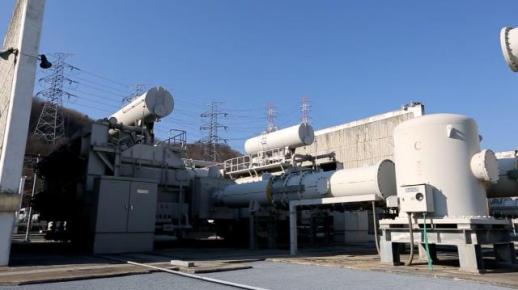 HOT STOCK: Hyosung Heavy takes breather after 50% near-nonstop rally SEOUL, May 07 (AJP) - Hyosung Heavy Industries, a Seoul-based transformer and switchgear maker, has emerged as one of the KOSPI’s standout AI infrastructure plays outside chip behemoths, with its shares soaring more than eightfold from a year earlier. The stock rose as high as 4,742,000 won ($3,267) on Thursday before easing to 4,558,000 won as of 2 p.m. Hyosung Heavy has gained nearly 50 percent in just two weeks from 2,990,000 won on April 16, and more than eightfold from 516,000 won a year ago. Its market capitalization has swelled to 42.49 trillion won, ranking No. 11 on the KOSPI. The rally has been driven largely by expectations for surging power demand from artificial intelligence. Training and operating large language models require data centers that consume far more electricity than conventional facilities, adding pressure to aging grids and prompting utilities to place massive orders for high-voltage transformers, circuit breakers and substation equipment — Hyosung Heavy’s core products. The shortage is most acute in North America, where waiting times for large transformers now range from 2.3 to 2.5 years, according to Wood Mackenzie’s second-quarter 2025 survey. Hyosung Heavy has become one of the clearest beneficiaries of the bottleneck. The company posted record annual results last year, with sales of 5.97 trillion won and operating profit of 747 billion won. North American revenue alone surpassed 1 trillion won, while its order backlog jumped 34 percent on-year to 11.9 trillion won, giving analysts confidence that earnings momentum can extend into next year. But the speed of the rally has raised valuation questions. The stock trades at roughly 80 times trailing earnings and 53 times forward earnings, well above the average for most global power-equipment peers. Brokerages remain broadly constructive on the long-term outlook. Naver Finance’s consensus 12-month target price stands at 4,620,000 won with a “buy” rating, implying analysts still see room for further upside. Trading volume reached more than 39,000 shares by mid-morning, heavy for a stock at this price level, with turnover topping 176.5 billion won. For now, the bull case remains intact — as long as hyperscalers keep pouring capital into AI data centers and U.S. utilities continue ordering transformers. 2026-05-07 14:58:09