
Journalist

HAN Joon ho
-
 South Korea’s Kospi briefly tops 7,500, sets another intraday record South Korea’s benchmark Kospi briefly climbed above 7,500 early Thursday, setting another intraday record. According to the Korea Exchange, the Kospi was up 52.22 points, or 0.71%, at 7,436.78 as of 9:07 a.m. It opened at 7,499.07, up 114.51 points (1.55%) from the previous session, then extended gains and touched 7,500 shortly after the bell. Brokerages said profit momentum led by semiconductors and foreign investor flows were supporting further upside. Han Ji-young, a researcher at Kiwoom Securities, said the Kospi still has room to rise, led by market bellwethers such as chipmakers, as “the sustainability of foreigners’ ‘buy Korea’ trend — with net buying in the 6 trillion won range since May — is unfolding alongside improving profit momentum.” In trading flows, retail investors stood out as net buyers. Individuals bought a net 4.0082 trillion won in the main market, helping lift the index. Foreigners and institutions, meanwhile, sold a net 2.8396 trillion won and 1.2019 trillion won, respectively, in what appeared to be profit-taking. Most large-cap shares were higher, including Samsung Electronics (up 1.88%), SK hynix (0.81%), SK Square (1.01%), Hyundai Motor (5.64%), Doosan Enerbility (7.17%) and Samsung Electro-Mechanics (0.33%). LG Energy Solution fell 1.24%, while Hanwha Aerospace slid 3.07% and HD Hyundai Heavy Industries dropped 4.01%. The Kosdaq turned lower. As of the same time, the tech-heavy index was down 2.90 points, or 0.24%, at 1,207.27. It opened up 0.66 point (0.05%) at 1,210.83 but gave up gains and moved into negative territory. In the Kosdaq market, foreigners and institutions were net buyers of 57.8 billion won and 24.8 billion won, respectively, while individuals were net sellers of 73.5 billion won. Moves among top Kosdaq stocks were mixed. EcoPro BM rose 1.75%, Alteogen gained 0.55%, Kolon TissueGene jumped 8.78%, ABL Bio added 1.18% and LigaChem Bio climbed 2.49%. EcoPro fell 1.97%, Rainbow Robotics slipped 1.14%, Samchundang Pharm dropped 1.35% and Lino Industrial declined 1.29%. Overnight, U.S. stocks ended higher on expectations for negotiations to end the war between the United States and Iran. The S&P 500 and the Nasdaq Composite rose 1.46% and 2.02%, respectively, to record highs, while the Dow Jones Industrial Average gained 1.24%.* This article has been translated by AI. 2026-05-07 09:23:09
 -
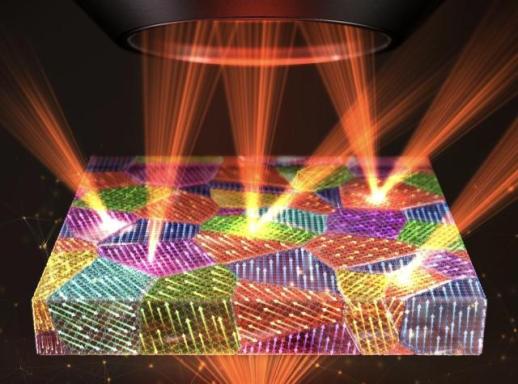 New imaging technique uses LED light to map material structures in 3D SEOUL, May 07 (AJP) - A joint research team has developed a new imaging technology that uses standard light-emitting diodes to look inside materials and map their complex internal structures in three dimensions. The method, called incoherent Dielectric Tensor Tomography, allows scientists to see how molecules are arranged without using high-powered lasers or destroying the sample, the Korea Advanced Institute of Science and Technology said Thursday. The project was a collaborative effort involving teams led by Professor Park Yong-keun at the Korea Advanced Institute of Science and Technology (KAIST), Professor Hong Seung-mo at Asan Medical Center, and Professor Jeon Seok-woo at Korea University. By precisely controlling the polarization and angle of the light-emitting diode (LED) light, the researchers performed 48 independent measurements to reconstruct a 3x3 matrix known as a dielectric tensor. This mathematical model describes how a material reacts to light from all directions, revealing its unique optical fingerprint. While previous versions of this technology relied on laser systems, they were often hindered by visual noise and were sensitive to tiny vibrations in the room. By switching to LED light, the team eliminated this noise and made the system stable enough for use in standard laboratories or industrial settings. In comparative tests, the incoherent Dielectric Tensor Tomography (iDTT) system visualized microscopic molecular arrangements that were previously obscured by noise in laser-based systems. The research team demonstrated the practical utility of the technique across several fields. They successfully visualized the 3D alignment of molecules within liquid crystal particles and performed observations of fibrosis in colon tissue without using chemical dyes. The system also automatically distinguished between different crystalline substances, such as quartz and calcium chloride, based solely on how they reacted to light. The iDTT technology is expected to have applications in materials science, semiconductors, pharmaceuticals, and biomedicine. In the pharmaceutical sector, it could serve as a tool for identifying drug polymorphs, which are different crystalline forms of the same molecule that can alter how a drug works in the body. In medicine, it provides a non-destructive way to analyze the environment around tumors by measuring the 3D orientation of collagen fibers. "This research presents the possibility of replacing material anisotropy measurements, which previously relied on large-scale facilities or destructive analysis, with small optical microscopes," Professor Park said, adding: "As LED-based measurement has become stable, it will become a new standard for non-destructive precision analysis in various industrial fields." (Reference Information) Journal/Source: Nature Photonics Title: Incoherent dielectric tensor tomography for quantitative three-dimensional measurement of biaxial anisotropy Link/DOI: https://bit.ly/48MKvF3 2026-05-07 09:22:25
 -
 LS Eco Energy Moves to Commercialize 400kV Extra-High-Voltage Cables, Targets U.S. Market LS Eco Energy is moving to commercialize high-end 400-kilovolt (kV) extra-high-voltage power cables as it steps up its push into the global power market, including the United States. The company said Wednesday that its Vietnam manufacturing unit, LS-VINA, will begin international certification and PQ testing for 400kV-class extra-high-voltage cables. It plans to complete a year of performance verification and long-term operating reliability evaluation, then start mass production in the second half of next year. PQ is a key process that evaluates long-term stability of an entire system on the assumption it will be used on an actual transmission grid. It is widely seen as a requirement for winning major global transmission projects. LS-VINA currently produces cables up to 230kV. The 400kV class has been a flagship extra-high-voltage product line produced by LS Cable & System. Once the project is completed, LS Eco Energy will secure an extra-high-voltage portfolio comparable to the LS Cable & System headquarters level, the company said. The 400kV class is used for national backbone transmission networks, large industrial complexes, AI data centers, and grid connections for offshore wind and solar power. It enables long-distance, high-capacity transmission and is a high value-added product category that requires strict quality and stability standards. Global demand for extra-high-voltage cables has been rising quickly as data center power needs grow and as the United States and Europe replace aging grids and expand transmission investment, the company said. Industry forecasts estimate annual U.S. electricity demand will rise from about 4,100 terawatt-hours (TWh) in 2024 to more than 5,000 TWh by 2030, driven by expanding AI data centers. LS Eco Energy recently secured U.S. certification for 230kV-class cables, laying the groundwork for market entry. If it also secures PQ for the 400kV class, it expects to be able to participate in bids for major global transmission projects, strengthening its competitiveness. A company official said, "Entering the 400kV class will be an opportunity to accelerate expansion into advanced markets and speed a shift to a profitability-focused business structure."* This article has been translated by AI. 2026-05-07 09:22:16
 -
 Trump Halted 'Project Freedom' After Saudi, Gulf Allies Withheld Base and Airspace Access U.S. President Donald Trump halted “Project Freedom,” an operation aimed at helping ships transit the Strait of Hormuz, after pushback from key Gulf allies, NBC News reported. NBC News, citing two U.S. officials, reported May 6 that Trump abruptly reversed his plan to support ships passing through the strait after core Gulf partners withdrew permission for U.S. forces to use their bases and airspace for the mission. According to the report, Trump announced Project Freedom over the weekend on Truth Social as a way to break Iran’s blockade of the Strait of Hormuz. The announcement was made without sufficient prior coordination with some Gulf allies and drew objections from Saudi Arabia’s leadership, the officials said. Saudi Arabia notified the United States that it would not allow U.S. aircraft to launch from Prince Sultan Air Base southeast of Riyadh or permit flights through Saudi airspace to support the operation, the officials said. The issue was not resolved despite a call between Trump and Saudi Crown Prince Mohammed bin Salman, and Trump had to pause the operation to regain access to critical airspace, the officials said. Project Freedom was designed to use U.S. military power to help ensure safe passage for ships if Iran threatened or attacked vessels transiting the strait. U.S. forces planned to provide surveillance assets, firepower and boarding teams to protect ships leaving the Persian Gulf. U.S. Central Command previously said two U.S.-flagged ships transited the strait as part of the operation. About 36 hours after the operation began, Trump ordered it halted. He said the pause would be brief to determine whether an agreement could be finalized and signed. U.S. military operations depend on Middle East allies Saudi cooperation is considered essential for U.S. operations. Prince Sultan Air Base hosts U.S. fighter jets, aerial refueling aircraft and air defense assets. One U.S. official told NBC News that for geographic reasons, using airspace along borders requires cooperation from regional partners and, in some cases, there is no alternative. NBC said military aircraft were expected to provide a “defensive umbrella” to protect ships during Project Freedom. Saudi Arabia and Jordan are important for basing aircraft, Kuwait for overflight, and Oman for overflight and naval logistics support. Analysts said that without adequate prior coordination with Gulf allies, any military operation tied to the Strait of Hormuz would be constrained. A Middle Eastern diplomat said the United States coordinated with Oman only after Trump’s announcement. “The U.S. coordinated with us after it made the announcement,” the diplomat said, adding, “We were not angry or furious.” A Saudi source, asked whether the announcement surprised Saudi leaders, said, “The issue is that everything is moving fast in real time.” The White House said regional allies were notified in advance. A White House official, asked whether some Gulf states were not informed beforehand, said, “Regional allies were notified in advance.” The pause also comes as talks on ending the war between the United States and Iran regain momentum. Iran’s Foreign Ministry said it is reviewing a new U.S. peace proposal and will discuss it with mediator Pakistan after completing its assessment. Trump said, “They want a deal,” and claimed there had been “very good talks” over the past 24 hours. In a PBS interview, Trump said a deal with Iran could be reached before he travels to Beijing for a meeting next week with Chinese President Xi Jinping. “I think there’s a very good chance it will end. And if it doesn’t end, we have to go back and bomb them like hell,” he said. Iranian hard-liners have warned against the U.S. proposal. Ebrahim Rezaei, spokesperson for Iran’s parliament National Security Committee, wrote on X that the latest proposal is a wish list until it becomes reality and said, “The U.S. will not obtain through a failed war what it did not obtain in direct negotiations.” Still, some in the region said diplomacy remains the likelier outcome. A Jordanian official told NBC News, “Iran does not have the economic means to keep this going,” adding, “The economy is collapsing and it cannot even pay wages.”* This article has been translated by AI. 2026-05-07 09:21:16
 -
 KB Kookmin Bank Expands Support for Youth Leaving Care Through KB Dream Home Program KB Kookmin Bank is expanding inclusive-finance efforts, including support for youth preparing to live independently after leaving care. The bank said May 7 it has selected sites for its KB Dream Home program, which supports these young people. KB Dream Home is a corporate social responsibility initiative that offers capacity-building programs such as job counseling and help obtaining professional certificates. The goal is to help participants build a foundation for independence while living in a more comfortable housing environment. The program is part of KB Financial Group’s “KB National Happiness Hope Project.” The bank said it completed renovation work last year at independent-living facilities in five regional areas, starting with South Chungcheong Province and including Gwangju, Mokpo, Daejeon and Jeonju. This year, the bank plans to continue support for facilities nationwide. One facility in Seoul and four in regional areas — including Wonju in Gangwon Province and Cheongju in North Chungcheong Province — were selected for upgrades. The bank said it will carry out tailored remodeling based on on-site inspections. The bank has also continued other youth-support programs. Last month, it said it would support 200 young people for one year with independence assistance funds, along with career exploration, certificate training and job consulting throughout the employment process. A bank official said the KB Dream Home program is intended to provide “a solid foundation” for young people beginning independent lives, adding that the bank will continue to expand inclusive-finance support so that “all people, including youth,” can be happier.* This article has been translated by AI. 2026-05-07 09:13:05
 -
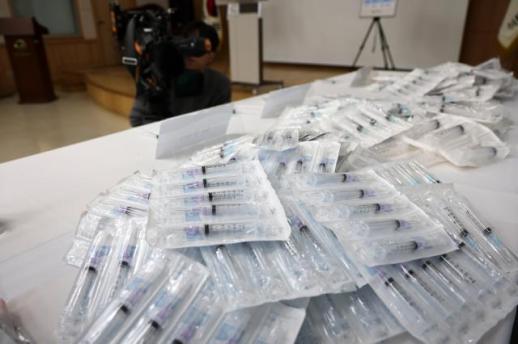 South Korea to name medical facilities hoarding supplies; prioritize plastic feedstock for makers As concerns grow that the war in the Middle East could disrupt supplies of medical products, the South Korean government will investigate and publicly disclose medical institutions holding excessive inventories. It will also prioritize plastic feedstock for manufacturers to keep production running smoothly. The Ministry of Health and Welfare announced the steps in a report titled “Medical product supply and price trends and measures in response to the Middle East war,” presented at a special interministerial task force on cost-of-living management. The government said it will make the supply chain more transparent. It has been conducting daily monitoring in cooperation with six medical associations, and will add a weekly nationwide survey of medical institutions’ inventories to track stock levels, including comparisons with the same period a year earlier. It also conducted on-site inspections from May 4 to May 7 at 24 medical institutions suspected of buying excessive quantities of syringes. For items at risk of short-term shortages — including packaging for IV solutions, syringes, medicine packaging and dosing bottles — the government will ensure manufacturers receive raw materials first. The measures will continue through May, and the government said it plans ongoing management after June as well. Jung Kyung-sil, director general for health care policy at the ministry, said the government will publish daily supply-and-demand updates, including syringe production, shipments and inventories, “to ease public anxiety and encourage voluntary self-correction in distribution.” To help ensure stable supplies for high-demand facilities such as dialysis clinics, the government has operated a “syringe supply chain hotline” since April 16. Since it began, 970,000 syringes have been supplied to online malls, and 210,000 have been delivered to medical institutions. The ministry also said patients who need around-the-clock management, including those with rare diseases, will be able to buy medical products through telemedicine platforms. Through telemedicine intermediaries, buyers will be identified as having rare or intractable diseases and allowed to place orders by distinguishing between covered and noncovered items. Jung said the ministry determined that shortages on online malls were fueling anxiety among patients, adding that syringes have been delivered using telemedicine platforms since May 4. Separately, the disposal interval for general medical waste at clinics and public health centers will be temporarily doubled to 30 days from the current 15 days. The measure will remain in place until next month’s 30th. The ministry said hospitals generate large volumes of waste and fill containers and plastic liners within 15 days, while clinics often dispose of waste before containers are full because volumes are smaller. Jung said the government is not moving to institutionalize the longer disposal interval for clinics. She said hospitals structurally use large amounts of plastic, adding that formalizing the change “could be considered as one option” to reduce reliance on plastic products, but that further talks with the Ministry of Climate, Energy and Environment are needed and it is difficult to say whether it could be adopted permanently. The government also adjusted National Health Insurance reimbursement rates for treatment materials to reflect the strong-dollar environment. Based on exchange rates over the past three years, it changed the exchange-rate reference grade for treatment materials from the 1,100-won range to the 1,300-won range and raised it by 6%. As a result, the average reimbursement for 27,000 separately calculated treatment materials rose 2%, with an expected support effect of 6.7 billion won per month. In addition, the government will provide emergency management stabilization funds to small and midsize companies that manufacture plastic-based medical products. 2026-05-07 09:08:02
 -
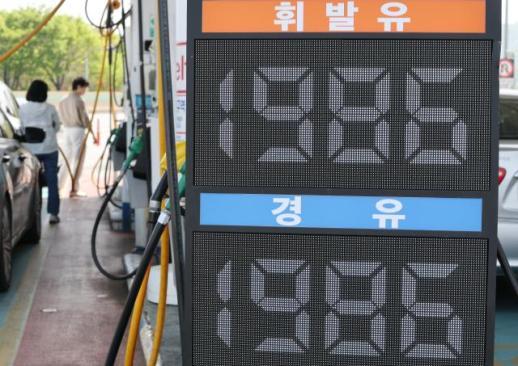 South Korea Weighs Fines for Fuel Hoarding, Says Diesel Could Have Hit 2,800 Won a Liter The government said it estimates diesel prices could have surged to about 2,800 won per liter without a cap on petroleum product prices, and it is considering introducing administrative fines to punish market disruptions such as hoarding. Officials said the risk of further inflation remains high as higher global oil prices, driven by uncertainty from the Middle East war, could feed into domestic prices with a lag. The government discussed its assessment and response plan at a meeting of the “Special Task Force of Related Ministers for Livelihood Price Management,” chaired by Deputy Prime Minister and Minister of Finance and Economy Koo Yun-cheol, held on the 7th at the Government Complex Sejong. The government said April consumer inflation came in at 2.6%, with a sharp rise in petroleum-related prices leading the increase after the Middle East war. Petroleum product inflation jumped to 21.9% in April from 9.9% in March, while inflation excluding petroleum products stayed around 1.8%. Officials said policy measures such as the price cap and fuel tax cuts absorbed much of the upward pressure. They estimated that without the price cap, overall inflation would have been 2.8% in March and 3.8% in April — 0.6 percentage points and 1.2 points higher than the official figures. A finance ministry official said figures presented by the Energy and Oil Market Monitoring Team suggest gasoline could have risen into the 2,200-won-per-liter range and diesel to more than 2,800 won per liter without government controls. The government also said Korea’s inflation has been relatively stable compared with major countries, noting that many advanced economies have recorded inflation in the mid-2% to low-3% range and that domestic oil prices have risen more slowly than in key peers. Japan, Hungary and Poland are using tougher measures such as price ceilings or subsidies for refiners, while major European countries are combining fuel tax cuts with market inspections, the government said. Going forward, officials said they will focus on stabilizing petroleum prices by stepping up on-site inspections at gas stations and crackdowns on hoarding, while also managing supply and demand through steps such as securing alternative crude supplies and rotating vehicle use at public institutions. The government said it will also swiftly execute 6.1 trillion won in high-oil-price relief funds and fuel-cost support for agriculture, fisheries and transportation, and expand measures to ease household costs, including discounts of up to 50% on farm, livestock and fishery products and broader discounts on processed foods. To strengthen market order, officials said illegal acts such as hoarding can be punished by up to three years in prison or a fine of up to 100 million won, along with confiscation and forfeiture, and that the government will review introducing administrative fines to enable faster penalties. A finance ministry official said the law already provides a basis to confiscate or forfeit related goods in hoarding cases, and added that the government will quickly review the administrative-fine measure mentioned by the president at a Cabinet meeting. * This article has been translated by AI. 2026-05-07 09:07:01
 -
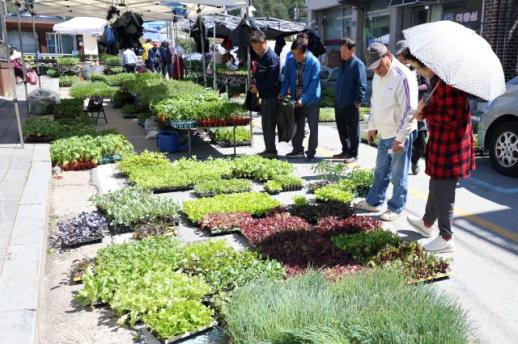 South Korea to tighten tariff-quota oversight, speed bonded-warehouse releases The government said it will tighten customs and distribution oversight of tariff quotas to prevent delays and misconduct, including by speeding releases from bonded areas and strengthening penalty rules. Officials said they reviewed follow-up steps to improve tariff-quota operations at a meeting of the interministerial task force on special management of consumer prices held on May 7. The government has used tariff quotas to help stabilize prices, but it said it identified improper cases in which some agricultural and fishery products were not promptly released from bonded areas after import declarations. In response, it plans to newly designate items for intensive management, revise customs rules to encourage faster release, and strengthen domestic distribution oversight and sanctions. The government previously inspected the full chain of importing, storage and sales for emergency tariff-quota items from March 9 to April 16. It said the review found price declines for bananas (-4%), mangoes (-20%), pineapples (-11%) and frozen mackerel (-3%). In distribution, the government said consumers saw larger price cuts when importers supplied large discount stores directly than when products moved through wholesale and retail channels. It also said imported fruit has a limited shelf life and frozen mackerel is already managed, and it found no problems with delayed market distribution timing. To support the changes, the government is also pursuing amendments to the Customs Act, including a new legal basis for designating intensively managed items. The related bill was submitted to a Cabinet meeting on March 31, then received emergency approval on April 3 and was promulgated and took effect. Since March, authorities have also operated a joint interagency task force on tariff-quota management for agricultural and livestock products to strengthen item-by-item customs and distribution inspections. The government said it will reflect additional measures — including tougher penalty standards and a new release order — in the regular tax law revision package in July, aiming to complete revisions within the year. Under current rules, an additional tax is imposed only after 30 days from the date goods enter a bonded area; the revision would tighten that to 20 days. To speed sugar distribution, the government will shorten the mandatory release period from six months to four months. Starting in August, it will also add five items — including frozen mackerel — to the list of imported seafood subject to distribution traceability management. By year’s end, the government said it will build an integrated system, centered on a dedicated body, to continuously monitor the entire process of importing, distribution and sales for tariff-quota items in agriculture and livestock.* This article has been translated by AI. 2026-05-07 09:05:34
 -
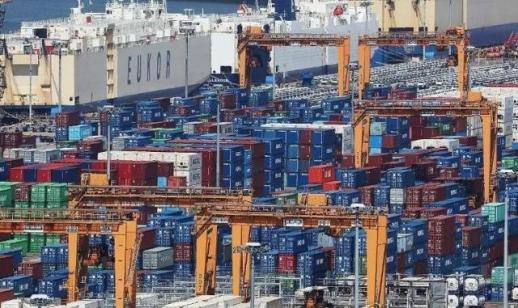 Korea to streamline customs for critical imports, expand FTA use to diversify supply chains As supply-chain disruptions from the Middle East war become more visible, South Korea’s customs authorities will simplify import clearance and unloading procedures for items deemed necessary for supply-demand management to speed deliveries of raw materials and intermediate goods. The Korea Customs Service also said it will pursue regulatory changes and identify additional support targets to help diversify supply chains. The agency announced the steps on the 7th at a ministerial task force meeting on special management of consumer prices, releasing an “inspection and improvement plan for import clearance of items affected by the Middle East war.” According to the Korea Customs Service, total crude oil imports in March and April fell to 130 million barrels this year from 150 million barrels a year earlier, down 8.5 percentage points. Imports from the Middle East dropped by 25.29 million barrels, while non-Middle East imports fell by 4.30 million barrels. The average unit price rose to $92 a barrel from $79 a year earlier, up 16.2%. Imports of Middle East-sourced liquefied natural gas and liquefied petroleum gas butane also plunged, down 12.7% and 47.8%, respectively. Key industrial inputs beyond energy also showed shifts. Total naphtha imports fell 25.2%, while sourcing diversified to the United States, Greece and India. Helium imports from Qatar dropped 45.5%, while shipments from the United States increased 49.9%. With energy and raw-material supply chains under strain, the customs service said it is operating an emergency response task force tied to the Middle East war to stabilize supplies and provide urgent tariff and logistics support. To ease bottlenecks at the import stage, it said it is helping rush-demand items clear customs before unloading so they can be deployed to industrial sites immediately upon arrival. The agency also said it is supporting supply measures by banning hoarding, designating certain emergency supply-demand adjustment items for penalties on delayed import declarations, and tightening customs screening for export-restricted goods. It is also analyzing import unit prices weekly for seven items, including crude oil and naphtha, and sharing detailed information with relevant ministries. To limit damage to companies trading with the Middle East, the customs service said it will minimize administrative fines, actively approve extensions of storage periods for unshipped cargo, and waive error points for corrections or withdrawals of export declarations. For companies using detours around the Strait of Hormuz or alternative transport, it said higher freight costs will be excluded from the customs value used for duties. It also said it will support Middle East importers with delivery extensions and installment payments. Until the Middle East war ends, the customs service said it will temporarily simplify import clearance and unloading procedures for supply-demand management items. For raw materials procured overseas, it will work with relevant ministries to allow required import documents to be submitted after customs clearance. To prevent supply delays caused by late arrivals or unloading of crude oil and LNG carriers, it will exclude them from vessel search designation and waive reporting requirements for moving to anchorage or mooring locations within ports. To diversify supply chains, the agency said it will identify additional systems and items eligible for special support under free trade agreements and work to resolve difficulties in import procedures. It said it will seek to shorten the time required to issue certificates of origin for Malaysian crude oil, which it said takes longer than in other countries. It also said it will review import support measures for some Australian condensate that can be used as a substitute feedstock for naphtha.* This article has been translated by AI. 2026-05-07 09:04:28
 -
 Boucheron sued in South Korea after diamond falls from ring; brand denies refund French luxury jeweler Boucheron has been sued by a South Korean consumer after refusing to exchange or refund a ring that the buyer says had a major defect. The lawsuit follows a claim that a diamond fell out of the ring about a week after purchase, and the company offered only repairs. According to the complaint obtained by Ajunews on the 6th, the customer, identified as A, bought one signature “Quatre Classic Small Ring” in early January at a Boucheron boutique inside a department store in Seoul’s Songpa district. The ring, popular as a wedding band, cost 11.5 million won. A said that about seven days after the purchase, on the 11th of that month, one diamond set in the band was missing. A told the store there had been no external impact or negligence and requested a refund, saying the incident showed a fundamental problem with durability and quality for a high-priced product. Boucheron, however, cited scratches that it said occurred during use and responded that a refund or exchange was not possible, according to the complaint. The company said only repairs could be provided and rejected the request. A filed a damages lawsuit against Boucheron’s South Korean unit, Kering Watch & Jewelry Korea, seeking the return of the purchase price. The law firm representing A said the case qualifies as grounds to cancel the contract under the Civil Act’s warranty liability for defects. Lee Hyun-hee, an attorney at Law Firm YK, said, “The value of luxury jewelry lies in sophisticated design and the completeness of the stone setting,” adding that “a diamond falling out just seven days after purchase is a serious defect that markedly lacks the durability ordinary precious-metal goods should have.” Lee also said the defendant’s repair-only stance “clearly refuses its obligation to deliver goods without defects.” In the lawsuit, the legal team cited not only South Korea’s consumer dispute resolution standards but also France’s consumer code, Code de la consommation, where Boucheron is headquartered. Under that code, defects that arise within two years of delivery are presumed to have existed at the time of sale, and unless the seller proves the consumer is responsible, the seller must provide remedies including repair, exchange or contract cancellation, the filing said. The case has also prompted criticism of how Boucheron operates in South Korea. Kering Watch & Jewelry Korea changed its corporate form in 2022 from a stock company to a limited liability company, drawing claims that the move was intended to avoid mandatory disclosure of external audit reports. An industry official said luxury brands can post enormous sales in South Korea while avoiding management disclosure obligations, and then, when defects occur, cite global guidelines to disregard domestic consumer protection rules. Ajunews said it contacted Boucheron multiple times by phone and email to seek comment on the lawsuit but received no response.* This article has been translated by AI. 2026-05-07 09:03:19