

Journalist

Imran Khalid
-
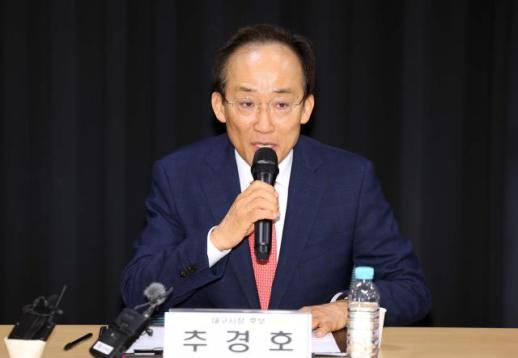 Choo Kyung-ho Resigns as Lawmaker to Run for Daegu Mayor, Vows to Rebuild Conservatives Choo Kyung-ho, the People Power Party’s candidate for Daegu mayor, said April 29 he submitted his resignation as a National Assembly member to run in the local election, pledging to restore political balance starting in Daegu. In a statement, Choo, a three-term lawmaker from Dalseong County in Daegu, said, “Korea needs a counterweight to protect the country. I will try to reestablish that balance starting from Daegu.” He called the local election “an important turning point for Korea’s democracy,” adding that “with power tilted to one side,” the country needs a counterweight. “I will try to reestablish that balance starting from Daegu,” he said, adding that he wants to prove “the conservative camp’s economic competence” through results and to “be the start of rebuilding conservatism.” Choo also reflected on his decade in parliament, citing “fierce committee meetings” and late nights in the lawmakers’ office building. He said his party and Dalseong County were always “side by side” before his name and that it was a source of pride. He said that while the lawmaker’s badge weighed “only 6 grams,” the responsibility was hard to measure, and that “even today, 10 years later, that weight has not become any lighter.” He thanked fellow lawmakers for sharing the burden. Choo said he felt heavy and apologetic about stepping away, recalling efforts to protect livelihoods and plan for the future under what he described as a difficult National Assembly in which the Democratic Party holds a majority. “Even if I’m physically farther away, I believe the path we walk is ultimately one,” he said, adding he would keep working to improve people’s lives “in the National Assembly and in the field.” The deadline for lawmakers running in the local election to resign is May 4. If an incumbent resigns by April 30, a by-election in the district will be held alongside the June 3 local elections. If the resignation comes May 1 or later, the by-election will be held in April next year.* This article has been translated by AI. 2026-04-29 10:00:38
 -
 Hyundai Rotem Shares Jump 8% on Poland K2 Tank Local Production Deal Hyundai Rotem shares surged more than 8% for a second straight session after the company said it signed a cooperation agreement tied to local production of K2 tanks in Poland. As of 9:43 a.m., Hyundai Rotem was trading at 265,500 won, up 21,000 won (8.59%) from the previous session, according to the Korea Exchange. The stock rose 5.84% a day earlier. Hyundai Rotem said Tuesday it signed a local production and maintenance cooperation agreement with Bumar-Labedy, a defense company under Poland’s state-run defense group PGZ, covering the Polish-version K2 tank (K2PL) and an armored recovery vehicle. The company said the agreement sets out specific execution measures for a core project under the second implementation contract for Poland’s K2 tanks signed in August last year, and is expected to support efforts to expand defense orders in Europe by building a local production base. With major European countries increasingly seeking local production in defense procurement, Hyundai Rotem plans to use Poland as a production hub for K2 tanks to pursue additional orders. The company said local production of related equipment, including a combat engineering vehicle and an armored bridge-layer, will be discussed in stages. Lee Jaekwang, an analyst at LS Securities, said he expects the stock to rise on increased new defense-export orders rather than further gains in profitability. He said the company appears to be aiming to boost K2 exports by using production hubs in Europe-Poland, Latin America-Peru and the Middle East-Iraq. * This article has been translated by AI. 2026-04-29 09:57:07
 -
 South Korea to Revamp Fintech Support, Add Incentives and One-Stop Help Desk The Financial Services Commission said it will overhaul its fintech support programs, naming the sector a key growth priority as the financial industry undergoes major change. The FSC said it held an event titled “Fintech, a Place for Connection” on Tuesday, chaired by FSC Chairman Lee Eok-won. The gathering brought together fintech firms and aspiring founders, financial companies, investors and policy finance institutions to share examples of successful cooperation. “Over the past decade, fintech companies have brought innovation to our financial industry,” Lee said. He added that advances in artificial intelligence are not only accelerating change but also “fundamentally reshaping how finance works,” putting the industry at another turning point. To spur growth, the FSC said it will revamp its support projects and designate regional and youth entrepreneurship, along with AI transformation (AX), as priority areas. It plans to offer incentives such as extra points in selecting recipients, dedicated budget allocations and additional support for companies with strong results. The FSC also said it will form public-private consultative groups by region, centered on existing local financial infrastructure such as financial firms, local governments and startup support organizations. The goal is to develop fintech models linked to key local industries and to back the launch and growth of differentiated fintech startups. In addition, the FSC said it will set up a fintech support help desk. It is expected to connect FSC programs, partner searches through financial firms’ fintech labs, funding support from policy finance institutions and startup assistance offered by local governments. “Innovation often begins by connecting different ideas and people,” Lee said, pledging continued support so financial companies and investors can help sustain fintech firms’ ongoing challenges. * This article has been translated by AI. 2026-04-29 09:56:19
 -
 South Korean Won Rises Early as UAE OPEC Exit Stirs Oil Volatility The won weakened early against the U.S. dollar but soon turned lower, as traders weighed easing Middle East-related concerns and shifting oil-price expectations. In Seoul’s foreign exchange market, the won was trading at 1,473.5 per dollar as of 9:30 a.m. on the 29th. The exchange rate opened at 1,474.0, up 0.4 won from the previous session, then reversed direction shortly after trading began. Markets are watching the United Arab Emirates’ decision to withdraw from the Organization of the Petroleum Exporting Countries, which has fueled expectations of increased crude supply in the near term. Traders said the prospect of independent production increases after the exit could curb the recent run-up in oil prices. International crude prices remain elevated, but volatility has increased. On the New York Mercantile Exchange, June West Texas Intermediate briefly rose above $100 a barrel before paring gains to settle up 3.7% at $99.93. The dollar was slightly weaker. The dollar index, which measures the greenback against six major currencies, fell 0.02% to 98.593. Min Kyeong-won, an economist at Woori Bank, said position adjustments ahead of the U.S. Federal Open Market Committee meeting were likely to drive a pullback. He added that importers’ demand for dollars to settle payments has remained “consistently active,” contributing to an intraday backdrop in which upward pressure can dominate. * This article has been translated by AI. 2026-04-29 09:55:35
 -
 King Charles III Highlights U.S.-U.K. Alliance in Address to Congress Britain’s King Charles III, on a state visit to the United States, used a joint meeting of Congress on April 28 (local time) to underscore the alliance and friendship between the two countries, citing shared history and democratic values. According to The New York Times and other foreign media, Charles described the relationship as a “partnership born in conflict.” He noted that Britain and the United States once had a fundamental disagreement over the principle of “no taxation without representation,” but said the idea reflects democratic values the United States inherited from Britain. Foreign outlets said the remarks amounted to a reminder that, despite recent friction over issues including the Iran war, the relationship remains rooted in a close alliance. Charles did not directly mention tensions between British Prime Minister Keir Starmer and President Donald Trump. Instead, he pointed to Britain’s support after the Sept. 11 attacks and its participation in the Afghanistan war. He said that when NATO invoked Article 5 for the first time after 9/11 — treating an attack on one member as an attack on all and obligating support — “we answered (America’s) call,” as Britain has done for more than a century. Politico interpreted the passage as a carefully aimed rebuff to Trump and pro-Trump forces in Congress. Trump has criticized European allies, including Britain, for not joining the Iran war, saying the United States spent trillions of dollars and did not receive adequate help. Charles also appealed for support for Ukraine in its fight against Russia. On trade, Charles struck a reciprocal tone. He said annual bilateral trade worth $430 billion continues to grow, and he praised $1.7 trillion in mutual investment that he said drives innovation and has created millions of jobs on both sides of the Atlantic. He called it a strong foundation that can be expanded. Charles also quoted a line Trump used during a state visit to Britain last year: “The bonds of kinship and identity between America and the United Kingdom are priceless and everlasting. They are irreplaceable and unbreakable.” Charles noted that the trip was his 20th visit to the United States and his first as king, and he expressed affection for Americans. The speech drew praise from some observers. James Lyons, a former communications chief at Starmer’s office, told Politico that the royal family is like “the Heineken of British diplomacy,” saying it can reach places diplomats cannot. Sen. Lindsey Graham, R-S.C., wrote on social media platform X that it was a “perfect speech” blending wit, humor and history, adding that it felt unusual but welcome to sense a divided Congress coming together. Charles has been viewed as a monarch who reigns but does not rule, while playing a behind-the-scenes role in advancing the national interests of Britain and Commonwealth countries. The NYT reported that in January, after Trump said NATO personnel including Britons stayed only in the rear during the Afghanistan war, Britain reacted with unease, noting it lost 457 service members. The report said the palace conveyed Charles’ concerns to the White House, which later issued a clarifying statement. The NYT also said that after Trump remarked in March last year that the United States should absorb Canada, Charles visited Canada in May that year and signaled support.* This article has been translated by AI. 2026-04-29 09:49:32
 -
 Kakao Pay Says 10-Year Transfers Totaled 447 Trillion Won, Saving 1.5 Trillion Won in Fees Kakao Pay said Tuesday that since it launched its money transfer service in April 2016, users have sent a cumulative total of about 447 trillion won over the past 10 years. The company said that is equivalent to people nationwide exchanging 120 billion won a day, or 5 billion won an hour, through Kakao Pay. Over the same period, cumulative transfer transactions topped 4.8 billion, it said. Annual transfers rose from about 2.65 million in 2016 to about 843.1 million last year, a 320-fold jump over a decade. This year, as of last month, average daily transfers exceeded 2.3 million, with about 240 billion won moving each day. That works out to roughly 1,600 transfers per minute, the company said. Kakao Pay said the service has expanded beyond a simple way to send money. In 2016, users sent money to an average of five acquaintances each; by 2025, that figure had grown to an average of nine. The company also said the service helped lower barriers to financial services, estimating users saved about 1.5 trillion won in fees over the past decade. A Kakao Pay official said the past 10 years have focused on reducing the hassle of transfers and improving users’ daily lives, adding the company will continue upgrading the service so users can feel that finance is “closer” and keep sharing “feelings and value.” * This article has been translated by AI. 2026-04-29 09:45:17
 -
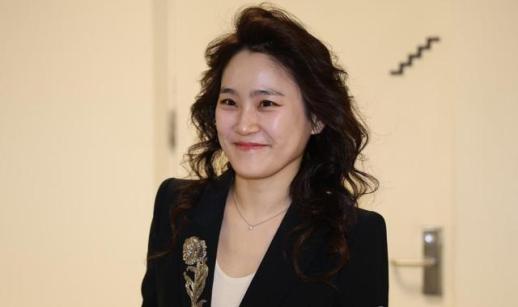 Hanna Chang Aims to Transform Seoul Arts Center into a Cultural Hub The Seoul Arts Center, located at the foot of Woomyeonsan in Seocho-dong, is more than just a performance venue. It serves as a mirror reflecting a nation's cultural level and a symbol embodying the spirit of an era. Like the traditional hat perched atop the opera house's roof, the Arts Center is a place where Korean tradition meets global artistry. However, an institution cannot survive on symbolism alone. Beautiful architecture does not cover maintenance costs, and reputation alone cannot offset deficits. Culture must ultimately move people's hearts, draw their footsteps, and become a platform for the times. In this context, the appointment of world-renowned cellist Hanna Chang as president of the Arts Center is not just a personnel change. It signifies a shift in the direction of Korean cultural administration and raises a crucial question about what the Arts Center should become in the future. One of the most striking statements in her inaugural speech was:“The competitors of the Arts Center are not Japan's Arts Center, America's Lincoln Center, or China's National Centre for the Performing Arts. Our real competitors are Netflix and YouTube.” This statement instantly dismantles the long-standing walls of Korean cultural administration. In the past, the Arts Center was viewed merely as a 'facility.' Good performance spaces, excellent acoustics, and quality exhibition areas were the focus. However, today is the era of platforms, not spaces. People do not necessarily go to performance venues. They watch Netflix on their smartphones and consume world-class performances on YouTube. Time has become fragmented, appreciation has become personalized, and culture has already entered the subscription economy. The chronic deficits of the Arts Center stem from this reality. Audiences are dwindling while costs rise. Innovation under the guise of a public institution has been slow, and past methods have failed to persuade the future. Accumulated deficits amounting to hundreds of billions of won are not just numbers; they are a warning. Cultural institutions must now declare a survival strategy. Hanna Chang has recognized this point. By defining the competition not as foreign performance venues but as digital platforms, she envisions the Arts Center as a 'content company' rather than merely a 'building.' This perspective is modern and accurately penetrates the MZ generation and the age of artificial intelligence. Today's younger generation chooses experience over authority. They prefer participation over formality and intuition over explanation. They consume short videos and memorable moments rather than lengthy explanations, and they remember shareable experiences more than the venue itself. Algorithms learn preferences, and platforms do not wait for audiences; they seek them out.The Arts Center must shift from a strategy of “Come see our great performances” to “We will enter your life.” Hanna Chang is a person with that potential. She is not just a famous performer; she is someone who has survived the harsh standards of world music history. Initially, she learned piano. As a child playing the piano, she became captivated by the deep, human sound of the cello one day. This change was not merely a shift in hobby but a turning point in her destiny. The cello became her life, and she ultimately became a globally recognized master. From a young age, she was called a genius, but the term 'genius' can be cruel. People see only the results, but behind those results lies unimaginable training and solitude. At the age of eleven, she shocked the world music scene by becoming the youngest and first Asian winner of the Rostropovich International Cello Competition. This was the moment when the legendary cellist Mstislav Rostropovich personally acknowledged her talent. The first proof of her genius is this 'victory at eleven.' Classical music is a world of early education, but it is nearly miraculous for a young performer to reach the top in a prestigious cello competition. It was a judgment that she was not just a prodigy but a fully formed musician. The second example is her invitations to the world stage. She has since collaborated with top orchestras, including the New York Philharmonic, London Symphony Orchestra, and Berlin Philharmonic. The world does not consider nationality or age; only skill remains on stage. The third is the evaluations from masters. World-renowned conductors and critics have described her performances as “simultaneously possessing fiery concentration and human depth.” Her recordings and live performances have become timeless art, not mere trends. These three points illustrate that Hanna Chang's success is not a coincidence but a structure, and her genius is just the beginning; ultimately, it was her rigorous self-discipline that completed it.She practiced for more than ten hours a day, moving her bow thousands of times for the sensitivity of her fingertips. Achieving ten minutes of perfection on stage requires tens of thousands of hours offstage. There is a scene in the film “Tár” where a young student says, “I don’t like Bach.” The reason is not music but identity; he judges art based on the composer’s gender and race. This scene symbolizes today’s cultural politics. Art is sometimes consumed based on identity rather than skill. However, Hanna Chang's true greatness lies beyond that. She is not great because she is a woman or an Asian; she is great because she has silenced the world with her overwhelming skill. Identity may be a starting point, but the ultimate judgment of art is always skill. The stage cannot be maintained by political correctness. If a single note is wrong, all rhetoric collapses. Hanna Chang is someone who has passed through that harsh truth. Her musical achievements are not just tales of success; they are records of human will. Collaborating with the world's top orchestras means stepping onto the judgment stage every time. She has always survived. Behind her success is her family.Hanna Chang's family has essentially devoted their entire lives to nurture one genius. Her father could have chosen a stable path but changed the direction of his life for his daughter's talent. Her mother also helped create a musical foundation. In fact, Hanna Chang's musical education began with her family's dedication. From learning piano to choosing the cello, the entire family went all-in for one artist. World-class geniuses are not created in isolation; behind one person's success lies the sacrifice of a family. Applause may echo on stage, but the time that makes that applause possible always begins at home. Hanna Chang understands this better than anyone. That is why she has always remained humble. Even on the grand stage, she refers to herself as “still a learner.” A true master knows how much they lack.She has not just remained a performer; she has sought to nurture younger generations and return classical music to the public. Notably, during the time when President Lee Jae-myung served as mayor of Seongnam, she contributed to popularizing classical music among youth through performances at the Seongnam Arts Center. She is not just a star performer but a cultural educator showing that classical music is not merely the privilege of a select few. Therefore, what the Arts Center needs now is precisely that. It should no longer be a sanctuary for classical music enthusiasts alone. It must become the heart of K-Culture. It should be a living platform encompassing classical music, opera, ballet, film, AI art, game music, digital performances, and global collaborations. The world’s best performance venue is not just a good concert hall; it is a place that the world seeks out first. To compete with the Lincoln Center in the U.S., Suntory Hall in Japan, and the National Centre for the Performing Arts in China, it requires more than mere comparisons of facilities. It needs the stories of Seoul, the emotions unique to Korea, and the strength of K-Culture. Just as Gwanghwamun becomes a stage for BTS and Gyeongbokgung serves as a backdrop for the world, the Arts Center must also become a cultural landmark that the world seeks out. It should not just be a place to watch performances but a destination to experience the future of Korean culture.In the age of artificial intelligence, culture is about 'participation,' not 'appreciation.' Audiences are no longer passive consumers. They connect, share, and recreate directly. The Arts Center must now move beyond operating a performance venue to becoming a center for digital platforms, global streaming, educational content, and cultural technology industries. Viewing Netflix and YouTube as competitors ultimately means the Arts Center aims to enter the daily lives of people worldwide. Laozi said in the Dao De Jing,“大器晩成 (great vessels take time to form).” The Arts Center is the same. It has long been a symbol of the nation, but now it must be reborn as a truly global platform. Deficits are just numbers, but vision can change the era. Hanna Chang's appointment is not merely a personnel change; it poses a question about the next 30 years of Korean culture. The answer to that question is clear: The completion of K-Classical will be achieved by Hanna Chang. Korea has already shaken the world with K-Pop. K-Dramas and K-Movies have captured the emotions of global audiences. The final pinnacle remains K-Classical. It is about Korea becoming the standard in the realm of the oldest, deepest, and highest art. The baton for that completion is now in Hanna Chang's hands. Transforming the Arts Center is not just about turning one institution into the black; it is about rewriting the status of Korean culture. Beyond Netflix, beyond YouTube, the day will come when the world looks to Seoul's Arts Center. On that day, we will finally say, “The completion of K-Classical was achieved by Hanna Chang.” 2026-04-29 09:42:49
 -
 LIV Golf Postpones New Orleans Event From June to Fall Amid Funding Questions 최근 재정 위기설에 휩싸인 LIV 골프가 오는 6월 미국 루이지애나주 뉴올리언스 대회를 가을로 연기한다. LIV 골프는 29일(한국시간) AP 통신에 보낸 보도자료에서 "루이지애나주 정부와 협력해 새로운 일정으로 대회를 옮기는 결정을 내렸다"며 "이는 한여름의 극심한 더위를 피하고 글로벌 스포츠 일정(FIFA 북중미 월드컵)과 충돌하지 않기 위한 것"이라고 밝혔다. LIV 골프는 "가을에 대회를 할 수 있도록 노력하고 있다"며 "가까운 시일 내에 확정된 날짜를 공유하기를 기대한다"고 덧붙였다. 뉴올리언스 대회가 미뤄지면서 LIV 골프는 6월 4일 개막하는 스페인 안달루시아 대회 이후 7월 23일 영국 대회까지 약 2개월간 공백이 생기게 됐다. 이번 결정은 사우디아라비아 국부펀드(PIF)가 LIV 골프에 대한 자금 지원 중단을 검토하고 있다는 현지 보도 직후 나와 관심을 모았다. 최근 4년간 약 50억 달러(약 7조 3680억원)를 투입해 온 PIF가 더는 지원에 나서지 않을 수 있다는 관측이 나오며 LIV 골프는 존폐 위기설에 휩싸였다. LIV 골프는 위기설을 부인했다. 스콧 오닐 LIV 골프 최고경영자(CEO)는 지난 28일 부산 아시아드 컨트리클럽에서 열린 국내 기자회견에서 "우리는 2026년 시즌을 운영할 자금을 이미 충분히 확보한 상태"라며 "주요 파트너들의 후원 규모도 약 5억 달러 수준으로 커졌다. 사업성과 경기력 양면에서 드라마틱한 성장을 이뤘다"고 말했다.* This article has been translated by AI. 2026-04-29 09:42:05
 -
 FSS chief’s expense account disclosed for first time; averaged 2.09 million won a month over 8 months Details of official expenses used by Financial Supervisory Service Gov. Lee Chan-jin since taking office have been disclosed for the first time, with most spending tied to discussions on supervisory issues, staff encouragement and media briefings. According to financial authorities on the 29th, the FSS posted the governor’s expense-account records on its website the previous day. The disclosure covers eight months of spending from August last year, when Lee took office, through March this year. Total spending during the period was 16,677,500 won across 76 transactions, averaging about 2.09 million won a month. Monthly totals were 1,621,100 won in August 2025; 2,167,000 won in September; 1,629,000 won in October; 2,336,600 won in November; 2,068,400 won in December; 2,268,300 won in January 2026; 2,204,100 won in February; and 2,383,000 won in March. Most expenses were incurred at restaurants around Yeongdeungpo-gu in Seoul, where the FSS headquarters is located. By purpose, work-related meetings accounted for a large share, including discussions on key supervisory issues and work plans and sharing difficulties by division. Other items included staff encouragement, meetings with news organizations, consultations with related agencies, and condolence or congratulatory payments. The disclosure follows Lee’s pledge during a National Assembly Legislation and Judiciary Committee audit in October last year. After criticism over how the FSS exercises its authority, he said he would improve transparency in the use of official expenses. Separately, official expenses used under the previous FSS governor from January through May last year totaled 12.10 million won, averaging 2.42 million won a month: 2.37 million won in January, 2.55 million won in February, 1.82 million won in March, 2.45 million won in April and 2.89 million won in May. 2026-04-29 09:40:16
 -
 Korea Creative Content Agency Earns Top Shared-Growth Rating for Fourth Straight Year The Korea Creative Content Agency said Tuesday it received a top rating for the fourth consecutive year in the Ministry of SMEs and Startups’ 2025 evaluation of shared growth by public institutions. Among 133 institutions assessed, the agency maintained the highest grade and posted the top score among other public institutions, it said. The agency credited efforts including building an innovation ecosystem for the content industry using artificial intelligence; creating a cooperation framework between over-the-top streaming platforms and small and midsize broadcast and video production companies; expanding cross-industry collaboration opportunities centered on content intellectual property through a character licensing fair; and strengthening shared-growth programs based on environmental, social and governance management, it said. The agency also operates business centers overseas that serve as local hubs for small and micro content companies. It said it used the global reach of K-content to broaden overseas demand in related industries such as food, consumer goods and tourism, helping open new export channels. “This result reflects our steady efforts to spread a culture of shared growth and cooperation across the content industry,” said Yoo Hyun-seok, acting president of the agency. “We will continue to actively support small and midsize companies so they can grow into core players in the content industry.”* This article has been translated by AI. 2026-04-29 09:38:15