

Journalist

Imran Khalid
-
 Wall Street Ends Lower on OpenAI Growth Concerns; Nasdaq Falls 0.9% 뉴욕증시가 오픈AI를 둘러싼 성장 둔화 우려 속에 일제히 하락 마감했다. 28일(현지시각) 뉴욕증권거래소(NYSE)에서 다우존스30산업평균지수는 전 거래일보다 25.86포인트(0.05%) 내린 4만9141.93에 거래를 마쳤다. 스탠더드앤드푸어스(S&P)500지수는 35.11포인트(0.49%) 하락한 7138.80, 나스닥종합지수는 223.30포인트(0.90%) 떨어진 2만4663.80으로 장을 마감했다. U.S. stocks closed broadly lower after negative news tied to OpenAI added to investor caution following recent record highs for the S&P 500 and Nasdaq. The Wall Street Journal reported that OpenAI missed targets for new users and revenue, and that internal concerns have been raised about whether the company can sustain massive artificial intelligence investment costs. In particular, OpenAI Chief Financial Officer Sarah Friar was reported to have told executives that if revenue growth is not fast enough, the company may not be able to cover future AI data center costs. AI chipmakers fell. Nvidia slid 1.6%, while Broadcom dropped 4.4%, AMD fell 3.4% and Micron declined 3.9%. Oracle, which is building data centers for OpenAI, sank 4.1%. Losses in tech were limited as investors looked ahead to earnings from major companies. Alphabet, Microsoft, Amazon and Meta are set to report results on 29일, and Apple is scheduled to release earnings on 30일. Investors are watching whether AI-driven demand helps deliver strong results. Chuck Carlson, CEO of Horizon Investment, told Reuters, "The OpenAI issue is giving investors more to think about in terms of whether growth is slowing and what that means for capital spending," adding, "With major hyperscalers reporting tomorrow, investors may have more incentive to take some profits." Rising oil prices also weighed on sentiment. Brent crude futures settled up 2.8% at $111.26 a barrel, and U.S. West Texas Intermediate crude rose 3.7% to $99.93. The gains came despite news that the United Arab Emirates would leave OPEC, as talks between the United States and Iran over ending the war remained stalled, fueling worries about prolonged supply uncertainty. Meanwhile, the Federal Reserve is holding a two-day Federal Open Market Committee meeting through 29일 to set monetary policy. Markets are leaning toward the benchmark rate being held at 3.50% to 3.75%, and are watching what message Chair Jerome Powell delivers on recent economic conditions, including Middle East developments, and the policy path ahead.* This article has been translated by AI. 2026-04-29 08:15:49
 -
 Online Post Recounts Aftermath of Sookmyung Girls’ High Exam Leak Case An update on the Sookmyung Girls’ High School exam paper leak case has resurfaced online. On the 29th, a post titled “Update on the Sookmyung Girls’ High exam leak twins” was uploaded to an online community. The post included a personal account from a reporter, identified only as A, who covered the case at the time. A wrote that he recently met an acquaintance who knew the family well and asked how they were doing. “I expected something, but it was more miserable than I thought,” A wrote, adding that the couple had divorced. A said the husband was the school teacher and academic affairs head implicated in the case, and that the wife also worked in education. He wrote that financial strain and stress made normal life difficult. The husband was sentenced to three years in prison and was released recently after completing his term, A said. A wrote that the man moved with the two children to a provincial area far from Seoul and now pumps gas at a service station, suggesting it was not easy to find work because of his age and career history. A also wrote that the two children, described as suffering from social anxiety, stay inside all day using their phones. “I heard they eat only when food is pushed into their room, then put the dishes back out,” he wrote. A added that he could understand why the wife chose divorce, writing that the cost of wrongdoing in one of South Korea’s most sensitive areas had been severe: the breadwinner lost his job, the family collapsed, and the children could not live normally. He wrote that they had no supporters in society. Some commenters who saw the post mentioned Cho Kuk, leader of the Cho Kuk Innovation Party, who has declared his candidacy in the Gyeonggi Province Pyeongtaek-eul by-election ahead of the June 3 by-elections. Many commenters described the situation as a “difference in power,” with some saying Cho’s family is “living well.” Other comments included: “The kids who flipped off reporters have social anxiety?” “Did the mother abandon the family by choosing divorce?” and “They’ve already been punished legally, but it’s still sad the family fell apart.” The twins, who were first-year students at Sookmyung Girls’ High School in 2024, were found to have taken exams using answer sheets their father stole on five occasions, from the first semester final exams in 2017 through the first semester finals the following year. The twins were indicted on charges of obstructing the school’s grading work. They denied the allegations from the first trial, but the courts did not accept their claims. On the 24th, the Supreme Court’s Second Division, with Justice Kim Sang-hwan presiding, upheld a lower court ruling sentencing the two daughters of former academic affairs head Hyun to one year in prison, suspended for three years. The sisters were expelled in October 2018, shortly after police announced the results of their investigation. Their father, Hyun, was tried earlier and found guilty of obstruction of business; in March 2020, the Supreme Court finalized a three-year prison sentence.* This article has been translated by AI. 2026-04-29 08:06:28
 -
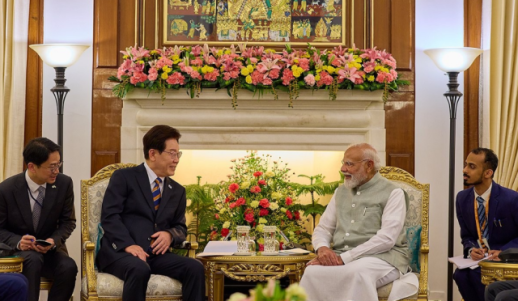 India: A Diverse Nation Poised for Growth and Strategic Partnerships Mark Twain (1835–1910), the great American author, recorded his impressions after traveling to India: "India is the cradle of humanity, the birthplace of human language, the mother of history, and the grandmother of legend, and the great-grandmother of tradition. The most valuable and instructive materials in human history are treasured only in India."Once regarded as a storehouse of civilization, India is now emerging as a new axis of growth that shakes the global economic order. It is the world's most populous country, the youngest economic giant, and simultaneously the most complex civilization.However, South Korea's perspective on India remains narrow. Many view it merely as a market for cheap labor, a vast consumer base, or a production hub to replace China. Yet, India is not a simple country; it is a continent, a civilization, and a world in itself. Therefore, the strategy for engaging with India should not be a short-term export plan but a long-term civilizational strategy spanning 30 years.Especially if the administration of President Lee Jae-myung is genuinely preparing for an Asian era, it must focus on cultivating Hindi experts at a national strategic level, rather than just English specialists. A generation that understands Hindi, Tamil, Bengali, and Marathi, in addition to Chinese and Japanese, is essential. Diplomacy begins with language, and trust starts with cultural understanding. The future with India will not be opened by interpreters but by people.The ancient Roman philosopher Seneca said, "To a person who does not know to which port he is sailing, no wind is favorable." South Korea now stands before that question: Where are we headed? Will we only seek a path between the United States and China, or will we design our future alongside India, a new axis of civilization?The 'I Ching' states, "The movement of heaven is vigorous; the superior man makes efforts unceasingly." This means that as the heavens move strongly, the noble man continuously trains himself. South Korea, facing the vast civilization of India, also needs this spirit. What is required is not impatience but sustainability, not short-term results but long-term strategies.The ancient Indian text 'Upanishads' states, "Only truth prevails. Falsehood never triumphs." This has become the root of the motto of the Republic of India: 'Satyameva Jayate.' Relationships between nations can only endure based on truth and trust.Understanding India's history is crucial to understanding its economy. India is not merely an emerging country; it is one of the oldest roots of human civilization. The Indus Valley Civilization, around 2500 BC, was already at the pinnacle of ancient civilization with urban planning and sewage systems. Following this, the formation of Vedic civilization and Hindu thought, the birth of Buddhism, the Maurya dynasty and the reign of Emperor Ashoka, and the golden age of the Gupta dynasty established India as a center of philosophy, religion, mathematics, and astronomy.The concepts of 'zero,' the decimal system, yoga, Buddhism, Upanishads, and Vedanta philosophy all originated in India. A significant axis of human intellectual history was created here.However, India's history is not only one of glory. Centuries of Islamic rule and subsequent British colonialism deeply shook Indian society. While the British left behind railways and administrative systems, they also instilled structures of division and poverty.After gaining independence in 1947, India, under the leadership of Mahatma Gandhi and Jawaharlal Nehru, embarked on a grand experiment in democracy. It became the country with the largest participation in democracy and the most complex electoral system.Post-independence, India was long tied to a socialist planned economy and protectionism, which slowed its growth. However, after economic reforms in 1991, the direction changed. Market liberalization, increased foreign investment, and the development of the information technology industry have shaped today's India.Now, India stands at another turning point. It sustains over 1.4 billion people while achieving food self-sufficiency and exporting agricultural products worth billions of dollars annually. The International Monetary Fund notes a growth rate of 6-7%. With the world's third-largest economy by purchasing power parity, India is a beneficiary of the restructuring of supply chains, becoming a new center of manufacturing. Viewing India merely as a populous nation misses the essence; today's India must be understood through the structural changes that drive its population.To understand India, one must first grasp its super-diversity. India is not a single nation but is closer to a 'federation of civilizations.' The constitution recognizes over 22 official languages, including Hindi and English, while hundreds of languages and dialects exist. The cultural sensibilities of the Hindi-speaking North and the Dravidian-speaking South are distinctly different.Religiously, India is complex. While Hinduism is the majority, the Muslim population ranks among the largest in the world, alongside Sikhism, Buddhism, Jainism, and Christianity. Although the remnants of the caste system are legally prohibited, they still operate in reality.The commercial acumen of Punjab, the entrepreneurial spirit of Gujarat, the intellectual traditions of Bengal, the manufacturing base of Tamil Nadu, the IT ecosystem of Karnataka, and the financial centrality of Maharashtra are all distinct. In India, it is more important to ask, "Which India do you know?" rather than simply stating, "I know India."Companies that ignore this diversity have mostly failed. A notable example is POSCO's steel plant project in Odisha. In 2005, POSCO initiated the construction of a large integrated steel mill in Odisha, marking the largest overseas investment by a South Korean company at the time. However, issues such as land acquisition, local opposition, environmental regulations, conflicts between the central and state governments, and political changes led to prolonged delays and ultimately resulted in failure.South Korean companies often think, "The contract is done, so the business is finished." However, in India, community trust lasts longer than contracts. Local communities are stronger than laws, and relationships matter more than speed.Walmart also faced significant challenges with regulations and distribution structures during its initial entry into India, while Vodafone suffered prolonged difficulties due to tax disputes. Nokia encountered issues with tax matters and policy changes.The common thread in these failures is the perception of India as a single market.Now, India must be viewed through a SWOT analysis.The strengths are overwhelming. First, India is young, with a median age of about 28. While South Korea, Japan, and China face aging populations, India possesses a robust working-age population. Second, its digital infrastructure is strong. The 'India Stack' has significantly improved financial accessibility and administrative efficiency through digital identity verification and payment systems. This is not just fintech; it is an innovation in national governance. Third, India has a framework of democracy and the rule of law, with institutional safeguards that, although slow, can change direction.Weaknesses are also evident. First, there is growth without employment. While the IT and service sectors are growing, there are not enough manufacturing jobs. Second, there is an education gap. Although there are many graduates, there is a lack of skilled workers ready for the industry. Third, inefficiencies in infrastructure and administration exist. Different regulations and tax systems across states exhaust foreign companies. Fourth, the remnants of the caste system and regional disparities create invisible social barriers that hinder productivity.Opportunities are clear. India is a key beneficiary of the 'China Plus One' strategy amid U.S.-China tensions. The movement of companies like Apple and Foxconn is symbolic. There is significant potential for collaboration with South Korea in sectors such as semiconductors, batteries, automotive, defense, shipbuilding, and energy.However, threats also exist. There are rising protectionism, political nationalism, religious conflicts, regional policy changes, and a slower-than-expected pace of reforms. India is always full of potential, but it is also difficult to predict.Thus, South Korea's strategy should not be "enter quickly" but rather "stay together for the long term." First, the government must cultivate Hindi experts as national strategic assets. It should systematically supply a pool of India specialists to the Ministry of Foreign Affairs, the Ministry of Trade, Industry and Energy, KOTRA, the Korea International Trade Association, and large corporations. This requires long-term projects at the university and national research institute level, rather than short-term training programs. Second, companies should not only focus on the capital, New Delhi, and the financial hub, Mumbai, but also develop state-level strategies. Tamil Nadu should focus on manufacturing, Karnataka on information technology, Gujarat on industrial infrastructure, and Telangana on advanced industries. Third, a model of joint growth is needed rather than simple investment. Projects in healthcare, education, vocational training, agricultural technology, smart cities, railways, and ports are crucial. India is not just a market for selling goods but a partner in nation-building. Fourth, a 30-year plan must be established. Trust cannot be built with India through policies that change with each administration. A long-term platform, such as a Korea-India Joint Future Committee, is necessary.The 'Doctrine of the Mean' states, "If you persist, you will shine; if you shine, you will go far." The 'Tao Te Ching' also states, "A great nation is like a low stream, a nation that accepts all waters." This means that a great nation does not dominate but flows low and accepts everything. India is such a nation. It is slow but deep, complex but enduring. India is not a fast nation, but it is a nation that lasts. South Korea is a fast nation, but sometimes it forgets too quickly.POSCO's failure was not a business failure but a failure of understanding. What is needed going forward is not capital but patience. Not contracts but friendship. The India that Mark Twain referred to as the great-grandmother of tradition is now transforming into the youngest economic giant. While India's per capita GDP remains low, the future is determined not by numbers but by direction.In 30 years, the order of Asia is likely to be rewritten around India. If South Korea wishes to remain not just a trading partner but a true friend, it must prepare now.India is not just a market. India is the future. 2026-04-29 07:25:14
 -
 KOSPI Hits Record High, South Korea Rises to No. 8 in Global Market Value ◆ Ajou Economy Top News ▷ Foreign and institutional investors flip from selling to buying; retail investors post record net selling of 14 trillion won - South Korea’s stock market, lifted by strength in AI-related semiconductor shares, moved ahead of the U.K. to rank eighth globally by market capitalization. - The KOSPI closed at 6,641.02, setting another all-time high after briefly topping 6,700 during the session. - Total market capitalization in South Korea rose to about 6,116 trillion won, up 53% from the end of last year. - Some brokerages cited the AI semiconductor-led rally and policy momentum in projecting the KOSPI could reach 7,000 to 8,000. ◆ Key Report ▷ Heungkuk Securities: Hyundai Steel outlook improves; target price raised - Heungkuk Securities kept its “buy” rating on Hyundai Steel and raised its target price to 55,000 won. - The company’s first-quarter results missed expectations, with revenue of 5.7397 trillion won and operating profit of 15.7 billion won, but higher sales volume confirmed a recovery in demand. - The brokerage said improved steel scrap prices, subsidiary performance and one-off gains helped cushion consolidated profitability. - It forecast results would continue improving from the second quarter, reflecting higher prices in China, better supply-demand conditions and the impact of price increases. ◆ Major filings after the close (28th) ▷ CrowdWorks: 1 billion won paid-in capital increase ▷ Aptochrom: 12 billion won paid-in capital increase ▷ GemVax: additional purchase of Korea Stem Cell Bank shares worth 12.4 billion won ▷ KBI Metal: acquisition of Wonyoung Hitech shares, raising stake to 100% ▷ SK Bioscience: share buyback worth 17.1 billion won ▷ NC: provides 21.8 billion won worth of treasury shares to employees ◆ Fund flows (as of the 27th, excluding ETFs) Domestic equity funds: 132 billion won Overseas equity funds: -5.7 billion won ◆ Key events today (Wed.) Eurozone: M3 (March), corporate loans (March), consumer confidence (April) United States: durable goods orders (March), housing starts and permits (March), remarks by Federal Reserve Chair Powell * This article has been translated by AI. 2026-04-29 06:54:24
 -
 Korea’s March Public Offerings Rise 3.8% as Short-Term and Structured Finance Lead Public offerings expanded across equities, corporate bonds and short-term funding in March, but the mix tilted further toward short-term and structured financing rather than long-term funding. According to the Financial Supervisory Service’s report released on the 29th on companies’ direct financing results for March 2026, total public issuance came to 19.9832 trillion won, up 3.8% from the previous month. Public issuance of equities and corporate bonds combined rose by 733.5 billion won from a month earlier. Equity issuance totaled 440.2 billion won, up 28.9%. Initial public offerings raised 210.4 billion won, down 27.6%, while paid-in capital increases surged 353.3% to 229.8 billion won, driving the overall gain. The number of IPOs increased, but the amount raised fell, while rights offerings emerged as the main funding channel. Corporate bond issuance totaled 19.5430 trillion won, up 3.4%, though components moved in different directions. Straight corporate bonds fell 6.5% to 4.7810 trillion won. Financial bonds and asset-backed securities increased, lifting the overall total. ABS issuance jumped 208.7% from the previous month to 1.3196 trillion won. The March market was marked by weaker long-term issuance and stronger structured and short-term funding. For straight corporate bonds, refinancing accounted for 85.6% of issuance, indicating companies largely rolled over existing debt rather than funding new investment. Issuance also concentrated in higher-rated paper, with 98.5% rated A or above. In the ABS market, structured financing expanded rapidly. P-CBO issuance surged 3,166.3%, and issuance backed by financial companies’ underlying assets rose 1,269.5%, pointing to growing use of credit-enhanced structures rather than plain-vanilla bond sales. Short-term markets grew even faster. Combined issuance of commercial paper and short-term bonds reached 200.4738 trillion won, up 25.6%. CP issuance rose 23.5% and short-term bonds increased 26.3%, underscoring a shift in funding strategy toward shorter maturities. Kim Eun-gi, an analyst at Samsung Securities, said April is a heavy redemption period, with 10.7 trillion won of straight corporate bonds maturing, excluding the first quarter. “Even so, corporate bond issuance yields are forming at levels higher than in February, when net redemptions were large, and as the U.S.-Iran situation drags on, volatility in government bond yields is also increasing, creating an atmosphere in which companies are delaying corporate bond issuance,” he said. He added that, unlike past crisis periods, CP yields are staying low, keeping short-term funding conditions favorable. “As the rate advantage of CP and CD over corporate bond yields has grown, companies are likely to make up funding shortfalls from net corporate bond redemptions with CP or bank loans,” Kim said.* This article has been translated by AI. 2026-04-29 06:46:36
 -
 UAE to Quit OPEC and OPEC+ on May 1, Calling It a Sovereign Decision The United Arab Emirates said it will withdraw from the Organization of the Petroleum Exporting Countries, or OPEC, and the OPEC+ alliance. Reuters and other outlets reported that the UAE Energy Ministry announced on April 28 (local time) that it will leave OPEC and OPEC+ on May 1, citing a commitment to “effectively contribute to meeting national interests and the market’s urgent needs.” According to the report, the ministry said short-term volatility — including disruptions in the Arabian Gulf and the Strait of Hormuz — continues to affect supply dynamics, but underlying trends point to sustained growth in global energy demand over the medium to long term. It added that the UAE will gradually increase crude oil production. Energy Minister Mohammed al-Mazroui told Reuters the move was a “sovereign national decision” based on the UAE’s strategic and economic vision. He cited an “unprecedented situation” in which strategic crude stockpiles are being depleted to serious levels, saying that while the UAE has long been a member of OPEC and OPEC+, the world will need more energy in the future. He said the UAE judged this to be the right time to consider such a policy decision. Asked whether the UAE consulted Saudi Arabia, which leads OPEC, al-Mazroui said it did not directly consult anyone in making the decision. He said the move is unlikely to have a major impact on the market given conditions around the Strait of Hormuz. Still, some have raised concerns that the UAE’s exit could weaken OPEC’s ability to manage the market and increase oil price volatility. * This article has been translated by AI. 2026-04-29 06:27:17
 -
 South Korea launches third cohort of nuclear export program for small and midsize firms South Korea’s Ministry of Trade, Industry and Energy said it held a launch ceremony Tuesday at the Changwon Convention Center for the third cohort of its “first-step” export program for small and midsize nuclear power companies. The event was attended by Kang Gam-chan, the ministry’s director general for trade and investment, Kim Myeong-ju, South Gyeongsang Province’s vice governor for economic affairs, and representatives from related organizations including the Nuclear Export Industry Association, Korea Hydro & Nuclear Power, the Korea Trade-Investment Promotion Agency, and the Korea Trade Insurance Corp. The ministry also held a meeting with nuclear companies to discuss ways to boost exports of equipment and components. The ministry said it has supported exports of nuclear equipment through multiple channels. Through the “first-step” program, it selected 37 early-stage exporters and provided end-to-end assistance, from consulting to financing, certification and marketing. The ministry noted that the global nuclear supply-chain market is shifting rapidly as electricity demand rises with growth in the artificial intelligence industry and the expansion of data centers, prompting calls to adjust government support strategies. It said it is reviewing steps to strengthen its export support system and provide tailored assistance based on the characteristics of new markets. “Amid the global expansion of nuclear power, opportunities for our companies to take the lead in new markets are becoming real,” Kang said. “The government will provide broad support so domestic companies can turn this trend into opportunity, including winning orders for new nuclear plants and entering overseas supply chains.”* This article has been translated by AI. 2026-04-29 06:03:16
 -
 Epson Korea Expands Total Labeling Solutions From Home Use to Industrial Safety Epson Korea’s dedicated label-printer brand, “Namer,” launched late last year, is gaining rapid traction about four months after its debut, reshaping the home labeler market, industry officials said. The product is being used not only for organizing but also for personalizing diaries and other lifestyle uses. According to the industry on April 28, Namer is built around the concept, “Build my world with my own name,” and is positioned as a platform for expressing personal taste rather than a basic label-printing tool. The company said the approach reflects a consumer trend that treats organizing as a hobby tied to improving one’s personal space. Epson Korea has worked with popular character intellectual property, including Disney and Sanrio, drawing interest from younger consumers and homemakers. Through its brand webzine, “Namer Magazine,” it also shares labeling trends and practical ideas, building an archive so users can enjoy labels in a wider range of styles. The company is also expanding into business-to-business demand, citing growing needs for identification and safety in construction and manufacturing sites. It recently partnered with global power-tool brand Milwaukee to introduce a professional package called “Precise Power,” combining power tools with a durable labeling solution to help workers manage materials and equipment systematically. Growth is also evident in distribution and logistics, where on-demand printing is used for product information labels, price tags, shipping invoices and receipts. Epson Korea said printing as needed can reduce the burden of holding preprinted inventory and allow faster responses to changing work requirements. A company official said label printers have become tools for self-expression in daily life and “a core solution” for protecting efficiency and safety in industrial settings. The official said Epson Korea will continue brand collaborations so labeling technology can create new value connecting personal life and business workplaces. 2026-04-29 05:03:17
 -
 LIV Golf CEO Scott O’Neil says Busan event will blend golf and entertainment LIV Golf, launched in 2022 and backed by Saudi Arabia’s Public Investment Fund, has sought to reshape the sport by pairing competition with entertainment. The effort is led by CEO Scott O’Neil, a sports marketing executive who took the job in January last year. LIV Golf will return to South Korea this year with its second event in the country. After holding its first Korea tournament last year in Songdo, Incheon, the tour will stage “LIV Golf Korea 2026” from May 28 to 31 at Busan Asiad Country Club in Gijang, Busan. This outlet met O’Neil on April 27 at Busan Asiad Country Club. He said LIV’s strategy is to use entertainment to bring new audiences to golf. ◆Putting entertainment on the course O’Neil previously led Harris Blitzer Sports & Entertainment, the parent company of the NBA’s Philadelphia 76ers and the NHL’s New Jersey Devils, and most recently served as CEO of Merlin Entertainments. He said LIV aims for a more energetic atmosphere than traditional tournaments, with music playing throughout and fans encouraged to react. “The average age of people watching golf on TV or attending tournaments is getting older by about one year every year,” O’Neil said. “If we want this sport to keep developing and growing, we need clear change. We have to bring younger generations to the course by blending culture — music, fashion, art.” He said he became convinced of entertainment’s pull after seeing the scale of fan turnout for BTS at a major U.S. venue he once managed. O’Neil pointed to Australia as an example of LIV’s impact. “After we held the event in Australia, golf participation among girls ages 8 to 16 increased by 200%,” he said. He added that waiting lists at some courses have stretched to three years, and that 40% of new members are under 35. “Our mission is to bring new life to golf by bringing in younger fans through entertainment.” ◆A ‘party’ atmosphere and a 4:35 round At a news conference the same day, O’Neil highlighted LIV’s shotgun starts, with all players beginning simultaneously across 18 holes. “A LIV round is more than an hour shorter than other tours,” he said. “Teenagers today don’t have long attention spans. A match that ends in 4 hours 35 minutes is a much more effective and attractive TV entertainment product than something that drags on for 11 hours.” LIV said its events have drawn large crowds, including 115,000 spectators in Australia, about 100,000 in South Africa, about 65,000 in the United Kingdom and about 60,000 in the United States. O’Neil said last year’s Korea event also showed signs of reaching new audiences. “Sixty percent of the gallery in Korea last year were first-time golf tournament attendees, and 40% of the total crowd were women,” he said. For Busan, he said he wants a festival-like setting. “What I want to bring to Korea is a perfect ‘party,’” O’Neil said. “Not a quiet tournament that demands silence, but a stage full of energy and passion where the gallery cheers loudly.” He cited last year’s South Africa event, where fans sang their national anthem together on the 18th green, and said he hopes to see a similar moment in Busan. Questions have been raised in some quarters about LIV’s long-term sustainability given its spending, and some foreign media have recently reported speculation about financial strain. O’Neil rejected that. “We have already secured enough funding to operate the 2026 season,” he said, adding that sponsorship from major partners has grown to about $500 million. LIV said this year’s revenue increased by $100 million from the previous year and global ticket sales jumped 129%. ◆Korean GC set for home debut With about a month to go before the Busan event, LIV will also feature the first home appearance for Korean Golf Club, a team newly made up entirely of South Korean players. The team changed its name from Iron Head GC and adopted a white tiger emblem symbolizing strength in Korea. The roster includes captain An Byeong-hun along with Kim Min-kyu, Song Yeong-han and Danny Lee. At a media day, O’Neil said the Korean GC players have “excellent star power, character and the persistence Koreans are known for,” and predicted they would perform strongly with home fans behind them in Busan. Top players are also expected to contend, including defending Korea champion Bryson DeChambeau, Jon Rahm, Dustin Johnson, Joaquin Niemann and Cameron Smith. 2026-04-29 00:03:34
 -
 Police Dismiss Complaint Alleging COVID-19 Vaccine Mismanagement by Moon, Jeong Eun-kyeong Police said Monday they dismissed a complaint alleging mishandling of COVID-19 vaccines against Moon Jae-in and Health and Welfare Minister Jeong Eun-kyeong. Seoul’s Yeongdeungpo Police Station said it decided on April 1 to dismiss the case filed against Moon, Jeong and former Health and Welfare Minister Kwon Deok-cheol. The complaint accused them of abuse of authority, dereliction of duty, violating the Pharmaceutical Affairs Act, fraud and murder. The civic group Seomin Minseang Daechaek Committee had filed the complaint with the Seoul Metropolitan Police Agency, alleging that during the pandemic, vaccinations using doses with the same lot number were not immediately halted even after reports of foreign substances in vaccines were received. The case was assigned to Yeongdeungpo police. Gangnam Police Station is separately investigating another complaint accusing Moon and Jeong of dereliction of duty and occupational negligent homicide. Police said they completed questioning of the complainant on April 2.* This article has been translated by AI. 2026-04-28 21:57:16