

Journalist

Imran Khalid
-
 SKC posts 28.7 billion won Q1 operating loss, narrows deficit 73% from a year earlier SKC remained in the red in the first quarter of 2026, but improved results across its battery, semiconductor and chemical materials businesses helped it return to positive EBITDA, a measure of cash-generating ability. In a regulatory filing on Sunday, SKC said it posted consolidated revenue of 496.6 billion won and an operating loss of 28.7 billion won for the quarter. The operating loss narrowed 73.3% from the previous quarter’s 107.6 billion won. EBITDA came to 10.0 billion won, marking its first quarterly EBITDA profit in 10 quarters. By business, the secondary battery materials unit reported revenue of 156.9 billion won, showing sharp growth from both the prior quarter and a year earlier. North American copper foil sales volume rose 95% from the previous quarter, while sales volume for energy storage systems, or ESS, jumped 132%, the company said. Productivity improved at its Malaysia plant, and the Malaysian unit posted positive quarterly EBITDA, signaling a broader recovery in profitability. The semiconductor materials business posted revenue of 68.3 billion won and operating profit of 23.6 billion won. SKC said a profitability-focused restructuring accelerated, lifting the operating margin to 34.5% and setting a quarterly record for operating profit. The company cited stronger demand tied to AI data centers and higher sales of memory-related products, along with a larger share of high value-added items. The chemical business recorded revenue of 270.8 billion won and operating profit of 9.6 billion won, returning to profit from the previous quarter. SKC attributed the improvement to supply-demand instability linked to geopolitical issues in the Middle East and to expanded sales of high value-added propylene glycol, or PG. In its glass substrate business, SKC said it is building out its production base step by step by improving product design completeness and upgrading manufacturing data management and operating systems. In the second quarter, it plans to produce samples for reliability testing and review new projects under discussion with multiple customers. SKC said it expects profitability improvements to accelerate in the second quarter. In battery materials, it sees revenue growth from expanded ESS sales and from major customers’ new lines moving into full operation. The company also said its Malaysia plant is entering a full-capacity operating system, targeting a production and sales share of more than 70%. In semiconductor materials, it plans investment to expand its first plant in Vietnam and build a second plant there. SKC said it is also moving ahead smoothly with a rights offering aimed at speeding up its glass substrate business and improving its financial structure. In a recent demand survey for an employee stock ownership subscription, demand reached 132% of the allocated amount, it said. “Achieving positive EBITDA in the first quarter confirms the recovery of the core competitiveness of our main businesses,” an SKC official said. The official said the company expects gradual performance improvement under a management focus on cash generation and profitability, and will complete the ongoing rights offering successfully.* This article has been translated by AI. 2026-04-27 13:58:16
 -
 KOSME, KT&G Sign Deal to Support Youth Startups and Boost Local Economies The Korea SMEs and Startups Agency and KT&G signed a business agreement on April 24 at KT&G Sangsang Planet in Seoul's Seongdong district to expand social contributions and promote shared growth with local communities. KOSME said on April 27 the two organizations agreed to cooperate in several areas, including promoting local spending and revitalizing regional economies, carrying out community-focused social contribution programs, fostering youth-led startups, and strengthening young people's capabilities through cultural events and education. The partners plan to link KOSME's Youth Startup Academy with KT&G's Sangsang Startup Camp to build a support base for young entrepreneurs from the preparation stage through commercialization. They also will jointly run market-access events, including flea markets, to help energize local communities. As part of the agreement, KOSME held a youth-focused talk concert titled "Youth, Play" on April 26 at KT&G Sangsang Planet. The event was designed to ease young people's uncertainty about career paths and the burden of starting a business, while sharing examples of career changes and encouraging new challenges. KOSME Chairman Kang Seok-jin said the agency will broaden opportunities for young people through cooperation with the private sector and will continue to support shared growth with local communities and the development of youth entrepreneurship.* This article has been translated by AI. 2026-04-27 13:45:15
 -
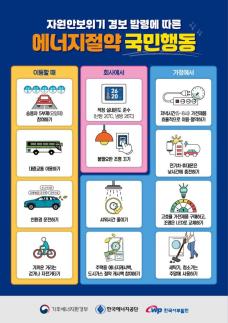 Korea Western Power Expands Campaign to Cut Evening Peak Electricity Use Korea Western Power Co. has launched an energy-saving campaign aimed at reducing electricity use during the evening hours when demand peaks, citing the need to respond to an energy security crisis linked to the Middle East. The company said on the 27th that it will continue the campaign for employees and local residents and operate a companywide task force dedicated to cutting energy use until the resource security crisis ends. The campaign is part of the Ministry of Climate, Energy and Environment and related agencies’ “Today’s Energy Saving National Action Relay” promotion. According to the Korea Energy Agency, from 5 p.m. to 8 p.m., when power demand is concentrated, higher-cost liquefied natural gas generation runs at maximum output. Simply avoiding electricity use during those hours can support the government’s energy-saving policy, the agency said. Korea Western Power is advising households to charge electric vehicles and smartphones, when possible, during daytime hours when solar power is produced, and to avoid using relatively high-consumption appliances such as electric kettles and irons between 5 p.m. and 8 p.m. The company said it has distributed promotional materials with everyday energy-saving tips around its headquarters and worksites nationwide. It also delivered reusable aprons to restaurants and other local businesses as part of efforts to encourage environmentally friendly consumption. Internally, the company has implemented stricter measures. Since March 23, it has used only half of its building lighting, turned off power-hungry electronic signboards, and tightly controlled heating and cooling settings. It is also reducing business trips, encouraging video meetings, restricting elevator use, and strengthening enforcement of an every-other-day private vehicle policy, it said. Chief Executive Officer Lee Jeong-bok said “the starting point for overcoming the energy security crisis is small actions in daily life,” adding that the company will carry out strong conservation steps and pursue a campaign that works more closely with local communities.* This article has been translated by AI. 2026-04-27 13:39:16
 -
 LG Innotek Posts Record First-Quarter Revenue of 5.53 Trillion Won LG Innotek said Monday its first-quarter operating profit was provisionally tallied at 295.3 billion won, up 136% from a year earlier. Revenue rose 11.1% to 5.5348 trillion won, the company’s highest first-quarter figure on record. The company said demand for mobile camera modules remained solid despite the seasonal off-peak period, while shipments of high value-added semiconductor substrates such as FC-BGA continued to be strong. It added that mobility components, including automotive camera and lighting modules, also posted steady growth and helped lift sales. By business line, the optical solutions unit posted revenue of 4.6106 trillion won, up 11.4% from a year earlier and a first-quarter record, as demand for mobile camera modules increased and automotive camera sales improved quickly. The package solutions unit recorded 437.1 billion won in revenue, up 16%. The company cited strong supply of high value-added communications substrates such as RF-SiP and continued expansion of FC-CSP supply into new applications, including high-performance memory. The mobility solutions unit posted revenue of 487.1 billion won, up 4.2%. The division had an order backlog of 19.2 trillion won as of the end of last year and plans to actively expand new orders this year, led by autonomous driving solutions. LG Innotek said it plans to strengthen its portfolio of high-profit businesses, focusing on expanding the package solutions business, which it described as having strong profitability and growth potential. The company said it aims to raise the package solutions unit’s contribution to operating profit to the level of the optical solutions business within five years. CEO Moon Hyuk-soo said in March that the mobility solutions business would continue to grow as revenue from automotive AP modules begins to materialize in earnest from the fourth quarter. * This article has been translated by AI. 2026-04-27 13:30:15
 -
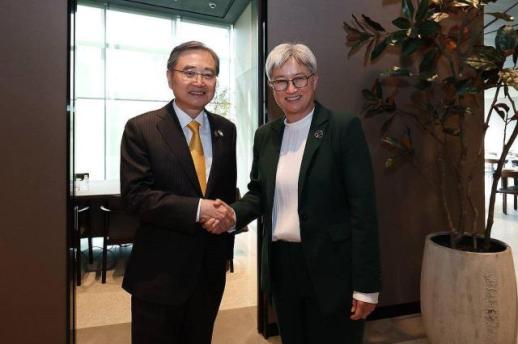 S. Korea pursues Australian energy lifeline as Middle East conflict chokes supply lanes SEOUL, April 27 (AJP) - In a bid to exit the current energy bottleneck caused by the war in the Middle East and diversify the country's energy sources, South Korea's foreign minister Cho Hyun will host his Australian counterpart, Penny Wong, in Seoul this Thursday. The April 30 summit comes as Seoul grapples with the fallout of the war in Iran and the subsequent closure of the Strait of Hormuz, a blockade that has effectively stranded the fossil fuels required to power the world's tenth-largest economy. According to February's trade data, Australia has already solidified its position as South Korea's top supplier of liquefied natural gas, providing 1,085,668 tons, representing 24.1 percent of the nation's total imports, even before the traditional supply lines from the Persian Gulf were paralyzed on February 28. The upcoming talks represent the structural component of a "Total Energy Diplomacy" offensive by the Lee Jae Myung administration to protect an economy that remains 100 percent dependent on foreign fossil fuels. By elevating Australia from a commercial provider to a primary security guarantor, Seoul is attempting to permanently decouple its industrial survival from the volatility of the Middle East. This strategic shift marks a transition from simple market diversification to the construction of a blockade-proof energy corridor within the democratic Pacific. This diplomatic push is coordinated with an emergency procurement drive led by the Presidential Chief of Staff Kang Hoon-sik. While Cho builds a long-term Pacific safety net, Kang Hoon-sik recently concluded a series of missions to the United Arab Emirates, Saudi Arabia, Kazakhstan, and Oman to secure immediate industrial lifelines. Kang's "shuttle diplomacy" focused on the urgent acquisition of crude and naphtha, successfully negotiating a priority supply of 24 million barrels from the Emirates to address critical shortages. The April 30 meeting is intended to complement these emergency measures by securing the long-term reliability of the Australian supply chain. The trade partnership between the two nations has evolved from a historical exchange of Australian iron ore and coal for South Korean heavy industry into a broader strategic alliance. As the "Hormuz Trap" threatens the national power grid, Australian gas has increasingly displaced volumes from more volatile regions, with the two nations now exploring expanded cooperation in critical minerals such as lithium and nickel. These resources are viewed as essential for the next generation of industrial growth as the government seeks to mitigate future shocks to the fossil fuel supply chain. The Ministry of Foreign Affairs confirmed on Monday that the two ministers will discuss high-level exchanges, economic security, and defense industrial cooperation. The session is expected to conclude with a joint press conference following a working dinner. 2026-04-27 13:28:12
 -
 Survey: 56% of South Korean Women Prefer Family Trips, Prioritizing Time and Convenience Ahead of South Korea’s May “Family Month,” a Trip.com analysis found that more than half of South Korean women travelers are planning family trips, with many prioritizing time savings and easier logistics over simply cutting costs. Global travel platform Trip.com released its “Family Travel Insights” report on the 27th, analyzing trends among women travelers worldwide. The report said family travel was the most preferred option globally, and the preference was especially pronounced in South Korea, where 56% of women surveyed chose family travel. ◆ Willing to pay more for efficiency and convenience The share of family travelers choosing independent travel (FIT), rather than package tours, has been rising, Trip.com said. But that shift has also increased the burden of planning and managing itineraries. In the preparation stage for trips with children, respondents cited the greatest fatigue from planning daily schedules and packing (38%), meal planning (36%) and arranging child-friendly attractions and activities (30%). During the trip, the biggest stressor was flight and layover time (35%), followed by choosing meals (33%) and adjusting schedules and travel pace (31%). As a result, Trip.com said South Korean family travelers are more willing to spend to reduce inconvenience. Women traveling with children showed strong willingness to pay extra for services that ease the process, including assigning family seats together on flights (24%), family package passes for attractions (22%) and fast-track tickets (18%). ◆ Family travel preferences vary by destination Trip.com said choices of accommodations and attractions have also shifted to family-centered criteria. For lodging, respondents prioritized family-friendly meal options (36%), ample space (35%) and children’s activities (33%). For attractions, they cited safety standards (42%), value for money (36%) and whether fast-track entry is available (27%). While the overall preference for family travel was similar globally, Trip.com said styles differed by region. Europe favored all-inclusive packages, while Japan emphasized travel convenience such as nonstop flights and securing family seating. Singapore prioritized flexible schedules and child-focused activities, and Thailand placed greater weight on an overall family-friendly experience, from meals to facilities. Trip.com said it is expanding family-focused services, including providing personalized itineraries and budget information through its AI-based travel assistant, “TripGenie.” “As demand for family travel rises worldwide, the value of shared experiences is growing,” said Hong Jong-min, head of Trip.com’s Korea branch. He said the company will continue expanding services that reduce the burden across the entire travel process and improve satisfaction.* This article has been translated by AI. 2026-04-27 13:25:14
 -
 KEPCO Names Kim Jae-gun as Executive Director, Power Grid Division Chief Korea Electric Power Corp. said it held an extraordinary shareholders meeting on the 27th at its headquarters in Naju, South Jeolla Province, and appointed Kim Jae-gun, former head of KEPCO’s Busan-Ulsan headquarters, as an executive director and head of its Power Grid Division, a vice president-level post. Kim graduated from Sudoteonki Technical High School and the electrical engineering department at Kyungil University, and joined KEPCO in 1986. He later served as head of the Daegu-Gyeongbuk Construction Branch, director of the power management office at the Daegu headquarters, head of the New Transmission Projects Office, and head of the Busan-Ulsan headquarters. KEPCO said Kim successfully completed the country’s first voltage-source high-voltage direct current (HVDC) transmission construction project linking the mainland and Jeju Island. The company said it expects him to help deliver timely construction of the future power grid, drawing on his expertise in new transmission and his field experience across power network construction and operations.* This article has been translated by AI. 2026-04-27 13:18:15
 -
 SK hynix Tops 1.3 Million Won, Hits Record High on HBM Demand Hopes SK hynix shares climbed past the 1.3 million won mark during trading, setting another all-time high as expectations grew for stronger demand for high-bandwidth memory, or HBM, driven by expanding artificial intelligence chip demand. According to the Korea Exchange, SK hynix was trading at 1,312,000 won as of 1:01 p.m., up 90,000 won, or 7.36%, from the previous session. Its market capitalization also expanded to about 935 trillion won, increasing its influence in the local stock market. Analysts cited expectations of rising HBM demand as AI server investment increases. With global big tech companies led by Nvidia continuing to invest in AI infrastructure, SK hynix is seen as a key beneficiary given its leading position in the HBM market. Samsung Electronics also rose, gaining 5,750 won, or 2.62%, to 225,250 won at the same time. The broader group of heavyweight chip stocks was moving higher, with Samsung’s market capitalization at about 1,316 trillion won. Investor sentiment was also supported by gains in the semiconductor sector on Wall Street in the final trading session last week. The Philadelphia Semiconductor Index jumped 4.32% on April 24 local time, reflecting expectations of stronger central processing unit demand tied to wider AI adoption and a first-quarter earnings report from Intel that beat market expectations. * This article has been translated by AI. 2026-04-27 13:06:15
 -
 National Assembly Speaker Woo urges vote on constitutional amendment, warns PPP of blame if it fails National Assembly Speaker Woo Won-shik on April 27 urged lawmakers to pass a proposed constitutional amendment that is set for a vote May 7, the first such vote in 39 years, calling it an effort to “fix an outdated Constitution and move toward the future.” He also warned the People Power Party, which has adopted opposition to the amendment as its party line, that it would bear responsibility if the measure fails. Speaking to reporters at the National Assembly, Woo said provisions in the proposal have broad public support, including language to carry on the spirit of the Bu-Ma Democratic Protests and the May 18 democratization movement, stronger National Assembly control over martial law, and a clause specifying balanced regional development. “This amendment is about fixing an outdated Constitution and opening the door to reform for the country’s future,” Woo said. “If it fails this time, we don’t know when it will succeed again,” he added, urging lawmakers to participate. Woo criticized the People Power Party for deciding as a party to oppose the amendment and for not attending a joint meeting. The party, led by Chairman Jang Dong-hyeok, has maintained its stance and has signaled it may boycott the vote. “If the People Power Party blocks the amendment as a party line and it is defeated, then the People Power Party must also take all responsibility,” Woo said. He added that joining the effort would be a way for the party to “move beyond insurrection and be reborn as a healthy conservative party,” and urged it to show courage, saying he believed it would serve the public. Woo said he plans to request meetings with Jang and floor leader Song Eon-seok to seek the party’s participation, while arguing that support for the amendment is growing within the party. “I am willing to meet the People Power Party leadership at any time. I plan to request talks with Chairman Jang and Floor Leader Song,” Woo said. He also claimed that several lawmakers, including Rep. Kim Yong-tae, have expressed support for the need for constitutional reform. Woo has repeatedly signaled his determination to complete the amendment. At a New Year’s news conference in February, he said passing it during his remaining term would be a key priority and announced a goal of handling it alongside the upcoming 6·3 local elections. Six parties, including negotiating and non-negotiating blocs, have jointly introduced the amendment with Woo. The People Power Party, however, has publicly declared opposition, saying an amendment pushed through while “trampling” the opposition would be “dictatorship.” With no clear shift in its position, the outlook for passage remains uncertain. 2026-04-27 12:42:17
 -
 Beijing to Ban Consumer Drones in May, Forcing DJI to Pull Products From Stores Beijing will impose an unprecedented ban on consumer drones starting in May, a move expected to hit the commercial drone industry hard. Local media outlets including IT Zhijia reported that the measure will require DJI, China’s leading drone maker, to remove all drone products from its Beijing stores beginning next month. Beijing consumers will no longer be able to buy drones either in physical shops or through e-commerce platforms. After-sales service for drones already owned will also become difficult. DJI said Beijing customers seeking repairs must ship products by courier to the company’s headquarters, then have the repaired items delivered to an address outside Beijing and bring them back themselves. With new demand dropping sharply, drone sales at some DJI stores have fallen by nearly 50% over the past two months, according to reports. As consumers also move to sell drones they already own amid worries about tighter flight restrictions, listings on secondhand platforms have surged and used prices have been falling. Beijing introduced the tougher rules in late March through its “Regulations on the Administration of Unmanned Aircraft,” effectively banning the sale, transport, entry and flight of consumer drones. The city designated all areas as controlled airspace and made prior approval mandatory for all outdoor flights. It also banned the entry and transport of drones and key components. An exception is allowed only for drones already owned, after real-name registration and information verification, when they are taken out of the city and later brought back in. Some observers have raised the possibility that similar restrictions could expand to major cities such as Shanghai and Guangzhou. There are differing interpretations of the rationale. Lianhe Zaobao reported that as drones have taken on a larger military role in the Russia-Ukraine war and conflicts in the Middle East, China views the issue as directly tied to national security. Another view is that the move is preparatory work to develop the “low-altitude economy,” a strategic emerging industry promoted by the Chinese government that includes drone taxis, drone deliveries and urban air mobility. In an interview with The New York Times, Remo, head of a research center at the Hong Kong University of Science and Technology, said it was like “tidying the living room before welcoming guests,” describing it as a process of organizing airspace first for the low-altitude economy. China is considered the world’s largest commercial drone market. The China Industry Research Institute said last year’s market was about 50.2 billion yuan, about 50% growth from 2020. Registered commercial drones topped 3 million, up 50% from a year earlier. But rapid growth has been accompanied by worsening problems with unlicensed flights. Near the Shanghai World Financial Center, about 66 drone crash incidents occurred over the past three years, and in August last year two drones collided at an altitude of 400 meters. China has continued tightening enforcement against unauthorized drone flights. Starting in January, illegal flights were defined as violations of public security, allowing criminal penalties including up to 15 days’ detention. China’s Ministry of State Security has also warned that if a flight threatens public safety and causes serious consequences, punishment could include more than 10 years in prison, life imprisonment or the death penalty. * This article has been translated by AI. 2026-04-27 12:33:19