

Journalist

Imran Khalid
-
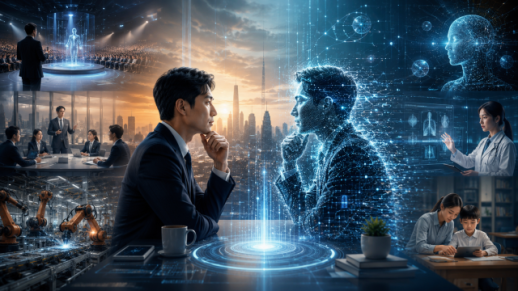 AJP Focus: The day the market crowned memory — and why Korea must not mistake the jackpot for the journey SEOUL, May 28 (AJP) - May 27, 2026, is likely to be recorded as a turning point in the history of both global capital markets and the artificial-intelligence industry. The day's gains were not merely another rally in technology shares. They were a symbolic demonstration of where industrial power now resides in the age of AI, of what determines national competitiveness in the twenty-first century, and of how strong companies, strong markets and strong economies form a single virtuous cycle. The roster of the world's fifteen most valuable listed companies had itself become a map of the global economy. Nvidia stood at the top at $5.4 trillion, followed by Alphabet at $4.6 trillion, Apple at $4.5 trillion, Microsoft at $3.1 trillion and Amazon at $2.9 trillion. Taiwan's TSMC followed at $2 trillion, Broadcom at $1.8 trillion, Saudi Arabia's Aramco at $1.7 trillion, and Tesla and Meta at $1.5 trillion each. And in the next tier, South Korea's Samsung Electronics, at $1.35 trillion, and SK hynix, at $1.06 trillion, stood shoulder to shoulder with the world's leading firms. Berkshire Hathaway at $1.04 trillion, Micron at $1.01 trillion and Eli Lilly at $950 billion rounded out the top fifteen. (The figures represent a single day's snapshot; intraday, SK hynix rose higher still.) These figures are not a mere sum of share prices. They are the clearest evidence that the axis of the world economy is shifting decisively away from oil, automobiles, traditional finance and manufacturing toward AI and semiconductors, platforms and data, biotechnology and advanced technology. The most historic scene of the day was the simultaneous entry of the three memory-chip makers into the trillion-dollar club. SK hynix rose to roughly 1,680 trillion won intraday, about $1.12 trillion at its peak, crossing the threshold decisively for the first time, and in that moment Samsung Electronics, SK hynix and Micron Technology — the world's three memory makers — stood together in the trillion-dollar range. It was the first time this had occurred in the history of the world's equity markets. Memory chips were long regarded as a cyclical industry, one in which prices soared in booms and collapsed as soon as supply expanded. The arrival of the AI era changed the meaning of memory. It is no longer a simple storage device but the memory of AI itself. Hyperscale AI models must read, write and learn from vast quantities of data simultaneously, and that requires high-bandwidth memory, or HBM, of a wholly different order than conventional DRAM. If Nvidia designs the brain of AI, then Samsung Electronics, SK hynix and Micron are the companies that supply the memory and speed that allow that brain to function. For that reason, the market has begun to stop viewing the memory industry as the simple cyclical business of the past. May 27 was the day the world's markets formally confirmed that the winners of the AI era are not only the platform companies but the memory-chip makers as well. The day carried a second historic meaning: South Korea became the second nation in the world, after the United States, to hold two trillion-dollar companies at once. With Samsung Electronics and SK hynix entering the trillion-dollar club together, Korea has risen from a catch-up manufacturing nation to a capital-market power holding two of the AI era's core strategic firms. It matters, too, that a substantial portion of the non-U.S. trillion-dollar giants are now Korean companies. Taiwan, for all the weight of TSMC, holds only one such firm; Saudi Arabia's Aramco stands alone as an energy colossus; and while the big-technology firms of Europe and the United States still dominate world markets, no other nation outside the United States now holds two trillion-dollar companies at once. Yet Korea's possession of two ultra-large semiconductor companies signifies something beyond a rise in corporate value: it means the standing of the Korean economy itself is changing. That the combined market value of Samsung Electronics' common and preferred shares has surpassed 2,000 trillion won is an unprecedented record in the history of Korea's capital market. It is a symbol not merely of one company's success but of the entire Korean economy ascending onto the core axis of the world economy — AI, semiconductors and advanced memory. This historic moment, however, should not be read with celebration alone. It is true that strong companies make strong markets, and strong markets in turn make strong economies. But for that to become genuine truth, the capital market must function not as a mere arena for speculation but as a national artery supplying funds to future industries. A securities market is not simply an exchange for buying and selling shares. It is core infrastructure that allocates a nation's capital efficiently and channels funds into future growth industries. Where a securities market is developed, companies need not depend solely on bank lending but can raise large sums through equity and bond issuance. That capital flows into research and development, capital expenditure, mergers and acquisitions, and overseas expansion, raising corporate competitiveness and productivity. Future industries such as AI, semiconductors, biotechnology and aerospace all require enormous capital. A developed capital market supplies funds to companies with high growth potential, and those companies in turn generate innovation and build new industrial ecosystems. The United States grew into the world's largest economy not on military power and the dollar alone. Behind it stood a powerful capital market that raised Apple and Microsoft, Nvidia and Amazon. Korea, too, must build a virtuous cycle, centered on Samsung Electronics and SK hynix, in which the capital market and industrial competitiveness reinforce one another. The current ranking of the world's equity markets makes this trend clearer still. The U.S. market, at $77 trillion, remains the overwhelming leader. Mainland China is second at $15.3 trillion, Japan third at $8.3 trillion and Hong Kong fourth at $7.5 trillion. Taiwan stands at $4.95 trillion, India at $4.92 trillion and Korea at $4.81 trillion, placing it around seventh in the world. Canada follows at $4.5 trillion, the United Kingdom at $4 trillion and France in the $3 trillion to $4 trillion range. This ranking is not a mere competition of numbers. It is the front line of the twenty-first century's economic war. The world does not wage military wars alone. Economic war is fierce as well. Which nation's companies can raise greater capital, which nation's market can grow future industries faster, which nation's household assets move in a more productive direction — these determine a country's fate. In that light, Korea's rise to seventh in the world is no small achievement. Should the KOSPI reach around 8,500, the Korean market would rise to roughly the $5 trillion range and could contest fifth through seventh place with Taiwan and India; at around 10,000, roughly $5.5 trillion to $6 trillion, a foothold in the global top five becomes possible; and at around 11,000, roughly $6 trillion to $7 trillion, it could vie with Hong Kong for fourth or fifth. The markets of Taiwan, India and Hong Kong may grow in tandem, so the actual ranking could shift in relative terms. But the direction is clear: the possibility is opening for the Korean market to leap from a peripheral market to a capital market that can look toward the world's top five. This matters because the development of a securities market directly affects economic growth. As a market grows, companies raise capital, and that capital flows into research and development, capital expenditure, mergers and overseas expansion — which in turn raises productivity and competitiveness and enlarges the growth potential of the national economy. Innovative industries in particular struggle to grow without a capital market. AI, semiconductors, biotechnology and aerospace all require long-term investment and large-scale capital. Bank lending alone cannot raise such industries; they require venture capital willing to bear the uncertainty of the future, long-term investment capital and the participation of global institutional investors. This is precisely why the United States became the center of world innovation. The Nasdaq was not a mere exchange but the cradle of America's innovative industries. For Korea to become a genuine AI-semiconductor power, the KOSPI and KOSDAQ, too, must become not mere price boards but capital platforms that raise future industries. The development of a securities market also affects the growth of household assets and the expansion of consumption. A rising market increases the financial assets of the public; as assets grow, the capacity for consumption and investment expands and economic activity quickens. This is the so-called wealth effect. Excessive wealth effects can, of course, create bubbles and inequality. But healthy capital-market growth becomes an important channel for sharing the fruits of corporate growth with the public. In Korea's case, the fact that Samsung Electronics has roughly five million individual shareholders is highly symbolic. Close to one in ten citizens is a Samsung shareholder, and counting family members, a very broad swath of Korean society is connected, directly or indirectly, to Samsung Electronics. Adding the National Pension Service, retirement pensions, exchange-traded funds, mutual funds and individual investors' assets, the earnings and share prices of Samsung Electronics and SK hynix are not a matter for the companies alone but a matter of the national economy and national wealth. For Samsung Electronics and SK hynix to grow stronger is not merely for conglomerates to grow stronger; it is connected to the returns of the national pension, the returns of retirement pensions, the assets of individual investors, national tax revenue, jobs for the young and the research-and-development ecosystem. The weight of Samsung Electronics and SK hynix in the Korean economy is already overwhelming. Samsung Electronics' market value stands at about 1,850 trillion won and SK hynix's at about 1,340 trillion won, for a combined value of roughly 3,190 trillion won — about 45 percent of the entire value of the Korean market, with Samsung at about 26.1 percent and SK hynix at about 18.9 percent. By 2025 earnings, Samsung earned about 45 trillion won and SK hynix about 43 trillion won, for combined profit of roughly 88 trillion won, equal to about 45.2 percent of the total profit of all listed Korean companies. Put simply, of every 100 won earned by listed Korean firms, about 45 won came from Samsung Electronics and SK hynix. For 2026, some aggressive forecasts even raise the possibility of combined operating profit on the order of 500 trillion won — Samsung at about 320 trillion won and SK hynix at about 180 trillion won — driven by the AI and HBM super-cycle. Were these figures realized, the Korean economy and capital market would enter an entirely new phase. Yet it is precisely because of that overwhelming weight that Korea bears opportunity and risk at once. The two companies have become both the heart of the Korean economy and its single greatest concentration risk. The same is true of Taiwan's TSMC. With a market value of about $2 trillion and a roughly 35 to 40 percent share of the Taiwan market, TSMC is an absolute company. It manufactures the advanced chips of the world's major AI firms — Nvidia, AMD, Apple, Broadcom and Qualcomm. Taiwan's exports and trade balance, its growth rate, its exchange rate and its entire market are directly affected by TSMC's results. TSMC is a private company, yet Taiwan's government-affiliated National Development Fund is known to hold a stake of about 6 percent as a major shareholder — meaning TSMC is more than a private firm; it is a national champion that the Taiwanese government strategically cultivates and supports. Korea's Samsung Electronics and SK hynix, and Taiwan's TSMC, are none of them mere companies. They are core national strategic assets that govern each nation's exports, employment, pensions, household wealth and equity market. But the roles of Korea and Taiwan differ. Samsung Electronics and SK hynix handle memory chips; TSMC handles foundry. Samsung and SK hynix supply HBM and DRAM, taking charge of AI's memory, while TSMC produces GPUs and AI chips, taking charge of producing AI's brain. Put simply, TSMC makes the brain of AI, and Samsung and SK hynix supply its memory. By market value, too, the combined roughly 3,190 trillion won of Samsung and SK hynix is comparable to TSMC's roughly $2 trillion, or about 3,000 trillion won. In market weight, Samsung and SK hynix account for about 45 percent of the Korean market and TSMC for about 35 to 40 percent of Taiwan's. In share of listed-company profit, Samsung and SK hynix hold about 45 percent, while TSMC likewise holds an overwhelming share among Taiwanese firms. In Korea, the National Pension Service holds about 7 to 8 percent of Samsung and about 7 percent of SK hynix as a key institutional shareholder; in Taiwan, government-affiliated funds participate as major shareholders of TSMC. Samsung is a "people's stock" with some five million individual shareholders, and TSMC, too, is Taiwan's representative people's stock. In the end, Korea and Taiwan each underpin the foundation of the AI-era global digital economy through their strategic firms. The most important point to watch here is the profit structure. In corporate value — market capitalization — the TSMC and Samsung–SK hynix camps have risen to comparable scale. But should the AI memory super-cycle materialize, the 2026 profit of the Samsung–SK hynix camp, at a maximum of roughly 500 trillion won, could far exceed TSMC's projected maximum of about 180 trillion won — and that is the core of what the market is watching. Were this realized, the world's capital markets would have no choice but to reassess Korea's memory-chip industry entirely. If TSMC has until now been recognized as the AI era's absolute strategic company, Samsung Electronics and SK hynix would henceforth be recognized as another absolute axis of the AI era — because the market is confirming that AI's memory matters as much as AI's brain. Yet all these numbers tell us not of a simple rosy future. They demand, rather, a higher level of sobriety. That about 45 percent of the entire value of the Korean market, and about 45.2 percent of listed-company profit, is concentrated in Samsung Electronics and SK hynix is both a blessing and a danger. When a national economy depends excessively on a particular industry and particular companies, that industry's cycle shakes the fate of the entire country. In a chip boom, household wealth grows, tax revenue expands and national credibility rises; but in a chip downturn, the market and the currency, exports and investment, employment and consumption can all be shaken at once. This is the danger of what might be called "semiconductor disease." Just as the Netherlands once suffered "Dutch disease," in which a natural-gas boom weakened its manufacturing competitiveness, Korea must guard against a semiconductor disease in which a chip super-boom drives policy judgment, industrial structure, the capital market and public sentiment too far in a single direction. A boom always clouds the eye. The world is now enraptured by the AI-semiconductor super-cycle. But the history of the technology industry has always been one of cycles. In the 1980s, Japanese semiconductors dominated the world, and the United States trembled at the fear of them. Yet amid the collapse of the bubble, structural change and U.S. technological and trade pressure, Japanese semiconductors faltered abruptly. So it was with the dot-com bubble, with LCDs, and with the solar and battery industries, all of which passed through vast cycles. AI, too, guarantees no eternal straight-line growth. Oversupply may someday arrive, price competition may intensify, technical standards may shift, and China's pursuit may prove faster than expected. China is already pouring enormous funds into AI chips and the memory industry, waging an all-out effort to build its own semiconductor ecosystem even under U.S. technology sanctions. A technological gap still exists, but the most dangerous thing in industrial competition is to underestimate a rival's speed of pursuit. Japan once pursued the United States, Korea pursued Japan, and now China is pursuing Korea and Taiwan. What Korea must do now, therefore, is not self-congratulation but design. That Samsung Electronics and SK hynix have entered the world's trillion-dollar club does not automatically guarantee the future. That the possibility of a KOSPI at 8,500, 10,000 or 11,000 is being raised does not mean the Korean capital market will advance of its own accord. For strong companies to make a strong market, and a strong market in turn to make a strong economy, there must lie between them trust and institutions, transparency and long-term capital, an innovation ecosystem and industrial diversification. Companies must not grow drunk on short-term results but invest in next-generation technology and energy, software and platforms, data and talent. Government must focus not on political slogans but on capital-market advancement and regulatory innovation, tax reform and the cultivation of a long-term investment culture. Labor must consider not only the distribution of present gains but also future competitiveness and the sustainability of industry. Investors must read not short-term swings but the structural transformation of national industry. For the Korean capital market to challenge for fifth, and further fourth, place from seventh carries meaning beyond a simple rise in share prices. It is an indicator that the competitiveness and future growth potential of Korea's capital market are expanding, and over the long term it can become a foundation on which companies, citizens and the nation grow together. That challenge, however, cannot be completed by Samsung Electronics and SK hynix alone. Korea must make semiconductors its central axis while building a broader industrial ecosystem connecting AI software and cloud, robotics and biotechnology, aerospace and defense AI, cultural content and digital finance. For the true winner of the AI era is likely to be not simply the country that makes chips well, but the country that designs the whole of AI civilization. The United States is strong not because of Nvidia alone. As Alphabet at $4.6 trillion, Apple at $4.5 trillion, Microsoft at $3.1 trillion, Amazon at $2.9 trillion, Tesla at $1.5 trillion and Meta at $1.5 trillion attest, the United States holds platforms and software, cloud and data, electric vehicles and an AI ecosystem all at once. Korea, too, must grow beyond the overwhelming memory devices of Samsung Electronics and SK hynix to cultivate AI platforms and software, data centers and power, robotics and defense AI together. National competitiveness in the twenty-first century is not determined by military power and manufacturing alone. The size and quality of the capital market, semiconductors and AI, data and energy, platforms and supply chains together now govern a nation's fate. The $77 trillion of the U.S. market is not a mere number but America's power to absorb and allocate the world's innovative capital. The rankings — mainland China at $15.3 trillion, Japan at $8.3 trillion, Hong Kong at $7.5 trillion, Taiwan at $4.95 trillion, India at $4.92 trillion, Korea at $4.81 trillion — are the present front line of the global economic war. For Korea to rise further in this competition, a rise in corporate value alone is not enough. It must build a market that foreign investors can trust, a market in which the national and retirement pensions can grow over the long term, a market in which individual investors can fairly share the fruits of corporate growth, and a market in which innovative companies can raise capital and venture out into the world. In the end, the meaning of May 27, 2026, is clear. On this day, the world's markets formally confirmed that the winners of the AI era are the memory-chip companies. The three memory makers entered the trillion-dollar club at once, and Korea became the second nation after the United States to hold two trillion-dollar companies. Samsung Electronics surpassed 2,000 trillion won counting common and preferred shares, the combined value of Samsung and SK hynix reached about 3,190 trillion won, or about 45 percent of the entire Korean market, and the two firms accounted for about 45.2 percent of listed-company profit in 2025 — with some forecasts raising the possibility of combined operating profit of as much as 500 trillion won in 2026. Taiwan's TSMC, at about $2 trillion and 35 to 40 percent of the Taiwan market, takes charge of producing AI's brain. Korea's Samsung Electronics and SK hynix take charge of AI's memory. TSMC and the Samsung–SK hynix pair are each the heart of their nation's economy and the most important strategic firms moving the AI-era world economy. But the real history begins now. Numbers speak of possibility, but strategy makes the future. Market capitalization shows present expectation, but a nation's dignity rests on how it connects that expectation to institutions, industry and household wealth. Korea now stands before the door of a boom — and at the same time before the door of risk. In comfort, think of danger — geo-an-sa-wi (居安思危). The AI-semiconductor jackpot is a blessing, but the moment that blessing becomes arrogance, crisis begins. Korea must connect strong companies to a strong market, a strong market to a strong economy, and a strong economy back to strong household wealth and future industries. That, precisely, is the path the Republic of Korea must walk in the age of AI. Semiconductors are the heart of the Republic of Korea. But the Republic of Korea must not become a nation of semiconductors alone. It must build a new national strategy that connects, with semiconductors at the center, AI and energy, the capital market and data, platforms and culture, robotics and biotechnology, defense and space. Only then will May 27, 2026, be recorded not as a day of mere share-price gains, but as the day the Republic of Korea began its leap toward becoming an AI-civilization nation. 2026-05-28 13:37:58
 -
 Foreign investors collected more in Korean dividends than domestic retail in 2025 SEOUL, May 28 (AJP) - Foreign investors collected a larger share of dividends from South Korean listed companies than domestic individual investors did last year, drawing 11.89 trillion won ($7.9 billion) as record corporate payouts — swollen by the semiconductor boom — flowed disproportionately to overseas shareholders. Total dividends paid by companies with December fiscal years reached 37.75 trillion won, up 16.9 percent from a year earlier, according to data released Thursday by the Korea Securities Depository. Of that sum, foreign shareholders received 31.5 percent, a share that rose 21.3 percent in value from the previous year, while domestic individual investors received 10.15 trillion won, or a smaller slice, up 11.6 percent. Domestic corporations remained the largest single recipient, taking 15.72 trillion won, or 41.6 percent of the total. The widening foreign share reflects the same force driving this year's equity rally: the dominance of the chipmakers. Semiconductor manufacturing accounted for the largest block of dividends by sector, at 5.69 trillion won, or 15.1 percent of the total, and it is precisely the chip heavyweights, Samsung Electronics and SK hynix, in which foreign investors hold their heaviest positions. As the AI memory cycle has lifted both earnings and payouts, much of the benefit has accrued to shareholders abroad. A total of 1,246 companies paid year-end dividends, comprising 577 firms on the main KOSPI market, which paid 34.68 trillion won, and 669 on the junior KOSDAQ, which paid 3.07 trillion won. KOSDAQ payouts stood out for their pace of growth, climbing 34 percent from a year earlier. Samsung Electronics led all companies, distributing 3.75 trillion won, the most on the main market. It was followed by Kia at 2.64 trillion won, SK hynix at 1.33 trillion won, Samsung Life Insurance at 952 billion won, and Samsung Fire & Marine Insurance at 829 billion won. On the KOSDAQ, EG Holdings paid the most, at 88 billion won. By sector, holding companies ranked second behind semiconductors at 3.68 trillion won, followed by automobile and engine manufacturing at 3.30 trillion won, while brokerage payouts rose sharply to 1.62 trillion won. Among domestic individuals, the dividends skewed heavily toward older investors. Those in their 50s received the most, at 3.38 trillion won, followed by investors in their 60s at 2.54 trillion won and those 70 and older at 2.01 trillion won. Together, shareholders in their 50s and 60s collected 58.4 percent of all dividends paid to individuals — a concentration that underscores how equity wealth in Korea remains held largely by older generations. 2026-05-28 13:37:12
 -
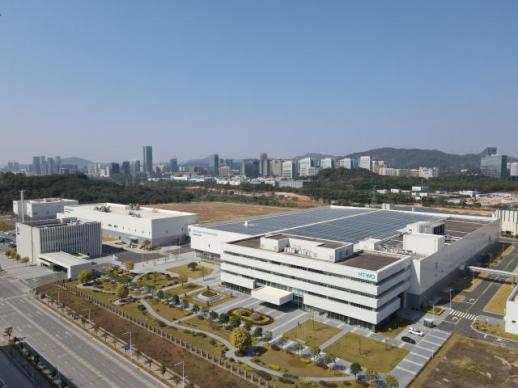 Hyundai's HTWO Guangzhou Selected as Leading Company in China's Hydrogen Industry Hyundai Motor Group's HTWO Guangzhou has been designated as a leading company in the hydrogen industry chain by the Guangzhou Municipal Bureau of Industry and Information Technology. This recognition marks Hyundai's formal integration into China's key hydrogen ecosystem, which is expected to accelerate the expansion of its local hydrogen business. Attention is now focused on whether the company can turn around its fortunes in the struggling Chinese automotive market through its hydrogen initiatives. On May 28, Hyundai Motor Group announced that HTWO Guangzhou, its first overseas hydrogen fuel cell system production base, was selected as a "leading company in the hydrogen energy sector" in the first phase of the strategic industrial cluster initiative. Guangzhou is promoting policies to nurture leading companies in 14 strategic industries, including new energy, smart connected vehicles, artificial intelligence (AI), semiconductors, aerospace, and biotechnology. HTWO Guangzhou is the only foreign-invested company among the 96 firms recognized as leading companies in the industrial chain. These companies are tasked with strengthening the industrial supply chain and fostering ecosystem development. With this designation, HTWO Guangzhou is expected to participate in the development of China's hydrogen industry supply chain, build regional industrial ecosystems, expand core technology cooperation, and enhance global exchanges. Recently, China has accelerated its efforts to develop the hydrogen industry, aiming for carbon neutrality and a transition to green energy. In September 2020, during the 75th United Nations General Assembly, China set goals to peak carbon emissions by 2030 and achieve carbon neutrality by 2060. Specifically, the country implemented policies to deploy 35,000 hydrogen fuel cell vehicles (including commercial vehicles) by last year. Guangdong Province, where Guangzhou is located, ranked first among pilot regions with over 7,000 vehicles deployed during this period. HTWO Guangzhou has sold more than 900 hydrogen fuel cell vehicles (commercial) this year. It ranks third among over 60 fuel cell system companies in the Chinese market and first among foreign-invested firms. Choi Doo-ha, CEO of HTWO Guangzhou, stated, "This selection as a leading company in the industrial chain recognizes our contributions to the development of Guangzhou's hydrogen industry and the establishment of a collaborative ecosystem. We plan to expand our participation in the comprehensive hydrogen energy application pilot projects scheduled to begin in the second half of the year and strengthen cooperation with local governments and partners." Meanwhile, Hyundai Motor Group is leading the global hydrogen industry as a co-chair of the Hydrogen Council CEO Summit, which comprises over 100 member companies worldwide. The company is at the forefront of the global hydrogen vehicle market with the launch of models like the all-new Nexo, Xcient hydrogen fuel cell truck, and hydrogen-powered tactical vehicles. Domestically, it is pursuing a project to establish a hydrogen hub in Saemangeum, North Jeolla Province, with a total investment of 8.9 trillion won.* This article has been translated by AI. 2026-05-28 13:36:00
 -
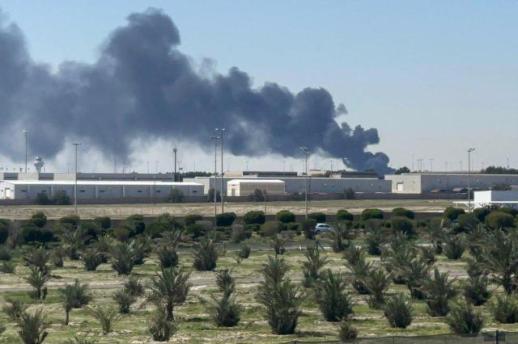 Kuwait's Air Defense System Responds to Missile and Drone Threats Kuwait's air defense system is actively responding to threats from missiles and drones, according to reports. This announcement comes amid claims of additional U.S. airstrikes on Iran and assertions of retaliation from Iran, although the identity of those behind the threats and any potential damage remain unconfirmed. It is also unclear if these events are directly related to Iran's retaliation. On May 28, the Kuwait military stated that its air defense system is intercepting missiles and drones. The military noted that "explosions may be heard" and explained that this is part of the interception operations. Residents have been urged to follow safety guidelines from the relevant authorities. The Kuwait military did not disclose details about the targets, any damage, or the entities involved. No group has claimed responsibility for the incident as of yet. Just before Kuwait's announcement, the United States conducted additional strikes on Iranian military facilities. According to the Associated Press, the U.S. Central Command reported that four Iranian drones posing a threat near the Strait of Hormuz were shot down. U.S. officials also stated that a ground control station in Bandar Abbas was targeted. The Iranian Revolutionary Guard confirmed the airstrikes near Bandar Abbas International Airport, claiming they retaliated against air bases used for U.S. military actions. However, it remains unverified whether the activation of Kuwait's air defense system is directly linked to Iran's retaliation. As tensions in the Gulf region escalate, the situation is compounded by ongoing deadlock in U.S.-Iran negotiations and issues surrounding navigation in the Strait of Hormuz, prompting Kuwait to activate its air defense system.* This article has been translated by AI. 2026-05-28 13:34:00
 -
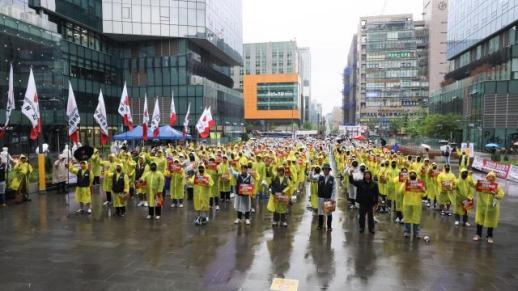 Kakao CEO apologizes to staff as union secures strike right after talks collapse SEOUL, May 28 (AJP) - Kakao CEO Chung Shin-a offered a public apology to employees as the company's union secured the legal right to strike following the collapse of a second mediation session, raising the prospect of the tech giant's first-ever headquarters walkout. Chung issued the apology through an internal notice Thursday, saying she was "sincerely sorry" for failing to quickly dispel growing uncertainty within the company. "Negotiations have dragged on, and I take seriously the fact that our crew members have had to wait this long," she said, using Kakao's in-house term for employees. The CEO struck a conciliatory tone, stressing that labor and management ultimately share the same direction and must work through their differences through dialogue. She also hinted at a partial organizational reshuffle, saying the company needed to reestablish a stable operational framework and reset its service priorities. Mediation talks at the Gyeonggi National Labor Relations Commission broke down late Wednesday after running until 11 p.m., leaving both sides without an agreement. The failure hands the union the legal standing to launch strike action, with about 1,200 union members set to march through the Pangyo Station area on June 10. The union said in a statement that it would not entirely close the door on further dialogue, but added it could "no longer resolve the matter through waiting and patience alone," and would move ahead with preparations for a June strike. The union accused management of passive bargaining, unilaterally paying out bonuses mid-negotiation and repeatedly swapping its lead representatives — moves it said had eroded trust. The central dispute centers on whether Kakao's annual 5-million-won restricted stock unit grants should count as performance pay, a classification the union firmly rejects. Kakao said it would keep communication channels open with the union even after the mediation process concluded. Shares of Kakao traded at 38,700 won per stock on 1:22 p.m., 4.44 percent lower than a day before and roughly 37 percent lower than earlier this year. 2026-05-28 13:29:26
 -
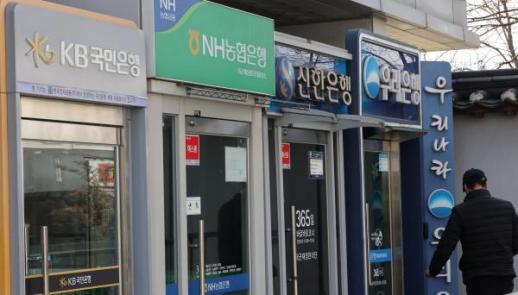 Bank Contributions Exceed 2 Trillion Won, Focus on Community and Financial Support As the government emphasizes inclusive finance to support vulnerable groups, the banking sector's social contributions surpassed 2 trillion won last year. This increase is attributed to expanded spending on community public projects and financial support for low-income individuals. According to the "2025 Bank Social Contribution Activity Report" published by the Korea Banking Association on May 28, the total amount of social contributions by banks reached 2.156 trillion won, an increase of 262.6 billion won (13.9%) from the previous year's 1.8934 trillion won. The scale of social contributions in the banking sector was 351.4 billion won when first recorded in 2006. After surpassing 1 trillion won for the first time in 2019, contributions have steadily increased, achieving the 2 trillion won mark for the first time in six years. Over the past five years, the banking sector's social contribution totals are as follows: 1.0617 trillion won in 2021, 1.238 trillion won in 2022, 1.6349 trillion won in 2023, 1.8934 trillion won in 2024, and 2.156 trillion won in 2025, amounting to a total of 7.984 trillion won. By sector, the "community and public interest" category accounted for the largest share at 1.435 trillion won, or 66.6% of the total. This was followed by "financial support for the underprivileged" at 538.9 billion won (25.0%), "academic and educational" contributions at 73.9 billion won (3.4%), "cultural, artistic, and sports" contributions at 68.4 billion won (3.2%), "global" contributions at 29.2 billion won (1.3%), and "environmental" contributions at 10.6 billion won (0.5%). The Korea Banking Association's report also includes a separate section on the "New Leap Fund." The banking sector contributed 360 billion won to this fund to help small businesses and vulnerable groups rebuild their foundations. The New Leap Fund is a program that purchases non-performing loans of 50 million won or less that have been overdue for more than seven years, providing debt relief. Cho Yong-byeong, chairman of the Korea Banking Association, stated, "I hope this report serves as a transparent and effective means to communicate the banking sector's commitment to social responsibility and genuine efforts to the public. We will lead positive changes in our society based on the values of coexistence and inclusivity."* This article has been translated by AI. 2026-05-28 13:24:00
 -
 Iran's Revolutionary Guard Claims Attack on U.S. Airbase in Response to Airstrikes The Iranian Revolutionary Guard Corps (IRGC) announced that it attacked a U.S. airbase in retaliation for American airstrikes near Bandar Abbas. This response came after the U.S. targeted Iranian facilities, citing drone threats in the Strait of Hormuz. However, the specific target and extent of damage remain unverified. According to Reuters on May 28, the IRGC released a statement through the semi-official Tasnim news agency, claiming, "The U.S. conducted airstrikes near Bandar Abbas airport in southern Iran," and added, "We responded at 4:50 a.m. local time." The IRGC characterized this action as a retaliatory measure. Prior to this, the U.S. had conducted operations targeting Iranian drones near Hormuz. Citing U.S. officials, Reuters reported that American forces shot down four Iranian attack drones that posed a threat to U.S. military and commercial vessels. Additionally, they struck a ground control center in Bandar Abbas that was preparing to launch a fifth drone. The U.S. described the operation as a defensive measure to protect its military and commercial ships. Iran, however, views this as an infringement on its territory and has justified its response. The situation has led to heightened military tensions, with the U.S. framing its actions as defensive and Iran labeling them as retaliatory. The IRGC warned that it would respond more forcefully if further attacks occurred. In its statement, it said, "If aggression is repeated, a more resolute response will follow," adding that the responsibility for escalating tensions lies with the aggressor. The IRGC did not disclose details regarding the means of attack, launch sites, target base names, or the scale of damage. The key takeaway from this announcement is that Iran has officially expressed its intent to retaliate, even as the specifics of the targets and damage remain unclear. This situation further complicates the prospects for resuming navigation through the Strait of Hormuz and any ceasefire negotiations. 2026-05-28 13:24:00
 -
 Defense Minister Ahn to attend Shangri-La Dialogue, meet Japanese counterpart SEOUL, May 28 (AJP) - South Korean Defense Minister Ahn Gyu-back will attend the 23rd Asia Security Summit in Singapore from May 29 to 31 and hold talks with defense ministers from several countries, the Ministry of National Defense said Thursday. The Asia Security Summit, also known as the Shangri-La Dialogue, is an annual security forum hosted by the International Institute for Strategic Studies in Singapore, bringing together defense ministers and senior officials for multilateral and bilateral talks. During the forum, Ahn is scheduled to hold a bilateral meeting with Japanese Defense Minister Shinjiro Koizumi. It will be their first in-person meeting since January, when Ahn visited Japan and held talks with Koizumi in Yokosuka, Kanagawa Prefecture. The two ministers are expected to discuss ways to expand defense exchanges between Seoul and Tokyo, which have recently gained momentum. In particular, they may discuss plans to hold a Korea-Japan search and rescue exercise, or SAREX, which had been suspended for about nine years before the two sides agreed to resume it during the Yokosuka meeting. Seoul and Tokyo are reportedly in the final stages of coordinating the schedule for the exercise. Momentum for closer defense exchanges between the two countries is expected to continue, as Koizumi’s bilateral visit to South Korea is also being discussed following the Shangri-La meeting. However, it remains unclear whether there will be progress on Japan’s push for an Acquisition and Cross-Servicing Agreement, or ACSA, with South Korea, as Seoul has maintained a cautious stance on the issue. U.S. Secretary of Defense Pete Hegseth is also set to attend this year’s Shangri-La Dialogue. A separate bilateral meeting between Ahn and Hegseth is considered unlikely, as the two already held talks during Ahn’s visit to the U.S. on May 11. Still, if the two meet on the sidelines of the forum, Ahn may again explain Seoul’s recently announced basic plan for a nuclear-powered submarine and discuss its progress. Attention is also focused on whether the defense chiefs of South Korea, the U.S. and Japan will hold a trilateral meeting during the forum. Ahn is also scheduled to meet delegations from the U.S. Senate and House of Representatives, as well as the defense ministers of Australia, Norway, the Philippines and Thailand, to discuss ways to expand defense and defense industry cooperation. On May 30, Ahn will deliver a speech during a plenary session of the Shangri-La Dialogue under the theme, “Regional Security Challenges and the Republic of Korea’s Strategic Response.” Through the speech, Ahn is expected to explain the government’s defense policy in response to the rapidly changing security environment, the ministry said. 2026-05-28 13:09:27
 -
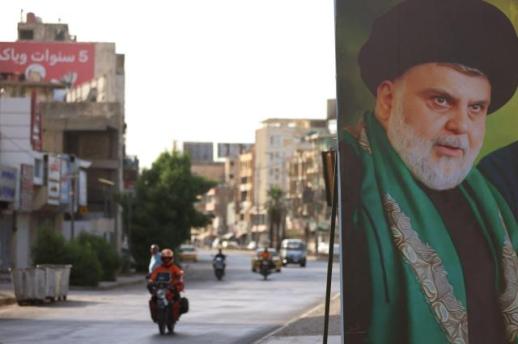 AJP DEEP INSIGHT: Hormuz's final tug-of-war — nuclear stakes, civilizational fault lines, and a new world order in the AI age SEOUL, May 28 (AJP) - In late May 2026, the world is watching the Middle East once again with unflinching attention. Explosions continue to echo across the Strait of Hormuz. The United States and Iran are simultaneously pursuing negotiations and military action. The White House signals "progress." Yet in the same breath, President Donald Trump warns that he could "finish it again" if necessary. Iran insists it intends to uphold the ceasefire, while condemning limited American airstrikes as violations of it. What the world is witnessing is a strange kind of war. Not a full-scale conflict, but not genuine peace either. Neither a ceasefire nor a true end to hostilities. Negotiations proceed even as the guns keep firing. This is the defining character of the 21st-century gray zone war. But its essence runs deeper than any conventional military clash. Beneath the surface lie nuclear ambitions and oil, the dollar system and the U.S.–China rivalry for global supremacy, the collision of Islamic and Jewish civilizations, and the contest over supply chains in the age of artificial intelligence. The Strait of Hormuz has become more than a body of water. It is the fault line of the entire world order. The most striking feature of the current crisis is that war and diplomacy are advancing in parallel. Washington and Tehran are reportedly discussing a memorandum of understanding toward an end to hostilities, and both sides have sent signals that progress is being made. The U.S. State Department and White House have indicated that negotiations have not collapsed entirely, and Iran has officially kept the door to a diplomatic resolution open. Yet simultaneously, U.S. forces launched fresh airstrikes on Iranian military installations near the Strait of Hormuz within days of the latest exchange. Washington described the strikes as defensive, citing the interception of four Iranian drones and the destruction of a ground control station preparing to launch a fifth. On the surface, it appears a limited confrontation. Yet global financial markets and the international community do not view it that way. The reason is simple: the Strait of Hormuz is the heart of the world's oil supply chain. A critical share of the world's seaborne crude passes through this narrow passage each day. It is the energy lifeline of manufacturing nations such as South Korea, China, and Japan. Any prolonged blockade or sustained instability here would send oil prices surging, fracture global logistics, and risk reigniting inflation. Washington understands this better than anyone. Trump has cultivated the image of a president who does not drag out wars. His preferred method is coercion and negotiation punctuated by limited military action — a strategy designed to bend adversaries without committing to full-scale conflict. But Iran does not operate on an American timetable. Where the United States wants speed, Iran deploys time itself as a weapon. That is an ancient Persian survival strategy. America is a young superpower, barely 250 years old. Iran is a civilization with 5,000 years of memory. It has learned, across centuries of foreign pressure and imperial domination, how to endure. And so, as American military pressure intensifies, Iran's response is not frontal confrontation but a strategy of delay and psychological attrition. In the current crisis, rather than launching immediate large-scale retaliation, Tehran has pursued managed tension. It knows the dangers of total war all too well. The Iranian economy has been hollowed out by sanctions. Youth unemployment, rising prices, and deep systemic fatigue have accumulated at home. But Washington, too, has no appetite for a full war. The American economy has not fully escaped inflationary pressure. For Trump, with domestic politics always in view, a prolonged conflict carries serious political risk. The result is a dangerously balanced standoff in which neither side can deliver a decisive blow nor easily back down. Four Fault Lines at the Heart of the Negotiations The current U.S.–Iran negotiations revolve around four core disputes. The first, and most fundamental, is the nuclear question. Trump has repeatedly and unequivocally stated that Iran acquiring a nuclear weapon is an absolute red line. Washington's most acute concern is Iran's stockpile of approximately 440 kilograms of uranium enriched to 60 percent purity. Nuclear experts generally define weapons-grade uranium as enriched to around 90 percent, but material at 60 percent is already considered a significant danger threshold — technically, further enrichment to weapons-grade levels is achievable within a short window. The United States sees no path to a post-war settlement without eliminating or placing that material under verifiable control. From Tehran's perspective, however, nuclear capability is not merely a weapon. It is an insurance policy for regime survival. The fate of Libya's Muammar Gaddafi — who dismantled his nuclear program only to see his government collapse and himself killed — remains a defining trauma for Iran's leadership. No Iranian government can lightly surrender that leverage. The second dispute concerns the handling of enriched uranium. Washington has expressed strong reluctance to allow China or Russia to take custody of Iran's highly enriched stockpile. The logic is straightforward: both are American strategic rivals. The more realistic alternative may be third-country management. Pakistan presents a particularly intriguing option. It is the Muslim world's first nuclear-armed state, maintains a strategic relationship with China, is not fully hostile to the United States, and has deep ties with Saudi Arabia. A model under which some portion of Iran's highly enriched uranium is stored temporarily in an internationally co-managed facility on Pakistani soil — under International Atomic Energy Agency supervision — could allow Washington to address its proliferation concerns while offering Tehran a face-saving exit. Diplomacy, after all, is ultimately the art of creating an off-ramp for the other side without demanding their complete humiliation. The third issue is the Strait of Hormuz itself. This is not merely a shipping lane. It is a vein of modern civilization. The global economy still runs on oil and liquefied natural gas. The AI age has arrived, but semiconductor fabrication plants and data centers consume extraordinary quantities of energy. AI is, at its core, a massive energy consumer. The data centers, chip factories, cloud server farms, and hyperscale AI computing systems that power the new economy require energy on a scale that strains the imagination. That is precisely why America's big tech companies are racing to secure nuclear power, LNG, and renewable energy sources. The AI age is less an era "after oil" than an era of energy power restructuring. The Strait of Hormuz will therefore remain a critical variable in the global economy for the foreseeable future. For China in particular, Hormuz is a lifeline. China is the world's largest manufacturing economy and one of its largest crude oil importers. Its factories, logistics networks, cities, and industrial zones run on Middle Eastern energy flows. A prolonged disruption to Hormuz would deliver a potentially crippling blow to the Chinese economy. Washington understands this clearly. The American strategy in the region therefore extends beyond pressuring Iran. It also functions as a means of exerting leverage over China's energy supply chain — linking the Middle East crisis directly to the broader U.S.–China contest for global primacy. China, in turn, has deepened its strategic ties with Iran, as has Russia. Meanwhile, the United States seeks to build a new regional order centered on Saudi Arabia, the UAE, and Israel. The Middle East is becoming the intersection of a new cold war. If the original Cold War was a clash between liberalism and communism, the present contest is far more complex. AI supremacy and semiconductor supply chains, control over energy and maritime logistics, the dollar system and digital finance, religion and civilization — all of these are simultaneously in play. The dollar question is particularly important. The United States has used dollar dominance to exert control over the global economy. The SWIFT payment system and the international financial architecture are, in practice, American-centered structures. Sanctions against Iran were ultimately a financial blockade executed through that dollar system. Yet China, Russia, and certain Middle Eastern states have been quietly expanding their use of alternative arrangements — renminbi-denominated payments, gold transactions, and energy trades settled in local currencies. None of this yet threatens dollar hegemony. But Washington senses the risk. The reason is that one of the foundational pillars of dollar primacy has always been the petrodollar system — the convention by which Middle Eastern oil is priced and settled in dollars. If the Middle East order shifts from American dominance toward a multipolar framework, the dollar system itself will face long-term structural pressure. Beyond the Abraham Accords: The Case for a 'Noah Covenant' The conflicts now tearing through the Middle East are not simply clashes of national interest. They carry within them the collision of Jewish and Islamic civilizations, the rivalry between Shia and Sunni power blocs, and the confrontation between an American-led order and a multipolar alternative. The Trump era's Abraham Accords opened a new current in the region — the emergence of a pragmatic framework for coexistence centered on Israel, the UAE, and Saudi Arabia. But Iran remains outside that framework. That absence matters enormously. The path forward must go beyond the Abraham Accords toward something that might be called a "Noah Covenant." Judaism, Christianity, and Islam ultimately share a common root. Among the descendants of Noah in the biblical tradition, the line of Shem — the Semitic lineage — connects to the spiritual origins of the Jewish, Arab, and Persian worlds. The region's genuine peace can only begin from the honest recognition that "the other side cannot be completely eliminated." Coexistence is not defeat. It is survival. Three Axes Moving Global Financial Markets Global financial markets are currently moving along three great axes. The first is the AI revolution. The second is the U.S.–China rivalry for supremacy. The third is Middle East risk. Until now, global equity markets have been driven by the AI rally. American AI semiconductor companies and big tech firms remain the dominant force. But the Middle East variable represents the single greatest risk capable of destabilizing that trajectory at any moment. If Washington and Tehran achieve a limited agreement and Hormuz stability is preserved, global markets will likely resume their AI-led advance. But if negotiations collapse entirely and the Hormuz crisis escalates in earnest, international oil prices could spike sharply and global inflation could re-emerge. The U.S. Federal Reserve would be unable to cut interest rates freely. The world economy would face the prospect of stagflation. Chinese manufacturing and European industry would absorb severe damage — and South Korea would not be spared. What This Means for South Korea South Korea is geographically distant from the Middle East, but it sits in no safe zone. The Korean economy is export-driven and heavily dependent on energy imports. Instability in the Strait of Hormuz translates directly into higher costs for Korean industry. Companies such as Samsung Electronics and SK hynix ultimately grow atop a foundation of global financial and energy stability. A surge in international oil prices and geopolitical turbulence would weigh on the entire Korean equity market. South Korea must therefore pursue three objectives simultaneously: diversification of its energy supply chain, reinforcement of its competitive industrial capabilities in AI and semiconductors, and a strategy of calibrated diplomatic balance in the Middle East. The world today does not move on military force alone. This is an era in which energy and AI, finance and supply chains, civilization and geopolitics all move together. The Strait of Hormuz is not simply a body of water. It is a microcosm of the entire 21st-century world order. And at this moment, humanity is testing that order on the surface of that sea. What is needed is not a balance of war, but an architecture of coexistence. Not the terror of nuclear weapons, but a system of trust and verifiable management. Not the transactional pragmatism of the Abraham Accords alone, but the civilizational imagination to move toward a Noah Covenant. That may be the only path through which the Middle East — and the world — survives what comes next. 2026-05-28 12:48:30
 -
 Labor Minister Kim Young-hoon Addresses Controversy Over Excess Profit Distribution Kim Young-hoon, the Minister of Employment and Labor, stated on May 28 that there are misconceptions suggesting the government intends to seize and redistribute profits from large corporations. He emphasized, "The government has neither the authority nor the intention to forcibly intervene in legitimate corporate profits." In a post on his social media, Minister Kim addressed the ongoing debate regarding the distribution of excess profits by large companies, asserting that it misinterprets the government's concerns and the essence of social dialogue. Earlier, during a meeting with reporters, Kim mentioned the need for social discussions on how to redistribute excess profits from large corporations. He announced plans for an urgent discussion hosted by the ministry next week, aiming to explore a 'Korean-style social solidarity wage' for the redistribution of excess profits. He added, "The success of Samsung Electronics today is the result of the dedicated efforts of labor and management, combined with support from the state and local communities. If we agree that this redistribution should also occur socially, then the solution must come through social dialogue." However, some critics argue that this approach represents excessive government intervention. The ruling People Power Party expressed concerns through a statement by Choi Bo-yun, head of the party's central election committee, describing it as a "dangerous state intervention that undermines the foundations of a free market economy." They noted that no other country has a government defining what constitutes 'normal profit' versus 'excess profit' for social distribution. Minister Kim acknowledged that while the wage agreement between Samsung Electronics and its labor union has been finalized, significant challenges remain for society. He pointed out that in the era of artificial intelligence (AI), various voices have emerged regarding the fairness of performance-based pay distribution, conflicts among labor, management, and shareholders, and risks in the capital market. This indicates a high level of public interest in these issues. He remarked, "The essence of this is a pressing question about 'how to live well together' in our society. I believe the solution lies in social dialogue, where we listen to diverse voices from the public, empathize with their concerns, and collaboratively seek alternatives and solutions. This is why I proposed the urgent discussion." Kim stressed that the widening gap among workers cannot be ignored, reflecting the will of the sovereign people. He called for labor, management, and the government to unite in wisdom to create a society where all can grow together through cooperation between primary and subcontractors. "We must listen and engage in dialogue with unwavering passion," he concluded. He further stated, "There are no companies without workers, and no unions created for companies to fail. Ultimately, we must live together."* This article has been translated by AI. 2026-05-28 12:33:00