

Journalist

Imran Khalid
-
 Hoban Construction, Upstage to Build AI Platform Integrating Data Across Construction Process Hoban Construction said it is partnering with global AI company Upstage to build an AI platform that integrates data generated across the construction process. The company said it signed a memorandum of understanding with Upstage on April 23 at its headquarters in Seoul’s Seocho-gu to pursue development of an “integrated AI agent platform.” Hoban Construction said the platform will consolidate and manage data produced in design, construction, quality and safety. It plans to apply AI to areas such as document drafting and management, data analysis and reporting systems to improve efficiency. Under the agreement, Hoban Construction will oversee platform development, provide data and work processes, and run pilot projects. The company said it aims to build an intelligent workflow system based on field-centered data to deliver practical productivity gains. Upstage will develop and supply AI models based on its in-house large language model, Solar. The company said it will advance industry-tailored AI through document-processing technology, fine-tuning models for construction and real estate, and design drawing analysis. Hoban Construction said it will first validate the platform in day-to-day operations, then expand it across Hoban Group. It plans to use accumulated data operations experience and AI use cases as shared group assets to strengthen digital transformation capabilities. A Hoban Construction official said the company will “organically connect data and work processes around the integrated AI agent platform to drive real workplace innovation and productivity gains,” and will expand “a proven AI utilization system” across the group to keep strengthening its AI transition foundation.* This article has been translated by AI. 2026-04-24 09:44:07
 -
 South Korea expands cooperation with Moldova as economic pact takes effect SEOUL, April 24 (AJP) - An agreement on economic cooperation between South Korea and Moldova took effect on Friday, according to the Ministry of Foreign Affairs. The agreement aims to strengthen bilateral cooperation across various sectors, including science and technology, energy, and transportation, laying the groundwork for a more comprehensive partnership between the two countries. Under the agreement, the two countries will establish a joint committee to review and implement projects, which is also expected to promote mutual exchanges among experts, scientists, and students through international fairs and exhibitions, thereby fostering industrial collaboration and broader professional networks. Bilateral trade stood at just $118 million last year, but both sides see room for growth. South Korea exports automobiles, steel, and cosmetics, while importing wine and agricultural products from Moldova. "We will continue to seek economic cooperation with promising markets to support South Korean companies' global expansion," a ministry official said, adding that the latest agreement would help broaden the country's foothold in emerging markets in Europe. South Korea currently has similar pacts signed or implemented with over 100 countries. 2026-04-24 09:43:17
 -
 GS E&C Teams With Vietnam’s FPT to Pursue Data Center, Smart City Projects GS Engineering & Construction Corp. said it is moving to develop new businesses in Vietnam centered on data centers and smart cities. The company said it signed a memorandum of understanding on April 22 with FPT Corp. at the Vietnamese firm’s headquarters in Hanoi to cooperate on data center development and smart city construction. GS E&C CEO Heo Yun-hong and FPT CEO Nguyen Van Khoa attended the signing, along with other officials. GS E&C said the agreement is intended to support Vietnam’s digital economy growth and its national digital transformation strategy by combining the two companies’ capabilities. FPT is Vietnam’s largest private IT company and ranks No. 1 among private firms in the country’s data center market by capacity, GS E&C said. GS E&C said it has more than 20 years of experience in data centers and can provide end-to-end solutions from development through operations. Under the MOU, the companies plan to develop large-scale data centers in major Vietnamese regions, starting with an initial project in the tens of megawatts and expanding in stages. They also plan to build high-efficiency facilities using advanced technology and modular construction to meet rising demand for artificial intelligence and cloud services. The companies also agreed to cooperate on smart city development. GS E&C will lead project development and execution and provide design and construction capabilities for AI infrastructure, the company said. FPT will provide technical cooperation based on its ICT expertise, including cloud services and digital platforms, and will support demand creation and cooperation with the central government and local authorities. GS E&C said the partners aim to build citywide digital infrastructure, including intelligent transportation systems, smart energy management and integrated public safety platforms, and to improve operational efficiency through AI and Internet of Things-based solutions. Separately, GS E&C said it signed another MOU on April 23 with the Bank for Investment and Development of Vietnam, the country’s largest state-owned commercial bank, for comprehensive cooperation on financial services. The company said the deal is intended to establish a financing support framework for development projects and broader smart city initiatives being pursued by its Vietnam unit, VGSE. GS E&C said the two agreements will help it secure an integrated business structure covering data center development, smart city construction and financial support, and strengthen its competitiveness in Vietnam’s digital infrastructure market.* This article has been translated by AI. 2026-04-24 09:43:15
 -
 Mosuseoul Apologizes After Customer Alleges Wine Vintage Switch; Online Backlash Follows A wine service dispute at Mosu, the Michelin three-star fine-dining restaurant run by chef Ahn Sung-jae, has drawn attention online after the restaurant posted an apology and commenters criticized its wording. Earlier, a customer identified as A wrote on a Naver cafe that during a visit to Mosuseoul, they ordered an expensive wine but believed a different wine was served. A said the sommelier held up a bottle described as a “2005” vintage and explained it as 2005, but after tasting the wine and checking the pairing list, the customer realized a 2000 vintage was supposed to be served. Mosuseoul posted an apology on its official social media account on the 23rd, saying it “bows its head in apology” over the matter that became known through an online community. The restaurant said that on the 19th, during wine pairing service, “accurate guidance was not provided,” causing confusion. It also apologized for not giving a sufficient explanation during follow-up communication, saying it caused “great disappointment.” Mosuseoul added that it separately apologized to the customer afterward and that the customer “generously accepted” it, but said the restaurant takes seriously that the process still fell short of expectations. “Chef Ahn Sung-jae and the entire Mosu team are taking this matter very seriously,” the statement said, adding that it would review overall service and prevent a recurrence. It said it would not stop at a “showy apology” and would work to rebuild trust with sincerity. Many online commenters reacted negatively to the apology, saying it avoided stating exactly what happened and lacked specific steps to prevent a repeat. Some also criticized the line that the customer “generously accepted” the apology, saying it sounded dismissive. One commenter wrote that the statement did not say what was done wrong, offered no prevention plan and did not mention any disciplinary action for the employee involved. Another said the issue appeared to be about trust, not simply a guidance problem, arguing the customer seemed disappointed by what they viewed as an attempt to gloss over the matter. 2026-04-24 09:39:48
 -
 Rapper Woody Gochild Shares Update After Fall: “I Missed Making Music” Rapper Woody Gochild has shared an update on his recovery after a fall. Woody Gochild appeared as a guest alongside rappers pH-1, Lil Boi and Big Naughty on the SBS PowerFM radio show “12 o’clock is Joo Hyun-young,” which aired on the 23rd. When DJ Joo Hyun-young asked how he had been since the accident, Woody Gochild said he went through a period when he could not make music. “As that time got longer, I missed music so much,” he said. He added that the experience made him realize “how precious it is to be able to use my voice again and express myself,” and said Lil Boi suggested they work together, prompting him to agree immediately. Woody Gochild previously said on social media in December 2024 that he suffered a serious accident after falling from a third-floor rooftop to the ground. At the time, he wrote that he was fortunate the life-threatening dangers “passed by me,” and that with “simple rehabilitation” he was able to use his body again and enter “a new decade of my 30s.” Woody Gochild gained wider recognition through appearances on Mnet’s “Show Me the Money 6” and “Show Me the Money 8.” 2026-04-24 09:39:16
 -
 Germany and Japan Rearm as Security Shifts; What South Korea Should Do Major shifts are underway in global security as Germany and Japan, once defined by post-World War II limits on military power, move to expand their forces. After the war, both countries sharply reduced their militaries, and Japan even wrote a renunciation of war into its constitution. That posture is changing. Germany has declared it will build “the strongest military in Europe,” and Japan has said it will develop “the capability to strike first if necessary.” The shift reflects a changing security order, not a sudden change of heart. A central driver is a growing sense of vulnerability. Since Russia’s invasion of Ukraine, many in Europe have concluded that war is no longer a matter of the past. In East Asia, tensions between China and Taiwan persist, and North Korea continues frequent missile launches. In that environment, it has become harder to assume someone else will provide protection. Another factor is uncertainty about the United States. Germany and Japan have long relied on U.S. support for their security, but concerns have grown that Washington may not provide the same guarantees as before. That has strengthened calls in Europe and Japan for greater self-reliance. Seen this way, rearmament is presented as a familiar pattern: as the world becomes less stable, countries expand their militaries to deter conflict, not to seek it. For South Korea, the debate is not abstract. The country experienced the Korean War and remains in a military standoff with North Korea, living in one of the world’s most tense regions. First, the article argues, South Korea should update how it thinks about security. Economic strength and national defense can no longer be treated as separate. Semiconductors, batteries and energy supplies are tied to security because disruptions can halt factories, shake the economy and ultimately endanger the country. Second is diplomacy. The world increasingly appears split between the United States and its allies and China and nearby partners. In that environment, South Korea may find it difficult to choose only one side, but also hard to maintain equally smooth relations with both. The proposed answer is a “smart balance” — avoiding dependence on a single partner. That means cooperating with the United States on security, spreading economic ties across multiple countries, and making technology choices based on circumstances. The article describes this as a “distributed strategy,” like not putting all eggs in one basket. Third is military capability. South Korea already has a strong military, but the article says it will need a smarter one, with technology outweighing troop numbers. It calls for preparation for drones, artificial intelligence and cyber warfare. At the same time, it says South Korea cannot abandon its alliance with the United States, since its security still depends heavily on cooperation. The direction, it argues, should be not “doing everything alone,” but “getting stronger while working together.” Fourth is the defense industry. Military technology can spill into civilian use, the article notes, citing satellite technology and the internet as examples that began as military projects. Linking South Korea’s strengths in semiconductors and artificial intelligence to defense could create new industries. It also draws a distinction between defense spending as a necessary cost and the defense industry as a potential investment. Not all defense budgets translate into economic growth, it says. Finally, the article stresses public understanding. A military buildup or higher defense spending can be a burden, requiring more taxes and reducing funds for other priorities. But it argues that failing to prepare can bring greater risks, making public agreement on “why it is necessary” essential. Germany and Japan’s shift, it concludes, underscores that the world is no longer as stable as before. When the balance of power changes, countries begin building up their militaries again — a pattern repeated through history. South Korea, the article says, faces a choice: wait for conditions to improve without preparation, or prepare in advance. It argues that only a prepared country can overcome crises. It calls for three elements: a strategy that spreads cooperation across countries, the capability to defend itself, and a direction the public understands and supports. History may not repeat exactly, it says, but similar moments return — and the task now is to prepare for the future.* This article has been translated by AI. 2026-04-24 09:36:42
 -
 South Korea Stocks Mixed at Open as Foreign Selling Pushes Kospi Lower South Korean stocks traded mixed early Thursday, with the Kospi turning lower as foreign investors sold after a modestly higher open. As of 9:14 a.m., the Kospi was down 12.92 points, or 0.20%, at 6462.89, according to the Korea Exchange. The benchmark opened up 20.29 points, or 0.31%, at 6496.10 before reversing course. Han Ji-young, a researcher at Kiwoom Securities, said the market was likely to face profit-taking pressure early in the session amid “fatigue” after a short-term peak, Middle East-related noise and weakness in U.S. stocks. She said that could limit gains during the day, while sector and stock rotation may continue on company-specific earnings events. Overnight, Wall Street ended lower after heightened Middle East military tensions fueled intraday volatility. The Dow Jones Industrial Average fell 179.71 points, or 0.36%, to 49,310.32. The S&P 500 dropped 29.50 points, or 0.41%, to 7,108.40, and the Nasdaq slid 219.06 points, or 0.89%, to 24,438.50. In the main board market, individuals and institutions were net buyers of 263.8 billion won and 86.5 billion won, respectively, while foreigners were net sellers of 344.4 billion won. Among large-cap shares, Samsung Electronics fell 2.00%, SK hynix slipped 0.33%, Hyundai Motor dropped 3.01%, SK Square fell 0.55% and Kia declined 2.08%. LG Energy Solution rose 1.93%, Doosan Enerbility gained 1.22%, Hanwha Aerospace jumped 5.68%, Samsung Biologics added 0.33% and HD Hyundai Heavy Industries climbed 2.18%. The Kosdaq was up 1.00 point, or 0.09%, at 1175.31 at the same time. It opened up 2.11 points, or 0.18%, at 1176.42. In the Kosdaq market, individuals were net buyers of 72.7 billion won, while foreigners and institutions were net sellers of 29.1 billion won and 33.7 billion won, respectively. Among top Kosdaq stocks, EcoPro BM rose 0.24%, Alteogen gained 0.42% and Samchundang Pharm climbed 2.11%. EcoPro fell 0.45%, Rainbow Robotics slipped 0.83% and Lino Industrial dropped 1.95%.* This article has been translated by AI. 2026-04-24 09:35:50
 -
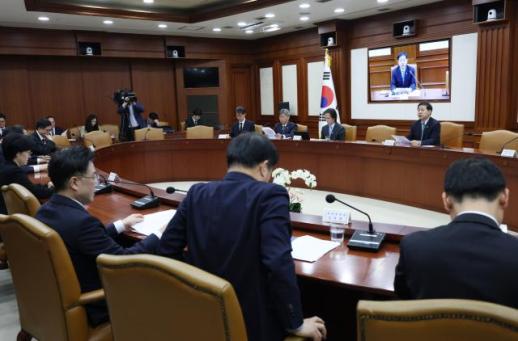
 South Korea to Ease Public Procurement Rules for Non-Capital Region Firms Companies outside the Seoul metropolitan area, especially those in depopulating regions, will face fewer hurdles in public procurement as the government expands negotiated contracts and preferential purchasing. Koo Yun-cheol, deputy prime minister and minister of economy and finance, announced the measures at an Emergency Economic Headquarters meeting and a National Startup Era Strategy meeting on the 24th. The plan aims to lower entry barriers and expand participation for non-capital region firms by widening the scope of small negotiated contracts for companies based in depopulating areas. For firms in those regions, the government will raise the ceiling for single-quote negotiated contracts to 50 million won from 20 million won, matching the treatment given to women-owned, disabled-owned, social enterprises and youth startups. For small negotiated contracts targeting companies in depopulating areas, the Public Procurement Service will act as a purchasing agent even when the amount is under 100 million won. The government will also revise the two-stage competition structure under the Multiple Award Schedule, or MAS, used for online shopping-mall listings. For products made by companies in depopulating regions, it will raise the threshold amount for two-stage competition, expanding exemptions and improving purchasing convenience. When requesting proposals for two-stage competition, the system’s automatic recommendations through the shopping mall will include two non-capital region companies. In concluding MAS contracts, authorities will give non-capital region firms priority review to speed processing and broaden early participation. In bid and award evaluations for goods and services, the government will introduce new bonus points favoring local companies and, when conditions are the same, will buy goods from local firms first to expand contract opportunities for non-capital region businesses. Separately from existing bonus points tied to the location of the ordering agency, the government will create new bid preferences for non-capital region companies, focusing on depopulating areas. It will add preferential items for non-capital region firms to credibility bonus points used in qualification reviews for goods and services and in MAS contracting. When bids are tied or performance-capability reviews produce the same results, the revised standards will give priority awards to companies in depopulating regions and other non-capital region firms. In MAS two-stage competition, companies in depopulating regions and other non-capital region firms will be selected ahead of lower-priced bidders. The government also plans to strengthen support for domestic and overseas sales channels for non-capital region firms. Working with local governments, it will focus on identifying innovative local products and will include outstanding products from depopulating-region companies among those eligible for extended designation periods. It will provide tailored consulting, especially for early-stage non-capital region companies, and expand participation by holding regional editions of innovative product exhibitions previously held in the capital area. Companies designated as promising firms for entry into overseas procurement markets under the G-PASS program will receive bonus points. If selected for support programs, their priority allocation share will rise to 60% from 50%. The government plans to revise the Enforcement Decree of the National Contract Act and the Public Procurement Service’s instructions and guidelines within the second half of this year. A ministry official said the government will build a legal framework to support a major shift toward a “local era” and prepare bold preferential policies for non-capital region firms, adding that it will gather sufficient opinions and conduct deliberations to finalize detailed implementation plans and move them into legislation and制度ization.* This article has been translated by AI. 2026-04-24 09:35:03
 -
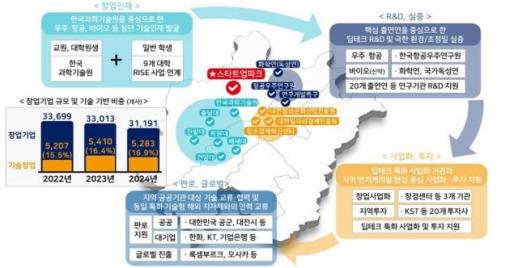 South Korea to Grant 10 Startup Cities Mega-Zone Regulatory and Funding Perks The government will roll out a broad package combining regulatory exemptions with fiscal, financial and talent support for 10 “startup cities” to be designated by next year, aiming to spur a nationwide startup boom and reshape local startup ecosystems beyond simple subsidies. The Finance and Economy Ministry announced the plan on the 24th at an emergency economic headquarters meeting and National Startup Era strategy session chaired by Deputy Prime Minister and Finance and Economy Minister Koo Yun-cheol. To build talent-driven startup hubs, the government will first select four cities this year that host science and technology institutes such as KAIST, DGIST, GIST and UNIST. It will add six more non-metropolitan areas by the first half of next year, for a total of 10 startup cities. The designated areas will receive “mega special zone” level regulatory easing to lower barriers for testing new technologies and business models. Sectors that previously had to go through separate regulatory sandbox procedures are expected to get faster permits and temporary regulatory waivers within startup cities. The government expects the changes to speed commercialization in strategic industries including AI, biotech and advanced manufacturing. Fiscal and financial support for startups in the regions will be expanded. Eligible firms will be offered up to 350 million won in commercialization funding, with follow-on investment linked through a newly created regional growth fund. The fund is set to launch this year at 450 billion won or more and expand to 2 trillion won by 2030. The government also plans tax and fiscal incentives for non-capital-area investment to draw more private venture capital. To strengthen exit options, the government will create a “venture capital brokerage platform” to support trading in unlisted startup shares and will pursue steps to expand venture investment by retirement pensions and public pension funds. The goal is a virtuous funding cycle from early-stage growth through exit. The government will also revise rules to help startups recruit talent. Approval time for professors and researchers to start businesses will be cut from up to six months to about two weeks, and startup-related leave will be allowed for up to seven years. For university students, restrictions on taking a leave of absence to start a business will effectively be eliminated. Plans also call for linking R&D with startup infrastructure. Startup cities will establish innovation startup institutes and deep-tech startup hub universities so technology development, commercialization and investment can be connected in one place. The package will include work space, testbeds and demonstration infrastructure, operating as a cluster linking “labs, companies and investment.” To better connect startups with local economies, the government will develop “glocal” commercial districts and local theme shopping areas near startup cities. Companies that attract investment will be eligible for additional support, including matching loans of up to 500 million won and about 200 million won in extra commercialization funding, to help local startups translate into sales and jobs. The government said the startup-city model is intended to disperse a capital-area-centered startup ecosystem and create conditions for technology-based startups to grow in the regions. A government official said startup cities are “comprehensive startup clusters” that simultaneously loosen constraints on regulation, funding, talent and infrastructure, adding that the government will build a foundation for unicorn companies to emerge outside the capital region.* This article has been translated by AI. 2026-04-24 09:34:07
 -
 South Korea to Add 200 Billion Won to ‘Startup for All,’ Name 10 Startup Cities The government said it will expand a nationwide, public-participation startup initiative and build technology- and region-based startup ecosystems, aiming to ease a growth structure centered on the Seoul metropolitan area and large conglomerates and shift toward a startup-driven economy. The Ministry of Finance and Economy announced the plan on April 24 after an emergency economic headquarters meeting and a National Startup Era strategy meeting chaired by Deputy Prime Minister and Finance and Economy Minister Koo Yun-cheol. The ministry said it sees “K-shaped growth,” in which gains concentrate in the capital region and big companies, as becoming entrenched, while automation is reducing structural employment. It said it will push a strategy to spread entrepreneurship to shift the jobs paradigm from “finding” work to “creating” it. As part of the effort, the government will expand the “Startup for All” project. Following the first nationwide idea contest now underway, it plans a second round later this year using a supplementary budget of about 200 billion won. Entrepreneurs will be selected through regional audition-style competitions, and the final winner will receive prize money of at least 1 billion won and support linked to follow-on investment. The government said it aims to run the project as a practical startup incubation program rather than a simple contest. The government will also develop 10 “startup cities” as hubs for technology-based entrepreneurship. It will designate four cities hosting KAIST, DGIST, GIST and UNIST later this year, then select six more, mainly outside major metropolitan areas, by the first half of next year. The startup cities will receive a package of support combining talent development, research and development, investment and startup space. Planned steps include creating innovation startup institutes at each science and technology institute, expanding deep-tech startup-centered universities, shortening approval procedures for faculty and student startups from up to six months to about two weeks, extending startup leave from three years to up to seven years, and removing limits on leaves of absence. Startups in these regions will be eligible for up to 350 million won in commercialization funding. The government said it will build a regional growth fund of at least 450 billion won this year and expand it to 2 trillion won by 2030. Support for entrepreneurship tied to local commercial districts will proceed in parallel. Under a “Local Commercial District for All” strategy, the government will foster 17 “glocal” commercial districts and 50 local theme districts. It will also expand the LIPS program, which provides matching loans of up to 500 million won and commercialization funds of up to 200 million won for companies seeking investment, to 450 firms from 300. An additional 40 billion won in supplementary funding will be投入 into support for everyday-technology development. To improve the broader startup ecosystem, the government said it will introduce a “three-part package” to encourage private investment: expanded incentives for venture investment outside the capital region, a new intermediary platform for venture capital to boost early-stage stock trading, and permission for retirement pensions and public pension funds to invest in venture capital. It also plans to strengthen funding support, including a 50 billion won “startup boom” fund and a “second-chance” fund totaling 1 trillion won by 2030. The government said it will introduce “mega special zones” to grant regulatory exemptions to startups in strategic industries, and provide up to 340 million won for open-innovation projects between large companies or public institutions and startups. It also plans to develop AI solutions using manufacturing-site data and apply them to 1,000 processes by 2030. It said it will institutionalize support for entrepreneurs seeking to try again after failure by introducing a “challenge resume” that datafies startup experience, expanding support for re-founders, and creating a youth startup challenge school, aiming to make failure experience an asset. “Startups are a jobs policy, a youth policy, and a strategy for balanced regional development and national growth,” Koo said. “We will do everything we can to create an environment where anyone can start a business anywhere with just an idea, open a ‘startup boom National Startup Era,’ and spread ‘Startup for All’ into ‘growth for all,’” he said. * This article has been translated by AI. 2026-04-24 09:33:22