

Journalist

Imran Khalid
-
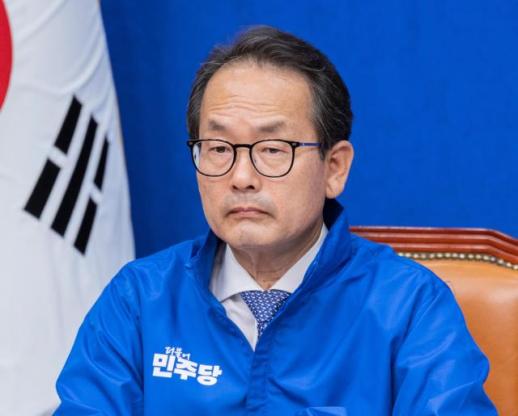 Democratic Party Criticizes People Power Party's Election Concerns The Democratic Party stated on May 31 that the People Power Party's critical stance toward the election is "distressing." This comment came after the People Power Party raised allegations of government interference and election manipulation regarding President Lee Jae-myung's inspection of the ballot stamp during early voting. Kang Jun-hyun, the party's chief spokesperson, held a press conference at the National Assembly, asserting, "Despite the Election Commission confirming that there are no legal issues, the People Power Party continues its baseless attacks." Kang emphasized that there are still factions within the People Power Party promoting conspiracy theories about election fraud and undermining the significance of early voting. He added, "Such behavior is a threat to democracy," urging the party not to fall into contradictions while trying to tarnish the president's image. In response to the People Power Party's claim that President Lee's message encouraging early voting constitutes election interference, Kang explained, "The government and the president have the right to encourage voting. A statement like 'It would be good if you vote' does not refer to any specific individual or party and is therefore permissible."* This article has been translated by AI. 2026-05-31 11:39:00
 -
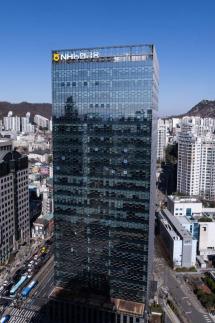 NH Nonghyup Financial Group Strengthens Retirement Pension Focus with 107% Cumulative Return NH Nonghyup Financial Group is transitioning to a retirement pension financial group focused on returns. According to Nonghyup Financial on May 31, Nonghyup Bank's principal and interest non-guaranteed products have achieved the highest comprehensive weighted average return among the five major commercial banks for four consecutive quarters. Another product, the NH All Wonderful Happy Together savings account, which is tailored for pension recipients, is seeing increased demand due to enhanced benefits and transaction convenience for pension customers. NH Investment & Securities has introduced digital and AI-based pension asset management services, earning recognition in the retirement pension sector with various awards. Notably, the NH-DNA retirement pension EcoNex, managed by a robo-advisor, has recorded a cumulative return of 106.5%, marking it as one of the industry's top performers. Nonghyup Financial plans to expand its customized products and services for pension customers, centered around its senior brand, NH All Wonderful, launched in November last year. A representative from Nonghyup Financial stated, "As we respond to the expansion of the retirement pension market and the entry into a super-aged society, it is essential to strengthen our group’s competitiveness in retirement pensions. We will enhance our unique synergy by providing differentiated services that combine health, lifestyle, and finance based on our senior-focused brand, NH All Wonderful."* This article has been translated by AI. 2026-05-31 11:15:00
 -
 U.S. Defense Secretary Says Iran Has Sufficient Capacity to Resume War Pete Hegseth, U.S. Secretary of Defense, emphasized the need to counter China and increase defense spending among allies during the Shangri-La Dialogue in Singapore. He warned that the U.S. could resume military intervention if negotiations with Iran fail, while maintaining maritime blockades. On May 30, local time, Hegseth held a press conference at the U.S. embassy in Singapore after the Shangri-La Dialogue, stating, "We have the capability to resume military action if necessary, and our stockpiles are more than adequate both there and globally." He added, "This reflects how we balance precision weapons with ample ammunition." Hegseth also noted that the blockade operations against Iran are firmly in place, mentioning that the issue of the Strait of Hormuz was frequently discussed during bilateral meetings. He asserted, "The Strait of Hormuz will remain open, accessible to all, and free of tolls, as it should be." U.S. Defense Secretary Pressures Allies to Increase Defense Spending In his earlier speech at the Shangri-La Dialogue, Hegseth highlighted the importance of countering China and the necessity for allies to boost their defense budgets. He stated, "No nation, including China, can undermine the security of the U.S. and its allies through hegemonic actions," expressing justified concerns over China's military expansion in the Asia-Pacific region and beyond. He warned that if a hegemonic power dominates the Pacific, it would disrupt the regional balance of power, emphasizing, "What we seek is a truly stable equilibrium that benefits both the American people and our allies." However, he also showed a desire to avoid direct confrontation with China, saying, "We do not want unnecessary conflict in this region." He noted that U.S.-China relations are at their highest level in years since the Trump administration, and that military-to-military communication channels are open and more frequent. Hegseth stressed the need for allies to increase their defense spending, stating, "Regional security has relied too heavily on U.S. military power. Everyone must take responsibility to build a strong alliance. There will be no free riders." He added, "The era of the U.S. subsidizing defense spending for wealthy nations is over; we need partners, not dependents." He reiterated the U.S. commitment to a $1.5 trillion military investment, urging allies and partners to raise their defense budgets to 3.5% of their GDP. South Korea Receives Praise Hegseth particularly commended South Korea for pledging to increase its defense spending to 3.5% of GDP, saying, "I applaud the pragmatism and leadership shown by South Korea." He described it as "a breath of fresh air" that allies like South Korea are taking the lead in military operations. Regarding Taiwan, he reaffirmed that there is no change in the U.S. position, stating, "The core of the U.S. approach in the Pacific is to deny access across the First Island Chain (a hypothetical line connecting Japan, Okinawa, Taiwan, the Philippines, and the Malacca Strait)." He reiterated the necessity of defending Taiwan, but noted that future sales of U.S. weapons to Taiwan depend on decisions made by President Donald Trump. Meanwhile, China delivered a relatively restrained message at the conference. According to the Global Times, a state-run English newspaper, Meng Xiangqing, head of the Chinese delegation, stated during a session on "Managing Threats to Strategic Stability" that "hegemonism threatens regional security." He expressed hope that "China and the U.S. can move closer together" and that military relations between the two countries develop in a healthy, stable, and sustainable direction. In contrast, China strongly criticized Japan's military rearmament efforts. Meng warned, "The lessons of history remain vivid, and the world stands at a crossroads again," urging vigilance against the resurgence of militaristic thinking and the need to uphold the achievements of World War II and the post-war international order. He noted that this year marks the 80th anniversary of the Tokyo Trials and claimed, "Some forces are glorifying war crimes and distorting the history of World War II while trying to whitewash their history of aggression." On the Taiwan issue, he stated, "Taiwan independence forces cannot coexist with peace across the Taiwan Strait."* This article has been translated by AI. 2026-05-31 11:09:00
 -
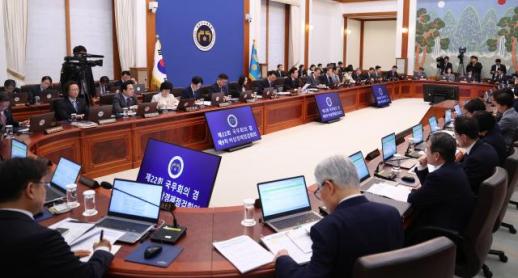 Korea's Fair Trade Commission Discovers $15 Billion Price-Fixing Scheme The Fair Trade Commission (FTC) highlighted its detection of a $15 billion price-fixing scheme as a key achievement in the first year of President Lee Jae-myung's administration.During a cabinet meeting on May 20, FTC Chairman Joo Byeong-ki presented the administration's major accomplishments over the past year.The fines imposed for significant price-fixing cases include: 396 billion won for sugar, 3.16 billion won for pork, 338.3 billion won for printing paper, and 590 million won for eggs. Joo emphasized that "serious unfair practices by monopolistic businesses threaten the survival of companies, and establishing market rules that promote fair competition and innovation is the only way for businesses to grow."The FTC also revamped its fine structure to combat price-fixing, raising the minimum fine by 20 times and increasing the maximum by 1.5 times.Another notable achievement is the price reductions resulting from voluntary corrections by companies involved in price-fixing. Joo noted that since February, price reductions of up to 26% have occurred for sugar, flour, and starch due to these voluntary measures, leading to lower prices for food items such as bread, ramen, and ice cream.Improvements to strengthen the bargaining power of economically vulnerable groups were also highlighted. Specifically, amendments to the Franchise Business Act have been completed to ensure collective bargaining rights for 380,000 franchise owners, and a three-tier safety mechanism has been established to ensure timely and stable payments for 1.2 million subcontractors.The FTC achieved over a 50% improvement in corrective measures through proactive investigations into technology theft compared to the previous year. Additionally, a bill has been prepared to amend the Fair Trade Act, enabling 8.29 million small and medium-sized enterprises and small business owners to negotiate on equal footing with large and mid-sized companies through collective action.Joo stated, "The FTC will continue to fulfill its role in establishing a fair market order to ensure that the principles of sustainable and fair growth take root in the market."* This article has been translated by AI. 2026-05-31 11:06:00
 -
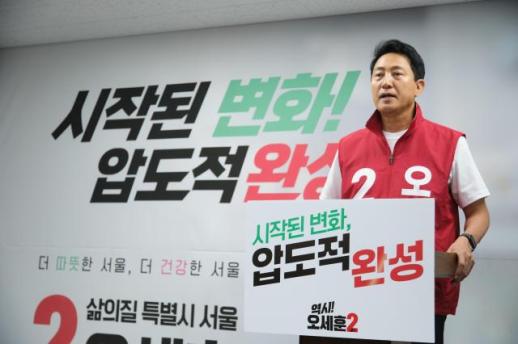 Oh Se-hoon Calls for Housing Regulation Relief from President Oh Se-hoon, the People Power Party's candidate for Seoul mayor, stated on May 31 that he plans to present three urgent housing policy improvements and two proposals for restoring the economy and democracy to the president during the first cabinet meeting after his election. Speaking at a press conference titled 'Five Major Commands from Seoul Citizens' at his campaign office in Jongno-gu, Oh emphasized that if elected, he would immediately fulfill the serious mandate from the citizens. The five major commands from Seoul citizens include: normalizing conditions for redevelopment and reconstruction projects, increasing the supply of private rental housing to address the rental crisis, establishing measures to prevent excessive property taxes, easing regulations in the metropolitan area to boost the local economy, and safeguarding democratic values by preventing the dismissal of charges. Oh pointed out that the only significant new housing supply measure in Seoul is redevelopment, which has become difficult under the current 10-15 policy. He pledged to lift restrictions on relocation loans for redevelopment projects, allow the transfer of membership status in housing cooperatives, and promote the relaxation of floor area ratios for public redevelopment projects. He also addressed the worsening rental crisis under the Lee Jae-myung administration, proposing the easing of regulations on registered rental businesses and corporate private rental projects to ensure the supply of safe and reasonably priced housing. Oh promised to advocate strongly for maintaining the long-term holding tax exemption for single-homeowners and adjusting tax brackets. He stated, "If the exemption for single-homeowners is abolished, it would cause significant losses. Therefore, we must maintain the current exemption and work with the government to find reasonable adjustments to the tax brackets." He emphasized that policies conflicting with the direction of government policy, including the maintenance of the tax exemption, would be unfeasible for Jung Won-oh, the Democratic Party's candidate for Seoul mayor. Oh remarked, "A Democratic mayor in Seoul would be nothing more than a puppet, unable to even mention the urgent and serious five commands from citizens. I believe that Jung, who was chosen as a candidate by the president, will have to act at the level of a nominal appointee." He urged Seoul citizens for strong support, stating, "What we need now is not a puppet but a guardian of citizens' rights." While vowing to speak candidly to the government, Oh addressed concerns about ongoing conflicts with the Lee administration, asserting, "I have never caused extreme conflicts with a president from a different party or engaged in unnecessary showy politics." He added, "Why can't I meet the president separately to discuss matters? I did so when I was elected in 2021, meeting with President Moon Jae-in. If I sincerely explain the market situation and convey the urgent issues, there should be no reason to reject stabilizing the housing market, which would also contribute to government stability." Oh concluded, "I have never backed down from doing what is right, and all the proposals I mentioned today are essential for a necessary future change. I question whether Jung, who is hesitant to speak out against the president, can truly take such actions." 2026-05-31 11:03:00
 -
 Korea moves to fortify defenses as AI reshapes cyber, wearable battles SEOUL, May 31 (AJP) - Artificial intelligence is pushing deeper into cybersecurity, public infrastructure and wearable devices, redrawing the lines of industrial competition as governments and companies scramble to keep pace. Korea's Ministry of Science and ICT on May 29 unveiled a plan to bolster private-sector information protection against AI-driven cyber threats, warning that high-performance AI models are sharpening attackers' ability to hunt for vulnerabilities and automate strikes faster than conventional defenses can answer. Under the plan, the government will build an emergency response system centered on the presidential Office of National Security and set up a vulnerability management center within the Korea Internet & Security Agency to share flaw and patch data in near real time. It also vowed to strengthen AI-based detection of malicious activity and tighten support for smaller firms. The push extends abroad. Korea, alongside Japan, recently became the first in Asia and the third globally after the United States and Canada to join OpenAI's Trusted Access for Cyber program, securing government access to the firm's most advanced cyber models. "Cutting-edge cyber AI capabilities should not be concentrated in the hands of a few," said Jason Kwon, OpenAI's chief strategy officer, at a Seoul briefing unveiling a parallel "Korea Cyber Action Plan." Generative AI, meanwhile, is steadily becoming a daily fixture. About 38.9 percent of Koreans said they had used generative AI services last year, up sharply from 12.3 percent in 2023 and 24.0 percent in 2024, according to the Korea Information Society Development Institute, though worries over disinformation and copyright abuse have climbed in step. In wearables, the contest is fiercest over smart glasses. Samsung Electronics and Google showcased Gemini-powered eyewear at Google I/O 2026 in May, mounting a joint challenge to Meta, which dominates a market it has held since 2023. Industry watchers say the center of gravity in AI competition is shifting from raw model performance toward security muscle, ecosystems and control of the points where users actually connect. 2026-05-31 10:47:21
 -
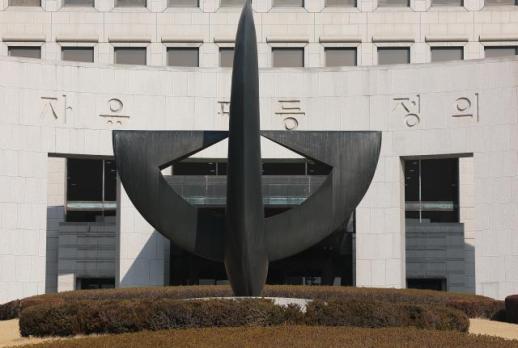 Supreme Court Recognizes Illegal Data Acquirers as Data Processors The Supreme Court has ruled that individuals who illegally acquire personal data for their own business purposes can still be classified as data processors under the data protection law, even if the acquisition process was unlawful. This decision aims to prevent gaps in victim protection that could arise if illegal acquirers were excluded from liability. According to legal sources on May 31, the Supreme Court's first division, led by Justice Seo Kyung-hwan, upheld a lower court's one-year prison sentence for a 40-year-old man identified only as Lee, who was charged with operating a gambling site and violating the data protection law. Prosecutors found that Lee illegally obtained the names, account numbers, and phone numbers of over 790 members from another site while establishing his gambling platform in 2024. He used this information to register unauthorized members to ensure the site's deposit and gaming functions operated correctly. Additionally, it was revealed that Lee's accomplice intended to create a site where numerous users could deposit betting money, recharge game currency, and withdraw winnings based on betting outcomes. Ultimately, prosecutors brought Lee to trial for operating a gambling site and violating the data protection law. The key issue during the trial was whether Lee could be considered a 'data processor' under the data protection law despite obtaining the information illegally. Lee's defense argued that since the data was acquired unlawfully, he did not qualify as an official data processor as defined by law. The first trial court found Lee guilty and sentenced him to one year in prison. However, it classified him as a handler rather than a processor, applying only the charge of 'unauthorized use.' The second trial maintained the one-year sentence but, unlike the first trial, recognized Lee as a 'data processor' who directly handled personal data, applying the violation of unauthorized use under Article 71, Item 10 of the data protection law. The Supreme Court affirmed the second trial's ruling, stating, "Even if personal data is acquired illegally, if it is used for business purposes, it should be regarded as being processed by a data processor." The court emphasized, "Excluding illegal acquirers from being classified as data processors would not only contradict the intent of the data protection law but could also create significant gaps in victim protection."* This article has been translated by AI. 2026-05-31 10:39:00
 -
 South Korea Approaches $1 Trillion in Exports, Must Prepare for Post-Semiconductor Era South Korea's exports are on the brink of a historic milestone. Projections indicate that this year's exports will exceed $900 billion for the first time. The Korea Institute for Industrial Economics and Trade recently forecast that exports will reach $924.4 billion in 2026, a 30.3% increase from the previous year. The trade balance is also expected to show a record surplus of around $220 billion. Some analysts predict that the country could soon enter the "trillion-dollar export era."This achievement is particularly significant given the current global economic uncertainties, including the prolonged Middle East conflict, high oil prices, rising protectionism, and the U.S.-China tech rivalry. Exports remain a crucial pillar of the South Korean economy and one of the most important indicators of national competitiveness.The primary driver behind this export growth is undoubtedly the semiconductor sector. As the competition for artificial intelligence (AI) investments intensifies, demand for high-bandwidth memory (HBM) and AI server semiconductors has surged, benefiting South Korea's semiconductor industry, led by Samsung Electronics and SK Hynix. The institute projects that semiconductor export growth will exceed 100% this year, with semiconductors accounting for about 40% of total exports.As the global industrial landscape shifts towards AI, the strategic value of South Korea's semiconductor industry is rising. Major U.S. tech companies are investing heavily in building AI data centers, increasing their reliance on South Korean memory semiconductors. This current export boom is not merely a recovery but is intertwined with the broader AI industrial revolution, marking a departure from past trends.However, a significant portion of the current export success relies on semiconductors. The Korea Institute for Industrial Economics and Trade has noted that the recent export increase is largely due to rising prices rather than expanded production volumes. Indeed, the sharp rise in prices for DRAM and NAND flash has significantly boosted export figures, but this does not necessarily indicate a structural leap in the overall competitiveness of South Korea's industry.The risks of an economy dependent on semiconductors are not new to South Korea. When the semiconductor market is strong, the entire national economy benefits, but downturns can simultaneously disrupt growth rates, investments, and stock markets. A structure where a single industry accounts for most of the export increase is not sustainable in the long term.The key issue is not the $924.4 billion in exports but what comes next. South Korea must enhance its manufacturing capabilities based on its AI semiconductor competitiveness. The industrial ecosystem needs to expand into robotics, autonomous driving, biotechnology, energy infrastructure, next-generation power grids, defense, and smart factories. In the AI era, the winners will likely be those countries that effectively integrate AI across all sectors, not just those that excel in semiconductor production.The government must not become complacent with these numbers. It needs to aggressively pursue increased research and development investments, regulatory innovation, expansion of power infrastructure, and the cultivation of advanced talent. In the AI era, semiconductor competitiveness alone will not suffice; data, energy, talent, and software capabilities must also be strengthened.While a $1 trillion export target is undoubtedly a commendable goal, it is not the final destination. What is needed now is not celebration over record-breaking figures but a strategic approach to prepare for the next industrial revolution. The semiconductor supercycle presents an opportunity, but if this opportunity does not translate into a structural leap in national competitiveness, the current boom may eventually fade away. What South Korea truly needs to prepare for is not just $1 trillion in exports but the "post-semiconductor era." 2026-05-31 10:21:00
 -
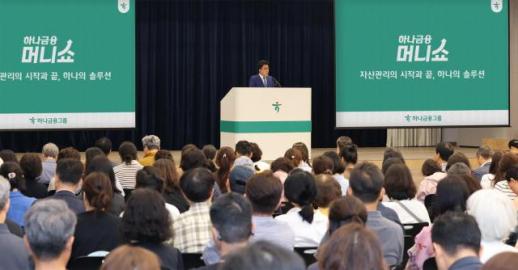 Hana Financial Group Successfully Hosts First Money Show Hana Financial Group's inaugural asset management event, the 'Hana Financial Money Show,' was a resounding success. Pre-registration closed within a day, and seats for the event were quickly filled, confirming the strong demand for asset management services.The first 'Hana Financial Money Show' took place on May 28 at the group's headquarters in Myeongdong, Seoul, and was reported to be a success on May 31.Registration for the event was conducted through Hana Financial's main mobile application, 'Hana OneQ,' and attracted approximately 1,500 participants, leading to an early closure of sign-ups.The Hana Financial Money Show featured participation from major subsidiaries, including Hana Bank, Hana Securities, Hana Life Insurance, and Hana General Insurance. Unlike previous seminars that were held separately by each subsidiary, this event provided a unified asset management service at the group level.The event included specialized lectures on various aspects of asset management, one-on-one personalized consulting, and an event zone. Consultation booths covered topics such as asset succession, gift and inheritance tax, investment strategies, domestic and international stock market outlooks, and insurance coverage analysis.The lecture program featured experts from Hana Bank discussing real estate succession and tax-saving strategies, as well as a market outlook presentation by analysts from Hana Securities.Hana Financial Group Chairman Ham Young-joo stated, "This Money Show will serve as an opportunity to become a reliable lifelong partner in our customers' asset management journey, safeguarding their dreams and their families' futures."* This article has been translated by AI. 2026-05-31 10:21:00
 -
 AJP joins World News Media Congress as AI takes center stage in Marseille SEOUL, May 31 (AJP) - Artificial intelligence has moved from a supporting theme to a central pillar of the global news industry's annual summit, as publishers, editors and media executives gather in southern France this week to navigate a rapidly changing information landscape. The 77th World News Media Congress, organized by the global news publishers association WAN-IFRA, opens Monday in Marseille, bringing together about 1,000 media leaders from more than 60 countries for three days of discussions on journalism, technology and business sustainability. For the first time, the Congress features a dedicated "AI in Media" track alongside its traditional Future of Journalism and Revenue and Growth programs, reflecting how generative AI has evolved from an experimental newsroom tool into a strategic priority for publishers worldwide. Aju Media, which has integrated AI across editorial production, translation, video creation and multi-platform distribution, has been invited to share its experience on newsroom transformation and audience growth in the AI era. The gathering marks WAN-IFRA's return to France for the first time in more than three decades. The event is being held at Marseille's Palais du Pharo, a 19th-century palace overlooking the Mediterranean that was built by Emperor Napoleon III. Founded around 600 BC, Marseille is France's oldest city and one of Europe's most diverse ports, linking Europe, Africa and the Middle East. WAN-IFRA said the choice reflects a deliberate effort to move beyond traditional media capitals and highlight emerging voices shaping the future of journalism. The annual Congress traces its roots to 1948, when delegates of the first FIEJ Congress — the predecessor to WAN-IFRA — gathered in Paris. Since then it has become the world's largest annual meeting of news publishing executives, rotating among cities across five continents. Previous editions have been held in Seoul, Cape Town, Taipei and Krakow. WAN-IFRA today represents more than 3,000 news publishing companies and 60 publishers' associations covering approximately 18,000 publications in 120 countries. This year's theme, "Rising Voices. Emerging Risks. Inspiring Futures," reflects the industry's struggle to adapt to disruptive technologies, shifting audience behavior, platform dependency and declining public trust. The AI emphasis marks a notable evolution from previous gatherings. The 2025 Congress in Krakow addressed artificial intelligence within the broader framework of media transformation under the banner "Mastering Media's New Playbook." The previous year's 75th anniversary edition in Copenhagen focused on "Shaping the Future of News Media in the AI Era." This year, however, AI has been elevated into a standalone strategic agenda. WAN-IFRA described AI as a "defining pillar" of its activities in its latest annual review. Its Newsroom AI Catalyst accelerator, developed in partnership with OpenAI, has involved 145 news organizations worldwide in experimenting with and deploying AI-powered newsroom tools. The Congress will also feature pre-conference workshops on technology, innovation, editorial strategy and business development, while industry-led roundtable discussions will examine media sustainability, revenue diversification, the future of print and the growing creator economy. All sessions will be conducted in English with AI-powered live translation available in more than 50 languages. The event will conclude with the presentation of WAN-IFRA's Golden Pen of Freedom Award, the organization's highest honor for press freedom, and the Digital Media Awards Worldwide, which now include categories recognizing the best use of artificial intelligence in newsroom operations and revenue generation. Following the Congress, delegates will visit leading Paris-based media organizations on a study tour scheduled for June 4 and 5. 2026-05-31 10:17:04