

President Lee Jae-myung speaks at the National Assembly on May 20 [Photo=Yonhap News]
The Fair Trade Commission (FTC) highlighted its detection of a $15 billion price-fixing scheme as a key achievement in the first year of President Lee Jae-myung's administration.
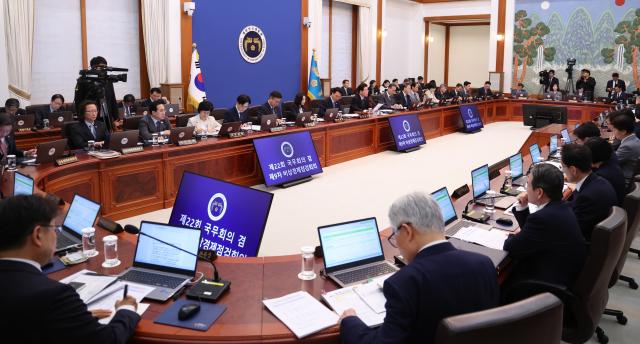
During a cabinet meeting on May 20, FTC Chairman Joo Byeong-ki presented the administration's major accomplishments over the past year.
The fines imposed for significant price-fixing cases include: 396 billion won for sugar, 3.16 billion won for pork, 338.3 billion won for printing paper, and 590 million won for eggs. Joo emphasized that "serious unfair practices by monopolistic businesses threaten the survival of companies, and establishing market rules that promote fair competition and innovation is the only way for businesses to grow."
The FTC also revamped its fine structure to combat price-fixing, raising the minimum fine by 20 times and increasing the maximum by 1.5 times.
Another notable achievement is the price reductions resulting from voluntary corrections by companies involved in price-fixing. Joo noted that since February, price reductions of up to 26% have occurred for sugar, flour, and starch due to these voluntary measures, leading to lower prices for food items such as bread, ramen, and ice cream.
Improvements to strengthen the bargaining power of economically vulnerable groups were also highlighted. Specifically, amendments to the Franchise Business Act have been completed to ensure collective bargaining rights for 380,000 franchise owners, and a three-tier safety mechanism has been established to ensure timely and stable payments for 1.2 million subcontractors.
The FTC achieved over a 50% improvement in corrective measures through proactive investigations into technology theft compared to the previous year. Additionally, a bill has been prepared to amend the Fair Trade Act, enabling 8.29 million small and medium-sized enterprises and small business owners to negotiate on equal footing with large and mid-sized companies through collective action.
Joo stated, "The FTC will continue to fulfill its role in establishing a fair market order to ensure that the principles of sustainable and fair growth take root in the market."
During a cabinet meeting on May 20, FTC Chairman Joo Byeong-ki presented the administration's major accomplishments over the past year.
The fines imposed for significant price-fixing cases include: 396 billion won for sugar, 3.16 billion won for pork, 338.3 billion won for printing paper, and 590 million won for eggs. Joo emphasized that "serious unfair practices by monopolistic businesses threaten the survival of companies, and establishing market rules that promote fair competition and innovation is the only way for businesses to grow."
The FTC also revamped its fine structure to combat price-fixing, raising the minimum fine by 20 times and increasing the maximum by 1.5 times.
Another notable achievement is the price reductions resulting from voluntary corrections by companies involved in price-fixing. Joo noted that since February, price reductions of up to 26% have occurred for sugar, flour, and starch due to these voluntary measures, leading to lower prices for food items such as bread, ramen, and ice cream.
Improvements to strengthen the bargaining power of economically vulnerable groups were also highlighted. Specifically, amendments to the Franchise Business Act have been completed to ensure collective bargaining rights for 380,000 franchise owners, and a three-tier safety mechanism has been established to ensure timely and stable payments for 1.2 million subcontractors.
The FTC achieved over a 50% improvement in corrective measures through proactive investigations into technology theft compared to the previous year. Additionally, a bill has been prepared to amend the Fair Trade Act, enabling 8.29 million small and medium-sized enterprises and small business owners to negotiate on equal footing with large and mid-sized companies through collective action.
Joo stated, "The FTC will continue to fulfill its role in establishing a fair market order to ensure that the principles of sustainable and fair growth take root in the market."
* This article has been translated by AI.
Copyright ⓒ Aju Press All rights reserved.