
Journalist

JEONG SE HEE
-
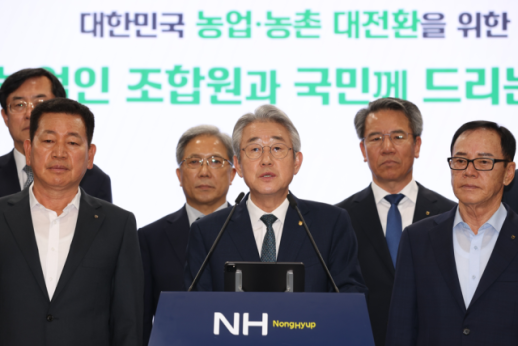 NongHyup Accepts Direct Election for Members, Maintains Stance on Audit Committee The NongHyup (National Agricultural Cooperative Federation) has announced its acceptance of a direct election system for its members as part of ongoing reforms, which also include the establishment of an audit committee. However, the organization maintains that the audit committee will serve to enhance internal auditing functions. Kang Ho-dong, Chairman of NongHyup, made this announcement on May 21 during a statement titled 'A Letter to Agricultural Members and the Public' at the NongHyup headquarters. This followed an emergency meeting of the joint emergency response committee, attended by over 60 members, including the committee chair, committee members, and executives from across NongHyup. Kang stated, "We will actively accept the direct election system with an open mind and a sense of responsibility," adding that NongHyup recognizes the need for a more democratic and accountable electoral system. However, he expressed concerns about potential regional conflicts, politicization of NongHyup, and the adverse effects of money-driven elections that could arise from implementing the direct election system. He emphasized the urgent need for institutional support, such as a public election system, to mitigate excessive election costs, which could reduce funding for member support. Regarding the establishment of the audit committee, Kang voiced apprehension, stating, "There are concerns that overlapping regulations and increased personnel and operational costs could undermine the overall autonomy and stability of management." He asserted that NongHyup would thoroughly enhance its internal auditing functions and seek effective measures that align with public expectations, while also engaging in public discussions involving academia, farmers' organizations, and stakeholders. Kang also indicated that improvements in governance and fairness in executive nominations would be addressed internally. He pledged to implement 13 self-innovation tasks recommended by the NongHyup Reform Committee to create tangible changes that agricultural members and the public can feel. The NongHyup Reform Committee serves as an official forum for discussions on structural reforms and improvements within NongHyup. Kang positioned NongHyup as a partner in the government's push for agricultural policy transformation, stating, "We will introduce a basic income for farmers and fishermen, expand solar income villages, and innovate agricultural product distribution, while also addressing labor shortages in rural areas to bring hope to agriculture and rural communities." He further committed to investing 93 trillion won in productive finance and 15 trillion won in inclusive finance over the next five years to support economic growth and assist low-income households. He also announced plans to expand the number of subsidized smart farms, which cover 75% of project costs, to 2,000 locations to establish a profitable agricultural foundation.* This article has been translated by AI. 2026-05-21 17:57:00
 -
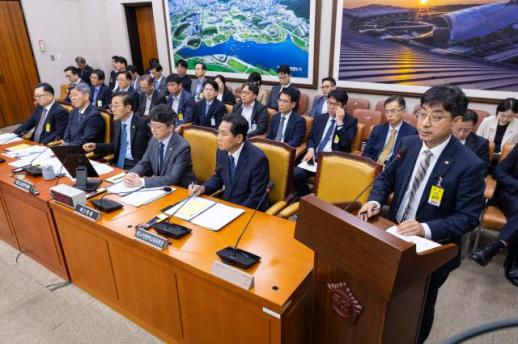 Safety Concerns Rise Amid Ongoing Deep Underground Construction Issues Concerns over safety have intensified following the discovery of rebar omissions in the GTX-A line construction and repeated ground subsidence near the Naeseong Underpass in Busan, which opened just three months ago. Both construction sites involve deep underground work, with depths exceeding 40 meters. As urban congestion increases, the frequency of deep underground projects has risen, yet the regulatory framework has not kept pace with international standards. As of May 21, the construction progress of the Yeongdong-daero underground complex development project is at 57.91%. This large-scale underground infrastructure project has a total budget of 1.7 trillion won. Errors in construction were identified late at the Samsung Station site, where rebar omissions were confirmed on the fifth underground level. Out of 218 columns in the entire platform, 80 were found to be missing rebar, with 50 of those failing to meet design standards. The primary rebar was supposed to be installed in two rows but was incorrectly placed in one. The issue is compounded by the fact that the Ministry of Land, Infrastructure and Transport only confirmed the omissions last month, despite Hyundai Engineering's initial report to the Seoul city government in November. The city explained the delay by stating, "We finalized the reinforcement plan in April after checking the applicability on-site." The city reported the issue to the Korea National Railway Authority six times, but the authority claimed it was not fully aware of the situation. An official stated, "While some related information was included in the reports by section, it was not considered a separate report." The GTX-A Samsung Station section is being constructed under the authority's oversight. In Busan, ground subsidence has occurred multiple times at the entrance of the Naeseong Underpass within a month. The city is investigating the possibility of inadequate backfilling after deep underground construction using ground-penetrating radar (GPR) but has not found any direct signs of abnormalities. Concerns about construction errors and insufficient post-construction management are being raised simultaneously. Experts point out that the current regulatory gaps are increasing the risk of accidents. The Seoul Institute published a report in September 2022, stating, "There is a general absence of regulations and standards related to deep underground construction." Since the GTX project began, the demand for underground urban rail and deep roads has surged due to a lack of available land and challenges in expanding surface infrastructure, making deep underground utilization an unavoidable choice. However, legal and regulatory frameworks remain in their infancy. A special law on deep underground construction proposed in 2020, which included penalties for safety and environmental violations, was not passed and has since been discarded. Currently, related laws are scattered, with only partial adherence to the Integrated Development of Underground Railways Act and the Underground Safety Act. Deep underground construction occurs at much greater depths than typical underground projects, necessitating a more precise approach due to varying ground conditions, groundwater flow, and hydrogeological characteristics. However, existing underground environmental impact assessments and safety management plans are primarily designed to prevent ground subsidence and do not adequately reflect the characteristics of deep underground construction. Comparing with international practices highlights a significant gap. Japan enacted the "Special Measures Law on Public Use of Deep Underground" in 2000, establishing systematic standards. During the construction of the Tokyo Outer Ring Road, they implemented a system for public disclosure of progress and long-term safety monitoring. The Seoul Institute recommends that project owners regularly check whether monitoring plans established during the design phase are being implemented as intended on-site, and take corrective actions as necessary. Suggested measures include establishing a real-time monitoring data sharing system, regular verification by third-party experts, and the introduction of a resident participation monitoring committee.* This article has been translated by AI. 2026-05-21 17:54:30
 -
 CJ Olive Young to open first US store in Pasadena next week SEOUL, May 21 (AJP) - CJ Olive Young is set to open its first U.S. store next week, tapping into the world's largest beauty market. Located on Colorado Boulevard in Pasadena's main shopping district in California, the store is scheduled to open on May 29, along with the launch of its U.S.-only online mall. The South Korean version of America's multi-brand beauty retailer Sephora will carry more than 5,000 beauty products from about 400 health and cosmetics brands. More than 80 percent of them will be South Korean brands. Facing stiff competition from local rivals and global brands including Apple, Lululemon, and Tiffany & Co., it will refresh its product lineup and store layouts as often as every two weeks to keep pace with fast-changing trends. The sprawling single-story store, covering 803 square meters, will also have an in-store space where customers can test devices, receive free skin consultations, and get personalized tips. Separately, its U.S. online store will be run through a new logistics center in Bloomington, California, which was built in March and is expected to cut delivery times from five to seven days to three to five days, while also reducing shipping costs compared with international delivery. "We will introduce South Korean beauty products to local customers including those unfamiliar with them, in a market long dominated by a handful of large foreign brands," said Olive Young CEO Lee Sun-jung. 2026-05-21 17:53:26
 -
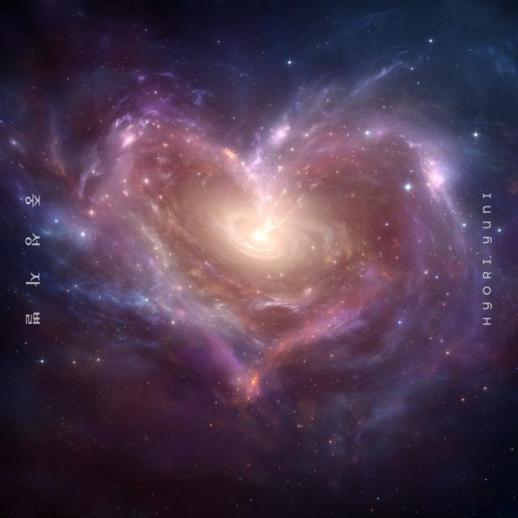 Former mimiirose member Hyori releases duet single 'Neutron Star' SEOUL, May 21 (AJP) - Hyori, former member of K-pop girl group mimiirose, has released a new duet single, "Neutron Star," with rookie vocalist Yuni, her agency Pocket7 Entertainment said Thursday. The digital single was released on major streaming platforms on May 16. Neutron Star is a ballad that uses images of the night sky and outer space to describe longing for someone who has grown distant but still exerts an emotional pull. The track pairs Hyori’s delicate vocals with Yuni’s deeper tone, focusing on the contrast between the two female vocalists. The single marks Hyori’s first major release as a solo artist since mimiirose disbanded in April, signaling a shift in musical direction from her girl group era. Pocket7 Entertainment said Hyori is currently working on a solo album targeted for release in June. Neutron Star is available on major music streaming platforms. 2026-05-21 17:50:35
 -
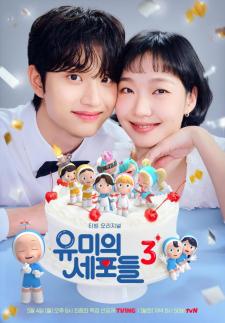 Director Lee Sang-yeob and Kim Jae-won Discuss 'Yumi's Cells' and Shin Sun-rok Every work contains numerous perspectives. Although the director and actors share the same space and time, their experiences may differ. 'Choi Song-hee's B-Cut' focuses on the vivid behind-the-scenes moments that go beyond the 'A-Cut' captured on screen. It reconstructs the 'B-Cut' moments that were even more intense than the completed frames through interviews with the director and actors. <Editor's Note> TVING's original series 'Yumi's Cells 3' (written by Song Jae-jung and Kim Kyung-ran, directed by Lee Sang-yeob) depicts the romance between Yumi (played by Kim Go-eun), now a star writer, and Sun-rok (played by Kim Jae-won), who unexpectedly enters her mundane life. Based on the webtoon of the same name, 'Yumi's Cells' has captured Yumi's life, love, and growth from its first season in 2022 to its third season in 2026.Director Lee Sang-yeob, known for his work on dramas such as 'Mr. Baek,' 'Shopping King Louie,' 'Revenge of Others,' 'A Wife Knows,' 'My Solo Love,' 'Half and Half,' and 'My Youth,' has guided 'Yumi's Cells' through all three seasons. The third season serves as the final chapter of Yumi's growth and love story, with Shin Sun-rok at its center. Kim Jae-won portrays Shin Sun-rok, Yumi's last love and the culmination of her long journey."It would be a lie to say I felt no pressure. It felt like being introduced as 'my boyfriend' by a precious daughter during a holiday gathering. Sun-rok is like a unicorn, a younger man without flaws. So, there was some pressure. But thinking back, it's an opportunity to play a fantasy-like role. I've always given my best in every project, but this time, I feel like I poured in 200% instead of 100%." (Kim Jae-won)Director Lee Sang-yeob noted that he saw Kim Jae-won's effort to manage that pressure. Rather than focusing on achieving perfect synchronization, he recognized Sun-rok's potential in Kim's attempt to maintain composure despite the tension."When Jae-won walked in, I thought, 'Oh? It's Sun-rok.' Being a rookie actor, he couldn't help but feel nervous. His efforts to hide that nervousness reminded me of Sun-rok. When I saw him sitting neatly, I thought, 'That's how Sun-rok would be,' and I found that endearing. I thought, 'If it's Jae-won, he can do it.'" (Director Lee Sang-yeob)The tone of the romance was crucial. Sun-rok needed to be youthful but not frivolous, affectionate but not overly sentimental. Kim Jae-won carefully calibrated Sun-rok's excitement while being mindful of this delicate balance."I thought it shouldn't be overly sentimental. As a younger man, he needs to convey love, but he must still appear masculine and evoke excitement without crossing into sentimentality. I determined that there's a fine line between sentimentality and excitement." (Kim Jae-won)What did Director Lee and Kim Jae-won find appealing about Sun-rok? Director Lee identified the character's core as 'twists,' while Kim Jae-won highlighted 'straightforwardness' as a key aspect of the character."I think the fundamental aspect is 'twists.' Even when there are twists, if there's no charm, it falls flat, but Sun-rok is genuinely honest and healthy. He has no prejudices. He is a wonderful young man who loves someone steadfastly and runs toward them, making him admirable as a man." (Director Lee Sang-yeob)"Sun-rok's greatest charm is his straightforwardness. Like the 'one-track general' cell in the series, once he decides, 'I love this woman,' and 'I will protect her for life,' he charges ahead without calculation. That's why he ends up marrying Yumi, right?" (Kim Jae-won)When did Sun-rok first develop feelings for Yumi? Kim Jae-won believes the answer lies in the second confession scene in the series. Despite trying to suppress his feelings due to the principle of maintaining a professional relationship, Yumi had already become an integral part of Sun-rok's life."In my interpretation, Sun-rok's journey is revealed when he says during the second confession, 'I think I liked the writer from the beginning.' That seems accurate. His feelings for Yumi grew, but due to the principle of not dating someone related to work, he forced himself to cut off his feelings. Perhaps he had a crush from the start and gradually became fond of Yumi through Kim Joo-ho. What began as curiosity turned into affection, and he may not have even realized how deep his feelings for Yumi had grown." (Kim Jae-won)Thoughts on the age difference between Yumi and Sun-rok were also discussed. Director Lee believes that the age gap enhances the dynamics of their relationship and adds to the drama's appeal, while Kim Jae-won noted that he focused on the romance without worrying about the age difference."Through seasons one and two, Yumi has matured, and in the original work, there aren't many conflicts in her relationship with Sun-rok. A drama needs conflict, but since there isn't any, we ultimately decided to introduce the keyword 'age gap.' The age difference was intended to add fun when Yumi has a crush on Sun-rok." (Director Lee Sang-yeob)"I didn't pay any attention to the age difference. Although I'm younger than Go-eun noona, she's such a lovely person that I approached the role with a mindset of loving her in reality. I was able to immerse myself in that feeling." (Kim Jae-won)'Yumi's Cells 3' consists of eight episodes, shorter than the previous seasons, which had 14 episodes each. While this brevity may be disappointing, the production team opted for a more concise conclusion to Yumi's growth, life, and love story."Seasons one and two had 14 episodes each, and I thought, 'Wow, that was long.' Haha. When we decided to conclude Yumi's story about growth and life, it raised many questions. We debated how many episodes to have. The final conclusion from the production team was, 'Even if it's disappointing, let's go with eight episodes.' We aimed to wrap up Yumi's story in an enjoyable way." (Director Lee Sang-yeob)"I can't control the number of episodes in the project. Haha. I also wondered why it was shorter than the previous series, but I think it's because Sun-rok, unlike previous characters, charges ahead once he is certain. Of course, a longer format would be great, but even in a shorter format, I believe I must give my best performance as Sun-rok." (Kim Jae-won)'Yumi's Cells' has been a series that follows not just a love story but also Yumi's journey to becoming the protagonist of her own life. For Director Lee, season three represents the conclusion of a work and a farewell to the viewers who have supported Yumi for so long."I am truly grateful. 'Yumi's Cells 3' would not have been possible without the love and support of the fans. The fans raised Yumi. Thank you for supporting, cheering, and applauding until the end. Every time I read comments saying, 'I was moved by the last scene,' I felt, 'The viewers share my feelings.' Thank you for being with us until now." (Director Lee Sang-yeob)"I believe 'Yumi's Cells' has taken a long journey from seasons one to three. I feel proud to have been part of it until the end. As a viewer who followed Yumi's perspective, I hope she lives happily." (Kim Jae-won)* This article has been translated by AI. 2026-05-21 17:49:07
 -
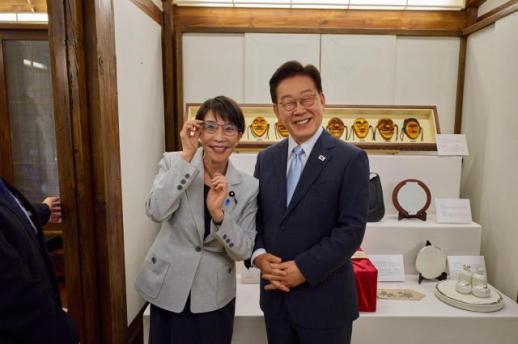 The Strategic Importance of South Korea-Japan Cooperation Amid Global Tensions "If you don’t have teeth, you have to rely on your gums." This saying aptly describes the current situation for South Korea and Japan in light of international dynamics. While the North Korea-China-Russia coalition is solidifying, the once-stable U.S.-led alliance is showing signs of strain. Chinese President Xi Jinping and Russian President Vladimir Putin reaffirmed their commitment to strengthening strategic cooperation against the U.S. during a summit in Beijing this week. The two countries have already been closely aligned in military, economic, and diplomatic matters, and recent developments suggest an even deeper bond. Speculation about Xi's potential visit to North Korea further indicates that the North Korea-China-Russia alliance is gaining strength. The challenge lies in the fact that the trilateral cooperation among South Korea, the U.S., and Japan does not appear as stable as before. The most significant variable is undoubtedly the United States. Since taking office, the Trump administration has prioritized "America First," adopting a harsh diplomatic stance that has affected both allies and adversaries alike. Pressures for increased defense spending, tariff threats, and unpredictable foreign policy have created unease not only for South Korea and Japan but also for European allies. Furthermore, as the U.S. becomes embroiled in conflicts in the Middle East, concerns about its diminishing power are being raised. Amidst joint criticism of the U.S. and Japan by Xi and Putin, South Korea cannot afford to feel complacent. Of course, the U.S. power is not going to vanish overnight. Its military strength, dollar dominance, and advanced technological capabilities remain formidable. However, the core issue is trust. The essence of an alliance is not merely military might but the ability to rely on each other. With President Trump frequently calling for U.S. troop withdrawals, allies are finding it increasingly difficult to place their trust in the United States. In this context, the strategic importance of South Korea-Japan cooperation has never been greater. This week’s visit by Japanese Prime Minister Sanae Takaichi to South Korea underscores this significance. It represents a foundation for both countries to create a safety net for their survival, independent of reliance on the U.S. However, deep historical wounds and emotional rifts still exist in South Korea-Japan relations. Issues such as forced labor and comfort women cannot be easily dismissed. Yet, the international landscape is unforgiving. If South Korea and Japan remain mired in past grievances while North Korea, China, and Russia rapidly align under shared strategic interests, they risk suffering the consequences. Moreover, cooperation between South Korea and Japan is essential for future industrial competition. In key sectors like semiconductors, batteries, artificial intelligence, supply chains, and energy security, the two nations are both competitors and collaborators. As China seeks to expand its dominance over global supply chains through technological advancements, South Korea and Japan must work together to effectively respond. History repeatedly shows that nations that unite in times of crisis survive. The world is moving toward a new era of bloc formation. As North Korea, China, and Russia strengthen their alliances, a time is emerging when the U.S. can no longer be taken for granted. Consequently, South Korea and Japan can no longer afford to dwell solely on emotions and the past. As uncertainties surrounding the U.S. grow, cooperation between South Korea and Japan is evolving from an option to a survival strategy.* This article has been translated by AI. 2026-05-21 17:46:06
 -
 Wellmade Strengthens Summer Collection Amid Strong May Sales Sejong Group's fashion retail brand Wellmade is set to continue its strong sales momentum in the first half of the year by promoting the summer collection of its women's brand Daily List. According to Sejong Group on May 21, Wellmade has recorded a 34% increase in sales compared to the same period last year. The company's promotional events and online and offline campaigns during May, which is Family Month in Korea, have garnered positive consumer responses. Daily List also contributed to this sales growth, with its sales rising 27% year-over-year this month. Cumulatively, sales for the year have increased by 17%, driving strong performance in the first half. In response, Daily List is launching its '2026 Summer Collection.' This collection, themed 'Light Moves,' focuses on lightweight and comfortable wear for the summer season. It features premium materials to enhance practicality and seasonal appeal. Key items include a tape-point jumper and a hooded string jumper, both made from sheer materials and reflecting the mint core style. These products offer UV protection, making them suitable for everyday wear and outdoor activities. Additionally, the collection includes printed long-sleeve shirts, patterned collar dresses, string vests, and elastic half pants. Some items can be styled as coordinated sets. A Wellmade representative stated, "We aim to maintain the strong performance of the first half into the second half with this summer collection." Meanwhile, Wellmade's online sales surged by 65% last year. During the winter season, sales increased by 10% due to strong outerwear sales. Sejong attributes the improved performance to product planning tailored to the customer bases of its key brands, including Indian, Bruno Baffi, and Daily List.* This article has been translated by AI. 2026-05-21 17:43:45
 -
 America-first policy to outlast Trump, says his former chief of staff SEOUL, May 21 (AJP) - Former White House chief of staff Mick Mulvaney said the “America First” brand of economic nationalism and a more restrained U.S. approach to overseas engagement are likely to remain defining features of Washington’s policy landscape long after Donald Trump leaves office. Speaking at a luncheon hosted by the American Chamber of Commerce in Korea at the Grand Hyatt Seoul, Mulvaney said protectionism and economic nationalism reflect broader structural shifts that will shape U.S. policy for years to come. Mulvaney, who briefly served as acting White House chief of staff during Trump’s first term, offered a wide-ranging assessment of the second Trump administration, U.S. foreign policy, trade tensions and the future of the U.S.-Korea economic partnership before more than 120 executives and business leaders. The fireside chat was moderated by AMCHAM Chairman and CEO James Kim. Drawing on his experience in the first Trump administration, Mulvaney said he sees four long-term trends emerging from Washington that are likely to outlast Trump himself: entrenched protectionism and economic nationalism, growing reluctance among Americans to support prolonged overseas engagement, persistently elevated inflationary pressures and a greater willingness by Washington to intervene in strategic industries and private-sector markets. “These are not temporary developments,” Mulvaney said. The discussion also focused on the future of the U.S.-Korea economic partnership amid record bilateral investment and expanding cooperation in semiconductors, shipbuilding, energy, artificial intelligence and advanced manufacturing. Mulvaney highlighted Korea’s growing role as a strategic economic partner and regional innovation hub within the evolving U.S. policy landscape. Asked how Trump views Korea, Mulvaney joked that Trump “doesn't really trust anybody,” adding that the president tends to see even close allies as benefiting from U.S. security commitments. Mulvaney said Trump evaluates foreign countries largely through two lenses: defense spending as a share of gross domestic product and trade deficits with the United States. In that context, he said Korea was “not in the really really bad club,” noting that Trump had been more frustrated during his first term with some European countries that he believed spent too little on defense. At the same time, Mulvaney said Trump understands the geopolitical importance of countries such as Korea, Japan and Australia. Describing the U.S. presidency as “the most isolated job” in the world apart from perhaps the pope, Mulvaney said the version of Trump portrayed on NBC’s “The Apprentice” closely resembles the real person. Unlike many politicians, he added, Trump is not particularly pretentious. Asked how business leaders and foreign officials should deal with Trump, Mulvaney advised them to be direct and straightforward. “His bullshit-meter is really really sensitive,” he said after briefly apologizing to the audience for swearing. Mulvaney also said Trump prefers doing business with people he personally enjoys being around. He cited Shinzo Abe as one of the foreign leaders who managed Trump most effectively during his first term, saying Abe understood the importance of personal rapport and even played golf with Trump despite being “one of the worst golfers in my lifetime.” Mulvaney added that Trump had been “really upset” by Abe’s assassination. He contrasted Trump’s first and second presidential transitions, saying Trump did little preparation before his unexpected 2016 victory but spent four years planning personnel and Cabinet appointments ahead of his 2024 return. Looking ahead to the Nov. 3 midterm elections, Mulvaney said he does not expect the administration’s policy direction to shift significantly even if Democrats regain control of the House or Senate. He also warned that ongoing wars and geopolitical instability are unlikely to ease anytime soon, factors he said will continue shaping the global business environment. Mulvaney also dismissed claims that Trump’s tendency to leave sentences unfinished reflects mental decline, saying the president has “always spoken that way.” 2026-05-21 17:42:12
 -
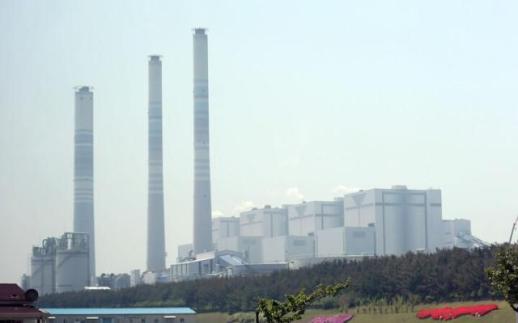 Energy Legislation Advances, Including Coal Phase-Out Support Legislation supporting the energy transition agenda of the Lee Jae-myung administration is advancing in the National Assembly. Key measures include a special law to support regions affected by coal plant closures, reforms to the Renewable Portfolio Standards (RPS), and amendments to three laws aimed at timely power grid construction. On May 21, Lee Ho-hyun, the Deputy Minister of the Ministry of Climate, Energy and Environment, held a briefing at the government complex in Sejong, stating, "Laws have been passed that will facilitate a just transition while enhancing local acceptance as we move toward a carbon-neutral energy mix. This is significant in establishing a regulatory framework to achieve our energy transition goals." The National Assembly's Climate, Energy, and Environment Committee approved 46 bills during a plenary session on May 19, including the 'Special Law on Support for Workers and Regions Affected by Coal Power Plant Closures' and amendments to the Renewable Energy Act. The coal plant closure support law addresses potential large-scale unemployment and economic downturns in regions affected by the closure of coal power plants. It focuses on institutional support for worker job transitions, employment assistance, and the development of alternative industries in these areas. The special law allows the national and local governments to prioritize the development of zero-carbon energy industries using the infrastructure of decommissioned coal power plants. It also mandates the establishment of local transition councils that include representatives of workers and residents to ensure their participation in the planning process for regional support. Notably, the law provides a basis for designating certain coal power plants as security power generation facilities instead of approving closure plans if deemed necessary for the reliability and stability of the power supply. The government has expressed concerns about job insecurity for workers, the impact on partner companies, and regional economic downturns as the closure of coal power plants accelerates in the transition to carbon neutrality. Several coal plants, including the Taean Unit 2 this year and the Hadong Units 1-3, Boryeong Units 5-6, and Samcheok Units 3-4 next year, are scheduled for closure. As a result, the government aims to minimize regional shocks during the closure process while maintaining the stability of the power supply. Deputy Minister Lee stated, "The principle is to phase out coal power by 2040, but we are considering a concept of security power that can be temporarily utilized in emergency situations, taking into account the power supply situation and regional conditions." He added, "A detailed roadmap for closure and compensation will be discussed in conjunction with the 12th Basic Plan for Power Supply and Demand." Additionally, the amendment to the Renewable Energy Act, which reforms the RPS system, has been passed. This amendment aims to gradually phase out the RPS system, which has been in operation since 2015, and transition to a long-term fixed-price contract market. Going forward, new renewable energy projects will be operated through a long-term fixed-price contract market based on capacity units. The existing 29 RPS obligated entities will be managed separately as eight public sector entities and 21 private sector entities. Moreover, amendments to three laws related to timely power grid construction (the Special Law on Power Grids, the Electricity Business Act, and the Act on Promotion of Power Generation Development) were also approved in this committee session. The amendments include provisions for private companies to construct certain sections of the national power grid and then transfer ownership to Korea Electric Power Corporation (KEPCO) under a Build-Transfer (BT) model. The government sees the need to leverage private capabilities as demand for the power grid surges due to the expansion of renewable energy and the growth of the artificial intelligence (AI) industry.* This article has been translated by AI. 2026-05-21 17:42:00
 -
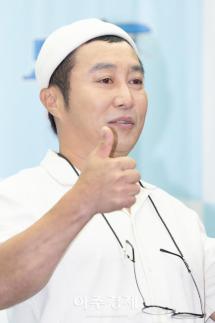 Kim Byung-man Apologizes for Arriving Late to Press Conference 코미디언 김병만이 TV조선 '생존왕2' 기자간담회에 지각한 것에 대해 사과했다. On May 21, comedian Kim Byung-man issued an apology for arriving late to the press conference for TV Chosun's "Survivor King 2." He posted a lengthy message on his social media, stating, "I am writing this to apologize for my tardiness at the production announcement due to my oversight." He explained, "I traveled from Jeju on May 19 to attend the press conference on May 20. I was preparing for the event and had scheduled morning activities, but I failed to consider the sudden weather changes and traffic conditions due to rain." Kim acknowledged, "I made the journalists wait, and as a result, my mistake caused a delay in the event schedule. I sincerely apologize for this and will be more careful in adjusting my schedule in the future." He added, "I apologize once again to everyone who experienced inconvenience and difficulties because of me. The entire staff and cast worked passionately on location in a remote area of Taiwan. I hope my oversight does not diminish expectations for the program. I appreciate your continued interest and support." On May 20, Kim Byung-man arrived over 20 minutes late to the press conference held at TV Chosun's Gasan studio in Geumcheon-gu, Seoul, sparking controversy.* This article has been translated by AI. 2026-05-21 17:39:19