

Journalist

Jack L. Rozdilsky
-
 South Korea Women’s Curling Team Falls to Canada, Misses Semifinals at 2026 Milan-Cortina Olympics World No. 3 South Korea’s women’s curling team, Gyeonggi Province, failed to reach the semifinals at the 2026 Milan-Cortina Winter Olympics. The team — skip Kim Eun-ji, third Kim Min-ji, second Kim Su-ji, lead Seol Ye-eun and fifth Seol Ye-ji — lost 10-7 to Canada on Feb. 19 (Korea time) in its ninth and final round-robin game at the Cortina Curling Olympic Stadium in Cortina d’Ampezzo, Italy. South Korea entered the match tied for third at 4-4 with Canada and the United States. A win would have clinched a semifinal berth regardless of other results. Instead, South Korea fell to world No. 2 Canada and finished tied for fifth at 5-4. In women’s curling, 10 teams play nine round-robin games, with the top four advancing to the semifinals. Sweden finished first at 7-2. The United States, Switzerland and Canada followed at 6-3 to claim the remaining semifinal spots. South Korea trailed early after giving up one point in each of the first two ends, but took three in the third to move ahead. Canada scored two in the fourth, and South Korea answered with one in the fifth to make it 4-4 at the break. The turning point came in the sixth end. With South Korea facing multiple Canadian stones in scoring position, Kim Eun-ji’s final shot failed to clear them, and Canada scored four to take an 8-4 lead. South Korea scored one in the seventh, then allowed one in the eighth. It pulled within 9-7 with two points in the ninth and looked for a comeback in the 10th, but could not steal, sealing the 10-7 loss. 2026-02-20 02:03:00
 -
 Short Track Captain Lee Jun-seo Targets Gold in Men’s 5,000 Relay at Milan Olympics South Korea’s men’s short track team is training with one goal: gold in the 5,000-meter relay final. Team captain Lee Jun-seo said he is ready to do his part in the title bid. Lee spoke after training on Feb. 19 at the Milan Ice Skating Arena in Italy. As captain, Lee has helped set the tone ahead of the final, scheduled for early Feb. 21 in Korea. Asked about tactics, he said he could not share details because it would reveal the team’s plan. Still, he added, “If I race, I’ll push my teammates with everything I have and help our gold-medal challenge.” At 182 centimeters (about 6 feet), Lee is expected to take on the “push man” role — the skater who drives a teammate forward during exchanges to build speed. “We’ve trained countless times, so I’m confident in our teamwork,” Lee said. “We know each other’s roles and strengths well, so I think we can produce a good result in the final.” South Korea’s men have had mixed results at these Games, with Hwang Dae-heon winning silver in the 1,500 meters and the team taking bronze in the 1,000. Lee said a relay win would erase that disappointment. “We started with Jong-eon’s bronze, then Dae-heon won gold, and now it’s our turn to win gold,” he said. He added that South Korea should skate with confidence because it won the most gold medals in the men’s 5,000 relay on the 2025-2026 International Skating Union World Tour. The team won two gold medals across World Tour events 1 through 4 and ranked No. 1 in the world standings. South Korea has not won Olympic relay gold since the 2006 Turin Games. The team will try to end that drought in the final early Feb. 21. 2026-02-19 23:12:00
 -
 South Korea’s Won Yoon-jong Elected to IOC Athletes’ Commission South Korean bobsledder Won Yoon-jong has been elected to the International Olympic Committee’s Athletes’ Commission, becoming the first South Korean from a winter sport to win a seat. The IOC announced the results Thursday at the athletes village for the 2026 Milano-Cortina d’Ampezzo Winter Olympics in Milan. Won finished first among 11 candidates. His term will run for eight years, through 2034. Voting was held among Olympic athletes from late January through Feb. 18. Won is South Korea’s third IOC athletes’ representative, following taekwondo gold medalist Moon Dae-sung at the 2004 Athens Olympics and table tennis men’s singles gold medalist Yoo Seung-min, a former president of the Korean Sport & Olympic Committee. He is the first from a winter Olympic sport. Short-track speed skater Jeon I-kyung ran in the election at the 2002 Salt Lake City Winter Olympics, and sled athlete Kang Gwang-bae ran at the 2006 Turin Winter Olympics, but neither was elected. With Won’s election, South Korea now has two active IOC members. Kim Jae-yeol, president of the International Skating Union, was elected an IOC member in 2023 and was also elected to the executive board at an IOC session held shortly before the Olympics, the report said.* This article has been translated by AI. 2026-02-19 22:24:00
 -
 Short-track skater Kim Gil-li targets individual gold after relay win at Milan Olympics Kim Gil-li, who won gold in the women’s 3,000-meter relay in short track, said she wants to add an individual title as well. After official training at the Milan Ice Skating Arena on Feb. 19, Kim said she is aiming for two gold medals. “I’m hungry for two titles,” she said. “After the team event, I want to go for gold in the individual races, too.” South Korea’s women’s team won the 3,000-meter relay final, with Kim skating the anchor leg and finishing a late comeback. With her bronze medal in the women’s 1,000 meters, she has become a multiple medalist at these Games. Kim now turns to the individual events, including the 1,500 meters on Feb. 21. “I’ll deliver the best performance I can,” she said. She also said she hopes to face teammate Choi Min-jeong in the final. “I’ve always competed with Min-jeong, and I’ve grown a lot watching her,” Kim said. “I want us to reach the final together and compete in good spirit.” Looking back on the relay, Kim said she had carried guilt after falls in earlier races. She said she fell in the women’s 3,000-meter relay final at the 2025 Harbin Asian Winter Games, and also went down in the mixed 2,000-meter relay semifinals at these Olympics after getting tangled with American skater Corinne Stoddard. “I felt really sorry to my older teammates, but winning gold in the women’s 3,000-meter relay let me put that weight down,” she said. Kim said the individual races feel different. “In the individual events, I can focus only on my own race, so I feel more at ease,” she said. “I’m relieved after getting past a big hurdle. With the pressure gone, I’ll show what I can do.”* This article has been translated by AI. 2026-02-19 22:03:00
 -
 Choi Min-jung Begins Training for 1,500 Meters After Olympic Relay Gold After winning the women’s 3,000-meter relay in short track to claim her fourth career Olympic gold, Choi Min-jung of Seongnam City Hall will race the 1,500 meters on Feb. 21, aiming to set a new South Korean record for most Olympic medals across the Summer and Winter Games. Choi is scheduled to compete at 4:15 a.m. Feb. 21 (Korea time) at the Milan Ice Skating Arena in Italy. A gold medal in the event could rewrite South Korea’s Olympic record book. Choi won gold in the women’s 1,500 meters and the women’s 3,000-meter relay at the 2018 Pyeongchang Winter Olympics. At the 2022 Beijing Games, she won gold in the 1,500 and took silver in the 1,000 and the 3,000-meter relay. With the relay gold at this Olympics, she now has four Olympic gold medals and two silvers. Her latest medal brought her level with Jin Jong-oh (shooting), Kim Soo-nyung (archery) and Lee Seung-hoon (speed skating) for the most Olympic medals by a South Korean athlete across the Summer and Winter Games, according to the report. She also matched short track great Jeon I-kyeong’s South Korean Winter Olympic record of four gold medals. If Choi wins the 1,500, she would set new national records for both total Olympic medals and Winter Olympic golds. Choi returned to the ice to prepare for the 1,500 just 12 hours after winning the relay gold. After training, she told reporters, “Things didn’t go well in the early and middle part of the women’s 3,000-meter relay final, but I think I was able to get through it because so many people cheered for us.” She added, “I want to carry that good energy into the last event, the women’s 1,500, and make sure I get a good result.” On tying Jeon’s record, Choi called her “a senior I respect,” and said, “Because so many seniors, including coach Jeon, set great records, younger athletes like me have been able to follow and take on new challenges.” Choi said she is not focused on records. “I just want to trust myself as usual and do my best,” she said. “I want to finish this Olympics smiling,” she added, saying, “Just like I didn’t cry yesterday, I won’t cry tomorrow either — I’ll get a good result.” * This article has been translated by AI. 2026-02-19 21:12:00
 -
 Iran and US reach preliminary agreement on negotiation principles in Geneva SEOUL, February 19 (AJP) - Iran and the United States have reached a comprehensive agreement on the basic principles for future negotiations following indirect talks held at the Omani Embassy in Geneva, the Embassy of the Islamic Republic of Iran in South Korea said Thursday. Seyed Abbas Araghchi, the Iranian Foreign Minister, described this second round of discussions as more serious than previous sessions, noting they took place within a constructive and practical atmosphere. The meetings serve as a critical step in addressing long-standing friction between the two nations regarding nuclear and diplomatic issues. The talks were facilitated by Omani mediation to provide a neutral ground for the two delegations to communicate. Both parties have started drafting a transition agreement and agreed to coordinate the schedule for the next round of meetings following a formal exchange of texts. Despite the progress, officials emphasized that additional efforts are required to resolve remaining points of contention. The diplomatic track was further detailed in a telephone conversation between Professor Seyed Abbas Araghchi and Rafael Grossi, the Director General of the International Atomic Energy Agency (IAEA). The two officials reviewed the status of the indirect negotiations and exchanged views on the essential requirements for establishing a consistent negotiating framework. Director General Grossi provided a positive assessment of the Geneva talks and affirmed the agency's readiness to support ongoing diplomatic initiatives. During a keynote speech at the United Nations Conference on Disarmament in Geneva, Professor Seyed Abbas Araghchi reaffirmed that nuclear weapons represent the most significant threat to humanity. He clarified that the nuclear program of Iran is based entirely on peaceful objectives and stated that nuclear weapons hold no place in the national security doctrine of the country. The foreign minister further stressed the importance of maintaining the technical and neutral character of the IAEA. He committed to continued constructive cooperation with the agency within the framework of legal obligations to ensure a sustainable and balanced agreement that secures the rights of the Iranian people. Iran maintains that it will pursue goal-oriented and result-driven diplomacy to achieve practical outcomes through these sustained diplomatic efforts. 2026-02-19 19:38:31
 -
 Men’s Ski Halfpipe Qualifying at Milan 2026 Postponed by Heavy Snow The men’s freestyle ski halfpipe qualifying was postponed because of heavy snow. Olympic organizers said the qualifying round, originally scheduled for 6:30 p.m. (Korea time) on Thursday, was pushed back 24 hours to 6:30 p.m. Friday. South Korea’s Lee Seung-hoon and Moon Hee-sung, both of Korea National Sport University, were set to compete. Halfpipe is judged on aerial tricks performed on a semicylindrical course. In the women’s event, Choi Ga-on of Sehwa High School previously won South Korea’s first gold medal in a snow sport. Ski halfpipe uses skis rather than a snowboard on the same type of pipe. The men’s halfpipe final had been set for 3:30 a.m. (Korea time) on Feb. 21, meaning qualifying and the final would be held on the same day if the schedule otherwise holds. The men’s freestyle ski aerials qualifying and final, scheduled at the aerials moguls park near Livigno Snow Park, were also postponed. No South Korean athletes are entered in that event. Earlier, heavy snow in Livigno on Feb. 17 forced postponements including the women’s snowboard slopestyle final and a ski aerials qualifying round. 2026-02-19 19:36:00
 -
 Choi Min-jeong, Kim Gil-li and Noh Do-hee draw 1,500 quarterfinal heats at Milan Olympics South Korea’s women’s short track team will return to the ice in the 1,500 meters, aiming for another gold at the 2026 Milan-Cortina d’Ampezzo Winter Olympics. The quarterfinal heat draws were announced on Feb. 19 (Korea time). Kim Gil-li, who won bronze in the women’s 1,000 and gold in the 3,000 relay, was placed in Heat 1. She will race Canada’s veteran Kim Boutin, the Netherlands’ Michelle Velzeboer, China’s Zhang Chutong, Croatia’s Valentina Aščić and Poland’s Natalia Maliszewska. The main rival in the heat is the 31-year-old Boutin, who took bronze in the 3,000 relay final and will face Kim for a second straight event. Choi Min-jeong, who won gold in the women’s 3,000 relay to claim her fourth career Olympic gold and draw level with short track great Jeon I-kyeong, will skate in Heat 3. The heat includes Italy’s Arianna Sighel, who won silver in the relay a day earlier, and Belgium’s Tineke Den Dulk, a mixed relay bronze medalist. Noh Do-hee was drawn into Heat 6, which includes Italian star Arianna Fontana. Fontana added relay silver a day earlier, bringing her Olympic total to 14 medals (three gold, six silver and five bronze) across her sixth Games, making her Italy’s most decorated Olympian. Belgium’s Hanne Desmet and American Kristen Santos-Griswold were also listed as key skaters in the heat. South Korea’s women’s 1,500 races are scheduled for early Feb. 21 (Korea time). * This article has been translated by AI. 2026-02-19 19:03:00
 -
 Hyundai Motor speeds up robotaxi push as it expands physical AI strategy Hyundai Motor Group, which has drawn attention in the AI race with its humanoid robot Atlas, is also accelerating its robotaxi business as it pushes to commercialize “physical AI.” After demonstrating the potential of humanoid robots in factories and logistics sites, the group is expanding into autonomous driving to speed up its vision of AI that operates in the real world. Industry officials said Feb. 19 that Hyundai is developing autonomous driving on two tracks rather than merging everything into a single architecture. It is pursuing a certification-friendly modular approach through Motional, prioritizing safety validation and regulatory approvals, while also developing a more general end-to-end (E2E) approach through 42dot. Motional, which is building the modular system, aims to commercialize a Level 4 driverless robotaxi service in Las Vegas later this year, signaling commercial operations for the general public in a real urban environment. Motional is currently running test operations based on Hyundai’s Ioniq 5 robotaxi. At a media briefing in Las Vegas last month, Motional CEO Laura Major said, “Given that the market is still in its early stages, I don’t think there is any company that has a cost-efficient Level 4 autonomous driving system yet,” adding, “Motional wants to focus not only on a safe driving experience but also on developing a profitable business model.” Hyundai’s robotaxi push is the other pillar of its physical AI strategy alongside humanoid robots. The group sees Atlas’ data from physical work environments and robotaxi driving data from city roads as inputs that can help AI understand and adapt to the real world. Hyundai plans to use its hardware-software integration capabilities to expand practical uses of physical AI more quickly. Hyundai also plans to build a domestic physical AI ecosystem, including AI data centers, to strengthen future technologies such as in-vehicle AI, autonomous driving, manufacturing efficiency and robotics. To that end, it is stepping up collaboration with global AI companies. Hyundai has been pursuing cooperation with Waymo, Alphabet’s autonomous driving unit, to adopt the Ioniq 5 as an autonomous vehicle platform. Boston Dynamics has also signed a strategic partnership with Google’s AI research organization DeepMind to accelerate development of future humanoid technologies. At CES 2026 in Las Vegas last month, Hyundai Motor Group Executive Chairman Chung Euisun drew attention when he met again with Nvidia CEO Jensen Huang, a reunion that became a talking point in the industry. Some in the industry have speculated Hyundai could adopt Nvidia’s autonomous vehicle platform, “Alpamayo.” Hyundai also plans to expand cooperation among its Advanced Vehicle Platform (AVP) division, 42dot and Motional to speed development. It is reviewing ways to combine Level 4 operational know-how and safety validation systems accumulated through the Las Vegas robotaxi rollout with 42dot’s roadmap to advance software-defined vehicles (SDVs). An industry official said Park Min-woo, a president recruited from Nvidia who runs both AVP and 42dot, is expected to move quickly on upgrading 42dot’s autonomous driving technology, Atria AI, and deciding whether to use Nvidia’s Alpamayo. Separately, Chung visited 42dot’s Pangyo headquarters late last year to review Atria AI, a Level 2+ E2E autonomous driving system based on the Ioniq 6, and stressed that “safety and completeness must come first to secure global competitiveness.”* This article has been translated by AI. 2026-02-19 18:05:12
 -
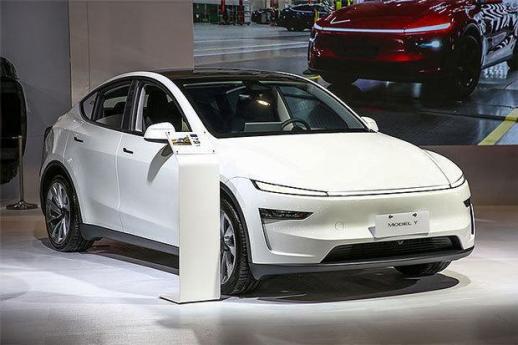 Mercedes-Benz Korea to Launch Direct Online Sales as Imported Brands Expand Fixed-Price Model Imported carmakers are moving away from dealer-led sales toward online direct-to-consumer models. Following Tesla, brands such as Polestar, Honda and Volvo (for new vehicles) have expanded direct sales, and industry No. 2 Mercedes-Benz is set to introduce its own system in the first half of this year. Supporters say cutting distribution margins and price markups could expand the overall market, while critics warn it could weaken dealer-built service networks and hurt consumers. According to industry officials on the 19th, Mercedes-Benz Korea will begin fully implementing its direct-sales model, “Retail of the Future” (RoF), starting in April. Under RoF, the Korean unit distributes vehicles directly and runs pricing closer to a fixed-price system. The key feature is that headquarters will manage vehicle prices, inventory and delivery dates, allowing customers to buy at the same price nationwide. To integrate systems, the company has significantly increased staff based in South Korea, while dealers will focus on showroom operations, after-sales service and specialized repairs. A Mercedes-Benz Korea official said the company communicated steadily with dealers for about two years to address misunderstandings and distrust that could arise early in the rollout, and now believes the groundwork is in place for stable adoption. The official said consumers can expect benefits from removing distribution margins and moving toward fixed pricing, while dealers, as official partners, can concentrate on improving service quality, calling it a win-win. More imported brands have adopted direct sales in recent years. Tesla Korea has used direct sales since entering the market, and Volvo Korea, Polestar Korea, Honda Korea, Toyota Korea, Stellantis Korea and Cadillac Korea have expanded direct-sales programs over the past five years. These brands allow customers to buy vehicles online and check inventory and delivery timing in real time. An industry official said the traditional dealer system often forced consumers to shop around because prices, delivery dates and service benefits varied by importer, but direct sales unify pricing and channels, making management easier for headquarters and purchases more convenient for customers. Dealers, however, say wider adoption of direct sales could limit competition, raise imported-car prices over the long term and lead to negative effects such as fewer service centers. Tesla, which has maintained direct sales, sells about 60,000 vehicles a year in South Korea but has only 16 service locations nationwide. A dealer official said dealers have helped expand the imported-car ecosystem despite low margins of about 3% to 5% of vehicle prices, taking on inventory purchases, financing interest, large showroom openings and building after-sales networks. The official said that as direct sales expand and sales margins shrink, dealers could face disruptions in operating the large service centers they currently run. 2026-02-19 18:04:20