

Journalist

Jack L. Rozdilsky
-
 Auto capacity looms over Korea–Germany race for Canada's $41bn submarine project SEOUL, February 06 (AJP) - Auto-sector capacity — and Ottawa’s efforts to shield its car industry from U.S. tariffs — is emerging as a decisive variable in the two-horse race between South Korea and Germany for Canada’s Canadian Patrol Submarine Project (CPSP), sources said after meetings this week with visiting Canadian officials. “Both South Korea and Germany are automotive manufacturing nations,” said Stephen Fuhr, Canada’s special envoy for defense procurement, during tours of Korean defense manufacturers and talks with senior officials. “If there are areas where we can cooperate in sectors like automobiles, we are looking to pursue broader partnerships that go beyond defense,” he said. Fuhr made the point explicit after touring the Jang Yeong-sil, a KSS-III submarine undergoing sea trials, reiterating that the decisive criterion in selecting a CPSP contractor would be which country delivers the greatest industrial benefits to Canada. Auto crisis sharpens offset calculations The message comes as the government of Mark Carney moves to stabilize Canada’s auto sector amid U.S. tariffs and uncertainty over the review of the USMCA trade pact this year. U.S. President Donald Trump last year imposed 25 percent tariffs on Canadian vehicles and parts, a shock to an industry that exports about 90 percent of its output to the U.S. Since then, thousands of workers have been laid off as major automakers, including General Motors and Stellantis, scaled back production. Carney’s government has responded with financial incentives for manufacturers, tariff credits tied to domestic production and the reintroduction of EV buyer rebates, as Ottawa seeks to diversify industrial partnerships beyond the U.S. Against that backdrop, officials say submarine bids are being judged not only on military performance but also on their potential to reinforce supply chains, investment and employment. Two platforms, one industrial test From a technical standpoint, South Korea’s proposed KSS-III Batch-II, developed by Hanwha Ocean, is widely assessed as more heavily armed and mature than Germany’s Type 212CD offered by ThyssenKrupp Marine Systems (TKMS). The KSS-III displaces about 3,000 tons and is equipped with 10 vertical launch system cells for long-range precision strikes. It has already entered service with the Republic of Korea Navy, allowing Fuhr to physically tour the submarine during ongoing sea trials. By contrast, the Type 212CD remains at the design and construction stage, with the first vessels for Germany and Norway not scheduled for delivery until 2029 and the early 2030s. The German submarine, displacing around 2,500 tons, uses hydrogen fuel-cell air-independent propulsion optimized for cold and Arctic waters but lacks vertical launch capability. Canadian officials, however, say platform performance accounts for only a fraction of the final evaluation, with fleet sustainability and economic return carrying the greatest weight. That assessment has been reinforced by Fuhr, who has stressed that CPSP is a strategic industrial decision as much as a naval acquisition. Germany’s VW anchor vs. Korea’s constraints Germany enters the race with a notable advantage through Volkswagen’s multi-billion-dollar battery and EV investment in Canada, which Berlin has aligned with its defence bid to underline long-term industrial integration. The Korean side has also emphasized high-level economic diplomacy. Team Korea, led by presidential chief of staff Kang Hoon-sik, included Hyundai Motor Group Chairman Chung Eui-sun in recent outreach to Ottawa. But analysts note that Hyundai Motor Group faces structural constraints. With a large EV complex already operating in Georgia, the commercial case for building a full-scale plant in Canada remains uncertain. Seoul has instead promoted broader industrial cooperation, including recent bilateral arrangements aimed at encouraging Korean automotive and future-mobility investment in Canada. Wider defense partnership pitch Kang met on Friday with Fuhr in just over a week at the Cheong Wa Dae in line with President Lee Jae Myung’s directive to accord special diplomatic courtesy to visiting Canadian officials. “Many people are hoping for a positive result from this project, and we are well aware of those expectations,” Kang wrote in a Facebook post after the talks. “However, this is by no means an easy situation.” “Although the circumstances are difficult, the government and companies will work together as one team and do their utmost until the very end,” he added. South Korea is also positioning its submarine proposal within a broader defense-industrial partnership as Canada accelerates army modernization and seeks domestic manufacturing capacity. Hanwha Aerospace has highlighted its willingness to invest locally, citing its armored vehicle production hub in Australia as a model for a Canadian facility that could generate jobs and support technology transfer. Germany, meanwhile, has expanded its offer to include joint research and workforce development, seeking to appeal to Ottawa through advanced R&D cooperation as well as platform delivery. With final bids due by March 2, both camps are now treating auto-sector cooperation as a core offset battleground — one shaped increasingly by Canada’s industrial vulnerability under U.S. trade pressure. “The key question,” Fuhr said during his visit to Hanwha’s Geoje shipyard, “is who can offer the best economic opportunity for Canada.” Background: Canada’s submarine replacement drive Canada’s CPSP aims to replace the Royal Canadian Navy’s aging Victoria-class fleet, which is scheduled for decommissioning in the mid-2030s. In July 2024, Ottawa announced plans to procure up to 12 conventionally powered, under-ice capable submarines, followed by a request for information in September that year. The government expects to award a contract by 2028, with the first new vessel delivered no later than 2035. The program is closely linked to Canada’s updated defense strategy, which prioritizes Arctic security as climate change makes northern waters more accessible to external powers, including Russia and China. Germany and Norway are jointly building six Type 212CD submarines, with deliveries beginning in 2029. South Korea’s Hanwha Ocean and HD Hyundai Heavy Industries have formed a “One Team” partnership to offer the KSS-III, with the first four units proposed for delivery by 2035. Korea has also pitched lithium-ion battery propulsion, extended underwater endurance and comprehensive crew training and maintenance facilities on both Canadian coasts. Beyond capability, Ottawa is seeking a partner with robust global supply chains to avoid a repeat of the Victoria-class’s “orphan fleet” problem, which has complicated maintenance and parts procurement for decades. 2026-02-06 16:09:54
 -
 South Korea Women Reach Asia Team Badminton Semifinals, Clinch Uber Cup Berth South Korea’s women’s badminton team have secured a spot in the world championships main draw. South Korea beat Malaysia 3-0 in the women’s quarterfinals of the 2026 Badminton Asia Mixed Team Championships on Thursday at Conson Gymnasium in Qingdao, China, advancing to the semifinals. Held every two years, the tournament is Asia’s top team event and also serves as the Asian qualifier for the world team championships. With many of the sport’s strongest teams based in Asia, the event is often viewed as world-class in level. By reaching the semifinals, South Korea earned qualification on merit for the BWF World Women’s Team Championships (Uber Cup), to be held in Denmark in April. In the opening match, women’s singles world No. 1 An Se Young beat Letshanaa Karupathevan (No. 37) 2-0. In the second match, women’s doubles world No. 3 Baek Ha Na and Kim Hye Jeong defeated Ong Xin Yee and Carmen Ting (No. 25) 2-0. Park Ga Eun (No. 70) then sealed the tie with a 2-0 win over Weng Ling Ching (No. 41). South Korea will play the winner of Indonesia vs. Thailand for a place in the final. The team’s best finish at the event is runner-up in 2020 and 2022, and they will try to better that mark led by An. * This article has been translated by AI. 2026-02-06 16:00:17
 -
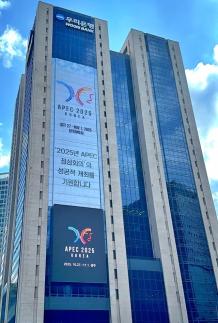 Woori Financial Posts 3.1413 Trillion Won Net Profit, Up 1.79% Woori Financial Group said its net profit for last year totaled 3.1413 trillion won, marking a second straight year above 3 trillion won. The result was up 1.79% from a year earlier. * This article has been translated by AI. 2026-02-06 16:00:00
 -
 Hanwha Ocean to build Korea's largest wind turbine installation vessel SEOUL, February 06 (AJP) - Hanwha Ocean said on Friday it had secured a 768.7 billion won ($530 million) order to build a wind turbine installation vessel from affiliate Ocean Wind Power 1. Delivery of the vessel is scheduled for the first half of 2028. The company said deployment will initially be considered for domestic offshore wind projects. According to Hanwha Ocean, the vessel will be the first in South Korea capable of installing 15-megawatt-class offshore wind turbines and is expected to become the largest operating in the country’s offshore wind sector. The company noted that many offshore wind projects in South Korea have relied on vessels built and operated by Chinese companies, raising concerns over supply-chain dependence. The new order is expected to help strengthen domestic shipbuilding capability and local supply chains for offshore wind projects. A company official said the government is expanding port and vessel infrastructure as it seeks to install 25 gigawatts of offshore wind capacity by 2035. "Hanwha Ocean aims to support growth in the country’s offshore wind industry through the project," the official said. * This article, published by Aju Business Daily, was translated by AI and edited by AJP. 2026-02-06 15:50:30
 -
 US senators raise alarm over lifting nuclear restrictions on South Korea SEOUL, February 6 (AJP) - A handful of U.S. senators have sent a letter to President Donald Trump, expressing concerns over allowing South Korea to pursue nuclear enrichment and the reprocessing of spent nuclear fuel, it was revealed on Friday. In the letter sent on Jan. 30, four U.S. Democratic senators Chris Van Hollen, Edward Markey, Jeff Merkley and Ron Wyden urged Trump to implement the "strongest possible non-proliferation measures in any revised nuclear cooperation agreement with South Korea." Warning about possible revisions to the current bilateral nuclear energy pact between the two countries, they argued, "Providing latent nuclear capability to South Korea would also undermine U.S. non-proliferation efforts," as it could jeopardize efforts to prevent the spread of nuclear weapons. "South Korea's complicated history with nuclear weapons, and your role in that history, makes your policy shift particularly concerning. South Korea has had an interest in nuclear weapons stretching back to the 1970s and conducted illicit activities that were investigated by the United Nations," they wrote. The letter followed the release of a joint fact sheet by the White House in mid-November last year, a few weeks after the U.S. reached a tariff-related border deal with South Korea, outlining the Trump administration's plans to "allow uranium enrichment and spent fuel reprocessing for peaceful uses in South Korea." Seoul and Washington first signed the nuclear energy pact in 1974, which details the scope of nuclear technology South Korea can use for civilian purposes. Under the decades-long pact, South Korea has been restricted from reprocessing its own spent nuclear fuel rods and enriching uranium for power generation, as Washington fears that South Korea could obtain materials to produce nuclear weapons if allowed. 2026-02-06 15:46:41
 -
 At lowest place, Archdiocese of Seoul diaconate ordination SEOUL, February 06 (AJP) - Eleven newly ordained deacons lie prostrate during the 2026 Archdiocese of Seoul Deacon Ordination Ceremony at Myeongdong Cathedral in central Seoul on Feb. 5. Deacons serve as ordained ministers assisting priests, proclaiming the Gospel and delivering homilies during Mass, administering the sacrament of baptism and presiding over marriage rites. The priestly ordination ceremony is scheduled to be held on Feb. 6. 2026-02-06 15:12:29
 -
Hanwha Ocean Wins $5.7 Billion Order for Offshore Wind Turbine Installation Vessel Hanwha Ocean said in a regulatory filing Thursday that it has won an order worth 7.687 trillion won for one wind turbine installation vessel, or WTIV, from its affiliate Ocean Wind Power 1. The vessel is scheduled for delivery in the first half of 2028. Hanwha Ocean said it will first consider deploying it to domestic offshore wind projects, including the Sinan Ui offshore wind project. Hanwha Ocean said the WTIV will be South Korea’s first vessel capable of installing 15-megawatt offshore wind turbines and is expected to be the largest WTIV operated in the country’s offshore wind sector. The company said South Korea’s offshore wind sites have increasingly relied on China-built and China-operated vessels that are brought in after changing their registered nationality, heightening supply-chain risks. It said the new order could be a proactive example of building core offshore wind infrastructure with a domestically built vessel and a local supply chain. A Hanwha Ocean official said the government is working to expand infrastructure such as ports and vessels as it aims to deploy 25 gigawatts of offshore wind capacity by 2035, adding that Hanwha Ocean will contribute to the growth of South Korea’s offshore wind industry. 2026-02-06 15:12:18
-
 HD Construction Equipment posts 2025 combined sales of 8.32 trillion won HD Construction Equipment, HD Hyundai’s integrated construction-equipment holding company launched in January, said Thursday that its two units — HD Hyundai Construction Equipment and HD Hyundai Infracore — posted combined 2025 sales of 8.3243 trillion won and operating profit of 457.3 billion won. HD Hyundai Construction Equipment reported 2025 sales of 3.7765 trillion won and operating profit of 170.9 billion won. Sales rose 9.8% from a year earlier, but operating profit fell 10.3% due to higher one-time costs tied to restructuring its China business. The company cited strong growth in emerging markets, Europe and China. Sales in emerging markets rose 21% year over year as mining and infrastructure development continued. Europe and China grew 18% and 26%, respectively, on improving demand. HD Hyundai Infracore posted 2025 sales of 4.5478 trillion won and operating profit of 286.4 billion won, up 10.5% and 55.5% from a year earlier. Its engine business recorded sales of 1.3264 trillion won and an operating margin of 14.3%. An HD Construction Equipment official said the company will strengthen integration synergies and region-specific sales strategies in line with a global market recovery. The official said it will also focus on securing future technology competitiveness and diversifying profit sources, including the aftermarket, engines and compact equipment businesses, to support sustained growth. 2026-02-06 15:12:00
 -
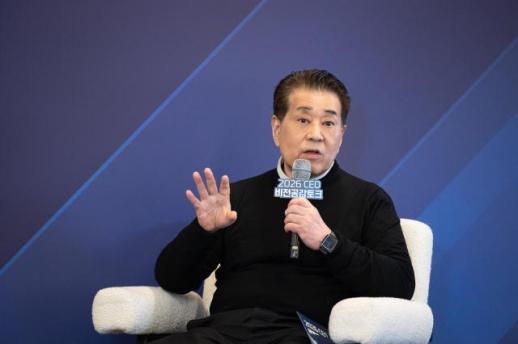 POSCO Chair Chang In-hwa urges faster AI transformation in employee town hall POSCO Group Chairman Chang In-hwa met with about 70 Seoul-area employees Thursday at the POSCO Center for the company’s first employee communication event of the year, a “CEO empathy talk,” to discuss the group’s management philosophy. The session ran about 90 minutes, with a vision briefing by topic followed by open discussion. Chang told participants to prioritize communication and listening, devoting most of the time to debate and Q&A. Asked about the group’s core competitiveness, Chang said POSCO Group is “solid” while also “having wings for the future.” He said the liquefied natural gas (LNG)-centered energy business, along with steel and battery materials, is viewed as the group’s “Next Core,” and its role as a key profit source will be expanded. On the importance of corporate culture, Chang said, “No matter how great the vision and strategy are, what executes them is ultimately our organizational culture.” He added that “overwhelming results” come when employees focus on fundamentals with a spirit of challenge, and that change begins with “empathy,” with management and employees looking in the same direction. Discussion also focused on the group’s artificial intelligence transformation, or AX, strategy and how to use AI. Chang said the group should shift to a goal-driven “Mission Oriented AX” strategy aimed at intelligent autonomous manufacturing, top-level execution capability and new value creation. He said POSCO Group plans to raise the odds of success by concentrating on key tasks and to strengthen external cooperation to speed deployment. Asked about expanding AI and automation and the changes that could follow, Chang said, “AI is now social infrastructure, and the company that converts to AX faster will win.” He said employees’ familiarity with AI is key to introducing autonomous processes, and pledged to expand programs and training opportunities to build AI capabilities. Chang urged employees to become “the main players of change” leading the group, and to meet this year’s management goals through bold, fast execution. He also called on employees to make it a year of proactively protecting their own safety and that of colleagues. POSCO Group said it plans to continue the CEO town hall in the second and third quarters, focusing on Gwangyang and Pohang, and to link the events with employee invitations and site visits to create an environment more focused on delivering results.* This article has been translated by AI. 2026-02-06 15:03:00
 -
 Blockchain expert says adoption in banking is shifting toward financial infrastructure SEOUL, February 06 (AJP) - Global financial institutions are increasingly viewing stablecoins and tokenized deposits as essential infrastructure rather than speculative assets, according to Xin Yan, co-founder and chief executive officer of Sign, a blockchain technology company. This shift is driven by the demand for programmable money that can function natively on-chain. Unlike traditional fiat currency, which relies on fragmented legacy systems, on-chain assets allow for direct settlement, payments, and collateralization without the need for manual intervention. Earlier concerns regarding the technical resilience of blockchain networks have largely subsided. The infrastructure supporting stablecoins has been tested through multiple market cycles and real-world applications. The primary challenges remaining are legal and regulatory, as many jurisdictions have yet to establish frameworks that recognize digital representations of sovereign currency. Xin Yan expects 2026 to bring significant regulatory clarification, moving the industry from debating the existence of these assets to integrating them into the formal monetary system. To scale these systems, financial institutions must bridge the gap between asset settlement speed and compliance verification. While blockchain transactions occur in seconds, identity and compliance checks often still rely on manual processes. The immediate priority for governments and institutions is the transition of identity and entity proofs into digital, verifiable credentials. This digitization allows records to be accessed and verified on-chain instantly, matching the speed of the underlying assets. The long-term role of these technologies is the comprehensive digitization of the global financial system. Whether through stablecoins, tokenized deposits, or central bank digital currencies, the objective is to remove friction from capital movement. Xin Yan notes that successful implementation will likely be invisible to the general public. Instead of focusing on the underlying blockchain technology, users will experience faster business operations and instant money movement. This efficiency is intended to increase the turnover of capital and improve the fluidity of global trade. Trust remains a central factor in the adoption of on-chain systems. For large banks, enterprise blockchain networks offer a more transparent and easier-to-track environment than legacy ledgers. These systems allow for layered data access, ensuring that information is shared only with authorized parties. By moving information flow onto a blockchain, banks can reduce maintenance costs and eliminate the need for large teams to reconcile different ledgers. The automated and transparent nature of these records also makes fraudulent activity more difficult to execute, potentially strengthening the existing trust advantage held by traditional financial institutions. 2026-02-06 14:59:11