

Journalist

Jack L. Rozdilsky
-
 Lee Jun Hyuk Cast in SBS Occult Drama 'Awakening' as an Exorcist Priest Actor Lee Jun Hyuk has confirmed his casting in SBS’ new drama “Awakening.” SBS’ “Awakening,” written by Jang Yoon Mi and directed by Oh Jun Hyuk, is an occult drama set in an exam-driven high school that has become a playground for evil spirits. An exorcist priest fights to save students. SBS, which expanded interest in Korean-style occult dramas with its 2023 series “Revenant,” is developing the new project with a goal of airing it in 2027. Lee will play Antonio, a new head priest assigned to Holy Spirit High School. Though he stirs students’ curiosity and anxiety, Antonio is an exorcist priest ordained by the Vatican’s Dicastery for the Doctrine of the Faith. Behind his detached exterior, he is portrayed as perceptive and empathetic. The character has endured terrifying situations alone and repeatedly prevailed in battles with evil spirits. Dispatched to the school to investigate, Antonio confronts a series of strange incidents and vows to risk everything to track down whoever is pulling children into a deadly race. SBS’ “Awakening” is scheduled to air in 2027.* This article has been translated by AI. 2026-01-28 16:12:00
 -
 PHOTOS:Mobile game meets Korean traditional art SEOUL, January 28 (AJP) -Once confined to mobile screens, familiar characters step into the physical world — reimagined through brushstrokes, fabric and light. “CookieRun: Kingdom Art Collaboration Special Exhibition – Legacy of the Great Kingdom,” presented by Devsisters, brings the popular game’s universe into dialogue with Korean traditional crafts and interactive media art. The exhibition runs through April 12 at Ara Art Center in Insa-dong, Jongno-gu, Seoul. CookieRun: Kingdom is a mobile role-playing game built on a fantasy narrative in which cookie characters embody distinct values and histories within a shared world. At the core of its storyline are two contrasting groups: the Ancient Cookies, who represent ideals that have been preserved over time, and the Beast Cookies, who reflect those same values when they are distorted or taken to extremes. The exhibition draws on this narrative structure to explore broader questions about choice, direction and consequence. The exhibition features 10 works created by Korean master artisans, each inspired by characters from CookieRun: Kingdom. Traditional techniques such as mother-of-pearl inlay, buncheong ceramics, embroidery and hanji are combined with contemporary character imagery, allowing long-preserved craft traditions to expand into a modern visual language. Through this process, the CookieRun characters gain added narrative depth within a cultural context. Spanning six exhibition rooms from the first floor to the fourth basement level of the Ara Art Center, the show presents pairs of Ancient Cookies and Beast Cookies in each space. These pairings explore five core values—will, history, knowledge, happiness and solidarity. Rather than depicting a simple confrontation between good and evil, the exhibition emphasizes how the same value can take on entirely different meanings depending on how it is chosen and applied. Interactive media art created in collaboration with the artist collective Nerdy Artist Union expands the meaning of the craft works throughout the space. Visitors participate using NFC-enabled wristbands that activate responses of light, sound and imagery. In the final exhibition room, hands-on content allows visitors to see characters they have drawn move through a folk-painting-inspired digital landscape, completing the exhibition’s narrative. “Legacy of the Great Kingdom” presents a moment in which characters once limited to mobile platforms are reborn through traditional crafts and media art. At the intersection of past and present, game narrative and craftsmanship, the exhibition suggests new possibilities for both cultural heritage and the expansion of intellectual property. 2026-01-28 16:06:11
 -
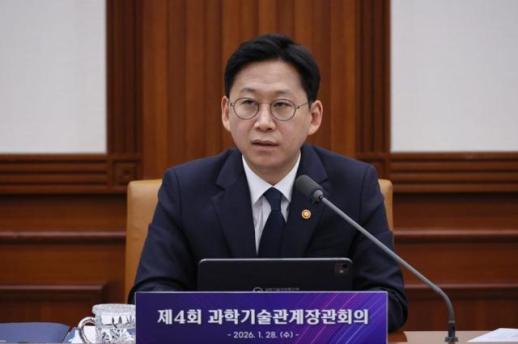 Trump' tariff threat has nothing to do with Coupang, Science and ICT minister says SEOUL, January 28 (AJP) - U.S. President Donald Trump's post on social media earlier this week about raising tariffs on South Korea has nothing to do with regulating big-tech companies including disputes over e-commerce giant Coupang, Science and ICT Minister Bae Kyung-hoon said on Wednesday. Shortly after Trump's abrupt threat on Monday, it was revealed that Seoul had received a letter from the U.S. about two weeks ago raising concerns over South Korea's push to regulate digital platforms. When asked by reporters about the letter he received from acting U.S. Ambassador to Seoul James Heller on Jan. 13, Bae dismissed any link to tariffs. "The letter simply requested that South Korea approach the matter of regulating digital platforms in a more reciprocal way," he said. Trump threatened to raise reciprocal tariffs on Seoul from 15 percent back to 25 percent, citing delays in the implementation of a bilateral agreement reached by the two countries in late October last year, only to soften his stance a day later, saying he would "work something out with South Korea." Some have speculated that disputes over Coupang prompted Trump's tariff threat, after several U.S. lawmakers raised concerns over "discriminatory measures" against Coupang in South Korea's investigation into a massive data leak detected late last year. In a related development, the Wall Street Journal reported on Tuesday that U.S. Vice President JD Vance, during his meeting with South Korean Prime Minister Kim Min-seok in Washington, D.C., warned South Korea "not to target tech companies with discriminatory regulations and investigations, in the latest U.S. effort to protect American internet platforms as it threatens higher tariffs on the country." But Bae said the matter is "completely unrelated" to the tariff issue. He said South Korea has been in discussions with the U.S. through multiple channels on issues related to online platforms and artificial intelligence-related laws and regulations. Deputy Prime Minister and Minister of Economy and Finance Koo Yun-cheol also said, "The government is looking into Trump's latest threat through various channels to figure out the intentions behind it." 2026-01-28 15:59:29
 -
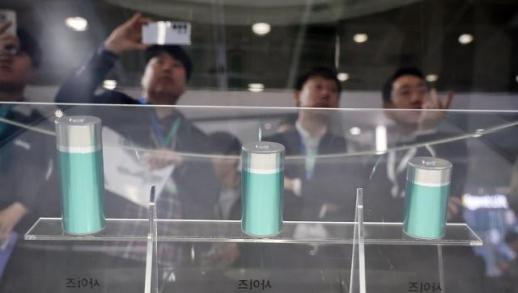 Korea's top battery firms post losses as EV demand slump drags earnings SEOUL, January 28 (AJP) - South Korea’s three major battery makers reported losses in the fourth quarter of 2025 as a prolonged slowdown in global electric-vehicle demand weighed on shipments. SK On posted an operating loss of 441.4 billion won in the October–December period and a full-year operating loss of 931.9 billion won. LG Energy Solution also recorded an operating loss of 122 billion won in the fourth quarter, swinging to a loss from a year earlier. Samsung SDI, which is scheduled to report earnings on Feb. 2, is also expected to post weak results. A securities-firm consensus estimates Samsung SDI’s fourth-quarter operating loss at 358.5 billion won. The losses reflect an extended lull in EV demand, as global automakers scale back production plans or delay investments in new models. Reduced battery shipments have pushed down factory utilization rates, increasing the burden of fixed costs and squeezing margins. Changes to EV subsidy policies, particularly in the United States and Europe, have also weighed on demand. As a result, the battery makers are accelerating efforts to diversify beyond EVs into areas such as energy storage systems and robotics. LG Energy Solution began mass production of long-cell lithium iron phosphate (LFP) batteries for ESS in May at its Holland, Michigan, plant. Samsung SDI continues ESS production in North America through its joint-venture facilities, while SK On plans to start ESS production in the second half of this year at its plant in Georgia. In South Korea, battery makers are also expanding production and investment to respond to government-led bidding for a centralized ESS contract market. In a recent earnings call, SK On said it aims to secure 20 gigawatt-hours of global ESS orders by 2026, primarily in North America, and plans to strengthen LFP battery production capacity to attract new customers. Robotics is also emerging as a medium- to long-term growth area. Industry officials say solid-state batteries, which could significantly improve safety and energy density, are being explored for use in next-generation devices such as humanoid robots. Samsung SDI has begun joint development of robot-specific batteries with Hyundai Motor and Kia, while LG Energy Solution is working with U.S.-based Bear Robotics to expand supplies of cylindrical batteries for robotic applications. * This article, published by Aju Business Daily, was translated by AI and edited by AJP. 2026-01-28 14:46:10
 -
 Korean batteries built for cars are finding new lives — in orbit and inside humanoid robots SEOUL, January 28 (AJP) - Korean battery makers are broadening their footprint beyond electric vehicles, expanding into space and humanoid robotics as global EV demand cools and major supply contracts unravel. The industry has slowed sharply in line with stalled EV sales. SK Innovation said Wednesday its battery unit SK On recorded fourth-quarter revenue of 1.46 trillion won ($1.03 billion) with an operating loss of 441.4 billion won. For 2025, SK On posted revenue of 6.98 trillion won and an operating loss of 931.9 billion won. LG Energy Solution on the previous day reported fourth-quarter revenue of 6.14 trillion won, up 7.7 percent from the previous quarter, but swung to an operating loss of 122 billion won. For the full year, the company posted operating profit of 1.35 trillion won, up 134 percent, though revenue fell 7.6 percent to 23.67 trillion won. The downturn has been exacerbated by a string of canceled EV battery deals. By the end of last year, scrapped contracts totaled more than 17 trillion won ($11.86 billion). Ford Motor in December abandoned a 9.6 trillion won battery supply agreement with LG Energy Solution, while cathode materials maker L&F saw its Tesla contract shrink from 3.8 trillion won to just 9.73 million won — effectively a cancellation. With the EV pipeline thinning, Korean battery makers are increasingly looking beyond automobiles — and upward. The global space battery market is projected to grow from $3.99 billion in 2025 to $5.61 billion by 2030, a compound annual growth rate of about 7 percent, according to The Business Research Company. Growth is being driven by a surge in satellite launches: more than 4,500 spacecraft reached orbit last year, roughly 60 percent more than the approximately 2,800 launches recorded in 2024, as private operators such as SpaceX and Blue Origin race to build satellite constellations. Space-grade batteries must endure some of the harshest operating conditions imaginable. Cells face temperature swings from minus 180 to 150 degrees Celsius, violent launch vibrations, vacuum pressure, intense solar radiation and decades of uninterrupted operation — with no possibility of replacement once deployed. LG Energy Solution has supplied lithium-ion cells for NASA spacesuits since 2016 and began work in 2024 on batteries for SpaceX spacecraft. Last November, it partnered with U.S. startup South 8 Technologies to develop batteries capable of operating in cryogenic conditions for lunar rovers and unmanned exploration vehicles. "The liquefied gas electrolyte technology fundamentally addresses long-standing issues of battery performance degradation in extreme cold environments," said Kim Je-young, chief technology officer of LG Energy Solution. "We anticipate this technology will unlock new possibilities for products and applications, including space." Samsung SDI has established a technical cooperation framework with CAMX Power, which holds a satellite battery supply contract with the U.S. Space Force. SK On is preparing for space-grade applications through its solid-state battery pilot plant and collaboration with U.S. developer Solid Power. Humanoid opportunity Humanoid robotics represents an even larger potential market. Morgan Stanley estimates the sector could exceed $5 trillion by 2040. Although batteries typically account for only about 0.5 percent of a humanoid robot's total cost, that still translates into a roughly $25 billion opportunity, excluding replacement batteries, maintenance and energy services. "Elon Musk has projected that humanoid robots could eventually reach annual sales of 1 billion units," said Kang Dong-jin, an analyst at Hyundai Motor Securities. "Assuming around 10 kilowatt-hours of battery usage per unit including spares, that implies a 10 terawatt-hour market. Battery makers can also pursue leasing, recycling and other service-based business models." With CES 2026 highlighting humanoids as key embodiments of physical AI, Korean battery firms have stepped up efforts to secure early positions. LG Energy Solution has reportedly received battery supply requests from multiple Chinese humanoid robot developers and plans to begin mass production this year. Tesla, which is developing its Optimus humanoid series, is expected to receive tens of thousands of ultra-high-nickel battery cells — with nickel content exceeding 95 percent — from LG. Samsung SDI is in supply discussions with Boston Dynamics and has partnered with cathode producer Ecopro BM, electrolyte supplier Soulbrain and separator maker W-Scope for humanoid-focused battery development. Technical requirements favor Korean manufacturers. Unlike EVs, which can accommodate large battery packs across vehicle floors, humanoids have only about 5 percent of that space — typically confined to the chest and back — making energy density paramount. Chinese battery giants CATL and BYD dominate the global EV market with a combined share of roughly 55 percent, built largely on cost-efficient lithium iron phosphate (LFP) technology. But LFP cells lack the energy density required for sustained humanoid operation; industry sources say robots powered by LFP often struggle to run for even one hour. As a result, even Chinese humanoid developers are opting for higher-density alternatives. Shenzhen-based Engine AI uses solid-state batteries in some versions of its T800 robot, while Unitree Robotics deploys lithium-ion polymer batteries instead of LFP to reduce weight and improve safety. "Humanoids operate in close proximity to humans, and any malfunction could cause serious accidents, particularly in factories," Kang said. "Safety is the top priority. Since batteries account for a relatively small share of total robot costs, using high-spec batteries is actually more economical and reduces concerns over degradation." Korean battery makers have spent years refining high-nickel ternary chemistries. L&F became the first company to mass-produce ultra-high-nickel cathode materials in the second half of 2025, with Ecopro BM preparing to follow. CATL and BYD, by contrast, remain focused on LFP and mid-nickel chemistries with nickel content of about 50 to 70 percent. Ultra-high-nickel batteries paired with 46-series cylindrical cells are increasingly seen as optimal for humanoid applications, offering energy density more than 30 percent higher than standard ternary cells. U.S. robotics firms such as Figure AI, Agility Robotics and 1X Technologies are also expected to turn to Korean suppliers. Chinese manufacturers are accelerating efforts to close the gap. CATL invested last year in Beijing-based humanoid developer Galbot and has begun deploying its Xiaomo robot — developed by affiliated startup Spirit AI — on battery production lines in Henan province. In space, CATL and China Aviation Lithium Battery Technology are reportedly developing batteries for domestic satellite programs under the China National Space Administration, according to Coherent Market Insights. Their penetration into Western aerospace supply chains, however, remains limited. 2026-01-28 14:44:44
 -
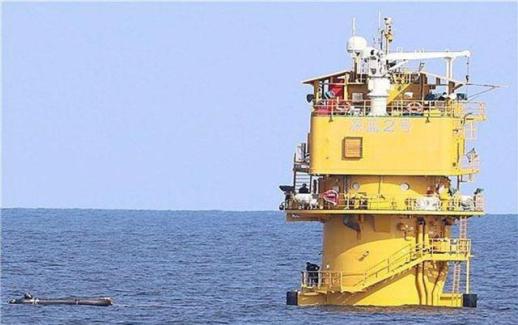 Seoul hails Beijing's move to dismantle dubious structure in West Sea SEOUL, January 28 (AJP) - South Korea on Wednesday welcomed China's decision to remove one of a couple of structures installed along the West Sea, calling it "meaningful progress." In a statement, Cheong Wa Dae said the government "has continued talks with Beijing" over the dubious steel structures on the submerged shelf of Ieodo in the West Sea, which overlaps with maritime zones of both South Korea and China. "While actively protecting our maritime rights, we will continue our efforts to maintain peace in the West Sea for shared prosperity," it added. The decision to remove the structure comes shortly after President Lee Jae Myung held a summit with Chinese President Xi Jinping earlier this month. In a possible step toward improving bilateral relations, Beijing appeared to decide to remove one of three such structures, which resembled an oil-drilling rig and raised concerns here that it could be used for military purposes. 2026-01-28 14:35:41
 -
 Solar project backed by Hyundai E&C enters full construction in Texas SEOUL, January 28 (AJP) - A large-scale solar power project South Korea's Hyundai Engineering & Construction is participating in has entered full construction in Texas following the completion of financing and preparatory work. The company said on Wednesday it held a groundbreaking ceremony on Jan. 27, local time, in Dallas for the "Lucy" project. The project is being developed by a consortium known as “Team Korea,” which includes Hyundai E&C, Korea Midland Power, the Korea Overseas Infrastructure & Urban Development Corp., EIP Asset Management and the PIS fund. The consortium plans to build and operate a 350-megawatt solar power plant in Concho County, northwest of Austin. Hyundai E&C said it has been involved since the early development stage, participating through an equity investment as well as technical reviews and the supply of solar modules. U.S.-based construction firm Primoris will build the facility, while Korea Midland Power will oversee operations. The project site spans about 11.7 million square meters, the equivalent of more than 1,600 soccer fields. Total project costs are estimated at 750 billion won. Completion is targeted for July 2027, with commercial operations to begin thereafter. After signing an agreement to acquire project rights in 2023, the consortium completed permitting and due diligence in 2024. Financing and preliminary work, including ground surveys and detailed engineering, were finalized last year. Hyundai E&C said the groundbreaking marks the start of full-scale construction, including installation of solar trackers, high-voltage equipment and modules. Once operational, the plant is expected to generate about 926 gigawatt-hours of electricity annually over a 35-year period, enough to supply power to roughly 260,000 four-person households, based on average monthly consumption of 300 kilowatt-hours. The electricity will be sold to global companies, including Starbucks and Workday, through virtual power purchase agreements, Hyundai E&C said. * This article, published by Aju Business Daily, was translated by AI and edited by AJP. 2026-01-28 13:55:33
 -
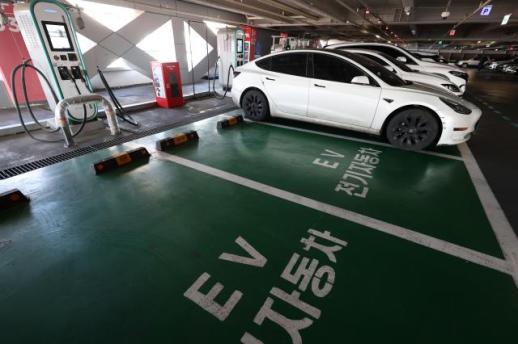 Vehicles registered in Seoul decline for third straight year SEOUL, January 28 (AJP) - The number of registered vehicles in Seoul has been declining, while the number of electric vehicles continues to rise. According to the Seoul Metropolitan Government, the total number of registered vehicles in the capital stood at around 3.16 million last year, down 18,335 from the previous year, making Seoul the only city to see a decline, while other cities and provincial areas saw increases. It was the third consecutive decline, following 3.18 million in 2024 and 3.19 million in 2023. Seoul also had the fewest vehicles per resident in the country, with one vehicle for every 2.94 residents, compared with the national average of one vehicle per 1.93 residents. The figure for the southern port city of Busan was one vehicle per 2.05 residents, Gyeonggi Province (one per 2.04), Daejeon (one per 1.93), and the administrative city of Sejong (one per 1.91). By district, Gangnam had the most vehicles with 251,807, with the five districts in southern Seoul – Gangnam, Songpa, Gangseo, Seocho, and Gangdong – accounting for 32.94 percent of the city's total. But the number of electric cars and other eco-friendly vehicles including hydrogen and hybrid cars rose by 74,429 to 424,568, with the cumulative number of EVs surpassing 100,000. Hybrids made up 75.32 percent of eco-friendly vehicles, followed by electric cars at 23.87 percent and hydrogen cars at 0.81 percent. The number of motorists with imported vehicles continued to rise, accounting for 22.58 percent of all registered vehicles, or 713,108, meaning that a quarter of vehicles on Seoul streets are from foreign brands. Male motorists accounted for 63.19 percent and women 36.81 percent. Registrations by men have been declining since 2023, while women's have increased each year. 2026-01-28 13:54:06
 -
 BTS Comeback D-52: Jin's solo run draws renewed spotlight in Mexico SEOUL, January 28 (AJP) - BTS’ Jin has been named “2025 K-POP Artist” in Mexico for the second consecutive year, underscoring his rising solo profile in a country where even the president has publicly appealed for additional BTS concert dates on behalf of young fans. The title was awarded by House Radio, Mexico’s leading digital pop music station, as Jin’s solo work continues to gain momentum ahead of BTS’ full-group comeback. Jin’s global reach has been led by “Don’t Say You Love Me,” which has amassed 795.56 million streams on Spotify, marking the strongest international performance of his solo career and signaling sustained long-term listener engagement rather than a short-lived spike. The song’s impact extended beyond streaming platforms. At the BreakTudo Awards 2025 in São Paulo, it won “International Hit of the Year,” drawing heightened attention from Latin American fans and industry observers. Beyond charts and trophies, “Don’t Say You Love Me” has been widely noted for its emotional depth. International reviews have pointed to its exploration of relationship uncertainty and the difficulty of letting go, with Rolling Stone India highlighting the track’s melancholic tone and K-drama-style narrative in its music video. House Radio’s year-end rankings further reflected Jin’s presence in the Mexican market. He placed three songs on its list of the “50 Most Important Songs of 2025,” led by “Don’t Say You Love Me” at No. 4, followed by “Running Wild” at No. 5 and “I’ll Be There” at No. 19. 2026-01-28 11:55:06
 -
 Korean stocks remain turbo-charged, local won returns to year-end level SEOUL, January 28 (AJP) - Korean markets are on a roll, refreshing new heights, with traction added by overnight news from Washington hinting at room for compromise before it moves to slap higher tariffs on Korean exports. As of 10:30 a.m. Seoul time, the benchmark KOSPI jumped 1.6 percent to 5,165.03, extending its advance into uncharted territory. The KOSPI 200 climbed 1.6 percent to 757.5, while the tech-heavy KOSDAQ surged 3.2 percent to 1,116.7, marking another strong push toward higher valuation ground. The Korean won strengthened, with the U.S. dollar falling 2.20 won to 1,433.3 won. The currency briefly revisited the sub-1,430 level for the first time since late last month, when authorities went all-out to stabilize the local currency toward year-end. Sentiment was lifted by comments from U.S. President Donald Trump, who said he would “work something out with South Korea” before departing for a campaign-related trip to Iowa. The remarks followed a social-media post a day earlier threatening to raise tariffs on South Korean automobiles and other products from 15 percent to 25 percent, citing delays in the Korean legislature’s ratification of a trade agreement. Investors interpreted the latest comments as a sign that negotiations, rather than unilateral tariff action, are likely to continue. Retail investors stepped in aggressively, absorbing selling by institutions and foreign funds. On the KOSPI, foreign investors sold a net 378.9 billion won ($264.6 million), while institutions offloaded 354.1 billion won. Individual investors bought a net 757.3 billion won. On the KOSDAQ, foreign and institutional investors led buying, adding 252.2 billion won and 859.1 billion won, respectively, while individuals sold a net 1.044 trillion won, suggesting a rotation by retail investors toward the larger bourse. Sector performance was broadly strong, led by wholesale and distribution-related shares and electrical equipment names. Battery stocks drew particular attention, with LG Energy Solution rising 4.4 percent to 426,500 won. The gains came after local media speculated the company is in talks with Tesla and several Chinese humanoid robotics firms over battery supply and joint development, while robust operating profit growth reported earlier this month continued to support sentiment. Large-cap technology shares also advanced. Samsung Electronics climbed 1.6 percent to 162,000 won, while SK hynix surged 5.5 percent to 843,000 won, extending gains on optimism over sustained demand for high-bandwidth memory. Elsewhere, EcoPro jumped 13.2 percent to 156,900 won, while Hyundai Motor added 1.1 percent to 494,000 won. Among laggards, Doosan Enerbility slipped 1.3 percent to 92,400 won, while LG CNS fell 3.0 percent to 69,800 won, reflecting profit-taking in select recent outperformers. Across the region, markets were mixed. Japan’s Nikkei 225 fell 0.5 percent to 53,068 as investors locked in gains after recent advances, while China’s Shanghai Composite Index edged up 0.07 percent to 4,142.7. 2026-01-28 11:54:59