

Journalist

Jack L. Rozdilsky
-
 Enhypen's Sunghoon to serve as torchbearer for Winter Olympics next month SEOUL, January 25 (AJP) - Sunghoon, a member of boy band Enhypen, will participate in a torch relay for the upcoming Winter Olympics in Cortina d'Ampezzo and Milan, scheduled to kick off early next month. The relay began its journey of carrying the flame across over 100 Italian provinces early last month, but details about which stretch Sunghoon will cover have not been disclosed. The former figure skater-turned-singer is expected to deliver a "message of peace and friendship" as one of some 10,000 torchbearers including Swedish football legend and former AC Milan striker Zlatan Ibrahimović. Sunghoon, who has been serving as a promotional ambassador for the country's sporting governing body, the Korean Sport & Olympic Committee, since last year, was selected on the recommendation of Samsung Electronics, an official sponsor of the quadrennial sporting event on ice and snow. "I know how much passion and effort athletes have poured into preparing for the Olympics, so what I want most is to cheer them on," he said in a press release from his management agency Belief Lab. "Personally, competing at the Olympics was my dream when I was training as an athlete, so I'm very happy and honored that it feels like I've achieved it," he added. Meanwhile, this year's Winter Olympics will kick off on Feb. 6 and run for about two weeks, bringing together around 3,500 athletes from more than 90 countries to compete for 116 medals across 16 disciplines. South Korea will field 71 athletes in snowboarding, bobsleigh, speed skating, short-track skating, and figure skating. 2026-01-25 12:19:59
 -
 Coupang reasserts itself as US tech company amid claims of unfair treatment SEOUL, January 25 (AJP) - E-commerce giant Coupang stressed once again that it is a U.S. company. The top of its browser tab briefly displayed "Coupang: US Tech Company Redefining Global Commerce" on Saturday before returning to the previous version, though some web browsers were still displaying it. The tab now again displays its previous promotional message in Korean, highlighting its fast "rocket" delivery service as well as membership benefits and discounts. The move came just a day after Prime Minister Kim Min-seok, who is currently visiting the U.S., met with U.S. Vice President JD Vance at the White House in Washington. During the meeting, Vance reportedly asked about details of the difficulties Coupang faces that may be caused by regulatory differences. Kim tried to clarify the misunderstanding, saying there was no discrimination against Coupang in the investigation into its massive data breach, dismissing allegations of "unfair treatment" raised by two American investors. Greenoaks and Altimeter Capital, the two largest U.S. shareholders of the New York-listed company, requested earlier in the week that the Office of the U.S. Trade Representative (USTR) launch an investigation into the South Korean government's handling of Coupang. Coupang's emphasis on being a "U.S. tech company" is widely interpreted as a strategic move to distance itself from regulatory obligations and other legal responsibilities in South Korea. But criticism may still be hard to avoid because Coupang has previously emphasized that it is a "South Korean company." In July 2019, Coupang said it was founded and grew in South Korea, runs most of its business here, and pays annual labor costs totaling 1 trillion won (about US$850 million) to South Koreans. 2026-01-25 10:38:36
 -
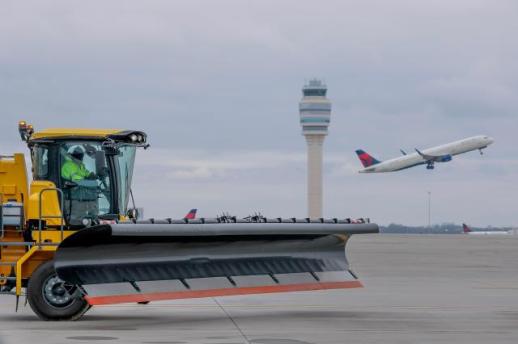 Korean airlines cancel 18 U.S. flights as powerful winter storm batters America SEOUL, January 24 (AJP) - Korean airlines have grounded 18 flights to the United States as a powerful winter storm sweeps across the central and eastern regions of the country, disrupting travel plans for thousands of passengers ahead of the weekend. Korean Air, Asiana Airlines and Air Premia announced the cancellations as of 2:30 p.m. Saturday, with disruptions expected to continue through Jan. 27 as the storm system intensifies. Korean Air bore the brunt of the disruptions, scrapping 14 flights through Monday. The carrier canceled Saturday's round-trip service between Incheon and Dallas, followed by 11 flights on Sunday serving Atlanta, Washington, New York, Boston and Dallas. A New York-to-Incheon flight scheduled for Jan. 26 was also axed. Asiana Airlines suspended two flights on the New York route, while budget carrier Air Premia canceled its round-trip Newark service, bringing the combined toll to 18 grounded flights. The airlines said they are contacting affected passengers and offering schedule changes or full refunds without penalties. However, carriers noted that no additional compensation would be provided as the cancellations stem from a natural disaster with advance notification. The storm's impact extends far beyond Korean carriers. Flight-tracking service FlightAware reported about 3,148 U.S. domestic and international flights were canceled on Saturday, with another 5,068 cancellations already confirmed for Sunday. 2026-01-24 18:24:30
 -
 Washington wants South Korea to take primary responsibility in defense vs North Korea -NDS SEOUL, January 24 (AJP) -The Trump administration has formally signaled a shift in security responsibilities on the Korean Peninsula, stating that South Korea is capable of taking “primary responsibility” for deterring North Korea with more limited U.S. military support. The assessment appears in the unclassified version of the U.S. National Defense Strategy (NDS) released Saturday by the Pentagon, a foundational policy document outlining Washington’s global defense priorities. “With its powerful military, supported by high defense spending, a robust defense industry, and mandatory conscription, South Korea is capable of taking primary responsibility for deterring North Korea with critical but more limited U.S. support,” the document said. “South Korea also has the will to do so, given that it faces a direct and clear threat from North Korea.” The strategy marks one of the clearest official acknowledgments to date that Washington expects Seoul to shoulder a larger share of deterrence on the peninsula, aligning with President Donald Trump’s long-standing call for greater burden-sharing among U.S. allies. The Pentagon said the shift is “consistent with America’s interest in updating U.S. force posture on the Korean Peninsula,” language that analysts say may foreshadow a reassessment of the scale and role of U.S. Forces Korea, though the document stops short of specifying troop reductions. At the same time, the NDS underscores the continued severity of the North Korean threat. The Pentagon assessed that Pyongyang retains the ability to strike targets in South Korea and Japan with nuclear weapons and other weapons of mass destruction, while also posing “a clear and present danger of nuclear attack on the American homeland.” Although much of North Korea’s conventional military equipment is described as aging or poorly maintained, the report warns Seoul must remain vigilant against the risk of invasion, particularly as Pyongyang’s nuclear forces grow in size and sophistication. The Korean Peninsula is explicitly cited as a case where Washington expects an ally to assume “primary responsibility” for regional defense, enabling the United States to reallocate military resources elsewhere. Similar language appears regarding Europe, where the Pentagon argues NATO allies are well positioned to take the lead in conventional defense with reduced U.S. involvement. The new strategy places homeland defense as the Pentagon’s top priority, followed by deterring China in the Indo-Pacific, increasing burden-sharing with allies, and strengthening the U.S. defense industrial base. While the document denies any move toward isolationism, it reflects a sharper focus on U.S. domestic security and the Western Hemisphere than in previous editions. Notably, the NDS provides few operational details — typical for an unclassified version — but sends clear signals to allies about Washington’s expectations under the Trump administration. Compared with the 2022 strategy issued under President Joe Biden, the new document places heavier political emphasis on allied responsibility and explicitly references President Trump throughout. The strategy follows the White House’s release of a new National Security Strategy in December, which also emphasized homeland defense and reduced reliance on forward-deployed forces. 2026-01-24 13:26:01
 -
 OPINION: Gold, silver and the quiet stress test of the FX system The scenery of global financial markets is changing. More striking than the daily swings of stock indices is the sight of gold and silver repeatedly hitting record highs. This is not a fleeting investment fad. It is a signal — one that reveals where global capital feels unease. Markets often exaggerate, but they rarely lie about direction. The current surge in precious metals reflects a collective instinct for risk aversion, rooted in subtle but growing cracks in confidence in fiat currencies. Major central banks are walking a tightrope between inflation control and economic slowdown. Lower interest rates would ease growth pressures, but premature easing risks undermining currency credibility. In this gray zone, investors gravitate away from paper assets toward tangible ones. Gold pays no interest, yet it does not default on trust. Silver, with its added industrial demand, offers even greater price elasticity. This rally looks less like speculation and more like an insurance premium — the price markets are willing to pay for protection against uncertainty. Geopolitical tensions are accelerating this shift. The shadows of protectionism, political fragmentation and supply-chain fragility have made global capital more defensive. The U.S. dollar remains the world’s reserve currency, but questions surrounding America’s fiscal trajectory and monetary policy are growing louder. When “Sell America” sentiment gains traction, gold begins to function as an alternative currency. This does not signal the collapse of the dollar, but rather the erosion of unquestioned faith in it. Korea is not insulated from these tremors. The foreign exchange market reacts first. Heightened risk aversion boosts dollar demand and puts downward pressure on the won. A weaker won may help exporters’ margins, but it also raises import prices and squeezes households. For an economy heavily dependent on imported energy and raw materials, sharp currency moves feed directly into inflation. Direction matters, but speed matters more. Gradual adjustment can be absorbed; abrupt swings become shocks. Equity markets are no exception. As uncertainty rises, global funds tend to reduce exposure to emerging markets. Korea’s stock market, highly sensitive to foreign capital flows, faces heightened volatility. Growth-oriented stocks are particularly vulnerable to interest-rate shifts, while firms with stable cash flows and low leverage tend to show greater resilience. In the end, markets assess not just profitability, but survivability. For corporations, the response is clear. First, foreign exchange risk management must be tightened. Second, liquidity should take priority — cash is not a cost in uncertain times, but a shield. Third, debt maturity structures need review to reduce reliance on short-term borrowing. Fourth, internal controls and risk management must be strengthened to preserve trust. In an era like this, a single misstep can erode corporate value overnight. Households, too, must prepare. Reducing exposure to variable-rate loans and clarifying repayment plans are essential. In investing, balance matters more than chasing returns. A headlong rush into gold or silver simply because prices are soaring risks inviting a different kind of loss. Markets inevitably correct after overheating. Long-term stability is built on diversification and restraint. Policymakers bear a heavy responsibility. Central banks must maintain balance between price stability and financial stability. Policy consistency and predictability are the foundation of market trust. In an age of uncertainty, the most powerful stabilizer is a clear and transparent policy signal. Ultimately, the surge in gold and silver is both an expression of fear and a warning. The world is prioritizing loss avoidance over profit maximization. That may signal vulnerability — but for those prepared, it can also mark the beginning of opportunity. Volatility is not a crisis; it is an environment. Survival in that environment depends not on dazzling returns, but on fundamentals, principles and discipline. Financial markets move not by numbers alone, but by trust. And when trust wavers, what truly shines is not metal, but principle. Those who hold to it will shape the next upswing. *The author is a columnist of AJP. 2026-01-24 12:02:14
 -
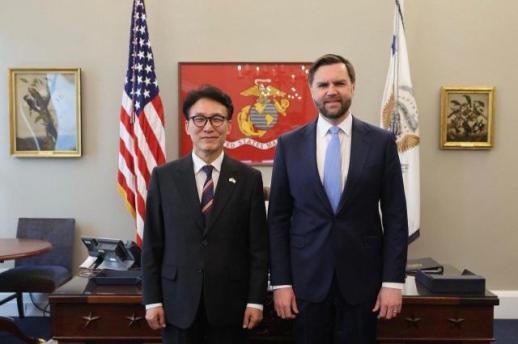 South Korea PM tells US there was no discrimination against Coupang SEOUL, January 24 (AJP) - South Korean Prime Minister Kim Min-seok assured U.S. Vice President J.D. Vance on Friday (local time) that Seoul has not discriminated against e-commerce giant Coupang, pushing back against allegations from American investors that the company faced unfair treatment. The two officials met at the White House for about 50 minutes, exceeding the originally scheduled 40 minutes, as the Coupang dispute emerged as a thorny issue in bilateral relations. Kim's solo visit to Washington marked the first such trip by a South Korean prime minister in 41 years. Kim said Vance expressed understanding of the legal issues involved but requested that both governments manage the situation carefully to prevent misunderstandings. The prime minister agreed to share developments with Washington promptly. The meeting came a day after two U.S. investment firms holding Coupang shares urged the U.S. Trade Representative to take action against South Korea's handling of the company. The investors accused Seoul of discriminatory enforcement following a data breach that affected a significant number of Korean customers. Kim dismissed allegations that he had singled out Coupang for harsh treatment, providing Vance with an English translation of his original remarks to demonstrate they had been quoted out of context. The investors had claimed Kim urged regulators to pursue the company with the same resolve used to "take down the mafia." "No discriminatory treatment was given to any American company," Kim said during a press briefing at the South Korean Embassy in Washington after the meeting. The prime minister also rejected characterizations by Coupang investors that President Lee Jae Myung holds anti-American and pro-China sentiments, expressing confidence that the Trump administration would not accept such claims. Kim said the strength of the alliance has grown beyond being susceptible to lobbying by any single company seeking to distort facts about discrimination that does not exist. The two officials also discussed of North Korea, with Vance asking for Seoul's perspective on how Washington might improve relations with Pyongyang. Kim suggested sending a special envoy to North Korea as one possible approach. Other topics included bilateral shipbuilding cooperation, South Korea's interest in nuclear-powered submarines, and uranium enrichment. Vance acknowledged bureaucratic delays on both sides and agreed to set concrete timelines for implementing summit agreements. Kim said he extended an invitation for Vance to visit South Korea, and the two exchanged direct phone numbers to establish a hotline. President Donald Trump, who had just returned from Davos, was unable to join the meeting but sent his regards to President Lee through Vance. 2026-01-24 11:17:23
 -
 Editorial: Sovereignty isn't a slogan. It's a legal record When two U.S.-based investors in Coupang, widely reported as Greenoaks and Altimeter, initiated the first procedural step toward investor–state arbitration under the Korea–U.S. Free Trade Agreement, they did more than submit a Notice of Intent. They sought to elevate a domestic accountability dispute into the most combustible arena available — treaty law, geopolitics and the global politics of data. Although a Notice of Intent is not yet a formal arbitration filing, it is a required precursor that signals the possibility of international litigation and invites external pressure. South Korea’s Justice Ministry has said it will review the claims and coordinate a government-wide response, while Justice Minister Jeong Seong-ho has made clear that the essence of the matter lies not in government persecution but in corporate responsibility following failures in personal data management. That distinction is central. The issue is not simply whether a notice matures into a case or who might ultimately prevail before an arbitration panel. The deeper question is whether a modern democratic state can enforce basic consumer protection after a data breach of historic scale without having that enforcement repackaged as “discrimination” and rerouted through international litigation and allied political narratives. In the digital economy, a data breach is not a private mishap. Coupang’s breach reportedly affected more than 33 million people — a figure so vast it ceases to be a statistic and becomes infrastructure. Personal data is the bloodstream of contemporary commerce, and when it leaks, the damage spreads beyond a single firm’s reputation into households, payment systems and public trust itself. That is why governments investigate. Not to punish corporate success, and not to stage regulatory theater, but to restore confidence in the rules that govern markets. If a state cannot credibly enforce baseline standards after a breach of this magnitude, the winners are not consumers but the least responsible actors — those who treat compliance as a performance and security as an optional cost. The investors’ response follows a familiar ISDS pattern. Regulatory scrutiny is reframed as political hostility, enforcement is described as targeted harassment, and public criticism is recast as threatening conduct that allegedly violates treaty standards such as fair and equitable treatment. The argument then escalates further, suggesting that Korea’s actions are intended to advantage Chinese competitors, thereby transforming a consumer-protection inquiry into a supposed front line of U.S.–China competition. This is less legal reasoning than narrative weaponization, designed to raise the political cost of enforcement in Washington and deter it in Seoul. Yet geopolitical framing cannot substitute for legal substance. Korea’s data protection and cybersecurity obligations do not disappear because a company is listed in New York, nor do they become discrimination because investors invoke treaty language. On this point, the Justice Minister’s emphasis is correct: an ISDS forum is not a domestic political stage but an evidentiary one. Korea’s strongest defense lies not in outrage or nationalism but in documentation — clear statutory authority, consistency of enforcement across firms, procedural fairness, proportionality and a demonstrable public-interest rationale for each regulatory step taken after the breach. Claims that political remarks by senior officials were distorted also matter, because in treaty disputes even careless language can be repurposed as evidence of hostile intent. In a global legal environment, every official statement is potentially discoverable. Coupang itself has said it is cooperating with authorities while distancing itself from its investors’ legal maneuvering, and it has published its own account of coordination during the incident. But cooperation is not a communications posture. It is an internal discipline. Any platform operating at national scale has an obligation to treat data security as core business, not as reputational insurance. There is also a strategic contradiction in the investors’ approach. Framing consumer protection as political persecution may buy time, but it risks deepening public resentment, intensifying scrutiny and eroding the trust that a data-driven business ultimately depends on. Markets reward credibility and punish perceived impunity. This dispute, however, extends beyond one company or one country. It is a stress test of the global investment regime. ISDS was designed to protect investors from arbitrary expropriation and capricious state action. Over time, it has also been used to chill regulation, convert reputational crises into treaty disputes and invite geopolitical leverage into matters that domestic law would otherwise govern. If routine accountability after a massive data breach can be reframed as discrimination and litigated internationally, regulators everywhere receive a dangerous signal: enforce too firmly and face arbitration; enforce too weakly and fail your citizens. Either way, trust erodes. South Korea should therefore proceed with discipline rather than drama, speaking in evidence rather than emotion, maintaining consistency, disclosing process where possible and resisting the temptation to turn a legal dispute into a nationalist spectacle. Sovereignty is not weakened by scrutiny; it is weakened by improvisation. Washington, for its part, should distinguish investor rhetoric from national interest. The United States has a legitimate interest in the fair treatment of its investors abroad, but it also has a stake in the credibility of allied governance, including the right to enforce consumer protection after a breach affecting tens of millions. Treaty protections are not a shield against accountability, and sovereignty is not a mood. It is a legal record, built case by case, fact by fact and procedure by procedure. In the end, the most important audience for this dispute is not an arbitration panel but the public — the millions whose personal data became collateral in a test of governance. 2026-01-24 10:27:13
 -
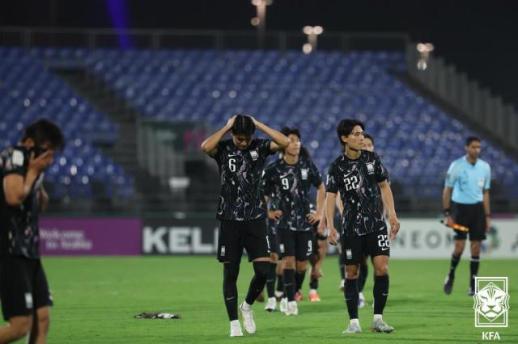 South Korea finish fourth at AFC U-23 Asian Cup after shock penalty loss to Vietnam SEOUL, January 24 (AJP) - South Korea's under-23 football team finished fourth at the Asian Football Confederation U-23 Asian Cup on Saturday after suffering a stunning penalty shootout defeat to Vietnam in the third-place playoff, capping a deeply disappointing campaign for the former champions. The match at King Abdullah Sports City Hall Stadium ended 2-2 after 120 minutes before Vietnam prevailed 7-6 in the shootout, handing South Korea their first-ever loss to Vietnam in the tournament's history after six wins and three draws. South Korea dominated possession throughout the match 65 to 35 percent, recording 32 shots to Vietnam's five and attempting 61 crosses compared to their opponents' four, but struggled to break down a resolute Vietnamese defense. Vietnam struck first through Nguyen Quoc Viet's powerful left-footed finish in the 30th minute after Nguyen Dinh Bac carved open the Korean defense down the left flank. Kim Tae-won equalized with a spectacular turning shot from outside the penalty area in the 69th minute, only for Dinh Bac to restore Vietnam's lead two minutes later. South Korea's fortunes shifted when Dinh Bac received a straight red card in the 86th minute. Shin Min-ha capitalized on the numerical advantage, drilling home a left-footed equalizer deep into stoppage time to force extra time. Despite their sustained pressure in extra time, South Korea failed to find a winner and succumbed in the shootout when Bae Hyun-seo's seventh kick was saved, allowing Nguyen Thanh Nhan to seal victory for Vietnam. The result marks South Korea's worst finish since returning to the semi-finals for the first time in six years since their 2020 triumph in Thailand. Vietnam, coached by Kim Sang-sik, secured third place, their best result since finishing runners-up in 2018 under Park Hang-seo. "We are not a complete team yet. We are a team that should continue to improve," said coach Lee Min-sung of the South Korean squad during the postmatch press conference. "If we can get sharper in attacking the half-space and the final third, we will be a much better team." The team is scheduled to return home through Incheon International Airport on Sunday. 2026-01-24 10:26:10
 -
 Korea's veteran progressive figure Lee Hae-chan hospitalized in Vietnam after heart attack SEOUL, January 24 (AJP) -Former South Korean Prime Minister Lee Hae-chan, a veteran progressive politician and one of the most influential figures in the country’s liberal camp, was rushed to a hospital in Vietnam on Friday after suffering a heart attack and remains in critical condition, officials said. Lee, 73, who currently serves as senior vice chairperson of the Peaceful Unification Advisory Council (PUAC), collapsed at around 1 p.m. local time shortly after arriving at Tan Son Nhat International Airport in Ho Chi Minh City while attempting to return to South Korea, according to PUAC officials. He had arrived in Vietnam a day earlier to attend a meeting of the council’s Vietnamese chapter but reportedly complained of flu-like symptoms before his departure from Seoul. As his condition worsened, Lee decided to cut short his trip and return home. During the airport incident, Lee experienced breathing difficulties and was transported by ambulance to a local hospital while receiving cardiopulmonary resuscitation. Officials said he suffered cardiac arrest twice during transport and treatment. Doctors performed a stent insertion procedure, and Lee is currently breathing with the assistance of mechanical support. His condition remains critical, and he is expected to remain hospitalized until stabilized, officials said. President Lee Jae Myung was briefed on the situation and ordered the dispatch of his senior political secretary, Cho Jung-sik, to Vietnam to assist during Lee’s hospitalization. Cho was scheduled to depart early Saturday, according to the presidential office. Born in 1952, Lee Hae-chan is a seven-term lawmaker and a towering figure in South Korea’s progressive movement. He served as prime minister from 2004 to 2006 under the Roh Moo-hyun administration and previously held the post of education minister, where he spearheaded sweeping education and administrative reforms. Known as a hardline strategist and ideological anchor of the Democratic Party, Lee later served as a senior adviser to Lee Jae Myung’s presidential campaign in 2021 and as co-chair of the party’s election committee during last year’s general election. He currently holds the title of standing senior adviser to the Democratic Party. The PUAC is a constitutionally mandated presidential advisory body tasked with proposing unification policies, gathering domestic and international public opinion on inter-Korean relations, and building national consensus on unification. The president serves as its chair, while the senior vice chairperson serves a two-year term. The council comprises roughly 22,000 advisers at home and abroad, including regional, professional and overseas Korean representatives. Officials said they are closely monitoring Lee’s condition as arrangements are made for ongoing medical support in coordination with South Korean authorities. 2026-01-24 10:19:07
 -
 Hyundai union clashes with management over humanoid robot deployment SEOUL, January 24 (AJP) - Hyundai Motor Company's labor union has warned it will block the deployment of humanoid robots on production lines without prior agreement, escalating tensions over the automaker's plan to introduce Boston Dynamics' Atlas robots to its manufacturing operations. "Not a single robot can enter the production floor without labor-management agreement," the National Metal Workers' Union Hyundai Motor Company branch said in a newsletter on Thursday. "If robots are deployed on production lines, significant employment shocks are expected." The union raised alarms over potential job losses, citing cost comparisons between human workers and machines. "With an average annual salary of 100 million won ($69,141), operating three shifts around the clock costs about 300 million won per year, while robots only incur maintenance costs after the initial purchase," the union said. Hyundai Motor Group unveiled a production-ready version of the Atlas humanoid robot at CES 2026 earlier this month, outlining a roadmap to deploy the machines at its Metaplant facility in Georgia before expanding to factories worldwide. The group plans to assign Atlas robots to basic tasks such as parts picking and sequencing starting in 2028, then expand their use to more complex operations including assembly, heavy-load handling and quality inspection by 2030. A dedicated robot factory is being built with annual production capacity of about 30,000 units. The union fears that concentrating electric vehicle and robotics investments at U.S. production hubs could accelerate the transfer of high-value manufacturing processes overseas, leaving domestic plants with diminished roles and reduced workforce requirements. Delays in robot deployment could also carry costs for Hyundai, potentially pushing back expected gains in productivity, quality control and workplace safety, while slowing the company's return on investment amid intensifying competition in the electric vehicle market. Global rivals are already moving toward commercialization. Tesla has begun testing its Optimus humanoid at its own facilities and has signaled plans to sell the robots by late next year, while BMW is running pilot programs at its Spartanburg plant. 2026-01-24 09:34:41