

Journalist

Jack L. Rozdilsky
-
 National Growth Fund Sells Out, Encouraging Productive Investment The National Growth Fund, designed for public participation, sold out its entire 600 billion won allocation within just five days of its launch. The number of subscribers surpassed 30,000, with approximately 39% classified as low-income based on annual income. The average subscription amount per person reached about 20 million won. In a financial market still marked by uncertainty, the fact that many citizens entrusted their funds to the growth fund carries significant implications. What stands out most is the choice made by investors. In recent years, market funds have tended to concentrate on real estate, deposits, and short-term financial products. As the low-growth phase has prolonged, there has been a strong preference for stability over risk-taking in future industries. However, the success of the growth fund suggests that at least some funds may shift back toward productive investment. Economic growth stems not from consumption but from investment—more specifically, investment that enhances future productivity. New companies must emerge, technologies must be developed, and innovative industries must grow to increase jobs and income. If funds remain tied up in real estate and short-term financial products, the overall growth potential of the economy will inevitably decline. In fact, developed countries have long established various systems to connect citizens' assets to productive investments. A prime example is the United States. A significant portion of American household assets is invested in companies and capital markets through pensions, mutual funds, and ETFs. The 401(k) retirement plan has served as a crucial source of funding for innovative companies for decades. The assets held by American households ultimately contribute to the growth of companies like Apple, Nvidia, and Microsoft. Japan is following a similar path. The Japanese government has expanded the NISA (Nippon Individual Savings Account) program to encourage household financial assets, which have long been tied up in long-term deposits, to flow into capital markets. This is part of a broader 'from savings to investment' policy. While more than half of Japanese household assets were previously locked in cash and deposits, the proportion of investments in stocks and funds has been gradually increasing. Singapore also utilizes its sovereign wealth fund and pension system to channel national and citizen assets into long-term investments, prioritizing national competitiveness and the development of future industries over short-term gains. South Korea faces similar challenges. A high proportion of household financial assets in the country remains in deposits and real estate. While maintaining stable assets is important, there are ongoing concerns about the lack of long-term funds available for investment in future industries. Sectors such as artificial intelligence (AI), semiconductors, biotechnology, space industry, and energy transition require substantial capital to grow. In this context, the complete sell-out of the growth fund can be seen as a positive signal. It demonstrates the potential for citizens' assets to be linked to future growth industries. Notably, the participation rate of low-income individuals approaching 40% indicates that citizens are eager to share in the long-term benefits of growth beyond simple deposit interest. However, success should not be judged solely by initial popularity. The real test begins now. In the past, various funds with policy objectives have garnered interest at launch but often failed to deliver expected results. Poor selection of investment targets or political interference can lead to deteriorating returns. Investment failures undermine public trust and negatively impact the development of capital markets. It is crucial to clarify that the growth fund is an investment product, not a policy finance tool. Investment always carries risks. While profits can be gained, there is also the possibility of losses. If the government is perceived as guaranteeing principal or if the fund is used for political gain, market principles could be compromised. Independence and professionalism in management are also vital. Investment decisions should be based on market logic, not political considerations. Support for specific industries or companies should not be the goal. When funds are allocated based on growth potential and profitability, both the fund and the industry can thrive. Transparency is essential. Investors should be able to regularly verify where their money is invested and what returns are being generated. The disclosure of asset management reports and information is not merely an administrative procedure but a key mechanism for maintaining trust. The significance of the growth fund lies not just in raising 600 billion won. Its true meaning is in connecting citizens' assets to future industries and creating a new financial ecosystem that encourages productive investment. Economist Joseph Schumpeter defined innovation as a "new combination." The growth fund should serve as a new combination that links citizens' funds with corporate innovation. This way, investors can earn returns, companies can grow, and the nation can enhance its competitiveness. The sell-out is just the beginning. What matters now is how well it is managed. There is hope that the growth fund will not be a short-term success but will establish itself as a new successful model for South Korea's capital markets. Creating a virtuous cycle where market funds flow into productive investments and the benefits return to the citizens is the most pressing task for the South Korean economy today.* This article has been translated by AI. 2026-05-30 11:06:00
 -
 White House: Trump Will Only Make Agreements Beneficial to the U.S. On May 29, the White House stated that President Donald Trump will only engage in negotiations with Iran that are beneficial to the United States and meet his red lines.According to Yonhap News on May 30, a White House official responded to questions about the results of a meeting regarding Iran negotiations held in the Situation Room with Trump's senior security team. The official emphasized, "Iran must never possess nuclear weapons." The meeting reportedly lasted about two hours before concluding.Just before the meeting began, President Trump announced on the social media platform Truth Social, "I will be having a meeting in the Situation Room to make a final decision." However, after the meeting, Trump did not disclose specific outcomes. The New York Times reported that Trump postponed a final decision on Iran's proposal.Meanwhile, on Truth Social, Trump outlined his top conditions, which include a ban on Iran's nuclear weapons development, the complete opening of the Strait of Hormuz without tolls, the immediate removal of underwater mines by Iran, and the U.S.-led excavation and removal of highly enriched uranium buried at Iranian nuclear facilities.* This article has been translated by AI. 2026-05-30 10:36:00
 -
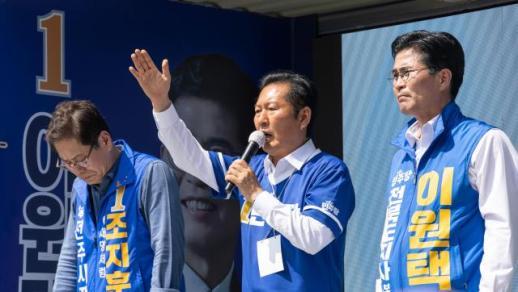 Election Campaigns Intensify Ahead of Local Elections Amid Internal Party Struggles As early voting begins, the leaders of both major parties are ramping up efforts for victory in the June 3 local elections. However, internal dissent is surfacing within their parties. On May 30, political sources reported that Jeong Cheong-rae, the leader of the Democratic Party, is struggling in the Jeollabuk-do region, where there have been signs of avoidance of Jang Dong-hyuk, the leader of the People Power Party. The Democratic Party is facing concerns about potentially losing the Jeollabuk-do governorship, a traditional stronghold, due to the rise of independent candidate Kim Kwan-young, who has declared his candidacy in defiance of the party's primary results. Local sentiment in Jeollabuk-do has led regional committee leaders to request Jeong to refrain from campaigning in the area, stating, "Please stop coming here." Song Tae-kyu, the Democratic Party's Iksan City committee chair, expressed on Facebook on May 29, "We appreciate the efforts you are making across the country, and we feel your genuine affection for Jeollabuk-do. However, it is time for you to stop coming. Please focus your efforts on other regions and let go of your concerns for Jeollabuk-do." He added, "Jeollabuk-do is not a region that will always wait patiently. Central politics must remember that it is not a quiet place without a voice." Previously, Jeong had posted about five times on Facebook by May 28, urging support for candidate Lee Won-taek. On the same day, he appeared on Kim Eo-jun's News Factory, apologizing for not understanding the sentiments of Jeollabuk-do residents and demonstrating efforts to secure the region. Jang is also facing challenges as some candidates from the People Power Party are distancing themselves from him due to concerns about losing moderate voters. Oh Se-hoon, the candidate for Seoul mayor, has kept his distance from Jang since the early stages of the campaign. On May 26, during an appearance on BBS Radio's "Kim Tae-seop's Morning Journal," he stated regarding Jang, "There probably won't be any invitations in the metropolitan area. There is no reason for him to rush to support the election in Seoul." Daejeon's mayoral candidate Lee Jang-woo also did not appear alongside Jang during his campaign activities in Daejeon on May 28, raising suspicions of a "Jang avoidance" phenomenon. Dissatisfaction within the party has surged since Jang was appointed as the head of the election campaign committee on May 13. Woo Jae-jun, a prominent member of the pro-Han (pro-Han Dong-hoon) faction, called for Jang to step back from the front lines and did not attend the launch ceremony, insisting that Jang should withdraw from active campaigning.* This article has been translated by AI. 2026-05-30 10:03:00
 -
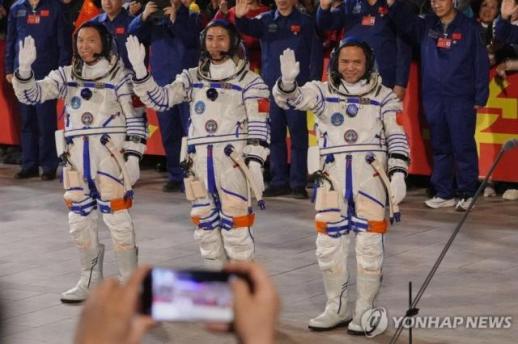 China's Shenzhou 21 Mission: A 210-Day Space Stay Raises Key Questions Chinese astronauts aboard the Shenzhou 21 spacecraft have returned to Earth after completing a 210-day mission. This achievement is significant beyond a mere successful space flight. It set a record for the longest single team stay by Chinese astronauts and included successful spacewalks, scientific experiments, and maintenance tasks for the space station. Most importantly, this mission demonstrates that China's ambitions for a 'space rise' are no longer just declarations but a reality. Space is a domain that reflects a nation's overall capabilities. Without a combination of economic strength, scientific and technological prowess, manufacturing competitiveness, educational standards, and long-term national strategy, space development is unattainable. Launching a single rocket involves thousands of companies and tens of thousands of researchers. Building a space station and sustaining a presence in space for hundreds of days is a testament to the strength of an entire national system. China has consistently demonstrated this over the past two decades. In 2003, Yang Liwei's Shenzhou 5 mission made China the third country to achieve human spaceflight, following the United States and Russia. Since then, it has progressively achieved goals such as the Chang'e lunar exploration program, the Tianwen Mars mission, and the construction of its own space station, Tiangong. Notably, consistency is more important than speed. China's space strategy has remained stable despite changes in government. It has pursued national projects with a long-term vision, looking 20 to 30 years ahead rather than focusing on short-term results. The record of 210 days in space is not an overnight achievement but the result of decades of accumulated technology, personnel, and capital. In contrast, South Korea remains in a position of catching up in the space sector, despite having world-class technology in semiconductors, shipbuilding, and batteries. The successful launch of the Nuri rocket is a significant achievement, but the country still lacks an independent space station and experience in human spaceflight. Lunar exploration is also in its early stages. Space is not a distant future concern. Today, it is a critical battleground for security, economy, and industrial competitiveness. Just as nations that dominated the seas led the world in the past, those that secure a foothold in space are likely to shape the new order of the future. The Shenzhou 21 mission is not merely a scientific achievement; it is a pivotal event in the ongoing US-China power competition. Similar to the space race between the United States and the Soviet Union during the Cold War, the US and China are now engaged in a new competition for space dominance. The United States is advancing its Artemis program to establish a lunar base and explore Mars, while China is investing heavily to achieve a crewed lunar landing around 2030. Interestingly, the areas of competition extend beyond simple space exploration. Satellite communications, space internet, reconnaissance satellites, space resource development, and space-based AI systems are all interconnected with future industries. Modern warfare has reached a point where it cannot be conducted without space. GPS, satellite communications, and reconnaissance satellite information have become central to military power. In the Russia-Ukraine conflict, civilian satellite networks have altered the course of events. Space has transitioned from a scientist's laboratory to a critical infrastructure for national security. The Korean Peninsula is no exception. North Korea is already making significant efforts to secure military reconnaissance satellites. China, the United States, and Japan are all expanding their space capabilities. The security environment in Northeast Asia is now directly linked to the competition in space technology. Economically, the global space industry is projected to grow into a multi-trillion dollar market within the next few decades. Reusable launch vehicles, satellite communications, space tourism, and space resource development are likely to become new growth drivers. If South Korea falls behind in the space race, it will not only face a technological gap but also find itself at a disadvantage in future industrial leadership and security capabilities. The competition in space ultimately reflects a competition in national strength. However, there is no need to fear China's rise. Instead, we should learn from it. China's strengths lie not just in technology but in its long-term strategy and talent development. It consistently cultivates a large number of STEM graduates and pursues national goals with unwavering commitment, positioning the space industry as a core component of its future growth strategy. South Korea has clear tasks ahead. First, a sustained national space strategy is needed, regardless of changes in government. Second, an ecosystem for the space industry must be established, allowing large corporations, startups, research institutions, and universities to grow together. Third, there must be bold investment in talent development, as the space industry ultimately relies on human resources. Fourth, a future industrial strategy that combines space and AI should be developed, as space data and artificial intelligence will become new sources of national competitiveness. The 210 days spent in space is not just a number; it represents the total time China has prepared for the future. Space cannot be conquered overnight. The same applies to technology, industry, and national competitiveness. China is already heading toward the moon, while the United States is preparing for Mars. In this context, what future will South Korea choose? The true meaning of the space rise is not just about rockets but about a nation's vision. What we need now is neither envy nor fear, but a long-term strategy and unwavering execution toward the future. The most significant message left by the Chinese astronauts after their 210-day mission is surprisingly simple: the future belongs not to those who wait, but to those who prepare.* This article has been translated by AI. 2026-05-30 09:42:00
 -
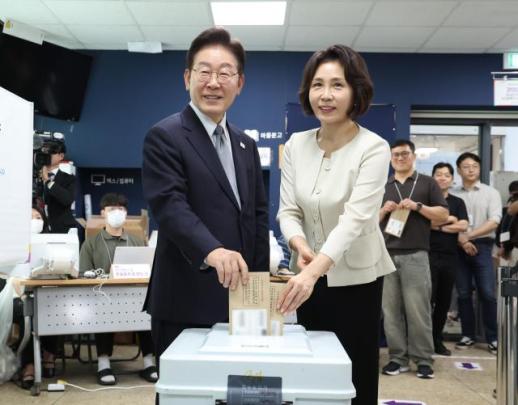 President Lee Jae-myung Encourages Voter Participation Ahead of Local Elections President Lee Jae-myung urged citizens to participate in voting on the second day of early voting for the 9th nationwide local elections on May 30. In a post on X (formerly Twitter) titled "Let’s Make Sure to Vote," President Lee stated, "Voting is the lifeline of democracy," adding that "abstaining from voting is akin to giving up the future of oneself and one’s family." He further emphasized, "Not voting is not neutrality; it is siding with those who harm my life and community." Earlier, on the first day of early voting, President Lee and First Lady Kim Hye-kyung visited a polling station in Samcheong-dong, Jongno-gu, Seoul to cast their votes.* This article has been translated by AI. 2026-05-30 09:42:00
 -
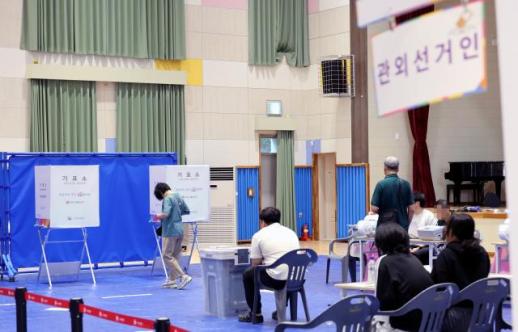 Final Day of Early Voting: Campaigns Intensify Ahead of Local Elections On the final day of early voting, political leaders from both major parties are intensifying their campaign efforts across the country to secure voter support. Lee Jae-myung, leader of the Democratic Party, is visiting Jeollanam-do today. He will start in Wando and then travel to Jindo, Jangheung, and Suncheon to support the campaigns of mayoral and county candidates. He will later visit the Hwagae Market in Hadong, Gyeongsangnam-do. Han Byeong-do, the Democratic Party's floor leader, is focusing on supporting candidates in the Chungcheong and Jeolla regions. He will visit Seosan and Taean in Chungcheongnam-do to discuss local issues with mayoral and county candidates. He will also hold a meeting with Kim Young-bin, the candidate for the National Assembly in Gongju, Buyeo, and Cheongyang, and will campaign for Park Ji-won, the candidate for Gunsan, Gimje, and Buan in Gimje. Since the official campaign period began on May 21, Han has been actively visiting Jeollabuk-do, where his constituency is located. Meanwhile, Jang Dong-hyuk, leader of the People Power Party, is targeting voters in Gangwon-do. He will support Kim Jin-tae, the candidate for governor of Gangwon, and plans to inspect the construction site of the Dongseo High-Speed Railway and the status of the construction project between Chuncheon and Sokcho, one of the region's major issues. Song Eon-seok, the floor leader of the People Power Party, is focusing on Gyeongsangbuk-do and Daegu. He will campaign at Hwanggeum Market in Gimcheon alongside Lee Cheol-woo, the candidate for governor of Gyeongsangbuk-do. Afterward, he will participate in early voting at the Peace Namsan-dong polling station. In the afternoon, he will move to Daegu to campaign with Choo Kyung-ho, the candidate for mayor of Daegu, at various locations including Dalseo-gu's Seonam Market and Duryu Park.* This article has been translated by AI. 2026-05-30 09:33:00
 -
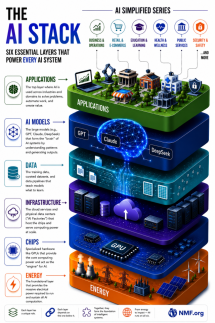 South Korea's reckoning with the AI century There is a phrase South Koreans invoke with quiet pride: bbaly bbaly — "quickly, quickly." It describes a national temperament forged in crisis, the same urgency that rebuilt a war-ravaged nation into an industrial titan within a single generation. But urgency alone, as Kwon Seok-jun, a semiconductor scholar at Sungkyunkwan University, recently warned, will not be enough for what comes next. The artificial intelligence age demands not just speed, but vision. South Korea stands at an inflection point that will look, in retrospect, as decisive as the 1960s industrialization drives that gave the world Hyundai and Samsung. The country holds world-class memory chip manufacturing — its two giants, Samsung Electronics and SK hynix, dominate the high-bandwidth memory market that powers today's AI data centers. And yet, as Professor Kwon put it, Korea remains a semiconductor power, not yet an AI power. The distinction is not semantic. It is existential. Generative AI has redrawn the map of strategic resources. Where iron ore and oil once defined national advantage, memory — the capacity of machines to store, recall, and contextualize vast knowledge — now does. GPT-class models require exponentially more memory with each generation. The country that controls that memory infrastructure wields, in effect, an indispensable key to the intelligence economy. South Korea possesses that key. The question is whether it knows what door to unlock with it. To understand the moment, consider the four powers now jostling for position in what may become the defining geopolitical contest of this century. America commands the full AI stack — frontier models from OpenAI and Google, hardware from Nvidia, capital from Silicon Valley. China presses forward with state-backed determination and the data exhaust of 1.4 billion citizens, despite the chokehold of American export controls. Taiwan's TSMC manufactures the world's most advanced chips, making it simultaneously indispensable and alarmingly vulnerable — a single strait separating civilization's nervous system from catastrophe. And Japan, once sovereign over the global semiconductor industry, now bets on its unmatched mastery of materials and precision equipment. South Korea sits in the interstices of all four. It is America's ally and China's largest trading partner. It manufactures what Taiwan designs and supplies materials Japan refines. It is, in the language of supply chains, a critical node — which is both a strategic asset and a dangerous dependency. "Korea has mastered the survival mind. The AI era demands something rarer: the great mind — the ambition not merely to endure, but to define what comes next." said according to Kwon. The architecture of computing itself is shifting beneath Korea's feet. For eighty years, the von Neumann paradigm — separating calculation from storage — governed hardware design. Today, as processors outrun memory bandwidth, a bottleneck known to engineers as the "memory wall" has become the central constraint of AI performance. High-bandwidth memory, or HBM, is the current answer. Korean companies built it. But the real prize is a comprehensive memory ecosystem spanning DRAM, NAND flash, and next-generation architectures — a prize Korea is uniquely positioned to claim. And yet hardware is not destiny. The uncomfortable truth confronting Korean policymakers is that the country has historically been stronger at manufacturing than at origination, better at refining foreign blueprints than at drawing its own. The software platforms that capture the value generated by AI — the operating systems, the foundation models, the application ecosystems — remain overwhelmingly American. Korea builds the picks and shovels of the AI gold rush. It has not yet staked a claim of its own. What could change that calculus? The answer, increasingly, lies in what technologists call physical AI: the fusion of machine intelligence with the material world. Robots, autonomous vehicles, smart factories, AI-enabled logistics — the digital made tangible. This is terrain where Korea's industrial structure offers a rare advantage. No other nation of comparable size combines deep capabilities in shipbuilding, automotive manufacturing, battery technology, telecommunications, and advanced semiconductors. Korea does not merely participate in these industries; in several, it sets the global standard. The physical AI wave, if Korea positions itself correctly, could be the country's defining contribution to the next industrial order — not merely adopting AI within its factories, but exporting the model of AI-enabled manufacturing to the world. That optimistic scenario requires confronting obstacles that are as much political as technological. Korean universities produce talented engineers, but the country's rigid corporate hierarchies and risk-averse culture have historically struggled to retain the kind of ambitious, iconoclastic talent that builds transformative platforms. Chaebol dominance, for all the efficiency it provided in the catch-up era, may now be a brake on the creative destruction that frontier AI demands. And then there is politics: Korea's democratic system, vibrant and combative, has produced policy gridlock at precisely the moment when the country needs a coherent, long-horizon national AI strategy. The window is not indefinite. The United States and China are moving fast; Korea's structural advantages will erode if they are not converted into ecosystem leadership within this decade. History is not indifferent to preparation. The industrial revolution rewarded the nations that had done the institutional groundwork — the property rights, the capital markets, the engineering education — before steam power arrived. The information revolution rewarded those that had built the network infrastructure and the legal frameworks for venture capital. The AI revolution will be no different. South Korea has pulled off three modern miracles: industrialization, democratization, and the information economy, each transforming the country within a generation. The fourth — becoming not just a supplier to the AI age but an architect of it — is harder precisely because it cannot be achieved through the survival mind alone. It requires a different kind of ambition: the willingness to define standards rather than meet them, to export ideas rather than components, to compete not at the bottom of the value chain but at its very top. Korea's time has not run out. But the clock, for perhaps the first time in its modern history, is running faster than the country's famous urgency can match. 2026-05-30 09:28:42
 -
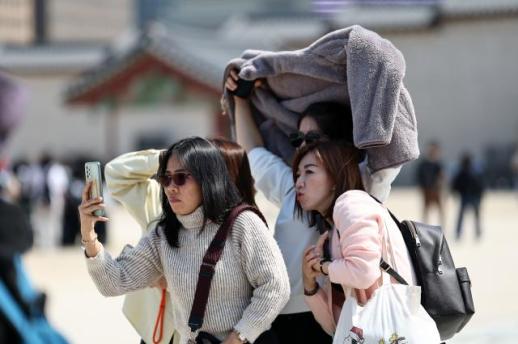 Sunday Weather: Highs of 33 Degrees Expected Across South Korea On Sunday, May 31, South Korea will experience mostly clear skies with daytime highs reaching 33 degrees Celsius (91.4 degrees Fahrenheit). According to the Korea Meteorological Administration on May 30, morning lows on the 31st are expected to range from 13 to 22 degrees Celsius (55.4 to 71.6 degrees Fahrenheit), with daytime highs forecasted between 27 and 33 degrees Celsius (80.6 to 91.4 degrees Fahrenheit). Major cities will see temperatures exceeding 30 degrees Celsius, including Seoul at 30 degrees, Gangneung at 33 degrees, Daejeon at 31 degrees, Daegu at 32 degrees, and Changwon at 31 degrees. On June 1, rain is expected to begin in Jeju Island from the morning, with anticipated precipitation ranging from 10 to 60 millimeters (0.4 to 2.4 inches), and mountainous areas could receive over 80 millimeters (3.1 inches) of rain. Strong winds, with gusts reaching around 55 kilometers per hour (34 miles per hour), are forecasted for the mountainous regions of Gangwon and the east coast. Winds may intensify to around 70 kilometers per hour (43.5 miles per hour) in the mountains, prompting caution regarding facility management and safety incidents. Fine dust levels are expected to be at 'good' to 'moderate' levels nationwide.* This article has been translated by AI. 2026-05-30 09:27:00
 -
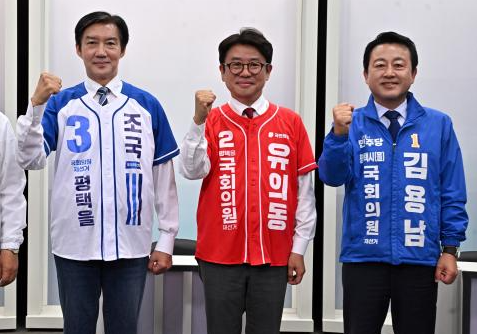 Pyeongtaek's 5-Way Race: Kim Yong-nam, Cho Kuk, and Yoo Yi-dong Compete The Pyeongtaek constituency is considered the most competitive district in the upcoming by-election, which coincides with the June 3 local elections. The race features Kim Yong-nam of the Democratic Party, Cho Kuk of the Justice Party, and Yoo Yi-dong of the People Power Party, along with candidates Kim Jae-yeon from the Progressive Party and Hwang Kyo-ahn from the Liberty and Innovation Party. Although there were discussions about potential unification among candidates from the progressive and conservative camps, these efforts have effectively collapsed, leading to a multi-candidate race. The significance of the Pyeongtaek election extends beyond a local contest, reflecting a power struggle within the progressive camp. The Democratic Party and the Justice Party are in direct conflict over who represents the progressive movement, while the People Power Party aims to capitalize on the divisions. Kim Yong-nam's strengths include the advantages of being the ruling party candidate and the organizational support of his party. The Democratic Party views Pyeongtaek as a strategic stronghold in the metropolitan area and is providing extensive support. Party leader Jeong Cheong-rae has even taken on the role of Kim's campaign chair, demonstrating strong party commitment. Kim is focusing on appealing to voters by emphasizing his connections with the central government and the stability of the current administration. His support base is also bolstered by the presence of Samsung Electronics' Pyeongtaek campus and the new city development in Godeok, which align with the party's metropolitan expansion strategy. However, Kim faces significant challenges. The conflict over unification with the Justice Party has intensified internal divisions within the progressive camp, and allegations regarding a shadow loan business and past political issues have sparked controversy throughout the campaign. Negative exchanges with Cho's camp are also contributing to voter fatigue among Democratic supporters. As a result, recent trends show a rise in support for Cho and a decline for Kim. Nonetheless, as the election approaches, there remains an opportunity for voter sentiment to coalesce around the idea of supporting the ruling party candidate. At the same time, Cho's ability to attract reform-minded supporters and some moderate voters poses a potential threat to Kim's base. Cho's strengths lie in his symbolic leadership of the Justice Party, national recognition, and ability to rally strong reformist support. By presenting a reform image distinct from the Democratic Party, he is appealing to progressive voters disillusioned with the current party. If Cho can attract voters dissatisfied with both major parties, he could not only secure a local victory but also demonstrate the Justice Party's potential for national expansion. Conversely, if strategic voting trends toward supporting the candidate perceived as most likely to win gain traction, Cho's third-party status could become a liability. Additionally, Cho's inability to establish a commanding lead despite his national recognition remains a concern. In this multi-candidate landscape, there is an opportunity for Cho to emerge as a central figure in the reorganization of the progressive camp by attracting voters disillusioned with the existing two-party system. Yoo Yi-dong, who has served three terms in Pyeongtaek, emphasizes his local roots and organizational strength. He also stands to benefit from the fragmentation within the progressive camp. Recent assessments suggest that while the Democratic Party and the Justice Party engage in fierce competition, Yoo has maintained a relatively stable campaign trajectory. In the older urban areas of Anjung-eup, Poseung-eup, and Cheongbuk-eup, there are expectations that he is the right candidate to address issues such as the development of Pyeongtaek Port, transportation network expansion, and industrial complex challenges. Some political analysts predict that the longer the progressive candidates inflict damage on each other, the more favorable the situation will become for Yoo. However, the failure to unify with conservative candidate Hwang poses a challenge. Recently, Yoo and Hwang have publicly clashed, effectively sidelining any discussions of unification. In the Pyeongtaek election, the distribution of votes and turnout rates across different regions will be crucial factors. The sentiment in the eastern region, centered around Samsung Electronics' Pyeongtaek campus and the Godeok new city, may differ significantly from that in the western areas of Anjung and Poseung. Additionally, the nature of the by-election may lead to lower overall turnout, prompting all campaigns to focus on encouraging early voting and consolidating their support bases. 2026-05-30 09:03:00
 -
 Early vote surge clouds DP landslide hopes as Korea heads into June 3 local elections SEOUL, May 30 (AJP) - South Korea’s June 3 local elections are no longer looking like the ruling Democratic Party’s walkover, as record early voting and tightening battleground races raise the odds of a more contested outcome than President Lee Jae Myung’s party had expected. Early voting reached 12.11 percent as of 7 a.m. Saturday, with 5.41 million of 44.65 million eligible voters casting ballots, according to the National Election Commission. The figure was 1.45 percentage points higher than the same point in the 2022 local elections, underscoring heightened voter interest in the first nationwide test of the Lee administration since it took office last June after former President Yoon Suk Yeol’s ouster over his failed martial law bid. The DP had once floated hopes of a near-sweep, possibly taking 15 of 16 metropolitan mayoral and gubernatorial posts, excluding only North Gyeongsang Province. But a JoongAng Sunday analysis of 382 opinion polls registered between March 1 and May 29 now projects the DP winning 9 to 14 regions, the People Power Party 2 to 7 and an independent up to one. The forecast suggests the election has shifted from a referendum punishing the conservative bloc over the martial law crisis into a more complex test of whether Lee can convert high approval ratings into local power. Seoul remains the symbolic prize. DP candidate Chong Won-o is narrowly ahead of incumbent PPP Mayor Oh Se-hoon, with JoongAng Sunday estimating a 3.4 percentage-point gap and a 62 percent winning probability for Chong. A DP win in Seoul would give Lee a powerful mandate in the capital; an Oh comeback would give conservatives their clearest platform for recovery. Daegu is another key test. PPP candidate Choo Kyung-ho is leading DP heavyweight Kim Boo-kyum by 4.3 percentage points, suggesting the conservative heartland may still resist the DP’s post-martial-law offensive. Busan is also being closely watched, with DP candidate Chun Jae-soo challenging incumbent PPP Mayor Park Heong-joon. In the Busan Buk-A parliamentary by-election, independent Han Dong-hoon, former PPP leader, is running neck and neck with DP candidate Ha Jung-woo, while former PPP lawmaker Park Min-shik trails. The Pyeongtaek-B by-election has become another high-profile fight, with Cho Kuk of the Rebuilding Korea Party, DP candidate Kim Yong-nam and PPP candidate Yu Eui-dong locked in a three-way race. High early turnout does not automatically mean higher final turnout, as early voting increasingly replaces election-day voting. But the regional pattern is politically telling. Turnout was highest in South Jeolla and North Jeolla, including areas where the DP faces internal or independent challenges, while Daegu posted the lowest figure. For the DP, the question is whether early voting reflects organized liberal turnout strong enough to preserve a double-digit regional sweep. For the PPP, the goal is narrower but urgent: defend conservative strongholds, hold Seoul if possible and use by-election gains to show the party can rebuild after the Yoon crisis. A DP victory in 12 or more regions would still be read as a governing-party win. But anything closer to single digits would mark a sharp retreat from the landslide narrative and give the opposition room to claim that the Lee administration’s honeymoon is fading faster than expected. 2026-05-30 08:53:05