

Journalist

Jack L. Rozdilsky
-
 Hyundai Opens 400kW EV Fast-Charging Station at Germany’s Nürburgring Hyundai Motor Co. has opened an electric vehicle fast-charging station inside Germany’s Nürburgring circuit capable of charging at up to 400 kW. The automaker said March 16 that its high-performance brand, Hyundai N, began operating the Nürburgring N fast-charging station on March 14 at the Nürburgring Nordschleife track. The Nürburgring, often called one of the world’s most demanding tracks, is a popular destination for car enthusiasts. Hyundai built the station in the parking lot at the entrance to the circuit’s tourist-drive access point. With the new facility, EV drivers can charge at the entrance and head directly onto the track. Hyundai said it will run the station on a pilot basis starting this month to coincide with the opening of the circuit’s track season this year. The station can charge EVs regardless of brand. It has two direct-current fast chargers, and each unit can charge up to two vehicles, allowing four EVs to charge at the same time. Charging is available at up to 400 kW. The E-GMP-based high-performance EVs Ioniq 5 N and Ioniq 6 N can charge from 10% to 80% in 18 minutes using an 800-volt ultra-fast charging system. After stabilizing and upgrading the service, Hyundai said it will offer free charging at this station starting next month for European Ioniq 5 N and Ioniq 6 N users who use the “Charge MyHyundai” app. The Nürburgring N fast-charging station will operate for 10 years from this year through 2035. Hyundai said it is expanding high-performance EV infrastructure in line with Hyundai N’s mission of “high performance for everyone.” In South Korea, it opened its first N fast-charging station at Inje Speedium in 2023 alongside the launch of the Ioniq 5 N. “Beyond proving the potential of high-performance EVs with the Ioniq 5 N and Ioniq 6 N, we built the N fast-charging station to create an ecosystem where drivers can fully enjoy high-performance experiences on the track,” said Park Jun-woo, head of Hyundai’s N Management Office and an executive director.* This article has been translated by AI. 2026-03-16 08:57:05
 -
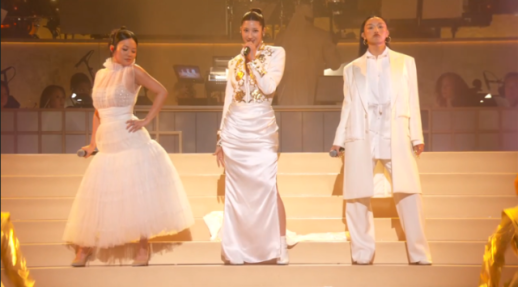 KPop Demon Hunters went Up, Up, winning 2 Oscars for Best Animated and Original Song *Updated with additional information SEOUL, March 16 (AJP) -KPop Demon Hunters turned Hollywood’s biggest night on Sunday into a K-pop celebration, sweeping two trophies at the 98th Academy Awards — Best Animated Feature and Best Original Song — as the Netflix sensation outshone heavyweight Hollywood contenders including Zootopia 2. Nearly a year after its global premiere, the animated hit — blending K-pop spectacle with Korean folklore and fantasy action — capped a remarkable awards-season run that has propelled it into one of the most culturally influential animated films in recent years. “To all the fans who got us here, and for all of those who look like me, sorry that it took us so long to see ourselves in a movie like this,” Korean-Canadian director Maggie Kang said as she accepted the award alongside co-director Chris Appelhans and writer Michelle L.M. Wong. “But it is here, and that means the next generations don’t have to go longing,” Kang added. “This is for Korea and for Koreans everywhere.” Produced by Sony Pictures Animation and released globally by Netflix, the film premiered on June 20, 2025 and quickly became one of the platform’s most-watched titles. The story follows fictional K-pop superstars Rumi, Mira and Zoey, who secretly battle supernatural threats while maintaining their global pop-idol personas — a concept that merges K-pop performance culture with animated fantasy storytelling. The film’s Oscar triumph capped a year-long wave of accolades, including major wins at the Golden Globe Awards, Critics Choice Awards and Grammy Awards. “Golden” captures Best Original Song The film also claimed the Best Original Song Oscar for “Golden,” a track that became a breakout hit from the film’s soundtrack. Written by EJAE, Mark Sonnenblick, Joong Gyu Kwak, Yu Han Lee, Hee Dong Nam, Jeong Hoon Seo and Teddy Park, the song was performed by EJAE, Audrey Nuna and REI AMI. “Growing up, people made fun of me for liking K-pop, but now everyone is singing our song,” singer-songwriter EJAE said in her acceptance speech. “I realized this award isn’t really about success — it’s about resilience. I’m incredibly grateful to our team, the amazing cast, all the producers, and of course my mom and dad.” Other nominees included “Dear Me” from Diane Warren: Relentless, “I Lied to You” from Sinners, “Sweet Dreams of Joy” from Viva Verdi!, and “Train Dreams” from Train Dreams. Hanbok-themed performance lights up Oscars stage The song also took center stage during the ceremony at the Dolby Theatre in Los Angeles, where EJAE, Audrey Nuna and REI AMI delivered a live performance of “Golden.” The stage opened with performers dressed in traditional Korean hanbok, accompanied by narration that built anticipation before the singers emerged in white to perform the K-pop-infused number. The performance blended synchronized choreography with Korean cultural imagery — bringing the film’s signature mix of K-pop aesthetics and folklore-inspired storytelling to the Oscars stage. With Netflix already announcing plans for a sequel, the triumph of K-Pop Demon Hunters suggests the film’s global cultural impact may only be beginning. 2026-03-16 08:54:47
 -
 Netflix’s ‘K-Pop Demon Hunters’ Wins Oscar for Best Animated Feature Netflix’s animated film ‘K-Pop Demon Hunters’ won an Oscar on Sunday night, taking the Academy Award for best animated feature at the 98th Academy Awards at the Dolby Theatre in Hollywood, Los Angeles. The film beat fellow nominees ‘Arco,’ ‘Elio,’ ‘Little Amelie’ and ‘Zootopia 2.’ Director Maggie Kang thanked fans and said, “I’m sorry it took so long to make a movie with a protagonist who looks like me.” She added, “The next generation won’t have to long for movies like this. This award is for Korea and Koreans around the world,” drawing applause. Co-director Chris Appelhans said music and storytelling can connect people across cultural borders, adding that he wanted artists and musicians to “sing in your own voice.” The Netflix action-fantasy centers on a K-pop idol group that fights evil spirits and protects the world through song. Released last June, it set a new Netflix record for most views, according to the report. The soundtrack song ‘Golden,’ performed in the film by the girl group Huntrix, topped Billboard’s main singles chart, the Hot 100. * This article has been translated by AI. 2026-03-16 08:48:06
 -
 Hanwha Tech and Life Units Expand AI-Driven Synergies, Pursue New Businesses Hanwha Group’s Tech and Life Solutions units, which are pursuing a corporate split, are stepping up efforts to develop new business models by creating synergies across divisions. The group aims to improve customer convenience, strengthen competitiveness across businesses and secure new revenue by opening new markets. The push is expected to gain momentum as the management drive of Kim Dong-seon, vice president of Hanwha Galleria and Hanwha Vision, combines with artificial intelligence across robotics, food and beverage, and distribution. Hanwha Galleria and Hanwha Vision said on the 16th that, starting with the latest collaboration, they will actively seek “new technologies” and “customized services” that can be used not only in distribution and services but also across a range of industrial sites. Both companies are set to be placed under a new Tech and Life holding company to be launched in the second half of this year, tentatively named Hanwha Machinery & Service Holdings. As a first step, Ourhome, which is expanding in group catering and food-ingredient distribution, will pilot Hanwha Vision’s AI technology at some sites to help prevent safety accidents, manage food hygiene and quality, and ensure smoother supply of ingredients. AI cameras installed in kitchens will check in real time whether cooks comply with dress and hygiene rules as they enter. The cameras will also detect unusual sounds and temperature changes to help prevent accidents such as fires. The companies are also pursuing an “intelligent automatic ordering system” to improve ingredient supply. A “BCR camera” that combines barcode recognition and video capture will automatically register inventory in real time, and the companies plan to develop a “customized SCM solution” in which AI places orders on its own. Hanwha also plans to introduce “customized services” using technology from Hanwha Vision and Hanwha Robotics at Galleria department stores and across hotels and resorts to improve customer convenience. Using AI cameras, the group plans to gauge store congestion and customer preferences to boost operating efficiency and service. It also plans a system that alerts employees immediately when AI cameras detect unusual situations. The companies’ food and beverage units plan to actively use Hanwha Robotics’ collaborative robots, including VINOBOT and cooking robots, in customer service. Once the ongoing corporate split is completed, the two units plan to set up a separate organization to drive new business development through cross-division synergies. New technologies will be applied first at Life unit sites, then expanded into business models aimed at generating outside revenue. A Hanwha official said cross-division synergies are “one of the key indicators” of the blueprint envisioned by Hanwha Machinery & Service Holdings, adding that the group will continue investing in research and development and collaboration to develop technologies that make daily life more convenient and better.* This article has been translated by AI. 2026-03-16 08:39:20
 -
 Autonomous A2Z, Busan Bus Operators Sign Deal to Advance Self-Driving Transit Autonomous A2Z, a South Korean autonomous-driving company, said it signed a memorandum of understanding with the Busan Metropolitan City Bus Transport Business Association on March 13 for “mutually beneficial cooperation to innovate public transportation based on autonomous driving.” The company said the agreement is aimed at combining advanced autonomous-driving technology with existing public transit operating experience to improve Busan’s autonomous public transportation services and build a cooperative framework to respond to future mobility needs. Under the deal, the two sides plan to cooperate on autonomous-driving demonstrations, joint research based on operational data, joint participation in pilot and demonstration projects, and the creation and operation of a working consultative body. Autonomous A2Z signed a separate MOU in September last year with the Seoul Special City Bus Transport Business Association and related organizations on “K-autonomous driving shared growth.” Last month, it also signed an agreement with the Korea National Federation of Taxi Transport Associations, expanding efforts to build a “Korean-style autonomous driving” ecosystem across public transportation, including buses and taxis. The company said it has accumulated demonstration experience in 13 cities and provinces nationwide, including Seoul, Sejong, Daegu and Anyang. “Autonomous driving technology is not meant to replace existing public transportation, but to work with various modes of mobility, including buses and taxis, to make urban mobility services more efficient as future social infrastructure,” Han said. He added that the company will use its technology and operating experience built in Seoul and other cities to develop an autonomous service model in Busan that works in step with public transportation.* This article has been translated by AI. 2026-03-16 08:36:16
 -
 KATECH Named Korea’s Accredited Testing Body for Low-Speed Autonomous Driving Korea Automobile Technology Institute said Sunday it has built a nationally accredited testing system to verify the safety and performance of low-speed autonomous driving systems in South Korea. KATECH’s Cooperative Driving Automation Research Center said it received approval from the Korea Laboratory Accreditation Scheme to expand its scope of accreditation based on the KS X ISO 22737 international standard. ISO 22737 sets out performance evaluation standards for low-speed autonomous driving (LSAD) vehicles operating on designated routes such as urban parks, university campuses and industrial complexes. It specifies minimum requirements for autonomous systems traveling at 32 kph (20 mph) or less, including collision avoidance, route compliance and emergency stopping functions. KATECH said it has established a real-road testing framework that reflects scenarios likely to occur in actual traffic, moving beyond evaluations centered on in-lab simulations. It said the tests incorporate a range of scenarios, including situations involving vulnerable road users such as pedestrians and cyclists. By verifying the full process of perception, decision-making and control under conditions equivalent to real driving, KATECH said it has improved the reliability of evaluations. KATECH said its designation as a nationally accredited testing body is significant because domestic autonomous driving companies have struggled with a lack of accredited testing systems, making it difficult to objectively demonstrate their technology in global markets. KOLAS-accredited test reports issued by KATECH are recognized with the same effect in more than 100 member countries under the International Laboratory Accreditation Cooperation’s mutual recognition arrangement, it said. KATECH said it plans to begin providing nationally accredited testing services in earnest from the second quarter of this year, targeting leading autonomous driving companies in South Korea and abroad. KATECH said, “This achievement is meaningful in that it links private-sector autonomous driving capabilities with nationally accredited, reliable data, laying the groundwork for a standardized evaluation ecosystem,” adding, “We will actively support domestic autonomous driving companies so they can respond proactively to international technical regulations and enter global markets.” * This article has been translated by AI. 2026-03-16 08:18:14
 -
 Oscar Winners to Be Decided as 'Sinners' Faces 'One Battle After Another' in Top Races The 98th Academy Awards will be held at 7 p.m. local time Sunday at the Dolby Theatre in Hollywood, Los Angeles. This year’s ceremony has drawn added attention as films with strong Korean elements landed nominations in major categories alongside traditional Hollywood contenders. One of the most closely watched titles is Netflix’s animated film “K-Pop Demon Hunters,” nominated for best animated feature and best original song. The film has already won major prizes at the Golden Globes and the Grammys, making it a leading Oscar contender. Its song nominee, “Golden,” was made with heavy participation from Korean producers and writers, including producer 24 (Seo Jeong-hun) and the songwriting team Idio. Korean-heritage artists Lee Jae, Audrey Nuna and Rei Ami are scheduled to perform a special stage on the day of the ceremony. Also in the spotlight is “Bugonia,” directed by Yorgos Lanthimos and backed in production by CJ ENM. The film reinterprets the Korean movie “Save the Green Planet!” with a Hollywood sensibility and is nominated in four categories, including best picture and best actress for Emma Stone. The best picture race is expected to pit two high-profile directors against each other. Ryan Coogler’s “Sinners: Sinners,” which leads the field with a record 16 nominations, gained momentum after winning the Screen Actors Guild Award for best ensemble. Challenging it is Paul Thomas Anderson’s “One Battle After Another,” which tackles refugee issues and racism. The film is seen as timely, with its themes intersecting with immigration policies under the second Trump administration, and is viewed as a strong draw for voters. The best actor category is also crowded. Leonardo DiCaprio is nominated for “One Battle After Another” for what the article described as a manic performance, while Timothee Chalamet is in contention for “Marty Supreme” and could win his first best actor Oscar. Michael B. Jordan (“Sinners: Sinners”) and Ethan Hawke (“Blue Moon”) are also in the mix, leaving the outcome uncertain. In best actress, Jessie Buckley (“Hamnet”) and Emma Stone (“Bugonia”) are in a close contest, setting up a race likely to remain tight through the end of the ceremony.* This article has been translated by AI. 2026-03-16 08:12:36
 -
 OPINION: South Korea faces '3 Highs' as U.S.-Iran War jolts markets, oil and prices SEOUL, March 16-South Korea’s financial markets have swung sharply as the U.S.-Iran war rattles investors, with the won-dollar exchange rate hovering around 1,500 won per dollar. Disruptions to Middle East crude supplies have pushed fuel prices higher, prompting the first oil price-control measures in 30 years. With global logistics strained, exporters and importers face growing uncertainty over when and where shipments of key products and raw materials may be delayed. The Korean economy, which had been showing signs of emerging from a prolonged slump on the back of a semiconductor boom and a strong stock market, is now being shaken by the crisis in the Middle East. The regional turmoil, triggered by U.S. airstrikes on Iran, has highlighted how exposed a small, open economy can be when geopolitics turn volatile. Milestones that had impressed global investors — including the Kospi topping 6,000 and exports reaching $700 billion, the world’s sixth-largest total — now appear less reassuring against the reality of vulnerability to external shocks. South Korea imports all of its crude oil and relies on Middle Eastern producers for more than 70 percent of supply. When the region becomes unstable or prices surge, the country has limited buffers. After each bout of Middle East turmoil since the oil shocks of the 1970s, South Korea has pledged to diversify suppliers, only to ease off once the immediate pressure faded. As industry has become more advanced, sensitivity to oil prices has grown. Semiconductors, petrochemicals, steel and autos — pillars of manufacturing — are closely tied to energy supply, leaving export competitiveness vulnerable to higher oil costs. What initially looked like a threat concentrated in refining and petrochemicals has spread across industries including autos, home appliances and chips, as concerns rise over a possible closure of the Strait of Hormuz. If global consumption weakens and sales of finished goods such as cars and smartphones slow, the broader parts ecosystem would also suffer. Even the semiconductor supercycle that helped lead the recovery and lifted the Kospi could lose momentum. After the Kospi crossed 6,000, South Korea briefly ranked ninth globally by total market capitalization. The latest turmoil has underscored the limits of an emerging market prone to sharp swings and heavily influenced by foreign investors. While nearby markets in China, Japan and Taiwan moved within roughly 2 to 3 percent, the Kospi posted roller-coaster sessions with daily moves of around 10 percent. Even if panic subsides once the war eases, questions may linger about whether the market’s investment mechanisms are functioning as they should. The exchange rate has neared the psychological threshold of 1,500 won per dollar, its highest level since the 2008 global financial crisis. Rising oil prices, a falling Kospi, foreign outflows, energy supply-chain risks and fears of production disruptions in key export industries have combined to weaken the won. As uncertainty over the economic outlook grows, the currency has struggled to maintain stability in foreign-exchange markets. World oil prices have surged amid threats to close the Strait of Hormuz, through which about one-fifth of global crude supply passes. Higher fuel costs are already feeding into everyday prices. Under government pressure as it steps up price monitoring, food companies have lowered or plan to lower prices for items including flour, cooking oil, bread and instant noodles. Still, many consumers say grocery bills already feel far higher than official figures suggest. The war has left South Korea grappling with a “three highs” problem: high oil prices, a high exchange rate and high inflation. If policymakers fail to contain this combination, the risk of stagflation — inflation alongside economic stagnation — could rise. These three pressures reinforce one another. Higher oil prices worsen the current account and place further pressure on the won while also raising household fuel and energy costs. A weaker currency combined with higher crude prices lifts import costs and inflation, while expensive oil can intensify demand for safe assets, adding further downward pressure on the won. The “three highs” can curb consumption, shrink the current account surplus and slow economic growth. The Bank of Korea has forecast 1.9 percent growth this year, but that estimate assumed oil prices at around $62 per barrel. Hyundai Research Institute warned that if oil rises to $100 a barrel, growth could fall by 0.3 percentage points, and if it reaches $150, growth could drop by 0.8 points. The International Energy Agency has announced the release of a record 400 million barrels from strategic reserves, yet oil has remained above $100 as Iran repeatedly declares it could close the Strait of Hormuz. When the Middle East has produced an oil shock in the past, South Korea has often faced severe economic strain. During the second oil shock triggered by Iran’s 1979 revolution, global oil prices jumped from $15 a barrel to $39, while domestic prices rose nearly 30 percent in 1980 alone. In July 2008, oil climbed to $150 amid rising energy demand in emerging markets and heightened geopolitical risks in the Middle East. The surge contributed to a global pullback in consumption and investment, culminating in a financial crisis that also hit South Korea hard. This time, the risk is compounded by simultaneous turmoil in financial markets and potential damage to the real economy. If the conflict drags on, the shock to the global economy could prove far larger than expected, and familiar crisis playbooks may not work. As military clashes between the United States and Iran intensify, some fear an economic tsunami from what could become the first oil shock of the 21st century. For energy-importing countries such as South Korea, even a short-term oil spike can worsen trade terms and reduce the current account surplus, slowing growth. It can sharply raise costs across industry, triggering a chain reaction that weakens production, consumption, investment and employment. If authorities respond too slowly, the country could fall into a stagflation spiral — higher oil prices leading to a weaker current account, a weaker currency, rising import prices and an economic downturn. When growth slows, policymakers typically cut rates or expand fiscal spending. But if inflation rises simultaneously, they may instead need to raise rates or tighten policy. That creates a difficult dilemma between supporting growth and stabilizing prices. The Bank of Korea said on March 12 that Middle East instability could push prices higher but that it would maintain a “cautious neutral stance,” reflecting the difficulty of setting a clear monetary-policy direction. In emergencies such as war or major disasters, the government may need to act pre-emptively and decisively beyond normal market expectations. The immediate priority is to contain the “three highs” early and prevent stagflation from taking hold. Authorities should make efficient use of the 100 trillion won financial market stabilization fund to maintain liquidity while directing support toward vulnerable groups and small business owners hit by rising fuel costs. The crisis also represents the first major economic test for the Lee Jae Myung government since it took office. The administration’s move to prepare an early supplementary budget of up to 20 trillion won is a rapid step to secure policy resources. Lee said, “We must not waste the golden time to ease the shock to the people’s livelihoods,” urging officials to accelerate the execution of the supplementary budget. The supplementary budget should remain focused on its stated purpose as an “oil-price supplementary budget” while carefully monitoring inflation pressures, to avoid criticism of election-driven spending ahead of local elections. The government has cited several areas requiring fiscal support, including freezing public utility fees, cutting fuel taxes, expanding discounts for agricultural, livestock and fisheries products, and providing fuel subsidies for freight trucks. To minimize the fallout from the Middle East crisis and soften the blow to the real economy from higher oil prices, spending should remain selective and targeted. How the budget is drafted and implemented will test the government’s policy capacity and credibility. Even if delayed, South Korea should not postpone diversifying crude oil and natural gas import sources beyond the Middle East to regions such as Africa and South America. Energy diversification must remain a long-term national priority. The Middle East crisis has once again exposed structural weaknesses hidden behind headline economic numbers. It underscores the need for a sober reassessment of South Korea’s economy — including its stock market — and for building greater resilience against external shocks. *The author is an editorial adviser for the Aju Business Daily. About the author: ▷MBA, Aalto University, Finland ▷Former Tokyo correspondent, editorial writer and business editor at The Dong-A Ilbo ▷Former CEO of Donga.com ▷Former president, Korea Online Newspaper Association ▷Professor at Kyungsung University (current) 2026-03-16 07:27:10
 -
 Song Il-gook Shares Update on Triplets, Says Daehan Is Taller Than Him Actor Song Il-gook has shared an update on his triplets, Daehan, Minguk and Manse. On the 15th, Song posted photos on Instagram, writing, "Flower Boys Triplets 6. Thank you to the fans who wished Daehan, Minguk and Manse a happy birthday." He added, "Since it was their birthday, they allowed me to post travel photos from a trip we took during this winter break with their grandmother." Song also wrote, "Daehan is now taller than I am. For reference, I'm 185 cm ..." and said, "They're all in their second year of middle school, so I get through each day praying." In the photos, the triplets drew attention from online commenters with their noticeably taller height. Song married Judge Jung Seung-yeon in March 2008, and the couple had triplets in 2012: Daehan, Minguk and Manse.* This article has been translated by AI. 2026-03-16 06:54:14
 -
 Seoul’s Gwanghwamun area buzzes ahead of BTS comeback show, with up to 260,000 expected SEOUL — With BTS set to perform “BTS Comeback Live: Arirang” on March 21 at Gwanghwamun Square, central Seoul is already seeing a surge of activity ahead of the show. The Gwanghwamun area has been crowded with multinational fans who have traveled to South Korea for the concert. Many can be seen wearing purple items associated with BTS’ fan club, ARMY, or carrying official merchandise. Fans have also gathered at large outdoor screens downtown to watch BTS videos and take commemorative photos. Visitors have also been streaming to major Seoul attractions linked to the group, including nearby Gyeongbokgung Palace, where BTS previously staged a special performance, and other sites associated with the members. An influx of K-pop fans from around the world is expected to intensify starting March 16, with the number of visitors to the Gwanghwamun area projected to rise further. Organizers expect as many as 260,000 people to gather on the day of the concert.* This article has been translated by AI. 2026-03-16 06:04:06