

Journalist

Jack L. Rozdilsky
-
 Middle East conflict squeezes Korean chip supply chain as helium shipments face disruption SEOUL, March 10 (AJP) - The widening Middle East conflict is beginning to bite into South Korea’s industrial supply chains, with the semiconductor sector facing growing concern over disruptions to helium shipments — a critical gas used in advanced chip manufacturing. The de facto disruption of shipping routes through the Persian Gulf has hit South Korea particularly hard given the country’s heavy reliance on Middle Eastern energy and industrial materials that feed its export-driven manufacturing base, including the strategically vital semiconductor industry. Industry attention has turned especially to Qatar, a major global supplier of helium, after Iranian retaliatory strikes spread across Gulf states following coordinated U.S. and Israeli attacks on Iran. Helium, a noble gas with an extremely low boiling point, is indispensable in semiconductor fabrication. It is widely used in lithography and plasma etching processes to maintain stable vacuum environments and cool high-temperature equipment during wafer processing, where microscopic circuit patterns are etched to form transistors and interconnects. Any interruption in supply therefore risks creating a bottleneck in the production of advanced chips. According to a Korea International Trade Association (KITA) report, Qatar accounts for roughly 64 percent of South Korea’s helium imports, highlighting the sector’s exposure to geopolitical shocks in the Gulf region. Other major suppliers include the United States and Russia, while the United Arab Emirates — another Gulf producer that has also come under attack — ranks fourth in Korea’s import mix, according to trade data compiled by Volza. Helium is typically transported in liquid form, which allows large volumes to be shipped efficiently before being vaporized upon arrival for industrial use. Shipping disruptions are already pushing up transport costs. The Shanghai Containerized Freight Index (SCFI) for Middle East routes jumped 72.3 percent week-on-week, according to the Shanghai Shipping Exchange, as vessels increasingly divert around the Cape of Good Hope to avoid the conflict zone. Such detours add two to three weeks to delivery times, raising the risk that chipmakers’ stockpiles could be drawn down faster than expected. “Temporary shortages are likely because alternative suppliers currently lack the capacity to immediately offset Qatar’s dominant share,” said Koo Gi-bo, a professor of global commerce at Soongsil University. “South Korea will need to rely on existing reserves while expanding imports from other regions.” Industry sources say Samsung Electronics and SK hynix typically maintain helium inventories sufficient for two to three months of operations. Both companies have already begun securing additional supplies from the United States and Australia, though rerouting shipments comes with sharply higher logistics costs. Yet analysts note that South Korea’s position at the center of the global semiconductor ecosystem could work to its advantage in securing alternative supplies. “The United States has a strategic interest in ensuring helium shipments to South Korea remain stable,” Koo said. “Without Korean high-bandwidth memory (HBM) chips, U.S. companies cannot manufacture advanced AI accelerators. Any disruption to Korean fabs would ripple across the global AI industry.” As fighting in the Middle East threatens vital shipping lanes, the episode is once again exposing a structural vulnerability in South Korea’s export economy — its dependence on imported energy and specialized industrial gases that underpin the world’s semiconductor supply chain. 2026-03-10 16:56:24
 -
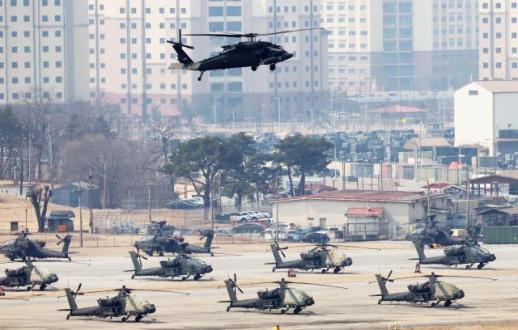 Annual South Korea–US joint military exercise underway SEOUL, March 10 (AJP) - The annual joint military exercise between South Korean and U.S. troops has been underway since early this week. The exercise, dubbed "Freedom Shield," which kicked off on Monday, aims to prepare for contingencies on the Korean Peninsula while assessing combat readiness to prepare for the transfer of wartime operational control from Washington to Seoul. Approximately 18,000 troops are participating in this year's exercise, similar to last year's level, but the number of field training sessions has been reduced to around 22, less than half of last year's 51. North Korea, which has hysterically reacted to these exercises, responded again as Kim Yo-jong, the country's unofficial mouthpiece as the sister of the country's leader Kim Jong-un threatened that it may "cause unimaginably terrible consequences." The exercise runs until March 19. 2026-03-10 16:48:18
 -
 USFK diverts air-defense assets to Middle East as Freedom Shield scales back SEOUL, March 10 (AJP) - The United States has redeployed portions of its air-defense architecture from South Korea to the Middle East as tensions with Iran escalate, coinciding with this year's scaled-back Freedom Shield (FS) joint exercise. According to reports from the Washington Post and real-time flight tracking data, the Pentagon has shifted elements of the Terminal High Altitude Area Defense (THAAD) system out of South Korea while also drawing Patriot interceptor units from the Indo-Pacific theater to counter rising threats of Iranian drone and ballistic missile attacks. Between late February and March 10, 11 C-17 Globemaster III transport aircraft and two C-5 Galaxy heavy airlifters were tracked departing Osan Air Base, a key U.S. Air Force logistics hub south of Seoul. The C-5 — the largest transport aircraft in the U.S. inventory — is capable of carrying an entire Patriot PAC-3 missile battery in a single lift, suggesting that air-defense equipment may have been among the cargo moved out of the peninsula. U.S. officials have described the redeployments as precautionary steps designed to reinforce defenses in the Gulf region should Iran retaliate against U.S. and allied forces following recent strikes. South Korean officials have effectively acknowledged the movement of assets while stressing that such decisions ultimately rest with Washington. President Lee Jae Myung said Tuesday that while Seoul expects U.S. Forces Korea (USFK) to remain committed to maintaining stability on the peninsula, it cannot fully dictate how U.S. military assets are employed globally. “Given that USFK contributes to peace and stability on the Korean Peninsula, we naturally hope its capabilities remain focused here,” Lee said. “However, it is also a reality that we cannot completely prevent the United States from relocating certain defensive systems according to its military needs.” Lee sought to ease concerns about potential gaps in air defense at a time when North Korea continues to advance its missile and nuclear programs. “Considering our defense spending, the development of our defense industry and our international military standing, there is no reason for concern about national security,” he said. The redeployment coincides with the launch of Freedom Shield 2026, the annual combined command-post and field exercise between the U.S. and South Korea, which runs through March 19 and involves roughly 18,000 personnel. This year’s drills place particular emphasis on verifying conditions required for the transfer of wartime operational control (OPCON) from Washington to Seoul — a process the allies are expected to target for completion by 2028, potentially aligning with the current terms of Presidents Lee and Donald Trump. The allies are currently conducting the Full Operational Capability (FOC) assessment, the second stage of a three-step transition process. If the FOC evaluation is approved, the alliance will move to the final Full Mission Capability (FMC) phase in 2027 before the formal transfer of operational control. At the same time, the Lee administration has shifted the structure of Freedom Shield exercises. Rather than concentrating on large-scale Field Training Exercises (FTX), the military has moved toward a more dispersed, year-round training model. This year’s FTX component has been reduced to 22 drills, down sharply from 51 last year, a change that analysts say could help ease tensions on the peninsula ahead of renewed diplomatic engagement between Washington and Pyongyang. President Trump is scheduled to visit China from March 31 to April 2, a trip that could reopen discussions on North Korea. Some military analysts say the redeployment of U.S. defensive systems is unlikely to significantly weaken deterrence against North Korea. Jung Kyeong-woon, a research fellow at the Korea Association of Military Studies, said the assets moved out of the peninsula likely involve reserve equipment and munitions rather than operational frontline units. Similarly, Koh Yu-hwan, former president of the Korea Institute for National Unification, said Pyongyang currently appears focused on signaling rather than escalation. “The fact that Kim Yo-jong issued a statement protesting the exercises suggests the North is reacting to U.S. military pressure rather than preparing offensive action,” Koh said. “Even if minor logistical gaps arise, the core deterrent remains the ROK-U.S. alliance.” North Korea has nonetheless responded sharply to the drills. Kim Yo-jong, the powerful sister of leader Kim Jong-un, warned that the “provocative and aggressive war simulations” conducted by the allies could lead to “unimaginably terrible consequences.” Both USFK and the South Korean military declined to confirm specific details of asset movements, citing operational security. They stressed that the alliance maintains what they described as an “ironclad combined defense posture” to ensure there are no security gaps on the peninsula. 2026-03-10 16:38:03
 -
 Shinhan Bank CEO visits Seoul Cosmetics, pledges expanded tailored financing Jeong Sang-hyeok, CEO of Shinhan Bank, visited a cosmetics manufacturer to review its research and development work and discuss ways to support the company, in line with the group’s push to expand “productive finance.” Shinhan Bank said Jeong on March 10 toured Seoul Cosmetics, an OEM (original equipment manufacturing) and ODM (original development manufacturing) company in Namdong-gu, Incheon, and met with Chairman Han Gwang-seok and CEO Han Jeong-su to discuss growth support measures. The visit was part of Shinhan Financial Group’s broader strategy to expand productive finance. The group held a “Group Productive Finance Steering Committee” meeting on Feb. 11 at its headquarters in Jung-gu, Seoul, to discuss ways to improve the execution and effectiveness of productive finance, which it said will be implemented in earnest starting this year. During the meeting, Jeong heard the company’s plans to expand production capacity as it grows in global markets, along with its mid- to long-term growth strategy. He then toured the company’s research institute and production facilities to review equipment operations and the overall process for pursuing new businesses. In an on-site discussion, the sides talked about strengthening supply capabilities, strategies for developing new product formulations, and financial and nonfinancial support needed to enter overseas markets. “We will further expand tailored cooperation and financial support so companies with strong technology and growth potential can secure competitiveness in global markets,” Jeong said. “We will continue to strengthen field-focused partnerships so corporate innovation and growth can proceed smoothly.”* This article has been translated by AI. 2026-03-10 16:30:00
 -
 South Korea Reaches WBC Quarterfinals for First Time Since 2009 After Beating Australia South Korea advanced to the World Baseball Classic quarterfinals for the first time since its 2009 runner-up finish, breaking a three-tournament streak of group-stage exits. Ryu Ji-hyeon’s team beat Australia 7-2 on March 9 at the Tokyo Dome in Tokyo in Pool C play. South Korea finished 2-2, tied with Taiwan and Australia, but claimed second place behind Japan (3-1) on the tournament’s minimum runs-allowed rate tiebreaker. The stakes were clear: South Korea needed to win by at least five runs and allow no more than two. It did both. Moon Bo-kyung of the LG Twins set the tone. Batting fifth as the designated hitter, he hit a two-run homer in the second inning with a runner on and the game scoreless. He later delivered RBI singles in the third (with one out and a runner on second) and fifth (two outs, runner on second), finishing 3-for-5 with four RBIs. Moon ended the group stage batting .538 with two homers, 11 RBIs and a 1.779 OPS. He matched the South Korean single-tournament WBC RBI record of 11 set by Kim Tae-kyun in 2009. Defense also mattered. In the bottom of the ninth, with South Korea leading 7-2 and one out with a runner on first, Lee Jung-hoo of the San Francisco Giants sprinted and made a sliding catch on a ball that could have led to a run and threatened South Korea’s advancement scenario. ESPN said Lee’s ninth-inning catch created a defining moment, adding that if the ball had dropped and Australia had scored, Australia would have advanced to the quarterfinals. On the mound, South Korea had to adjust early. Starter Son Ju-young of LG worked a scoreless first inning but left after reporting sudden elbow pain, forcing a bullpen game from the second inning. Veteran right-hander Noh Kyung-eun, born in 1984, was summoned and delivered two scoreless innings, allowing one hit and striking out one. He mixed a changeup, fastball, cutter, curve, slider and sinker to keep Australia in check. “Today’s MVP is Noh Kyung-eun,” Ryu told reporters after the game. “In an unprepared situation, he gave us two innings. I want to say I respect him.” Reliever Jo Byeong-hyeon of the SSG Landers closed it out under heavy pressure. He entered in the eighth with one out and a runner on first and South Korea leading 6-2, with three more runs allowed meaning elimination. Jo finished the eighth without damage and returned for the ninth, striking out the first batter, issuing a walk, then recording two flyouts to preserve the two-run-allowed requirement. South Korea will play the Pool D winner in the quarterfinals at 7:30 a.m. March 14 (Korea time). In Pool D, the Dominican Republic and Venezuela were tied atop the standings with three wins each.* This article has been translated by AI. 2026-03-10 16:24:42
 -
 ‘Number One’ reunites Jang Hye-jin and Choi Woo-shik after ‘Parasite’ Every production holds many perspectives. Even in the same place and time, directors and actors can experience the moment differently. “Choi Song-hee’s B-Cut” looks beyond the on-screen “A-cut” to the vivid record of what happened off camera. By weaving together interviews with directors and actors, it reconstructs the “B-cut” moments that were often more intense than the finished frame. <Editor’s note> Reunions can be risky, inviting complacency. But on the set of the film “Number One,” familiarity appeared to fuel growth. Jang Hye-jin and Choi Woo-shik, who played mother and son in “Parasite,” worked together again, while director Kim Tae-yong reunited with Choi a decade after “Giant” (2014). Instead of easing into old rhythms, they leaned into new demands, including the challenge of speaking in the Busan dialect and pushing through emotionally difficult scenes. Jang said the second collaboration with Choi brought comfort — and a new respect for him as a fellow professional. "People might think that’s why he was cast, but I think that’s a separate issue," Jang said. "Because it’s our second time meeting, there’s a comfort in thinking we know each other well. We don’t have to go through the process of getting to know each other like you do with actors you meet for the first time. Watching Woo-shik again, I thought he’d gained a lot of know-how. There were moments when I was watching the monitor and the thought popped into my head: ‘I want to do it like that.’ He also seemed to feel more responsibility for the set and looked after people around him. And he really looks like my real son, which helped me immerse myself. He really does!" Choi said Jang’s voice reminded him of his own mother, helping him connect more deeply in scenes where the two exchange emotions and dialogue more often than before. "She kind of resembles my mom. Even her voice tone is similar, so it was easy to immerse myself while acting," Choi said. "This time we had a lot more scenes where we traded emotions and lines, so it felt like we got closer, and I saw sides of her I hadn’t seen before. I think I’m just lucky. I’ve known the director since ‘Giant,’ and I’ve been close with Jang since ‘Parasite.’ The subject matter can be heavy, but on set we laughed a lot and had a really fun shoot." For viewers who remember “Giant,” the reunion between Kim and Choi carries added weight. Choi recalled meeting the director when Kim was 27 and Choi was 24, and said the director recognized how much he had changed over 10 years. "When we met on ‘Giant,’ the director was 27 and I was 24," Choi said. "Back then we shot with almost no rules, and it was really hard, but it was still enjoyable. This time I went in expecting a lot. The difference is we’re about 10 years older. The director would say, ‘You’ve grown so much, you’re all grown up, now you’re an actor.’ I think it’s because I didn’t have any of that back then. I had a pure heart that wasn’t worn down by the world, and that makes me trust him more." Jang described Kim as candid and upbeat, and said she would work with him again. "The director is honest and keeps the mood light," Jang said. "Because it’s a story about people, his own story inevitably comes through. ‘Giant’ reflected how he felt then, and now it’s reached ‘Number One.’ If he asks to do another project next time, I think I could do it anytime. It was a really good set." Behind the warm reunion, both actors faced a major hurdle: the Busan dialect. Choi said using the dialect while playing intense emotions felt daunting, but he wanted to challenge himself and relied on guidance on set. "I was most worried about the Busan dialect," he said. "I thought it would be really hard to use it while doing emotional acting. This time I wanted to challenge myself. A dialect has to tell you how that person has lived. Having to go to intense emotions on top of that honestly felt scary. When I actually did it, it was really hard, but thankfully the director and my senior were there, and a lot of people watched over me." Jang, who is from Busan, said the hardest part was balancing authenticity with clarity for viewers. She also pointed to costume details that helped complete her character, Eun-sil, including a light-blue fleece left behind by her son in Busan. "Because I’m from Busan, people told me that if I spoke in a real dialect they couldn’t understand it," Jang said. "The hardest part was adjusting how understandable to make it. I worried people might say, ‘You’re from Busan and that’s all you can do?’ But regional emotion is in your body, so I tried to go naturally. Costumes helped a lot, too. I wanted to keep the setup that Eun-sil comes out wearing the light-blue fleece her son left behind in Busan." Choi said he had long avoided what he called a “jinx” around heavy emotional scenes, fearing sadness would linger. On “Number One,” he said, Jang’s performance helped him face it directly. "I actually have a jinx about emotional acting," Choi said. "I avoided filming sad things because I felt like I’d fall into a swamp and become unhappy. But I couldn’t avoid that scene. Watching the mother change because of Ha-min was really hard. But Jang guided me well, so I just had to receive the emotion. I think that’s why the acting could come out naturally." The film’s foundation, they said, is the trust built over years — not the comfort of familiarity, but a shared willingness to test limits. Their reunion, shaped by long working relationships and new challenges, became less a return to the past than a push forward.* This article has been translated by AI. 2026-03-10 16:15:25
 -
 Volleyball star Kim Yeon-koung named Asian winner of IOC's annual award SEOUL, March 10 (AJP) - Volleyball star Kim Yeon-koung has been named one of the recipients of the International Olympic Committee's (IOC) annual awards, which recognize efforts to promote gender equality, diversity, and inclusion in sport, along with winners from other continents. The Gender Equality, Diversity and Inclusion Champions awards are presented annually across continents with one at the world level and one each for Africa, the Americas, Asia, Europe and Oceania, honoring individuals who have made outstanding contributions to "gender equality, diversity and inclusion in and through sport across the areas of participation, leadership, safe sport, portrayal and resource allocation." According to the IOC, Kim was chosen as the winner in the Asia region in recognition of her efforts, even after retiring as a professional player, to expand women's participation in sports, strengthen leadership, and promote a safe and fair sporting environment. The IOC said the former captain of South Korea's national volleyball team has continued to "advance gender equality and athlete welfare through her leadership off the court," while working to "expand opportunities for girls and young women in sport by addressing financial and structural barriers to participation." "Through mentoring, athlete advocacy and public engagement, also supports leadership development for women in sport and promotes safe, fair and inclusive sporting environments," it added. During her career, Kim helped elevate South Korea's standing in women's volleyball and grow public interest in the sport, participating in three Olympics — London in 2012, Rio de Janeiro in 2016 and Tokyo in 2020. Since retiring, Kim has established a foundation to nurture prospective athletes through scholarships, equipment support, youth clinics, and other training programs. "It is very meaningful that Kim's dedication and achievements have been recognized internationally," said Yoo Seung-min, president of the Korean Sport & Olympic Committee. Meanwhile, former captain of India's men's national volleyball team Abhijit Bhattacharya was named the global winner in recognition of his large-scale, inclusive grassroots sports program for children. 2026-03-10 16:13:48
 -
 BTS comeback D-11: Extra tickets to open as Seoul prepares for massive crowds SEOUL, March 10 (AJP) — Organizers of BTS’s comeback concert in central Seoul will release an additional 7,000 tickets this week, expanding the official audience capacity as authorities and nearby institutions brace for crowds that could swell to around 260,000 people in the Gwanghwamun area. BigHit Music said Tuesday that an additional round of tickets for “BTS THE COMEBACK LIVE | ARIRANG” will go on sale at 8 p.m. Thursday through the NOL ticket platform. The newly added viewing zone will stretch from Sejong-daero Intersection toward Gwanghwamun Station on Line 5 and City Hall Station on Line 1, where fans will watch the performance on large LED screens installed along the boulevard. The expansion will increase official capacity to about 22,000 spectators, according to the agency. Authorities expect far larger crowds beyond the ticketed audience as fans gather across the Gwanghwamun district, one of Seoul’s busiest civic corridors. Preparations are already altering daily operations across the area. KT Corp. said it will close its Gwanghwamun headquarters on the day of the concert, citing safety concerns as massive crowds are expected to gather near the venue. Employee access will be restricted and commercial facilities inside the building will suspend operations. Several cafés and bakery outlets inside the complex are also expected to close, while nearby businesses are reviewing operating hours ahead of the surge in visitors. Cultural institutions surrounding Gwanghwamun Square are adjusting schedules as well. The National Museum of Korean Contemporary History said it will temporarily close on March 21 for safety reasons. The Sejong Center for the Performing Arts has cancelled or rescheduled several performances scheduled that day due to anticipated congestion around the square, though the art exhibition “The Fourth Wall” by actor and painter Park Shin-yang will remain open. Historic landmarks nearby will also suspend operations. Gyeongbokgung Palace and the National Palace Museum of Korea said they will temporarily close to prevent safety incidents and reduce inconvenience to visitors as crowds gather around the district. Transportation across central Seoul will also be significantly adjusted. City officials said subway stations near the venue — Gwanghwamun Station (Line 5), City Hall Station (Lines 1 and 2), and Gyeongbokgung Station (Line 3) — may allow trains to pass through without stopping for several hours during the event to prevent dangerous crowd congestion. Access to certain station exits may also be restricted depending on real-time conditions. Seoul plans to deploy more than 3,400 personnel for on-site safety management, operating a dedicated civil safety headquarters coordinating crowd control, medical support and emergency response. The Seoul Metropolitan Police Agency will deploy about 4,800 officers, including riot police and counterterror units prepared to respond to potential threats. Organizers are also tightening measures against ticket scalping and fraudulent entry. BigHit Music said it will monitor online resale postings and strengthen identity verification procedures for attendees. Ahead of the concert, BTS will release its fifth studio album “ARIRANG” at 1 p.m. on March 20, one day before the performance. The comeback concert will also be streamed globally on Netflix. 2026-03-10 16:13:12
 -
 Korea’s Internet Banks Gear Up for Check Cards for Kids as Young as 7 Competition among South Korea’s internet-only banks and fintech firms is intensifying as the minimum age for getting a check card is set to drop, effectively opening the market to children in the so-called Alpha generation, born in 2010 or later. The Financial Services Commission is pushing a 시행령 revision in May to improve youth access to financial services by lowering the eligible age for check card use to 7 and older, from 12, the financial industry said Monday. In response, the country’s three internet-only banks are expanding teen-focused products and promotions. The goal is to move beyond a model in which parents open and manage cards and savings accounts for their children, and instead let teens experience everyday money management directly through app-based services. KakaoBank, for example, has been running a “Teens Bonus” promotion since March 5 through its youth service, “KakaoBank mini.” It offers three daily random cash-back benefits for payments at teen-friendly merchants such as Daiso, Artbox and Mega MGC Coffee. K Bank is leaning into gamification, promoting services such as “Money Mission,” which pays rewards when users complete in-app tasks, aiming to boost motivation and engagement among young customers. Toss plans to introduce a “youth mydata” service, the first such offering in the fintech industry, it said. Toss said teens accounted for 12% of its customers as of 2025. Its affiliate Toss Bank offers an under-14 “Youth Card” and “Youth Home,” with features such as an allowance ledger and a digital piggy bank designed for easy use. Financial companies see teen adoption of internet banks and fintech platforms as a way to secure “future customers,” betting that a first finance app used in adolescence can carry into adulthood. Overseas firms are also moving aggressively into the teen market. In Canada, RBC runs the allowance-management app Mydoh, which lets parents assign chores and pay allowances when children complete them. RBC also encourages customers ages 6 to 14 to transition over time to student and then adult accounts. In the United States, fintech firm Greenlight goes beyond savings and check cards by offering access to stock and exchange-traded fund, or ETF, accounts, positioning it as an early investing education tool. “Today’s youth are a generation whose daily routines — from taking the bus to buying meals and going to after-school academies — are all tied to financial transactions,” an official at an internet-only bank said. “The younger they start building structured economic education and financial experience, the better, so competition in services will only intensify.”* This article has been translated by AI. 2026-03-10 16:12:00
 -
 Choreographer Sharon Eyal on ‘Jakie’: ‘Come with an open mind and feel it’ “Come with an open mind and feel it.” Choreographer Sharon Eyal said at a March 10 talk at the Sejong Center for the Performing Arts that dance is about “freedom, connection and emotion.” “Movement makes us better people and brings better things,” she said, adding, “Everyone needs dance.” The Sejong Center will present the Seoul Metropolitan Ballet’s first program of its 2026 season as a double bill: Johan Inger’s “Bliss” and “Jakie” by Eyal and Gai Behar, staged at the Sejong M Theater. “Jakie,” which premiered in 2023 at Netherlands Dance Theater (NDT), will be performed for the first time for audiences in South Korea through the Seoul company. It is Eyal’s first time working with Korean dancers, though she said nationality is not central to her process. “My work is with people. It’s about working with new people — nationality doesn’t matter much,” she said. Still, she said she appreciates that Korean dancers “respect rigor,” and added that drawing out emotion “could be a challenge.” Eyal said she has made small adjustments for this production. “I tailor it little by little to each individual,” she said. “Rather than keeping the Korean audience in mind, I look for what can bring out the dancers’ sincerity in this moment. I believe that’s how communication happens.” Calling herself a “dreamer,” Eyal repeatedly pointed to “life” when asked what inspired “Jakie” and whether the title refers to a specific person. “I don’t make works for the sake of making works. I drew inspiration from life. (‘Jakie’) is an extension of life,” she said. She said the answer to what “Jakie” is meant to be remains open. “You can think of Jakie as a bear. You can think it’s not a person,” she said. “Rather than explaining it, I want you to feel it directly. I don’t like reading a plot summary before going to the movies — I want to experience it. I hope audiences do, too.” The program runs March 14-22 at the Sejong M Theater for seven performances. There are no performances on March 16, 17 and 21.* This article has been translated by AI. 2026-03-10 15:51:21