

Journalist

Jack L. Rozdilsky
-
 1 dead, 3 injured due to fire at aging apartment complex in southern Seoul SEOUL, February 24 (AJP) - A fire broke out in an apartment unit in southern Seoul on Tuesday, leaving one person dead and three others injured. About 70 residents were evacuated after the fire began at around 6:20 a.m. at the Eunma apartment complex in Daechi-dong, an affluent neighborhood in Seoul's Gangnam district, according to district officials. Fire authorities said they contained the fire in about an hour and were working to extinguish the remaining flames. The aging complex, built in 1979 and long slated for redevelopment into high-rise skyscrapers that could house nearly 6,000 households, has seen property prices surge in recent years. 2026-02-24 08:37:31
 -
 Korea's producer prices on mild increase in Jan on brisk chip demand SEOUL, February 24 (AJP) -South Korea’s producer prices posted mild gains in January despite a softer U.S. dollar against the won and falling fuel prices, supported by brisk chipmaking activity. According to data released by the Bank of Korea on Tuesday, the producer price index (PPI) for January stood at 122.50 (2020=100), up 0.6 percent from the previous month and 1.9 percent from a year earlier. The PPI has recorded monthly increases since September. By category, prices for agricultural, livestock and fishery products rose 0.7 percent, with agricultural products up 1.4 percent and livestock products up 0.9 percent. Manufactured goods increased 0.6 percent, driven by primary metal products, which rose 3.0 percent, and computer, electronic and optical equipment — including semiconductors — up 1.8 percent. Service prices climbed 0.7 percent, led by finance and insurance, up 4.7 percent, and transportation services, up 0.7 percent. Among individual items, prices jumped for DRAM chips (49.5 percent), pumpkins (41.4 percent), silver bullion (43.6 percent), butadiene (26.7 percent), sulfuric acid (15.9 percent), consignment brokerage fees (15.2 percent), primary refined copper products (11.0 percent), beef (6.8 percent) and flash memory (9.9 percent). Prices fell for frozen squid (19.8 percent), mixed sauces (10.4 percent), hotels (7.5 percent), gasoline (6.0 percent) and diesel (5.1 percent). The domestic supply price index, which tracks price changes including imports, rose 0.3 percent from the previous month. Raw material prices fell 0.8 percent, while intermediate goods rose 0.6 percent. The total output price index, which includes export goods along with domestic shipments, rose 1.3 percent, led by manufactured goods, up 1.8 percent, and services, up 0.7 percent. Lee Moon-hee, head of the Bank of Korea’s price statistics team, said key price factors should be closely monitored, noting that Dubai crude prices rose in February from the previous month while the won-dollar exchange rate edged down. Still, Lee said spillover effects were likely to remain limited given the nature of the items driving the increase and a decline in domestic supply prices for consumer goods. He said the rise in producer prices was largely attributable to intermediate goods such as primary metal products and semiconductors, suggesting that any pass-through to consumer prices would likely appear with a time lag. He added that consumer goods prices in the domestic supply index fell for the first time in eight months in January, since May 2025, as the Lunar New Year fell in January last year versus February this year. On U.S. tariffs, Lee said they are not directly reflected in the producer price index, as it measures price changes for goods supplied by domestic producers to the domestic market. 2026-02-24 08:36:31
 -
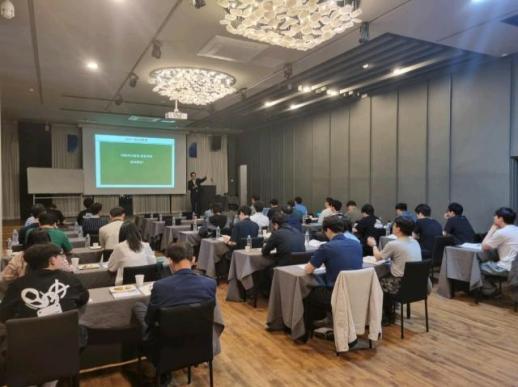 Korea Automotive Technology Institute Expands Training for Future Vehicle Talent The Korea Automotive Technology Institute said Monday it will expand job-transition training and consulting support for auto parts companies as the industry shifts to future vehicles. KATECH said it will broaden its programs under the Korea Industrial Human Resources Corp.’s Industrial Transition Joint Training Center project, offering more training for incumbent workers and more company-support consulting. This year, it plans to upgrade courses to reflect demand in the field and expand consulting, with full-scale operations set to begin next month. KATECH said it will significantly expand hands-on courses including vehicle software development based on the future vehicle standard software platform AUTOSAR; battery management system software development using model-based design; and techniques for applying international certification rules for future vehicle cybersecurity. It also plans to set up an integrated “training-consulting performance management system” that links consulting support to companies with large numbers of employees participating in the training, aiming to improve the effectiveness of industrial transition. KATECH is carrying out the joint training center project for five years, from last year through 2029. In its first year, it signed agreements with 161 companies and ran courses focused on key future vehicle areas such as fuel cells, electrification and autonomous driving. It also provided tailored diagnostics and consulting to support technical capabilities for 15 companies, producing results including new business item development, commercialization strategy planning, process improvements and quality gains. “Transitioning to the future vehicle industry is a core task that determines parts companies’ competitiveness and survival, beyond simply learning new technologies,” KATECH President Jin Jong-wook said. He said the institute will actively support the domestic parts industry in securing new growth engines through a virtuous cycle of practical training that can be applied immediately in the field and customized consulting support.* This article has been translated by AI. 2026-02-24 08:24:30
 -
 Kim Junsu Says ‘Beetlejuice’ Role Fueled by Desire to Take on Something New “Junsu is really good at finding roles that fit him.” Musical actor Kim Junsu said that kind of reputation helped shape his decision to take on “Beetlejuice” — in part because he wanted to answer it with a different kind of role. He said he wanted to show he could do well even in work that people might not immediately associate with him. In an interview with reporters on Feb. 23 in Seoul’s Gangnam district, Kim said he chose “Beetlejuice” because it felt different from what he had done before. “My desire to challenge myself played a part,” he said. “People always say, ‘He’s good at finding roles that suit him.’ But every production has been a challenge for me,” he said. “Whether it was ‘Dracula’ or ‘Todd,’ I started those projects hearing, ‘That doesn’t suit you.’” He said shifting reactions left him both pleased and uneasy. “I took it positively, thinking, ‘I must have done well,’ but at the same time I wondered, ‘How long do I have to keep hearing this?’” he said. That pushed him to look for something new. Kim said many people were puzzled when the casting was announced, and he also had doubts. “Right up until the announcement, I was so torn my mind changed every day,” he said. “In the end, I think it was the right decision.” To create his own take on the character, Kim said he tried to let go of his usual approach, while adjusting elements that felt too far from him through discussions with the production team. Rather than changing for the sake of it, he said he focused on bringing his own color to the role. “I thought I could make it my strength if I played him like a spoiled kid throwing a tantrum because he doesn’t know any better,” Kim said. “No matter how funny or bizarre a face I make, I didn’t think I could beat Seonghwa (Jung Seong-hwa). So I approached it thinking I should create my own charm for the character.” He said the pressure before opening was intense, to the point he had nightmares about going onstage without knowing his lines. “There were so many words I don’t normally use,” he said. “There are sexual lines and profanity, too. Tempo matters. It has to come out like rapid-fire.” Kim said he prepared until the lines would come out instantly on cue, without thinking, so he could also weave in ad-libs. “I paid even more attention to it,” he said. He also said he prepared two or three different reactions depending on how the audience responded. For example, when describing Beetlejuice — a character no one notices — as “like your boyfriend passing by next to Kim Junsu,” he said he had multiple follow-ups ready depending on the crowd’s response, such as “You like that?” or “They say they like it.” Still, he said he could not predict how fans would react until opening night. Only after the audience burst out laughing at his first ad-lib did he feel relieved. “I worried about what if people hesitate over whether to laugh,” he said. “More than anything, I only felt at ease after the first show.” Kim said Beetlejuice has become a character he feels attached to. “I can’t say I’m attached to every character I’ve played. There aren’t many I want to do again — not even half,” he said. “But Beetlejuice is one of them. I’ve done about 10 productions so far, and it’s in my top five.” The musical “Beetlejuice” is based on the film of the same name directed by Tim Burton. The show runs at LG Arts Center Seoul in Gangseo-gu through March 22. 2026-02-24 08:04:16
 -
 Seoul Police Step Up Ticket Fraud Crackdown, Crowd Plans for BTS Gwanghwamun Show Police are tightening measures to prevent ticket scams and manage crowds ahead of BTS’ concert set for March 21 at Gwanghwamun Square in Seoul. With as many as 260,000 people — including foreign tourists — expected to gather, authorities said they will focus on safety. Seoul Metropolitan Police Agency Commissioner Park Jeong-bo said at a regular news briefing on Feb. 23 that police are “continuously monitoring” crimes that could arise around ticket sales. He said police have asked platforms to delete or block 34 posts so far, including listings for proxy purchases and resales. Police said offers online for ticket proxy buying or high-priced resales are likely to be scams. Park warned of possible secondary harm, saying scammers may steal and misuse personal information under the guise of proxy purchasing, and urged consumers to be cautious. Police also plan to prepare for illegal bookings using macros and scalping, as well as potential crimes on the day of the event, including sex crimes and theft. For crowd control, police will use a “stadium-style” approach. The event area will be divided into four zones by risk level — core, hot, warm and cold — and density will be managed through 29 entry routes. Crowd-control lines will also be installed by zone based on expected movement. Traffic restrictions are also being finalized. The agency has asked Seoul Metro to consider having trains pass through three nearby stations — Gwanghwamun, Gyeongbokgung and City Hall — without stopping. On the day of the concert, phased traffic controls will be imposed on major roads including Sejong-daero, Saemunan-ro, Jongno, Sajik-ro and Yulgok-ro. Park said a midterm safety review meeting on Feb. 20 rechecked overall preparations. “We will concentrate available personnel with public safety as the top priority,” he said. * This article has been translated by AI. 2026-02-24 08:03:09
 -
 Jang Hang-jun’s ‘The Man Who Lives With the King’ Tops 6 Million Moviegoers in 20 Days '왕과 사는 남자' has drawn more than 6 million moviegoers. Showbox said on the 24th that the film passed 6 million in cumulative admissions on its 20th day in theaters, on the 23rd. It reached the mark faster than '왕의 남자' (29 days) and '사도' (26 days), and matched the pace of the hit '광해, 왕이 된 남자.' Set in 1457 at Cheongnyeongpo, the historical drama follows a village chief who chooses exile to revive his community and a young deposed king sent into exile. The film is directed by Jang Hang-jun and stars Yoo Hae-jin, Park Ji-hoon, Yoo Ji-tae and Jeon Mi-do. '왕과 사는 남자' is now playing in theaters.* This article has been translated by AI. 2026-02-24 07:57:15
 -
 South Korea wins UK court bid to void Elliott ISDS award SEOUL, February 24 (AJP) -South Korea has won a decisive legal battle in a UK court to overturn an international arbitration ruling that had ordered the government to pay roughly 160 billion won ($110 million) to U.S. hedge fund Elliott Management, the Justice Ministry said in a release issued late Monday. The British High Court set aside the 2023 investor-state dispute settlement (ISDS) award, meaning the arbitration decision can no longer stand. The case will now return to arbitration proceedings. The dispute stems from the controversial 2015 merger of Samsung C&T and Cheil Industries. Elliott, then a shareholder of Samsung C&T, filed the ISDS claim in 2018 under the Korea-U.S. Free Trade Agreement (FTA), arguing that it suffered losses after the National Pension Service (NPS) backed the merger. In June 2023, the Netherlands-based Permanent Court of Arbitration (PCA) ordered Seoul to pay $107.8 million in damages and interest. With accrued interest, the compensation had risen to about 160 billion won as of this month — roughly 7 percent of Elliott’s original claim of more than 1 trillion won. Seoul immediately sought to annul the award in the UK, the seat of arbitration, arguing that the tribunal had exceeded its jurisdiction. A first-instance court dismissed the challenge in August 2024, ruling that the relevant FTA provisions were outside the scope of review under the UK Arbitration Act. But the UK Court of Appeal reversed that decision in July last year and sent the case back to the High Court. In the remanded proceedings, the High Court sided with the Korean government and formally set aside the award. NPS not a “state organ” At the heart of the case was whether the National Pension Service qualifies as a state organ under international law — a key “gateway” requirement for ISDS claims under Article 11.1 of the Korea-U.S. FTA. The UK court accepted Seoul’s argument that the NPS has a separate legal personality from the government, that pension fund management is not a core sovereign function such as defense or public security, and that its day-to-day investment decisions are not fully subordinate to the state. The ruling marks the first time an overseas court has recognized that the NPS’ exercise of shareholder voting rights cannot automatically be treated as state action for ISDS purposes, a precedent the Justice Ministry said would help shield Korea from future treaty-based claims by activist funds. However, the court noted that actions by the Blue House and the Ministry of Health and Welfare related to the merger could still qualify as “relevant measures” under the FTA, meaning those issues may be revisited in renewed arbitration. Justice Minister Jeong Seong-ho called the decision a significant victory, noting that UK courts overturn arbitration awards in only about 3 percent of cases. “We pierced the narrow needle’s eye,” Jeong said at a briefing, adding that the government spent only about one-sixth of Elliott’s legal costs in pursuing the challenge. The win follows another high-profile ISDS outcome last year in which Seoul avoided roughly 400 billion won in damages in a dispute with Lone Star over the sale of Korea Exchange Bank. Elliott is expected to appeal the UK ruling. If it does not, the arbitration tribunal will reconsider the matter, this time excluding the NPS from the scope of state liability. 2026-02-24 07:53:11
 -
 Actress Kim Ji-su Shares Update From Prague, Says She’s Preparing New Work 배우 김지수가 자신의 근황을 전했다. Kim Ji-su shared an update on social media on the 22nd, posting photos from her daily life in Prague and saying she is preparing “productive work” there. In the post, she wrote, “Hearing such joyful, hearty laughter made me laugh, too. I think laughter might be the strongest cure-all.” She added that many people assume she is simply traveling, but said she has been living between Prague and South Korea. “Even in Prague, I’m not just spending time anymore — I’m preparing productive work,” she wrote. Kim said it can be overwhelming and difficult at times, but that solving things one by one is part of the fun. “I like myself for living diligently,” she wrote, adding, “Spring is coming soon — not the spring that comes every year, but another new spring.” Born in 1972, Kim debuted in 1992 as a talent recruited in SBS’ second open audition. * This article has been translated by AI. 2026-02-24 07:39:15
 -
 Automakers’ Humanoid Robot Strategies Diverge: Mass Market vs. Lights-Out Factories The world’s five biggest automakers competing in humanoid robots are pursuing sharply different strategies, drawing attention to which approach will win out. Hyundai Motor Group and Tesla are preparing for mass production based on the idea that humanoids can be used broadly, though they are targeting different areas. BMW, Mercedes-Benz and Toyota, meanwhile, are focusing on maximizing productivity and moving toward fully unmanned factories using humanoids. According to the auto industry on Feb. 23, Hyundai is upgrading functions centered on manufacturing processes, aiming to deploy Boston Dynamics’ Atlas in industrial sites in 2028. Atlas is built on an adult male scale — 190 centimeters tall and 90 kilograms — with 56 joints, hands equipped with tactile sensors and 360-degree sensing. It can carry up to 50 kilograms and has cognitive capabilities such as charging itself or swapping batteries when power runs low. It can also work in extreme conditions from minus 20 to 40 degrees Celsius. Hyundai is conducting advanced verification tests with Atlas at its Global Innovation Center in Singapore. Tesla’s strategy is to mass-produce Optimus by the end of 2027 and enter the general-purpose AI robotics market faster than the other big five automakers. Optimus is 173 centimeters tall and weighs 57 kilograms, and can walk at 8 to 10 kilometers per hour. It has 40 joints and eight sensors and can carry up to 20 kilograms. Tesla plans to validate tasks such as moving battery cells and sorting parts at its Gigafactory by the end of this year, then begin outside sales next year. To support that plan, it has built a production system at its Fremont, California, plant capable of making more than 1 million Optimus units a year. BMW, Mercedes and Toyota have each chosen alliances with startups, focusing less on retail sales of humanoids and more on boosting vehicle production efficiency. BMW partnered with U.S. startup Figure AI and deployed Figure 02 at its Spartanburg plant, conducting about a year of testing. Figure 02 is 160 centimeters tall and can carry parts weighing up to 25 kilograms. With AI reasoning capabilities, it can perform tasks autonomously and hold conversations with people. It has reportedly assembled chassis components, handled storage of more than 90,000 parts and worked on production of BMW’s key SUV model, the X3. BMW plans to deploy its next model, Figure 03, this year. Mercedes is testing Apollo, developed by U.S. humanoid company Apptronik, at plants in Berlin and Hungary. Apollo is 177 centimeters tall, can lift up to 25 kilograms and operate for 22 consecutive hours. Its detachable lower body can be configured with wheels or for bipedal walking, allowing use not only in manufacturing but also in logistics, construction, retail and delivery. For cognition and decision-making, it uses Gemini Robotics. Toyota placed Digit, a humanoid from U.S. startup Agility Robotics, at its Woodstock plant in Ontario, Canada. When an autonomous vehicle carrying Digit arrives at a destination inside the plant, the robot jumps out of the trunk and moves parts boxes. After about a year of testing, Toyota plans to expand Digit’s duties this year to more difficult assembly processes. Automakers are moving quickly in humanoids in part because of the industry’s existing strengths. Control, driving and perception technologies already used in vehicles can shorten the development process for AI robotics. Another advantage is the ability to deploy robots in large factories and directly measure productivity gains. Humanoids can be up to three times more productive than humans and can operate around the clock. AI robotics with action, cognition and language capabilities can also be used for ultra-precise parts assembly, painting and quality inspection — areas traditionally handled by skilled workers — making fully unmanned “dream factories” possible. Hyundai estimates it could save 1.7 trillion won a year by replacing just 10% of its existing production workforce with AI robotics. Still, companies must keep improving the technology while also cutting costs. Atlas is currently expected to cost about $130,000 per unit (187 million won). The industry estimates an acceptable price point for mass adoption at around 50 million won. Tesla plans to lower Optimus’ average price by 2027 to 27 million to 40 million won, roughly the level of a compact sedan. Hwang Gwang-taek, a senior researcher at the Export-Import Bank of Korea’s Overseas Economic Research Institute, said humanoids still have limited ability to respond outside specific scenarios and that high upfront investment costs weigh on companies’ short-term profitability. He said longer-term challenges include rebuilding systems to deploy humanoids and rising operating, maintenance and repair costs for robotics. * This article has been translated by AI. 2026-02-24 05:07:21
 -
 POSCO Expands Electrical Steel Output to Offset Weak Plate and Hot-Rolled Demand 포스코가 전기강판 생산을 확대하며 사업 포트폴리오 다변화에 속도를 내고 있다. 중국발 공급과잉과 전방 산업 침체로 후판·열연강판 등 범용 제품의 수익성이 흔들리자 고부가가치 특수강 비중을 늘려 실적을 방어하겠다는 전략이다. 23일 업계에 따르면 포스코는 저가 철강재 수입 급증과 글로벌 수요 부진으로 국내 열연·후판 시장의 수익성이 크게 악화한 가운데 전기강판 생산을 꾸준히 늘려온 것으로 나타났다. 포스코의 전기강판 생산량은 2023년 60만t에서 2024년 73만t, 2025년 82만t으로 증가했다. 3년 새 30% 이상 늘어난 것이다. 전체 조강 생산에서 차지하는 비중은 아직 크지 않지만, 범용재 수요가 위축된 상황에서도 생산이 확대됐다는 점이 주목된다. 전기강판은 전기적 특성을 강화한 특수강으로 전기차 모터, 산업용 모터, 변압기 등 전력 변환 장치의 핵심 소재로 쓰인다. 기술 장벽이 높아 경기 변동에 민감한 범용재보다 수익성이 비교적 안정적인 소재로 평가된다. 시장 성장 전망도 제시됐다. HTF 마켓 인텔리전스는 세계 전기강판 시장 규모가 2025년 약 63조원에서 연평균 8.2% 성장해 2033년 약 100조원에 이를 것으로 전망했다. 이는 최근 몇 년간 생산 물량이 연간 수요 기준선에 못 미쳤다는 후판·열연강판 시장과 대비된다고 업계는 보고 있다. 전기강판은 방향성(변압기용)과 무방향성(전기차 구동 모터용)으로 나뉜다. 포스코는 무방향성 전기강판에 투자를 집중하고 있다. 전기차 수요 정체 국면에서도 기술 개발을 통해 국내에서 유일하게 무방향성 전기강판을 생산하고 있다고 회사는 밝혔다. 포스코는 2023년 총 1조원을 투자해 연산 30만t 규모의 하이퍼 NO 공장을 완공한 뒤 생산 라인을 증설해 광양 30만t, 포항 70만t 등 총 100만t의 전기강판 생산 체제를 구축했다. 대표 제품인 하이퍼 NO는 포스코가 만든 구동 모터용 무방향성 전기강판으로, 철손을 최소화한 것이 특징이라고 회사는 설명했다. 포스코는 글로벌 완성차 업체를 중심으로 전기강판 수출을 확대한다는 방침이다. 포스코 관계자는 "현재 도요타와 테슬라 등 글로벌 자동차사에 구동 모터용 전기강판을 공급하고 있다"며 "신제품 개발과 품질 고도화를 통해 점유율을 점진적으로 끌어올릴 계획"이라고 말했다. * This article has been translated by AI. 2026-02-24 05:06:04