

Journalist

Jinkyu, Myung
-
 Samsung Electronics ushers in agentic AI phone era with Galaxy S26 SEOUL, February 26 (AJP) -The drizzle over the Palace of Fine Arts in San Francisco did not stop more than 1,200 journalists and influencers from crowding into the domed venue Wednesday for Samsung Electronics’ latest Unpacked event — a return to the same stage where the company once declared it was preparing for a “new decade” of mobile. This time, instead of dazzling hardware theatrics, Samsung framed the Galaxy S26 series as its first truly “agentic” AI phone: a device that does not wait for commands but gently intervenes. Not assistance. Not automation. But what executives repeatedly called a “nudge.” When CEO TM Roh took the stage, he did not begin with chip speeds or camera sensors. Instead, he showcased a simple text exchange: “Beer on the 27th?” Before a reply could be typed, a subtle banner surfaced above the keyboard: “27th — All-day event at Phoenix Park.” The feature, called Now Nudge, does not require a request. It reads context — across messages, calendar and gallery — and surfaces the right action at the right moment. Samsung is betting that this shift — from reactive AI to anticipatory AI — defines the next phase of the smartphone wars. For years, Samsung’s Unpacked events led with displays, sensors and silicon. The S26 series still delivers on that front. The Ultra model runs on the Snapdragon 8 Elite Gen 5 for Galaxy, promising double-digit CPU, GPU and NPU gains. Thermal redesigns and Super Fast Charging 3.0 round out the hardware upgrades. But those specifications were deliberately secondary. Samsung’s narrative emphasized something more intangible: AI that “fades into the background.” A single press of the side key can summon Gemini or other integrated agents to complete multi-step tasks — from ordering an Uber to placing food deliveries — without switching apps. The distinction Samsung is drawing is clear: this is not AI as a chatbot. It is AI as a silent coordinator. The most enthusiastic response inside the hall was reserved for a different innovation: Privacy Display — described as the world’s first built-in side-view blocking screen for mobile. Unlike stick-on privacy filters, Samsung’s solution disperses light at the pixel level. When activated during sensitive moments — PIN entry, banking apps, messaging — it limits visibility from side angles while preserving brightness and clarity for the user. In an era of AI-driven personalization, Samsung is pairing proactivity with containment. And for a company unveiling its 26th-generation flagship, the devil is in those details. While Apple’s iPhone ecosystem emphasizes privacy branding and vertical integration, Samsung is introducing hardware-level visual discretion. Against Chinese competitors such as Huawei and Xiaomi — which are rapidly integrating AI features at aggressive price points — Samsung is differentiating not merely through AI capability, but through AI governance embedded into hardware. The strategy suggests Samsung sees the next battleground not just as performance, but trust. The S26 Ultra widens apertures for improved low-light capture and introduces support for a professional-grade APV video codec. AI ISP improvements refine skin tones even on the selfie camera. But again, the headline is workflow integration. With the upgraded Photo Assist suite, users can simply describe edits: “Make it night.” “Add more strawberries.” “Change the outfit.” Edits unfold within the native gallery — no third-party app, no export/import friction. For creators accustomed to hopping between apps — including Google tools or other generative platforms — the frictionless editing could become Samsung’s practical edge. The S26 series arrives amid intensifying competition. Apple continues refining on-device AI within iOS while tightly guarding ecosystem control. Chinese brands are pushing hardware innovation and aggressive pricing. Generative AI models are turning smartphones into gateways for cloud intelligence. Samsung’s counter-position is distinct: agentic AI embedded system-wide, not siloed in one assistant, hardware-backed privacy, not just software encryption, cross-agent flexibility (Gemini, Perplexity, Bixby), rather than a single locked ecosystem, and seven years of security updates, reinforcing long-term device value. The choice to spotlight “nudging” over megapixels signals Samsung believes smartphone competition is shifting — from a hardware race to behavioral intelligence. 2026-02-26 07:52:30
 -
 Actor Park Yeong-gyu Stuns Hwang Jae-gyun With Question About Marriage on 'Radio Star' Actor Park Yeong-gyu put retired professional baseball player Hwang Jae-gyun on the spot with an unexpected question about his personal life. On the Feb. 25 broadcast of MBC’s “Radio Star,” Park appeared alongside Hwang, Yu Hui-gwan and Noh Min-woo. Hwang said he had wrapped up a 20-year playing career. “Everyone tried to stop me, but I’d been thinking about it since the start of last season,” he said. He added that this is normally the time he would be heading to spring training, and that it felt strange to be in South Korea during the cold season for the first time in 20 years. Park then asked who was at home. When Hwang replied that he had two dogs, Park reacted with surprise and asked, “Aren’t you married?” drawing awkward reactions in the studio. Park followed up, asking if Hwang had split up, then joked, “Nice to meet you. I suddenly feel affectionate. Don’t worry,” prompting laughter.* This article has been translated by AI. 2026-02-26 07:24:16
 -
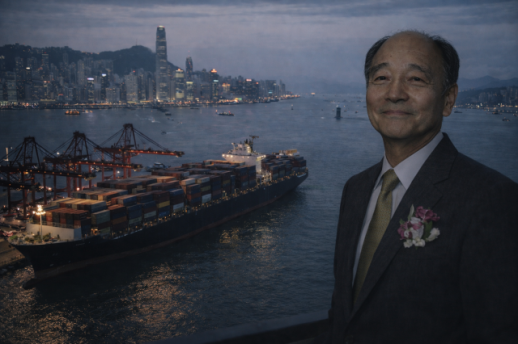 Kwon Hyuk’s Offshore Tax Case: Was the NTS Approach Appropriate After Acquittal? In December 2010, the passport of Sido Group Chairman Kwon Hyuk, 75, was effectively frozen. With the National Tax Service preparing to file a criminal complaint over alleged offshore tax evasion, authorities imposed a travel ban. For nearly 15 years, the head of a shipping company operating a 128-ship fleet has run the Hong Kong headquarters by phone and email. In 2016, South Korea’s Supreme Court finalized an acquittal on the central charge of corporate tax evasion. But the NTS tax assessment remained in place, and the unpaid amount grew to 393.8 billion won after 14 years of penalties were added to the principal. Even now, the dispute has not faded. What began as an offshore tax-evasion case has continued through diverging criminal and administrative tracks, prompting tax and shipping experts to question whether the case was properly framed in the first place. ◆ What “offshore tax evasion” means Offshore tax evasion refers to tax avoidance or evasion through transactions in which at least one party or the taxable subject is overseas. In plain terms, it can mean moving money earned at home abroad or using foreign transactions to conceal taxes. Common patterns include manipulating prices or costs in dealings with overseas affiliates, omitting commission income, or using foreign investments and financial transactions to build slush funds. The underlying premise is that assets formed domestically are shifted overseas. Because such schemes can park funds abroad, they can reduce domestic jobs and the tax base. That is why the term is often linked to concerns about an outflow of national wealth. ◆ What the system was designed to target South Korea created a dedicated offshore tax-evasion unit in 1986, when President Chun Doo-hwan directed the NTS to set up a specialized team. The instruction was explicit: preventing illegal overseas outflows of national wealth was described as a key national-interest priority. After the 1997 foreign exchange crisis, the unit expanded. In the wake of the IMF crisis, the team grew to 36 people and handled cases involving hundreds of billions of won in foreign-currency flight. Major cases in that period shared a similar structure: people who built assets in South Korea and then moved them abroad. Former NTS officials familiar with offshore investigations have also warned of risks, saying that creating excessive anxiety around cross-border economic activity in a global economy can harm national interests in ways that are hard to quantify. ◆ Kwon’s business followed a different path The article’s account says Kwon’s money flows did not match the typical offshore-evasion pattern. After leaving Hyundai Motor Co. in 1990 and moving to Japan, Kwon did not take domestic capital out of South Korea, it said. He started without capital, and in 1993 set up what became the predecessor of Sido Group by renting a corner of a Marubeni Corp. office. He later built ship financing around Hong Kong and expanded the fleet. The business began overseas and grew overseas, the article said. During that process, funds flowed into South Korea, it said. Orders placed with South Korean shipyards totaled about $7.15 billion. Including operations of a ship-management company in Busan, ship insurance and registration with the Korean Register, the combined amount was about $9.64 billion — nearly 13 trillion won — that flowed into the country, according to the article. ◆ SPCs: tax tool or industry practice? The NTS pointed to special purpose companies, or SPCs, as a tool for tax evasion. An SPC is a standalone entity set up for a specific project or asset. Kwon used a structure in which one SPC was established per vessel, and the NTS raised concerns that the entities were incorporated in tax havens. But the one-ship, one-SPC structure is described as a standard financing method in international shipping. It is used to contain risk within a single entity in the event of an accident and to secure international ship financing. The article says it is common for global lenders to refuse loans unless an SPC is set up in a jurisdiction offering tax advantages. The article cites examples abroad, saying Greek shipowners often manage through companies in places such as the United Kingdom, and Japanese Imabari shipowners use Panama SPCs to hold Panama-flagged vessels while operating in Japan, without typically facing tax-evasion allegations. In shipping, it said, placing SPCs where financing terms and tax regimes are favorable is widely accepted practice. ◆ Tax evasion, or a residency determination? The NTS complaint rested on a determination that Kwon was a “domestic resident.” Under the Income Tax Act, a resident is an individual with an address in South Korea or who has lived there for at least 183 days. If deemed a resident, a person owes South Korean tax on worldwide income. The NTS cited factors including Kwon’s resident registration, his family’s stay in South Korea, and records of hospital and credit-card use. Kwon repeatedly objected, according to the article. It said canceling resident registration is effectively impossible without giving up South Korean nationality, and that someone intending to evade taxes would not leave such records. It also argued that the NTS had treated him as a nonresident for the period he worked in Japan starting in 1993, but switched to treating him as a resident and taxing him after he moved his base to Hong Kong in 2006. The article also said there were records of taxes paid to Japan’s tax authorities. As a result, the central issue came to resemble a dispute over the validity of the residency determination more than proof of an evasion scheme, the article said. It added that when someone runs a business overseas for decades while keeping South Korean nationality and having family in South Korea, deciding which country should treat the person as a taxpayer remains an area without clear international standards. ◆ Courts reached a different conclusion In 2013, a trial court sentenced Kwon to four years in prison and fined him 234 billion won. On appeal, the ruling changed. The appeals court acquitted him on the key corporate tax-evasion charge, saying the creation of single-ship companies and use of overseas bases reflected common international shipping practice and were difficult to view as sham acts aimed at tax avoidance. The only conviction was for evading about 240 million won in comprehensive income tax, and the sentence was reduced to eight months in prison, suspended for two years. The Supreme Court finalized that decision in 2016. A criminal acquittal does not automatically invalidate a tax assessment because criminal trials and tax administration apply different legal standards. Still, the article said, the courts’ view of the SPC structure as industry practice highlighted a significant gap with the NTS position that it was a tax-evasion device. ◆ View from a former Seoul regional tax chief The article cites Yoon Jong-hoon, who served as Seoul Regional Tax Office chief during the Roh Moo-hyun government and was involved in shaping the concept of offshore tax evasion. Yoon has said Kwon’s case did not fit offshore tax evasion because Kwon did not take a single won out of South Korea and instead earned money overseas and brought it into the country. From the original purpose of offshore investigations — monitoring outflows of national wealth — Yoon said Kwon was closer to someone who should be commended, according to the article. Former NTS officials familiar with offshore investigations have offered similar assessments, the article said, arguing that the selection of Kwon as a target did not align with the historical purpose of such probes and that the national-interest damage from an aggressive audit is difficult to quantify but substantial. ◆ The weight of a 15-year travel restriction In global shipping, the article said, on-the-ground activity by shipowners is central to the business. Vessel purchases and sales, freight-rate negotiations, long-term contracts with cargo owners and ship financing depend on face-to-face networks. It described Japanese, Greek and Norwegian shipowners as routinely traveling among major financial centers as part of standard practice. The article said it is unclear whether orders to South Korean shipyards and foreign-currency inflows stayed at prior levels while Kwon was unable to travel for nearly 15 years. But if the nearly 13 trillion won brought into South Korea was the result of direct sales and field networks, it said, the loss from restricting that business foundation for 15 years cannot be reduced to a private tax dispute alone. With the criminal case concluded by a Supreme Court ruling nine years ago, the article said, it is time to examine what it means for the national economy that administrative and judicial proceedings over the tax assessment have continued and the travel restriction remains in place.* This article has been translated by AI. 2026-02-26 07:04:33
 -
 Toss Bank Nears CEO Decision as Lee Eun-mi Seen as Leading Candidate for Second Term Toss Bank’s process to pick its next chief executive is in its final stage, with industry observers widely viewing incumbent CEO Lee Eun-mi as the leading candidate for another term. They cite the bank’s shift to profitability and the need to maintain continuity in its mid- to long-term strategy. Toss Bank said Feb. 25 it plans to recommend and disclose a final CEO candidate as early as this month and no later than early March. It then plans to confirm the next CEO through a board resolution in March. The bank began its succession process in December, when its executive candidate recommendation committee reviewed a long list of CEO candidates. In January and February, it narrowed the field to a short list and conducted checks on qualifications and capabilities. Lee, the bank’s second leader, is credited with strengthening its financial footing. Toss Bank posted net profit of 45.7 billion won in 2024, marking its first full-year profit since launch. It then recorded cumulative net profit of 81.4 billion won through the third quarter of last year, its best performance to date, after years of early losses. Under Lee, the bank has also accelerated efforts to diversify its business. She has formalized plans to introduce mortgage lending to broaden a loan portfolio previously centered on unsecured credit loans, and the bank has been preparing the rollout in stages. It has also outlined plans to expand overseas, saying it is actively reviewing entry into markets such as Southeast Asia with a goal of going global within three to five years. Observers also point to parent company Viva Republica’s push for a Nasdaq listing as a factor supporting continuity, as stable performance and risk management can weigh heavily in valuation during an IPO process. At the same time, internal controls and consumer protection have been flagged as areas for improvement. Toss Bank experienced an internal embezzlement case last year and received an “insufficient” rating in the Financial Supervisory Service’s 2025 assessment of financial consumer protection practices. “Financial results have improved clearly, and key strategic tasks are still underway, so there is a need to maintain stable leadership,” a financial industry official said. “Unless there is an unusual variable, the likelihood of a second term appears high.” If Lee is reappointed, she is expected to keep her role as board chair. Toss Bank operates a structure in which the CEO also serves as chair, alongside a lead outside director. Some have criticized the arrangement as out of step with regulators’ recent emphasis on strengthening board independence, arguing that combining the CEO and chair roles can weaken oversight.* This article has been translated by AI. 2026-02-26 07:03:00
 -
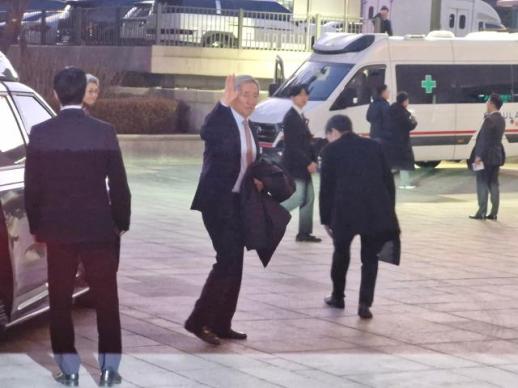 Hyundai Founder Chung Ju-yung Remembered at 25th Anniversary Memorial Concert in Seoul "My father in heaven will also be grateful." (Chung Mong-joon, chairman of the Asan Foundation) Members of the wider Hyundai founding family, along with figures from business, politics and culture, gathered in Seoul on Feb. 25 for a memorial concert marking the 25th anniversary of the death of Chung Ju-yung, honorary chairman of Hyundai Group. Around 6 p.m., the lobby of the Seoul Arts Center Concert Hall in Seocho-gu was already crowded ahead of the program. Hyundai family members began arriving about an hour before the concert. Chung Mong-joon, chairman of the Asan Foundation, arrived at the venue’s above-ground parking lot at about 6:36 p.m. and briefly greeted reporters. "Thank you for coming today," he said. "My father will also be grateful that you came." Direct family members also appeared in succession, including Chung Ki-sun, chairman of HD Hyundai; Chung Myung-yi, president of Hyundai Commercial; and Chung Tae-young, vice chairman of Hyundai Card. Other attendees included Lotte Group Chairman Shin Dong-bin; Hong Ra-hee, former director of the Leeum Museum of Art; National Assembly Speaker Woo Won-shik; Kim Jong-in, former emergency committee chairman of the People Power Party; and lawmaker Na Kyung-won. Actor Yoo Hae-jin was among those from the entertainment and cultural sector. Hyundai Motor Group Chairman Chung Euisun arrived about two hours before the concert to check the rehearsal and review preparations. Hyundai Motor CEO Jose Munoz, Hyundai Motor Group Vice Chairman Jang Jae-hoon, Hyundai Motor R&D chief Manfred Harrer and Hyundai Motor President Sung Kim also arrived early to welcome guests. The memorial concert featured performances by internationally known pianists Kim Sunwook, Sunwoo Yekwon, Cho Seong-jin and Lim Yunchan. Tickets were not sold; they were provided only to invited guests, including public-service workers, future talent, key figures from various fields and Hyundai Motor employees, organizers said, to preserve the event’s purpose. Attendees received a gift set that included Chung’s autobiography, "Born on This Land," and an event booklet. Organizers said the concert was held to reflect on the meaning of Chung’s entrepreneurial spirit for society and future generations. Chung is widely regarded as a symbol of Korean entrepreneurship, credited with helping lead the country’s industrialization through a bold vision and determination to maintain hope in the face of hardship. 2026-02-25 21:12:21
 -
 SK hynix okays $16 bn investment into Yongin chip facility to stay ahead in HBM race SEOUL, February 25 (AJP) - SK hynix said Wednesday it will invest more than 21 trillion won ($15.7 billion) in new semiconductor production facilities at the Yongin Semiconductor Cluster, as it moves to expand capacity and stay ahead in the high-bandwidth memory race amid the artificial intelligence boom. According to a regulatory filing with the Financial Supervisory Service, the company plans to invest 21.61 trillion won in the construction of Phases 2 through 6 of its first fabrication plant complex in Yongin, south of Seoul. The investment, classified as new facility spending, amounts to 29.23 percent of SK hynix’s equity capital based on its latest consolidated financial statements. The project will run from March 1, 2026, to Dec. 31, 2030. The board of directors approved the plan on Wednesday, with all five outside directors in attendance. SK hynix shares closed Wednesday at a record high of 1,028,000 won, up 2.29 percent on the day and nearly tenfold from early 2025 levels. The capital spending plan was disclosed after market hours. The world’s leading DRAM maker said the investment aims to build mid- to long-term production infrastructure in response to growing semiconductor demand, particularly for advanced memory chips used in artificial intelligence and data centers. “This investment is intended to strengthen our manufacturing base and ensure stable supply capacity over the long term,” the company said in its disclosure. It cautioned that the total investment amount may change depending on project progress and shifts in the business environment. The start and end dates are also provisional and could be adjusted during implementation. Expanding costs, swelling long-term outlay The latest disclosure comes amid expectations that SK hynix’s overall investment in the Yongin Semiconductor Cluster could eventually approach 600 trillion won, nearly five times its original projection, driven by facility expansion, inflation and rising equipment costs. Industry sources said Yongin City recently approved its ninth revision to the cluster’s development plan, raising the floor area ratio of SK hynix’s main site from 350 percent to 490 percent and easing height limits to 150 meters. The changes are expected to expand cleanroom space by about 50 percent, significantly increasing construction and installation costs. SK hynix initially announced in 2019 that it would invest about 120 trillion won in the Yongin project. However, prolonged delays, a surge in AI-related demand and the growing need for cutting-edge equipment have since pushed costs sharply higher. The Yongin cluster will eventually house four large fabrication plants built in stages. Industry estimates suggest each fab could require more than 120 trillion won, implying total investment of at least 480 trillion won once all facilities are completed, with further increases likely as prices rise. The overall project is planned to extend through 2050. SK hynix plans to begin initial cleanroom operations at the first Yongin fab in 2027. Market watchers expect its production capacity to exceed that of the company’s largest existing facility in Icheon. AI boom and volatility The expansion reflects the rapid transformation of the global semiconductor industry driven by artificial intelligence. Chey Tae-won, chairman of SK Group, said AI demand could push SK hynix’s operating profit beyond $100 billion in the near term, while also increasing volatility. Speaking at the Trans-Pacific Dialogue 2026 held Feb. 20–21 in Washington, Chey said artificial intelligence was fundamentally reshaping industrial structures worldwide. “AI is driving extraordinary opportunities, but also unprecedented uncertainty,” he said. He noted that earnings expectations have risen rapidly in recent months, adding that Morgan Stanley recently projected SK hynix’s operating profit could reach 179 trillion won ($123 billion) this year. Despite the upbeat outlook, Chey warned against excessive optimism. “It sounds like great news, but it could also mean a $100 billion loss,” he said. “Volatility is extremely high.” Meanwhile, rival Samsung Electronics has resumed construction of its fifth plant at the Pyeongtaek campus, targeting operations in 2028. The project is estimated at around 60 trillion won, highlighting intensifying competition among Korean chipmakers in the AI era. 2026-02-25 19:56:16
 -
 Jin Air Extends Add-On Service Purchase and Refund Deadlines to 4 Hours Before Departure Jin Air said Tuesday it is expanding the deadlines for buying and refunding ancillary services to improve customer convenience. Under the changes, effective Tuesday, customers can buy or request refunds for key services — including advance seat selection, excess baggage and fast baggage retrieval — up to four hours before departure, extended from the previous 24-hour cutoff. The airline also adjusted the deadline for preordered in-flight meals and meal-pack products to 48 hours before departure, from 72 hours, to give customers more flexibility. Jin Air said it also improved website usability by adding estimated flight-time information by route and updating the user interface so customers can more easily compare bundle-discount rates with individual purchases. To mark the expanded service, Jin Air will offer two discount coupons through its website and mobile app through March 10. Customers can download a 5,000-won coupon for excess baggage and a 2,000-won coupon for preordered meals and use them for travel between Feb. 25 and March 28. A Jin Air official said the changes follow the start of a codeshare with Air Busan and are intended to further improve customer convenience ahead of integration. The official said the airline will continue to review customer experience and pursue customer-focused service improvements. * This article has been translated by AI. 2026-02-25 18:09:16
 -
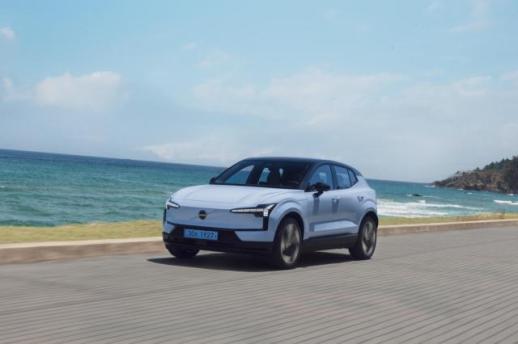 Imported EV Price War Intensifies in South Korea as Models Near 30 Million Won Imported electric-vehicle makers are accelerating their push in South Korea with price cuts and subsidy-focused strategies, aiming to bring more models into the 30 million won range that many consumers view as a key psychological threshold. Industry officials said Feb. 25 that Volvo Car Korea will cut the price of its electric SUV, the EX30, by as much as 7.61 million won starting next month. The base trim will fall to 39.91 million won from 47.52 million won. The discounting has spread among imported brands after Tesla opened the latest round of price cuts earlier this year. Tesla lowered the Model 3 Standard RWD to 41.99 million won. With a 1.68 million won national subsidy and local government subsidies, the purchase price could drop to the high 30 million won range, the report said. BMW, the top-selling imported-car brand in South Korea, is emphasizing a strategy tied to larger EV subsidies. By building more than 3,000 EV chargers nationwide, BMW raised its incentive used in the Transport Ministry’s EV subsidy calculation by 37% from a year earlier, the report said. As a result, the BMW Mini Aceman E, priced at 49.80 million won, can fall to 40.30 million won when combining a 4.00 million won national subsidy and a 5.50 million won local subsidy, based on Haenam in South Jeolla Province. Prices for imported EVs that had largely been in the 40 million to 50 million won range are now moving closer to the 30 million won level seen as a practical buying range for many consumers. The report attributed the aggressive push by imported brands to South Korea’s subsidy policy. As the United States and Europe slow the pace of EV adoption and brands face uncertainty in China, EV supply is shifting toward South Korea, it said. South Korea this year is offering EV subsidies and an additional 1 million won for switching from an internal-combustion vehicle to an EV. The structure of the imported-car market is also changing quickly. Of 307,377 imported vehicles sold last year, 91,253 were battery-electric vehicles, or 29.6%, the report said. Over the same period, sales of internal-combustion vehicles totaled 41,906. EV sales were more than double internal-combustion sales, underscoring a reshaping of the imported-car market. Kim Pil-su, a professor in the Department of Future Automobiles at Daelim University, said the trend toward lower prices is clear. “It’s evident that the trend is to lower prices so consumers can access them more easily,” Kim said. He added that shifting batteries — a major share of EV costs — to Chinese-made LFP batteries appears to have created some room for price cuts. * This article has been translated by AI. 2026-02-25 18:04:50
 -
 T’way Air to Rebrand as Trinity Air, Expanding Beyond Low-Cost Model T’way Air, a low-cost carrier founded in 2010, will be reborn as “Trinity Air” after 16 years, aiming to raise brand value by combining air travel with lodging and travel services in a “three-in-one” offering. According to industry officials on Tuesday, the airline plans a full rebrand starting around September, applying the new name to aircraft liveries, airport check-in counters, and its booking and ticketing systems. The carrier traces its roots to Hansung Airlines, launched in 2004, and changed its name to T’way Air in 2010. It has held the No. 2 spot among South Korea’s low-cost carriers, behind Jeju Air, for about 16 years. Industry data show T’way Air’s total passenger count topped 11 million last year, up about 10% from roughly 9.9 million in 2023 and 5% from about 10.5 million in 2024. As routes expanded to Southeast Asia, Europe, North America, Central Asia and Oceania, the number of scheduled routes rose 26%, from 50 in 2023 to 63 as of February this year. The new name, “TRINITY,” comes from the Latin “Trinitas,” meaning a trinity. The airline said it reflects a plan to go beyond flights by combining lodging and travel to upgrade the customer experience. T’way Air was acquired by Daemyung Sono Group in February last year, and the company plans to use the new name as a starting point to generate synergies. Trinity Air plans to strengthen those ties by linking routes spanning Asia, Europe and the Americas with hotel and resort infrastructure to offer differentiated package products. The airline is also moving to build systems to improve service as it expands long-haul routes to North America and Europe. It said long-haul passengers tend to spend more time at airports and have higher expectations for rest areas, refreshments and baggage-related services. While a single-seat structure centered on low-cost operations has limited value-added revenue, long-haul routes allow lounge operations and more varied seating, supporting both diversified profitability and a better customer experience. A lounge service is expected to be an early step. The airline is reviewing a plan to lease an existing Asiana Airlines lounge in Incheon International Airport’s Terminal 1 and use it as a dedicated lounge, and it has submitted a letter of intent to Korea Airports Corp. It also opened a new “Premium Check-in” Counter A in Terminal 1 for business-class passengers and T’way Plus Platinum members. The company said it plans additional measures to provide a more integrated travel experience, consistent with the new brand concept. “Trinity Air is the starting point signaling a new leap forward for the company,” a T’way Air official said. “Based on customer safety and sustainability, we will open new possibilities in the aviation industry.” * This article has been translated by AI. 2026-02-25 18:03:29
 -
 Volvo Car Korea Expands Toy Hospital Drive, Donates 707 Repaired Toys Volvo Car Korea said Tuesday it expanded its “Volvo Toy Hospital” event to major showrooms nationwide, collecting and donating a total of 707 toys in partnership with the Swedish Embassy in Seoul and Kinis Toy Hospital. The event ran from Nov. 15 to Dec. 14 at Volvo showrooms across the country. During the campaign, visitors donated unused or broken toys as part of year-end giving, the company said. Showrooms also offered hands-on programs for families, including a color-book DIY kit designed to evoke Sweden’s year-end holiday atmosphere. The 707 broken toys collected nationwide were sent to Kinis Toy Hospital’s “toy doctors,” a group that includes retired engineering Ph.D.s, teachers and manufacturing experts, and were repaired, the company said. The restored toys will be delivered in stages through Kinis to organizations that need them, including local care centers and an environmental coalition. Lee Yoon-mo, CEO of Volvo Car Korea, said he hoped families found meaning in donating toys children once cherished and taking part in a resource-circulation effort that gives broken items a new use. He added that the company will continue working toward a sustainable world for future generations. Volvo Car Korea said it continues to carry out social-contribution programs aimed at promoting sustainability based on a people-centered philosophy. It said it has maintained cooperation with the Purme Foundation to support customized assistive devices and rehabilitation for children and teenagers with disabilities. The company also said it previously donated about 15,000 “children’s safety key rings” to childcare support centers and the National Police Agency to help strengthen child safety on the road. * This article has been translated by AI. 2026-02-25 17:54:16