

Journalist

Jinkyu, Myung
-
 Shift to Fair Value in Mergers Could Transform South Korea's M&A Landscape A proposed amendment to the capital markets law that applies 'fair value' in mergers of listed companies is expected to reshape South Korea's mergers and acquisitions (M&A) market. The current system, which primarily relies on average stock prices for merger valuations, may shift to a model that incorporates asset value, earnings potential, and future growth prospects, leading to significant changes in restructuring and merger strategies for listed companies. According to financial investment industry sources and lawmakers on May 29, the amendment related to 'fair merger valuation' passed the National Assembly's Political Affairs Committee on May 14 and is likely to be addressed in a plenary session after the fall assembly reconvenes. The committee views this bill as one of the key legislative tasks related to capital markets. The amendment proposes moving away from the existing market price-based system for calculating merger ratios of listed companies, instead applying a 'fair value' that comprehensively reflects asset value, earnings potential, future cash flows, and growth prospects. It also includes provisions to strengthen the accountability of external valuation agencies and the obligation of boards to explain their decisions. Under the current capital markets law, the merger ratios for listed companies are determined based on average stock prices over a certain period. While this approach aimed to enhance predictability by using an objective market indicator, there have been ongoing criticisms that it allows undervalued stock prices to be used to set merger ratios favorable to major shareholders. The issue gained prominence following the merger of Samsung C&T and Cheil Industries, which sparked a broader awareness that market prices do not necessarily equate to fair prices. In 2024, the merger of Doosan Bobcat and Doosan Robotics also reignited criticism over the valuation methods used, amid controversies regarding the overvaluation and undervaluation of certain affiliates. Recently, there has been a growing demand for the protection of minority shareholders' rights during merger processes. Shinsegae Food, which submitted a revised report on May 21, raised the buyout price by approximately 30% following controversy over the merger valuation. Market analysts suggest that simply applying the statutory market price is no longer sufficient to persuade shareholders. The influence of activist funds and minority shareholder platforms is increasing, leading to more frequent debates over the legitimacy of pricing and procedural fairness in mergers. Industry experts believe that in the future, not only the price itself but also the independence and transparency of valuation agencies will become critical issues in the M&A market. Business leaders express concerns about the increased burdens that may arise from these regulatory changes. Incorporating various valuation factors into the fair value assessment could complicate merger processes and extend timelines. There are also concerns about heightened litigation risks. Companies currently pursuing holding company transitions, restructuring, or succession plans may need to reassess their overall strategies. Conversely, investors and academics view the amendment as a potential opportunity to enhance trust in South Korea's capital markets. By reducing controversies surrounding major shareholder-driven mergers and strengthening protections for minority shareholders, it could help alleviate the 'Korea Discount.' A financial industry representative stated, "In the past, the focus was on calculating merger ratios according to legal formulas, but moving forward, the process of explaining why a price is fair will become crucial. If the bill is enacted, companies pursuing mergers will inevitably face greater challenges."* This article has been translated by AI. 2026-05-29 18:12:00
 -
 Samsung Maintains Lead in Global TV Market, But TCL's Growth Narrows Gap Samsung Electronics maintained its position as the leading global TV manufacturer by shipment volume in the first quarter of this year. However, the growth of China's TCL has accelerated, narrowing the market share gap between the two companies compared to a year ago. According to industry sources on May 29, market research firm Counterpoint Research reported that Samsung's global TV shipments increased by 8% year-on-year in the first quarter. Samsung's market share rose from 16.1% in the first quarter of last year to 16.8% this year. In contrast, TCL's shipments surged by 22% during the same period, boosting its market share from 12.0% to 14.1%. As a result, the gap between Samsung and TCL has decreased from 4.1 percentage points to 2.7 percentage points. TCL's rapid growth is attributed to its expansion in miniLED LCD TV sales. The company increased shipments across its major TV product lines in the first quarter, targeting both the premium and mid-range markets with its miniLED offerings. While Samsung showed strong growth in the W-OLED TV segment, the overall shipment volume of OLED TVs remains smaller than that of LCDs, limiting the impact on its total market share. Although Samsung has maintained a premium image, it faces challenges from Chinese competitors in terms of pricing and product range expansion. Industry analysts noted that TCL briefly surpassed Samsung in monthly shipments at the end of last year and has continued to expand its miniLED production. They believe that this year, the competition in the TV market will shift towards a confrontation between OLED-focused premium strategies and miniLED-driven volume strategies. Starting in the second quarter of this year, the competition is expected to intensify as major players like Samsung, LG Electronics, TCL, and Hisense launch new products. Chinese manufacturers, in particular, are aiming to increase their market share in North America and emerging markets with large LCD and miniLED offerings. For Samsung, the focus has shifted from merely increasing shipment volumes to maintaining a strong share of premium products and profitability. However, to retain its position as the global TV leader, it will likely need to navigate price and performance competition with Chinese companies in the miniLED and mid-range segments as well as in OLED and large-screen TVs. An industry insider remarked, "While Samsung's status as the global TV market leader remains unchanged, TCL's growth rate cannot be overlooked. This year, competition will be fierce not only for premium products but also for volume in miniLED and large LCD segments."* This article has been translated by AI. 2026-05-29 18:06:00
 -
 Weather Forecast: Clear Skies and Early Summer Heat Expected Nationwide On Saturday, May 30, clear skies are expected across the country, with daytime temperatures rising significantly, leading to early summer heat. Daegu is forecasted to reach a high of 32 degrees Celsius, with notable warmth particularly in the Gyeongsang region. According to the Korea Meteorological Administration on May 29, the weather on May 30 will be influenced by high pressure moving eastward over the Yellow Sea, resulting in generally clear conditions nationwide. While there are no significant rain forecasts, strong sunlight will cause inland temperatures to rise above average. Morning lows are expected to range from 12 to 19 degrees Celsius, while daytime highs will be between 25 and 32 degrees. Compared to the average morning lows of 11 to 16 degrees and daytime highs of 22 to 27 degrees, morning temperatures will be similar or slightly higher, and daytime temperatures will be elevated nationwide. Due to the significant temperature difference between day and night, residents should take care of their health. Morning lows in major cities are forecasted as follows: Seoul 16 degrees, Incheon 16 degrees, Suwon 14 degrees, Chuncheon 14 degrees, Gangneung 19 degrees, Cheongju 15 degrees, Daejeon 14 degrees, Jeonju 15 degrees, Gwangju 14 degrees, Daegu 15 degrees, Busan 17 degrees, Ulsan 16 degrees, and Jeju 17 degrees. Daytime highs are expected to be: Seoul 28 degrees, Incheon 26 degrees, Suwon 27 degrees, Chuncheon 29 degrees, Gangneung 31 degrees, Cheongju 30 degrees, Daejeon 29 degrees, Jeonju 28 degrees, Gwangju 29 degrees, Daegu 32 degrees, Busan 29 degrees, Ulsan 30 degrees, and Jeju 26 degrees. Particularly in the Gyeongsang region, many areas will see daytime temperatures exceed 30 degrees. With humidity factored in, the perceived temperature could rise to around 31 degrees, necessitating adequate hydration for those engaging in outdoor activities for extended periods. Fog that persisted overnight will mostly dissipate, but some sea fog may linger over the Yellow Sea and around Jeju Island until morning. Vessels navigating or fishing in these areas should exercise caution for maritime safety. Waves are expected to reach heights of 0.5 meters in the Yellow Sea, 0.5 to 1.0 meters in the South Sea, and 0.5 to 1.5 meters in the East Sea. Air quality is expected to be at a level ranging from 'good' to 'moderate' across all regions. Some areas in the central and western parts of the country may experience temporarily elevated levels of foreign fine dust in the early morning, but conditions are expected to improve as atmospheric dispersion becomes more favorable throughout the day.* This article has been translated by AI. 2026-05-29 18:03:00
 -
 To young Jeju islanders, life does not give tangerines SEOUL, May 29 (AJP) - "Jeju's wind is harsh, but people learn to bend instead of break." The line from the hit Netflix drama When Life Gives You Tangerines celebrates the resilience of people on South Korea's southern island. In reality, however, the wind has become harsh enough to drive many young Jeju residents away altogether. As Jeju recorded a second consecutive year of net population loss, young islanders told AJP that a lack of quality jobs, limited career opportunities and a narrower cultural scene compared with Seoul are pushing them to leave their hometown in search of a future on the mainland. South Korea's premier resort island is now confronting a demographic reversal after years of rapid growth fueled by an "in-migration boom." According to the "2025 Domestic Migration Trends in the Honam and Jeju Regions" released Thursday by the Honam Regional Statistics Office, 77,588 people moved into Jeju in 2025 while 81,861 moved out, resulting in a net population loss of 4,273 people. The decline follows a net loss of 1,808 people in 2024 and marks a stark turnaround from more than a decade of uninterrupted growth. Jeju's population expanded from 577,000 in 2010 to more than 700,000 in 2023 as retirees, remote workers and lifestyle migrants flocked to the island. Young adults accounted for much of the outflow. The net migration rate among people in their 20s stood at minus 3.2 percent, while teenagers and people in their 30s also posted negative migration rates. Statistics indicate that employment and education are the main drivers. About 18,000 people moved from Jeju to the Seoul metropolitan area last year, while roughly 16,000 moved in the opposite direction, resulting in a net outflow of around 2,000 people to greater Seoul. Jobs were cited as the leading reason for leaving the island, accounting for 35.5 percent of departures. Education-related moves represented 12.7 percent, well above the national average of 9.2 percent. The trend is especially pronounced among young singles. One-person households accounted for 86.8 percent of interregional departures from Jeju, reflecting young people relocating alone for work or study. "There are no jobs unless young people become civil servants, work at public corporations or get jobs at banks, so many young people from Jeju move to the Seoul metropolitan area," said a Jeju native in her 30s who is preparing to seek employment in Seoul and requested anonymity. "There's nowhere for young people to hang out." She said career options outside government service, teaching and a handful of professional occupations remain limited, pushing many residents toward the capital region. Another Jeju native in her 30s who now works as a civil servant in Seoul said living in the capital during university fundamentally changed her perception of the island. "After experiencing Seoul's infrastructure during college life, life in Jeju felt frustrating," she said. Lee, a 27-year-old pharmacist born and raised in Jeju until high school, spent about seven years in Seoul and said the gap extends beyond jobs. "Jeju offers fewer opportunities for young people to gain experiences," Lee said. "There are especially fewer opportunities in cultural life and employment." She recalled having to fly to Seoul whenever her favorite group, Davichi, held a concert, requiring additional costs for flights and accommodation. "There are so many events in Seoul," she said. "Seoul is vibrant and full of youthful energy." Lee said policymakers should focus on attracting major corporations and high-value industries to the island. Many of her longtime friends from Jeju have already relocated to the Seoul area for work. Kim Sung-bum, a parliamentary candidate for Seogwipo, argued that the exodus reflects structural economic challenges rather than declining attachment to the island. "I believe young people are leaving their hometown not because they lack affection for the region, but because there are not enough quality jobs where they can build their future," Kim told AJP. Asked how he would address the issue if elected, Kim said attracting future industries and creating stable, well-paying jobs would be central to the effort. "We will work closely with the central and local governments to secure relevant budgets so that we can overhaul the regional economic structure through future industries and provide quality jobs and stable living conditions," he said. For many young Jeju residents, the problem is not a lack of affection for the island. It is that while Jeju remains a dream destination for visitors and retirees, it increasingly struggles to offer the opportunities that young people believe they need to build their lives. 2026-05-29 17:45:58
 -
 Samsung SDS Executive Advocates Redesigning Processes for AI Transition "The transition to artificial intelligence (AI) in businesses is not merely about adopting AI tools; it requires a comprehensive redesign of work processes, data management, and organizational operations," said Shin Gye-young, Vice President and head of the AI Business Team at Samsung SDS. Shin made these remarks during a presentation on 'Transitioning to AI Native Enterprises' at the Samsung SDS AX Summit held on May 29 at the company's Jamsil campus in Songpa, Seoul. The summit focused on sharing strategies and real-world applications of AI agent-based AX (AI Transformation). He noted, "There is a saying that AI does not take jobs away, but rather those who effectively utilize AI may take jobs from others. Similarly, if companies do not properly implement AX, they risk falling behind in competition." Shin defined AI native transition as the innovative redesign of overall business and IT processes based on AI. He emphasized the need for a hybrid strategy that combines both top-down and bottom-up approaches for implementing AX. The bottom-up approach involves enhancing productivity and AI literacy through the use of AI at the employee and departmental levels, although it can be challenging to measure the overall impact of investments. In contrast, the top-down approach focuses on redesigning entire workflows, allowing for clearer assessment of key performance indicators (KPIs) and return on investment (ROI). To measure the success of AX, Shin proposed three key indicators: AI performance KPIs, workflow KPIs, and business KPIs. He explained that it is essential to evaluate how much AI has improved accuracy and coverage compared to existing tasks, reduced work hours and personnel input, and ultimately led to improvements in quality and productivity. Shin identified six core pillars for AI native transition: process redesign, securing AI-ready data, developing and operating agents, governance, talent development, and fostering an organizational culture. He particularly highlighted the importance of data cleansing, metadata management, and access control. The operational framework for agents was also noted as a key challenge. Shin stressed the need for environments where general employees can create agents using natural language, as well as low-code development environments that operate according to workflows, alongside traditional coding environments for developers. He explained that created agents should be registered in an internal marketplace for reuse, with integrated management of permissions, usage, token costs, and risks associated with external tool usage. Samsung SDS shared its own organizational practices, stating that it established a structure to lead the company's AX transition through a reorganization last year, encouraging the use of AI tools across various departments. Currently, about 107 AI professionals are actively engaged, and the company has implemented systems for identifying best practices and providing training and certification. Customer examples included Woori Bank and Samsung Electronics. Woori Bank announced its transition to AX, designing over 175 agents across five major functions and 27 core tasks. Samsung SDS has built more than 300 agents based on its 'Fabrics' platform, supporting the redesign of financial operations such as customer management, credit, and asset management. To support AX, Samsung SDS is integrating its data analytics platform 'Brightics AI,' agent platform 'Fabrics,' and automation platform 'Brite Automation.' Additionally, the company is facilitating the adoption of OpenAI Enterprise to assist domestic companies in expanding their use of AI.* This article has been translated by AI. 2026-05-29 17:42:00
 -
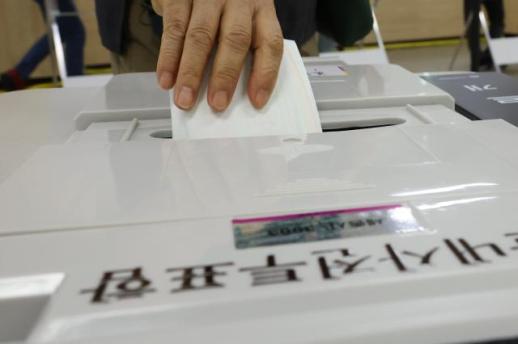 Early Voting for Local Elections Sees Record Turnout at 10.39% As of 5 p.m. on May 29, the first day of early voting for the 9th nationwide local elections, the national voter turnout reached 10.39%. This marks the highest early voting rate recorded since the June 4, 2014 local elections. According to the National Election Commission, from 6 a.m. to 5 p.m. on this day, 463,981 voters out of a total of 44,649,908 registered voters participated in early voting. This turnout is 1.19 percentage points higher than the same time during the early voting for the 2022 local elections, which recorded a 9.2% turnout. The region with the highest turnout so far is Jeonnam, with 20.5%. It is followed by Jeonbuk at 17.63% and Gangwon at 13.05%. Seoul's turnout was recorded at 9.93%, while Daegu had the lowest turnout at 8.09%. Early voting will continue for two days at 3,571 polling stations nationwide, operating from 6 a.m. to 6 p.m. Voters must bring identification to participate, and polling station locations can be confirmed on the election commission's website or by calling the representative hotline at 1390. 2026-05-29 17:42:00
 -
 Ahn Hyo-seop teams up with Khalid for debut single 'Something Special' SEOUL, May 29 (AJP) - South Korean actor Ahn Hyo-seop has released his debut solo single "Something Special," a collaboration with Grammy-nominated American R&B artist Khalid. The single was released through FANDOM on major streaming platforms on Friday, with Musicow planning to unveil an official music video in June. Musicow is a music equity platform that lets fans co-own royalty revenue from their favorite artists' songs, and FANDOM is its debut project — an album series featuring U.S. and K-pop artist collaborations where fans can share in the music's financial journey. The release marks the 31-year-old's first official single as a solo recording artist and Khalid's first collaboration with a Korean artist. Ahn recently drew wider global attention for voicing Jinwoo, the leader of the demon boy band Saja Boys, in Netflix's animated film "KPop Demon Hunters." "Something Special" is an R&B-leaning track that brings together Ahn's growing music profile and Khalid's established sound. The song was produced by Woo "RAINSTONE" Rhee, known for his work on Wonder Girls' "Nobody," and co-produced by Grammy-winning producer Troy "R8DIO" Johnson, who contributed to Solange's "A Seat at the Table." The release follows FANDOM's January collaboration "Two Car Garage" by Jon Bellion and Swae Lee, as the platform continues to develop music projects involving artists from different markets. "Something Special" is available on major streaming platforms. 2026-05-29 17:39:01
 -
 NCSOFT to Launch 'Lineage 2M' in China on June 24 with 4.95 Million Pre-Registrations NCSOFT will begin the Chinese service of its MMORPG 'Lineage 2M' on June 24. With this launch, Lineage 2M will become the only mobile game that NCSOFT currently offers in the Chinese market. The company already provides PC games such as 'Lineage,' 'Lineage 2,' and 'Blade & Soul' in China. On May 29, NCSOFT announced that its local publisher, Tencent Games, revealed the service schedule for China on its official website. The Chinese service will be titled 'Heaven 2: Pact.' Tencent Games will support cross-play between mobile and PC platforms. Before the official launch, NCSOFT and Tencent Games conducted a closed beta test (CBT) with approximately 50,000 participants. They are focusing on localization efforts based on user feedback from the test, which includes improvements to user experience (UX) and user interface (UI), enhancements to party dungeons, and the addition of a 'social appearance' feature for character profiles. Currently, over 4.95 million users have signed up for pre-registration. Leading up to the launch of Lineage 2M, NCSOFT will host events such as an offline pop-up 'Aden Throne Parade' and a 'Return of the Lord' photo-sharing campaign on TikTok.* This article has been translated by AI. 2026-05-29 17:39:00
 -
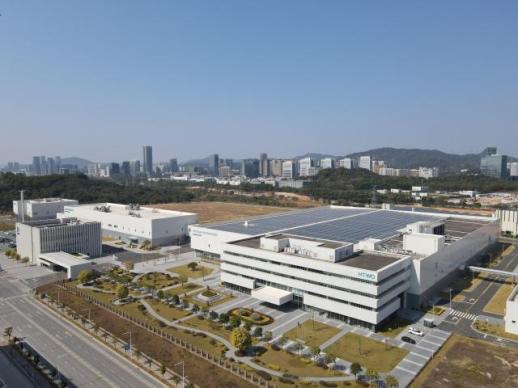 Hyundai Motor's HTWO Guangzhou named hydrogen industry leader in China SEOUL, May 29 (AJP) - Hyundai Motor Group's HTWO Guangzhou has been named a hydrogen industry leader by the southern Chinese city, becoming the only foreign-invested company among 96 firms selected under the city's strategic industry cluster program. According to the automaker, its first overseas production base for hydrogen fuel cell systems in China was selected by the Guangzhou municipal government as a leading enterprise in the hydrogen energy sector. The city has selected and fostered leading companies across 14 strategic industries including new energy, intelligent connected vehicles, artificial intelligence, and semiconductors with the aim of strengthening local supply chains, building industrial ecosystems and expanding cooperation in key technologies. With the designation, HTWO Guangzhou will take on a larger role in local hydrogen industry planning, supply-chain development, and technology cooperation, along with support and other benefits. The selection comes as China continues to expand its hydrogen industry as part of a broader energy transition. Beijing has set goals of reaching peak carbon emissions by 2030 and carbon neutrality by 2060, and has identified hydrogen as a key part of its future energy system. China's first long-term national hydrogen plan, released in 2022, called for establishing a hydrogen technology innovation system by 2030 and building a more diversified hydrogen application ecosystem by 2035. Under a 2021 program to promote hydrogen fuel cell vehicles, China designated five regional clusters, including Guangdong, with aims to deploy about 35,000 hydrogen vehicles by 2025. Guangdong led the five clusters by deploying more than 7,000 vehicles during the period, while Guangzhou operated more than 4,300, making it one of China's largest hydrogen vehicle markets. HTWO Guangzhou sold more than 900 hydrogen commercial vehicles in China in 2025, ranking third in the overall market and first among foreign-invested companies in a field of more than 60 competitors. "This selection recognizes HTWO Guangzhou's contribution to the development of Guangzhou's hydrogen industry and its local cooperation ecosystem," said Choi Doo-ha, general manager of HTWO Guangzhou. "We will continue contributing to the development of China's hydrogen industry and the expansion of its ecosystems. Choi added that the company plans to expand its participation in hydrogen energy demonstration projects scheduled to begin in China in the second half of this year and strengthen cooperation with local governments and partners. 2026-05-29 17:34:56
 -
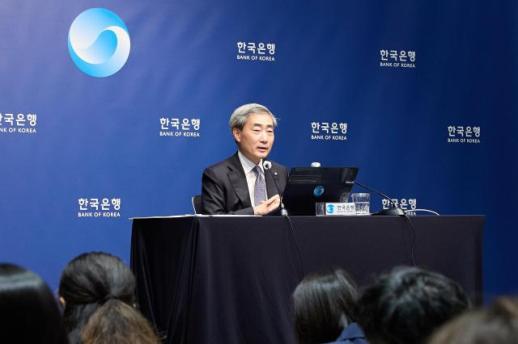 Stock leverage, not typical housing as BOK's policy headache SEOUL, May 29 (AJP) — More than 60 trillion won ($39.9 billion) of leverage tied to South Korea’s stock market frenzy is emerging as a risk factor for both equities and the foreign-exchange market after the central bank all but signaled at least one rate hike in the second half. “While demand curves typically slope downward, heavy debt-fueled investment could reverse that pattern, as forced liquidations are triggered and funds are withdrawn when prices decline,” Bank of Korea Governor Shin Hyun-song said Thursday after the central bank left its benchmark rate unchanged at 2.50 percent for a full year. For ordinary investors, the message was straightforward: excessive leverage can accelerate capital flight and magnify market losses when sentiment turns. The vicious cycle created by debt-financed investing can also hurt investors who have committed only their own funds. Shin’s remarks suggested that leveraged trading is no longer merely a retail-investor issue but a potential complication for monetary policy and financial stability. The Bank of Korea’s latest dot plot, which contains three six-month rate projections from each board member, showed 10 dots at 3.00 percent, seven at 2.75 percent and two at 3.25 percent. Only two projected the benchmark rate remaining at 2.50 percent. The distribution leaves room for as much as 75 basis points of additional tightening in the second half, a prospect that coincides with record borrowing in the domestic stock market. As of Wednesday, outstanding margin loans had surpassed 36 trillion won, setting a new record. Stock-backed loans, in which investors borrow against existing holdings, also exceeded 25 trillion won, bringing retail investors’ total stock market-linked debt exposure to roughly 61 trillion won. At the same time, borrowing costs have climbed sharply. Maximum margin-loan rates at major brokerages are already in the mid-to-high 9 percent range, with Samsung Securities charging as much as 9.6 percent and Mirae Asset Securities up to 9.5 percent. Those elevated rates could weigh on investor sentiment and erode borrowers’ ability to service interest payments even before stock prices begin falling. Early warning signs are already appearing in the short-term credit market, where forced liquidations have been rising in the three-day settlement segment. Over the past six months, the ratio of forced liquidations to unpaid balances exceeded 2 percent on 20 trading days. The figure typically hovers around 1 percent in stable market conditions, but its six-month average has risen to 1.45 percent and spiked to 7.6 percent on May 20. Market participants worry that stress in the short-term credit segment could spill over into the broader margin-loan and stock-backed lending market. If share prices fall, collateral values would decline, potentially triggering margin calls and forced selling by investors unable to meet collateral requirements. Analysts also warn that debt-fueled positions could amplify volatility. “Margin trading volumes are expanding too rapidly at a time when stock market volatility is also rising, pushing daily forced liquidations above 10 billion won,” said Lee Hyo-seop, a senior research fellow at the Korea Capital Market Institute. “We need to monitor whether forced liquidations at one brokerage could spread to other firms and further increase volatility,” Lee said, warning that retail losses could evolve into broader market selling pressure. The risk is heightened by the narrow nature of the KOSPI rally. Much of the index’s recent advance has been concentrated in a handful of semiconductor heavyweights, including Samsung Electronics and SK hynix, creating what some analysts describe as an index illusion that leaves leveraged investors more vulnerable if leadership stocks retreat. The BOK’s tightening signal also carries implications for the foreign-exchange market. In theory, higher domestic rates should support the won by narrowing interest-rate differentials with major economies. Shin separately addressed currency markets, warning against one-sided moves in the won. “We will respond firmly to excessive one-sided movements in the exchange rate,” he said. “We will not tolerate herd behavior in the currency market. We have the tools, the will and various ways to respond.” Yet if monetary tightening coincides with a sharp equity correction, the currency effect could become more complicated. Even as domestic rates rise, foreign investors may cut risk exposure, sell Korean stocks and increase demand for dollars. That dynamic was visible following the BOK’s hawkish signal on May 28. In the bond market, the three-year government bond yield rose 5.5 basis points to 3.766 percent, while the 10-year yield climbed 4.5 basis points to 4.147 percent. Stocks also came under pressure. The KOSPI tumbled more than 4 percent intraday, briefly testing the 8,000 threshold, while the won weakened to close at 1,505.80 per dollar. Despite the governor’s hawkish rhetoric, markets continued to move in the opposite direction on Friday. The won lost another 5.1 won to close at 1,507.9 per dollar as foreign investors dumped more than 1 trillion won worth of KOSPI shares amid a stronger U.S. Dollar Index fueled by expectations of a U.S.-Iran peace deal. For that reason, investors increasingly view Shin’s message as more than a warning about retail leverage. It underscored how rising stock market debt has become a policy burden for the central bank, as tighter monetary policy, narrow market leadership and exchange-rate volatility can reinforce one another during a correction. Shin signaled that the BOK would take those risks into account when determining the pace of tightening. “The timing and pace of interest rate hikes will be decided based on incoming data, as we assess the expansion of inflationary pressures, the path of economic recovery and broader financial stability conditions,” he said. 2026-05-29 17:33:37