

Journalist

Jinkyu, Myung
-
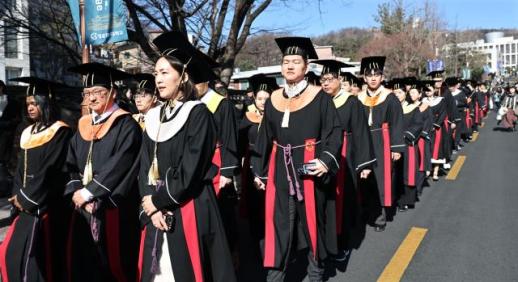 AI reshapes entry-level jobs as Korea nears '20,000 Ph.D. era' SEOUL, March 11 (AJP) - As artificial intelligence reshapes white-collar work, more South Koreans are staying in school longer — and earning Ph.D.s in record numbers. Universities awarded 19,831 doctoral degrees in 2025, according to data released Tuesday by the Korean Educational Development Institute, the highest since records began in 1999 and a 51.6 percent increase over the past decade. The milestone places the country on the brink of what policymakers call the “20,000 Ph.D. era.” The surge reflects a rapidly changing labor market in which AI is increasingly automating entry-level analytical and research tasks — from finance and legal work to data analysis — pushing many young professionals to pursue deeper specialization to remain competitive. Yet the rise also highlights a growing paradox: while more South Koreans are earning the highest academic credential available, many struggle to find jobs that match their qualifications. Among 7,005 doctoral graduates employed last year, 10.4 percent reported earning less than 20 million won annually, roughly $15,000 — up from 6.3 percent in 2011. When the national statistics series began in 1999, only 5,586 people earned doctoral degrees nationwide, and a Ph.D. was widely seen as a rare credential reserved mainly for future academics. The numbers climbed steadily as universities expanded graduate programs and competition in the labor market intensified. By 2010 the annual number of Ph.D. graduates surpassed 10,000, marking the rapid expansion of doctoral education. With nearly 20,000 new doctorates last year, the figure has almost quadrupled over a quarter century. The latest data also highlight a major shift in gender balance. In 2025, 8,629 women received doctoral degrees, the first time the number of female Ph.D. graduates exceeded 8,000 in a single year. Women accounted for 43.5 percent of all doctoral recipients, the highest proportion since records began. The change is striking compared with the late 1990s. In 1999, only 1,144 women earned Ph.D.s, representing 20.5 percent of the total. The motivations behind doctoral study have also evolved. In a survey of 10,498 recent doctoral graduates conducted by the Korea Research Institute for Vocational Education and Training, the most common reason for pursuing a Ph.D. was to improve professional expertise, cited by 37.5 percent of respondents. The share slightly exceeded the 35.5 percent who said they aimed to become professors or researchers. That represents a shift from earlier years. When the survey began in 2011, 43.2 percent cited academic careers as their primary goal. Analysts say the shift reflects growing uncertainty about academic career paths as well as broader changes in the labor market. Even as doctoral graduates increase, evidence suggests the labor market has struggled to absorb them. A report by the vocational education institute found that 31 percent of South Korean workers are overeducated for their jobs, significantly higher than the 23 percent average among countries in the Organization for Economic Co-operation and Development. At the same time, 49 percent of college graduates work in jobs unrelated to their majors, compared with the OECD average of 38 percent. “The high level of overeducation indicates a strong inflow of highly educated workers into relatively simple positions,” the report said. Researcher Lee Soo-hyun, who led the study, warned that such mismatches could have long-term economic costs. “A double mismatch — being both overeducated and working outside one’s field — can prevent individuals from fully utilizing their capabilities,” she said. Economists say the surge in doctoral degrees ultimately reflects structural pressures in South Korea’s labor market. “The high level of overeducation in Korea is largely due to insufficient demand for high-quality jobs,” said Kwon Sang-uk, a professor at Kyungpook National University. “When there are far more job seekers than desirable positions, workers naturally try to differentiate themselves by accumulating more qualifications.” He contrasted the situation with the United States, where academic credentials more closely align with labor market segmentation. “In Korea, a university diploma no longer guarantees employment,” Kwon said. “That pushes people to build increasingly stronger credentials.” External factors may also be contributing to the rise in domestic Ph.D. programs. A weaker Korean won has made studying abroad more expensive, while stricter immigration policies in the United States have discouraged some Korean students from pursuing doctoral programs overseas. Those shifts may be pushing more students to remain in Korea for graduate education or for some to stay competitive against AI competition. “The Ph.D. represents deep expertise in a specific field,” Kwon said. “While artificial intelligence makes general knowledge widely accessible, understanding complex systems and applying advanced research methods still requires intensive training.” Demand for such expertise is likely to grow in sectors such as robotics, advanced manufacturing and cutting-edge technologies, he added — even as competition intensifies in traditional academic careers. 2026-03-11 17:46:19
 -
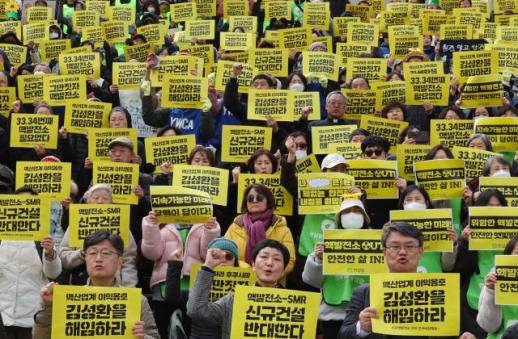 Activists rally in Seoul to mark 15th anniversary of Fukushima disaster SEOUL, March 11 (AJP) - Activists held a rally in central Seoul on Wednesday to mark the 15th anniversary of Japan's Fukushima disaster in 2011. The protesters, wearing boards shaped like nuclear reactors, were members of an anti-nuclear civic group. They gathered in front of Sejong Center for the Performing Arts in Gwanghwamun, reading a declaration to urge remembrance of the Fukushima nuclear disaster, oppose the construction of additional nuclear power plants, and advocate for nuclear phase-out policies. 2026-03-11 17:45:38
 -
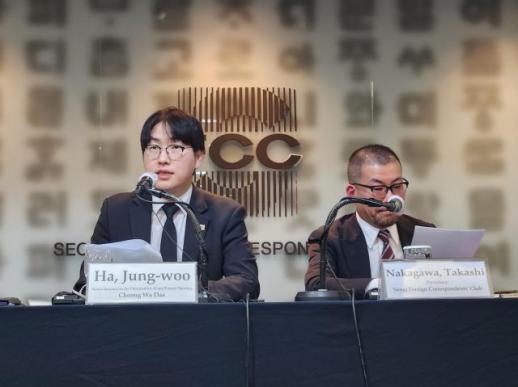 South Korea moves to build its own AI backbone SEOUL, March 11 (AJP) - South Korea is moving to build its own AI backbone — an "AI Highway" of massive data centers, specialized semiconductors and autonomous software — as it seeks to avoid falling behind the United States and China in the global artificial intelligence race. Government officials and industry executives outlined the strategy at a briefing at the Seoul Foreign Correspondents' Club on Wednesday, describing an effort to link large-scale computing infrastructure with next-generation chip development and industrial AI systems. The initiative, led by the administration of President Lee Jae Myung, combines state investment in computing capacity with private-sector advances in semiconductor design and AI applications. The government has allocated 10.1 trillion won ($6.8 billion) in the 2026 budget to strengthen the country's AI infrastructure. A core goal is securing 50,000 high-performance computing units — specialized processors needed to run advanced AI models. Ha Jung-woo, presidential secretary for AI and future strategy, framed the push as a matter of national survival. "Advanced technology like AI is both economic power and the force that determines national security," Ha said. While the United States and China dominate global AI infrastructure, Seoul is attempting to build what officials describe as a "Silicon Shield" — a network of large domestic data centers powered by carbon-free energy. One flagship hub is planned in Haenam, a coastal county selected for its potential to host large-scale solar and nuclear power facilities needed to run energy-intensive AI computing. The government is also moving to integrate AI more rapidly into military operations. Ha said the defense system — traditionally structured and procedural — is being redesigned for faster adoption of AI technologies. A new deputy minister-level position has been created within the Ministry of National Defense to oversee AI strategy, while the Defense Acquisition Program Administration is preparing to incorporate AI tools into procurement and operational planning. "South Korea aims to become one of the world's top four defense powers, and AI will be at the center of that," Ha said. Shift toward specialized silicon At the hardware level, the AI boom is pushing the industry toward specialized chips designed specifically for AI workloads. Graphics processing units, or GPUs, remain the dominant technology for training large AI models, but their heavy electricity demand has become a growing constraint for data centers. South Korean startup FuriosaAI is targeting this bottleneck with its second-generation neural processing unit, RNGD — pronounced "Renegade" — which has recently entered mass production. Unlike GPUs, NPUs are designed specifically for AI inference, the stage where trained models process new data and generate responses. Kang Jee-hoon, chief research officer at FuriosaAI, said the industry is entering what he described as a "power crisis," where computing capacity is increasingly limited by electricity availability. "The challenge for the industry is to enable more work to be processed with the same power consumption," Kang said. The RNGD chip uses a proprietary Tensor Contraction Processor architecture that manages on-chip memory more efficiently than conventional chip layouts. According to the company, its PCIe server card operates at around 180 watts while delivering roughly 2.8 times higher throughput than comparable hardware within a standard 15-kilowatt server rack. "Our goal is to generate more tokens with the same power," Kang said. "Just as computing once shifted from CPUs to GPUs, we want developers to easily adopt our Renegade and next-generation products." At the software level, the next frontier is "agentic AI" — systems that can independently plan and execute tasks rather than simply respond to user prompts. LG AI Research is advancing this trend through its EXAONE model. Stanly Jung-kyu Choi, vice president and head of the institute's agentic AI research group, described the system as an "expert AI" designed for specialized industrial applications. In manufacturing, the system is already being used to optimize naphtha scheduling — the complex logistical planning required for petrochemical feedstocks. In life sciences, the EXAONE Discovery platform has reduced the time required to identify new material compounds from about 22 months to a single day by autonomously analyzing research papers and molecular structures. Because of the high autonomy involved, LG has established a dedicated AI ethics unit to monitor potential risks associated with the technology. "We are moving beyond general-purpose models to expert systems that maximize productivity in specialized industries," Choi said. The institute is also developing K-EXAONE, a national flagship model tailored to the Korean language and local context, which is expected to be deployed across public services by late 2026. As artificial intelligence evolves into a system of specialized hardware and increasingly autonomous software, South Korea is attempting to build a fully integrated ecosystem. Officials say the success of that strategy will depend on coordination between government policy, semiconductor innovation and advanced research — an effort aimed at securing the country's place in the rapidly shifting global AI supply chain. 2026-03-11 17:37:02
 -
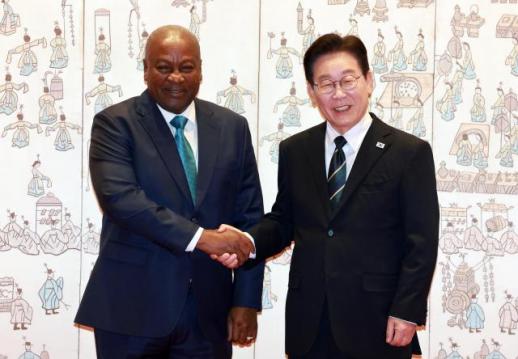 South Korea, Ghana agree to cooperate on climate change, maritime security SEOUL, March 11 (AJP) - South Korea and Ghana have agreed to strengthen cooperation on climate change, maritime security and digital development, Cheong Wa Dae said on Wednesday. President Lee Jae Myung met with Ghanaian President John Dramani Mahama in Seoul, and the two leaders signed a series of agreements including three memorandums of understanding (MOUs) on climate cooperation, maritime safety and security, and collaboration in technology, digital development, and innovation, following their summit. Among the key agreements, the two countries pledged to work together on climate change initiatives and related technology development, and plan to set up a joint committee to coordinate their efforts. This includes the use of Article 6 of the Paris climate accord, which allows countries to trade internationally recognized carbon reduction credits through voluntary cooperation. South Korean officials said the mechanism could help both countries meet their nationally determined contributions for greenhouse gas reductions. South Korea's Coast Guard and Ghana's Navy also agreed to cooperate on maritime safety and security through expanded personnel exchanges including educational training programs and seminars, as well as information sharing on maritime crimes such as piracy, arms trafficking, and drug smuggling. The two sides also agreed to collaborate on search and rescue operations for ships, aircraft, and people in distress at sea. Officials said the cooperation could help improve safety in the Gulf of Guinea region while strengthening protection for South Korean citizens and vessels operating in the area. The two leaders also agreed to deepen collaboration in technology, digital development and innovation with plans to support vocational training for young people, expand education in artificial intelligence (AI) and STEM fields — science, technology, engineering and mathematics — and improve digital accessibility. Mahama's visit marks the first visit by an African head of state since Lee took office in June last year. It is also the first visit by a Ghanaian president to South Korea in about two years, following the Korea-Africa Summit in 2024. Ahead of the visit, Cheong Wa Dae said it had placed specially produced "Ghana chocolate" as a gesture of warm welcome. The chocolate was made using cocoa beans sourced primarily from Ghana. Presidential spokesperson Kang Yoo-jung said the packaging featured both countries' national flags and Mahama's name. Kang recalled that Lee once drew encouragement from a bar of the same chocolate brand given to him by a child during a hunger strike in September 2023, when he was serving as leader of the opposition party. 2026-03-11 17:28:25
 -
 Global EV Deliveries Excluding China Rise 21.2% in January; Hyundai Motor Group Ranks No. 4 Global electric-vehicle deliveries excluding China rose in January despite weakness in North America, according to SNE Research. The firm attributed the increase to stronger demand in Europe and other Asian markets as electrification gains momentum. SNE Research said Tuesday that 572,000 EVs were newly delivered worldwide outside China in January, up 21.2% from a year earlier. The tally includes plug-in hybrid electric vehicles as well as battery-electric models. Europe posted 19.5% growth, maintaining a steady trend. SNE Research cited the broader rollout of new EV models and continued carbon-emissions regulations, even as some governments discuss scaling back subsidies or adjusting policies. Asia outside China roughly doubled from the same month last year. North America, however, fell 30.2%. SNE Research said consumer preferences have shifted toward internal-combustion and hybrid vehicles, while demand has cooled quickly after EV tax credits ended. By group, Volkswagen remained No. 1, delivering 88,000 vehicles, up 8.1%. China’s BYD ranked second after deliveries surged 118.6% to 67,000. Tesla was third, up 8.4% to 53,000. Hyundai Motor Group delivered 38,000 vehicles, up 4.9%, but slipped to fourth from third a year earlier as BYD climbed the rankings. * This article has been translated by AI. 2026-03-11 17:27:18
 -
 SHINee’s Taemin Signs Exclusive Contract With Galaxy Corporation Taemin, a member of the K-pop group SHINee and a solo singer, has signed with Galaxy Corporation. Galaxy Corporation said on the 11th that it has signed an exclusive contract with Taemin, adding that it will provide full support so his “unrivaled artistic capabilities” can create synergy with the company’s cutting-edge technology. Galaxy Corporation, which describes itself as South Korea’s first AI entertainment-technology company, develops “entertech” businesses that combine entertainment content with technologies such as AI and robotics. The company said the signing reflects a strategy to create added value by merging artists’ intellectual property with digital technology. With the move, Taemin joins a roster that includes singer G-DRAGON, actor Song Kang-ho and broadcaster Kim Jong-kook. Taemin debuted in 2008 as a member of SHINee, releasing hits including “Replay,” “Ring Ding Dong” and “View.” After making his solo debut in 2014, he released songs such as “Danger,” “Move” and “Want,” establishing himself as a solo artist known for performance. In August 2024, he launched his first solo world tour, “Ephemeral Gaze,” starting at Inspire Arena in Incheon, and held 37 shows across 20 countries in Asia, the United States and Europe. He is set to perform April 11 and 18 at the Coachella Valley Music and Arts Festival in Indio, California, becoming the first South Korean male solo singer to take the stage at the festival.* This article has been translated by AI. 2026-03-11 17:21:19
 -
 J-pop Singer Vaundy to Hold First Solo Concerts in South Korea in September Japanese singer Vaundy will visit South Korea for the first time since his debut. Type Communication Co., the organizer, said on the 11th that Vaundy will hold two solo concerts on Sept. 19 and 20 at Inspire Arena in Incheon, titled "Vaundy ASIA ARENA TOUR 2026 'HORO' IN SEOUL." The shows will mark his first official meeting with Korean fans who have long awaited a Korea concert, the organizer said. Vaundy is known as a multi-talented artist who oversees songwriting, composition and arrangement, as well as design, video direction and self-producing. Backed by polished sound, messages that resonate across generations and strong live performances, he has built a following across Asia beyond Japan. The Seoul concerts are expected to feature hit songs including "怪獣の花唄 (Kaiju no Hanauta)" and "踊り子 (Odoriko)," along with a special set list prepared for the Asia tour. The concerts will be held at Inspire Arena, described by the organizer as South Korea’s first multipurpose arena. Tickets for Vaundy’s first solo Korea concerts will be sold exclusively through online seller NOL Ticket starting at 8 p.m. on the 11th.* This article has been translated by AI. 2026-03-11 17:09:24
 -
 Biathlete Kim Yun-ji adds another medal at Winter Paralympics in Italy SEOUL, March 11 (AJP) - Biathlete Kim Yun-ji on Tuesday added another medal at the Winter Paralympics, which kicked off last week in Milan and Cortina d'Ampezzo, Italy. Kim finished second in the women's sitting cross-country sprint final with a time of 33:10.1, just behind the U.S.' Oksana Masters, who claimed gold with a time of 33:07.01. It was her second medal at this year's quadrennial sporting event, after she won gold in the women's sitting sprint 12.5-kilometer biathlon last Sunday, which made her the first South Korean woman to win a gold medal at the Winter Paralympics. With Kim's strong performance, South Korea has already achieved its best-ever result, earning one gold, one silver, and one bronze, surpassing its previous record of one gold and two bronze medals at the 2018 PyeongChang Paralympics. 2026-03-11 17:06:29
 -
 South Korea Requests Police Probe Into 105 Suspected Scalped BTS Tickets South Korea’s Ministry of Culture, Sports and Tourism said it is stepping up its crackdown on ticket scalping. The ministry said on the 11th it asked the National Police Agency to investigate four suspected cases involving 105 BTS concert tickets believed to have been sold illegally. After intensively monitoring major online secondhand marketplaces for BTS concerts in Gwanghwamun and Goyang, the ministry said it found posts offering a total of 1,868 tickets, including duplicates. It said it secured multiple tickets for the same performance and referred 105 tickets for a police probe. The ministry also warned that buying scalped tickets may make it effectively impossible to attend. For the BTS Gwanghwamun concert, entry uses a QR-code system that does not allow screenshots. Once a code is scanned for first use, it cannot be reissued or scanned again under any circumstances. It said all attendees will be required to verify their identity with a designated ID at entry and wear a wristband that cannot be reattached if damaged. Wristbands will be checked for re-entry after movement such as restroom visits, and organizers may conduct random identity checks inside the venue, removing anyone caught attempting a transfer. The ministry said organizers are also monitoring online posts to detect transactions that violate ticketing policies and are canceling tickets when buyers fail to respond to requests for explanation or cannot substantiate purchases. Minister Choe Hwi-young said scalping violates organizers’ ticketing policies and warned that strengthened on-site identity checks make transfers “virtually impossible.” He said buyers also face a high risk of fraud, including sellers disappearing, and urged fans to purchase tickets only through official sellers. * This article has been translated by AI. 2026-03-11 17:05:29
 -
 Gout Isn’t Just a ‘Rich Man’s Disease’: Common Myths and What Drives Risk "I can’t even put my foot on the ground." Gout patients say it often, and the pain can be so intense that the old line about it hurting even when a breeze brushes by does not feel like an exaggeration. Because the Korean name includes the character for “wind,” some people confuse it with stroke, but gout is a different disease caused by abnormal uric acid metabolism. Gout was once called the “emperor’s disease” or a “rich man’s disease,” because it was common among royals and aristocrats who could afford plentiful meat and alcohol. Fatty foods and frequent drinking were once symbols of privilege, and gout was seen as a byproduct of that lifestyle. That has changed. With Westernized diets, drinking culture and increased fructose intake, gout is no longer limited to any one group and can affect anyone. The number of patients has risen. According to the Health Insurance Review and Assessment Service, the number of gout patients in South Korea increased by more than 18% to about 500,000 in 2022 from about 430,000 in 2018. The fastest growth rate was among people in their 20s and 30s, with analyses linking the increase to heavy drinking and high-fat, high-protein diets among younger adults. Gout begins with uric acid. After food is metabolized, uric acid is produced and is usually excreted in urine through the kidneys. When the kidneys cannot filter enough of it, the concentration of uric acid in the blood rises. When blood uric acid exceeds a certain level, it can no longer stay dissolved and turns into sharp, needle-like crystals. These crystals can deposit in areas with slower circulation, such as the big toe, ankle and knee. The immune system treats them as foreign material, triggering inflammation and severe pain. Uric acid does not stay in the foot. It can spread to multiple joints, including the knee, wrist and fingers, and can also affect the kidneys and blood vessels, raising the risk of kidney disease. Lee Ju-ha, a professor of rheumatology at Seoul St. Mary’s Hospital at the Catholic University of Korea, said gout mainly occurs in the big toe or ankle but can later appear in the upper body as well. If high levels of uric acid crystals persist, she said, visible lumps of uric acid crystal deposits can sometimes be seen. Another problem is the belief that gout is a brief, one-off illness. When medication eases the pain, many people assume treatment is over. But gout is a chronic disease that requires ongoing management. It often recurs and is closely linked to other metabolic conditions such as hypertension and diabetes. Misconceptions are common. One is the idea that avoiding beer is enough, or that switching from beer to soju is safe. While beer yeast contains many purines, alcohol increases uric acid regardless of type. What matters is not the kind of alcohol but how much is consumed. Cutting back on alcohol is not the only concern. Liquid fructose in sodas and juices can promote uric acid production as the liver metabolizes it. One study found that people who drink two or more sugary beverages a day had about an 85% higher risk of gout than those who do not. There is also confusion about pain relief. If you are unsure whether to use cold or heat, remember: cold compresses during an acute flare. When a joint is swollen and warm, cold is the rule because it constricts blood vessels and can help reduce inflammation. Ice should be wrapped in a towel and used for no more than 15 to 20 minutes. Heat during this period can worsen inflammation. After swelling subsides in the chronic phase, warm compresses may help circulation. If gout is not caused by other medications or diseases, Lee said, patients need sustained management, including maintaining a healthy weight and limiting foods that increase uric acid production. Exercise and dietary control to keep an appropriate weight can help, she said. Diet choices can also matter. Foods low in purines may help, but not all vegetables are low in purines. Spinach, asparagus and mushrooms are relatively high among vegetables. Oats, often considered a health food, are not an exception. For uric acid management, white rice may be less burdensome than brown rice or oats. Foods known to be high in purines include organ meats, oily fish and shellfish.* This article has been translated by AI. 2026-03-11 17:03:00