

Journalist

Jinkyu, Myung
-
 North Korean leader highlights 'traditional friendship' with China in letter to Xi SEOUL, March 10 (AJP) - North Korean leader Kim Jong-un has expressed his expectations for further cooperation with his country's traditional alley in a letter to Chinese President Xi Jinping, state media reported on Tuesday. According to the state-run Korean Central News Agency, Kim sent the letter to Xi the previous day, expressing his belief that cooperation between the two countries "will become even closer in the future." He was also quoted as saying that strengthening the "traditional friendship" between North Korea and China would help meet the "new demands of the times." The letter was a reply to Xi, who sent a congratulatory message late last month when Kim Jong-un was re-elected general secretary of the ruling Workers' Party at the country's rare party gathering. Kim also thanked Xi for his message, saying it provided "support and encouragement" for himself and party members. 2026-03-10 10:18:42
 -
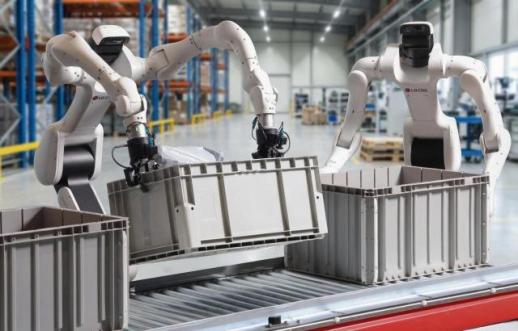 LG CNS invests in U.S. robotics firm Dexmate, broadening humanoid hardware lineup SEOUL, March 10 (AJP) - South Korean IT solutions provider LG CNS said it has made a strategic investment in Dexmate, a Silicon Valley-based robotics startup, marking the first such deal by a Korean company with the U.S. firm. The investment, announced Tuesday, was channeled through LG Technology Ventures, the conglomerate's corporate venture capital arm. Dexmate, founded by PhDs from MIT, UC San Diego and Carnegie Mellon University, manufactures humanoid robots whose hardware has been adopted as a standard research platform by global robotics AI developers. Its flagship model, Vega, forgoes bipedal legs in favor of an omnidirectional wheeled base, a design choice that prioritizes stability and endurance over human-like locomotion for industrial use. The robot features 36 degrees of freedom and dual arms capable of carrying a combined payload of about 15 kilograms, with a single charge sustaining more than 20 hours of continuous operation. Its wheeled lower body offers a more stable platform than bipedal counterparts, making it well-suited for deployment in logistics centers and manufacturing plants. The deal expands LG CNS' robot hardware portfolio to include wheeled humanoids alongside bipedal and quadruped models it had already secured. The company said it plans to bundle the hardware with a robot foundation model and its proprietary operation and training platform to offer what it calls a "full-stack RX service" for industrial clients. "This investment is a strategic move to organically combine robot hardware, foundation models and our platform to enable large-scale robot operations and accelerate deployment across industrial sites," said Lee Jun-ho, head of LG CNS' smart logistics & city business division. 2026-03-10 10:05:12
 -
 Hanon Systems targets No. 1 global thermal management by 2036 Korea & Company Group said its automotive thermal energy management unit, Hanon Systems, has set out a growth vision ahead of its 40th anniversary on March 11. Hanon Systems said it aims to become the world’s No. 1 thermal management solutions company by 2036, when it marks its 50th anniversary. The company said it will accelerate expansion beyond its core automotive thermal management technology. It plans to broaden its portfolio by targeting infrastructure industries that need high-efficiency thermal management, including data center cooling systems, where demand has been rising. Hanon Systems currently supplies automotive thermal management solutions through 50 production plants worldwide and three R&D innovation centers. It is assessed as the world’s No. 2 manufacturer in automotive thermal management and one that offers a full lineup globally. The company said it plans to position itself not only as a partner to the auto industry but also as a key infrastructure partner across industries that require thermal management technology. It also plans to expand into adjacent growth areas, including the global aftermarket, to strengthen its mid- to long-term growth base. To mark its anniversary on March 11, Hanon Systems released the message “40 Years Forward.” The company said it reflects its intent to build new growth opportunities in future mobility and other industries that require thermal management, based on technology and innovation accumulated over the past 40 years. “This 40th anniversary will be more than a commemoration — it will be a new starting point to leap to the world’s No. 1 thermal management solutions company, grounded in execution and healthy fundamentals,” said Lee Soo-il, vice chairman and CEO of Hanon Systems.* This article has been translated by AI. 2026-03-10 09:52:29
 -
 BTS, National Museum Foundation and HYBE launch merch inspired by Silla-era Emille Bell The National Museum Foundation of Korea said Tuesday it will release “2026 BTS X MU:DS Collaboration Merch,” developed with HYBE. The products were made to mark the release of BTS’ fifth full-length album, “ARIRANG.” The designs take their motif from the patterns on the National Treasure “King Seongdeok Divine Bell,” a cultural heritage item held by the Gyeongju National Museum. Following “2024 BTS Dalmajung X MU:DS,” this is the second series and includes five items: a shoulder bag, card holder, hair clip, hairpin and layered skirt. The bell is a National Treasure representing Unified Silla and is regarded as a masterpiece in Korea’s history of bronze temple bells. King Gyeongdeok, the 35th ruler of Silla, began the project using 120,000 geun of copper to pray for his father King Seongdeok, but died before completing it. His son, King Hyegong, finished the bell in 771. The bell stands 365.8 centimeters (12 feet) tall. Its surface features arabesque and lotus bands, as well as carved panels and striking points. Among the most notable elements is a donor figure carved at the center, depicted holding a handled incense burner while floating on clouds, with finely rendered drapery and a solemn pose. The foundation and HYBE said they developed graphics based on the donor figure and surrounding cloud patterns and applied them across the product designs, giving new use to motifs created by artisans about 1,250 years ago. Jeong Yong-seok, president of the National Museum Foundation of Korea, called the bell “the essence of our cultural heritage, recognized worldwide for its outstanding beauty and casting technique,” and said he hopes the collaboration will help the craftsmanship of Silla artisans reach BTS fans around the world. The items will go on sale at 1 p.m. March 20 at the shop inside the National Museum of Korea’s permanent exhibition hall and at BTS’ offline pop-up, and at 2 p.m. the same day on HYBE’s global superfandom platform, Weverse. The National Museum of Korea shop will sell a limited run of eight items — the five collaboration products plus a poster, link keychain and message keychain — and sales will end early if stock runs out. * This article has been translated by AI. 2026-03-10 09:51:28
 -
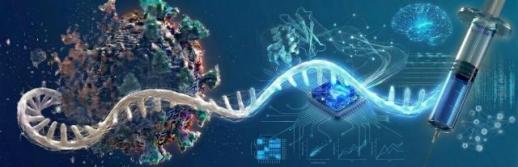 Joint research team develops mRNA platform effective for aging and obesity SEOUL, March 10 (AJP) - A joint research team from the Korea Advanced Institute of Science and Technology (KAIST) and the Catholic University of Korea has developed a new mRNA platform designed to maintain high therapeutic efficacy in elderly and obese populations. The technology improves the production of therapeutic proteins by optimizing specific regulatory sequences within mRNA molecules, addressing a major limitation where current treatments lose effectiveness due to age or metabolic conditions. While mRNA vaccines gained global recognition during the COVID-19 pandemic, their performance can vary significantly depending on the biological environment of the recipient. In older individuals or those with obesity, high levels of oxidative stress often hinder the process by which cells translate genetic instructions into functional proteins. This reduced efficiency has remained a hurdle for the broad application of next-generation RNA therapeutics. To overcome this, the researchers focused on the 5' untranslated region (5' UTR) of the mRNA. This segment does not encode the protein itself but acts as a control center that dictates the volume and speed of protein synthesis. By analyzing vast amounts of biological big data, including tissue transcriptomes and individual cell expression patterns, the team identified specific 5' UTR sequences that remain resilient under cellular stress. The research utilized multiple advanced analytical techniques, such as RNA sequencing and ribosome profiling, to minimize bias across different species and cell types. The team discovered that their newly designed sequences are regulated by specific protein factors, including LARP1 and LARP4. These factors allow the mRNA to continue producing proteins effectively even when standard cellular pathways are compromised by aging or obesity. Preclinical trials using animal models confirmed that the optimized mRNA platform significantly improved both protein expression and immune responses. Unlike conventional mRNA sequences that showed decreased performance in aging and obesity models, the newly engineered sequences maintained high levels of activity. "This research establishes a design methodology that allows mRNA to produce proteins more effectively by leveraging large-scale biological datasets," said Professor Lee Young-suk of the KAIST Department of Bio and Brain Engineering. "It provides a foundation for ensuring that mRNA vaccines and treatments remain reliable for patient groups where drug efficacy is typically lower, such as the elderly or those with obesity." The study, led by Professor Lee Young-suk and Professor Nam Jae-hwan of the Catholic University of Korea, featured Yoon Su-bin and Cho Hyeong-gon as joint first authors. The findings were published online in the international journal Molecular Therapy on January 2. (Paper information) Journal: Molecular Therapy (impact factor: 12.0) Title: Designing 5' UTR sequences improves the capacity of mRNA therapeutics in preclinical models of aging and obesity DOI: https://doi.org/10.1016/j.ymthe.2025.12.060 2026-03-10 09:44:37
 -
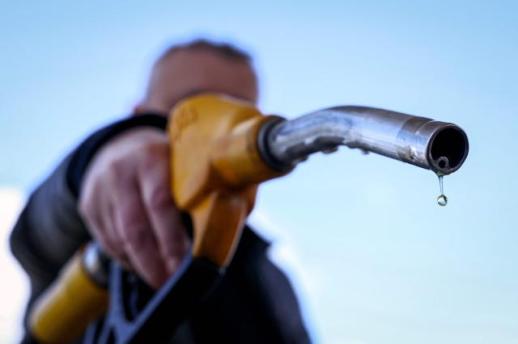 KOSPI swings back up 5% on easing oil prices and Trump comment on war SEOUL, March 10 (AJP) — South Korean shares swung back as sharply as their fall, riding on a rapid retreat in oil prices after the U.S. president vowed the fighting in the Middle East could be “ended soon” and G7 ministers scrambled to take concerted action to ease prices through a possible release of strategic reserves. A sidecar was issued as soon as the opening bell on Tuesday, but unlike the previous morning it was triggered to cool buy-side momentum as both the KOSPI and KOSDAQ soared more than 5 percent, recouping most of the KOSPI’s near 6 percent drop on Monday. A buy-side sidecar is a market stabilization mechanism that temporarily halts program trading for five minutes when KOSPI 200 futures rise more than 5 percent from the reference price and sustain that level for at least one minute. The benchmark KOSPI was up 5.33 percent at 5,534.47 and the KOSDAQ gained 2.61 percent to 1,153.89 as of 9:30 a.m. Foreign investors, who sold more than 3 trillion won ($2.1 billion) worth of shares and institutions more than 1 trillion won the previous day, changed positions with retail investors to become heavy buyers. The volatile swings in Seoul have hinged heavily on oil price movements and remarks from the U.S. president. President Donald Trump said he expects the war in Iran to end “very soon,” but also described it as “the beginning of building a new country,” as the administration offered differing characterizations of how long the operation may last. He also warned Iran could pay an “incalculable” price if its military disrupts oil tankers, as major importers grapple with higher prices since the war began. Speaking to reporters at his Miami-area golf club in his first formal news conference since the U.S. and Israel began strikes on Iran, Trump said he does not expect the war to end next week, but “soon.” His contradictory comments sent mixed signals to oil markets. U.S. benchmark West Texas Intermediate crude was trading at $88.81 a barrel after swinging within roughly a $28 range, while global benchmark Brent crude settled at $90.33 a barrel, sharply below an intraday high of $119.50. Oil prices retreated after finance ministers from the Group of Seven nations said in a joint statement they could release strategic petroleum reserves if needed to address surging prices and potential supply disruptions. Overnight in New York, all three major stock indexes also rose. The Dow Jones Industrial Average gained 0.50 percent, while the S&P 500 and the Nasdaq Composite advanced 0.83 percent and 1.38 percent, respectively. Most major stocks traded higher, with the exception of defense firms Hanwha Aerospace and Hanwha Systems, which fell 2.37 percent and 5.47 percent, respectively. Samsung Electronics rose 8.18 percent to 187,700 won, while SK hynix gained 9.33 percent to 914,000 won. Automakers also advanced, with Hyundai Motor climbing 6.11 percent to 538,000 won and Kia rising 4.89 percent to 160,900 won. Among other heavyweights, LG Energy Solution added 3.76 percent to 373,000 won, while Samsung Biologics gained 3.04 percent to 1,627,000 won and Naver edged up 2.06 percent to 223,000 won. 2026-03-10 09:43:20
 -
 OPINION: Why defense stocks aren't sure bet in turbulent times SEOUL, March 10 (AJP) - As global tensions rise, such as the ongoing conflict in the Middle East, financial markets often grow more cautious. As gunfire grows louder, investors tend to shift their attention away from the human toll and toward which industries might benefit and which stocks could climb. Defense companies are often viewed as potential winners in these moments. Over the past year, shares of major weapons makers in advanced countries have risen sharply. Some estimates suggest that companies such as Hanwha Aerospace have seen their valuations surge dramatically since early 2024. As the British weekly magazine The Economist observed, defense has become nearly as hot in venture investing as artificial intelligence. But investors should keep one thing in mind: war does not automatically mean defense stocks will keep rising. Modern history often suggests the opposite. When conflict remains limited, orders for military weapons can increase and earnings may improve. But once war is in full swing, governments often step in to reclaim corporate profits for public purposes — imposing excess-profits taxes, cutting contract prices, restricting dividends and share buybacks, and sometimes capping executives' pay. History shows it hasn't been simple. During both world wars, the British government imposed high excess-profits taxes to reclaim gains from arms makers. After the U.S. fully entered World War II, it repeatedly renegotiated and lowered prices even on contracts already signed, a practice that continued through the Korean War and the Cold War. The Economist also cited research showing that from 1938 until the attack on Pearl Harbor, U.S. aircraft manufacturers' shares performed well. But from late 1941 through the end of the war in 1945, returns for the overall U.S. stock market outpaced those of defense stocks. The larger the war became, the less governments tolerated outsized profits. Today's international environment is reviving that pattern. U.S. President Donald Trump issued an executive order in January barring defense contractors from paying dividends or buying back shares, and he also said CEO pay at defense companies should be capped at about US$5 million a year. Whatever the legal reach, the message is clear: When national security is at stake, governments put public priorities over market logic. That does not mean long-term demand for defense industries will vanish. In 2025, NATO set a new benchmark targeting 5 percent of GDP, with 3.5 percent for core defense spending and 1.5 percent for security-related investment. Europe's push to rearm amid uncertainty over the U.S. security umbrella is clear. But this does not automatically translate into large-scale orders for tanks, missiles, or self-propelled artillery, since the commitment also covers broader security spending including cybersecurity, protection of energy infrastructure, and upgrades to roads and bridges. This has implications for South Korean defense companies, which have posted strong results in global markets in recent years. A $13.7 billion contract with Poland in 2022 marked a turning point for South Korea's defense exports, and Hanwha Aerospace has said it aims to double its European sales by 2027. Hyundai Rotem secured a roughly $6.5 billion deal to supply an additional 180 K2 tanks to Poland, while LIG Nex1 won an contract with Iraq worth about 3.71 trillion won for a medium-range surface-to-air missile system. That success is also cause for caution. The question is not whether defense stocks are worth investing in, but whether they are already priced too high. According to The Economist, Western defense stocks are trading at around 35 times expected earnings, a level not far from Nvidia, which led the boom of artificial intelligence (AI). A common misconception among South Korean investors is that a major war would automatically boost stocks such as Hanwha Aerospace. The reality is more complex. If a conflict remains limited, expectations of increased weapons demand can lift share prices. But if war drags on and escalates, national finances come under pressure, governments tighten budget controls, and pricing negotiations usually tilt in the state's favor. Still, the outlook for South Korea's defense industry should not be underestimated. As of 2023, South Korea ranked among the world's top 10 arms exporters, and the government has set a goal of becoming one of the world's four leading defense powers. Europe's rearmament after Russia's war in Ukraine, growing demand for missiles and other weapons in the Middle East, and security uncertainties in the Indo-Pacific create opportunities for South Korean companies. However, these opportunities will materialize into tangible results only when companies can maintain sufficient production capacity and deliver strong performance in quality, delivery schedules, localization and others. War pushes up oil prices, higher oil boosts energy stocks, and rising uncertainty lifts defense stocks. History, however, suggests a more complex reality. War can generate orders for defense companies, but it also brings state power that can cap profits. The larger the conflict, the less flexibility companies have; the higher the priority given to national security, the smaller the share left for shareholders. The right approach to defense stocks is restraint, not euphoria. South Korean defense companies have proven competitive on the global stage. But investors should consider not only whether governments want more weapons, but also how much profit those governments will permit. War can boost revenue, but it does not guarantee a windfall for shareholders. When national security comes first, corporate profits can quickly take a back seat. * This article, published by Business Daily, was translated by AI and edited by AJP. 2026-03-10 09:33:54
 -
 Kia releases video showcasing EV safety and convenience technologies Kia said March 10 it released a video titled “Symphony of EV Technology” on the Hyundai Motor Group YouTube channel and social media, highlighting advanced driver-assistance features for its electric vehicles. The video focuses on technology designed to respond to unusual acceleration situations as reports of pedal-misapplication crashes have become more frequent, aiming to create a safer driving environment for both drivers and pedestrians. It presents the advanced safety-assistance systems fitted to Kia’s dedicated EV models — the EV3, EV4 and EV5 — as a coordinated “symphony,” explaining how each feature works over a refined classical soundtrack. The video covers four safety and convenience technologies used on Kia’s dedicated EVs: Pedal Misapplication Safety Assist, Acceleration Limiting Assist, i-Pedal 3.0 and Smart Regenerative System 3.0. Pedal Misapplication Safety Assist is designed to help prevent crashes by recognizing excessive accelerator input as a misapplication when the vehicle is stopped or moving at low speed. Kia said the latest specification applied to the EV5 strengthens safety by expanding obstacle-detection distance to up to 1.5 meters and by analyzing steering direction and collision risk for control. Acceleration Limiting Assist is intended to reduce risk by detecting excessive acceleration while driving. When it identifies a situation that differs from typical driving patterns, it warns the driver and limits acceleration. i-Pedal 3.0 enables one-pedal driving, allowing acceleration, deceleration and a complete stop using only the accelerator pedal. Smart Regenerative System 3.0 automatically adjusts regenerative braking based on traffic flow and road conditions analyzed using a front camera and navigation information. A Kia official said the video shows EV technology being implemented naturally in everyday driving and added that the company will continue advancing electrification technology that covers both safety and convenience.* This article has been translated by AI. 2026-03-10 09:33:16
 -
 KakaoBank’s One-Month Savings Tops 14 Million Accounts in 2 Years, 5 Months KakaoBank said Tuesday that its “One-Month Savings” product has surpassed 14 million cumulative accounts in the 2 years and 5 months since its launch. Introduced in October 2023, the short-term installment savings product is designed to help customers build a saving habit by setting aside small daily amounts ranging from 100 won to 30,000 won. With a 31-day maturity, it is easier to keep through to the end. Each deposit also triggers an on-screen animation of the bank’s “Chunsik” character climbing a 31-story building, adding a playful element. KakaoBank said the product reached 5 million accounts about seven months after launch, 10 million in 1 year and 5 months, and exceeded 14 million earlier this month. The customer base has broadened. While the product initially drew a higher share of customers in their 30s and younger, customers in their 40s now account for 31% and those 50 and older for 32%, or 63% combined. Women made up 72% of customers, the bank said. KakaoBank has also offered the product as a “partner savings” program tied to companies including Samsung Electronics, LG Electronics, Hana Securities, Baskin-Robbins and Gmarket, providing additional benefits to customers. KakaoBank said the product’s reputation as “easy and 부담 없는” — simple and not burdensome — along with its fun features helped it reach 14 million accounts quickly. The bank said it will continue working to provide greater benefits and convenience through differentiated products and services.* This article has been translated by AI. 2026-03-10 09:24:00
 -
 Hyundai Rotem Wins Two 2026 iF Design Awards for Hydrogen Rail Vehicles Hyundai Rotem said Tuesday that its hydrogen electric locomotive and hydrogen electric multiple unit each won an iF Design Award 2026, giving the company two honors in the competition. The iF Design Award, considered one of the world’s three major design prizes, selected this year’s winners after expert judging of more than 10,000 projects submitted from 68 countries, the company said. The hydrogen electric locomotive and hydrogen electric multiple unit are hydrogen mobility models Hyundai Rotem is developing. The company said they are strategic products aimed at expanding hydrogen mobility in rail, following its hydrogen electric tram scheduled to begin operations in cities including Daejeon and Ulsan. Hyundai Rotem said the two award-winning models are the first to adopt an “H”-shaped side graphic that it expects to become a signature design element for its hydrogen mobility lineup. The company said the grid pattern spreading outward from the H motif, which it said represents both Hyundai Rotem and hydrogen, reflects its vision for broader adoption of hydrogen mobility. The company said the designs are based on three core principles: purity, simplicity and symbolism, and are intended to set a new benchmark for sustainable mobility in rail. It said the roofline and front-end form combine a soft curve flowing from the windshield with sharper, more dynamic lines lower down to express both the sustainability and strength of hydrogen energy. The linear headlight arrangement was inspired by light trails seen when moving at high speed through tunnels, it said. Hyundai Rotem said the hydrogen electric multiple unit uses a low-floor structure to improve accessibility for passengers with mobility challenges and features a smooth front-end shape meant to convey the sustainable value of hydrogen energy. In 2023, Hyundai Rotem’s hydrogen electric tram won an iF Design Award, which the company said made it the first in South Korea’s rail industry to receive a global design prize. The company said the latest awards further demonstrate the competitiveness of its hydrogen mobility products. “This award recognizes Hyundai Rotem’s efforts and design philosophy toward realizing hydrogen mobility in the rail sector,” a company official said.* This article has been translated by AI. 2026-03-10 09:09:20