

Journalist

Jinkyu, Myung
-
 Speculation grows as US military assets gather at Osan Air Base SEOUL, March 6 (AJP) - Patriot missile batteries and heavy transport aircraft have been quietly amassing at a U.S. military base in Pyeongtaek, Gyeonggi Province, in what appears to be a consolidation of U.S. air defense assets. According to multiple government sources, Patriot missiles and large U.S. military transport aircraft including C-5s and C-17s have recently been spotted at U.S. Forces Korea (USFK)'s Osan Air Base. Some of the Patriot missiles were reportedly transferred from other U.S. bases. C-17s regularly fly into Osan to transport U.S. equipment and troops, but the presence of the larger C-5 was seen as unusual, the sources said. With concerns growing that the Middle East conflict could become prolonged following U.S.-led airstrikes on Iran last week, the recent movements have fueled speculation that USFK may prepare to deploy some of its military assets overseas in case of contingencies in the region. The Patriot is capable of intercepting incoming missiles at low to medium altitudes, roughly 20 to 40 kilometers above the surface. Together with a Terminal High Altitude Area Defense (THAAD) battery, it forms a core part of USFK's missile defense. Two Patriot batteries were previously deployed to the Middle East during the U.S.' surprise strike on Iranian nuclear facilities last June, under a military operation dubbed "Midnight Hammer," and returned several months later. But some suggest that the recent movements of U.S. military assets may be in preparation for the annual joint exercise between South Korea and the U.S., set to begin next week, rather than a sign of an imminent deployment to the Middle East. For now, both remain uncertain. "It is not appropriate to comment on USFK's operations," said a spokesperson from the Ministry of Defense during a regular press briefing on Friday. He added that USFK's mission is to maintain a strong combined defense posture with South Korea's military to support peace and stability on the Korean Peninsula and in the region, and that the allies will continue to coordinate closely. 2026-03-06 15:38:48
 -
 Sookmyung Women's University researchers identify protein key to maintaining healthy muscle SEOUL, March 06 (AJP) - Professor Yang Young and Dr. Han So-ra from the Department of Biological Sciences and the Research Institute of Women's Health at Sookmyung Women's University have identified that CTRP1, a myokine produced in muscles, plays a critical role in maintaining healthy skeletal muscle. The research team found that CTRP1 regulates mitochondrial homeostasis in immature muscle cells to support normal muscle differentiation. This process induces the formation of muscle fibers favorable for mitochondrial respiration, thereby contributing to the maintenance of healthy muscle tissue. In cases where CTRP1 was absent, the researchers observed muscle damage and reduced muscle strength. These findings align with observations in tissues from patients with muscular diseases, where CTRP1 expression was notably decreased. The study further demonstrated that restoring CTRP1 in deficient cells normalized mitochondrial function and muscle differentiation. The study identifies CTRP1 as a core factor in regulating muscle homeostasis and suggests it as a potential target for gene therapy in muscular diseases. Professor Yang Young stated that the research confirms the possibility of using CTRP1 as a new strategy for regeneration and recovery in the treatment of muscle disorders. The findings were published online in January in Molecular Therapy, the official journal of the American Society of Gene and Cell Therapy and a member of the Cell Press family. (Paper information) Journal: Molecular Therapy (impact factor 12.0, JCR top 2.6 percent) Title: CTRP1 regulates skeletal muscle differentiation through quality control of mitochondrial dynamics and function DOI: https://doi.org/10.1016/j.ymthe.2025.12.063 2026-03-06 15:28:55
 -
 South Koreans return home from Middle East SEOUL, March 06 (AJP) - Korean travelers who departed for the Middle East are returning home one by one as many air routes have been disrupted in the aftermath of Middle East tensions. Additionally, the Dubai-Incheon route, which had been suspended due to the aftermath of Iran's airstrikes, resumed on March 6. The flight took off three hours and ten minutes later than scheduled due to local airport conditions. Korean Air has suspended flights to the Middle East until March 8. Meanwhile, the government is reviewing plans to deploy chartered planes and military transport aircraft to the UAE and other locations as early as this weekend, and is in discussions with UAE authorities for this purpose. According to the Ministry of Foreign Affairs, Foreign Minister Cho Hyun held a phone call with UAE Foreign Minister Abdullah bin Zayed Al Nahyan on the night of March 5 to discuss plans for chartered plane takeoffs and landings to support the return of Korean nationals staying in the region. 2026-03-06 15:01:55
 -
 Winter Paralympics: Intense Strategy in Wheelchair Curling Mixed Doubles SEOUL, March 06 (AJP) - South Korea’s wheelchair curling mixed doubles team of Lee Yong-seok and Baek Hye-jin defeated Britain and Japan in succession to improve to 2–1 in the preliminary round at the 2026 Milan–Cortina Winter Paralympics. After narrowly losing to host Italy in their opening match, Lee and Baek bounced back with a 14–3 victory over Britain in the morning session before overpowering Japan later in the day. Eight teams are competing in the wheelchair curling mixed doubles event. The preliminary round is played in a round-robin format, with the top four teams advancing to the semifinals. The 2026 Milan–Cortina Winter Paralympics opened on Thursday at the Arena di Verona in Italy and will run through March 15. 2026-03-06 15:00:58
 -
 Day 7 Middle East War: Tehran power vacuum rattles Gulf order As the war triggered by U.S.–Israeli strikes on Iran enters its first week, AJP examines how the conflict began and evolved, the emerging power vacuum in Tehran and its implications for Iran and the Gulf states, and the broader impact on global energy routes, financial markets and the international order. SEOUL, March 06 (AJP) - Exactly who is in control in Tehran remains unclear after Supreme Leader Ayatollah Ali Khamenei was killed during the opening hours of the United States’ Operation Epic Fury and Israel’s concurrent Operation Roaring Lion. The conflict ignited on February 28 after U.S. President Donald Trump authorized a massive joint air campaign alongside Israel. Ali Khamenei was killed during the opening salvos of the bombardment. What he removed was more than a leader figurehead, according to Lee Hee-soo, a prominent expert on Islamic culture and Professor Emeritus at Hanyang University. "Khamenei held the status of a spiritual leader for approximately 300 million Shia Muslims worldwide," and the loss was a "spiritual blow" that the West may have underestimated. The uncertainty deepened after U.S. President Donald Trump said Washington should have a say in selecting Iran’s next leader, warning that figures he considers unacceptable could "just end up dead." The sudden removal of Iran’s supreme leader and several senior military officials has left the Islamic Republic navigating a rare leadership vacuum while confronting the most intense military assault on its territory in decades. An interim leadership council composed of President Masoud Pezeshkian, judiciary chief Gholam-Hossein Mohseni-Eje’i and senior cleric Ayatollah Alireza Arafi is temporarily overseeing the state. Meanwhile, Iran’s powerful Assembly of Experts is expected to begin the process of selecting the country’s next supreme leader. Mojtaba Khamenei, the slain leader’s son, is widely viewed as a potential successor, though the succession process—traditionally handled within Iran’s clerical establishment—now faces unprecedented external pressure. Lee called the potential rise of Mojtaba Khamenei as the "final card" for a regime. "In a state of war, the population often unites under a banner of patriotism," he added noting that Iran’s 1,200-year history since the time of Alexander the Great has been a "history of resistance." Decentralized retaliation and power Despite heavy damage to Iran’s military infrastructure, retaliation has continued across multiple fronts. Israeli officials say successive waves of U.S.–Israeli strikes have destroyed roughly 80 percent of Iran’s air defense systems and more than half of its missile launch infrastructure. Yet missile and drone attacks from Iranian forces and allied groups continue to target Israel as well as U.S. installations across the Gulf. Iran’s ability to sustain attacks reflects a contingency strategy developed by the Islamic Revolutionary Guard Corps (IRGC) known as the "Mosaic Defense Doctrine." Under the doctrine, Iran’s military was divided into 31 autonomous regional commands capable of operating independently if central leadership were eliminated. Professor Lee notes that the IRGC is not merely a military wing but a central power pillar controlling approximately 40 percent of the Iranian economy. "The Revolutionary Guard holds political, economic, and information power. This makes a simple regime change extremely difficult," Lee observed. Regional IRGC units appear to be acting with pre-authorized authority to launch missiles and deploy drone swarms. While Iran's high-tech capabilities are degraded, it reportedly maintains a production capacity of over 400 drones per day, including the Shahed drones currently utilized in the Russia-Ukraine conflict. Drawing parallels to the eight-year Iran-Iraq War, Lee warned that asymmetric warfare lacks a clear "end game" and could settle into a permanent state of chaos. Moreover, the weakening of centralized leadership has also activated Iran’s broader regional proxy network, the Axis of Resistance. Hezbollah forces in Lebanon have intensified attacks against northern Israel, triggering heavy Israeli strikes in Beirut. In addition to targeting Israel and U.S. bases, Iranian drones struck neighboring Azerbaijan—marking the first expansion of the conflict into the Caucasus. The Hormuz dilemma and the Beijing channel One of the most immediate global consequences of the conflict has been the disruption of maritime traffic through the Strait of Hormuz. The narrow corridor carries roughly one-fifth of global oil shipments and remains the world’s most critical energy chokepoint. Naval units associated with the IRGC and allied Houthi forces have effectively created a de facto blockade. Professor Lee warned that the risks remain extreme: "The blockade is Iran's life-line and their most potent asymmetric weapon." Based on current tracking data from maritime intelligence firms like Vortexa and Kpler as of Friday, the maritime paralysis has reached critical levels. Roughly 300 oil tankers and 280 dry bulk carriers are currently trapped inside the Persian Gulf. Outside the passage, at least 150 tankers carrying crude and LNG have dropped anchor in the Gulf of Oman. Approximately 3,200 vessels—representing 4 percent of total worldwide shipping tonnage—are currently idle. China can surface a mediating actor in the conflict, Lee said as Beijing purchases approximately 80 percent of Iran’s oil. The upcoming summit between U.S. President Donald Trump and Chinese President Xi Jinping in Beijing on March 31 therefore can service as the true "inflection point," he said, Gulf security under pressure Iran’s retaliation has also sent shockwaves across the Gulf monarchies. Missile and drone attacks during the opening days targeted multiple countries in the Gulf Cooperation Council (GCC), including the United Arab Emirates, Saudi Arabia, Qatar and Oman. Several strikes damaged civilian infrastructure, including airports, shaking the region’s image as a safe global business hub. The United Arab Emirates bore the brunt of early attacks, threatening its reputation as a stable financial center. Oman, traditionally known for its neutral diplomacy and role as a mediator, was also targeted. The attacks are forcing Gulf states to reassess their national security strategies. For decades, Gulf governments assumed that hosting U.S. military bases would guarantee protection, but some are now questioning whether the security benefits still outweigh the risks. A region entering a new strategic era Whether Iran ultimately survives the conflict intact or emerges deeply weakened, the Gulf that emerges from the war will likely be very different. Iran’s attacks on Gulf states have eroded the neutrality and mediation roles those countries once played. At the same time, the leadership vacuum in Tehran and the rise of decentralized proxy warfare are transforming the structure of regional conflict. The war that began as a targeted U.S.–Israeli military campaign is now evolving into a fragmented regional confrontation stretching from the Persian Gulf to the Mediterranean and the Caucasus. The conflict has now expanded to involve 14 countries. The death toll continues to rise, with officials reporting at least 1,230 fatalities in Iran and more than 120 in Lebanon. As the conflict enters its second week, the central question facing the region is no longer simply how Iran will respond to the strikes. It is whether the Middle East’s fragile balance of power—already under strain—can survive the collapse of centralized authority in Tehran. 2026-03-06 14:57:29
 -
 Arko Marks 10 Years of Small Museums Turning Idle Spaces Into Local Arts Hubs The Ministry of Culture, Sports and Tourism and the Arts Council Korea (Arko) held an anniversary event on March 5 at the Artists House in Daehangno, Seoul, to mark the 10th year of the “Small Museum Creation and Operations Support” program, share results and recognize outstanding operations. Launched in 2015, the program converts unused public spaces in areas without museums into cultural venues to expand residents’ access to the arts. Since then, 38 small museums have been established in 34 cities and counties nationwide. The event reviewed the program’s progress and recognized small museums and organizations that have served as local cultural hubs, as well as individual planners, for exemplary work. The top prize went to the Bogugot Small Museum in Gimpo, created by repurposing a civil defense shelter. Judges cited its decade of exhibition and education programs involving a nearby military unit and local residents, reflecting the site’s location in a border area. The award for expanding the value of local resources went to the Sacheon Small Museum in South Gyeongsang Province, built between Samcheonpo Bridge Park and the sea. The award for excellence in local cooperation governance went to the Bupyeong Bae-dari Itda Space Small Museum in Incheon, created by renovating an old inn building. The award for operational sustainability went to the Naju Small Museum, converted from a rice mill. In the individual category, Arko presented citations to planners who designed and ran programs and to a village residents’ representative for contributions to the project. The operations merit award went to Kim Hyeon-ju, director of the Angye Small Museum, and to Lee Myeong-gyu, chairman of the Naju Small Museum (Naju Eupseong Village Management Social Cooperative). The outstanding planner award went to Kim Sin-ae, a planner at Samcheok Small Museum AND (Tantan Village Management Social Cooperative). Arko Chairman Jeong Byeong-guk, who took part in the awards, said the past decade showed how “barren spaces” could be reborn as cultural venues “where art can breathe,” thanks to the dedication of artists, planners and residents. He said Arko would continue support so that “anyone can encounter art close to everyday life.” More information on the program is available on Arko’s website. * This article has been translated by AI. 2026-03-06 14:57:26
 -
 Day 7 Middle East War: How Operation Epic Fury was born in the AI age As the war triggered by U.S.–Israeli strikes on Iran enters its first week, AJP examines how the conflict began and evolved, the emerging power vacuum in Tehran and its implications for Iran and the Gulf states, and the broader impact on global energy routes, financial markets and the international order. SEOUL, March 06 (AJP) — Residents of Tehran did not immediately grasp what had happened. Shortly before 10 a.m. local time on Feb. 28, explosions ripped across the Iranian capital as coordinated strikes by U.S. and Israeli forces targeted the country’s military leadership and strategic infrastructure. Air-raid sirens sounded only after the first wave had already struck. Within less than an hour, the opening phase of what Washington called Operation Epic Fury had achieved its primary objective: crippling Iran’s command structure and striking key missile and nuclear facilities. The operation had been authorized by U.S. President Donald Trump the previous afternoon — Feb. 27 at 3:38 p.m. EST — following intelligence assessments that Washington said pointed to accelerating Iranian nuclear development and renewed proxy attacks on Israel. Tehran denies those accusations, and Washington has not publicly presented detailed evidence. The first strikes began at 1:35 a.m. EST (9:05 a.m. Tehran time) as U.S. Central Command bombers and Israeli aircraft hit targets across Tehran and other strategic sites. Reports soon emerged that Supreme Leader Ali Khamenei had been killed in a bunker strike roughly ten minutes later. The campaign widened almost immediately. Iran responded at 4:05 a.m. EST with Operation True Promise IV, launching more than 170 missiles and hundreds of drones toward Israel and U.S. military installations across the Gulf. Interceptions prevented large-scale damage in many areas, but the attack reverberated across the region. Missiles and drones struck or were intercepted near Bahrain’s Fifth Fleet headquarters, Qatar’s Al Udeid air base and Kuwait’s Al Salem base. Dubai International Airport temporarily suspended operations after debris fell near flight corridors. The first day alone signaled that the conflict would not remain contained. A week of rapid escalation Over the following days, the war expanded across multiple fronts. By March 1, U.S. and Israeli forces had intensified strikes on Iranian command centers, missile bases and nuclear facilities. Iranian retaliation extended to ports and energy infrastructure across the Gulf, including shipping hubs in the United Arab Emirates and Oman. Hezbollah joined the confrontation with rocket barrages from Lebanon, while U.S. forces targeted militia infrastructure across the region. On March 2, American B-2 bombers reportedly struck the headquarters of Iran’s Islamic Revolutionary Guard Corps, while Iranian missiles targeted U.S. diplomatic facilities in Kuwait and bases in Qatar. The escalation continued through the week. Strikes damaged or destroyed several Iranian nuclear facilities and naval assets, including warships in the Persian Gulf. By the end of the first week, more than 1,000 people were reported killed in Iran, while missile exchanges and proxy attacks continued across the region. Shipping lanes near the Strait of Hormuz, through which roughly 20 percent of the world’s oil trade passes, were also threatened by mines and naval activity. With no ceasefire in sight, the conflict had already expanded beyond a limited strike into a regional war. Echoes of Iraq — but a different war The opening of the conflict immediately drew comparisons to the 2003 U.S. invasion of Iraq, which was also justified partly on fears of weapons of mass destruction. Following the Sept. 11 attacks, the administration of President George W. Bush adopted a doctrine of preemptive strikes against states suspected of developing WMD or supporting terrorism. The Iraq war later became controversial after such weapons were never found. The current campaign against Iran has been framed differently — as an effort to contain Tehran’s nuclear program and ballistic missile capabilities before they mature into a direct strategic threat. Yet analysts say the motivations behind Operation Epic Fury are likely more complex. Many see a convergence of political opportunity, regional rivalry and strategic calculation. “Having completed or even ongoing military operations would benefit Trump politically,” said Annette Freyberg-Inan, a professor at the University of Amsterdam. “Trump likes to present himself as a global strongman and peacemaker who fixes problems,” she said. For Israel, she added, the confrontation offered “an opportunity to punish and perhaps even remove the Iranian regime while improving Israeli security with U.S. backing.” Domestic political pressures may also have played a role. “Netanyahu’s political survival relies heavily on war, and Iran has always been the primary target,” said Robert Huish, a professor at Dalhousie University. A moment of perceived weakness Iran’s internal turmoil may also have shaped the timing of the operation. In January, large anti-government protests erupted across several Iranian cities before being suppressed by security forces. According to Dov Levin, a professor at the University of Hong Kong, those events may have signaled vulnerability to Washington. “The protests created what could be seen as a ‘blood in the water’ moment,” Levin said. “They may have convinced U.S. decision-makers that Iran was in a particularly weak position and could potentially be coerced into concessions or even defeated quickly in a conflict.” Others believe strategic concerns over nuclear proliferation were decisive. Lee Haneol , a professor of political science and diplomacy at Pusan National University, said Washington and Jerusalem may have concluded that delaying action risked allowing Iran to cross a nuclear threshold. “In that sense, the operation may have been less about democratizing Iran and more about preventing the emergence of another nuclear-armed state similar to North Korea,” Lee said. Warfare in the AI age Beyond geopolitics, the conflict has also revealed how rapidly modern warfare is being reshaped by advanced technologies. The opening strikes showcased AI-assisted intelligence analysis, precision-guided weapons and integrated missile-defense networks capable of identifying and destroying targets within minutes. But experts caution that artificial intelligence remains a complex tool in military decision-making. Hans Liwång, a researcher at the Swedish Defence University, said many widely known AI systems — including large language models — are poorly suited to battlefield analysis. “A particular challenge with AI-based systems is that they are opaque and their reasoning can be difficult to explain,” he said. “Such systems on their own may create bad advice in very convincing language.” Military-grade AI therefore relies on specialized data and tightly controlled operational systems developed within defense agencies or contractors. Still, technology is rapidly changing the battlefield. Yang Woo-jin, a senior researcher at the Security Management Institute, said the first week of the war demonstrated how advanced weapons systems and real-time intelligence networks are increasingly integrated into combat operations. “Israel operates layered missile-defense systems such as Arrow-2, Arrow-3 and Iron Dome, with interception rates estimated at around 90 percent,” Yang said. “The United States maintains a technological advantage in precision-strike platforms and battlefield intelligence.” But the future of warfare may depend less on raw firepower than on speed. “In technology-driven conflicts, the key factor is often who can detect threats faster, make decisions more quickly and allocate resources more efficiently,” Yang said. Iran, he noted, may attempt to counter that advantage through asymmetric strategies, including drone swarms, proxy militias and underground missile systems. As the conflict enters its second week, the implications are expanding far beyond Iran and Israel. Energy markets, shipping routes and financial markets are already reacting to disruptions near the Strait of Hormuz, the world’s most critical oil chokepoint. But the deeper significance may lie elsewhere. The war is unfolding at a moment when AI, drones and precision weapons are transforming how conflicts begin, escalate and spread. Operation Epic Fury may therefore be remembered not only for how it began — but for what it revealed about the next generation of warfare. 2026-03-06 14:53:56
 -
 SeAH Steel Profit Plunges 74.3% in 2025 on Impact of High U.S. Tariffs SeAH Steel said its 2025 results deteriorated sharply as high U.S. steel tariffs hit earnings, with operating profit plunging more than 70%. According to SeAH Steel Holdings on Thursday, SeAH Steel’s separate financial statements showed 2025 revenue of 1.3721 trillion won, down 23.2% from a year earlier. Operating profit fell 74.3% to 51.9 billion won, and net profit dropped 68.0% to 41.6 billion won. The company cited high U.S. tariffs as a key driver. With construction slowing and steel demand weakening, the spread of U.S. protectionism increased tariff burdens, sharply hurting both sales volume and profitability. SeAH Steel is heavily exposed to the U.S. market. Exports to the United States account for about 30% to 38% of total revenue, among the highest shares for South Korean steelmakers. The company relies on demand for energy-industry steel pipes such as oil country tubular goods, or OCTG, and pipeline products, selling through its local distribution unit, SSA (SeAH Steel America). That structure increases earnings volatility as U.S. energy investment and trade conditions shift. At the holding-company level, consolidated results were relatively steady. SeAH Steel Holdings posted 2025 consolidated revenue of 3.7596 trillion won, up 2.3% year over year, while operating profit slipped 2.7% to 205.8 billion won. The company said sales from its U.S. unit and overseas projects partly offset weakness in domestic operations. The company said it plans to strengthen a selective order strategy focused on profitability this year and increase the share of high value-added products. A SeAH Steel Holdings official said, “Despite uncertainty in global markets, demand for steel pipes in North America is expected to remain solid,” adding that the company will use its domestic and global manufacturing bases to meet that demand and deliver stable performance.* This article has been translated by AI. 2026-03-06 14:52:27
 -
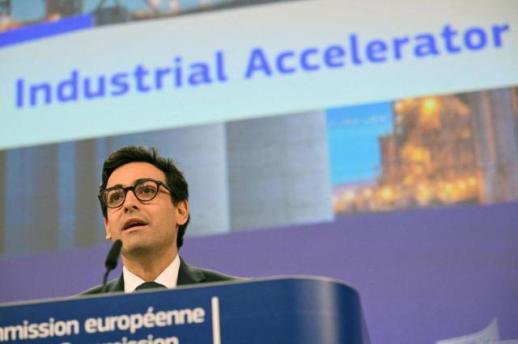 Hyundai, Kia face challenges amid EU's push for local EV production SEOUL, March 6 (AJP) - Auto industry workers are closely monitoring developments as the European Union unveiled its Industrial Accelerator Act (IAA) earlier this week, a proposal aimed at boosting local manufacturing by imposing stricter requirements on global automakers. In a press release out on Wednesday, the European Commission said it has "adopted a legislative proposal to increase demand for low-carbon, European-made technologies and products," adding that IAA will "boost manufacturing, grow businesses, and create jobs in the EU, while supporting industry's adoption of cleaner, future-ready technologies." The commission also said the act "sets a goal to increase manufacturing's share of EU GDP to 20 percent by 2035." Once fully implemented, the IAA would require South Korean automakers to produce at least 70 percent of their vehicles' parts in the EU to be eligible for subsidies offered for eco-friendly vehicles. The country's largest automaker Hyundai Motor Group, which manufactures more than 80 percent of its European EV exports in South Korea, now needs to adjust to comply with the new rules under the IAA. The commission indicated that these requirements would cover "selected strategic sectors" such as steel, cement, aluminum, cars, and net-zero technologies, with the possibility of being expanded to "other energy-intensive sectors such as chemicals." The IAA also sets rules on foreign direct investment. If a country controlling more than 40 percent of global production capacity invests over 100 million euros in Europe, it must ensure at least half of its workforce are EU workers, limit foreign ownership to below 50 percent, and meet other obligations such as technology transfers. "Most automakers including Hyundai and its affiliate Kia export the majority of the EVs they sell in Europe rather than assembling them locally," an industry official said. "Unlike South Korea, which provides subsidies regardless of where a vehicle is made, Europe's proposed rules would effectively disadvantage imported vehicles." Hyundai and Kia sold 183,912 electric vehicles in Europe last year, but locally produced models stood at about 31,722 units, accounting for just a 17.2 percent of the total. Hyundai currently operates two manufacturing facilities in Europe — in Nošovice, the Czech Republic and Izmit, Türkiye — while Kia has one in Žilina, Slovakia. But their production capacity remains heavily concentrated on internal combustion models, while key EVs such as the Ioniq 5 and 6 and the EV5, EV6 and EV9 are all produced in South Korea and exported to Europe. The two automakers plan to gradually expand the production of EV models in Europe. Hyundai plans to begin mass production of the Ioniq 3 in the Czech Republic in August and convert its plant in Türkiye to EV production, targeting an annual capacity of 200,000 units. Kia already began mass production of the EV4 in Slovakia in August last year, with plans to rapidly expand its EV production by 2027. "We will speed up the transition of our plants for EV production ahead of the IAA's implementation," said a Hyundai staffer. "At the same time, we aim to maintain our market share by offering a broader range of EVs tailored to European motorists." However, a long legislative road still lies ahead for the implementation of the IAA, as it must be negotiated and approved by both the European Parliament and the Council of the European Union before adoption. 2026-03-06 14:30:20
 -
 'I Am Solo' Star Mr. Kim Says He’s Dating Season 28’s Soon-ja Mr. Kim from the "I Am Solo" franchise said he is dating Soon-ja from Season 28. On the 6th, a live broadcast on YouTube channel "Chonjang Entertainment TV" featured cast members from SBS Plus' "I Am SOLO, Love Continues." Mr. Kim said "many people already know," and confirmed he is "dating Soon-ja from Season 28." He said they reconnected at a pop-up event for Season 28's Young-soo, talked at length and grew closer. He said they stayed in touch, and that he was the one who first worked up the courage to speak up about his feelings. Mr. Kim also referred to comments he made during his self-introduction on "I Am Solo," saying he had said long-distance relationships and dating someone with a child could be difficult. He said he had tried long-distance dating before and found it was not easy, and that he had never dated someone with a child, calling it unfamiliar territory. He said Soon-ja may have come across as "mean" on the show, but is not like that in real life and is "pretty." He added that she is smart, cute and affectionate. He closed by saying the phrase "people date within their own circle" fits them, and asked viewers not to insult Soon-ja, saying if anyone needs to be criticized, they should direct it at him instead.* This article has been translated by AI. 2026-03-06 14:12:15