
Journalist

Joshua Elves-Powell
-
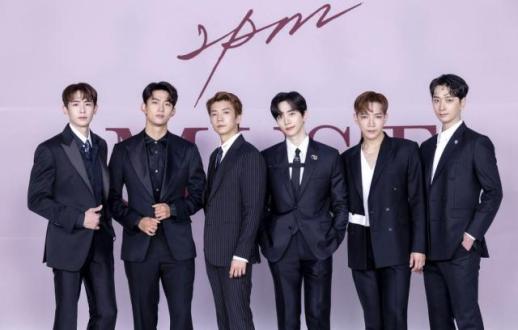 2PM to return with full-group concert in Korea coming August SEOUL, May 11 (AJP) - K-pop group 2PM will return to the South Korean stage as a full six-member act this August for its first domestic solo concert in three years, management agency JYP Entertainment said Monday. The group will hold the 2026 2PM Concert THE RETURN in INCHEON on August 8 and 9 at the Inspire Arena in Incheon. The performances will mark the first solo show in South Korea featuring all six members since September 2023, when the group held a concert to commemorate its 15th anniversary. Debuting in 2008, 2PM became one of the most recognizable male groups in the region with its athletic choreography and signature beast idol image. The group built a large fanbase across Asia through hits such as Heartbeat, Hands Up, and My House. The Incheon concerts were announced during the group's performances in Japan last weekend. The Tokyo Dome shows marked the first time the group had returned to the venue in 10 years following a hiatus for mandatory military service. During the Japanese performances, 2PM played a selection of South Korean and Japanese songs released throughout its career. The event also served to celebrate the 15th anniversary of the group's Japanese debut. The group ended the show with the song I'll Be Back, echoing a promise made during its previous Tokyo Dome concert that it would return to the venue. Further details regarding ticket sales for the Incheon concerts will be released later through the group's official social media channels. 2026-05-11 14:18:07
 -
 Woori Bank Issues 300 Billion Won Green Bonds, Leading the Banking Sector Woori Bank has become the first commercial bank this year to issue Korean-style green bonds, accelerating its efforts in ESG finance. The bank raised a record 300 billion won, reinforcing its position as a leader in the green finance market. On May 11, Woori Bank announced that it issued a total of 300 billion won in Korean-style green bonds through the "Korean-style Green Bond Issuance Interest Support Program" organized by the Ministry of Climate, Energy, and Environment and the Korea Environmental Industry and Technology Institute. The issuance consists of 150 billion won with a three-year maturity and 150 billion won with a one-year maturity. This marks the first instance among commercial banks this year and is the largest single issuance to date. Following the issuance of 150 billion won in Korean-style green bonds in both 2024 and 2025, this latest 300 billion won issuance brings the bank's total to 600 billion won. This amount positions Woori Bank as the leader in cumulative issuance of Korean-style green bonds among banks since 2022. The funds raised will be fully allocated to support eco-friendly projects, including solar and wind energy production and waste-to-energy recovery projects. Woori Bank plans to solidify its leading position in the green finance market and accelerate its expansion in ESG finance. Kang Han-na, head of Woori Bank's funding department, stated, "This issuance of Korean-style green bonds is an opportunity to reaffirm Woori Bank's commitment to ESG management in the market. As the role of finance in the transition to eco-friendliness becomes increasingly important, we will continue our responsible ESG initiatives."* This article has been translated by AI. 2026-05-11 14:16:16
 -
 IBK Industrial Bank Receives Presidential Award for Family Policy Contributions IBK Industrial Bank announced on May 11 that it received a Presidential Award for Family Policy Contributions at the '2026 Family Month Commemoration Ceremony' hosted by the Ministry of Gender Equality and Family.This award recognizes the bank's ongoing social contribution efforts benefiting 2.87 million marginalized individuals, including small business workers and vulnerable youth.The award cited the bank's diverse social contribution activities, ranging from basic living support to childcare and caregiving. Notable initiatives include the 'IBK Scholarship and Medical Expense Support' to alleviate educational and medical costs for small business workers and their families, the 'IBK Hope Narae' program assisting independent and socially withdrawn youth, and the 'IBK Everyone Concert' aimed at enhancing cultural accessibility for multicultural families and foreign workers.The 'IBK Hope Narae' program has notably led to successful outcomes, including admissions to dental and law graduate schools and employment in the financial sector.An IBK official stated, "This award is particularly meaningful as it recognizes our sincere efforts to support marginalized neighbors. We will continue to serve as a robust safety net in our society and strive to assist those in need of social consideration." 2026-05-11 14:14:46
 -
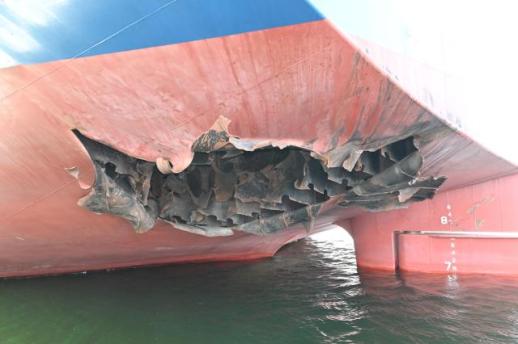 Seoul stays cautious on blaming Iran over HMM Hormuz attack SEOUL, May 11 (AJP) - South Korean Foreign Minister Cho Hyun maintained a cautious stance Monday, stopping short of directly blaming Iran for the attack on a Korean-operated cargo ship near the Strait of Hormuz despite the government’s initial conclusion that the vessel had come under an external strike. “There are still things that need to be studied before making a judgment,” Cho told reporters, signaling Seoul’s reluctance to escalate tensions before the investigation is fully completed. His remarks came a day after the foreign ministry disclosed that two “unidentified airborne objects” struck the stern of the Panama-flagged cargo ship HMM Namu last week, triggering an explosion and fire aboard the vessel. The ship, operated by HMM, was carrying 24 crew members, including six South Koreans. No casualties were reported. Additional analysis is underway on engine fragments recovered from debris found at the scene. Seoul’s calibrated response reflects the delicate diplomatic balancing act facing South Korea as tensions surrounding the Strait of Hormuz intensify. South Korea remains heavily dependent on Middle Eastern crude imports and has sought to avoid being drawn directly into confrontation between Washington and Tehran despite its alliance with the United States. The foreign ministry summoned Iranian Ambassador to South Korea Saeed Koozechi on Sunday to explain the findings, Cho said, adding that the investigation results had also been shared with Washington. Koozechi did not speak publicly upon arriving at the ministry. According to Seoul officials, First Vice Foreign Minister Park Yoon-joo briefed the Iranian envoy on the preliminary investigation outcome. U.S. President Donald Trump earlier claimed that Iran had “taken some shots” at the HMM vessel and other targets in the region. The Iranian Embassy in Seoul strongly denied any involvement, saying Tehran “firmly and categorically” rejects allegations linking its military to the incident. The attack came just hours after Washington launched — and later suspended — “Project Freedom,” a U.S.-led operation aimed at assisting commercial ships stranded around the strategic waterway. Tehran condemned the operation as a violation of the ceasefire framework that has nominally remained in place since early April. The incident is expected to surface during talks between South Korean Defense Minister Ahn Gyu-back and U.S. Defense Secretary Pete Hegseth in Washington on Monday local time. The trip marks Ahn’s first visit to the United States since taking office. 2026-05-11 14:14:09
 -
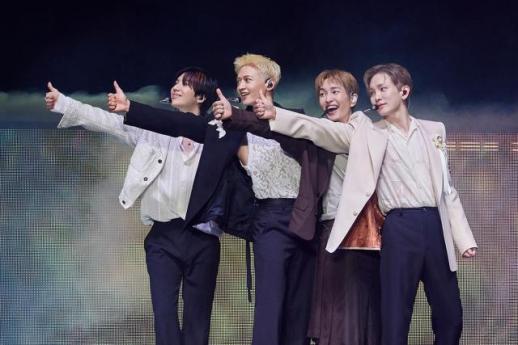 SHINee to return with new EP 'Atmos' on June 1 SEOUL, May 11 (AJP) - SHINee, one of K-pop's most influential bands known for its experimental music and trend-setting performances, will return on June 1 with its sixth mini album “Atmos,” SM Entertainment said Monday. Debuting in 2008 under SM Entertainment as a five-member group, SHINee built a strong global fanbase with hits such as “Replay,” “Ring Ding Dong” and “Sherlock,” while earning recognition for pushing the boundaries of K-pop performance, fashion and contemporary pop sound. The group's six-track EP, including the title song "Atmos," will be released at 6 p.m. (0900 GMT) through major music streaming platforms on June 1. The album marks the band’s first major release in a year following the 2025 single "Poet | Artist." Ahead of the release, SHINee will hold its eighth solo concert series, "The Trilogy I - 2026 SHINee WORLD VIII : ," from May 29 to May 31 at KSPO DOME in Seoul’s Olympic Park. Pre-orders for the album began Monday through online and offline music retailers. 2026-05-11 14:12:50
 -
 Doosan Fuel Cell Shares Surge 12% on North American Data Center Demand Doosan Fuel Cell has seen its shares rise over 12% during trading, reaching an all-time high amid expectations of increased demand for data centers in North America. According to the Korea Exchange, as of 1:53 PM, Doosan Fuel Cell shares were trading at 97,000 won, up 10,700 won (12.40%) from the previous trading day. At one point, the stock peaked at 103,800 won, marking a record high. Analysts attribute the stock's rise to growing demand for phosphoric acid fuel cells (PAFC) aimed at North American data centers and the anticipated visibility of solid oxide fuel cell (SOFC) stack exports. Jung Hye-jung, a researcher at KB Securities, stated, "Demand for PAFC in North American data centers appears to be stronger than previously expected, and SOFC stack exports are likely to become visible soon. Considering that we are currently in discussions for new orders with multiple clients for North American data centers, additional orders could be possible in the first half of the year." Expectations for improved performance are also rising. Doosan Fuel Cell reported a preliminary revenue of 144.8 billion won for the first quarter of this year, a 45.2% increase compared to the same period last year. Although the company continued to incur an operating loss of 1.3 billion won, this figure exceeded market expectations. The increase is attributed to revenue growth from the domestic Clean Hydrogen Power Generation Obligation (CHPS) project and the effects of SOFC deliveries for the Haichangwon project. Jung noted, "While one-time factors such as the reversal of provisions in the SOFC sector and profits from the sale of retired electrodes were partially reflected, the expansion of demand for data centers in North America will serve as a medium- to long-term growth driver."* This article has been translated by AI. 2026-05-11 14:06:22
 -
 Controversy Erupts Over Inappropriate Subtitle on Lotte Giants' YouTube Channel A controversy has arisen over inappropriate subtitle editing on the official YouTube channel of the Busan Lotte Giants, 'Giants TV.' In response to the backlash, the production team has removed the problematic segment. On May 11, a video titled 'Responding to Park Se-woong's Strong Performance' was uploaded to the 'Giants TV' channel. In the video, a segment at 7 minutes and 9 seconds featured a uniform with the name of player Noh Jin-hyuk, accompanied by the subtitle 'Infinite Applause.' Notably, the subtitle was edited in a way that obscured the player's name, making it appear as 'Noh Mu-han Applause,' which drew attention. As the clip circulated on online communities and social media, some users raised suspicions that the expression was intentionally reminiscent of the far-right community 'Ilbe.' The controversy intensified, particularly because Noh Jin-hyuk is from Gwangju, and the opposing team at the time was the KIA Tigers, also based in Gwangju. Users commented, "It's disrespectful to Noh Jin-hyuk; this is insane," "This was definitely intentional," "There was no need for 'infinite applause' to be there," "Ilbe is a mental illness," and "If you have time, please report the Lotte Giants YouTube channel." As the controversy grew, 'Giants TV' issued an apology through the comments section of the video. The channel stated, "We sincerely apologize for the discomfort and concern caused by the subtitle expression in today's uploaded video. The problematic subtitle was used without fully recognizing the potential associations during the filming and editing process, and it was removed immediately upon confirmation of the issue." They added, "We take the failure to review more carefully seriously and will thoroughly check the entire content creation and review process to prevent a recurrence of such incidents. We deeply apologize once again for the concern caused."* This article has been translated by AI. 2026-05-11 14:03:13
 -
 California Governor Newsom Announces Free Diaper Program for Low-Income Families California Governor Gavin Newsom, a prominent contender for the 2028 presidential election, has unveiled a free diaper program aimed at addressing rising living costs. The initiative will provide 400 diapers to each newborn, with a total of 40 million diapers to be distributed this year. This announcement comes in conjunction with Mother's Day on May 10, seen as a strategic move to engage mothers as voters. According to the Wall Street Journal, during the announcement on May 8, Newsom stated that all newborns discharged from hospitals in California will receive 400 diapers. Given that a newborn typically uses 8 to 10 diapers a day, this supply will last between one month and 50 days. The newspaper reported that a pack of 84 diapers sells for $25. In a press conference, Newsom emphasized, "This is not a political slogan; it is a tangible provision of a box of diapers." He added, "California aims to reduce the cost of raising a family by providing free school meals, free childcare for four-year-olds, and ensuring that newborns leave the hospital with essential items. Every baby in California deserves a healthy start in life, which means guaranteeing access to necessities from day one." However, not all newborns will receive diapers immediately. Newsom noted that the 40 million diapers planned for this year represent only 25% of the ultimate goal. Priority will be given to mothers participating in the Medicaid program. California plans to purchase 80 million diapers next year and has requested $12.5 million from the state legislature for this purpose. The budget for this year's diaper program is approximately $7.4 million. The Associated Press reported that diapers will primarily be distributed through 65 to 75 hospitals that mainly serve low-income patients. Additionally, California is collaborating with the nonprofit organization Baby2Baby to produce diapers under the brand name "Golden State Start." This initiative reflects California's declining birth rate. Last year, 394,294 newborns were born in the state, a 20% decrease compared to a decade ago, attributed to high housing costs driving middle-class families to relocate to other states. In the U.S., Tennessee and Delaware are also running free diaper distribution programs for low-income families participating in Medicaid. In Tennessee, families with children under two can receive 100 diapers per month, while Delaware offers 80 diapers and one pack of wipes weekly for the first 12 weeks after birth. The Hill, a publication focused on Congress, noted that Newsom announced this new cost-of-living policy ahead of Mother's Day weekend, highlighting that he is viewed as a leading Democratic candidate for the 2028 election, where cost of living will be a significant issue. Fox News criticized the initiative, stating that Newsom is proposing a tax-funded free diaper program amid a budget tightening in California. Meanwhile, the Arab media outlet Al Jazeera pointed out the excessive costs of childbirth and parenting in the U.S. It reported that the average cost of a vaginal delivery is $15,178, while a cesarean section averages $19,292. Alaska has the highest childbirth costs, with vaginal deliveries reaching $29,152 and cesarean sections $39,532. Costs are even higher for non-partner hospitals, with Nevada reporting $49,699 for vaginal deliveries and $72,604 for cesarean sections. Furthermore, childcare expenses in the U.S. account for 40% of disposable income for couples, marking one of the highest rates globally. 2026-05-11 14:01:12
 -
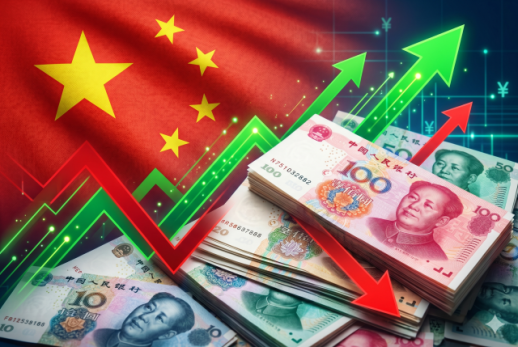 ASIA INSIGHT: China's inflation signal, the Strait of Hormuz, and Korea's strategic crossroads For much of the past two years, the dominant concern surrounding the Chinese economy was not inflation but stagnation. Economists spoke openly of deflationary pressure, collapsing real-estate confidence, weakened domestic consumption and a manufacturing slowdown severe enough to shake the foundations of the world’s second-largest economy. Beijing’s policymakers responded with cautious monetary easing, infrastructure stimulus and selective industrial support, while global investors questioned whether China’s long era of rapid expansion had reached structural exhaustion. Yet history rarely moves in straight lines. Economies that appear frozen can suddenly reawaken under the pressure of geopolitics, energy shocks and strategic competition. China’s latest inflation figures suggest precisely such a turning point. April’s rise in the Consumer Price Index and the sharper acceleration in Producer Price Inflation may appear modest by Western standards, but in the Chinese context they are deeply significant. They indicate that China is moving away from the deflationary anxiety of the post-pandemic era and entering a far more complicated phase: a return of industrial inflation driven not by consumer exuberance, but by global strategic instability. At the center of this transformation lies a triangle of forces now shaping the international economy. The first is America’s prolonged high-interest-rate regime. The second is the geopolitical instability spreading across the Middle East and the Strait of Hormuz. The third is the rebound of Chinese manufacturing power. Together, these three forces are redefining the economic architecture of Asia and perhaps the wider world. China’s recent inflationary movement cannot be understood merely as a domestic monetary phenomenon. It is inseparable from rising oil prices, disrupted shipping expectations, tightening global supply chains and the renewed militarization of trade routes. The world economy is once again learning an old historical lesson: when the arteries of energy and commerce become unstable, inflation returns with extraordinary speed. China remains the workshop of the modern world. Even after years of supply-chain diversification, Western companies continue to rely heavily on Chinese industrial ecosystems for intermediate goods, rare earth processing, electronics components, chemicals, steel products and consumer manufacturing. When production costs rise inside China, the effects ripple outward across continents. The rise in Chinese producer prices therefore carries implications far beyond Beijing or Shanghai. It affects semiconductor fabrication in South Korea, automobile assembly in Germany, electronics distribution in Southeast Asia and consumer pricing in the United States. Inflation inside China increasingly becomes inflation exported to the world. This matters because the global economy has entered an era fundamentally different from the one that dominated the decades after the Cold War. From the 1990s through the late 2010s, globalization functioned largely as a deflationary system. Cheap labor, stable shipping lanes and expanding international trade continuously pushed prices downward. China served as the anchor of that system. Today the opposite dynamic is emerging. Strategic rivalry, military tensions, technological decoupling and energy insecurity are creating a new inflationary order. Production is becoming more expensive not because of excessive consumer demand, but because the geopolitical cost of maintaining the global economy is rising. No place illustrates this transformation more clearly than the Middle East. The Strait of Hormuz is not merely a narrow body of water. It is one of the central pressure points of civilization. Roughly a fifth of the world’s oil supply passes through this corridor. Liquefied natural gas shipments from Qatar also move through these waters toward Asia and Europe. Any instability there immediately affects shipping insurance rates, freight costs, energy futures and ultimately consumer prices. The escalating confrontation involving Iran, American military deployments and regional proxy conflicts has therefore become more than a political crisis. It is now an economic accelerator. China, as the world’s largest importer of energy and raw materials, is especially vulnerable to such disruptions. Rising oil prices feed directly into factory costs, transportation expenses and industrial production. Chinese manufacturers already operating under thin margins must either absorb the higher costs or pass them onward through global supply chains. That process now appears to be underway. Yet China’s situation is paradoxical. Inflationary pressure is arriving at the same moment as industrial recovery. Export orders have improved in several sectors. Manufacturing activity has stabilized. Government-led investments in electric vehicles, artificial intelligence infrastructure, green technology and semiconductor development have helped revive industrial momentum. In another era, such recovery might have been celebrated unambiguously. But today’s recovery is occurring under conditions of strategic fragmentation. Chinese policymakers face a delicate balancing act. If they stimulate aggressively, inflationary pressures may intensify and capital outflows could accelerate. If they tighten too early, the fragile recovery could weaken before domestic demand fully stabilizes. Meanwhile, demographic decline, youth unemployment and property-market instability continue to weigh heavily on long-term confidence. The result is an economy suspended between revival and vulnerability. Western analysts sometimes underestimate the psychological and historical dimension of China’s current posture. China’s leadership does not view economic management solely through quarterly growth statistics. It increasingly frames economic resilience as part of national security and civilizational continuity. The memory of foreign intervention, maritime vulnerability and industrial dependence remains deeply embedded in the strategic thinking of Beijing. This is why China continues investing heavily in manufacturing capacity despite global concerns about overproduction. Beijing sees industrial strength not simply as an economic asset but as geopolitical insurance. In this context, the rebound of Chinese manufacturing becomes more than a business cycle. It becomes part of a broader contest over the future structure of global power. The United States, meanwhile, faces its own contradictions. The Federal Reserve’s high-interest-rate policy was initially designed to combat domestic inflation. Yet prolonged monetary tightening has created secondary consequences across the world economy. Higher American rates strengthen the dollar, pressure emerging-market currencies and increase debt-servicing burdens globally. Countries dependent on imported energy or dollar-denominated financing face especially acute vulnerability. Asia sits at the intersection of these pressures. A stronger dollar raises import costs. Higher oil prices worsen trade balances. Slowing Western demand threatens exports. Yet regional governments simultaneously face pressure to invest more heavily in industrial transformation, technological competitiveness and energy security. South Korea illustrates these tensions with particular clarity. The Korean economy is deeply integrated into both American and Chinese systems. It relies on exports to China while maintaining strategic alignment with the United States. It depends heavily on imported energy while competing globally in high-value manufacturing. This dual exposure makes Korea exceptionally sensitive to shifts in global inflation and geopolitical instability. When Chinese producer prices rise, Korean firms immediately feel the impact through intermediate goods and supply-chain costs. Semiconductor producers, petrochemical companies, battery manufacturers and automobile suppliers all face rising input expenses. At the same time, elevated American interest rates place downward pressure on the Korean won and complicate domestic monetary policy. Korea therefore confronts a strategic dilemma that is economic, geopolitical and civilizational all at once. The nation can no longer rely solely on the export-driven assumptions that powered its rise during the late twentieth century. The old model was built on stable globalization, relatively cheap energy and predictable trade routes. That world is fading. The emerging world is one of fragmentation, technological blocs, strategic supply chains and recurring geopolitical shocks. This requires a profound shift in Korean thinking. First, Korea must strengthen its energy resilience. The events surrounding the Strait of Hormuz demonstrate how vulnerable import-dependent economies remain to external disruptions. Korea should accelerate diversification of energy sources, strategic reserves and next-generation energy technologies. Nuclear energy, hydrogen infrastructure and advanced battery systems must be viewed not only as industrial opportunities but as national security priorities. Second, Korea must deepen technological sovereignty. The global semiconductor industry increasingly resembles a geopolitical battlefield rather than a conventional market. Artificial intelligence, advanced chips, quantum computing and strategic materials now function as instruments of state power. Korea cannot remain merely an efficient manufacturing base. It must become a strategic innovator capable of controlling core technologies and critical supply networks. Third, Korea must rethink the meaning of economic security itself. For decades, efficiency was the dominant principle of globalization. Companies minimized costs, optimized logistics and relied on just-in-time supply chains. Today resilience matters as much as efficiency. Governments and corporations alike are rediscovering the value of redundancy, strategic reserves and domestic industrial capacity. This shift may appear expensive in the short term, but the cost of fragility is proving far greater. The broader global economy now stands at an inflection point comparable in some respects to the oil crises of the 1970s. Then, as now, geopolitical conflict in the Middle East triggered inflationary pressure, financial instability and structural economic transformation. Yet the present situation may be even more complex because it coincides with technological revolution, demographic transition and intensifying great-power rivalry. Artificial intelligence, automation and digital infrastructure are reshaping labor markets and production systems at extraordinary speed. Meanwhile aging populations across developed economies are reducing labor supply and increasing fiscal burdens. The old growth engines of globalization are weakening just as new strategic conflicts emerge. China’s inflation data must therefore be interpreted within this larger historical framework. It is not merely a statistical development. It is part of a broader transition from the age of hyper-globalization to an era of strategic economics. The consequences of that transition will not be evenly distributed. Countries with strong industrial capacity, technological adaptability and social cohesion may emerge stronger. Nations overly dependent on imported energy, fragile supply chains or excessive financial leverage may struggle severely. Korea possesses many of the strengths required for this new era: advanced manufacturing, world-class technology companies, educational achievement and cultural influence. Yet it also faces structural vulnerabilities including demographic decline, political polarization and heavy external dependence. The challenge ahead is therefore not simply economic management. It is strategic adaptation. Historically, Korea has often thrived under pressure. From postwar devastation to industrial transformation, the nation repeatedly converted crisis into opportunity through discipline, education and institutional resilience. The question now is whether Korea can once again reinvent itself for a more fragmented and uncertain century. China’s current inflationary movement offers a warning, but also a lesson. The warning is that geopolitical instability can rapidly reshape economic reality. Energy shocks, supply disruptions and strategic rivalry are no longer temporary anomalies; they are becoming structural features of the international system. The lesson is that industrial capability still matters profoundly. Despite all the talk of digital economies and virtual finance, real power continues to depend upon factories, energy systems, logistics networks and technological infrastructure. Nations that lose control over these foundations risk losing strategic autonomy itself. For Korea, this means embracing a dual vision: remaining globally connected while becoming strategically resilient. The country must continue engaging international markets while simultaneously protecting critical industries and strengthening domestic capabilities. It must deepen alliances without becoming economically overdependent on any single bloc. It must pursue innovation while preserving social stability. Above all, Korea must avoid complacency. The world entering the second half of the 2020s will likely be more volatile than the world that emerged after the Cold War. Inflation may remain structurally higher. Geopolitical tensions may become more persistent. Economic fragmentation may accelerate further. In such an environment, wisdom becomes as important as growth. Economic policy can no longer focus solely on quarterly indicators or short-term political cycles. Strategic patience, institutional credibility and long-range national planning will matter increasingly. Ancient civilizations understood this principle well. The old Persian empires recognized that whoever controlled the trade corridors controlled the flow of wealth and influence. The Silk Road was not merely commerce; it was power organized through geography. Today the Strait of Hormuz serves a similar function in modern form. What happens there affects factories in Shenzhen, stock markets in Seoul, inflation expectations in Washington and energy prices in Europe. The world remains interconnected, but the nature of that interconnectedness has changed. It is now more fragile, more contested and more strategic. China’s inflation numbers are therefore not isolated economic data points. They are signals from the fault lines of a changing world order. For Korea, the appropriate response is neither panic nor passivity. It is preparation. Preparation through technological leadership. Preparation through energy security. Preparation through industrial resilience. Preparation through strategic clarity. The coming decade may test the foundations of the global economy more severely than any period since the end of the Cold War. Nations capable of balancing openness with resilience will likely endure. Those trapped between dependency and indecision may struggle. Korea still possesses the capacity to choose its future. But the window for strategic preparation is narrowing. 2026-05-11 13:58:22
 -
 Korea Deposit Insurance Corporation Resumes Sale of MG Insurance The Korea Deposit Insurance Corporation has initiated the process to resell MG Insurance, previously known as MG Non-Life Insurance. Following a failed auction last month where Korea Investment Holdings was the sole bidder, Heungkuk Fire & Marine Insurance is reportedly considering participation in the bidding, potentially altering the dynamics of the sale. On May 11, the Korea Deposit Insurance Corporation announced that it would conduct a re-announced public bidding for MG Insurance. This bidding process will take place from today until June 30. Interested potential buyers will undergo due diligence for about seven weeks before submitting their final acquisition proposals. The corporation has been gauging the interest of potential buyers since the previous auction failed. The earlier public sale of MG Insurance, which took place on April 16, ended without a successful bid as Korea Investment Holdings was the only participant. For a valid competitive auction, at least two bidders must participate. Heungkuk Fire & Marine Insurance is also reviewing its options to join the bidding for MG Insurance. If Heungkuk decides to bid, it could create a competitive environment that was previously absent with only Korea Investment Holdings involved. However, the final decision will depend on the results of the due diligence and the terms of acquisition. If valid competition is established in this re-announced bidding, the Korea Deposit Insurance Corporation plans to select a preferred bidder by mid-July. They may also consider a negotiated contract if necessary. Conversely, if no bids are received, the insurance contracts of MG Insurance will be transferred to five other insurance companies: Samsung Fire & Marine Insurance, DB Insurance, Hyundai Marine & Fire Insurance, KB Insurance, and Meritz Fire & Marine Insurance. 2026-05-11 13:56:57