
Journalist

Jun sungmin
-
 Hite Jinro CEO and Executives Buy 30,000 Shares to Promote Responsible Management Twenty executives at Hite Jinro, including CEO Jang In-seob, have initiated a stock buyback. This marks a new beginning for the company following a leadership change after 14 years, with Jang emphasizing responsible management to restore market confidence. Hite Jinro announced on May 18 that Jang purchased 5,000 shares, while eight other executives acquired a total of 10,831 shares. Additionally, 11 more executives plan to buy over 1,000 shares each by June, bringing the total to approximately 30,000 shares purchased by the management team. The decision to buy back shares reflects a serious acknowledgment of the current challenges. According to the Financial Supervisory Service's electronic disclosure system, Hite Jinro reported a consolidated operating profit of 55.9 billion won in the first quarter of this year, a 10.8% decrease from the same period last year. Revenue also fell by 3.6% to 590.8 billion won. Last year, Hite Jinro's consolidated revenue was 2.4986 trillion won, down 3.9% from the previous year, with operating profit dropping 17.2% to 172.3 billion won. The overall contraction in the alcoholic beverage market has impacted Hite Jinro as well. In this context, the executives' personal investments signal their confidence in the company's future. A Hite Jinro representative stated, "Despite the shrinking domestic liquor market and external cost pressures, we are expressing confidence in long-term growth through global market expansion. We expect to improve our performance by enhancing management efficiency and building our strength." Hite Jinro is also significantly increasing investments aimed at penetrating global markets. The company is set to complete its production facility in Vietnam in the second half of this year and is strengthening its lineup of export-oriented products, including fruit liqueurs that mix distilled spirits with fruit juice and sweeteners. Hite Jinro emphasized, "While solidifying our foundation through responsible management domestically, we will achieve growth through aggressive expansion internationally."* This article has been translated by AI. 2026-05-18 21:21:00
 -
 Meritz and Homeplus Bridge Loan Negotiations Stalled, MBK Partners' Intervention Needed Meritz Financial is considering a 100 billion won short-term bridge loan for Homeplus, but negotiations between the two parties remain at an impasse. Homeplus has proposed alternatives in an effort to reach an agreement, but analysts believe finding common ground is unlikely without a significant change in attitude from MBK Partners, the major shareholder. According to the financial investment industry on May 18, Homeplus suggested establishing a subordinate income right on trust real estate as an alternative to the joint guarantee condition demanded by Meritz from MBK Partners and its management. This proposal aims to offer additional real estate collateral instead of accepting the joint guarantee. Currently, most of Homeplus's key assets are tied up in trust collateral for senior financial institutions, including Meritz Financial, its largest creditor. This situation has effectively blocked Homeplus from securing additional funds through its assets. The investment banking (IB) sector has dismissed Homeplus's offer of subordinate income rights as a "meaningless deception," arguing that it does not provide any additional safety measures given that Meritz already holds senior control over the assets. An IB industry insider stated, "Given that Meritz already has senior control over the assets, offering subordinate rights on the same assets as collateral for a new loan of 100 billion won does not add any financial safeguards. It essentially asks Meritz to take on risk without a solid joint guarantee from MBK, which could lead to potential breaches of duty." The two sides are also at odds over the proposed interest rate of 6%. Homeplus argues that the short loan term makes the 6% rate burdensome, but market perspectives differ. Homeplus's liquidity crisis and financial situation have deteriorated significantly. A market observer noted, "MBK Partners, as the largest shareholder, bears the greatest responsibility for Homeplus's management decline, yet they are unwilling to take on any additional risks such as joint guarantees. Asking creditors, who are considering emergency support to prevent a liquidity crisis, to lower the interest rate to market levels of 6% is merely shifting the burden onto financial institutions." The uncertainty surrounding the sale of Homeplus Express, which is intended to fund the bridge loan repayment, is also a factor in Meritz's firm stance. Homeplus recently signed a main contract for the business transfer with Harim and is currently undergoing detailed due diligence. However, there is a possibility that the contract could be terminated during the due diligence process or that the sale could ultimately fall through before the final payment is made. Meritz stated, "We are fully aware of the potential impact on employment and have been doing our utmost to consider emergency funding support. However, the performance guarantee is necessary because the sale of Homeplus Express is within the controllable scope of the major shareholder, MBK, to prevent breaches of duty and persuade shareholders."* This article has been translated by AI. 2026-05-18 21:18:15
 -
 Samsung Union Leadership Faces Controversy Over Allowance Payments The leadership of the Samsung Electronics Union, which has announced a total strike, is embroiled in a controversy over its decision to amend union regulations to allow part of the union dues to be allocated as allowances for executive positions. According to industry sources, the union amended its regulations during a general meeting in March to permit a portion of the union dues to be designated as allowances for executives. The revised rules reportedly state that the chairman can allocate allowances up to 10% of the union dues, and if the executive team consists of eight members or fewer, the allowance funding can be set at up to 5% of the dues. With approximately 70,000 union members and monthly dues around 10,000 won, the union collects about 700 million won in dues each month. Even if only 5% is allocated for allowances, this amounts to 35 million won monthly. If the executive team consists of five to six members, each could receive several hundred thousand won in additional payments. The controversy has intensified because key executives, including Chairman Choi Seung-ho, are already receiving salaries from the company through a system that exempts them from working hours. Critics argue that the structure allowing union leaders to receive substantial allowances on top of their company salaries does not align with the expectations of union members. Particularly concerning is the timing of the regulation amendment, which coincided with a vote on whether to support strike actions. Some union members have raised suspicions that the details regarding the new allowances were not adequately explained before the vote. There are claims that this sensitive issue regarding the use of union dues was effectively pushed through amid the turmoil of a potential strike. Industry observers believe this controversy could undermine the union's justification for the strike. The push for increased performance bonuses and enhanced compensation has now shifted to a debate over the leadership's allowance, leading to criticisms that the struggle for better pay has devolved into a controversy over executive privileges. In fact, the Korean GM union faced internal conflict last year when former executives were accused of misappropriating 120 million won from a fund intended for tax payments, leading to police complaints. Concerns have also been raised about a lack of checks and balances within the union. With the delegate council not properly constituted, decision-making and fund allocation are concentrated within a small executive committee, raising fears of excessive power being held by the leadership. There are reports of members from the DX division considering leaving the union, as dissatisfaction grows over being sidelined in discussions about performance bonuses that primarily focus on the DS division. An industry insider stated, "To gain legitimacy for the strike, the allocation of union dues must be transparent. If the leadership fails to clearly address the controversy over high allowances, internal distrust could destabilize the union before the total strike even begins."* This article has been translated by AI. 2026-05-18 21:16:00
 -
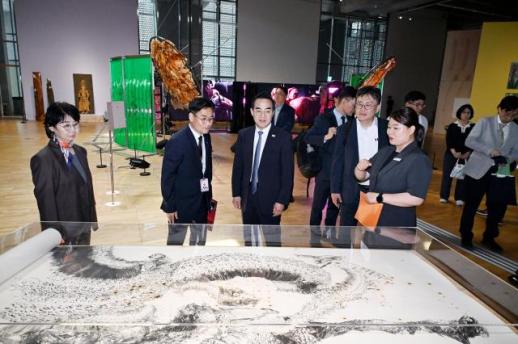 Minister Park Hong-keun Pledges Support for 5·18 Veterans and Families Park Hong-keun, Minister of the Ministry of Planning and Budget, stated on May 18 that he will intensify efforts to support veterans and families of the May 18 Democratic Uprising throughout their lives. After attending the 46th anniversary ceremony of the May 18 incident in Gwangju, Minister Park visited the May 18 Memorial Culture Center and held a meeting with representatives of veterans' organizations. During the meeting, leaders of the veterans' organizations proposed the construction of a central headquarters and effective promotion of May 18 memorial projects. Currently, the May 18 organization is the only legal veterans' group without a central headquarters, and representatives agreed on the necessity of establishing one for stable operations. In response, Minister Park said, "We will actively consider the construction of a central headquarters and pay more attention to support across all areas of life, including economic assistance, medical services, education, and employment." He also promised to review the voices raised during the meeting with relevant departments and incorporate them into next year's budget proposal. Later that afternoon, Minister Park visited the National Asia Culture Center and the restoration site of the former Jeonnam Provincial Office to gather opinions from local artists and cultural stakeholders. He revealed plans to enhance the symbolic significance and accessibility of the culture center through new projects, including the 'Space of Light' initiative. Minister Park expressed his appreciation for the completion of the restoration project of the former Jeonnam Provincial Office, a site of democratic history, stating, "I find it meaningful that we are opening an exhibition hall today. We must continue to support it to faithfully reflect its historical value and significance." He praised the culture center for establishing itself as a leading multi-cultural facility in the country, fulfilling functions from performances to exhibitions, creation, and cultural exchanges. He emphasized that the role of the culture center is becoming increasingly important for the development of local culture and the expansion of cultural enjoyment among the public.* This article has been translated by AI. 2026-05-18 21:13:42
 -
 Seoul Mayor Candidate Jung Won-o's Housing Promises Lack Concrete Plans As elections approach, politicians often make grand promises, citing figures in the billions and hundreds of thousands. However, what citizens truly want to know is not the size of these numbers but how they will become a reality. The critical questions are how, where, and when these plans will be implemented. On May 18, Jung Won-o, the Democratic Party's candidate for Seoul mayor, announced his housing policy for young people and newlyweds in front of Seoul City Hall. The main points were clear: an expansion of monthly rent support, 10,000 affordable homes for newlyweds, 30,000 public rental units, and 50,000 youth rental homes, with a total of 87,000 units to be supplied and started by next year. At first glance, this seems like an ambitious plan. The acknowledgment of the struggles faced by young people and newlyweds in dealing with high rents and housing prices is commendable, as many in Seoul are delaying marriage, forgoing childbirth, and giving up on their futures due to these pressures. However, good intentions do not equate to effective policies, especially for a candidate for mayor. The mayor of Seoul is not just a civic activist or a district chief; it is a position that requires managing the largest administrative organization in South Korea. Therefore, the design of policies is more important than goodwill. The first question that arose during Jung's press conference was straightforward: where will these units be built? While he promised 87,000 units, there was little specific information about where they would be located. There was no roadmap detailing which areas would see new construction, how many units would be built at each site, or the methods to be used. Although figures were provided—60,000 units from redevelopment projects, 7,000 from public rental reconstruction, and 20,000 from purchased rentals—the crucial question of 'where' remained unanswered. The second question is about timing. Jung repeatedly mentioned the goal of 87,000 units by next year. However, upon closer examination, many of these units are based on the start of construction rather than completion. For citizens, the expectation of supply typically means homes that are ready for occupancy, but in administrative terms, 'start of construction' and 'occupancy' are entirely different concepts. Redevelopment and reconstruction involve a lengthy process that includes resident consent, formation of associations, reviews, permits, relocations, and construction. Just because a press conference was held at City Hall does not mean construction will begin the next day. Particularly, the reconstruction of aging public rental units is complicated by issues related to resident relocation and budget constraints, making it difficult to expedite. This raises the question: is it really feasible to achieve this by next year? The third question is about the methodology. Jung stated he would restore the Seoul Housing Corporation (SH) to its original role as a housing welfare agency, criticizing the previous mayor Oh Se-hoon for utilizing SH for projects like the Seoul Ring and Han River Bus, which diluted its primary function. This is a clear political differentiation. However, this raises further questions. If SH is to be reverted to a housing welfare agency, how will the necessary funding be secured? What will be the costs associated with the 20,000 purchased rental units, and how will the financial burdens arising from the expansion of public rentals be managed? If he criticized the Seoul Ring and Han River Bus projects, he should also explain how much of their budgets will be redirected to actual housing resources. Managing Seoul is more complex than it appears. The city already operates within a finely tuned system that does not function solely based on the will of one mayor. Conversely, this means that the mayor must present a clear blueprint for what they intend to do for the system to operate effectively. Budgeting, SH, urban planning, resident consultations, and cooperation with the central government must all align precisely. Thus, a mayoral candidate's press conference is evaluated not by numbers but by details. Jung's announcement on this day conveyed a relatively clear policy philosophy focused on housing welfare for young people and newlyweds, strengthening public rentals, and redefining SH's role. His intent to differentiate from Oh Se-hoon's private sector-focused supply approach was also evident. However, philosophy and execution are two different matters. What was felt at the press conference was a sense of uncertainty regarding the execution plans rather than confidence in the numbers. While promises were made, there was a need for explanations to the most pressing questions from citizens: 'where, when, and how.' Seoul citizens are no longer easily swayed by slogans. The issues of housing prices and rents in Seoul are matters of life and survival, making residents more discerning. The larger the promises, the more detailed the scrutiny they require. Politicians can make promises, but being the mayor of Seoul requires more than just promises. A clear blueprint must be presented. What the citizens of Seoul want to see now is not just numbers but tangible realities.* This article has been translated by AI. 2026-05-18 21:08:32
 -
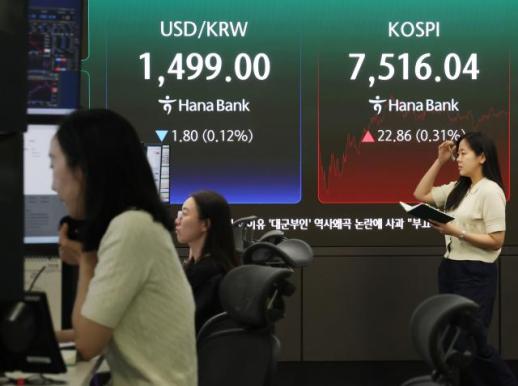 KOSPI Plummets Amid Rising Interest Rate Fears, Individual Investors Bet Big The South Korean stock market experienced another severe "rollercoaster" day on May 18. Fears of rising interest rates from the U.S. led to a sharp drop in the early trading session, prompting concerns of a "Black Monday" akin to last week's "Black Friday." However, the fear of rising rates did not deter individual investors, who have made over 32 trillion won in net purchases over the past eight trading days. On this day, they contributed more than 2 trillion won in buying, helping to lift the index.Despite the rebound, the overall market sentiment remained subdued. Among the 948 stocks listed on the KOSPI, only 203 saw gains, while 688 declined, with 57 remaining unchanged. Notably, 110 stocks fell by more than 5%, indicating a more significant perceived loss.Nevertheless, individual investors aggressively pursued bargain buying. According to the Korea Exchange, they net purchased 2.2 trillion won in the stock market alone on this day. In contrast, foreign investors sold off 3.65 trillion won, while institutional investors bought 1.39 trillion won.Over the last eight trading days, individual investors' net purchases totaled 32.69 trillion won, while foreign investors sold off 35.73 trillion won during the same period. On May 15 alone, individual net purchases reached 7.23 trillion won. As the market continues to decline, individual investors are increasingly intensifying their bargain buying efforts.However, there are concerns that continued market declines could lead to increased risks of forced selling. According to the Korea Financial Investment Association, as of May 15, the amount of margin loans stood at 1.54 trillion won, with forced selling amounting to 37.5 billion won. Analysts suggest that if the index continues to fall, the volume of forced selling could increase, exacerbating the downward trend.While individual investors are actively engaging in bargain buying, some investors who bet on a market decline are facing significant losses. The KODEX 200 Futures Inverse 2X, a popular inverse product, recorded a -40.70% return over the past month. Similarly, the TIGER 200 Futures Inverse 2X posted a 40.48% loss during the same period. The repeated rebounds following sharp declines have also worsened the returns for those betting on a downturn, with the last two trading days showing returns of -1.7% and -1.6%, respectively.Analysts identify the surge in U.S. Treasury yields as a key factor driving volatility in global markets. The yield on the U.S. 10-year Treasury has surpassed 4.5%, while the 30-year yield has exceeded 5%, leading to a rapid spread of risk-averse sentiment. Concerns over the prolonged conflict in the Middle East and inflation pressures from rising oil prices are also contributing to market unease.The South Korean stock market has been affected by increased foreign selling, but semiconductor stocks have provided some support. As Samsung Electronics turned upward during trading, the KOSPI managed to reduce its losses and eventually reversed course. Analysts predict that the domestic market will continue to experience high volatility in the near term, influenced by U.S. interest rate trends, geopolitical developments in the Middle East, and labor issues at Samsung Electronics.Han Ji-young, a researcher at Kiwoom Securities, stated, "The market is expected to be exposed to macro uncertainties. The upcoming earnings results from NVIDIA, scheduled for later this week, could be a pivotal moment for improving market sentiment, particularly for semiconductor stocks."Seo Sang-young, a researcher at Mirae Asset Securities, noted, "The decline in the KOSPI was significantly reduced when Samsung Electronics turned upward amid news surrounding its labor issues. However, the recent surge in Treasury yields is likely to continue, making increased volatility in global markets inevitable."* This article has been translated by AI. 2026-05-18 21:06:00
 -
 Seoul Mayoral Candidates Focus on Youth Engagement Seoul mayoral candidates Jung Won-o of the Democratic Party and Oh Se-hoon of the People Power Party both engaged with young voters on May 18, aiming to capture the support of a demographic with a significant number of undecided voters. Jung held an event titled "Jung Won-o Goes: Interviewing Seoulites, Episode 9 - Youth Living in Seoul" in the afternoon at Cheonggyecheon in the Gwanghwamun area. The event was designed to hear the challenges faced by young people living in Seoul and included participation from a newlywed couple running a small sewing factory, startup representatives, and young individuals involved in urban planning. After listening to the attendees, Jung stated, "Seoul should not just be a city that survives but one that plans for the future and allows its residents to feel hopeful based on their hard work," promising to develop tailored support policies. Following the event, he moved to the front of Seoul City Hall in Jung-gu to announce his housing pledges for youth and newlyweds. His proposals include expanding the number of youth rent support recipients to 50,000, providing 10,000 affordable homes for newlyweds, and supplying 30,000 public rental units, along with 50,000 dormitory and shared housing units for young people. On the same day, Oh visited the Yeongdeungpo campus of the Seoul Youth Employment Academy with Ahn Cheol-soo, a member of the National Assembly from the People Power Party, to meet with young trainees. The Seoul Youth Employment Academy is an educational institution established by the city of Seoul and the Seoul Business Agency (SBA) to train professionals in digital fields, including artificial intelligence (AI), and connect them with job opportunities. Ahn remarked, "Oh is focusing on the current youth generation, and he expressed his commitment to creating excellent programs for young people in Seoul that can be expanded nationwide to improve our country. I felt his sincerity here." Oh emphasized to the attendees, "In the AI era, it is crucial to cultivate the abilities of young people to help them secure jobs and start businesses, which is vital for the competitiveness of future Seoul." He pledged to make efforts to secure advanced talent that the city needs amid rapidly changing technological advancements. Oh also announced separate pledges related to youth employment. In his "Quality of Life Special City: Seoul Economy and Job Pledge," he stated that he aims to create an average of 985,000 jobs annually from next year through 2030. To support this initiative, the city will invest 200 billion won to establish a 4 trillion won "Next Economy Seoul Fund," which will be used to transform Seoul into five major hubs for advanced and creative industries.* This article has been translated by AI. 2026-05-18 21:00:00
 -
 DBKorea Opens First 'Hong Kong Banjum' Location in Mongolia DBKorea, led by CEO Baek Jong-won, has opened its first Korean-style Chinese restaurant, 'Hong Kong Banjum,' in Ulaanbaatar, the capital of Mongolia. On May 9, DBKorea announced the opening of the first Hong Kong Banjum location in Mongolia. This marks the company's second brand expansion in the country, following the launch of Saemaul Restaurant in 2023, which currently operates five locations in Mongolia. DBKorea chose to expand with Hong Kong Banjum due to the growing demand for Korean-style Chinese dishes, such as jajangmyeon and jjamppong, in the local market. Ulaanbaatar, home to over 2.5 million of Mongolia's approximately 3.5 million residents, is the largest consumer market in the country, with increasing interest in Korean food culture fueled by the popularity of Korean content and OTT platforms. The first Hong Kong Banjum location has received a warm reception since its opening. Following the initial rush of customers on May 9, the restaurant temporarily limited operations due to the overwhelming demand. By the next day, sales had nearly doubled compared to the opening day. Local media outlets also visited the restaurant for coverage, highlighting Hong Kong Banjum as Mongolia's first Korean-style Chinese food franchise. DBKorea is planning to open a second Hong Kong Banjum location in the Ayud Tower, where the fifth Saemaul Restaurant is located, aiming for a launch in the second half of this year. As of the end of March, DBKorea operates a total of 154 stores across seven brands, including its flagship, Hong Kong Banjum, Saemaul Restaurant, Baekdabang, and Hanshin Pocha, in 13 countries. The company plans to expand its international presence, starting with the opening of its first Baekdabang location in Japan later this year. A DBKorea representative stated, "As global interest in Korean cuisine grows, requests for localization of various Korean-style menus are increasing in different countries. We will continue our global expansion by reflecting the characteristics of each market and consumer trends based on our multi-brand operational expertise." Meanwhile, the trend of South Korean food companies expanding overseas is gaining momentum. According to a survey conducted by the Ministry of Agriculture, Food and Rural Affairs and the Korea Agro-Fisheries & Food Trade Corporation (aT), out of 4,156 surveyed companies, 122 have ventured abroad, with a total of 139 overseas brands and 4,644 stores across 56 countries.* This article has been translated by AI. 2026-05-18 20:54:51
 -
 Kyochon Chicken Reports Average Franchise Revenue of 780 Million Won with 0% Closure Rate Kyochon F&B, the operator of Kyochon Chicken, announced on May 18 that its franchisees achieved an average revenue of 780 million won last year, with a closure rate of 0% in the first quarter of this year. According to performance data released by Kyochon F&B on May 12, the average revenue for franchises in 2025 was reported at 780 million won, significantly higher than the average revenue of 328 million won for chicken franchises, as per the Fair Trade Commission's statistics. This figure also surpasses the average revenue of the top five companies in the same industry, which stands at 584 million won. The closure rate remains exceptionally low. For the first quarter of this year, the closure rate was recorded at 0.0%, a decrease from the 0.6% reported in the 2025 business report. In comparison, the average closure rate for chicken franchises is 12.0%, while the overall restaurant industry averages 15.8%. The closure rates based on disclosure documents were 0.2% in 2022, 0.7% in 2023, and 2.1% in 2024. The 2024 figure reflects the impact of contract expirations for 20 special stores, including theme parks and resorts. Excluding these, the company maintains a consistent closure rate near 0%, according to company officials. A representative from Kyochon F&B stated, "The high average revenue and low closure rate are results of our focus on enhancing franchise operational stability and profitability. We aim to strengthen franchise competitiveness and expand brand value, targeting an annual revenue of over 800 million won per store by 2028." Meanwhile, Kyochon F&B's consolidated revenue for the first quarter was provisionally reported at 123.4 billion won, with an operating profit of 5.3 billion won. This reflects a 1% decrease in revenue and a 50.6% drop in operating profit compared to the same period last year, impacted by the prolonged avian influenza outbreak and rising costs.* This article has been translated by AI. 2026-05-18 20:52:06
 -
 Iran Blames U.S. and Israel for Middle East Instability in Call with South Korea's Foreign Minister Iran's Foreign Ministry announced that Foreign Minister Abbas Araghchi discussed bilateral relations and regional stability with South Korean Foreign Minister Cho Hyun during a phone call. In a statement released on May 17 via its official Telegram channel, the ministry noted, "Minister Araghchi emphasized the importance of a forward-looking perspective for the development of relations between the two countries, referencing their historical ties." Araghchi also described the current situation in the Persian Gulf and the Strait of Hormuz, asserting that the imposed instability and its global ramifications stem from aggressive actions by the United States and the Zionist regime against Iran. He stressed that these entities must be held accountable for their violations and crimes before the international community. Additionally, the Iranian Foreign Ministry reported that Minister Cho highlighted South Korea's position on ensuring security and safety for maritime navigation in the region and worldwide, expressing hope for a swift resolution through diplomatic channels. However, the Iranian Foreign Ministry's announcement did not address the recent incident involving the South Korean vessel HMM Namoo in the Strait of Hormuz. The South Korean Foreign Ministry stated that during the May 17 call, Minister Cho informed Araghchi that the South Korean government is conducting further investigations into the incident and has requested Iran's stance on the facts surrounding it.* This article has been translated by AI. 2026-05-18 20:50:19