
Journalist

Jun sungmin
-
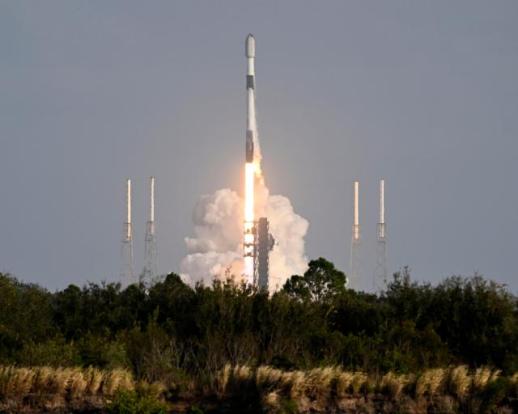 Nasdaq IPO blitz threatens South Korean stock market SEOUL, May 18 (AJP) - Amid unresolved bottlenecks around the Strait of Hormuz, high-profile United States companies including SpaceX, OpenAI, and Anthropic are preparing for consecutive initial public offerings (IPOs) later this year. With foreign capital expected to flock to these massive listings and South Korean investors steadily expanding their overseas portfolios, forecasts are emerging that the domestic stock market could face a correction. The benchmark KOSPI closed 0.31 percent higher at 7,516.04 on Monday. While it recouped some losses on growing expectations that the general strike at Samsung Electronics would come to an end, the index had plunged below the 7,100 mark early in the session, following a decline of more than 6 percent last week. East Asian stock markets had previously pushed higher despite the escalating blockade of the Strait of Hormuz. The KOSPI hit a record high of 7,981.41 at Thursday’s close last week, while Japan’s Nikkei 225 similarly touched an all-time high of 63,442.50 on May 10. Analysts point to various factors behind the sudden stagnation or decline of Asian markets that had seemed bound for endless gains, with the upcoming series of megacap listings in the United States being cited most frequently. The most anticipated listing is SpaceX, which operates small-satellite launch vehicles and manned spacecraft operations. SpaceX is a dominant leader in capturing and deploying multiple satellites into low Earth orbit (LEO). Up to 70 percent of active satellites currently in orbit were launched via the company’s rockets, and 97 percent of global satellite internet speed tests are conducted through its Starlink service. Its broad portfolio, spanning civil and military applications, is considered a core strength. Most notably, its reusable launch vehicles, led by the Falcon 9, allow the company to perform launches at costs up to three times lower than competitors in China and Russia, attracting clients worldwide. Consequently, markets expect SpaceX’s public offering to be the largest in history. Prominent asset management firms, including Morgan Stanley and Goldman Sachs estimate the size of the offering could reach up to $75 billion. This would more than double the previous record of $29.4 billion set by Saudi Aramco, the world's largest oil company, in 2019. The complicating factor is the rising volume of overseas investment by South Korean nationals. In 2025, South Koreans poured an estimated $114.4 billion into overseas equities, more than doubling the roughly $42 billion that flowed out in 2024. The combined value of foreign direct investment into South Korea during the same period stood at only $36 billion. The Bank of Korea (BOK) had sought to incentivize domestic investment by launching Reshoring Investment Account (RIA) products to curb the local currency's sharp depreciation, which fell 6.5 percent over the past year from 1,390 won per dollar in May 2025 to 1,480 won per dollar this May. However, with the SpaceX IPO becoming tangible, those plans are in jeopardy. With leading artificial intelligence companies like Anthropic and OpenAI scheduled for large-scale listings later this year - or the first quarter of 2027 at the latest - capital flight from the South Korean securities market is projected to accelerate. Some forecasts suggest these two firms could even surpass SpaceX’s record-breaking offering size. Domestic brokerage firms are racing to launch SpaceX-related exchange-traded funds (ETFs). Firms, including Korea Investment Management and Mirae Asset Global Investments, are rolling out aerospace-focused ETFs in an effort to retain domestic capital. Yet, blocking the correction appears challenging given the lowered barriers to foreign market entry. While forecasting that the KOSPI could reach 9,000 by the end of the year, NH Investment & Securities projected that "large-scale IPOs such as SpaceX and OpenAI could temporarily dampen the South Korean securities market." "The scale of domestic capital shifting overseas could be substantial," Mirae Asset, which has aggressively invested in SpaceX, also warned of a short-term shock. 2026-05-18 16:34:32
 -
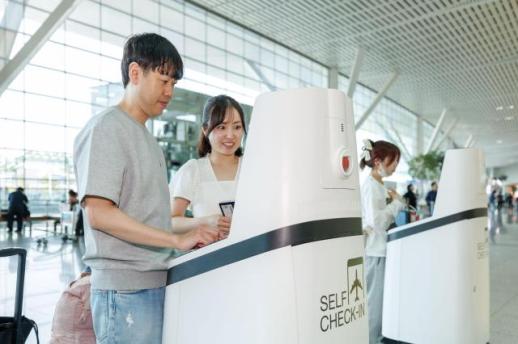 South Korea deploys more service robots amid rising labor costs SEOUL, May 18 (AJP) - South Korea’s main gateway, Incheon International Airport, has deployed autonomous service robots as the country accelerates automation across service industries amid rising wage costs and labor shortages. Incheon International Airport Corporation said Monday that it has begun full-scale operations of 31 autonomous robots, including self-check-in robots, guidance and patrol robots, and docent robots designed to assist passengers and provide cultural information across airport facilities. The rollout reflects a nationwide shift toward automation as South Korean businesses and major companies increasingly turn to service robots to offset mounting labor costs and staffing shortages. South Korea’s minimum wage rose to 10,320 won ($7.5) per hour in 2026, bringing minimum monthly pay for full-time workers to about 2.16 million won based on a 209-hour work month. As labor costs continue to climb, businesses in labor-intensive sectors such as tourism, retail and hospitality are increasingly adopting kiosks and service robots to reduce staffing burdens and maintain round-the-clock operations with fewer workers. According to pricing released by B-ROBOTICS, a robotics affiliate of Woowa Brothers, the operator of Baemin, South Korea’s largest food delivery platform, serving robots can be rented for as low as 299,000 won ($218) per month under a 36-month contract. By comparison, employing a full-time worker at a low-cost eatery such as Gimbap Cheonguk can cost restaurant owners roughly 2.4 million won to 2.8 million won ($1,750-$2,040) a month. The large cost gap is accelerating adoption among small business owners already struggling with rising wages and labor shortages. A survey conducted by part-time job portal Mediawill Networks on April 26 found that 73.7 percent of 114 small business owners said they had used unmanned devices such as kiosks, cooking robots or serving robots over the past year. 48.6 percent of respondents said kiosks helped reduce operating costs, reflecting growing interest in automation tools among small businesses facing rising labor expenses. The shift is also reshaping employment patterns in South Korea’s service sector. In a 2024 report based on surveys of 2,000 restaurants and bars in Seoul, the Korea Employment Information Service found that restaurants introducing kiosks reduced sales and serving staff by about 11.5 percent on average, while tablet ordering systems cut such jobs by roughly 7.5 percent. The report said 55 to 76 percent of businesses cited labor cost reduction as the main reason for adopting digital devices such as kiosks, tablets and service robots. The trend in service-sector automation reflects South Korea’s broader embrace of robotics across the economy. According to the International Federation of Robotics’ “World Robotics 2025” report released in April, South Korea has the highest concentration of industrial robots in the world, with 1,220 robots for every 10,000 manufacturing workers — more than six times the global average. Behind the trend is a deeper structural shift. South Korea officially became a “super-aged” society in 2025, with people aged 65 or older accounting for more than 20 percent of the population, according to the International Labour Organization. At the same time, the country’s working-age population has continued to shrink, intensifying labor shortages across service and manufacturing industries and pushing companies to accelerate investment in robotics and AI-powered automation technologies. 2026-05-18 16:27:28
 -
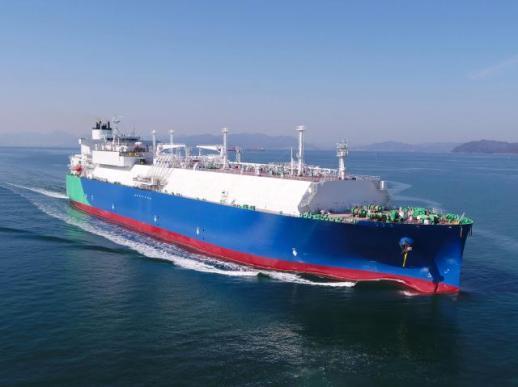 Samsung Heavy Industries Secures Orders for Three LNG Carriers Worth 1.12 Trillion Won Samsung Heavy Industries continues to expand its orders for liquefied natural gas (LNG) carriers. The company announced on May 18 that it has secured orders for three LNG carriers from a shipping company in Oceania, totaling 1.12 trillion won. This month, Samsung Heavy Industries has recorded a total of six orders, including one LNG floating storage and regasification unit (LNG-FSRU) and five LNG carriers, amounting to 2.36 trillion won. In the LNG carrier sector, the company has already surpassed last year's total of 11 vessels before the end of the first half. A Samsung Heavy Industries official stated, "As geopolitical instability in the Middle East continues, the importance of energy security and supply chain diversification is increasing, leading to a growing demand for high-efficiency LNG carriers. We will actively respond to customer needs based on our proven capabilities and quality competitiveness in LNG carrier construction to maintain our order momentum." Additionally, Samsung Heavy Industries participated in the Data Center World (DCW 2026) event held in Washington, D.C., in April to address the rising demand for data center infrastructure. At the event, the company obtained conceptual design certification for a 50MW floating data center (FDC) from the American Bureau of Shipping (ABS) and Lloyd's Register (LR), laying the groundwork for its entry into the global market with its self-developed floating data center.* This article has been translated by AI. 2026-05-18 16:26:39
 -
 SKC Achieves Oversubscription in Capital Increase, Accelerates Glass Substrate Business and Financial Improvement SKC has successfully achieved oversubscription in its capital increase of 1.1671 trillion won, with both existing shareholders and employee stock ownership plans exceeding expectations. According to SKC on May 18, the subscription rate for existing shareholders reached 113.01%, surpassing the 100% mark, while the employee stock ownership plan recorded a high subscription rate of 131.4%. The company attributed the strong interest in the capital increase to improved performance and market expectations surrounding its restructuring focused on semiconductor-related businesses. Notably, the transition to positive EBITDA (earnings before interest, taxes, depreciation, and amortization) after ten quarters and the acceleration of the commercialization of the glass substrate business have positively influenced investor sentiment. SKC stated, "The funds secured through this capital increase will be used to secure future growth drivers and establish financial stability." The company plans to invest 589.6 billion won in its semiconductor glass substrate business partner, Absolix, to expedite commercialization, while 577.5 billion won will be allocated to repay significant debts, improving key financial metrics. This is expected to reduce the debt ratio from approximately 230% at the end of last year to about 129%. A representative from SKC commented, "The success of this large-scale capital increase confirms the market's strong belief in SKC's fundamental restructuring and the potential of next-generation core businesses like glass substrates. We will strategically invest the secured funds to seize the global glass substrate market while striving to enhance shareholder value based on unwavering financial stability." One small shareholder expressed, "When I first heard about the capital increase, I was worried that the stock value might drop. However, SKC's investment in the capital increase is larger than the planned debt repayment, and I am optimistic about the significant investment in the growth of the glass substrate business as a shareholder." Meanwhile, the public subscription for the fractional shares resulting from the allocation process, totaling 23,687 shares, will take place from May 19 to 20. The new shares from this capital increase are set to be listed on June 8.* This article has been translated by AI. 2026-05-18 16:19:51
 -
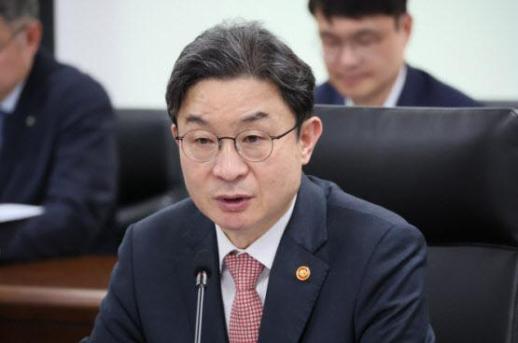 Government Pushes to Expand National Growth Fund Amid Global AI Investment Trends The government is addressing concerns over the National Growth Fund, which has faced criticism for potentially supporting large corporations and distorting the market. Officials emphasized that the fund serves as a catalyst to attract private investment, given the nature of advanced industry investments that require substantial long-term funding and risk-sharing. On May 18, the Financial Services Commission held a seminar at the Korea Development Bank's IR Center to assess the National Growth Fund's performance and explore future directions. During the seminar, Financial Services Commission Chairman Lee Eok-won stated, "Since the National Growth Fund began full operations earlier this year, it has rapidly deployed funds to invigorate advanced industries. Over the past four months, more than half of the 8.4 trillion won in support has been allocated to local areas, broadening investment opportunities for promising regional companies." However, concerns persist in the market regarding the inclusion of large corporations with their own funding capabilities as beneficiaries of policy financing. Critics question whether government funding might discourage private investment. There are also worries about potential overvaluation of companies and market overheating, particularly as funds increasingly flow into sectors like AI. In response, the Financial Services Commission and experts argue that due to the significant initial capital requirements and long investment recovery periods characteristic of advanced industries, a certain level of policy risk-sharing is unavoidable. They assert that support should not only focus on individual companies but also aim to enhance the overall competitiveness of the industrial ecosystem. Lee Byeong-yun, a senior researcher at the Financial Research Institute, remarked, "It is advisable to concentrate national energy on areas with the highest potential for global competitiveness to secure economies of scale for achieving a significant gap. This can also enable the co-growth of related small and medium-sized enterprises through anchor companies in the ecosystem." Recent global venture capital investments have been increasingly concentrated among top firms. In 2025, global venture capital investments rose by 31% year-on-year to $512.1 billion, marking the third-highest level in history. Notably, in the fourth quarter of 2025 alone, eight AI companies raised over 50 trillion won in funding, with valuations skyrocketing in subsequent investment rounds, reflecting a global trend. Additionally, the government is accelerating efforts to create mechanisms for sharing the results of advanced industry investments with the general public. This initiative aims to expand opportunities for citizens to directly participate in growth industry investments beyond policy financing. The Public Participation Growth Fund, set to launch on the 22nd, will offer tax deductions and separate taxation benefits on dividend income, with the government absorbing 20% of initial losses. More than 20% of the available shares will be allocated exclusively for low-income individuals. Kang Seong-ho, head of the National Growth Fund at the Financial Services Commission, explained, "We have included tax deductions to incentivize public participation in long-term capital (with a five-year maturity). To ensure tax equity, we have established measures such as excluding tax benefits for those subject to comprehensive taxation on financial income, gradually reducing the deduction rate, and applying a comprehensive limit on deductions."* This article has been translated by AI. 2026-05-18 16:14:17
 -
 BBQ Chairman Yoon Hong-geun Receives Korea's Mid-sized Business CEO Award Yoon Hong-geun, Chairman of Genesis BBQ Group, has been awarded the Korea Mid-sized Business CEO Award for his efforts in promoting franchise cooperation and achieving global business success. BBQ announced on May 18 that Yoon received the award at the 2026 Spring Conference of the Korean Management Association, held on May 15 at the Seoul Chamber of Commerce and Industry. The Korea Mid-sized Business CEO Award is presented to exemplary small and medium-sized business leaders who have demonstrated a successful model from startup to growth. Recipients are selected based on evaluations by the Korean Management Association's selection committee, which considers ethical entrepreneurship, management philosophy, industry competitiveness, expansion achievements, transparent management, and social responsibility. Since its founding in 1995, Yoon has been recognized for establishing a cooperative franchise model, pioneering global markets, and fulfilling social responsibilities, thereby guiding the growth of Korea's restaurant franchise industry. BBQ has implemented a structure that involves franchise owners in discussions about brand policies, marketing, and new menu development through its operating and partnership committees. The company has also been praised for standardizing training in cooking, hygiene, and service through its Chicken University, enhancing the competitiveness of the franchise industry. As of May, BBQ has expanded to 57 countries worldwide, leading the globalization of K-Chicken. The company has invested in operational efficiency through an ERP-based management system, its own logistics management system, and smart kitchen technologies, contributing to the stability of franchise operations. Yoon's ongoing community support initiatives, disaster recovery efforts, and assistance for vulnerable groups have also been highlighted as significant achievements. Yoon stated, "This award is a meaningful recognition of BBQ's efforts and growth alongside our family over the past 30 years. We will continue to contribute to creating a sustainable franchise industry ecosystem based on cooperation and innovation."* This article has been translated by AI. 2026-05-18 16:12:00
 -
 Homeplus: Meritz Requires Immediate Repayment of Express Sale Proceeds Homeplus, which is undergoing corporate rehabilitation, announced on May 18 that Meritz Financial Group has demanded immediate repayment of the proceeds from the sale of Homeplus Express as a condition for providing a short-term operating loan (bridge loan).According to Homeplus, Meritz is considering a short-term operating loan of approximately 100 billion won ($75 million) for a duration of 2 to 3 months, with interest rates similar to those of existing emergency operating loans (DIP loans). The conditions also include personal guarantees from major shareholders MBK Partners and the management team.In response, Homeplus has proposed using a second-ranking income right on real estate as collateral instead of personal guarantees. Homeplus stated, "The contract for the sale of Express has already been signed, and considering that the transaction will be completed by the end of next month, we have already provided personal guarantees for other operating funds." However, it appears that Homeplus is reviewing Meritz's loan conditions due to pressing issues such as unpaid wages and outstanding product payments.Currently, Meritz holds collateral on 68 Homeplus stores. Proceeds from major real estate sales completed or in progress after the rehabilitation process are also being prioritized for repayment of Meritz's claims.Meanwhile, as Homeplus continues to face financial difficulties, the labor union has also requested normalization of deliveries. The Homeplus General Labor Union recently decided to forgo wages and defer salary payments, sending a formal request to suppliers for the regular supply of goods. In the letter, the union stated, "Only with a smooth supply of goods to the stores can they be normalized, and only when the stores recover can the valuable delivery payments be fully repaid."* This article has been translated by AI. 2026-05-18 16:09:00
 -
 HVEM Shares Surge Over 20% Amid Positive Market Outlook HVEM shares experienced a significant increase of over 20% during trading hours, driven by optimistic forecasts from the financial sector. According to the Korea Exchange, as of 2:22 PM, HVEM shares were trading at 117,700 won, up 19,800 won (20.22%) from the previous trading day. Earlier in the day, Meritz Securities released a report projecting growth and improved performance across all business divisions for HVEM. Jung Ji-soo, a researcher at Meritz Securities, stated, "In the first quarter, the standalone performance showed a revenue increase of 79.4% year-on-year to 23.3 billion won, with operating profit rising 292.2% to 4.4 billion won, surpassing market consensus of 3.3 billion won in operating profit." He noted that sales to the world's largest private space company led the performance improvement, with a 143% year-on-year increase to 14.9 billion won. He further projected that in 2026, revenue by business division would be 5.3 billion won for existing products (-27.2%), 76.4 billion won for space (93.3%), 13 billion won for aerospace and defense (76.7%), and 18.2 billion won for semiconductors and electronics (47.9%). He emphasized that all divisions, except for existing products, are expected to see significant growth. Jung added, "The new launch vehicle from the world's largest private space company is expected to begin its first launch this week, with launch frequency rapidly increasing. The supply of nickel-based special alloys for the engine part of the new launch vehicle is anticipated to rise significantly starting in the second half of the year. We are planning to expand production facilities through the issuance of 92 billion won in convertible bonds last month, and once the third factory expansion is completed, we expect to achieve annual sales exceeding 500 billion won."* This article has been translated by AI. 2026-05-18 16:06:32
 -
 South Korean chipmakers rescue Seoul market despite broad Asia selloff SEOUL, May 18 (AJP) - South Korean stocks ended higher on Monday as heavyweight semiconductor shares helped the benchmark index recover from a sharp early plunge. The market stood out against a broader selloff across Asia triggered by rising global bond yields, renewed oil price pressures and weakness in United States technology shares. The KOSPI rose 0.6 percent to close at 7,516.04, rebounding from an intraday low of 7,142.71 to reach a high of 7,636.20. The recovery occurred despite heavy foreign selling, as overseas investors offloaded 3.65 trillion won, or 2.43 billion dollars, worth of shares. Retail and institutional investors absorbed the selloff, purchasing 2.21 trillion won and 1.39 trillion won respectively. Samsung Electronics drove much of the recovery, climbing 3.9 percent to close at 281,000 won. The gains came even as labor tensions remained in focus ahead of a planned strike by company unions on May 21. A local court partially accepted an injunction request from Samsung against illegal strike activity, recognizing the need to maintain safety operations and wafer protection work at semiconductor facilities. The unions said they would proceed with the planned action, arguing the court ruling did not block the strike itself. Business groups and shareholder organizations stepped up pressure on the union to withdraw the plan, warning of potential damage to the core semiconductor industry of South Korea. Workers are demanding the removal of a performance bonus cap set at 50 percent of their annual salary and want 15 percent of operating profit allocated to a uniform bonus pool. SK hynix gained 1.2 percent to 1,840,000 won, supported by continued optimism over demand for high-bandwidth memory. The advance came despite concerns that rising global bond yields could pressure valuations for artificial intelligence-related technology companies. Other large-cap shares faced steep declines. Hyundai Mobis plunged 9.2 percent to 571,000 won, tracking weakness across Hyundai Motor Group shares after the sharp morning drop triggered a sell-side sidecar for the second consecutive session. LG Electronics dropped 9.8 percent to 217,000 won, while LS Electric fell 2.1 percent to 253,500 won. Doosan Robotics slid 7.5 percent to 117,900 won, while cable manufacturer Daehan Electric Wire fell 3.2 percent to 58,100 won and Gaon Cable jumped 12.3 percent to 380,000 won. The technology-heavy KOSDAQ failed to match the broader market rebound, falling 1.7 percent to close at 1,111.09. The junior index moved between a high of 1,122.57 and a low of 1,071.66, with institutions selling 255.1 billion won and retail investors offloading 7.7 billion won, while foreigners bought 237.2 billion won. Jusung Engineering surged by the daily limit of 30 percent to 182,200 won on the KOSDAQ. The company announced it had shipped the world's first ALG-based transistor full integration manufacturing equipment to a global chipmaker, adding the technology could expand to display and solar applications. Mirae Asset Venture Investment jumped 22.8 percent to 67,400 won, boosted by expectations that SpaceX could accelerate its initial public offering timeline. Mirae Asset Group has reportedly invested about 400 billion won in the aerospace company through funds since 2022. Jeju Semiconductor rose 12.5 percent to 92,600 won after reporting first-quarter revenue surged 273 percent from a year earlier to 180.5 billion won. The company said operating profit jumped 1,713 percent to 67.1 billion won, driven by higher DRAM prices and stronger demand for memory chips used in mobile and automotive applications. Sphere Corporation advanced 14.6 percent to 48,150 won after reporting first-quarter consolidated revenue grew 106 percent year-on-year to 45 billion won. The company attributed nearly all of its revenue to an aerospace special alloy supply business supported by growth in the global space industry. Hanmi Semiconductor plunged 14.1 percent to 317,000 won following an earnings shock. The company posted revenue of 50.9 billion won and operating profit of 8.5 billion won, down 65.5 percent and 87.9 percent respectively, citing a decline in Asian sales and a gap in TC bonder orders. Regional markets ended broadly lower as investors reacted to rising bond yields, higher oil prices and renewed weakness in United States technology shares. Japan's Nikkei 225 fell 0.9 percent to 60,877.5, China's Shanghai Composite declined 0.5 percent to 4,116.9 and Hong Kong's Hang Seng Index lost 1.5 percent to 25,566.6. Oil prices extended gains as stalled talks between the United States and Iran and continued disruptions around the Strait of Hormuz kept supply concerns elevated. Brent crude rose 2.3 percent to 107.80 dollars a barrel, while West Texas Intermediate climbed 1.9 percent to 111.28 dollars. The VIX volatility index rose 6.8 percent to 18.4, and the Philadelphia Semiconductor Index dropped 4 percent to 11,588.5. The South Korean won weakened slightly, trading at 1,500.3 won against the dollar, down 2.3 won, or 0.1 percent, from the previous session. 2026-05-18 16:00:47
 -
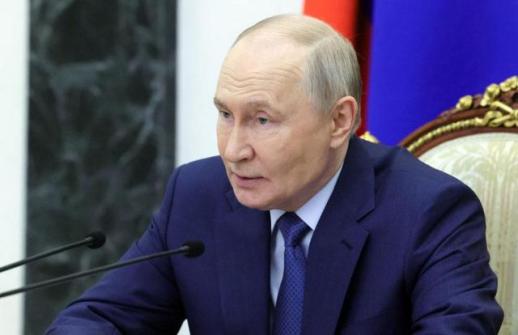 ASIA INSIGHT: What back-to-back visits by Trump and Putin mean for China SEOUL, May 18 (AJP) - Just days after U.S. President Donald Trump left Beijing, Russian President Vladimir Putin is set to arrive there this week. The timing appears to be no coincidence. According to China's Foreign Ministry, Putin will visit China on Tuesday and Wednesday at the invitation of Chinese President Xi Jinping. The two leaders are expected to discuss bilateral cooperation, regional security and other broader global issues before signing a series of agreements. On the surface, it may appear to be another routine summit between two traditional allies. But the back-to-back visits by the leaders of the world's two most powerful countries carry a deeper meaning, highlighting Beijing's growing influence over the global order. Trump traveled to Beijing seeking to mend a strained relationship while pressing U.S. interests on trade, Taiwan-related issues and Iran amid the prolonged conflict in the Middle East. Both sides struck a cooperative tone, but underlying tensions remained unresolved, with the summit ending without concrete breakthroughs. Putin arrives amid that complicated aftermath. The Kremlin has already signaled that one of Moscow's priorities is to determine what Trump and Xi discussed, with Russia's presidential spokesman Dmitry Peskov saying Putin wants to obtain "direct information" from Beijing. That suggests something beyond simple curiosity. China has come to serve a strategic role as one of the few global powers capable of leveraging its close ties with Moscow in its rivalry with Washington, allowing it to engage both sides at once. Moscow remains an important partner, providing Beijing with energy and diplomatic support against the U.S., but Beijing has little interest in fully siding with Russia against the West, as China's economy still depends heavily on global trade and access to American markets. Their relationship is more nuanced than a simple anti-American alliance, as China stays engaged with both Washington and Moscow and may even benefit from frictions between them. Despite China's growing global influence, Beijing still faces clear limits and challenges, while many countries remain quietly wary of its growing power. China is likely trying to position itself at the center of an increasingly fragmented world, where old alliances are weakening and new alignments remain uncertain. But balancing relations with both Washington and Moscow will become increasingly difficult as tensions among the major powers deepen, even though Beijing currently appears comfortable playing that role. The visits by both Trump and Putin suggest, in different ways, that China is no longer just reacting to the global order, but is trying to play a larger role in shaping it. 2026-05-18 15:53:15