
Journalist

Jun sungmin
-
 Court Partially Grants Samsung Electronics' Request to Ban Union Strike The Seoul court has partially accepted Samsung Electronics' request for an injunction to prohibit an illegal general strike by the labor union. This decision comes just three days before the union's planned strike. The court's ruling is expected to hinder the strike by requiring staffing levels to remain at normal levels.In response, the largest union, the Samsung Electronics branch of the Korean Federation of Trade Unions (KCTU), stated that it respects the court's decision and plans to proceed with its scheduled strike activities on May 21.On May 18, the Suwon District Court's Civil Division 31, led by Judge Shin Woo-jung, partially granted Samsung's injunction request against two unions, including the KCTU and the Samsung Electronics Union, filed on April 16.The court ruled that the unions must maintain staffing levels, operating hours, and scale of operations during the strike at the same levels as normal weekdays or weekends. It also ordered that Samsung's security and maintenance operations must continue without disruption during the strike.Additionally, the court prohibited the KCTU and its chairman, Choi Seung-ho, from occupying any facilities or installing locks that would impede workers' access.This ruling largely aligns with Samsung's demands and is expected to legally restrict the union's ability to strike.To ensure compliance, the court stated that for each day of violation, the unions would be required to pay 100 million won, while Choi Seung-ho and acting chairman Woo Ha-gyeong would each owe 10 million won to Samsung.In a statement, the KCTU's legal representative, Law Firm Majung, acknowledged the necessity of security measures and expressed respect for the court's decision, affirming plans to proceed with the strike on May 21.However, they noted that the dispute was primarily over the specifics of staffing levels. Law Firm Majung explained that while Samsung claimed a requirement of 7,000 workers on weekdays, the union argued for fewer workers on weekends or holidays, a position the court supported, indicating that the actual number should be less than 7,000.The union contends that staffing levels on weekends or holidays will be lower than 7,000, asserting that this will not impede their strike activities.The union also requested that Samsung provide specific staffing needs for each department to enable union members to organize effectively.In response, Samsung Electronics criticized the KCTU for misrepresenting the court's ruling, stating that the court clearly defined "normal" as referring to both normal weekdays and weekends.Samsung emphasized that the ruling means staffing levels must match those of normal weekdays during the strike period, and similarly for weekends and holidays, to maintain security and safety operations.The company added that it would provide separate guidance to employees in departments requiring normal attendance during the strike period. 2026-05-18 15:31:14
 -
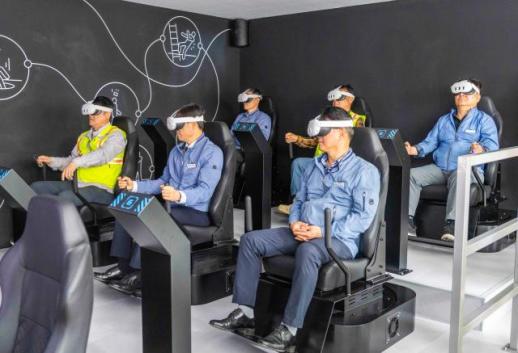 Hyundai Engineering Establishes Safety Training Center at Shinhanul Units 3 and 4 Hyundai Engineering has created an experiential safety management space at the construction site of Shinhanul Units 3 and 4. The company announced on May 18 that it held an opening ceremony on May 14 for the first safety training center at a construction site in South Korea. The safety training center at Shinhanul Units 3 and 4 is designed to allow workers to experience and respond to common hazards encountered during construction. It features five zones: Fire Safety Zone, Safety Inspection Zone, Confined Space Safety Zone, Emergency Response Zone, and Virtual Safety Zone, offering a total of 13 experiential programs. These programs include safety training for fall, suffocation, fire, and electric shock incidents, as well as health education on CPR, the use of Automated External Defibrillators (AED), and the prevention of musculoskeletal disorders. Among these, the Virtual Safety Zone utilizes 4D XR experience facilities, multi-user virtual reality (VR), and Apple Vision Pro technology to create immersive content simulating construction site accidents, according to the company. A Hyundai Engineering representative stated, "The safety training center is a practical training space designed for workers to experience real hazards and develop their response capabilities. We aim to operate it as an open industrial safety education platform that can be utilized by site members and the local community, thereby strengthening a prevention-focused safety management system." Additionally, Hyundai Engineering has been operating a mobile experiential education program called the 'Safety Culture Hub' dedicated vehicle. This program combines experiential content and VR equipment focused on major hazards such as hanging, confined spaces, electricity, and construction equipment, allowing participants to experience various work environments directly.* This article has been translated by AI. 2026-05-18 15:28:54
 -
 Malta Offers Free AI Access to All Citizens in Partnership with OpenAI Malta, a small island nation in the Mediterranean, has partnered with OpenAI to provide free access to 'ChatGPT Plus' for all of its approximately 540,000 citizens for one year. This initiative reflects the government's struggle, as tourism is its primary source of income. The remnants of medieval history scattered across the island are insufficient for survival in the AI era, prompting the government to focus on enhancing the AI capabilities of its citizens. Located in the center of the Mediterranean, Malta lies south of Sicily, Italy. While Maltese is the official language, English is widely spoken. Once a popular destination for language studies, Malta's small land area and low rainfall make agriculture challenging. Tuna farming is a key industry, but it accounts for only about 1% of the country's GDP. Tourism remains the sole significant economic driver. The Knights of St. John, who were displaced after their defeat by the Ottoman Empire on the Greek island of Rhodes, found refuge in Malta after Pope Clement VII persuaded Holy Roman Emperor Charles V to grant them the island in exchange for an annual tribute. Once settled, the Knights positioned themselves as defenders of the Christian world, engaging in piracy against the pagan Arab population. Despite the Ottoman Empire mobilizing 40,000 troops to conquer Malta, the Knights and local militias successfully defended the island with just over 500 fighters. Their victory laid the foundation for modern Malta, attracting support from across Europe, leading to the construction of fortifications and ornate buildings that now adorn the island. Today, Malta is one of Europe's major vacation destinations, with its densely packed Baroque buildings and churches appealing to those seeking a glimpse of the medieval era. However, with 80% of the population employed in the service sector, the economy faces significant risks. In response to the lack of diverse industries, the Maltese government has opted for digital transformation. While the small population allows for such initiatives, Malta is the first country to offer a year of free AI services to all citizens. To access these services, citizens must complete a government-sponsored AI training program. This approach aims to address workforce shortages and educate the public on the ethical implications of AI, maximizing administrative efficiency. What could happen if all citizens freely utilize AI? Although Malta lacks a robust electronics or heavy industry sector, the AI era may present new digital opportunities for its people. Malta's digital experiment is not its first. A few years ago, the country branded itself as the 'Blockchain Island' by passing groundbreaking virtual asset laws, attracting global capital, including the world's largest cryptocurrency exchange, Binance. However, the government’s decision to suspend regulations for two years to facilitate the industry backfired, leading to a proliferation of unverified scams and a decline in national creditworthiness. As the country began to enforce regulations, exchanges and global companies departed, having exploited the favorable conditions. Rather than succumbing to these challenges, the Maltese government has committed to transforming the entire nation into an 'AI laboratory.' Unlike past efforts to attract AI startups through regulatory relaxation, this time the focus is on integrating AI at a national level as a practical survival strategy. This decision reflects a commitment to learning from past failures and building foundational strength. While Malta seeks to rapidly import advanced technologies and establish itself as a 'demand-driven testing ground,' South Korea is pursuing a 'supply-driven' approach to building 'Sovereign AI' capabilities. This strategy aims to avoid technological dependency and protect data sovereignty. With strengths in semiconductors, electronics, and heavy industry, South Korea is expanding its AI competitiveness into physical AI. Despite its competitive advantages, South Korea still has a long way to go. The National AI Strategy Committee, directly under the President, is currently working on over 300 policy initiatives. While many discuss AI, the industry has yet to establish a stable revenue structure. Progress cannot occur without trial and error. Although Malta and South Korea differ in scale and strategy, both share the commonality of being resource-limited and having small populations. Both countries recognize that bold and sophisticated policy experiments led by the government are essential for survival in the AI era. To avoid becoming data colonies of big tech companies, they must navigate through necessary trials and errors. Concerns about the 'national AI representative' are prevalent, and the Ministry of Science and ICT fears that initial successes may not be sustainable. However, the government should not shy away from regulation out of fear of failure, as this could stifle industry growth. It is time to accelerate the development of Sovereign AI and undertake bold public-private AI integration experiments, as those who hesitate will miss out on opportunities for innovation in the harsh realities of the IT landscape.* This article has been translated by AI. 2026-05-18 15:27:00
 -
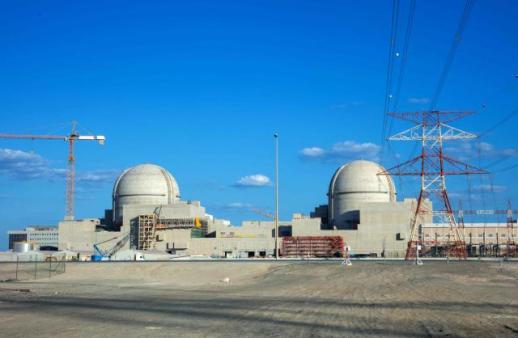 Tensions Rise in Gulf Following Drone Attack on UAE Nuclear Plant The United Arab Emirates (UAE) has pointed to Iran or Iranian-backed groups as the likely perpetrators behind a recent drone attack near the Barakah Nuclear Power Plant, escalating tensions in the region. On May 17, Anwar Gargash, a senior diplomatic advisor to the UAE president, stated on X (formerly Twitter) that whether the attack was executed directly by the main culprit or through proxies, it signifies a dangerous escalation of tensions targeting the Barakah clean nuclear power plant. Gargash condemned the attack as a "dark scene" that violates all international laws and norms, criticizing those responsible for disregarding civilian lives. While the UAE Ministry of Defense has announced an investigation to identify the attackers, there is a prevailing sentiment in UAE political circles that Iran or its affiliates are behind the assault. UAE Deputy Prime Minister and Foreign Minister Sheikh Abdullah bin Zayed Al Nahyan has been in contact with foreign ministers from Saudi Arabia, Kuwait, Qatar, Morocco, Egypt, and Bahrain to discuss the situation. The UAE Foreign Ministry stated on X that the foreign ministers strongly condemned the unjustified terrorist attack and reaffirmed the UAE's complete and legitimate right to respond in a manner that ensures their sovereignty and national security in accordance with international law. Saudi Arabia also condemned the attack and expressed solidarity with the UAE. According to AFP, the Saudi Foreign Ministry issued a statement declaring that the drone attack poses a threat to regional security and stability, supporting all measures to protect the UAE's sovereignty, security, and territorial integrity. In light of this attack, concerns about drone threats are rising across the Gulf region. The Saudi Ministry of Defense announced that it intercepted and destroyed three unmanned drones that had entered its airspace from the direction of Iraq. Iran has heightened its warnings, claiming that Gulf nations are cooperating militarily with the United States. Mohammad Mohaver, a senior advisor to Iran's Supreme Leader, criticized Gulf states on X, stating that while Iran has regarded them as friends and brothers for years, they have compromised their independence and entrusted their territory and homeland to enemies of Palestine and Iran. As U.S.-Iran ceasefire negotiations remain stalled and the U.S. reviews military options, tensions across the Middle East are again on the rise. On the same day, President Donald Trump warned on social media platform Truth Social that Iran has little time left, advising them to act quickly or risk losing everything. Trump also reportedly discussed the possibility of renewed Iranian attacks during a phone call with Israeli Prime Minister Benjamin Netanyahu, as reported by Israeli media citing Iranian state television.* This article has been translated by AI. 2026-05-18 15:21:21
 -
 SAMT Shares Surge on Optimism for AI Semiconductors and Automotive Memory Shares of SAMT have reached their daily limit due to growing expectations for its expansion into artificial intelligence (AI) semiconductors and automotive memory. According to the Korea Exchange, as of 1:47 PM on May 18, SAMT's stock was trading at 18,590 won, up 30.00% from the previous trading day. The stock price, which was in the 7,000 won range last month, has recently surged past the 18,000 won mark. As SAMT's stock price has shown a sharp increase this month, the exchange announced on May 15 that it would designate the company as an investment caution stock starting May 18. Founded in 1990, SAMT is an IT marketing specialist that supplies key electronic components to major global companies, including Samsung Electronics, for manufacturers of smartphones, OLED monitors, and TVs. The company was listed on the KOSDAQ market in 2000. Recently, SAMT has been expanding its business into high-value products such as CMOS image sensors (CIS), automotive memory, and AI semiconductors. The growth in automotive electrification, the AI industry, and the expansion of data centers appear to be driving expectations for future revenue growth and improved profitability. Additionally, as the AI industry expands and the semiconductor and automotive component markets continue to grow, investor sentiment toward SAMT, which operates in distribution and marketing related to these sectors, is also improving.* This article has been translated by AI. 2026-05-18 15:10:51
 -
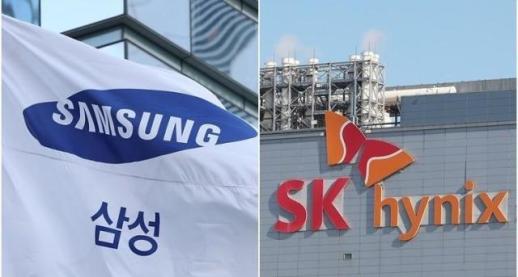 Samsung Electronics Recovers Midday; SK Hynix Also Sees Gains Samsung Electronics has successfully turned around its midday performance, showing strength in the market. SK Hynix is also experiencing a rise of over 1%. According to the Korea Exchange, as of 1:42 PM, Samsung Electronics is trading at 280,750 won, up 10,250 won (3.79%) from the previous trading day. Samsung began the day at 270,500 won and initially faced weakness, dropping to as low as 262,000 won. However, buying interest surged, allowing the stock to recover, reaching a high of 288,500 won during the session. It has since slightly retraced but is maintaining above the 280,000 won mark. SK Hynix is also up 20,000 won (1.10%), trading at 1,839,000 won. The stock opened at 1,827,000 won and fell to 1,731,000 won during the day but reversed course as individual investors stepped in to buy. As both semiconductor giants rebound, the KOSPI index, which had been under pressure, has regained the 7,500 level and is expanding its gains. However, analysts caution that the potential for increased market volatility remains. Seo Sang-young, a researcher at Mirae Asset Securities, noted, "The Korean stock market has seen a significant reduction in index declines due to aggressive net buying by individual investors, but overall global market volatility is unavoidable."* This article has been translated by AI. 2026-05-18 15:09:00
 -
 Government Seeks Public Ideas to Reduce Living Costs, Invites AI Policy Proposals The government is launching an initiative to gather public ideas aimed at reducing living costs. Focusing on areas with significant household expenses, such as housing, transportation, and communication, the initiative will also explore policies that utilize artificial intelligence (AI) technology. On May 18, the Ministry of Finance and Economy announced the "2026 Cost of Living Reduction Policy Idea Contest," which will run until July 27. The contest aims to alleviate the financial burden on citizens and discover policies that can be felt in daily life. This contest is designed to connect creative and practical ideas from the public with policy implementation, particularly in sectors where household spending is high. It will not be limited to traditional policy methods such as legislative amendments or institutional improvements but will also focus on generating cost-saving ideas that incorporate AI technology. The initiative aims to ensure that even those who are less familiar with digital devices can benefit from the latest technological advancements. Submitted ideas will undergo expert evaluation, and the final rankings will be determined through an online public vote from August 19 to September 2. An awards ceremony is scheduled for October, where the grand prize winner will receive a commendation from the Deputy Prime Minister and Minister of Finance, along with a cash prize of 2 million won. The total prize pool amounts to 5 million won.* This article has been translated by AI. 2026-05-18 15:01:13
 -
 Gaon Cable Signs $3 Billion Supply Deal for Busducts with U.S. Tech Firms Gaon Cable, a subsidiary of LS Cable, has secured a supply contract worth approximately 4 trillion won ($3 billion) for busducts to be used in artificial intelligence (AI) data centers in the United States. This marks the largest supply agreement in the domestic cable and electrical equipment industry to date. On May 18, Gaon Cable announced that its U.S. subsidiary, LSCUS, has entered into a long-term supply contract with a major American company for high-capacity power systems, specifically busducts, over the next five years. Under this contract, Gaon Cable will supply busducts to dozens of AI data centers across the U.S. annually, starting with an estimated 50 billion won this year. By 2030, the total supply volume is expected to exceed 4 trillion won. Busducts consist of insulated copper and aluminum conductors housed within a modular metal casing. Unlike traditional cables, which require significant space to manage the substantial power demands of AI data centers, busducts can stack conductors, significantly enhancing space efficiency. Notably, this contract is significant not only for its scale but also because it is a long-term framework agreement rather than a one-time order. Byun Jeong-il, head of LS Cable's busduct division, stated, "This achievement combines LS Cable's global sales capabilities with the local responsiveness of Gaon Cable's U.S. subsidiary. Following last year's large-scale contract with a major tech company, we are rapidly expanding our supply to U.S. AI data centers with this new order." The initial supply will be sourced from LS Cable's manufacturing facility in Gumi, South Korea, while Gaon Cable is considering establishing new busduct production facilities at its Jeonju plant. LS Cable's Mexican production subsidiary, set to be completed in 2026, will also serve as a key production hub. In January, LS Cable announced plans to increase its investment in Mexico to a total of 230 billion won, aiming to enhance supply stability and delivery competitiveness through a local production system in North America.* This article has been translated by AI. 2026-05-18 14:58:44
 -
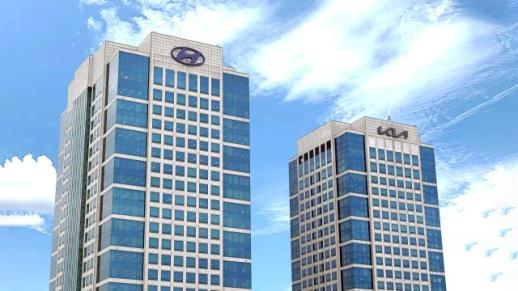 Hyundai Motor Group to Establish Hydrogen Ecosystem in Hong Kong, Expanding to Asia-Pacific Market Hyundai Motor Group is set to establish a comprehensive hydrogen value chain in Hong Kong, encompassing hydrogen production, refueling, and utilization. On May 18, the company announced the signing of a multilateral memorandum of understanding (MOU) at the Hong Kong Convention Center during the 'International Hydrogen Development Symposium 2026' to create a hydrogen ecosystem in the region. The MOU aims to build a 'resource-circulating hydrogen production model (W2H)' facility utilizing landfill gas, establish liquefied hydrogen refueling stations, and introduce hydrogen mobility to promote and activate the hydrogen ecosystem. The initiative involves three South Korean companies, including Hyundai Motor, Hyundai Engineering & Construction, and JN Group, along with seven other firms: China Gas Hong Kong, Veolia, China Certification & Inspection Group, Guofu Hydrogen Energy, Temple Water, Chunwo Construction, and Chunwo Bus. These companies will collaborate to produce eco-friendly hydrogen energy locally and develop infrastructure that connects hydrogen production with refueling and hydrogen mobility distribution, supporting Hong Kong's energy independence. Specifically, the project will implement the W2H model to produce low-carbon hydrogen energy from landfill gas. Additionally, liquefied hydrogen refueling stations will be established in key areas with high transportation demand. These stations are more suitable for Hong Kong's limited space as they can store more hydrogen per unit volume compared to gaseous hydrogen stations. Throughout the project, Hyundai Motor will oversee all aspects of the hydrogen ecosystem in Hong Kong, including hydrogen production, utilization, and refueling station construction, while promoting hydrogen mobility. The company plans to expand its hydrogen market into the Asia-Pacific region in the future. Shin Seung-kyu, Vice President of Hyundai Motor Group's Energy and Hydrogen Policy Division, stated, "In line with Hong Kong's proactive hydrogen policies, we aim to leverage Hyundai Motor Group's capabilities and experience in hydrogen business to foster a local hydrogen ecosystem. Starting in Hong Kong, we will expand our cooperation and business across the Asia-Pacific hydrogen market." Meanwhile, Hyundai Motor Group is expanding its hydrogen value chain business, centered around its hydrogen brand 'HTWO,' which encompasses production, storage, transportation, and utilization.* This article has been translated by AI. 2026-05-18 14:57:00
 -
 Amorepacific CEO: K-Beauty is a New Standard, Not Just a Trend Kim Seung-hwan, CEO of Amorepacific, stated that "K-Beauty is no longer a temporary trend but has established itself as a new standard in the global skincare market." According to Amorepacific, Kim made this remark while presenting strategies for the competitiveness and sustainable growth of the Korean beauty industry at the '2026 WWD Beauty CEO Summit' held in Palm Beach, Florida, from May 11 to 13. WWD, a fashion and beauty media outlet founded in 1910, hosts this prestigious CEO forum for the 28th time this year. Approximately 500 executives from global retail and beauty companies, including L'Oréal, Estée Lauder, Unilever, Amazon, Sephora, and Ulta Beauty, attended the event. In his presentation, Kim outlined three key factors contributing to the success of K-Beauty: discerning Korean consumers, continuous product innovation, and an open manufacturing infrastructure that allows anyone to easily create a brand. Previously, at the IGDS World Department Store Summit held in Seoul last June, Kim emphasized that "thanks to strong ODM support, there are over 30,000 beauty brands in Korea," adding that "anyone with an idea can collaborate with over 4,000 manufacturers to launch a brand." Kim explained that for K-Beauty to continue its rapid growth sustainably, a strategic shift to a new phase is necessary, presenting four core tasks: differentiating brand identity, expanding categories beyond skincare, enhancing R&D-based scientific innovation, and broadening personalized customer experiences through digital technology and AI. Amorepacific noted that this presentation is significant as it positions K-Beauty not merely as a trend but as a unique industrial model rooted in Korean consumers and the industry ecosystem. An Amorepacific representative stated, "For over 80 years, we have led the growth and innovation of the K-Beauty industry based on our accumulated R&D capabilities and consumer trust as Korea's representative beauty company. We will accelerate our growth as a global leader in beauty and wellness under our long-term vision of 'Create New Beauty.'"* This article has been translated by AI. 2026-05-18 14:51:52