

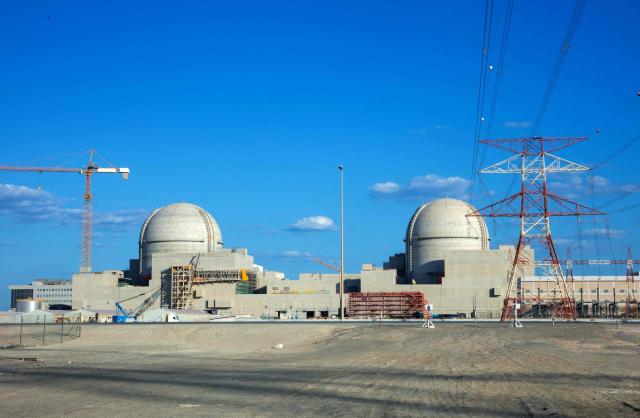
On May 17, Anwar Gargash, a senior diplomatic advisor to the UAE president, stated on X (formerly Twitter) that whether the attack was executed directly by the main culprit or through proxies, it signifies a dangerous escalation of tensions targeting the Barakah clean nuclear power plant.
Gargash condemned the attack as a "dark scene" that violates all international laws and norms, criticizing those responsible for disregarding civilian lives.
While the UAE Ministry of Defense has announced an investigation to identify the attackers, there is a prevailing sentiment in UAE political circles that Iran or its affiliates are behind the assault.
UAE Deputy Prime Minister and Foreign Minister Sheikh Abdullah bin Zayed Al Nahyan has been in contact with foreign ministers from Saudi Arabia, Kuwait, Qatar, Morocco, Egypt, and Bahrain to discuss the situation.
The UAE Foreign Ministry stated on X that the foreign ministers strongly condemned the unjustified terrorist attack and reaffirmed the UAE's complete and legitimate right to respond in a manner that ensures their sovereignty and national security in accordance with international law.
Saudi Arabia also condemned the attack and expressed solidarity with the UAE. According to AFP, the Saudi Foreign Ministry issued a statement declaring that the drone attack poses a threat to regional security and stability, supporting all measures to protect the UAE's sovereignty, security, and territorial integrity.
In light of this attack, concerns about drone threats are rising across the Gulf region. The Saudi Ministry of Defense announced that it intercepted and destroyed three unmanned drones that had entered its airspace from the direction of Iraq.
Iran has heightened its warnings, claiming that Gulf nations are cooperating militarily with the United States. Mohammad Mohaver, a senior advisor to Iran's Supreme Leader, criticized Gulf states on X, stating that while Iran has regarded them as friends and brothers for years, they have compromised their independence and entrusted their territory and homeland to enemies of Palestine and Iran.
As U.S.-Iran ceasefire negotiations remain stalled and the U.S. reviews military options, tensions across the Middle East are again on the rise.
On the same day, President Donald Trump warned on social media platform Truth Social that Iran has little time left, advising them to act quickly or risk losing everything.
Trump also reportedly discussed the possibility of renewed Iranian attacks during a phone call with Israeli Prime Minister Benjamin Netanyahu, as reported by Israeli media citing Iranian state television.
* This article has been translated by AI.
Copyright ⓒ Aju Press All rights reserved.