SEOUL, July 10 (AJP) - SK hynix has gone from one of South Korea's biggest corporate rescues to Wall Street's biggest foreign share sale, raising a record $26.5 billion on Nasdaq just 14 years after SK Group acquired the struggling memory maker for roughly $3 billion. The blockbuster listing underscores how the artificial intelligence boom has transformed the once-troubled chipmaker into one of the world's most valuable semiconductor companies.
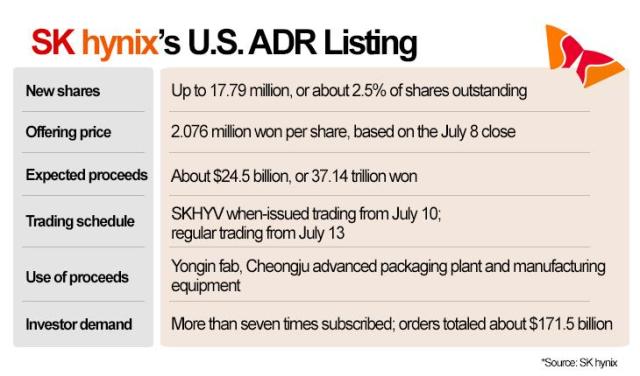
The company has priced its landmark U.S. share offering at $149 per American depositary share, floating 177.9 million ADSs representing 17.79 million newly issued common shares on Friday. Each ADS represents one-tenth of an SK hynix common share traded in Seoul.
The deal surpasses the roughly $25 billion raised by Alibaba Group in 2014, making it the largest U.S. equity offering by a foreign company and the biggest ADR issuance on record.
Perhaps more striking than its size is its pricing.
The $149 offer represents a 2.7 percent premium to the average closing price of SK hynix shares over the previous three trading sessions — an unusual outcome for a large equity offering, which is typically sold at a discount to attract investors.
The premium suggests global investors were willing to pay extra for dollar-denominated exposure to the world's dominant supplier of AI memory chips.
Bank of America, Citigroup, Goldman Sachs and JPMorgan acted as lead underwriters.
From bailout to AI powerhouse
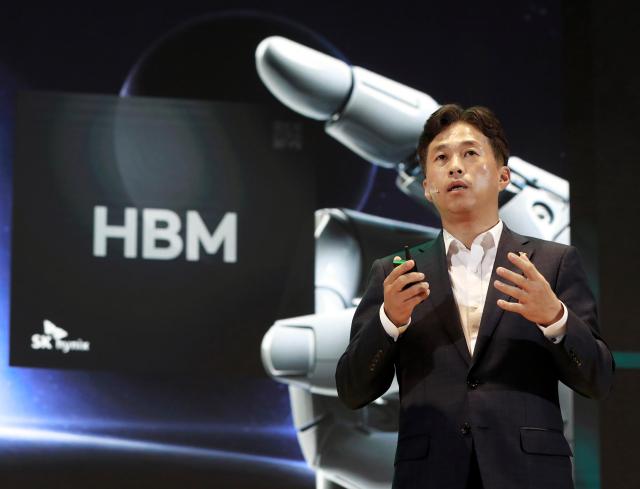
The turnaround began with one strategic decision: an early bet on high-bandwidth memory (HBM) years before artificial intelligence turned the technology into one of the semiconductor industry's most coveted products.
In 2012, SK Group acquired then-struggling Hynix Semiconductor for roughly 3.4 trillion won, rescuing what had become one of South Korea's biggest corporate casualties after years of debt restructurings following the Asian financial crisis.
Fourteen years later, the company has raised nearly eight times the value of that rescue in a single U.S. share sale.
At Thursday's close, SK hynix was valued at 156.6 trillion won, making SK Square's roughly 20 percent stake worth about 32 trillion won.
The remarkable transformation from Samsung Electronics' longtime shadow to the world's HBM leader has been driven largely by that early technological gamble.
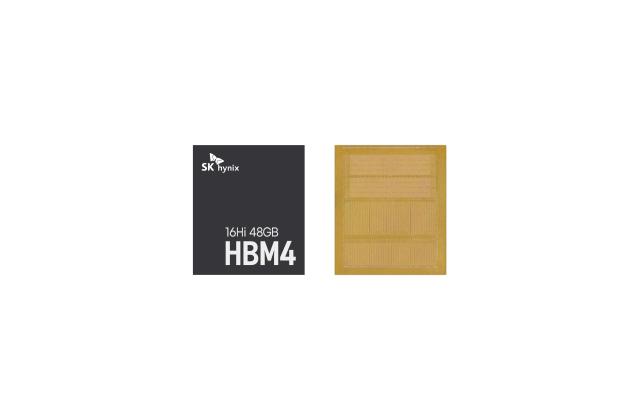
HBM stacks multiple DRAM chips vertically to dramatically increase bandwidth while reducing power consumption, making it indispensable for graphics processors and AI accelerators.
SK hynix now commands 56.4 percent of the global HBM market by revenue, according to IDC data cited in its U.S. regulatory filing, ahead of domestic rival Samsung Electronics and U.S.-based Micron Technology.
Its early commitment to HBM forged an exceptionally close partnership with Nvidia, whose graphics processors dominate AI computing.
During a visit to South Korea last month, Nvidia Chief Executive Jensen Huang described SK hynix's HBM as "the best" and said the company would remain Nvidia's largest memory supplier while AI-memory shortages could persist for years.
The company's shares have surged about 680 percent over the past year, despite falling roughly 25 percent during the previous two weeks amid concerns that AI-related stocks had become overheated. The stock rebounded 5.3 percent Thursday to close at 2.186 million won.
Narrowing the Korea discount
The ADR listing is about far more than raising capital.
It is also an attempt to narrow the valuation gap that has long separated SK hynix from U.S.-listed semiconductor companies despite its technological leadership.
Ahead of the offering, SK hynix traded at roughly 5.5 times estimated earnings over the next 12 months, compared with about 6.7 times for Micron, according to LSEG data cited by Reuters.
The valuation gap has persisted even as SK hynix overtook rivals in HBM and secured a stronger position in Nvidia's AI supply chain.
Chief Executive Kwak Noh-jung has said the Nasdaq listing would diversify the company's shareholder base and allow its market value to better reflect its growing importance in the global AI ecosystem.
"The ADR listing reflects SK hynix's strategy to raise capital from global investors by leveraging its international recognition and competitiveness, rather than relying solely on the domestic market," said Kang So-hyun, a research fellow at the Korea Capital Market Institute.
She added that dual listings could improve price discovery by allowing information to be reflected more efficiently between U.S. and Korean markets.
Still, the company is unlikely to fully escape the so-called Korea discount as long as its primary listing remains on the Korea Exchange, where valuations continue to be weighed down by longstanding concerns over corporate governance and shareholder returns.
Financing the AI expansion
The proceeds will help finance one of the industry's most ambitious capacity expansion programs as AI demand continues to outpace memory supply.
"The long-term outlook is positive because the listing will expand SK hynix's funding capacity at a time when the company needs to invest heavily across multiple areas," said Ahn Ki-hyun, executive director of the Korea Semiconductor Industry Association.
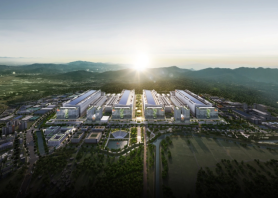
Major projects include the company's first fabrication plant at the Yongin Semiconductor Cluster, the P&T7 advanced packaging complex in Cheongju and purchases of extreme ultraviolet lithography equipment.
The broader investment plan includes approximately 31 trillion won for the Yongin fab, 19 trillion won for the Cheongju packaging facility and nearly 12 trillion won for EUV equipment through 2027.
The company is also building a roughly $4 billion advanced packaging and research facility in West Lafayette, Indiana, backed by up to $458 million under the U.S. CHIPS Act.
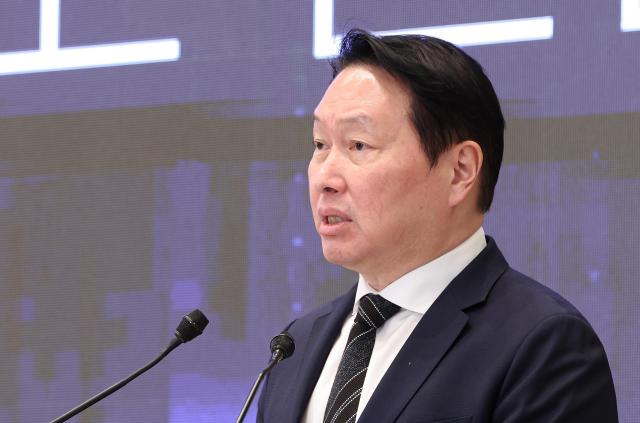
Separately, SK Group Chairman Chey Tae-won last week unveiled plans to invest 400 trillion won to build two semiconductor fabrication plants in southwestern Honam as part of a broader regional semiconductor initiative.
Record profits, familiar risks
The offering follows one of the strongest earnings booms in memory industry history.
First-quarter revenue nearly tripled from a year earlier while operating profit increased more than fivefold as HBM and server DRAM sales surged.
Artificial intelligence has fundamentally changed the economics of memory chips, transforming what was once among the semiconductor industry's most cyclical and commoditized businesses into one of the biggest constraints on global AI computing capacity.
Yet investors remain mindful that memory has historically been defined by boom-and-bust cycles.
Periods of soaring prices have repeatedly encouraged aggressive capacity expansion, only to be followed by oversupply, collapsing prices and shrinking profits.
Whether the current AI supercycle proves more durable will depend on sustained investment by hyperscale cloud operators, disciplined industry capacity additions and how quickly Samsung Electronics and Micron can expand their own HBM production.
The new shares will dilute existing shareholders by about 2.4 percent.
Friday's debut will provide the first real test of Wall Street's appetite.
If the ADSs sustain a premium to the $149 offer price, SK hynix will have strengthened its case that investors increasingly view it as a global AI infrastructure company rather than a traditional memory manufacturer. A weak debut, however, would suggest that even the AI boom cannot completely erase investor concerns over lofty valuations and the semiconductor industry's notoriously cyclical nature.

Copyright ⓒ Aju Press All rights reserved.