

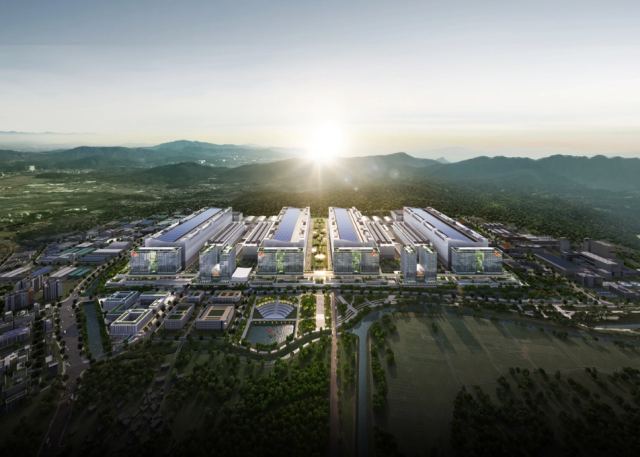
The issue could require close coordination with Washington because the airport retains a wartime role under the South Korea-U.S. alliance even as Seoul prepares to relocate the base and turn the land into the centerpiece of its government-led Honam chip project.
The Ministry of Land, Infrastructure and Transport said Thursday that it had designated 364.19 square kilometers surrounding the planned cluster as a land transaction permit zone following a review by the Central Urban Planning Committee. The designation will remain in force from July 14 through July 13, 2028, requiring government approval for property transactions exceeding specified sizes.
The controlled area covers all five districts of Gwangju as well as Naju, Jangseong and Hwasun in South Jeolla Province. The measure is intended to curb speculative buying and sharp land-price increases following the announcement of the large-scale development project.
The government selected Gwangju Military Airport on Monday as the site of the Honam semiconductor cluster, where Samsung Electronics and SK hynix are expected to build a combined four fabrication plants. The broader project is tied to investment estimated at more than 800 trillion won ($530 billion), making the airport's relocation and the resolution of its alliance-related operational role critical to the project's timetable.
Under the permit system, transactions involving land above certain sizes require approval from local government heads. Buyers of residential land must live on the site, while purchasers of commercial or industrial land must use it for actual business operations. Landowners are also subject to an actual-use obligation for up to five years, making speculative purchases difficult.
The ministry and local authorities said they will closely monitor the newly designated zone and take stern action, in cooperation with relevant agencies, if suspicious transactions or illegal speculative activity are detected.
Gwangju military airport is one of five South Korea-U.S. Air Force collocated operating bases in the country. Although no U.S. Air Force operational unit is permanently stationed there in peacetime, the base is maintained for the deployment of U.S. air assets in a contingency.
Military officials and observers say relocating the airport will require consultations between Seoul and Washington under the Status of Forces Agreement, as part of the site is known to have been granted for U.S. military use. The Defense Ministry said it will “swiftly consult” with the U.S. side on ways to make the site available in time for the semiconductor project while preventing any security vacuum.
The airport already has a preliminary relocation candidate site in Muan County, but the government’s decision to use the current site for the chip cluster has raised the possibility that the airfield may need to be vacated earlier than originally planned.
One option under discussion is dispersing some functions of the ROK Air Force’s 1st Fighter Wing, which operates T-50 advanced trainers and conducts pilot training, to other bases before a new airport is completed.
A Defense Ministry official said the government will push the policy in a way that allows both national security and the semiconductor industry to develop together.

Copyright ⓒ Aju Press All rights reserved.
