

Journalist

Kim Hee-su김희수
khs@ajupress.com
ReporterMinistry of Foreign Affairs, Seoul City Hall & Defense, Foreign Affairs
Kim Hee-su is a bilingual reporter at AJU Press, covering defense and foreign affairs. Before joining AJP in 2025, she worked at The Korea Times, where she wrote interview stories, including a profile of North Korean defector Kim Gum-hyok, and produced digital content. She also previously worked as a researcher for KBS News 9’s International News Department, supporting correspondents in 10 countries around the world. She graduated from the University of Toronto in Canada with a double major in Book and Media Studies and East Asian Studies.
"I'm driven by storytelling."
Latest by Kim Hee-su
-
 South Korea proposes military talks with North to clarify MDL SEOUL, October 23 (AJP) - South Korea renewed its call for military talks with North Korea on Friday to clarify the Military Demarcation Line (MDL), restore military communication lines and prevent accidental border clashes. The proposal follows a September 21 land mine explosion that injured three South Korean soldiers inside the Demilitarized Zone (DMZ). A military investigation concluded that the explosion was caused by North Korean mines planted south of the MDL. The incident highlighted longstanding differences between the two Koreas over the precise location of the MDL in certain areas, raising concerns that troops could inadvertently cross what the other side considers the boundary, increasing the risk of accidental clashes. "We formally propose holding talks between the military authorities of the two Koreas to mutually confirm the precise location of the land Military Demarcation Line, discuss restoring military communication lines and explore ways to prevent accidental clashes in border areas," said Kim Hong-chul, director of the defense ministry's Defense Policy Office. "If necessary, a three-way meeting involving the United Nations Command would also be possible," he added. Kim said the ministry had closely monitored North Korea's construction of tactical roads and fences, mine-laying activities and repeated crossings of the MDL in recent years. South Korea's military estimates that North Korea has planted approximately 960,000 land mines in the DMZ area since 2024, according to multiple lawmakers' offices on the National Assembly's defense committees on Friday. The military has also identified several suspected North Korean minefields south of the MDL and is conducting further investigations with the United Nations Command. "Given the reality of military confrontation along the Military Demarcation Line, it is difficult to predict what further incidents could occur if this situation is left unaddressed," said Kim. "The potential damage would not be limited to either side," he added. Kim also warned that the unresolved boundary issue had contributed to an increase in North Korean military activities and South Korean warning broadcasts and warning shots near the MDL. A total of 1,292 markers were installed along the MDL following the 1953 Korean War Armistice Agreement, but only about 200 remain identifiable today. South Korea previously proposed military talks in November 2025 to address differences over the MDL's location, but North Korea has not responded. Kim said the date and venue for the proposed talks could be discussed through Panmunjom. "We hope for a positive response from the North," he said. 2026-10-23 15:02:00
 -
 Black Eagles turn Sacheon's sky into a canvas SACHEON, October 22 (AJP) - A giant white starfish spread across Sacheon’s blue autumn sky on Thursday as the Black Eagles broke formation, each jet drawing a long arm of smoke toward a different edge of the heavens. Their dark silhouettes tipped the widening trails, yellow undersides catching the sunlight as they swept overhead. Behind them, crisp white lines thickened and feathered at the edges, leaving the sky streaked with the paths they had flown. Below, hands and phones rose together. Spectators leaned back to follow the aircraft while camera crews tilted their lenses skyward, trying to fit the sprawling display into a frame. The South Korean Air Force’s aerobatic team had given the 2026 Sacheon Airshow an opening written across the sky. “Incredible. Very impressive,” squealed Marjorie, a 22-year-old student from France watching the Black Eagles for the first time. She had come to South Korea through an international program involving the Republic of Korea Air Force, or ROKAF. “I came with the ROKAF. It’s an international week,” she said. “I study with planes in France, so they invited us. There are the Philippines, Malaysia, a lot of countries.” Running through Sunday at Sacheon Airfield and surrounding venues, the four-day event brings together aerial displays, aircraft and weapons exhibitions, and opportunities for visitors to experience flight. This year, it also incorporates an aerospace and defense industry exhibition as the city seeks a larger role in international aviation business. The opening-day audience included young people who hope eventually to occupy the cockpits themselves. Raven and Aldrin, both 22, had traveled from the Philippines as air force cadets taking part in a program at the Korea Air Force Academy in Cheongju. “We are air force cadets from the Philippines, and visiting the Sacheon Airshow is part of our activities with participants from 19 countries,” they said. “We are taking part in a program at the Korea Air Force Academy in Cheongju, and we expect to graduate next year before becoming military pilots.” Their visit brought an international dimension to a gathering rooted in South Korea’s aviation industry. Sacheon is home to Korea Aerospace Industries, or KAI, and the Korea AeroSpace Administration, placing aircraft production and the country’s wider space ambitions within the same city. The flying program puts some of that industrial work directly before the public. Alongside the Black Eagles, the lineup includes demonstration flights by the domestically developed KF-21 fighter and T-50 trainer, as well as performances by overseas guests including Australia’s Paul Bennet Airshows team. For visitors, the aircraft displays offer a change of perspective: machines seen as small silhouettes overhead can be examined at ground level, with their landing gear, external fuel tanks and cockpit canopies in view. U.S. Air Force personnel accompanying aircraft from Osan Air Base said their presence was about supporting their South Korean counterparts. “We’re just here to support our allies,” said Master Sgt. Michael Merriman, a maintenance representative from the 51st Fighter Wing. “These are aircraft stationed in Korea, out of Osan. Here, we’re just here for the air show.” Merriman said this was his second visit to South Korea. The U.S. contingent was not conducting training or flight demonstrations at the event, he added. Master Sgt. Joshua Ahn, from Seventh Air Force logistics, offered a similar message. “We support the ROKAF and the strong U.S.-Korea alliance,” he said. That mix of public spectacle, military exchange and industrial promotion runs through this year’s show. Opening the event, Air Force Chief of Staff Gen. Son Sug-rag welcomed visitors under what he called a “splendid autumn sky” and said the addition of the industry exhibition and a gathering of international air force leaders marked an important step for Sacheon. “This will be a historic starting point for its development into an international airshow that attracts attention beyond South Korea and around the world,” he said. Son urged visitors to experience both the strength of the Air Force and the capabilities of Korean-built aircraft while considering the future of the country’s aerospace industry. On the ground, that ambition takes the form of two exhibition halls covering a combined 6,050 square meters and an 850-square-meter space for export consultations. About 100 Korean and overseas companies are participating in the aerospace and defense exhibition. Business meetings and export consultations are concentrated on Thursday and Friday, alongside exchanges involving visiting air force leaders and overseas buyers. For families and younger visitors, the weekend program offers a more hands-on introduction to those fields. Saturday’s events include a space rover challenge, a national rocket-pitch competition and an aerospace education festival. Science and engineering creators Geekble are scheduled to give a special talk Sunday. 2026-10-22 16:43:04
 -
 Korea's rice farmers struggle to keep a staple—and a livelihood—alive SEOUL, October 20 (AJP) - Rice farming is a labor as old as Korea’s 5,000-year history, its harvest a staple of daily meals and an essential ingredient in the country’s cuisine. Yet the farmers sustaining that legacy face a difficult squeeze: aging hands, costly machinery and a changing appetite for the grain they grow. In Icheon, a city in Gyeonggi Province famed for its premium rice, autumn brings both the harvest and a festival celebrating it. Beyond the festival grounds, the work offers a less comforting picture of an industry trying to carry its heritage forward. At a paddy in Jinri-dong on Oct. 15, a family of three arrived with a truck and a tractor carrying their harvesting machine. The father unloaded the equipment while his wife and son took up sickles, cutting stalks along the edge of the field to clear a path for it. Even a mechanized harvest began by hand. The son, who asked not to be named, does not farm full time. He returns during planting and harvesting seasons to help his aging parents tend their small holding. “Last year was better,” he said, blaming excessive rainfall for the weaker crop. A field that yielded roughly eight loads last year might produce only six this season, he estimated. Then the harvesting machine broke down. After a succession of phone calls, the family sat down for a meal beside the field, waiting for work to resume. A royal reputation At the nearby Icheon Rice Cultural Festival, the grain was a source of pride. “Icheon rice is the best,” said Kim Mu-saeng, a women’s association leader in her 80s from Daewol-myeon who was taking part in the event. The region markets its grain as Imgeumnimpyo Icheon Rice, or King’s Table Icheon Rice, drawing on its association with the royal table. According to local tradition, King Seongjong tasted Icheon rice during a visit in 1490 after paying respects at King Sejong’s tomb. Impressed by its flavor, he reportedly ordered it supplied to the palace. The story remains central to the region’s identity as a producer of premium grain. Rice also carries memories of a more laborious kitchen routine. Before electric rice cookers, families cooked it in a gamasot, a large iron cauldron heated over a wood fire. Getting it right meant tending the flames, then reducing the heat and leaving the rice to steam beneath a closed lid. The crisp layer left at the bottom, called nurungji, became a treat of its own. Hot water poured over it made sungnyung, a toasted-rice drink often served after a meal. The festival drew visitors eager to explore that culture. Lee Ho-geun traveled from Guri, Gyeonggi Province, with his Japanese girlfriend, Sokono, who had spotted the festival on Instagram. “I eat a wide variety of foods, but she likes rice much more than I do,” he said. She described rice as a versatile companion to Korean side dishes. For Noorie Bajaj Womack, a 37-year-old American who moved to South Korea last year, the visit was another opportunity to sample the country’s regional varieties. Her spouse serves with U.S. Forces Korea. “The rice from the border has been really good, and so I wanted to try this rice too,” she said, referring to rice grown near the Demilitarized Zone. But a reputation built over centuries does not make the next harvest easier to finance. The cost of keeping the harvest moving Back in Jinri-dong, the son described equipment prices that were difficult to justify for a small family farm. “A good piece of farming equipment can cost more than 200 million won. That’s a lot of money for farmers like us,” he said. The family uses a harvesting machine about eight years old and a tractor that has been in service for many years. Japanese machinery is highly regarded, he said, but beyond their budget. “The really good machines are Japanese, but they’re too expensive for us to buy,” he said. “We only use them during planting and harvesting seasons anyway, so we haven’t felt the need to buy newer or better equipment.” For some farmers, making the investment pay means taking on work beyond their own paddies. “Machines are so expensive these days that you can’t make back the cost by using them only on your own fields. That’s why people also work other farmers’ fields,” he said. Keeping the equipment running is another burden. Repair technicians are scarce, he said, and a breakdown during the short harvest window can leave farmers stranded as favorable weather slips away. “If a machine breaks down these days, you can lose an entire day’s work,” he said. "There just aren’t enough technicians who can repair these machines. Once you call someone, it can take forever for them to arrive.” “Sometimes, all you can do is sit beside the rice field and wait until the technician comes,” he added. New technology offers less help when the farm is too small to justify the expense. “We don’t farm on a very large scale, so we don’t use things like drones,” he said. “But people farming 100,000 or 200,000 pyeong do use them.” Those holdings would cover roughly 33 to 66 hectares. National figures show the rising cost of cultivation, though they also caution against assuming every farmer's returns are deteriorating. Average paddy-rice production costs rose 4.4 percent in 2025 to approximately 9.21 million won per hectare, according to the Ministry of Data and Statistics. Labor costs increased 6.6 percent and fertilizer expenses 6.9 percent. Gross revenue per hectare, however, rose 17 percent to approximately 13.5 million won. From the rice sack to the microwave The pressures extend beyond the field. Farmers must also adapt to how—and how much—people eat. At the festival, Kim Young-jun, a third-generation farmer who runs Icheon Dodram Rice, had a succinct explanation for why fewer consumers were buying large bags of uncooked rice. “It’s because of Hetbahn,” he said, referring to CJ CheilJedang’s ready-to-eat rice brand. For someone living alone, a 10-kilogram sack can be a burden, he explained. Packaged rice offers a single portion without the need to cook a pot or store a large supply. The shift is visible in household data. Annual per capita household rice consumption fell 3.4 percent to 53.9 kilograms in 2025, the lowest since comparable records began in 1962, according to the Ministry of Data and Statistics. It was barely half the 106.5 kilograms recorded in 1995. Single-person households reached 8.24 million in 2025, accounting for 36.6 percent of all general households, up from 23.9 percent in 2010. Food manufacturers are adapting the rice bowl accordingly, offering smaller portions alongside multigrain and other specialized products. In September, CJ CheilJedang introduced a 110-gram Hetbahn serving, nearly half the size of its standard 210-gram pack. Products weighing 130 grams accounted for about 16 percent of the domestic instant-rice market in the first half of 2026, up from around 9 percent two years earlier, according to Nielsen data cited by the company. For farmers and local brands selling directly to households, the change means competing for a smaller place in the pantry. But the rise of packaged rice also creates another buyer for their grain. A new market, uneven opportunities CJ CheilJedang bought about 65,000 metric tons of South Korean rice in 2025 for Hetbahn and other rice-based products, according to the company's August report. It plans to purchase 60,000 to 70,000 tons in 2026. The company has operated contract-farming arrangements since 2010 and works with about 2,500 farmers across 14 regions, including Asan, Jincheon and Iksan. Those arrangements give participating growers an established buyer and the company a stable supply. In Asan, CJ CheilJedang planned to expand contracted cultivation of Donghaeng, a rice variety developed for Hetbahn, from about 1,111 hectares for the 2025 crop to 1,420 hectares for 2026. The expanded area was projected to yield about 12,000 tons. A dedicated rice-processing center provides drying, storage, milling and processing services, linking the farms to the company’s manufacturing network. The market is substantial. CJ CheilJedang sold about 771 million Hetbahn products worldwide in 2025, up 31.6 percent from 586 million in 2021, according to company figures analyzed by DataNews. The brand held about 66 percent of South Korea’s instant-rice market by retail sales value in 2025, according to Nielsen Korea data cited in the company’s business report. Demand from food manufacturers also extends well beyond microwaveable rice. Businesses used about 1.07 million metric tons of rice in 2025, up 22 percent from a year earlier, government data showed. That figure includes food and beverage production, notably rice cakes. Falling household consumption, then, tells only part of the story. Rice is finding new routes to consumers through factories and packaged meals. The question for small growers is how readily they can enter those supply networks—and how much of the value will reach them. An expanding market for branded rice products does not, by itself, guarantee better farm incomes or ease the cost of bringing in the crop. In Jinri-dong, that distance between a growing food business and a farmer’s immediate needs was measured in idle machinery and an unfinished harvest. “Farm machinery costs around 100 million won. For people like us, it’s just...” the farmer’s mother said, trailing off with a sigh. 2026-10-20 18:01:42
 -
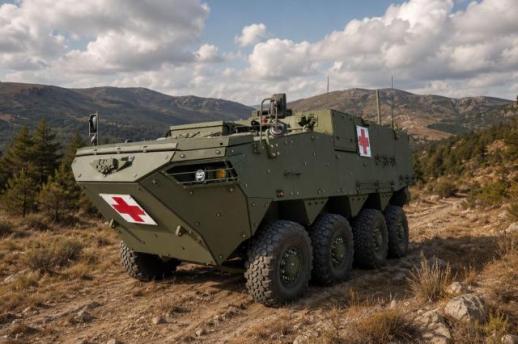 Hyundai Rotem to acquire Hyundai Wia defense unit SEOUL, October 20 (AJP) - South Korea's Hyundai Rotem plans to acquire Hyundai Wia's defense business for 358.4 billion won ($270 million) to strengthen its defense operations and expand its presence in global markets. Hyundai Rotem said Monday it had signed an agreement to acquire Hyundai Wia's special business division, which manufactures main guns for K2 tanks and gun barrels for K9 self-propelled howitzers. The division also develops naval guns, remote-controlled weapon systems (RCWS), close-in weapon systems (CIWS) and counter-drone technologies. The acquisition will allow Hyundai Rotem, which manufactures the K2 tank, to bring key weapons production in-house rather than relying on an external supplier. The company expects the move to reduce production costs, improve supply chain stability and strengthen its ability to meet localization requirements in overseas defense contracts. The deal is expected to be completed by the end of March 2027, following a Hyundai Wia shareholder meeting scheduled for Nov. 27. Hyundai Rotem will take over the division's assets, liabilities, employees and intellectual property, retaining all existing workers. The business recorded 393.1 billion won in revenue and 45.6 billion won in operating profit last year. Brokerage analysts welcomed the acquisition Tuesday, saying it could improve Hyundai Rotem's cost competitiveness while expanding its business beyond armored vehicles. KB Securities analyst Jung Dong-ik said the deal could generate savings through vertical integration, improve research and development efficiency and diversify Hyundai Rotem's operations. Analysts also pointed to opportunities in counter-drone systems, naval weapons and remote-controlled defense technologies. However, they cautioned that the acquisition alone would not resolve concerns over Hyundai Rotem's earnings and delays in securing new overseas contracts. The company's third-quarter revenue and operating profit fell about 10 percent short of market expectations, while uncertainty over additional defense exports beyond Poland has weighed on its outlook. Several brokerages, including Samsung Securities, Shinhan Securities and Kiwoom Securities, subsequently lowered their target prices for Hyundai Rotem shares. Hyundai Rotem plunged 11.9 percent as of 12:05 pm Tuesday to 88,800 won, after trading between an intraday high of 101,700 won and a low of 86,500 won. 2026-10-20 12:12:23
 -
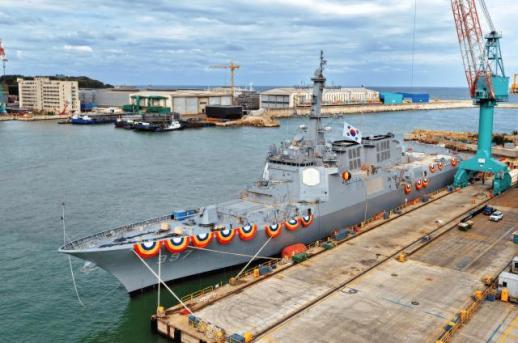 South Korea's Navy plans nuclear-powered submarines, drone carrier SEOUL, October 20 (AJP) - South Korea's Navy plans to develop nuclear-powered submarines and a drone carrier to strengthen its defenses against North Korea's nuclear and missile threats, the Navy said Tuesday. The Navy outlined its plans during a parliamentary defense audit at the Gyeryongdae military headquarters, pledging to strengthen its forces through artificial intelligence (AI), robotics and advanced naval technologies. Under the government-led Jangbogo-N program, South Korea aims to launch its first nuclear-powered submarine in the mid-2030s and bring it into operational service in the late 2030s. The Navy established a dedicated nuclear-powered submarine task force in May to oversee preparations for design, construction, testing and eventual deployment. The submarines are expected to use low-enriched uranium containing less than 20 percent uranium-235. Although detailed specifications have not been officially disclosed, military authorities are reportedly considering three vessels displacing around 8,000 tons each. The Navy is also seeking to introduce a carrier capable of operating both manned aircraft and unmanned systems by the early 2040s. Measuring approximately 270 meters long and 70 meters wide, the carrier would displace more than 30,000 tons and accommodate over 20 unmanned systems, including surveillance and attack drones, alongside more than 20 manned aircraft and landing craft. The Navy submitted a revised requirement for the project in October last year. The proposal remains under review by the Joint Chiefs of Staff, with a final decision on the revised requirement expected by the end of this year. Beyond the two major projects, the Navy plans to acquire Korean Destroyer Next Generation (KDDX) vessels, ship-to-surface ballistic missiles, long-range attack drones and SM-3 and SM-6 interceptors during the 2030s. It is also pursuing domestically developed naval ballistic missile interceptors to strengthen its ability to detect, track and intercept North Korean missiles. "Strong naval power is the foundation of maritime security and a key capability supporting our maritime sovereignty, peace and prosperity," said Adm. Kim Kyung-ryul, South Korea's chief of naval operations. Separately, the Marine Corps told lawmakers it plans to establish a Marine Operations Command by 2028 as part of efforts to gain greater operational independence from the Army and Navy. 2026-10-20 11:46:12
 -
 South Korea still in $6.1 billion Swiss air defense race SEOUL, October 19 (AJP) - South Korea remains a formidable candidate to supply Switzerland’s roughly 5 billion Swiss franc ($6.1 billion) second long-range air defense system, the Swiss defense ministry confirmed to AJP, denying that the contest has narrowed to a two-way race between French and Israeli suppliers. “Yes,” Switzerland’s Federal Department of Defence, Civil Protection and Sport, known as the VBS, replied when asked whether South Korea was still under consideration for the procurement program known as Bodluv GR2. Asked whether the field had been reduced to suppliers from France and Israel, the ministry answered, “No.” It also confirmed that the South Korean bidder had been asked to extend the validity of its offer as Switzerland takes more time to decide — a request previously reported only for the French and Israeli contenders. The clarification keeps South Korea in a major European procurement contest driven by delays in U.S. weapons deliveries and Switzerland’s desire to diversify its defense suppliers. Bern is seeking a second long-range ground-based air defense system as deliveries of its U.S.-made Patriot systems face delays of five to seven years. Switzerland now considers delivery of the delayed systems by 2032 realistic. The government estimates the additional system will cost around 5 billion francs, according to public broadcaster SRF. That preliminary figure includes missiles, logistics, training and other related expenses. Switzerland has not disclosed how many fire units, launchers or interceptors it intends to buy. The estimate is separate from a more recent 6 billion franc funding figure cited by the VBS, which covers both the second system and at least part of the additional costs arising from the Patriot delays. Switzerland opened contract negotiations in June with manufacturers from France, Israel and South Korea after an initial assessment found their proposals broadly met military requirements and offered the strongest cost-benefit performance. Armasuisse, the federal defense procurement agency, completed its military and defense-policy evaluation in late September. Manufacturers from all three countries submitted binding offers, leaving the final choice to the Federal Council, Switzerland’s executive body. Questions over South Korea’s standing arose after Swiss newspaper Blick reported on Oct. 5 that French and Israeli suppliers had been asked to keep their offers valid for longer. Subsequent reports described them as the remaining contenders. But the VBS told AJP the same request had been made to the South Korean side. “Yes,” the ministry said when asked whether the Korean bidder had also been asked to extend its offer following the delay. The confirmation concerns South Korea’s participation, however, rather than the identity of the system it has offered. “We do not comment on which systems are currently undergoing evaluation,” the VBS said. Swiss media, including SRF, have identified the Korean candidate as L-SAM, South Korea’s domestically developed long-range surface-to-air missile system. SRF has also named the Franco-Italian Eurosam consortium’s SAMP/T NG as a contender, alongside an Israeli system. Neither South Korea’s Defense Acquisition Program Administration, or DAPA, nor LIG Nex1 confirmed to AJP that L-SAM was the system formally submitted. “It is difficult for us to confirm the status of an overseas weapons procurement program,” an LIG Nex1 official said. The official said the company would need to check internally and declined to confirm whether the Korean system had reached a final stage of the competition. DAPA also declined to confirm details. “We always monitor such developments, but it is not necessarily the case that we know about them first,” an official from DAPA’s spokesperson’s office said, explaining that the agency sometimes learns of developments through media reports before checking with the relevant department or company. “If the other government has not disclosed the matter, or is in a situation where it is difficult to confirm, we cannot unilaterally make it public,” the official said. For Switzerland, delivery certainty and dependable supplies will weigh heavily in the decision. When negotiations began in June, the VBS identified firm delivery commitments, protection against long-range threats, compatibility with Swiss operations and reliable access to ammunition and spare parts as key requirements. It also said the chosen supplier should, where possible, manufacture missiles, command systems or at least critical components in Switzerland or elsewhere in Europe over the medium term. “An additional system reduces dependence on one supplier and a single supply chain and thereby strengthens security of supply,” the Swiss government said. The strain on U.S. weapons supplies extends beyond Switzerland. Poland’s top operational commander said Oct. 12 that deliveries of contracted U.S. weapons, including PAC-3 MSE Patriot interceptors, would be delayed as the war involving Iran depleted American military stockpiles. Swiss media have portrayed SAMP/T NG as a strong contender partly because Switzerland’s defense industrial strategy favors domestic or European procurement. The Federal Council has nevertheless said excluding non-European manufacturers cannot currently be justified, particularly if they move parts of their production and supply networks to Switzerland or elsewhere in Europe. Performance, cost, integration, supply risks and foreign and security policy considerations will also shape the choice. The decision itself now faces a delay. The procurement had been scheduled to move forward by the end of 2026. But the VBS said that timetable was no longer feasible after the National Council, the lower house of parliament, declined to support expedited consideration during the upcoming winter session. “The originally planned timetable can no longer be implemented,” the ministry said earlier this month. The Federal Council will assess the situation and decide the next steps. No revised selection timetable has been announced. 2026-10-19 18:00:16
 -
 HD Hyundai, Anduril demonstrate autonomous naval vessel in US SEOUL, October 19 (AJP) - South Korea's HD Hyundai has demonstrated autonomous naval vessel technology in the United States with American defense firm Anduril Industries, marking its first such test in U.S. waters. The company said Monday that the demonstration took place off Long Beach, California, using a modified 368-ton experimental vessel previously operated by the U.S. Navy. The vessel was equipped with VAone, an autonomous naval system developed by HD Korea Shipbuilding & Offshore Engineering, and Anduril's Lattice mission autonomy software. During the three-and-a-half-hour demonstration, the vessel performed autonomous navigation, mission changes, formation sailing and emergency responses to engine malfunctions. The operations were monitored in real time from a shore-based control center. VAone builds on HiNAS Prime, an autonomous navigation system developed by HD Hyundai subsidiary Avikus. It also includes systems that monitor machinery, automatically respond to malfunctions and detect and address damage to the vessel. About 40 representatives from the U.S. Navy, U.S. Coast Guard, South Korean Navy, Defense Acquisition Program Administration and other organizations attended the demonstration. "The demonstration confirmed the vessel's ability to carry out multiple missions and respond to a range of operational scenarios," said Jang Kwang-pil, vice president and head of HD Korea Shipbuilding & Offshore Engineering's Future Technology Research Institute. 2026-10-19 17:31:01
 -
 Seoul's files complaint over USFK Brunson's DMZ remarks SEOUL, October 19 (AJP) - South Korea has lodged complaint with Washington over U.S. Forces Korea Commander Gen. Xavier Brunson's remarks on the Demilitarized Zone (DMZ) and the U.S. has sympathized with its concerns, according to a government source Monday. Seoul conveyed its concerns through multiple diplomatic and military channels, and Washington responded that it recognized and understood South Korea's position, according to the source. The dispute follows Brunson's remarks at a forum hosted by the Gold Institute for International Strategy in Washington on Oct. 14. Brunson, who also commands the United Nations Command (UNC) and the South Korea-U.S. Combined Forces Command, said that from the UNC's perspective, South Korea begins at the southern fence of the Demilitarized Zone (DMZ). His comments drew criticism from ruling party lawmakers, who accused him of questioning South Korea's territorial sovereignty. The controversy centers on the distinction between the UNC's authority to manage the DMZ and South Korea's sovereignty over the territory. Under the 1953 Korean War Armistice Agreement, the UNC oversees armistice compliance and controls access to the southern portion of the DMZ, a buffer zone extending roughly 2 kilometers on either side of the Military Demarcation Line (MDL). But that administrative authority does not determine national territorial boundaries. Article 3 of South Korea's Constitution defines the country's territory as the entire Korean Peninsula and its adjacent islands, including North Korea. The issue has become particularly sensitive as ruling party lawmakers seek to give the South Korean government greater control over civilian access to the DMZ, an area where the UNC currently exercises authority under the armistice. South Korea's defense ministry dismissed Brunson's comments as his personal views, reaffirming its position on territorial sovereignty. The UNC also sought to ease the controversy Sunday, saying South Korea's sovereignty was beyond question. It explained that Brunson had been referring to his military and administrative responsibilities under the armistice rather than South Korea's territorial status. Brunson also drew criticism for remarks at the same Washington forum about the planned transfer of wartime operational control (OPCON) from the United States to South Korea. "Because the conditions have changed, because we've changed our plan, we have new standards which we have to uphold," Brunson said, citing North Korea's evolving military threats. The transfer would place a South Korean general in command of the allies' combined forces during wartime, replacing the current U.S.-led command structure. Seoul is seeking to complete the transfer before President Lee Jae Myung's term ends in 2030, while maintaining that the conditions already agreed upon by the allies should remain unchanged. Brunson's reference to new standards raised concerns in Seoul that additional requirements could delay the transfer indefinitely. The controversy highlights ongoing tensions over the UNC's authority in the DMZ and the timing of the OPCON transfer, even as Seoul and Washington seek to address their differences. 2026-10-19 15:28:06
 -
 USFK chief's DMZ remarks spark sovereignty row SEOUL, October 18 (AJP) - South Korea's defense ministry on Sunday distanced itself from U.S. Forces Korea Commander Gen. Xavier Brunson's remarks that South Korea begins at the southern edge of the Demilitarized Zone (DMZ), calling them his personal views as the United Nations Command (UNC) sought to clarify its position. Brunson made the remarks Wednesday at a forum hosted by the Gold Institute for International Strategy in Washington. Brunson, who also heads the UNC and the South Korea-U.S. Combined Forces Command, said that, from the UNC's perspective, South Korea begins at the southern fence line of the DMZ. The 1953 armistice established the DMZ as a roughly 4-kilometer-wide buffer zone, extending about 2 kilometers on either side of the Military Demarcation Line (MDL). Under Article 3 of South Korea's Constitution, the country's territory encompasses the entire Korean Peninsula and its adjacent islands, including the North, although Seoul does not exercise control over North Korean territory. The controversy comes amid an ongoing disagreement over who should authorize civilian access to the DMZ. Ruling party lawmakers have pushed legislation that would give the South Korean government greater authority over access for nonmilitary purposes, while the UNC has maintained that its existing authority is grounded in the Armistice Agreement. "The UNC has no authority to determine the territorial sovereignty of the Republic of Korea," said Rep. Kim Byung-joo, a ruling Democratic Party lawmaker and presidential special adviser on defense policy, in a Facebook post Saturday. The defense ministry said Sunday that Brunson's comments reflected his personal views and reaffirmed its firm position on South Korea's territorial sovereignty. The ministry added that it would continue working closely with the UNC to ensure that South Korea's exercise of sovereignty within the DMZ and the command's armistice responsibilities could coexist. The UNC also sought to ease the controversy, saying South Korea's sovereignty was beyond question. It explained that Brunson had been referring to the military and administrative responsibilities assigned to the UNC commander within the DMZ and the Joint Security Area (JSA) under the Armistice Agreement, rather than questioning South Korean sovereignty. The dispute also follows growing friction between Seoul and Brunson over the planned transfer of wartime operational control (OPCON) from the United States to South Korea. At the same Washington forum, Brunson argued that changing security conditions, including North Korea's missile advances, required updated military standards for the transfer. "Because the conditions have changed, because we've changed our plan, we have new standards which we have to uphold," Brunson said. Seoul has maintained that the transfer should proceed under the conditions previously agreed upon by the allies. Defense Minister Kang Shin-chul told lawmakers Thursday that South Korea had already conveyed its concerns to the United States over Brunson's OPCON remarks. 2026-10-18 17:59:06
 -
 Hyundai Motor to deploy humanoid robots at new factories after 2032 SEOUL, October 18 (AJP) - Hyundai Motor Group plans to deploy humanoid robots at new manufacturing plants after 2032 as part of a broader push to automate vehicle production using artificial intelligence (AI) and robotics. The automaker outlined its plans ahead of E-FOREST Tech Day 2026, scheduled for Oct. 19–21 at Hyundai Motor and Kia's Uiwang Research Institute in Gyeonggi Province. The event will showcase around 200 manufacturing technologies, including automation, AI and software-defined factory (SDF) solutions. At a media preview on Friday, Choi Young-tae, head of Hyundai Motor and Kia's E-FOREST Center, outlined a roadmap to advance autonomous manufacturing systems at the Hyundai Motor Group Innovation Center Singapore (HMGICS) by 2030 before introducing humanoid robots and full-scale automation at future factories after 2032. The group aims to move beyond conventional industrial robots, which largely perform repetitive tasks such as welding and painting, by adopting physical AI that allows robots to recognize their surroundings and make decisions. Potential applications include connecting wiring inside vehicles, supplying interior trim components and performing paint touch-ups, tasks that have been difficult to automate using conventional technology. Hyundai plans to use HMGICS as a testing ground for autonomous manufacturing technologies before expanding their use to Hyundai Motor Group Metaplant America (HMGMA) in Georgia and its electric vehicle plant in Ulsan. The group is also developing digital twin technology to simulate factory operations and identify potential problems before they occur. Among the technologies being showcased are logistics robots whose production costs have been reduced by about 30 percent, with charging times shortened from roughly two hours to as little as 12 minutes. "We will keep working to expand the use of these new technologies in our production plants and put them into practice on the factory floor," said Cho Hyun-chul, vice president and head of Hyundai Motor Group's E-FOREST Strategy Group. The automaker stressed that its automation strategy is intended to shift workers away from dangerous and repetitive tasks, allowing them to focus on production management, quality improvement and other higher-value work. 2026-10-18 15:30:45