

The issue has taken on greater urgency as South Korea and the United States resumed follow-up talks last month on security commitments made by Presidents Donald Trump and Lee Jae Myung.
The agenda includes Seoul's plans to build nuclear-powered submarines, expand cooperation in shipbuilding and seek greater autonomy over uranium enrichment and spent fuel reprocessing.
U.S. Under Secretary of State for Political Affairs Allison Hooker, who led the American delegation, described the discussions as "a brief but very productive visit" that laid the groundwork for "continued technical conversations."
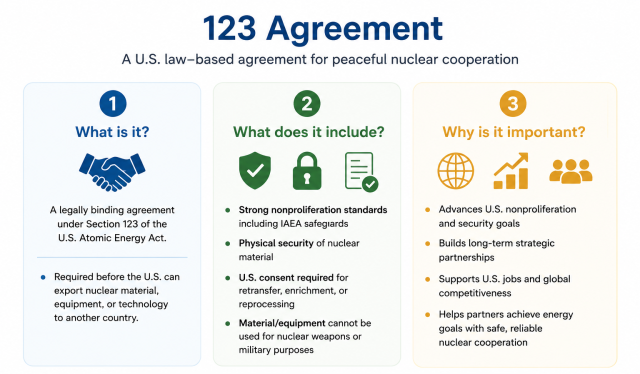
At the center of the debate is South Korea's decades-old nuclear cooperation agreement with Washington.
Under the bilateral "123 Agreement," Seoul cannot enrich uranium or reprocess spent nuclear fuel without prior U.S. approval, even for civilian purposes. Those restrictions have remained despite South Korea's compliance with the Nuclear Non-Proliferation Treaty and its long-standing cooperation with the International Atomic Energy Agency.
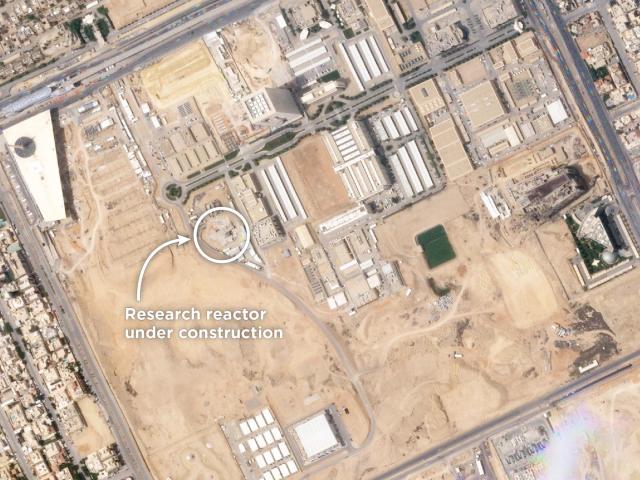
The Saudi proposal appears to signal greater U.S. flexibility.
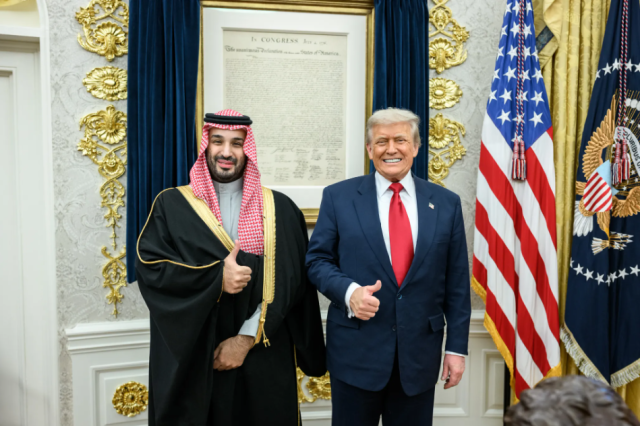
For advocates in Seoul, that could strengthen the argument that South Korea—which already operates one of the world's largest civilian reactor fleets—has an even stronger economic case for domestic fuel production.
But experts caution that the Saudi negotiations and South Korea's submarine ambitions involve fundamentally different legal questions.
"When people hear enrichment, they immediately think of highly enriched uranium," said Suh Kune-yull, professor of nuclear engineering at Seoul National University.
"Nuclear-powered submarines do not necessarily require that level of fuel. It is technically possible to operate with low-enriched uranium of around 5 percent, similar to commercial nuclear fuel. France and China are known to operate submarines using low-enriched uranium."
South Korea has already indicated that any future indigenous nuclear submarines would use low-enriched uranium rather than weapons-grade fuel in an effort to ease proliferation concerns.
Yet even that approach does not remove the legal obstacles.
"Building an enrichment plant for commercial nuclear fuel may be possible, but it has nothing to do with submarines."
In other words, even if Washington eventually grants Seoul greater civilian enrichment rights, the allies would still need a separate arrangement covering fuel for military reactors.
That leaves unresolved the most sensitive issue surrounding South Korea's submarine program—whether the United States would provide reactor fuel, allow South Korea to produce it domestically, or devise an entirely new legal framework.
For Saudi Arabia, meanwhile, the debate centers on economics.
Unlike South Korea, Saudi Arabia has no operating commercial nuclear reactors and remains in the early stages of developing a civilian nuclear industry.
"The key question is whether Saudi Arabia can demonstrate economic feasibility," Chung said.
"If a country has only a handful of nuclear power plants, it may simply be told to purchase fuel instead. If a country with virtually no nuclear industry insists on enrichment, that naturally raises questions about its intentions."
He suggested Washington may have left itself considerable room to maneuver.
"For years Saudi Arabia insisted it would not purchase reactors unless it received enrichment rights," Chung said.
"The United States may be opening the door now, but it can still close it later by concluding there is no economic justification."
He said the proposed agreement may primarily serve as a vehicle for U.S. reactor suppliers such as Westinghouse to gain access to Saudi Arabia's emerging nuclear market.
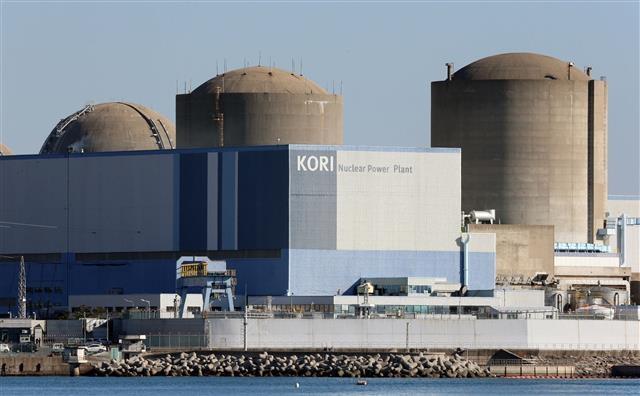
"South Korea operates about 30 commercial reactors, and if exported reactors are included, it effectively supports around 40 units," Chung said. "Those reactors all require fuel. That economic rationale is much easier to demonstrate."
Even so, Washington has another reason for caution.
"From the U.S. perspective, South Korea is a competitor in the nuclear fuel market," Chung said. "Saudi Arabia is not."
For Seoul, the Saudi negotiations may therefore strengthen the political argument for expanding civilian enrichment rights, but they offer little guidance on the separate challenge of fueling a future fleet of nuclear-powered submarines.
The next round of Korea-U.S. nuclear talks will test whether Washington is prepared to distinguish between those two issues—granting greater flexibility over the civilian fuel cycle while maintaining tighter restrictions on military nuclear propulsion.

Copyright ⓒ Aju Press All rights reserved.
